
Key civil society leaders at a discussion focused on electoral integrity on Tuesday (6 February) called for active citizenship to protect Sri Lanka’s fragile democracy and urged the public to demand integrity from their candidates as a first step towards systemic change.
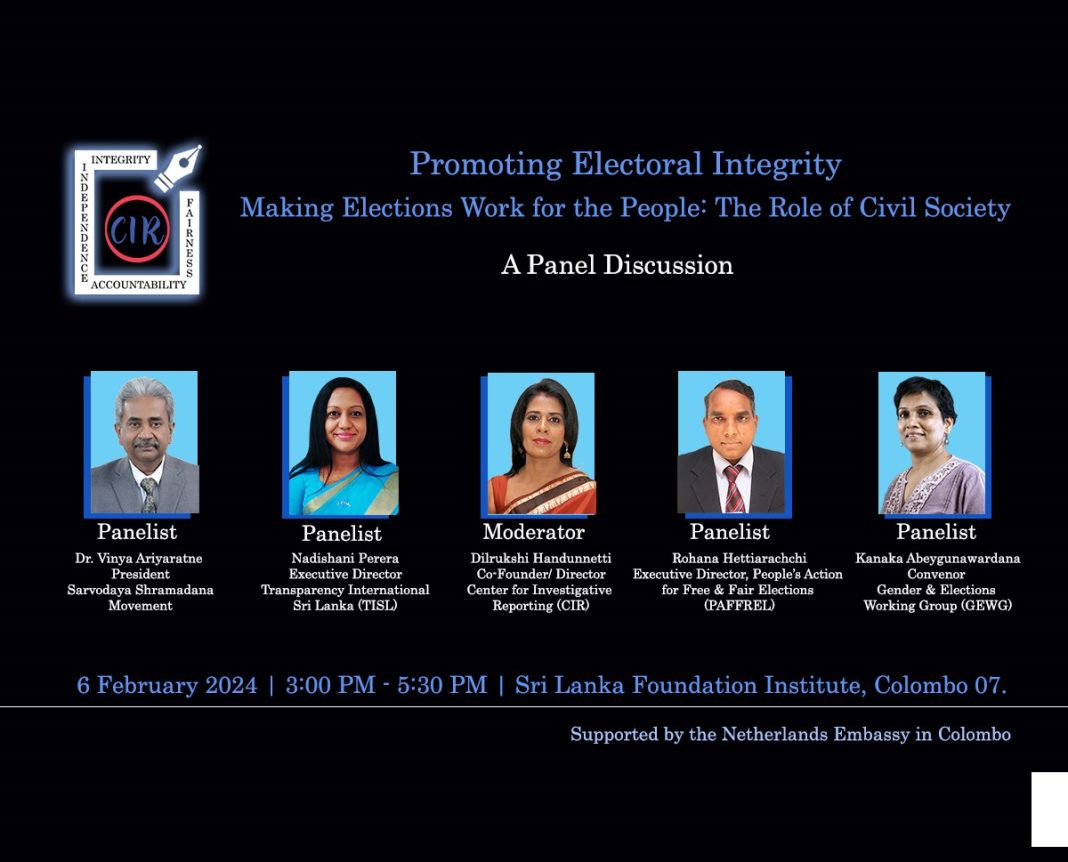
The call to action came from four changemakers who spoke at a panel discussion titled “Making Elections Work for the People -Role of Civil Society” organized by the Center for Investigative Reporting (CIR).
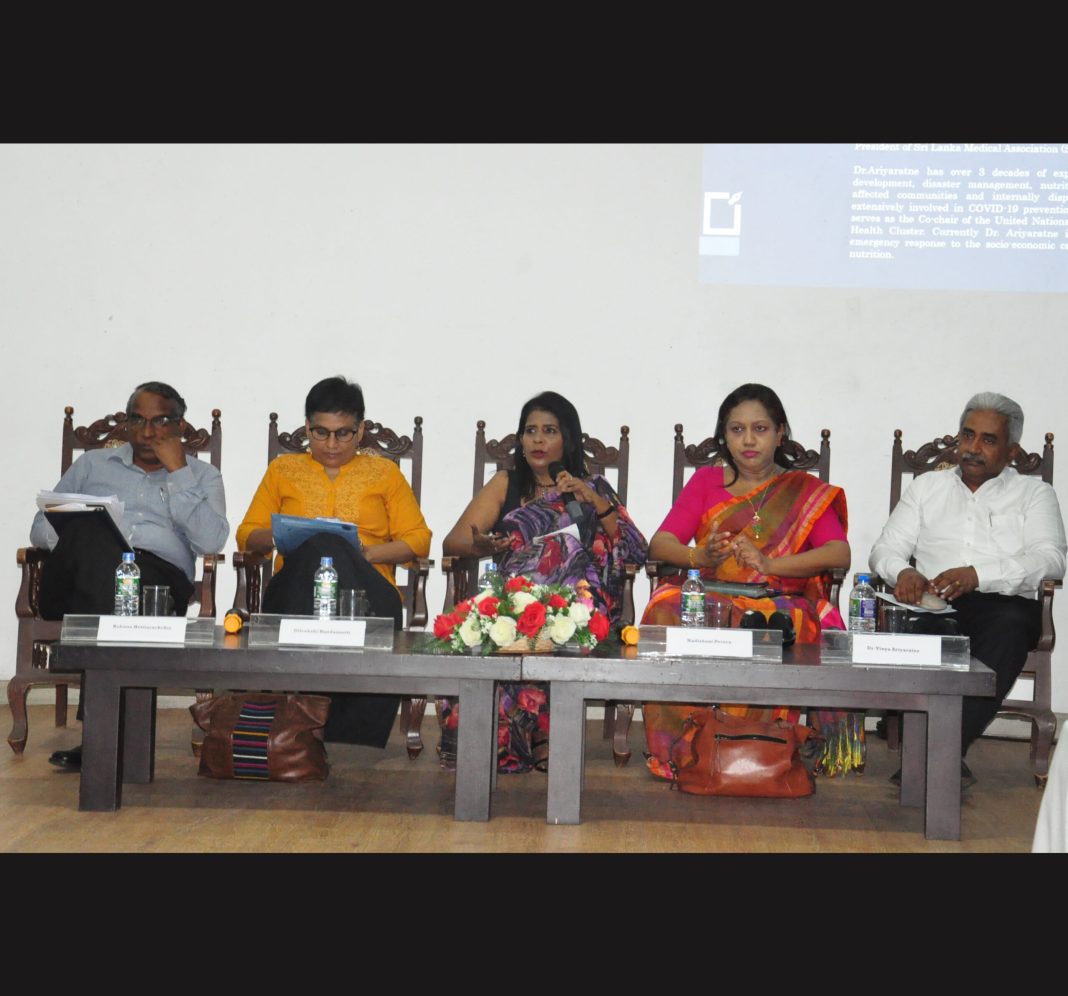
The panel comprised Dr. Vinya Ariyaratne, President of Sarvodaya Shramadana Movement, Rohana Hettiarachchi, Executive Director of the People’s Action for Free & Fair Elections (PAFFREL), Nadishani Perera, Executive Director of Transparency International Sri Lanka (TISL) and Kanaka Abeygunawardana, Convenor of the Gender & Elections Working Group (GEWG).
The speakers emphasized the need for electoral literacy, the need to create a demand for better politics and politicians and the need for playing the role of concerned citizen at all times, not just during election periods.
Dr. Vinya Ariyaratne defined electoral integrity as public confidence and the ability to trust their representatives and for governance in the best interests of people. He said Sri Lankans are affected by a financial and socio-political crisis and overcoming the huge challenges before the nation requires citizens actively taking the lead. He said polls need to be free and fair, but people should be able to see it.
Nadishani Perera spoke about citizens’ contribution to making democracy work and the need for active campaigning against political corruption. She said that governing bodies show minimal commitment towards accountability, and unless the public challenges the rulers and demands accountability, the status of state capture will continue and kleptocrats will continue to reign.
It is not only about candidates and the problem of selections by political parties but also about voters not being concerned about selecting the most suitable people to represent them, said Rohana Hettiarachchi. He emphasized that voters have a responsibility to vote for candidates with a reliable track record and hold democratic values.
Kanaka Abeygunawardana focused on the poor representation of women in elected bodies including the parliament. She said despite a 56% of registered voters being women, their candidacy was controlled by men in political parties and women were never considered winning material.
The discussion was moderated by Dilrukshi Handunnetti, Co-Founder and Director of the Center for Investigative Reporting (CIR).
The gathering included journalists, civil society representatives, UN agencies and senior public officials.
The second panel discussion of CIR’s six-part series will be held on March 6.