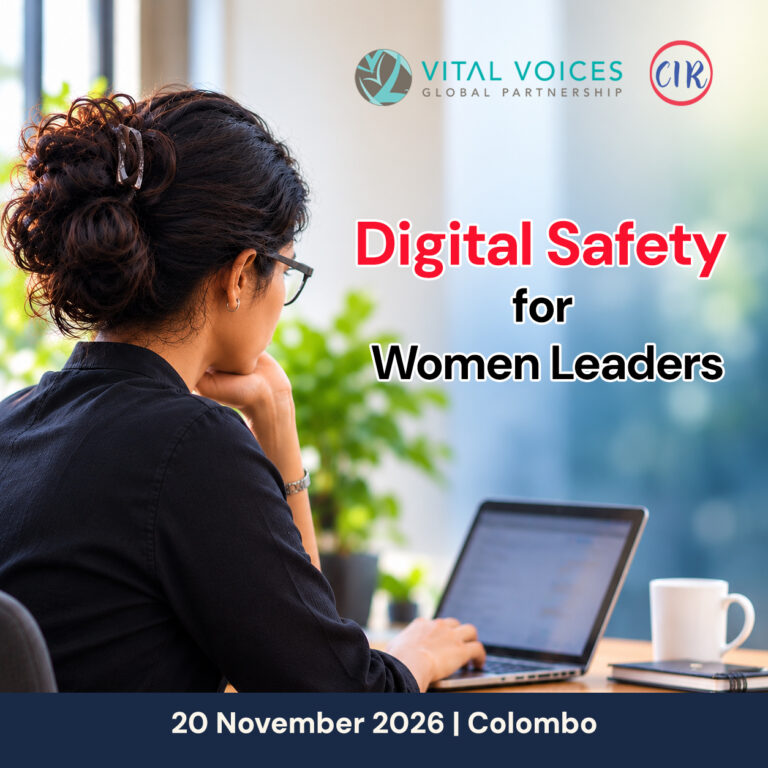
The Center for Investigative Reporting (CIR) Sri Lanka invites applications from women in media and civil society to participate in a full-day training on Digital Safety for Women Leaders, scheduled for 20 November 2026 in Colombo.
The training aims to equip participants with practical knowledge and skills to enhance their digital safety and security in an increasingly complex online environment. Participants will also engage in the practical development of individual digital safety plans, incorporating preventive measures, incident response strategies, and personal digital security practices.
The training will feature a context-setting session by Dr. Sanjana Hattotuwa, a globally renowned expert in information disorder, new media literacy and digital security. The program will be facilitated by Dilrukshi Handunnetti, Director/Trustee of CIR.
The workshop will be conducted in English and is supported by Vital Voices Global Partnership, as part of its global initiative, Crisis Readiness Training for Women Leaders.
Interested individuals are invited to complete the application form on or before 13 November 2026, at 8.00 p.m.
Vital Voices Global Partnership is a non-profit founded on the simple idea that nations and communities cannot move forward without women’s voices in leadership positions. Vital Voices invests in women leaders who are taking on the world’s greatest challenges – from extreme forms of violence against women and girls to sustainability, economic inequities, and more.
The Social Media Journalists for Democracy in Sri Lanka Collective filed a complaint on Nov. 3 seeking an investigation into the sponsorship of a private broadcaster’s ABU event.
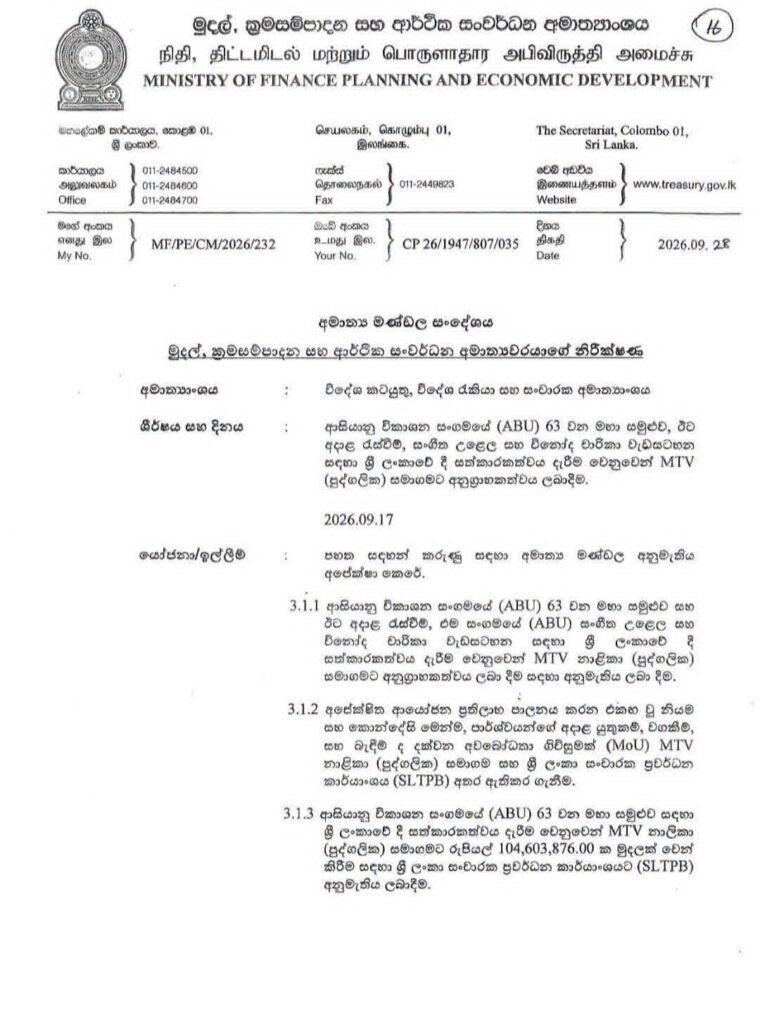
Cabinet Paper No. 26/1947/807/035, dated Sept. 17, 2026, records approval for the sponsorship, subject to the Finance Minister’s observations.
Cabinet spokesperson Nalinda Jayatissa said the more than $313,000 (LKR 104 million) was provided through the SLTPB using tourism-related levy revenue, not a direct Treasury allocation.
Sri Lanka Tourism projected promotional media value exceeding $752,000 (LKR 250 million), while concerns remain over how the expected benefits will be measured.
COLOMBO—A complaint was been lodged with the Commission to Investigate Allegations of Bribery or Corruption (CIABOC), calling for an investigation into the government’s decision to provide more than $313,000 (LKR 104 million) in sponsorship for an international broadcasting conference hosted by a private television broadcaster.
The complaint has brought renewed scrutiny to the government’s decision to channel the sponsorship through the Sri Lanka Tourism Promotion Bureau (SLTPB), with questions emerging over the justification, approval process and accountability for the expenditure.
Responding to the allegations at the weekly Cabinet media briefing, Cabinet spokesperson and mass media minister Nalinda Jayatissa maintained that the sponsorship did not come from government tax revenue or constitute a direct allocation from the Treasury. Instead, he said, the funds were provided by the SLTPB through revenue generated from tourism-related levies.
The sponsorship had also required Cabinet approval, as documented in Cabinet Paper No. 26/1947/807/035, a memorandum dated Sept. 17, 2026, submitted by the Minister of Foreign Affairs, Foreign Employment and Tourism.
Jayatissa defended the expenditure as falling within the bureau’s mandate to promote Sri Lanka internationally, arguing that supporting events with potential tourism promotional benefits was part of its responsibility.
However, the sponsorship had also required Cabinet approval, as documented in Cabinet Paper No. 26/1947/807/035, a memorandum dated Sept. 17, 2026, submitted by the Minister of Foreign Affairs, Foreign Employment and Tourism.
The memorandum, titled “Sponsorship for MTV Channel (Private) Limited, to host the 63rd Asian Broadcasting Union (ABU) General Assembly and Associated Meetings, Music Festival and Excursion in Sri Lanka,” was considered alongside observations submitted by the Minister of Finance, Planning and Economic Development.
Following deliberations, the Cabinet approved pursuing the recommendations set out in items 3.1.1 to 3.1.5 of subparagraph 3.1, paragraph 3.0 of the memorandum, subject to giving due consideration to the matters raised in the final paragraph of the Finance Minister’s observations and taking action accordingly.
The decision was also treated as confirmed, with the secretary to the Cabinet of Ministers authorized to communicate it to the relevant authorities for implementation.
The contents of the finance minister’s observations, particularly the matters specified in the final paragraph, are significant in determining the conditions attached to the approval and whether they were subsequently fulfilled.
Jayatissa said the SLTPB regularly evaluates sponsorship opportunities that could contribute to the tourism industry, with proposals assessed by its board, which includes representatives from the tourism and hospitality sectors.
He also clarified that MTV Channel Ltd.’s selection as the host broadcaster was made by the ABU and not by the Sri Lankan Government.
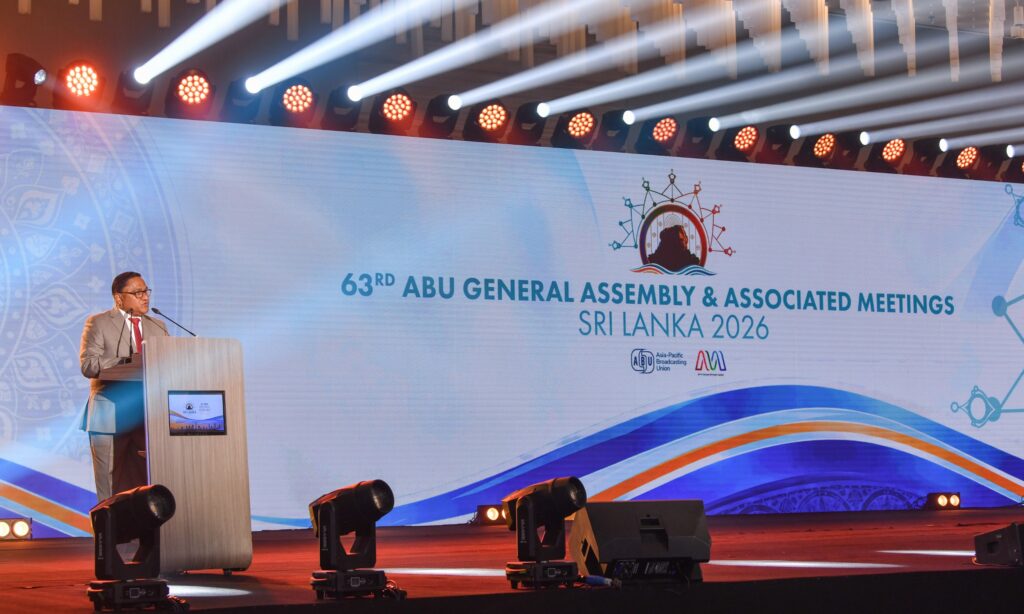
Foreign minister Vijitha Herath addressing the 63rd general assembly of ABU. Image courtesy of President’s Media Division.
Chevaan Daniel, recently appointed vice president of ABU and executive group director of Capital Maharaja Group, was contacted for comment on the controversy. He said his position was the same as that of the government.
In a media release issued on Nov. 2, Sri Lanka Tourism said the ABU general assembly was expected to generate promotional media value exceeding $752,000 (LKR 250 million) through international exposure.
The bureau described the gathering as an opportunity to position Sri Lanka not only as a leisure destination but also as a venue for international conferences and major events, an increasingly important segment of the country’s tourism development strategy.
The Colombo gathering brought together approximately 350 international delegates representing leading media organizations. The ABU has around 225 member organizations across 66 countries, providing a platform for international exposure.
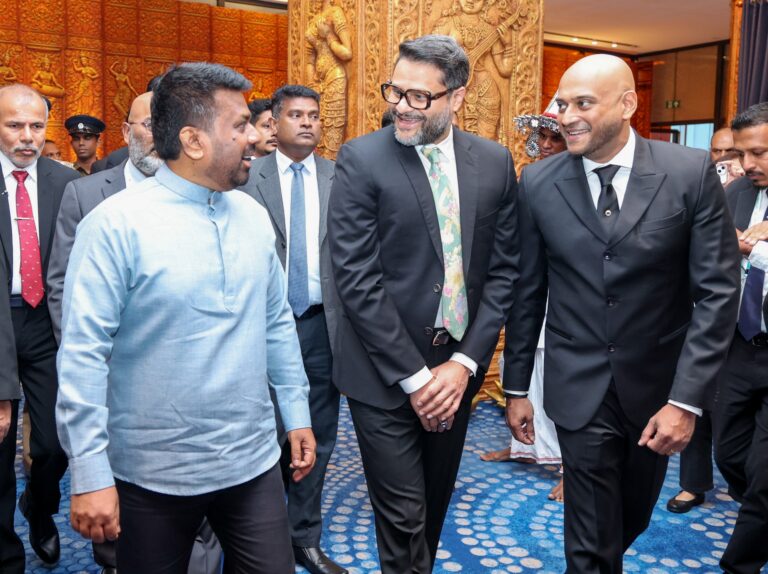
The general assembly’s inauguration was attended by President Anura Kumara Dissanayake, alongside senior government officials.
The controversy also raises questions about the basis on which a private broadcaster was selected to receive substantial tourism promotion sponsorship, the assessment of the anticipated publicity benefits and the mechanisms in place to ensure accountability for the expenditure.
The 63rd ABU general assembly was held in Colombo from Oct. 30 to Nov. 3, 2026.
BannerImage: President Anura Kumara Dissanayake attended the 63rd general assembly of ABU. Image courtesy of President’s Media Division.
This story was written and edited by Gagani Weerakoon. She leads the editorial at the Center for Investigative Reporting (CIR).
This story was produced with support from Report for the World, a global media service strengthening local independent journalism.
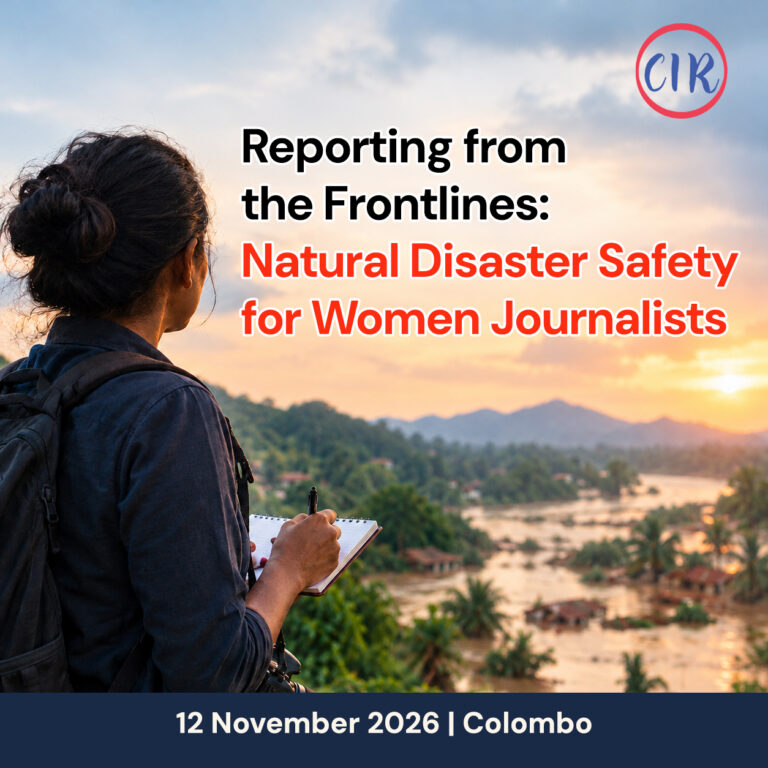
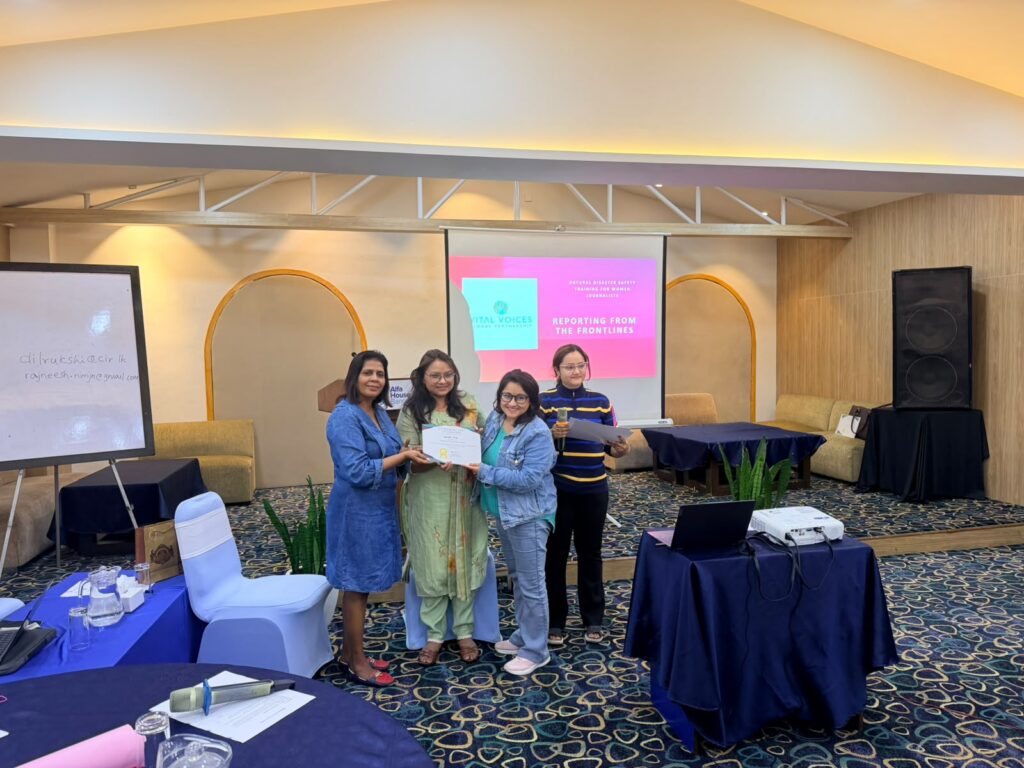
The Center for Investigative Reporting (CIR) Sri Lanka invites applications from women in media and civil society to participate in a full-day, hands-on training on Natural Disaster Safety, scheduled for 12 November 2026 in Colombo.
The training aims to equip participants with practical knowledge and skills to enhance their safety and preparedness when working in natural disaster contexts. It will cover disaster preparedness, safety measures, emergency response, risk management and self-care. Participants will also engage in the practical development of individual natural disaster safety plans, incorporating preparedness, emergency response and personal safety measures.
The training will be conducted in English and is supported by Vital Voices Global Partnership, as part of its global initiative, Crisis Readiness Training for Women Leaders.
A few seats are still available. Interested individuals are invited to send a request to cir@cir.lk, together with two work samples (media personnel only) and a brief expression of interest, on or before 6 November 2026, at 8.00 p.m.
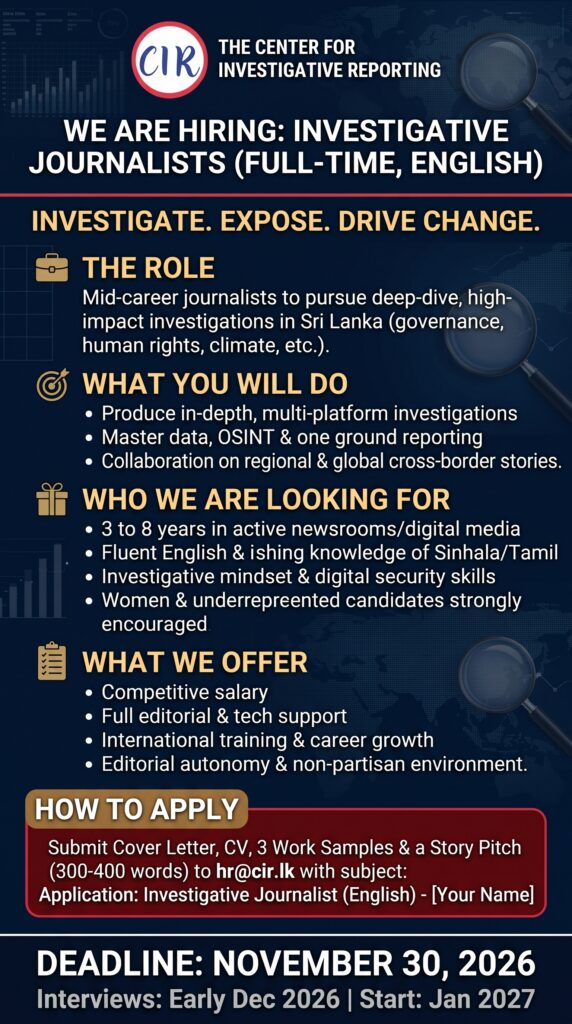
The Centre for Investigative Reporting (CIR) Sri Lanka is seeking experienced journalists to join its team as full-time Investigative Journalists (English).
The positions offer mid-career journalists an opportunity to pursue in-depth, high-impact investigations on issues affecting Sri Lanka, including governance, human rights and climate change.
The Role
Successful candidates will produce in-depth, multi-platform investigative stories, combining data, open-source intelligence (OSINT) and ground reporting. They will also have opportunities to collaborate on regional and international cross-border investigations.
What You Will Do
Produce in-depth, multi-platform investigative reports.
Apply data journalism, OSINT and ground reporting techniques.
Collaborate on regional and global cross-border investigations.
Who We Are Looking For
Applicants should have:
3–8 years of experience working in active newsrooms or digital media.
Fluency in English and a working knowledge of Sinhala or Tamil.
An investigative mindset and digital security skills.
Women and candidates from underrepresented groups are strongly encouraged to apply.
What We Offer
Competitive salary.
Full editorial and technical support.
International training and career development opportunities.
Editorial autonomy and a non-partisan working environment.
How to Apply
Interested candidates should email the following documents to hr@cir.lk:
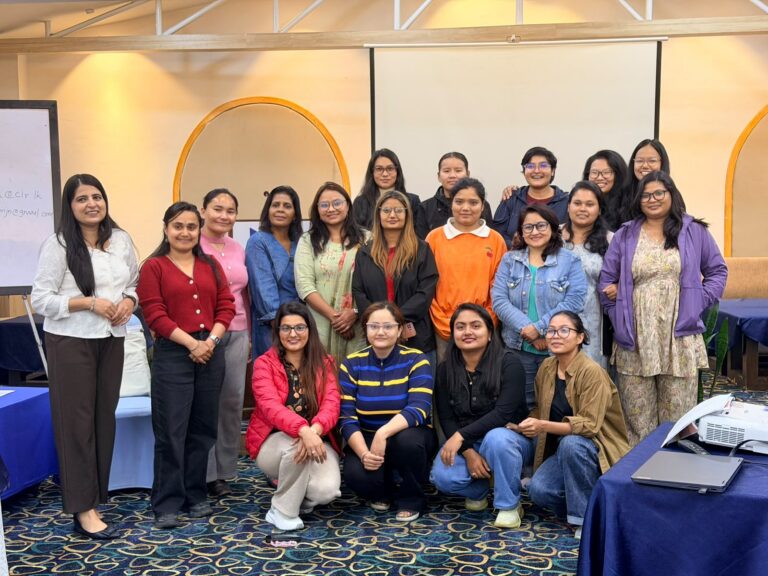
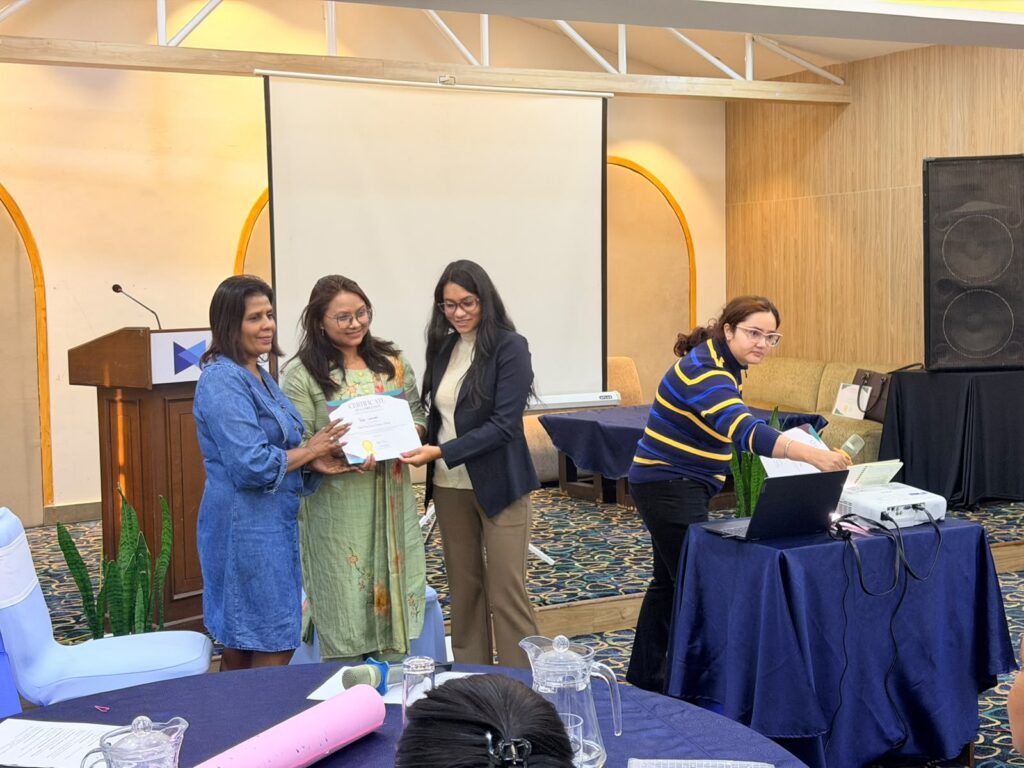
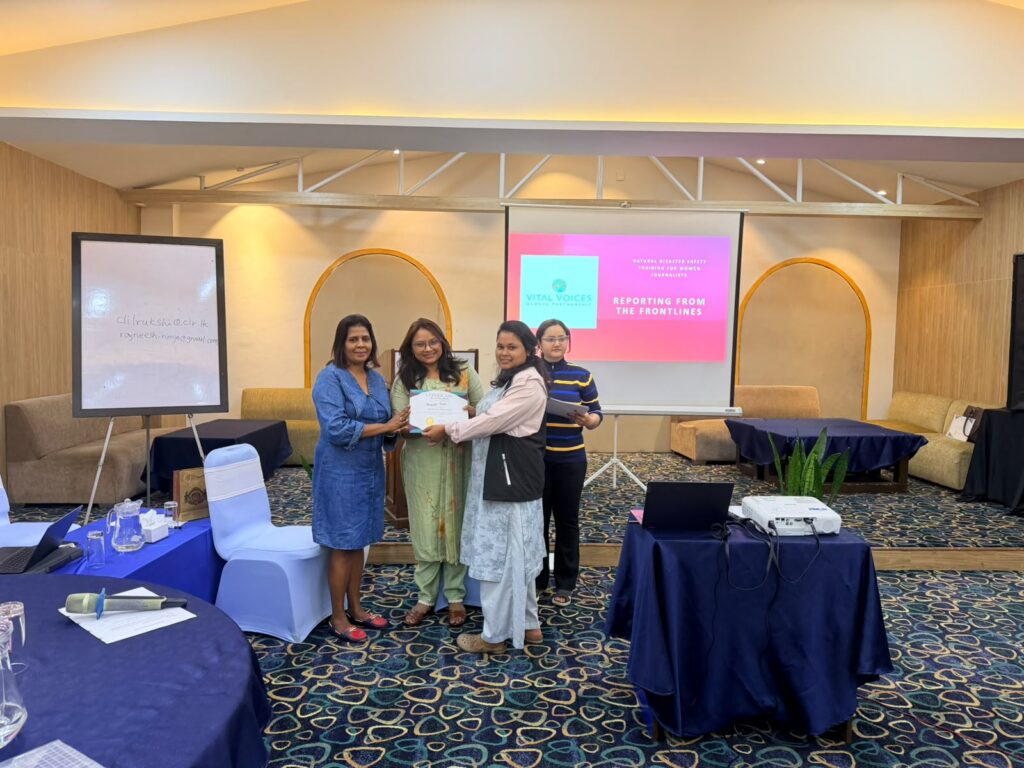
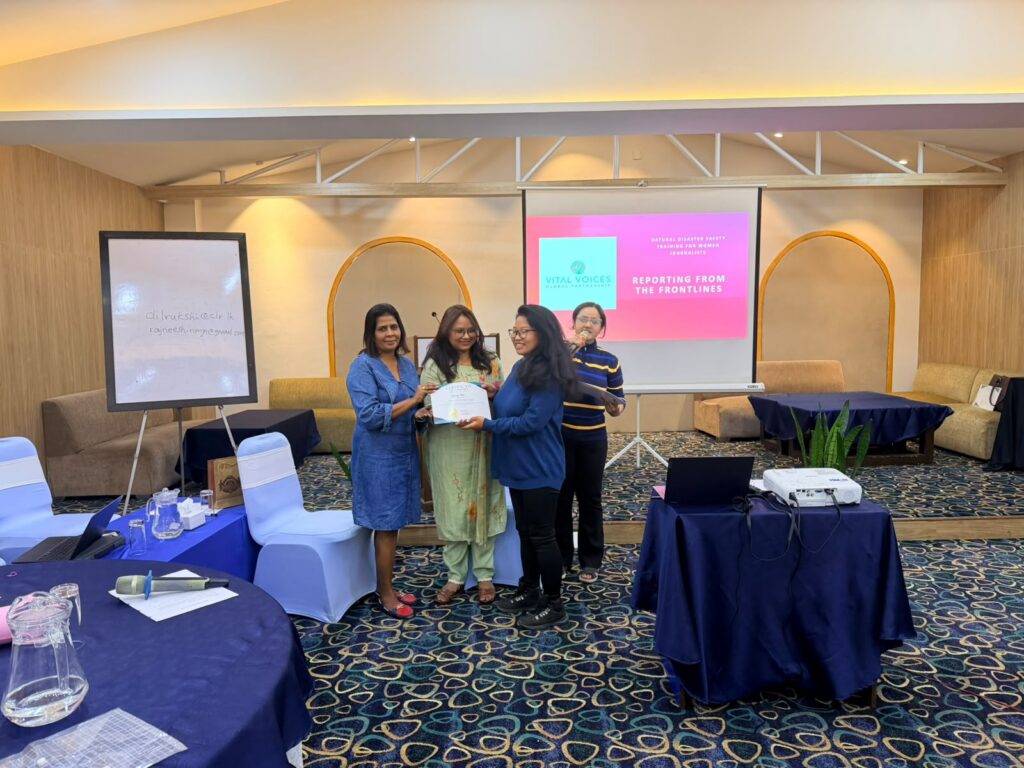
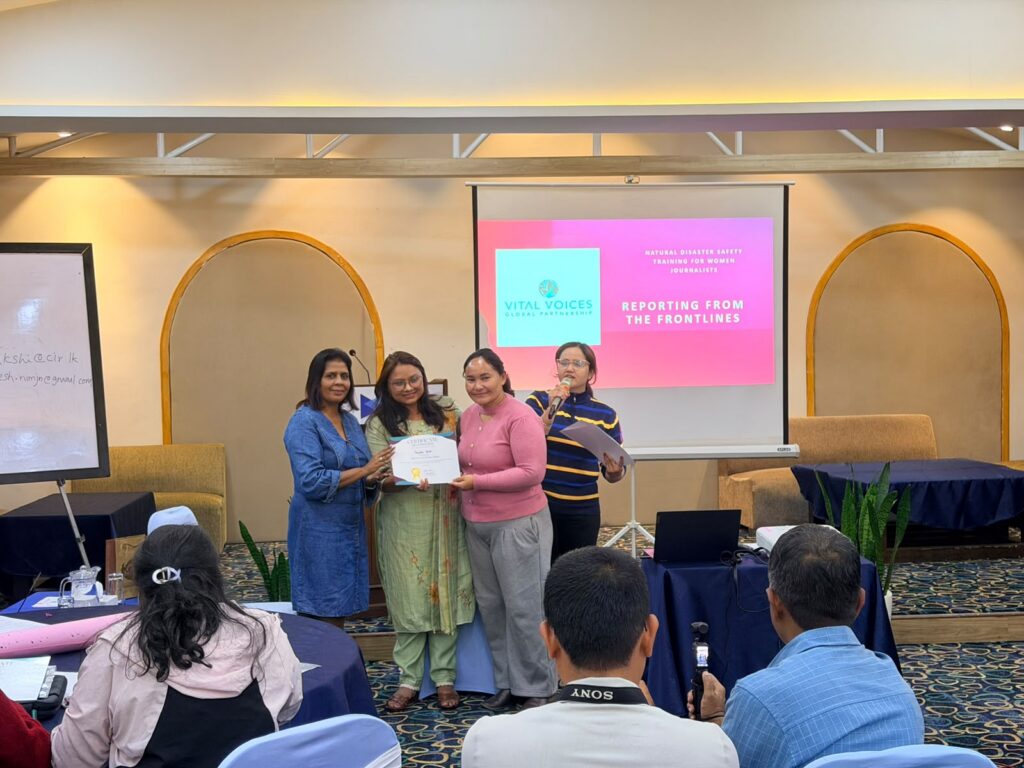
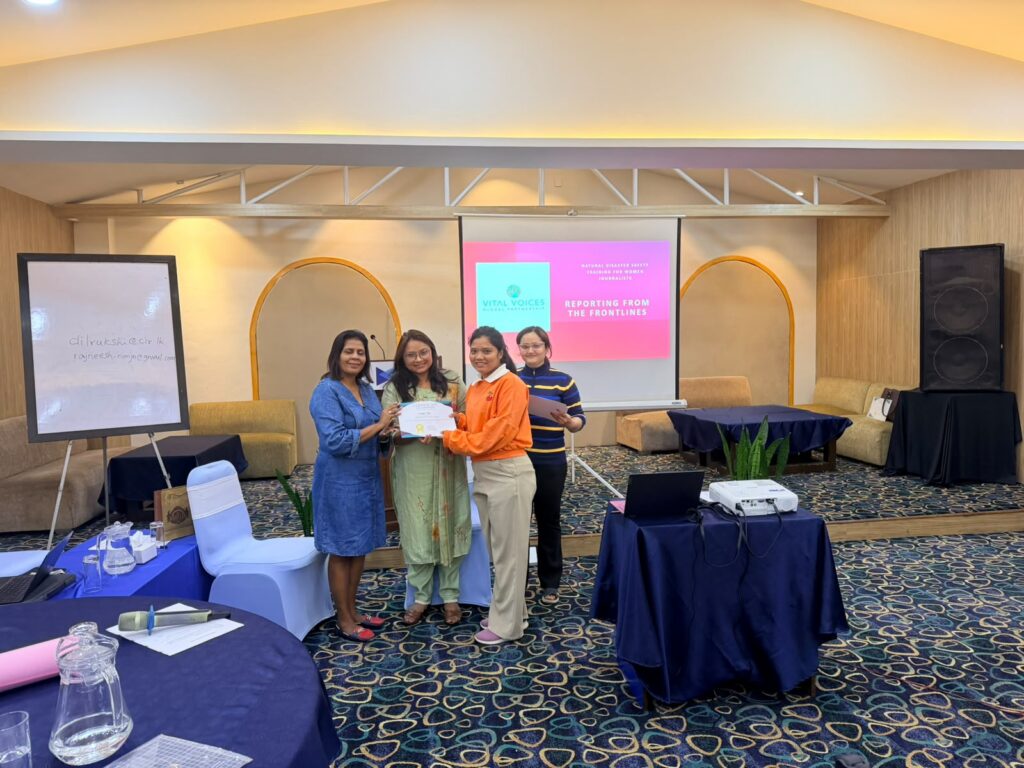
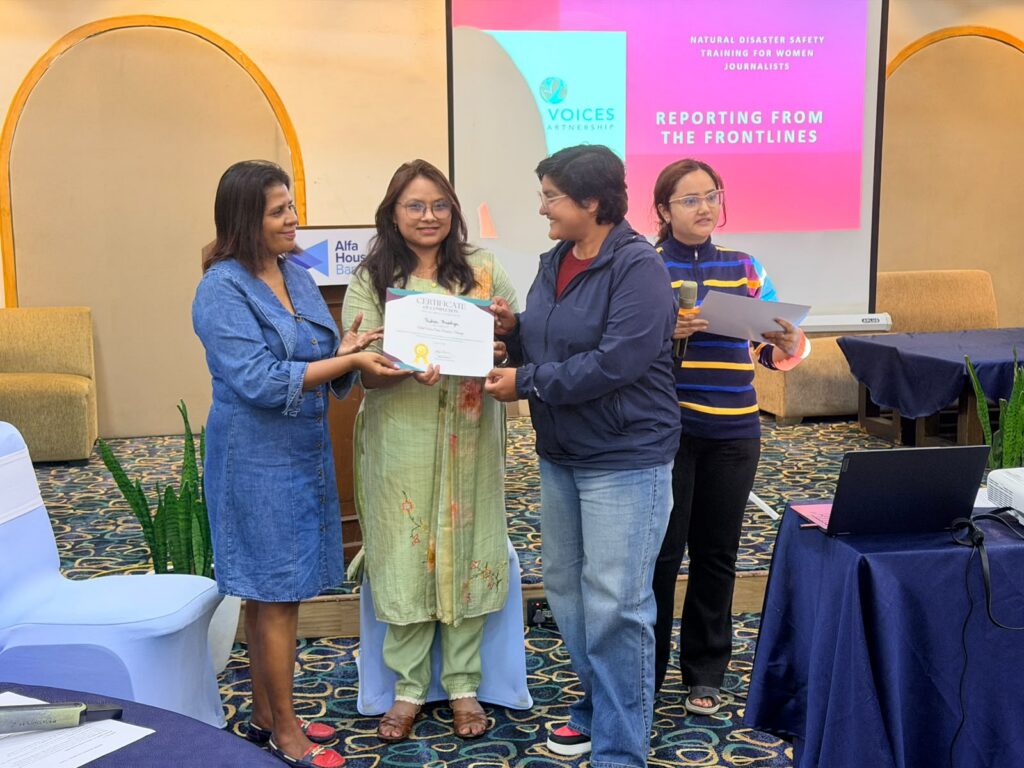
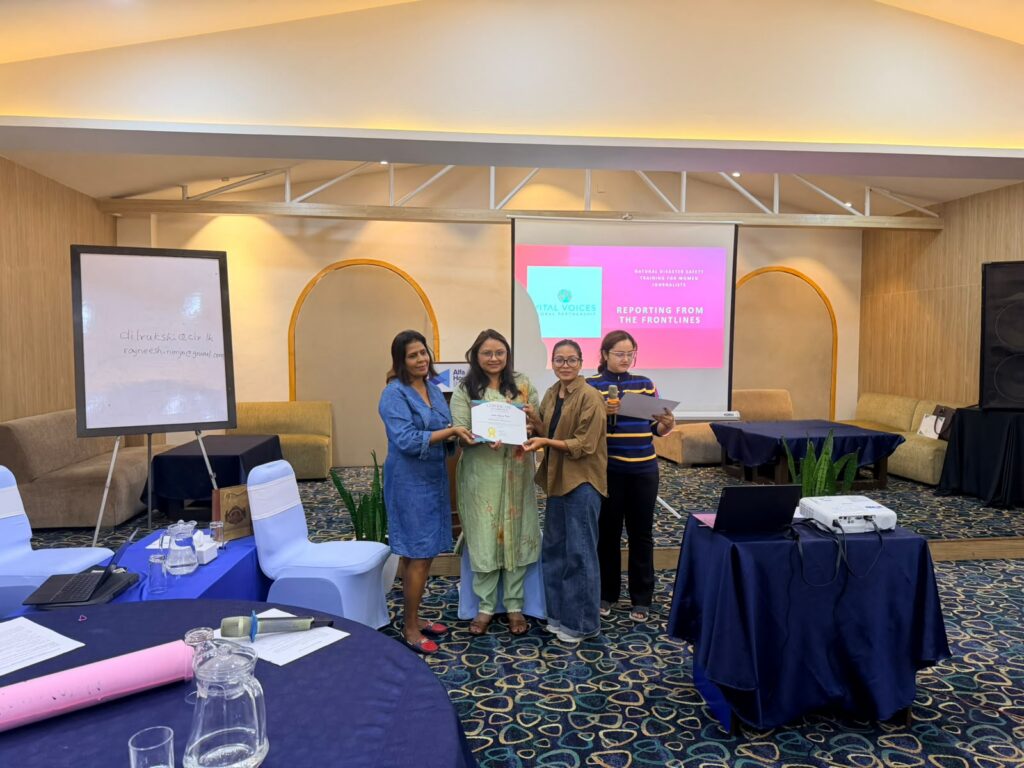
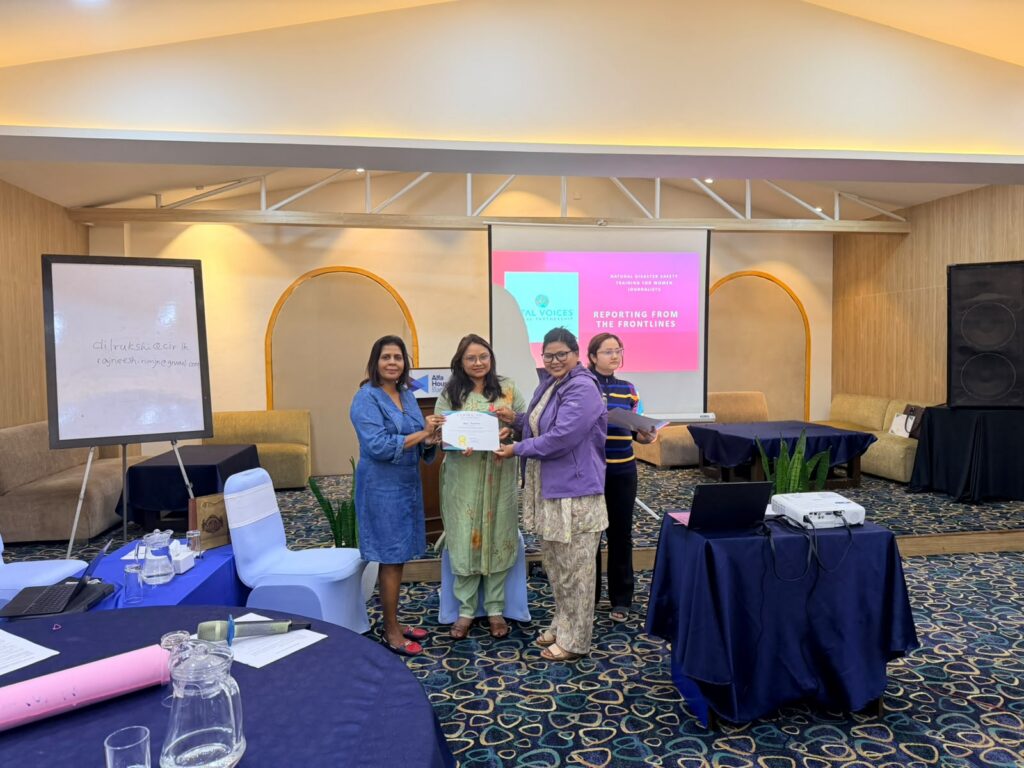
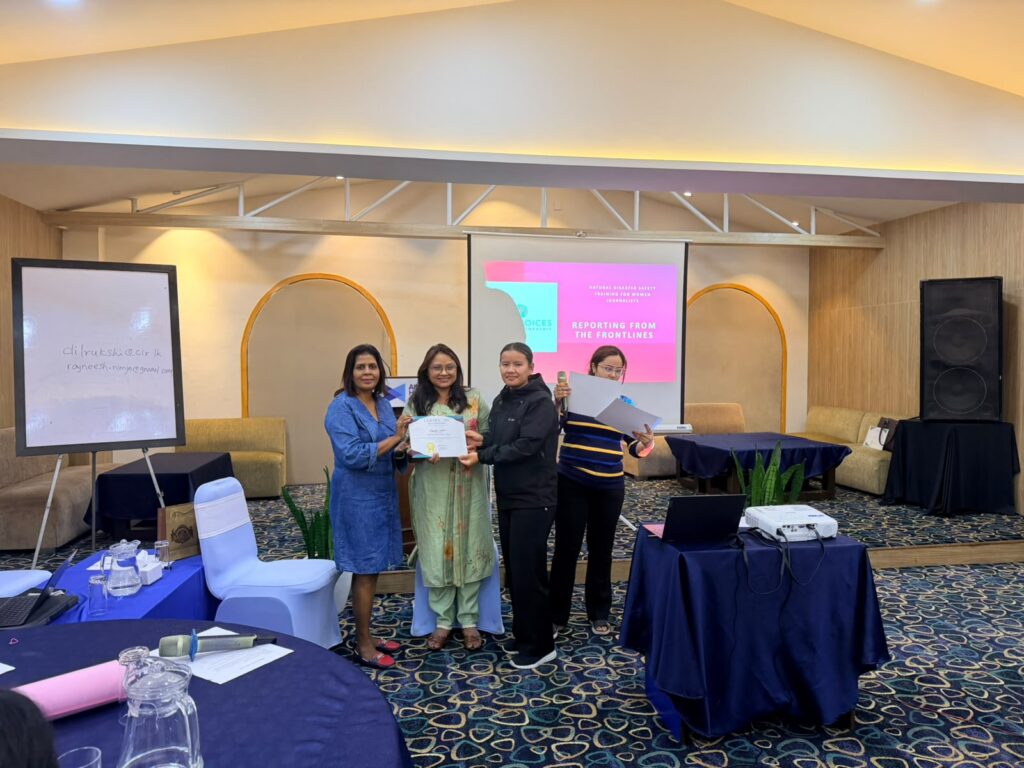
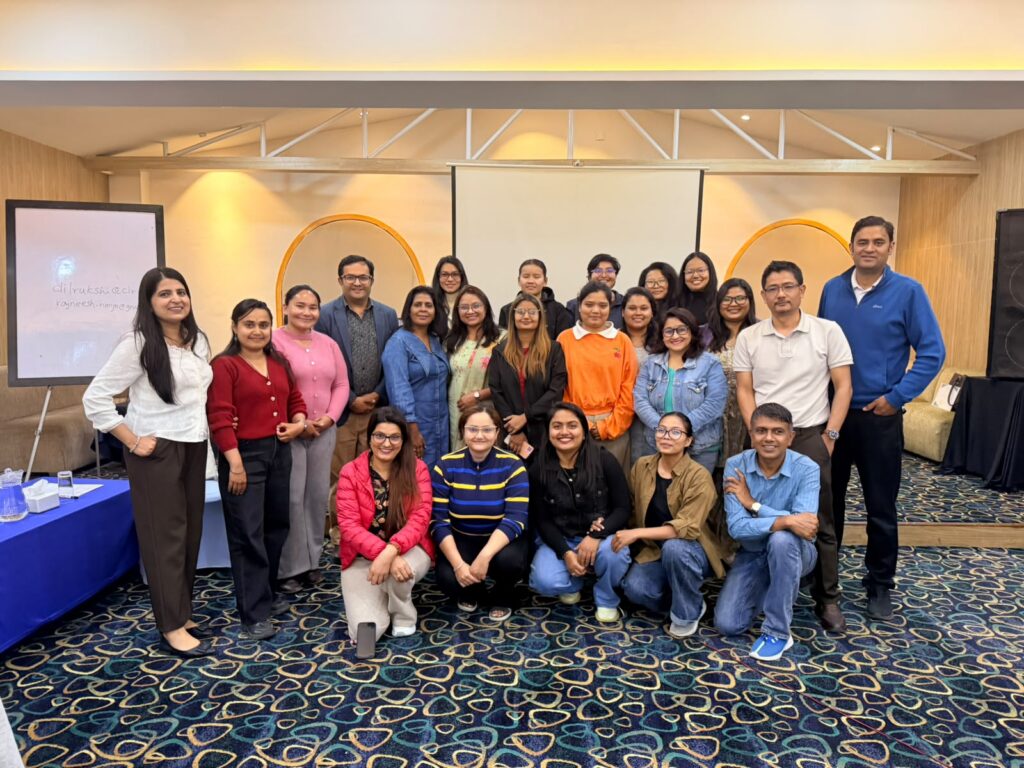
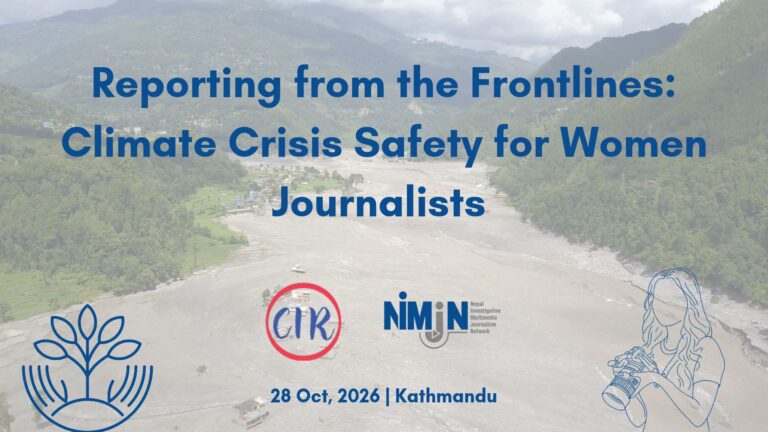
On October 28, the Center for Investigative Reporting (CIR) and the Nepal Investigative Multimedia Journalism Network (NIMJN) brought 20 Nepali women journalists together in Kathmandu for a full-day training for a hands-on training natural disaster safety.
The training covered disaster preparedness, emergency response, personal safety planning, and self-care for journalists working on the frontlines.
The training was supported by Vital Voices Global Partnership, as part of its global initiative, Crisis Readiness Training for Women Leaders.
Colombo’s heritage buildings are being renovated and repurposed amid growing demand for development.
Sri Lanka’s commercial city’s facelift has improved cleanliness and safety, but some citizens feel the buildings have lost their historic character and iconic status.
Despite existing protections and plans for a national heritage list, conservation remains difficult amid regulatory gaps, limited funding and competing ownership interests.
Cabinet approval for a national heritage list was obtained in 2022 and the government announced a renewed initiative in November 2025 to classify tangible and intangible heritage in Sri Lanka. Nearly a year later, the list remains unapproved.
Colombo’s heritage redevelopment plan is in its early stages, with the UDA and World Bank exploring tourism-related uses for historic buildings – director, UDA
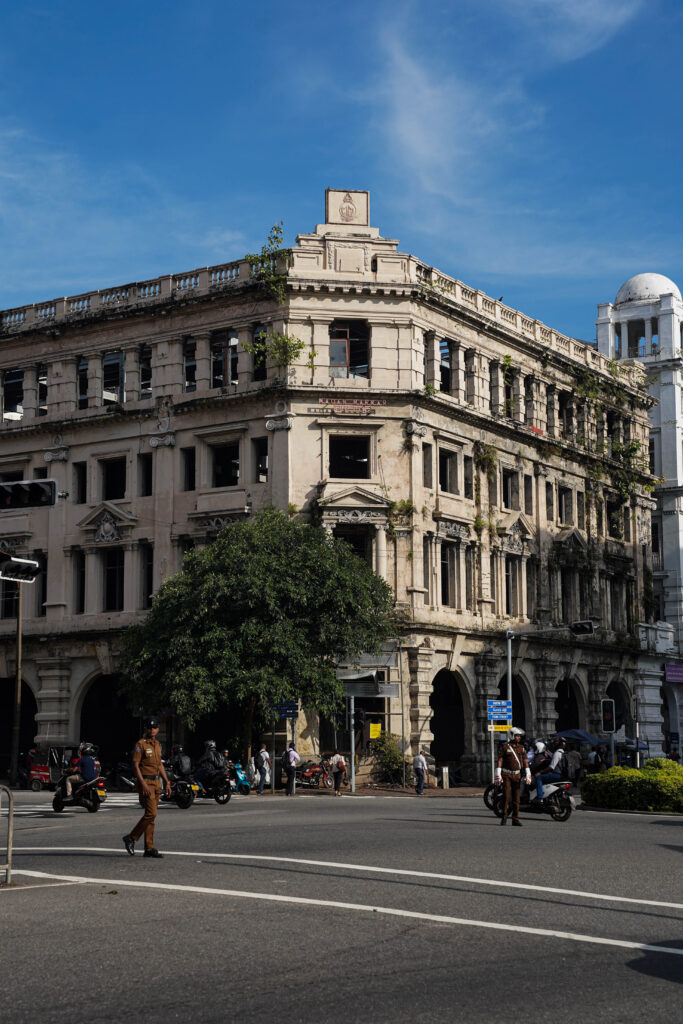
COLOMBO—For decades, Colombo’s oldest buildings have stood strong during wars, political changes, economic growth, and currently, the expansion of the capital. Now, some are being renovated. Others remain neglected. Some have found a new commercial purpose while others sit empty on increasingly valuable land. It raises the question how much of the past can survive these developments?
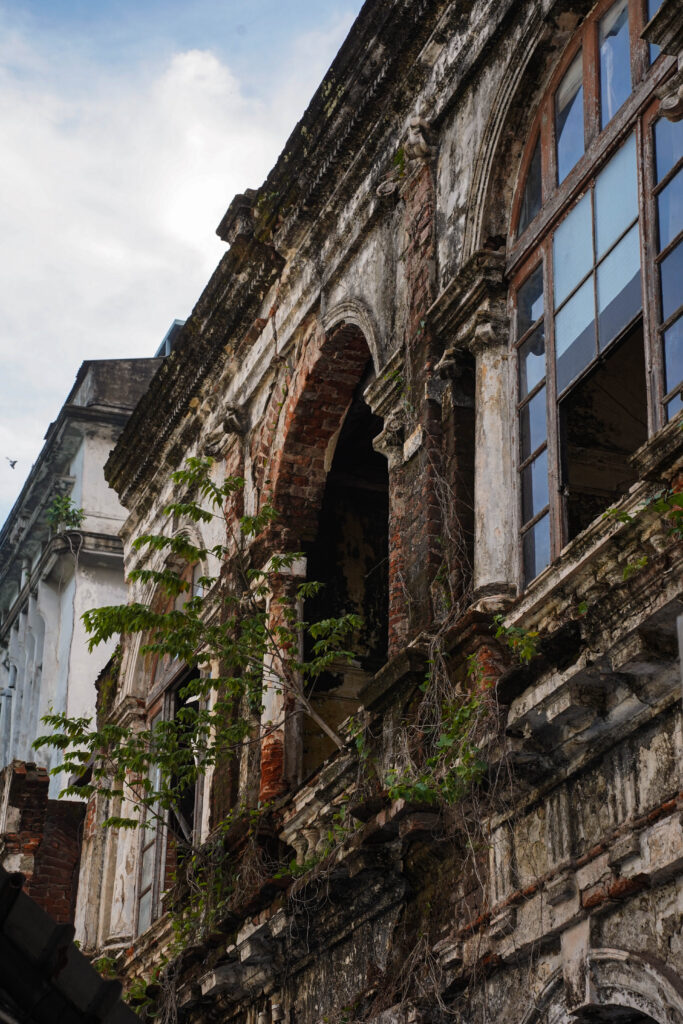
There is a remarkable divide when walking through Colombo metropolitan area. It feels like the city got caught between two centuries. Glass towers are shining in the bright sun, in stark contrast with the crumbling facades of some of the heritage buildings.
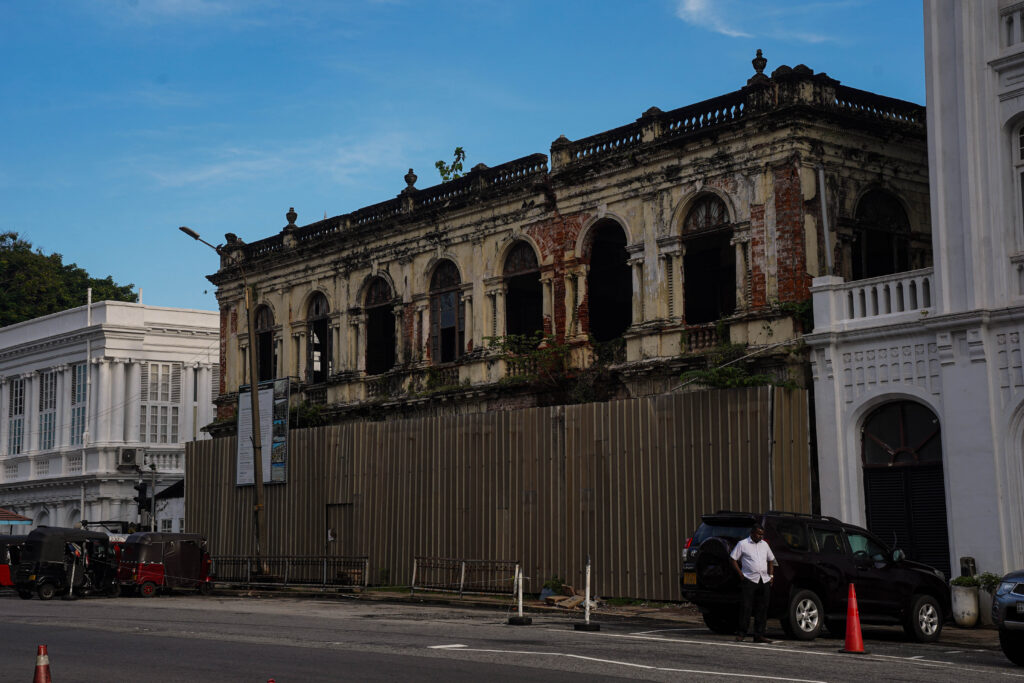
The crumbling facade of Sri Lankans first Telegraphic post office. Image by Evy Coeckelbergs.
Yet, some of the buildings are part of daily life, passed on the way to work, photographed by tourists, used as offices, theatres and railway stations.
Colombo’s heritage buildings reflect the city’s colonial history as a centre for trade and transport and how it has developed over time.
The Urban Development Authority’s Colombo Commercial City Development Plan 2019–2030 identified 62 listed buildings across the Commercial city. It notes that while some are well conserved and economically used, a significant amount is in a dilapidated status and need immediate conservation. The plan also states that most of these buildings are in prime locations with high land values, where pressure for new investments is high.
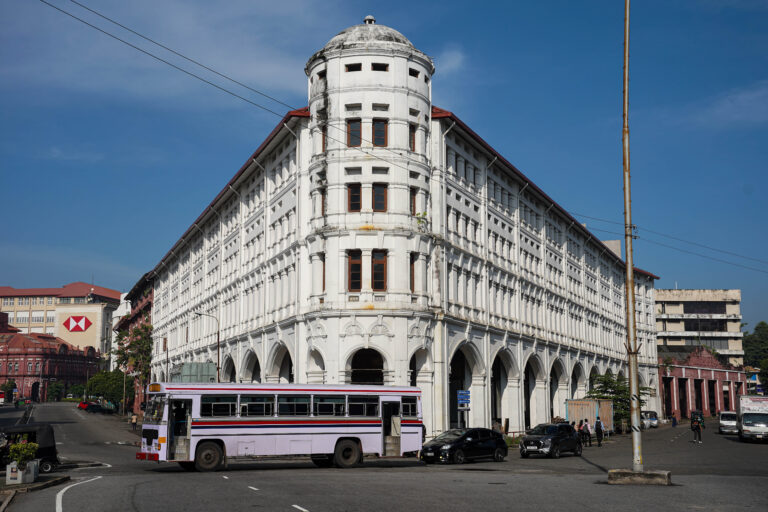
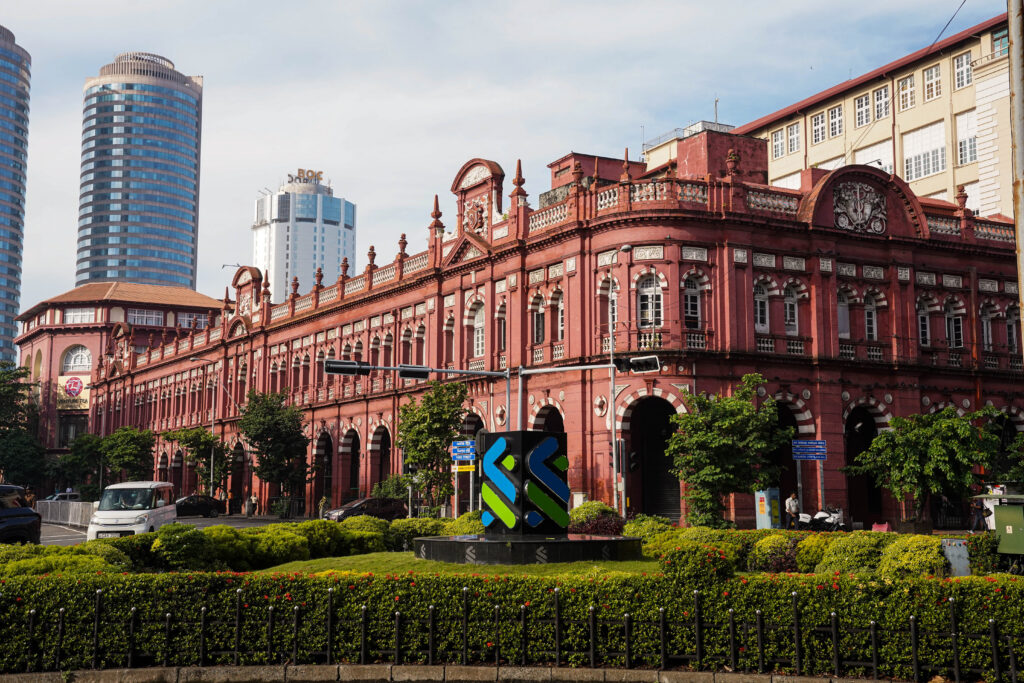
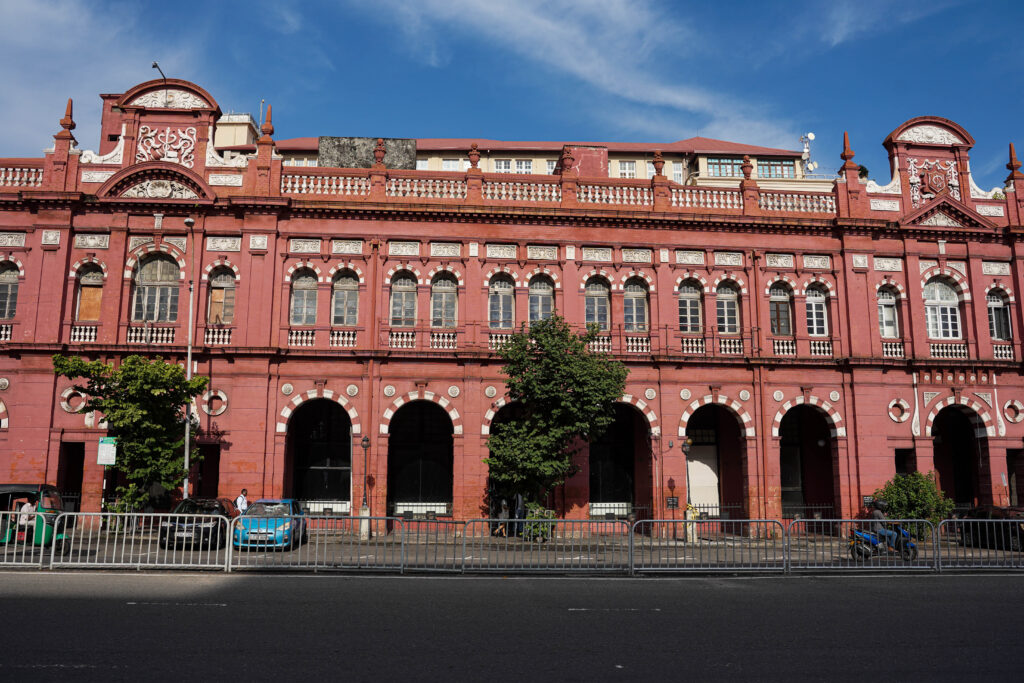
Cargills Building in Colombo Fort. Image by Evy Coeckelbergs.
The UDA’s plan proposed to conserve the identified buildings while enhancing their economic, environmental and social values. Heritage rehabilitation and a heritage trail were among the ideas put forward.
However, the future of many of these buildings remains uncertain, especially with ownership spread over the government, private companies and individuals.
For the heritage buildings to survive, it doesn’t only mean being protected but also to stay part of the life of the city. For many private owners, this means finding a way for an old building to function in a modern city.
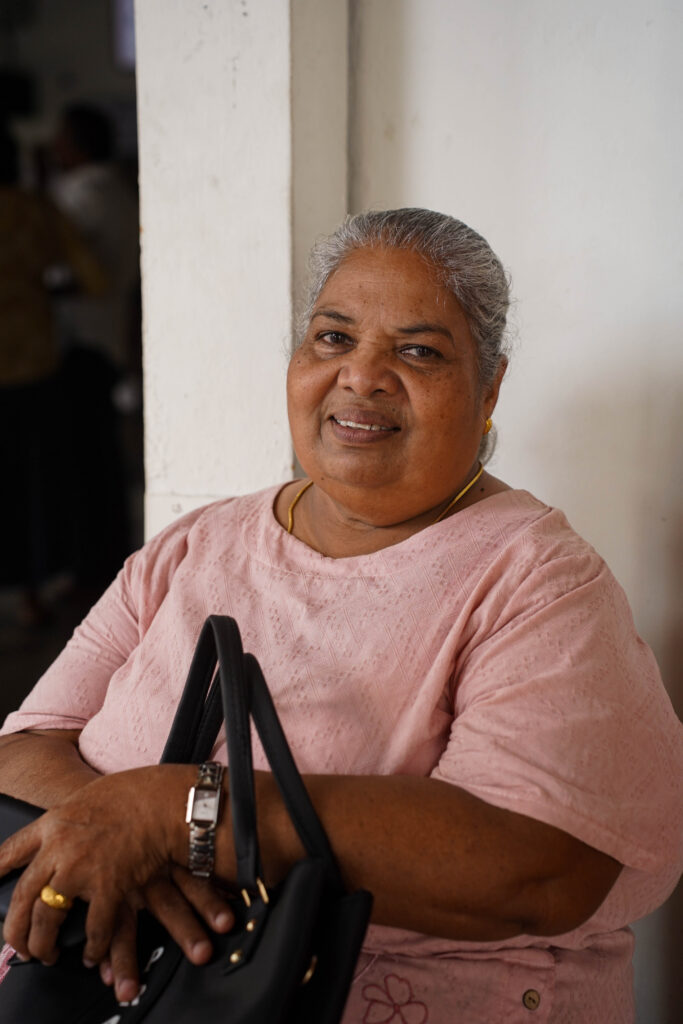
Priyanthi lived in Colombo for 30 years and is now living in her village in Southern Sri Lanka. After years, she returned to Colombo by train to seek medical consultation at the National Hospital Sri Lanka.
“I was so happy to see Maradana station after so many years. Early, this place looked ugly and unclean. Now that it is renovated, I feel it is more people friendly and safe,” she said after witnessing Maradana Station being given a facelift.
Priyanthi sitting in front of Maradana station. Image by Evy Coeckelbergs.
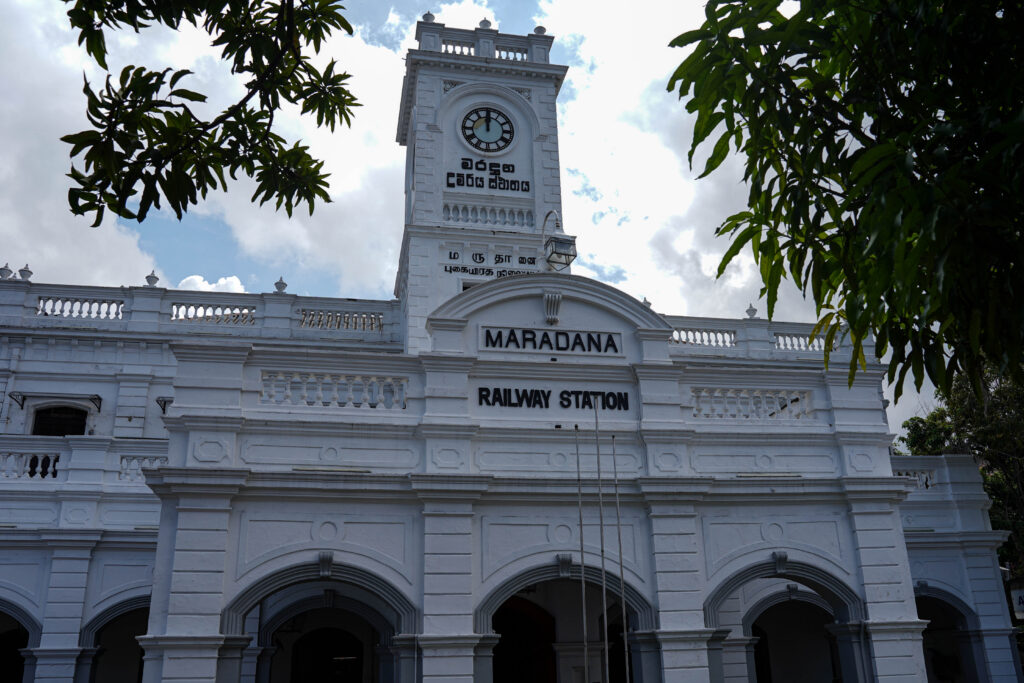
In April 2026, the first phase of the station’s renovation was completed as part of the “Dream Destination” Programme, which aims to renovate 100 railway stations across the country through government, private sector and public funds. The project, sponsored by the Akbar Brothers, the country’s largest exporter of Ceylon Tea, and supervised by the Department of Archaeology, included refurbishing the main entrance, improving sanitary facilities, platforms and landscaping.
Renovated Maradana railway station. Image by Evy Coeckelbergs.
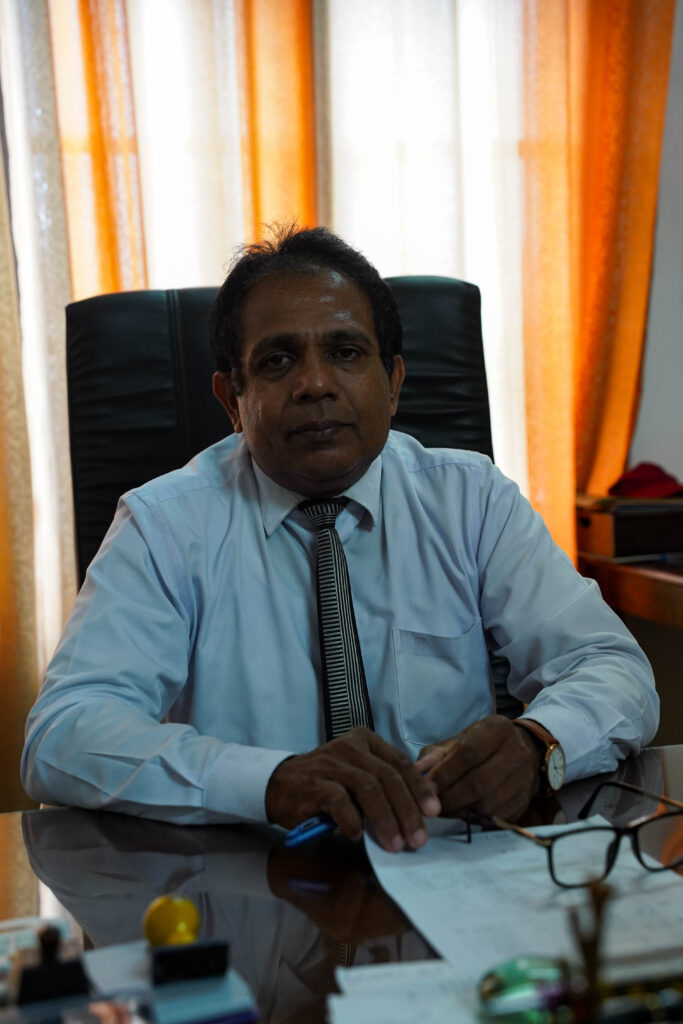
“The renovation took place under the strict supervision of the Archeology Department as we cannot change certain parts of the station on our free will. This building falls under heritage buildings therefore we consulted them even to change the wall paint color,” H.P.K. Pushpakumara, station superintendent of Maradana railway station told the CIR.
H.P.K Pushpakumara, station superintendent of Maradana railway station in his office. Image by Evy Coeckelbergs.
While Priyanthi was elated to see the facelift, Sheik Hussain who has been in the neighborhood for more than seven decades and now runs a small shop near the station feels otherwise.
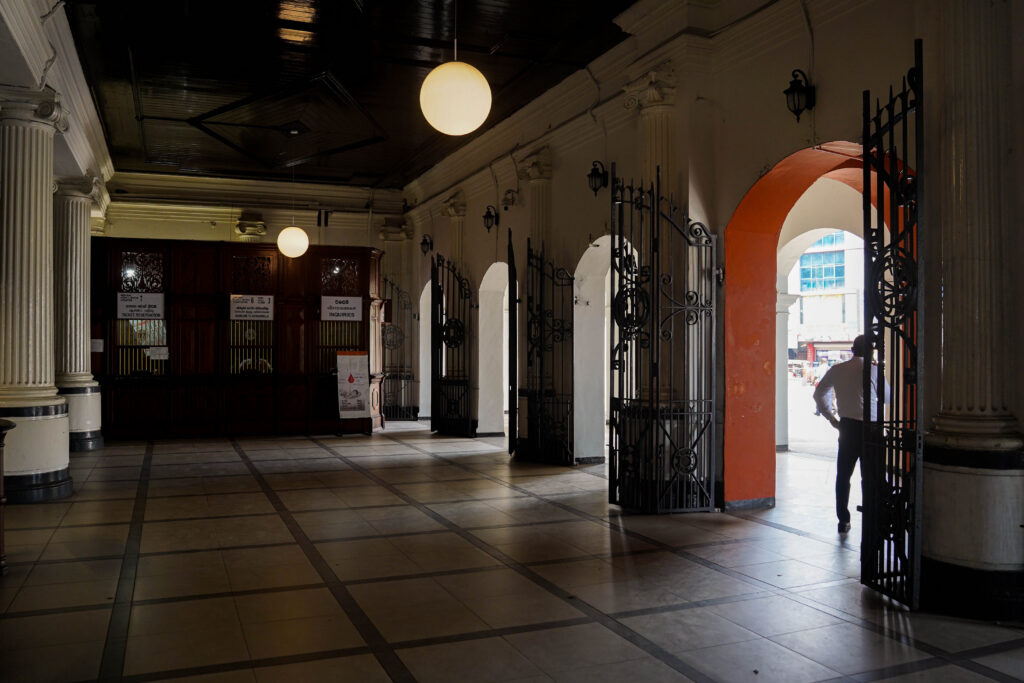
Inside of the newly renovated Maradana railway station. Image by Evy Coeckelbergs.
“The old building carried power. When we looked at it, we also felt proud. I know it looks clean now but that sense of power and pride is lost after the renovation,” he said.
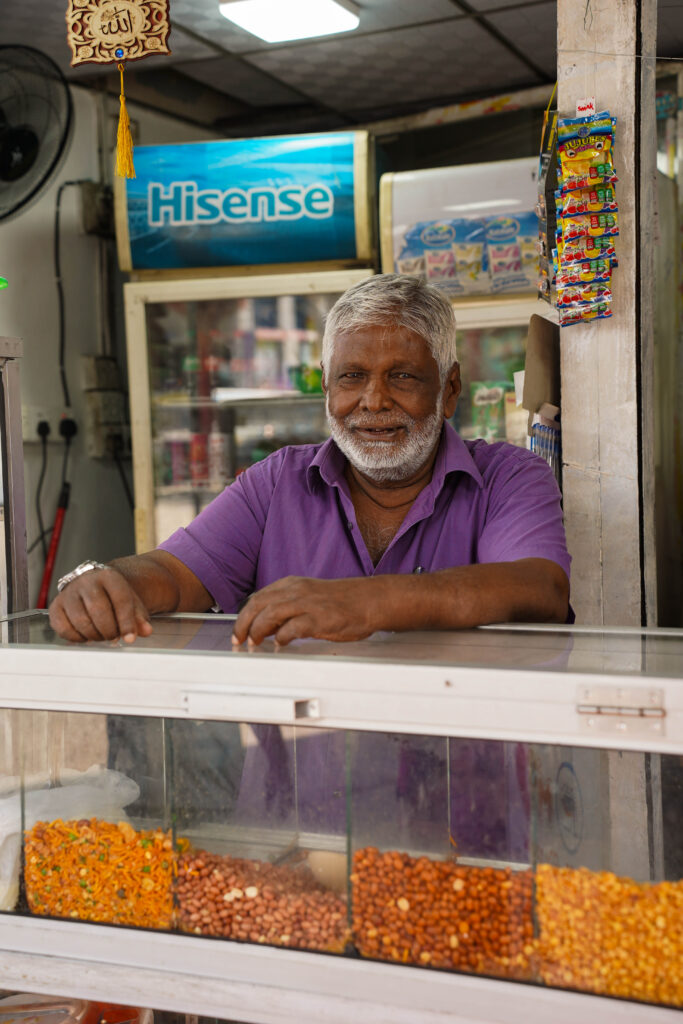
heik Hussain owns a little shop next to the Maradana railway station. Image by Evy Coeckelbergs.
Even though both Priyanthi and Sheik agree that the historical value of the buildings should be maintained, heritage is experienced in different ways.
“There are several buildings in Colombo that carry a part of our history. Those should be properly utilized and maintained but most certainly preserving the original outlook,” Sheik added.
The buildings of Colombo
Colombo offers dozens of heritage buildings from colonial periods.
One of the most recognizable landmarks, the Cargills building, is known for its commercial purpose. The red-and-white building on York street dates back to 1844 when it served as a general wholesale warehouse.
argills building in Colombo Fort. Image by Evy Coeckelbergs.
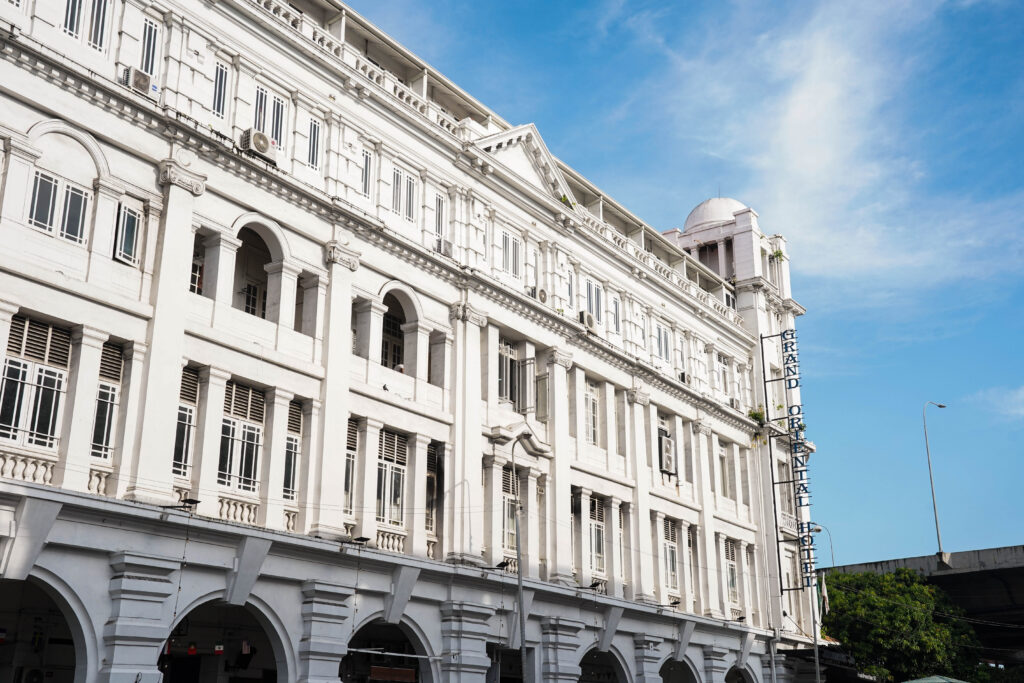
The Grand Oriental Hotel, which initially served as military barracks, celebrated its 150th anniversary last year as one of the best-known hotels in Colombo.
Grand Oriental Hotel in Colombo Fort. Image by Evy Coeckelbergs.
Along Duke street is Sri Lanka’s first Telegraphic Post Office built in 1850 is awaiting renovations for the betterment of the tourism industry.
The Telegraphic Post Office awaiting renovations. Image by Evy Coeckelbergs.
All of these may have different owners, but they face a similar challenge: remaining useful while also representing their historical value.
The privately owned Macan Markar building Colombo Fort offers a totally different possibility.
The building, purchased in July 1944 by the Macan Markar family of Galle, is in poor condition after years of non-occupation and litigation.
The Macan Markar building is in poor condition. Image by Evy Coeckelbergs.
Now it’s being given a different use.
According to Samsi Deen Macan Markar, director of O.L.M. Macan Markar Ltd, the building is now being restored through a private arrangement. Hatch Works Ltd is leasing the building and funding the restorations. By 2027, the building is expected to be turned into co-working and meeting spaces while the original architecture will remain.
For the family, it allows the building to generate an income while preserving the features that give the building its identity. “Historical value is very important,” he says. According to Macan Markar, turning the building into co-working spaces, will not only generate an income for them but it will also contribute to Colombo’s economic growth.
But his experience raises a larger problem.
Macan Markar mentions that there are plans and organizations working on heritage but maintaining and restoring buildings remain difficult.
“There are plans”, he said, “but it’s not properly regulated and they are obviously short of funds.”
But “heritage” doesn’t always mean the same thing legally. Not every building fall under the UDA’s heritage inventory and they fall under different forms of protection, ownership and responsibility.
Laws and their gaps
Sri Lanka already has legal protection for historical monuments, archaeological sites, and cultural artifacts under the Antiquities Ordinance l. It regulates restoration, repairs and alterations. However, ICOMOS raised concerns that the existing framework does not recognise all forms of heritage, potentially leaving buildings of historical significance without protection.
In Nov. 2025, the government announced a national heritage list covering both tangible and intangible heritage to establish the criteria to identify and classify national heritage. In 2022, then minister of cultural affairs Vidura Wickramanayake obtained Cabinet approval to create this list.
Nearly a year later, that national list still hasn’t been approved.
More recent plans are linked to tourism.
“I personally believe we should not overtly redo or renovate heritage buildings to make those commercially viable. They are the living proof that the Portuguese, the Dutch and the British came to our country. It is part of our history,” Farhan Hussain, a small-scale businessman said.
Farhan Hussain in front of the Maradana railway station. Image by Evy Coeckelbergs.
Farhan said there is no harm in utilizing those buildings for tourism purposes while preserving its originality.
“There are at least 10 foreigners daily who come to us and ask what they could explore in Colombo. If these heritage buildings could carry little museums which state what it was earlier, who was the original owner and how it evolved and create a small video of even 30 seconds and show it to passengers in SriLankan Airlines that would be a great opportunity. Now see the Gaffoor building. The family was into gem business and he donated the building. The least you could do is to respect his dream and put it to good use with due credits to him or the family,” he added.
The World Bank’s THRIVE Colombo proposal is based on the idea of making Colombo a stronger tourist destination while retaining its heritage. According to media reports, President Anura Kumara Dissanayake is currently reviewing plans with the Fort area at the center of the proposal. Plans are in place to preserve its historically significant buildings and monuments while implementing a systematic traffic management plan. By establishing links between Colombo Port City and cruise ships arriving at the Port of Colombo, the project is expected to make a significant contribution to the national economy.
Thushari Thilakarathne, director of project management for the Western Region at the Urban Development Authority (UDA), told CIR that the project was still in its early stages.
“We are currently working on the master plan and developing a vision proposal for the project in partnership with the World Bank. We are looking at heritage buildings, including the old Town Hall and the post office, to identify how they could be used to support tourism rather than for purely commercial purposes. We are still working out the timeline for the project,” she said.
It shows how Colombo’s heritage is increasingly being viewed not only as something to preserve, but also as an economic and tourism asset. With this plan on the table, it represents another attempt at intertwining Colombo’s heritage with its economic future. However, the question remains: how much of Colombo’s past can be a part of its everyday future?
Banner Image: Gaffoor building in Colombo Fort. Image by Evy Coeckelbergs.
Journalist associations say that press freedom remains a major concern across Asia, where the media faces restrictions in covering politically sensitive events and protests.
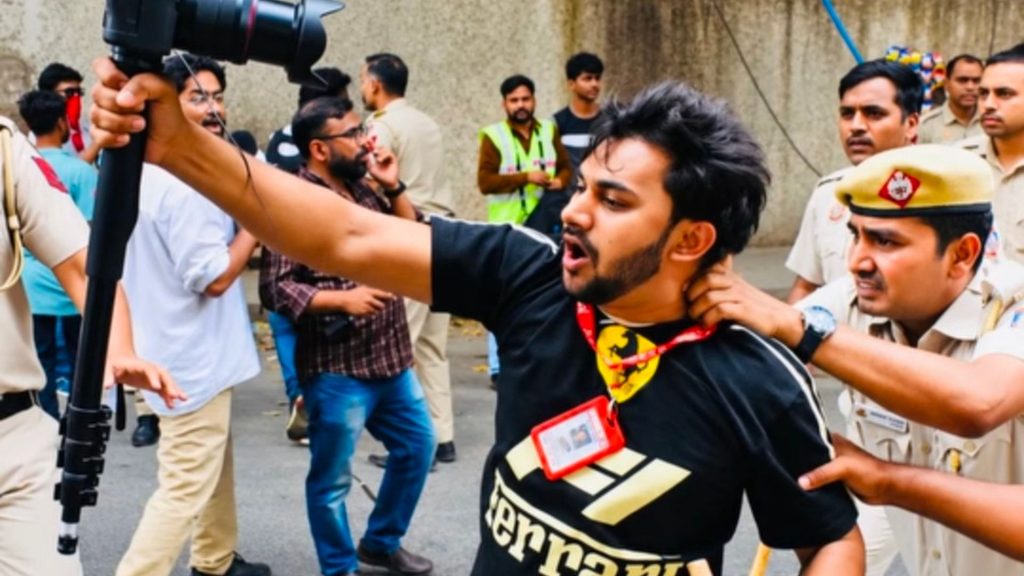
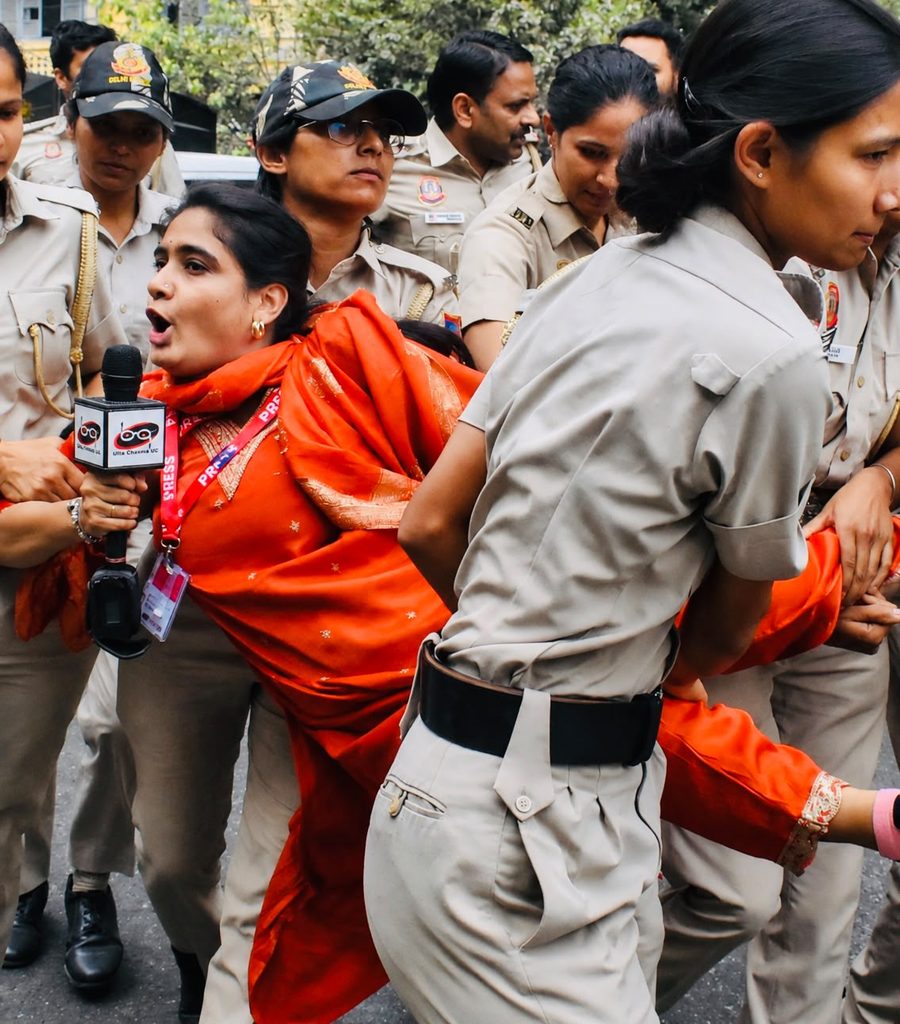
“I was put in a bus. I showed them that I have an ID card and a mic ID, and asked them why I was being detained. But they didn’t want us to show how protesters were being manhandled,” said 28-year-old Pragya Mishra, who runs a news outlet called Ulta Chasma uc.
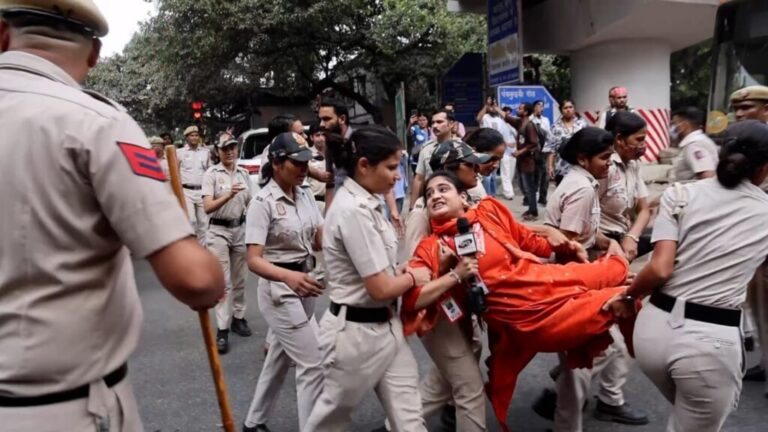
On October 11, 2026, Mishra was covering the protests against Chief Election Commissioner (CEC) Gyanesh Kumar at RK Ashram in Delhi. While reporting, Mishra says her cameraperson Anuj Kumar (23) was pulled by his hair by police personnel. When she went to protect him and inform the police that they were from the media, she was also forcibly put inside a bus with a few other journalists.
She told Asian Dispatch that she was being taken to a detention center in Rajendra Nagar. The bus, however, was intercepted and stopped by other journalists. She says that the police eventually dropped them at Connaught Place.
Anuj Kumar, 23, held by police personnel at RK Ashram on October 11, 2026. Image courtesy of Ulta Chashma uc.
Mishra was not the only journalist who faced police action during the recent protests held across the country against Kumar over the alleged irregularities in the Special Intensive Revision (SIR) of the electoral rolls.
What are the protests about?
The protest against CEC Kumar is linked to the alleged irregularities in the ongoing SIR process, which has reportedly resulted in the deletion of around 13 crore names from electoral rolls.
It gained momentum after a report published by The Indian Express dated September 24 found that Election Commissioners Sukhir Singh Sandhu and Vivek Joshi had formally objected at least 14 times over a 10-month period. The objections were related to electoral rolls, changes to Form 6, and handling of the electoral-roll data.
The opposition parties, including the Indian National Congress (INC), have also levelled allegations of vote theft and demanded the resignation of CEC Kumar.
According to the Committee to Protect Journalists (CPJ), at least 43 instances of journalists being detained were recorded. Journalists from several news organisations such as The Wire, Scroll, The Quint, Newslaundry, as well as freelance journalists were detained — some were even heckled, assaulted, and forced to delete what they had documented on the ground.
The Press Club of India, along with other journalists’ associations, condemned the detentions and said that the police took the step even after journalists displayed their press cards. It further mentioned that the police seized the phones and reporting equipment of some of the journalists. The statement referred to the developments as a “blatant attack on the freedom of the press”
Commenting on the situation, Reporters Without Borders (RSF) told us, “What we are witnessing is not simply excessive policing during demonstrations, it is part of a broader pattern of restrictions that undermines the ability of journalists to report freely on matters of public interest, particularly when their reporting exposes the conduct of the authorities.”
The repression that happened in Delhi reflects an increasingly hostile environment for journalism in India, where the authorities are using a combination of police repression, surveillance, judicial harassment, internet shutdowns and online censorship to obstruct the coverage of protests and restrict access to information.
Reporters Without Borders (RSF)
RSF is an international non-profit working towards protecting the rights of journalists/press. According to their 2026 World Press Freedom Index, India ranks 157 out of 180 countries in press freedom. The body also highlighted that press freedom remains a major concern across Asia, where the media faces restrictions in covering politically sensitive events and protests.
More Journalists in Jail in Asia Than Any Other Region
CPJ’s annual report on jailed journalists, released in January 2026, noted that 330 journalists were behind the bars globally as of December 1, 2025. Of these, one-third were in Asia — China and Myanmar were found to be the leading jailers in the region. It’s important to note that this number from Asia excludes jailed journalists from Central and West Asia (referred to as the Middle East in the graph). Those are marked separately in CPJ’s database.
Speaking to Asian Dispatch, Kunal Majumder, Asia-Pacific program coordinator, Committee to Project Journalists (CPJ), said that journalism is under attack across the region and added, “In South Asia, the focus is largely on over-regulation of the online space; apart from SLAPP [Strategic Lawsuits Against Public Participation] suits, physical violence remains a grave problem.”
Expressing concern about the situation in India, Majumder said that India has a responsibility to uphold press freedom and “serve as a role model for other countries in the Global South”.
This pattern where journalists have faced action, have been assaulted, detained, or arrested by law enforcement agencies is consistent across other Asian countries.
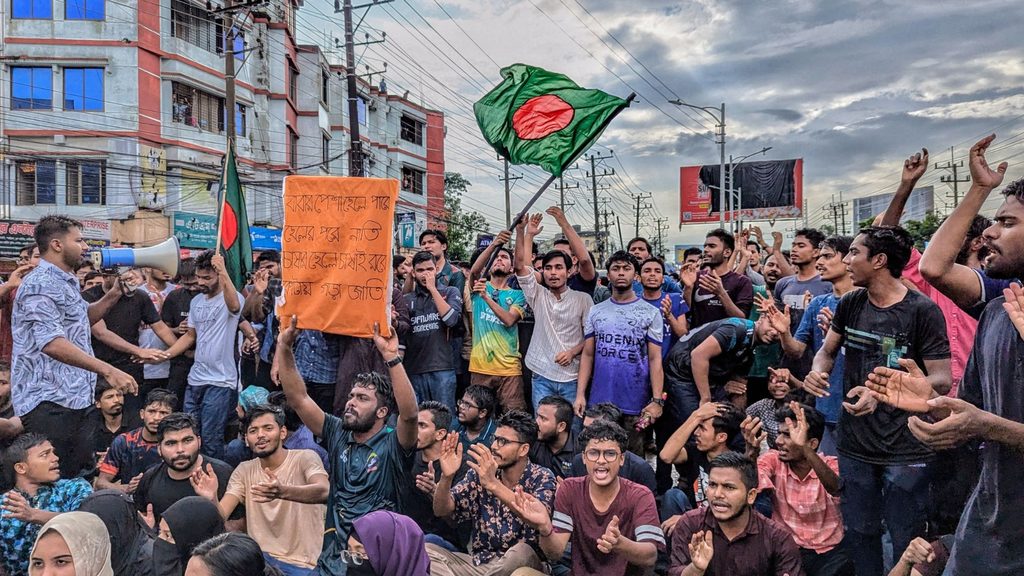
For instance: the situation for journalists in Bangladesh during the 2024 July uprising was alarming. The International Federation of Journalists (IFJ) estimated that at least 160 journalists were reportedly injured while covering the nationwide protests as of July 31, 2024.
Students and people protesting during the July uprising movement in Bangladesh in 2024. Image courtesy of Mahmudur Rahman Chowdhury Nayeem/Wikimedia Commons.
RSF noted that five journalists were allegedly killed by police bullets between July 15, 2024 and August 5, 2024, and one was killed during clashes between two factions.
CPJ, in a report published on July 26, 2024, detailed the reports of police attacks on journalists. It said that on July 16, 2024, police personnel fired metal pellets at journalists Mehedi Mamun, Abdur Rahman Khan Sarjil, Wajahatul Islam, and Jubayer Ahmed. This happened despite them identifying themselves as journalists.
The next day, July 17, 2024, Abdullah Al Mamum, a correspondent with Prothom Alo, was reportedly beaten with rifles and batons by police personnel while he was recording the police action against students. Mamum told CPJ that he showed them his press card but he was beaten and the police fired a rubber bullet at him while he was trying to flee.
More recently, Ernest Cruz, a reporter working with Bulatlat in the Philippines, was assaulted by the Quezon City Police on October 19, 2026, while he was covering a protest led by farmer groups. According to RSF, Cruz was assaulted despite identifying himself as a journalist.
A similar incident happened on September 21, 2025, when eight journalists covering the anti-government protests in Manila were harassed, assaulted, and obstructed. They alleged that police used shields to deliberately obstruct media coverage. The usage of tear gas and water cannons near to where journalists were also posed direct harm to their safety.
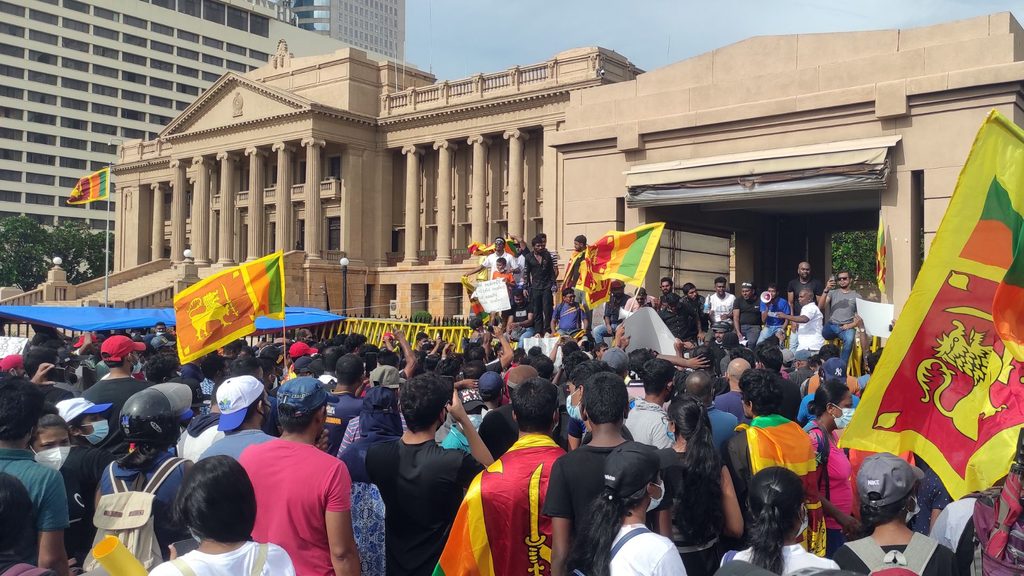
At least nine journalists in Sri Lanka were injured during the anti-government protests in 2022. A freelance journalist, Sumedha Sanjeewa Gallage, was reportedly attacked by the police while he was covering a demonstration outside the president’s residence. As per reports, he lost partial vision in his right eye following the attack.
Anti-government protest in Sri Lanka on April 13, 2022 in front of the Presidential Secretariat. Image courtesy of AntanO/Wikimedia Commons.
The 2026 CPJ analysis also found that the greatest incidence of torture and beatings of journalists has occurred in Iran since 1992. Between 2022 and 2025, 71 journalists were imprisoned in Iran.
‘Journalists Deterred From Doing Their Jobs’
Mishra, who was bundled in a bus in New Delhi on October 11, highlighted that these detentions happened despite the Supreme Court clearly stating that lawyers and journalists should be allowed to work without hindrance.
“The Supreme Court had ordered that journalists, lawyers, and doctors should be allowed to continue their work…I pointed this out, but they [police] weren’t listening,” Mishra says. She also told us that she repeatedly asked the police personnel not to carry her and that she could walk to the bus, but nobody heard her.
Pragya Mishra being carried by female police personnel on October 11 while covering protests. Image courtesy of Ulta Chashma uc.
Speaking about the detentions and the force with which journalists were met, RSF said, “The circumstances strongly suggest that journalists were targeted precisely because they were documenting what was happening on the ground: the police’s brutal treatment of protesters. Several journalists were detained while filming arrests or acts of police violence. Others had their phones seized, their cameras damaged or were pressured to delete their footage. This raises serious concerns that the objective was to prevent images of police operations from reaching the public.”
Several journalists, who were covering the protests, also highlighted on social media that the police was asking for government accredited press cards and not recognising cards issued by independent organisations.
“This raises fundamental concerns, press freedom cannot be conditional on government approval, and accreditation requirements must never become a tool for excluding independent or critical voices. The right to report does not depend on whether a journalist works for an established newspaper, an independent online outlet or a digital platform. All journalists must receive equal protection, regardless of their employer and professional status,” RSF said.
In Bangladesh, IFJ documented an expansion of gatekeeping intended to restrict the media’s ability to report. The Press Information Department had revoked the accreditation of around 167 journalists between October 29, 2024 and November 7, 2024.
The United Nations’ Human Rights Committee, in 2020, adopted general comment number 37 that noted that the right to peaceful assembly should be recognised. It also highlighted the obligations of state parties regarding the same.
It said that law enforcement officials must respect and ensure the exercise of fundamental rights of organisers and participants, while also protecting journalists, observers, and others from harm.
The committee further said, “The role of journalists, human rights defenders, election monitors and others involved in monitoring or reporting on assemblies is of particular importance for the full enjoyment of the right of peaceful assembly.” It added that journalists and participants have the right to record law enforcement officials.
Majumder emphasised that every journalist has an equal right to report on public events without intimidation, obstruction, or discrimination.
The police must not decide who gets to do their job based on which media organisation they represent or what their reporting might reveal. Press freedom means protecting the right of all journalists to report, including those whose coverage may be critical of the authorities.
Kunal Majumder, Asia-Pacific program coordinator, Committee to Project Journalists
With respect to what happened in India, RSF recommended that courts should provide effective and timely remedies when journalists’ rights are violated, and newsrooms should strengthen safety protocols. It also said that the police must put an end to physical assaults, intimidation, and the confiscation of journalistic equipment.
“Let us do our jobs. We don’t want any special or VIP treatment. We already go through a lot when we are on the ground…If the fourth pillar of democracy, which is journalism, is weakened, then what will happen to democracy?,” said Mishra.
Banner Image: 28-year-old journalist Pragya Mishra was detained while covering the protests at RK Ashram in Delhi on October 11, 2026. Image courtesy of Ulta Chashma uc.
This story was produced by Asian Dispatch and originally published on 22 October 2026. It is republished by CIR with permission.
The Centre for Investigative Reporting (CIR) and the Nepal Investigative Multimedia Journalism Network (NIMJN) will bring together women journalists in Kathmandu on 28 October 2026 for a full-day training on natural disaster safety.
The training focuses on developing natural disaster safety plans for frontline journalists, including how to prepare for disaster coverage, respond to emergencies, and recover, with an emphasis on self-care.
The program was created by the Vital Voices Global Partnership and a part of its Crisis Readiness Training for Women Leaders.
Legal and human rights bodies warn that two proposed laws could expand state powers over detention, surveillance and prosecution while weakening judicial oversight and fundamental freedoms.
Broad definitions raise fears of arbitrary arrests. Clothing, tattoos, associations and offenses carrying prison terms of four years or more could bring people and conduct not ordinarily linked to organized crime within the law’s reach.
Proposed executive detention orders of up to one-year, restricted access to bail and admissible police confessions raise concerns about judicial oversight and custodial abuse.
Expanded surveillance powers, access to digital data and restrictions on reporting court proceedings could affect personal privacy and public-interest journalism.
COLOMBO—Two proposed laws intended to strengthen Sri Lanka’s response to terrorism and organized crime are facing mounting criticism from legal and human rights bodies, which warn that their provisions could expose citizens to arbitrary arrest, prolonged detention and restrictions on fundamental freedoms.
Their concerns include broad definitions of criminal offenses, detention orders issued without prior judicial approval, restrictions on bail, the admissibility of certain police confessions and expanded surveillance powers. Several activists also claimed that the organized crime bill could allow people to be identified as members of criminal groups based partly on their appearance and associations.
The Prevention of Organized Crimes Bill was gazetted on Oct. 6 and presented to Parliament on Oct. 20.
Concerns over consultation and accountability
The BASL has called for both bills to be withdrawn in their present forms, claiming that their provisions risk repeating problems associated with existing counterterrorism legislation.
The association said the final gazetted version of the PSTA differed substantially from the draft considered by consultative committees, without informing committee members of the changes. It has filed a special determination application in the Supreme Court under Article 121 of the Constitution, arguing that the bill violates fundamental rights guaranteed under Articles 3, 4(d), 10, 11, 12, 13, 14 and 14A.
The BASL has called on the government to restore safeguards contained in the committee-approved draft, publish missing committee reports and dissenting opinions, and repeal the Prevention of Terrorism Act (PTA), which has been in force since 1979.
Former justice minister Mohamed Ali Sabry stated the importance of broad consultation when drafting legislation. Laws, he claimed, must serve the country and its people rather than the interests of a particular government or political party.
“Recognizing flaws and reconsidering a proposal are responsibilities of public service, not signs of weakness,” he said.
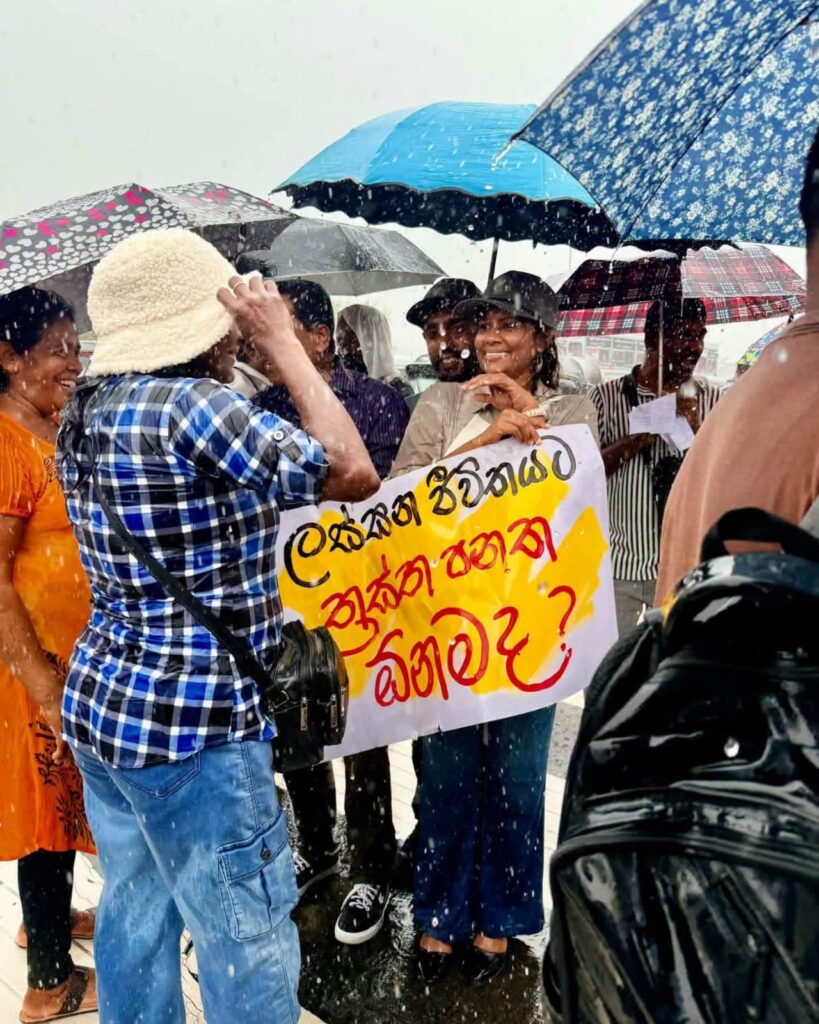
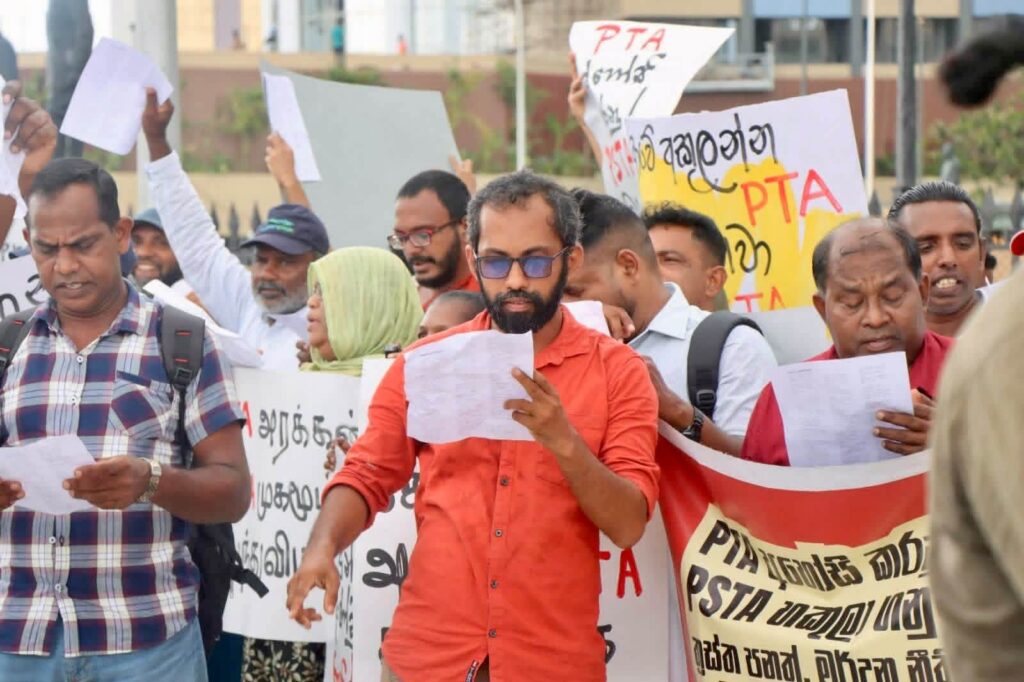
Protests were held in front of the President’s Office despite heavy rains calling the government to repeal existing anti-terrorism laws (PTA) and withdraw proposed new laws (PSTA) which is viewed as more draconian. Image courtesy of Rajkumar Rajveekanth.
Risk of broad definitions
The HRCSL has recommended that the Prevention of Organized Crimes Bill be withdrawn and substantially revised. It said the proposed law is incompatible with the fundamental rights chapter of the Constitution and Sri Lanka’s international human rights obligations, warning that it could be more draconian than the PTA.
The commission acknowledged the need for effective legislation against organized crime but questioned the breadth of the offenses covered by the bill.
The proposed law defines a serious crime to include offenses punishable by imprisonment of four years or more, alongside specified offenses under other legislation relating to customs, intellectual property, forestry and wildlife protection.
The HRCSL warned that the definition could bring offenses not ordinarily associated with organized crime within the law’s reach.
The bill also allows courts to consider factors such as clothing, tattoos, hand signs, language, associations and places visited when determining whether someone belongs to an organized criminal group.
Raising concerns, former BASL president Saliya Pieris asked how police officers would decide whether a person’s appearance or tattoos were associated with a criminal group when making an arrest. He warned that the law grants extensive powers to police without sufficient safeguards against arbitrary decisions.
Frontline Socialist Party (FSP) education secretary Pubudu Jayagoda echoing similar sentiments cautioned that the bill could be used to suppress dissent. He cited the inclusion of offenses such as theft, copyright infringement, illegal gambling and obstructing police officers as examples of how the legislation could be interpreted broadly.
Justice minister Harshana Nanayakkara in parliament on Oct.20 said the bill would not restrict people’s freedom to choose their hairstyles or clothing. However, he said adopting hairstyles or wearing clothes associated with organized criminal groups would be considered an offense.
The unresolved question is how authorities would distinguish genuine involvement in organized crime from characteristics or associations that, on their own, do not establish criminal conduct.
Detention powers and restrictions on bail
The proposed organized crime law would allow senior police officers to seek detention orders from the secretary to the Ministry of Public Security or the ministry responsible for police. Each order could authorize detention for up to two months, with the total period capped at one year.
The HRCSL has raised concerns about detention on executive authority and provisions limiting magistrates’ discretion to release suspects, grant bail or order remand.
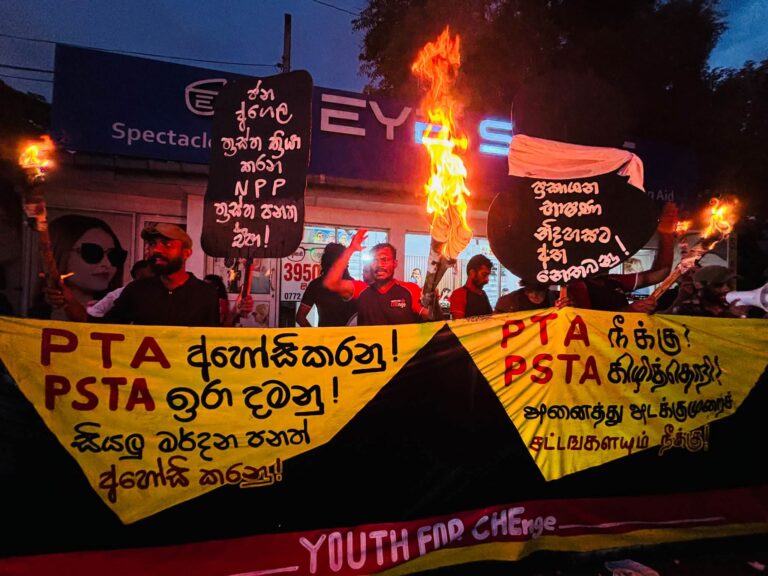
The HRCSL said the proposed provision closely resembles Section 16 of the PTA. It cautioned that allowing police confessions to be used as evidence could create incentives for torture and other cruel, inhuman or degrading treatment in custody. Image via Youth for CHEnge.
Under the bill, suspects generally must be produced before a magistrate within 72 hours of arrest, excluding specified travel periods. A magistrate may authorize a further period of police custody of up to 24 hours, provided reasons are recorded.
That differs from the ordinary procedure under Section 37 of the Code of Criminal Procedure Act, which generally requires a person arrested without a warrant to be produced before a magistrate within 24 hours.
Bail would have to be sought from the High Court. For offenses punishable by life imprisonment or death, bail would be available only in exceptional circumstances.
The bill would also permit people already in remand custody to be transferred back to police custody and held in isolation for periods of two weeks at a time, up to a cumulative six months.
Pieris cautioned that magistrates could be left with little room to intervene, even when the evidence presented by police does not justify continued detention. The HRCSL has stressed that judicial officers must retain meaningful authority to discharge suspects or grant bail.
Police confessions and surveillance
The admissibility of confessions made to police officers of the rank of assistant superintendent of police (ASP) or above is another major concern.
The HRCSL said the proposed provision closely resembles Section 16 of the PTA. It cautioned that allowing police confessions to be used as evidence could create incentives for torture and other cruel, inhuman or degrading treatment in custody.
Former BASL president Pieris also cautioned against the provision, pointing to past abuses under the PTA and emergency regulations and arguing that the risks associated with coercive police powers cannot be ignored.
The bill would also permit certain statements made by people who have died or cannot be found to be admitted in evidence, even if they are not present at trial or have not been cross-examined. Other provisions would allow evidence of past conduct and associations to help establish membership in a criminal group.
The proposed legislation would further expand investigative powers over electronic devices and private communications. Police could seek orders requiring people to unlock data storage devices and provide access to stored information. The bill also provides for the interception and recording of communications, including emails and telephone calls.
Senior police officers could obtain certain subscriber, call and location data from service providers without a court order, raising concerns about privacy and the reach of state surveillance.
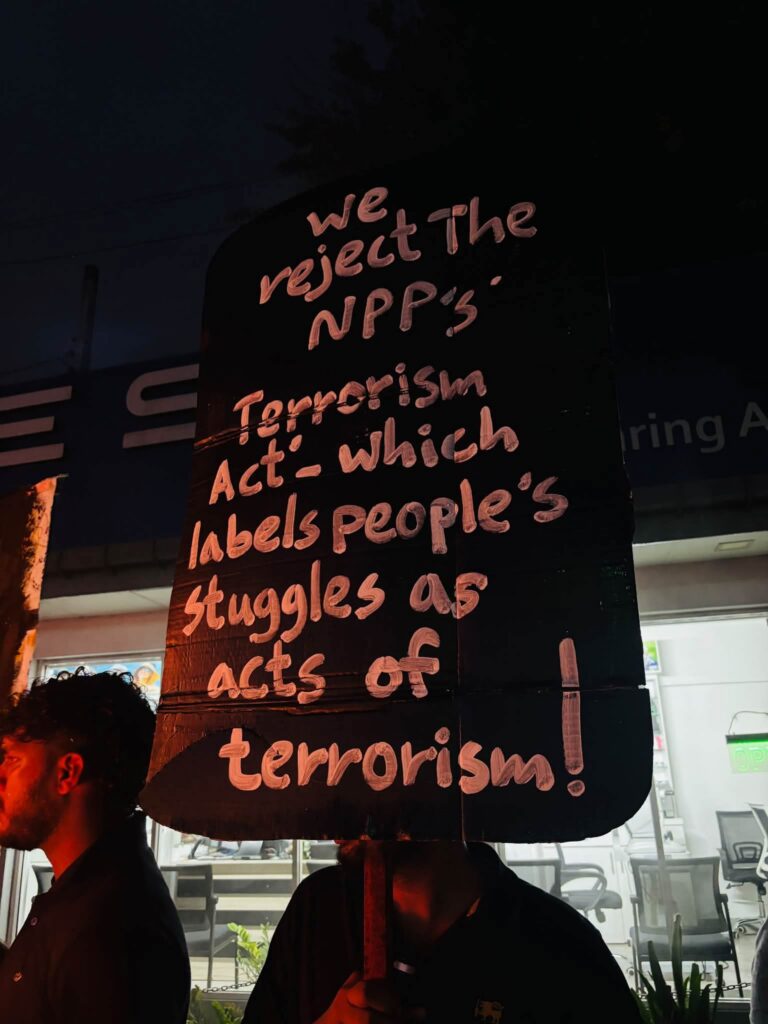
Concerns include broad definitions of criminal offenses, detention orders issued without prior judicial approval, restrictions on bail, the admissibility of certain police confessions and expanded surveillance powers. Image courtesy of Rajkumar Rajveekanth.
Media freedom is also at stake. The bill would criminalize publishing information that identifies a person against whom a serious crime is alleged to have been committed. Publishing material relating to court proceedings involving such offenses without prior court permission would also be an offense.
Concerns have also raised that these restrictions could complicate reporting on criminal investigations and court proceedings, particularly where journalists are seeking to inform the public about matters of public interest.
Lessons from past legislation
Opposition to the bills reflects concerns about how laws granting extensive powers to the executive and law enforcement authorities can be used under successive governments.
The BASL cited the prolonged detention of attorney Hejaaz Hizbullah as an example of concerns associated with the existing counterterrorism framework.
Pieris claimed that legislation introduced to address genuine security threats can also be misused against political opponents, protesters and dissenting voices. The test, he argues, must be the protections built into a law, not simply the purpose stated by its proponents.
Sabry made a similar point, recalling that he decided not to proceed with a proposed bill on obscene publications after the BASL raised concerns that it could criminalize relatively minor conduct and impose disproportionate penalties.
The BASL wants the government to withdraw the PSTA in its present form, restore safeguards removed during drafting and repeal the PTA. It has also called for the organized crime bill to be withdrawn to allow meaningful public consultation.
The HRCSL has recommended that the organized crime bill be substantially revised to comply with constitutional and international human rights obligations.
The central issue is not whether Sri Lanka needs effective laws to combat terrorism and organized crime. It is whether those laws can achieve that objective without weakening judicial oversight, personal liberty and the protections citizens need against arbitrary state action.
Banner Image: The proposed legislation would further expand investigative powers over electronic devices and private communications. Concerned groups held late night protests in Colombo suburbs in the past few days against the proposed laws. Image via Youth for CHEnge.
This story was written and edited by Gagani Weerakoon. She leads the editorial at the Center for Investigative Reporting (CIR).
This story was produced with support from Report for the World, a global media service strengthening local independent journalism.
Submissions are now open for the Global Shining Light Award. This unique award, sponsored by the Global Investigative Journalism Network, honors investigative journalism in a developing or transitioning country, done under threat, duress, or in the direst of conditions. See the link at the bottom of this post to apply.
There will be two award categories: Small and Medium Outlets (organizations with staff of 20 or less, including freelancers); and Large Outlets (organizations with more than 20 staff). Top winners will receive an honorary plaque, US$2,500, and a trip to the 2027 Global Investigative Journalism Conference in Rotterdam, The Netherlands, to accept the award in front of hundreds of their colleagues from around the world.
Criteria
The journalist, journalism team, or media outlet provided independent, investigative reporting, which:
Originated in and affected a Global South country;
Was broadcast or published between January 1, 2025 and December 31, 2026;
Was of an investigative nature;
Uncovered an issue, wrongdoing, or system of corruption which gravely affected the common good;
And did so in the face of arrest, imprisonment, violence against them and their families, or threats and intimidation.
Due to the high volume of applications, we ask that you send us online links to your work samples. If your sample is not available as a public link, you can easily upload your document to a platform such as Google Drive or Dropbox, and share the link with shininglightaward@gijn.org. If you run into any problems, please send us an email. If submissions are in languages other than English, you must provide a detailed English-language summary of a print or online story, or an English-language transcript of a broadcast script.
Competition is keen. In 2025, the awards attracted 410 applications from a record 97 countries. From 13 extraordinary finalists, the judging panel gave out three awards — two in the Large Outlets category and one from the Small and Medium Outlets category — as well as a special citation at the 14th Global Investigative Journalism Conference in Kuala Lumpur, Malaysia.
Submissions deadline for the GIJC27 awards: February 28, 2027.
Al comparar casinos en línea, teniendo en cuenta la variedad de juegos, pensando en un uso regular, una plataforma que puede revisarse de forma independiente es chicken subway juego , mientras una revisión independiente también puede abarcar la experiencia móvil y la navegación, junto con las reglas de retirada y los límites antes de registrarse.
Vor der Entscheidung, welche Seite näher geprüft werden soll, beim Vergleich von Navigation und Bedienkomfort, als Teil eines unabhängigen Vergleichs, eine Option für den direkten Vergleich ist fugu casino 5 , separat kann man auch betrachten die aktuellen Aktionsbedingungen, zusammen mit den wichtigsten Bedienungsdetails ohne die endgültige Wahl zu überstürzen.
Før man beslutter hvilken side der bør undersøges nærmere, ved vurdering af mobil brug, fra et praktisk brugerperspektiv, en platform der kan vurderes uafhængigt er https://spinlander-casino.dk/ , mens en uafhængig vurdering også kan omfatte registrerings- og verifikationsprocessen, med kundesupportens tilgængelighed i tankerne uden at forhaste den endelige beslutning.
Dla użytkowników zestawiających kilka platform jednocześnie, z uwzględnieniem metod wpłat i wypłat, na potrzeby wstępnej oceny, jednym z punktów odniesienia może być kasyno na prawdziwe pieniadze jeśli jednocześnie ocenia się najważniejsze warunki korzystania z serwisu, wraz z zasadami dotyczącymi wypłat w ramach szerszego porównania podobnych serwisów.