

- On Sept.7, Nepali families performed the13th day funeral ituals without knowing what became of their loved ones, missing since flash floods.
- On Aug. 26, a sudden section collapse of a mountain glacier named Langtang Lirung triggered a 5.2 magnitude seismic tremor and sent a catastrophic wall of water, mud, and rocks downstream, resulting in at least1,300 reported deaths with thousands missing.
- Considered one of the biggest natural disasters to have occurred in Nepal, the flooding caused widespread destruction of bridges, roadways, and hydropower projects, making relief efforts highly challenging.
- With Nepal’s Rasuwa, Nuwakot, Dhading, Gorkha, and Chitwan districts alongside the Tibetan border devastated, the resettlement and rebuilding may take years, according to relief workers.
COLOMBO — For Bishwash Nepali, the Aug. 26 flash floods in Nepal’s Rasuwa district were not a disaster he could watch from afar. His home village is about 10 minutes from the river. The people he was helping were his neighbors, friends, relatives and members of his own community. Six of his relatives were among those lost.
Nepali, a civil rights activist, was in Kathmandu when the floods struck, staying with his hospitalized brother. With roads into Rasuwa destroyed, he could not return immediately. Two days later, he found an alternative route and made his way home.
Since then, he has helped collect and distribute relief, coordinate with local authorities and volunteers, and support displaced families in holding centers.
Two weeks on, the relief worker says the emergency is far from over. People are still missing, bodies remain unidentified and survivors are beginning to face another crisis: finding somewhere safe to rebuild their lives.
In a telephone conversation with CIR’s Gagani Weerakoon, Nepali shared his firsthand account of the disaster and its aftermath.
‘The situation still critical’
I am trying to do what I can to support people affected by the recent floods in Nepal. The situation is still critical. Search and rescue operations are continuing, and many people are still missing.
Local government authorities are managing holding centers for displaced people. Some families are staying with relatives, while others remain in temporary shelters. The government and other organizations are providing relief, but collection and distribution are still continuing, 14 days after the disaster.
On Sept. 7, many families carried out funeral rituals according to Nepali tradition. Families traditionally observe the 13th day after a death. But in this case, many people are still missing, so families performed these rituals without knowing what had actually happened to some of their loved ones.
The government also declared Sept. 7 a day of condolence for those who died or went missing.
Many places remain disconnected. Roads and bridges have been destroyed, and some rural areas still have no electricity, mobile networks or internet access.
Some areas have received limited relief by helicopter, but there are still places where government and organizational support have not reached. Many injured people remain in hospitals.
‘My own are gone’
I was in Kathmandu when the flood happened. My brother was in the hospital, and I was with him.
I wanted to come to Rasuwa on the first day, but there was no road access. The roads had been blocked or destroyed by the flood. After two days, I reached the area through an alternative route using a gravel road.
From then on, I got involved in collecting and distributing relief and supporting the local government and affected communities.
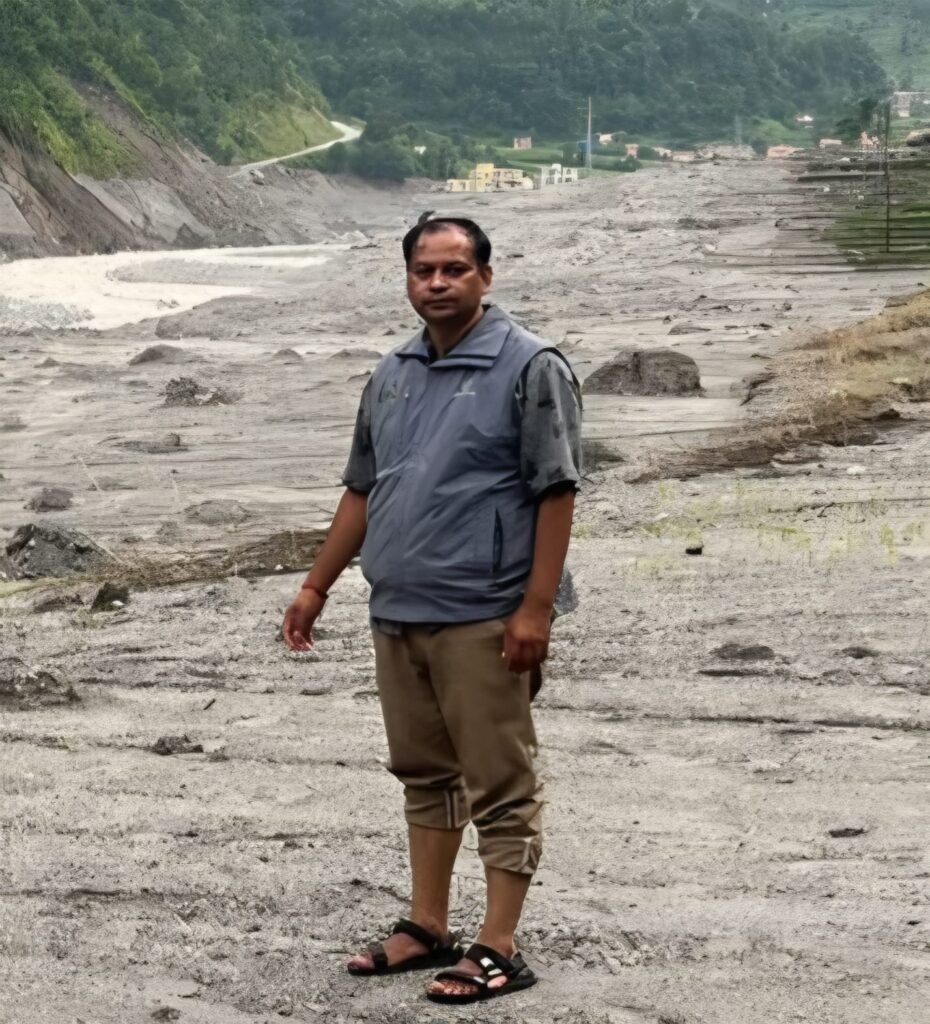
The river is only about 10 minutes from my home. My village is on the opposite side of the bazaar and slightly elevated from the riverbank.
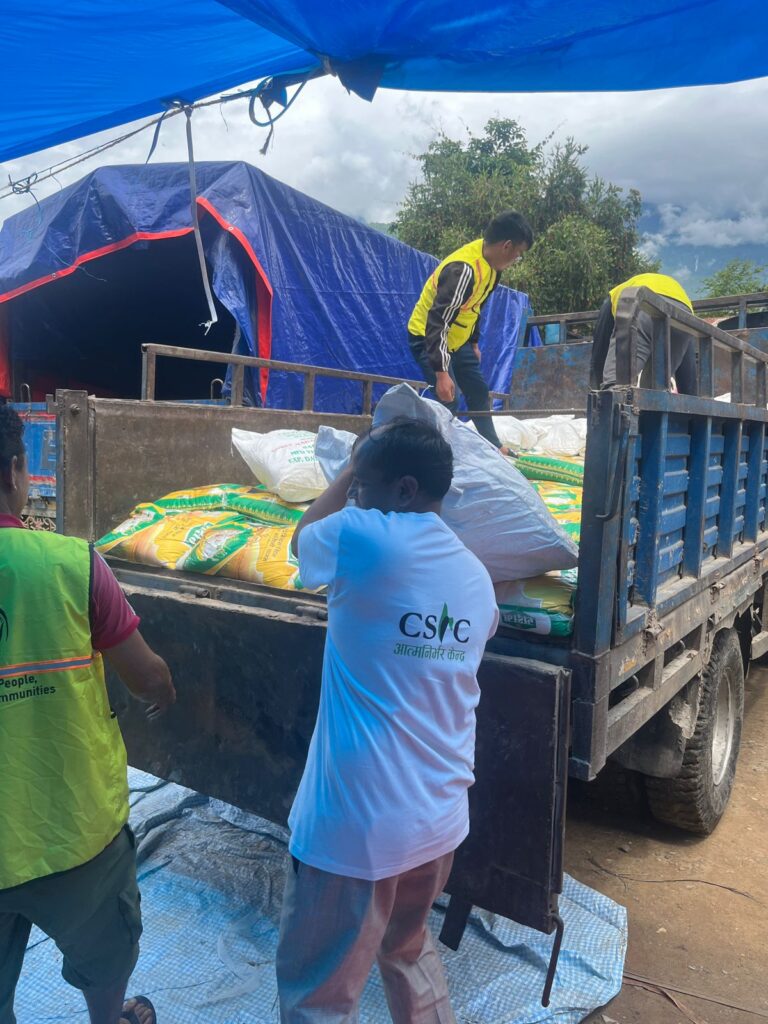
When I returned to Rasuwa, I coordinated with the local government, my organization, our team and other volunteers. We mobilized support from organizations and individuals to collect relief materials.
We centralized the relief and distributed it to victims and affected communities based on decisions made by local authorities and political parties.
We also supported holding centers with management and counseling. Almost everyone there has been affected in some way. Many are missing family members or have been displaced.
I know many of these people personally. They are my neighbors, villagers and people from my district.
This disaster also affected me personally. I lost six members of my family — my uncle’s son, other relatives, a classmate, friends and villagers. We lost many people we knew.
I am still helping families with relief distribution. We started two days after the disaster, and the work is continuing.
‘Younger generation badly hit’
I work with the Community Self-Reliance Centre, a national NGO that works on land rights and supports landless people in securing land and housing. We also work with small-scale and older farmers to protect their land and livelihoods.
Through the organization, we are supporting displaced families and communities affected by the flood.
I have contacted other NGOs, INGOs and foundations and asked them to bring relief to rural districts and coordinate distributions.
This flood has affected everyone, but many of the victims are from Indigenous communities living along the river and near the China border.
Women, children, men and older people have died or gone missing. Families have lost parents, children, relatives and household breadwinners.
In areas such as Timure and Rasuwagadhi, many business owners, entrepreneurs and young people are missing. Tech workers, including engineers and technicians at hydropower projects, are also among those missing.
The younger generation has been particularly affected. Many young people owned trucks, containers, cars and jeeps and transported goods between China and Nepal. Many are now missing.
‘Khalte lost so many people’
In Uttargaya rural municipality, about 250 households displaced by the 2015 earthquake are still living in temporary shelters in Khalte.
Khalte is close to the Trishuli River. According to community members, more than 1,500 people lived there.
The data is still being collected because families are scattered. But community members say more than 500 people are missing from that one community.
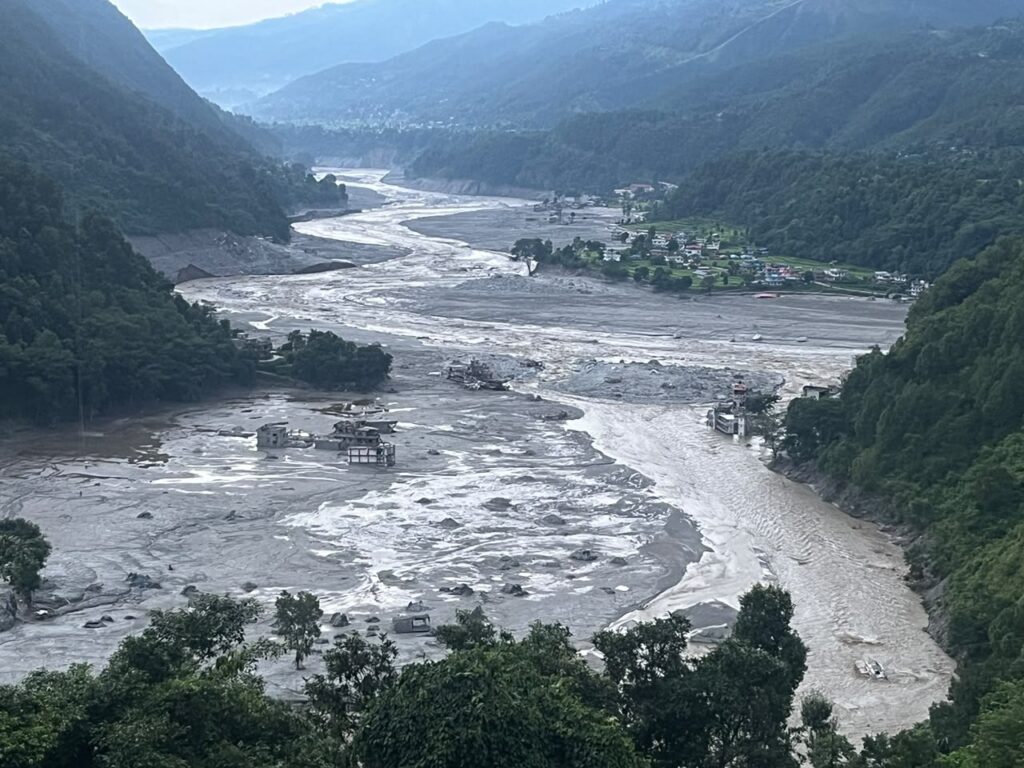
Khalte is home to indigenous Tamang communities, including older people, women and children. Everyone has been affected. Betrawati is another area that was devastated. It is a historic market and important commercial center, with banks, microfinance offices, shops and wholesale businesses.
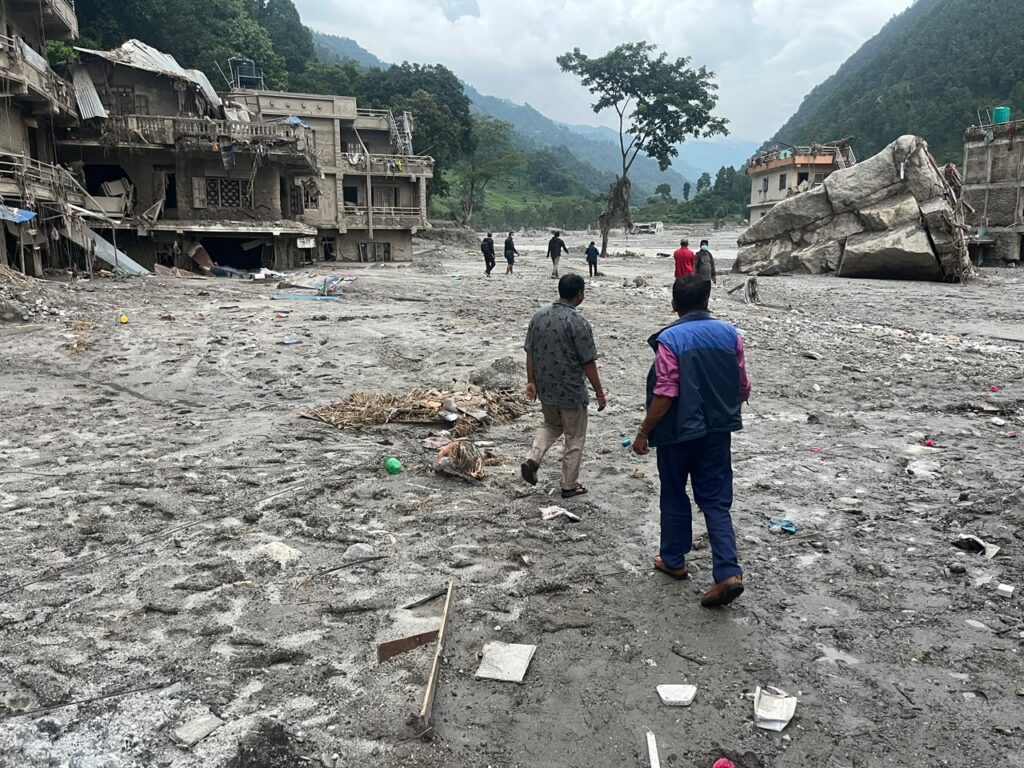
The entire area was swept away. Businesses were destroyed, property was lost, and people were killed or went missing.
Betrawati also has religious and historical importance, including a pilgrimage site associated with the Hindu tradition. That area was destroyed as well.
We have lost people from every age group. We have lost young technicians, engineers and business owners. Their families have also lost their sources of income.
People have lost their businesses, vehicles, homes and family members.
Local governments have also suffered enormous losses. In Uttargaya and Gosaikunda rural municipalities, government offices were completely destroyed, and some staff and elected representatives are missing.
‘The toll remains uncertain’
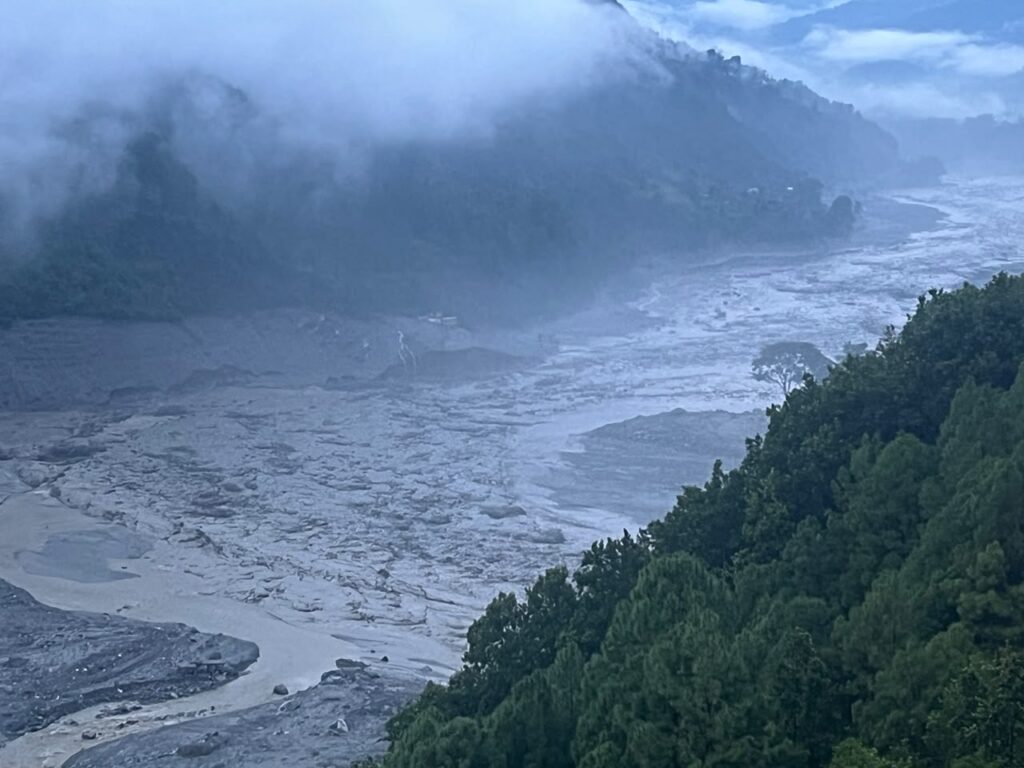
The situation with the dead bodies has not been fully resolved. Search and rescue operations are still continuing.
Thousands of people have reportedly been missing, and hundreds of bodies have been recovered. But identifying them is a major challenge.
People are missing from the China-Nepal border areas, while bodies have been found far downstream, including near the Indian border.
In Chitwan and Nawalpur, police and health officials are struggling to manage and identify the bodies.
For families, identifying the dead and establishing their identities is extremely important. But people have been swept so far from where they disappeared that identification has become very difficult.
‘Where can people live?’
The people who survived have lost their homes, land, relatives and family members. Now they face another enormous problem: rebuilding their lives.
In Rasuwa, there is very little land available to resettle displaced families. It is a mountainous district with steep terrain, so finding safe land is difficult.
The government also does not have enough land or funds to relocate everyone.
This disaster is different from an earthquake. People have not simply lost their houses. Many have lost the land itself. They have lost their property and almost everything they owned.
The biggest question is how to resettle them.
Our government policy on resettlement is weak. Land prices are rising because so little land is available, while government subsidies are limited.
I saw this problem after the 2015 earthquake. I was involved in reconstruction and recovery work for earthquake victims in Rasuwa, Nuwakot and other districts. It took five to six years for many people to be resettled because of difficulties finding land and the long process of receiving government subsidies and support.
That is why I am very worried now.
This time, some of the land itself has been destroyed by the flood.
People will have to move to safer areas, but there is very little land available. Much of it is privately owned, and owners are asking for compensation. The government will have to negotiate land acquisition, and that will take time.
At the same time, affected families have no money because they have lost everything.
They are in a very critical situation and need support from the government and other organizations.
They need safe land. They need money to rent land and build temporary shelters. They need livelihood support. They need almost everything.
‘This will not be solved quickly’
It will take time.
Our government and political situation is not very stable. There are communities that have been waiting for relocation support for more than 10 years after the earthquake.
The government still has not properly supported some of those communities.
That is why I am worried about the flood-affected families. I do not think it will be possible to relocate and resettle them quickly.
They will need support not only from the government but also from NGOs and other organizations.
The immediate relief effort is still necessary, but we also have to think about what happens afterward.
People have lost their homes. They have lost their land. They have lost family members. They have lost their businesses and livelihoods.
The question now is not only how we rescue those who are still missing. It is how we help the people who survived build a life again.
And that will take much longer.
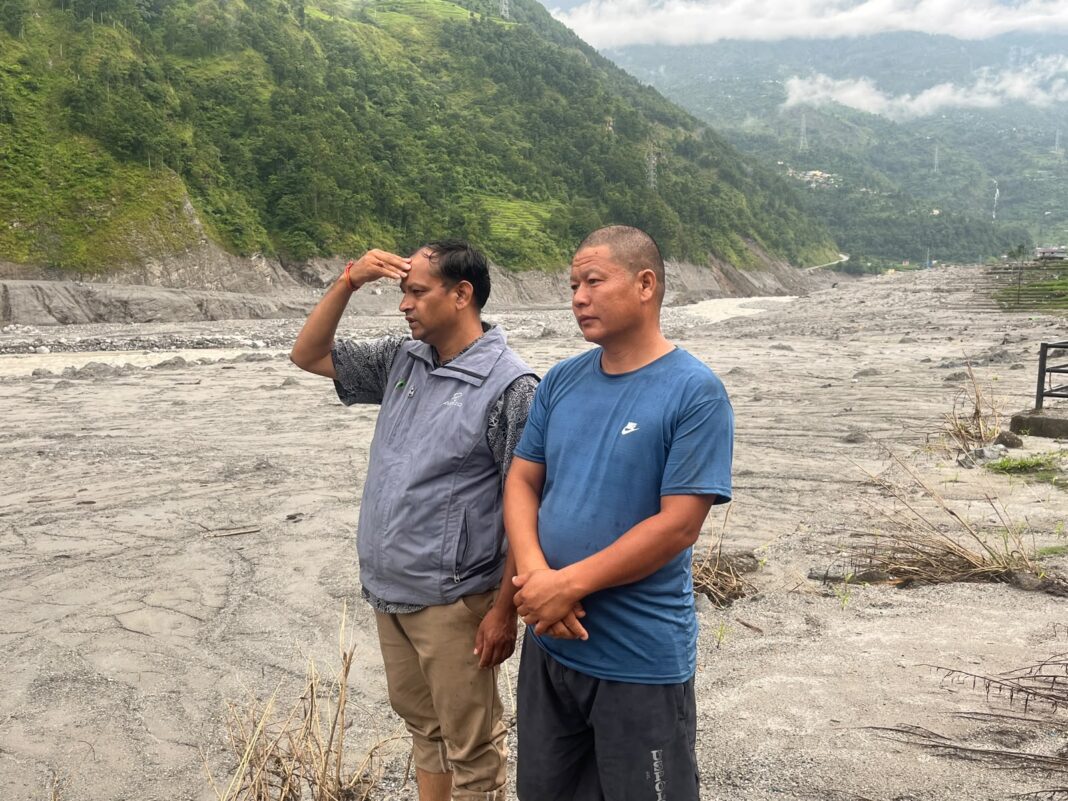
Banner Image: Bishwash Nepali who engages in relief and rescue operation stares at the completely devastated neighborhood while working tirelessly for more than 12 hours in the past 14 days. Image courtesy of Bishwash Nepali.
This story was written and edited by Gagani Weerakoon. She leads the editorial at the Center for Investigative Reporting (CIR).
This story was produced with support from Report for the World, a global media service strengthening local independent journalism