
Hunger and violence push children from home. Drugs, criminal exploitation and barriers to care make leaving the streets harder.
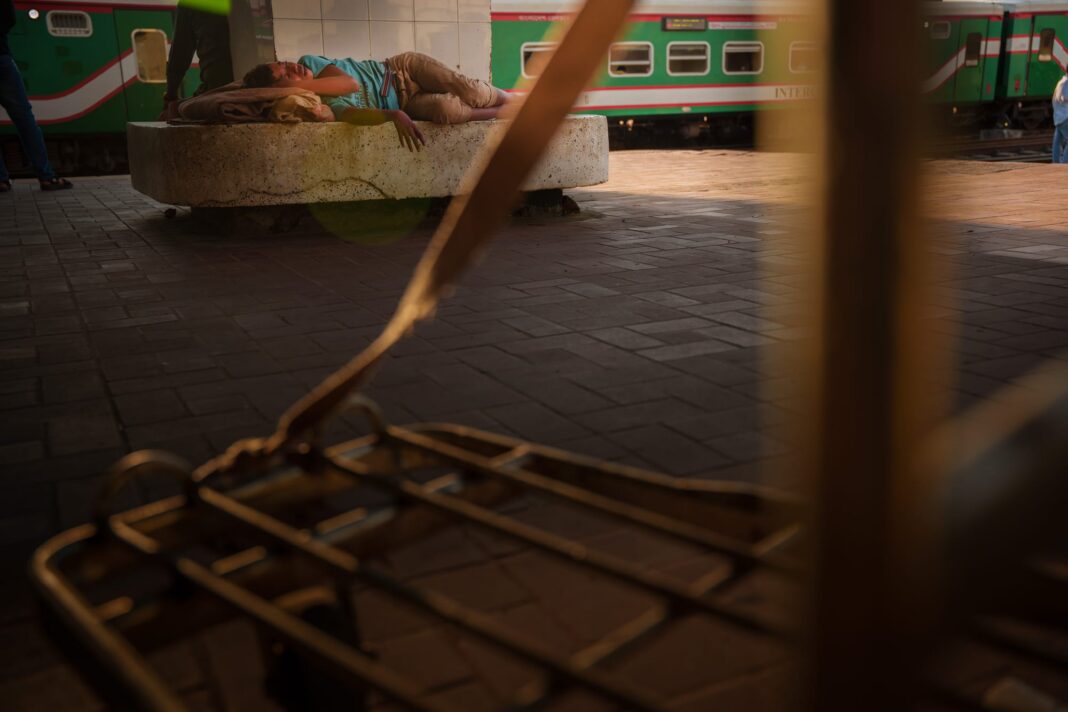
At midday in Palton, a child sleeps beneath Dhaka’s metro-rail pillars. Beside him lies a crumpled plastic bag containing industrial glue, inhaled as an intoxicant known locally as “dandi”.
The scene captures one part of a larger trap. Children escape hunger or violence, only to encounter drugs and adults who exploit them. Meanwhile, the institutions meant to offer an alternative can be difficult to enter — or frightening to stay in.
Netra News visited eight locations across Dhaka, interviewing 15 children and five adults who grew up on the streets. Their accounts suggest that the crisis persists because the routes out are often as uncertain as the routes in.
Research has identified hunger and domestic violence as reasons children leave home. Even an institution can fail to provide refuge. Sathi, who grew up in an orphanage, said:
“In the orphanage, you have to pay to eat. If I had to pay 5 taka, I had to come down to the streets.”
Once outside, she said, people lured her away and exploited her.

Drugs, gangs and survival
Some children use substances to cope with hunger, trauma and distress, according to the Consortium for Street Children. But drugs can introduce further harm into already precarious lives.
Children can also be drawn into the drug trade. A Department of Narcotics Control study of 1,600 street children reported that 58% of those surveyed were addicted to drugs and 21% were used as drug carriers.
A 2021 study of 53 street children described links between poverty, gang recruitment and criminal involvement, including theft and drug dealing. Its small sample cannot establish how common those patterns are among all street children. But the accounts collected by Netra News show how coercion can work.
One child described being ordered to deliver packets, and what happened when a friend refused.
“A friend of mine said, ‘I won’t do bad work’, so they pulled him.”
The child also described being beaten: “You know the rod? I got hit on the leg with a rod. Look, the whole leg burst open.”
Those issuing orders claimed to be police. The account does not establish their identities or the packets’ contents. It describes a child carrying out deliveries amid intimidation and violence.
LEEDO’s founding director said criminal groups could readily exploit children whose disappearance might attract little attention.
“If they die in a train accident, if they die in a road accident, or if someone kills them, actually there is no one to search for them.”
For girls, even the search for protection can create dependence. Umme Salma Akter Urmi, director of Pother School, said some students entered relationships they described as marriages at ten or eleven.
“When she says that she is someone’s wife, other men harass her less.”
Urmi also described girls pressured into sexual exploitation by relatives or the people sheltering them. Having a protector is not necessarily the same as being protected.
The obstacles to leaving
Legitimate opportunities can be harder to access. A 2025 Caritas Bangladesh survey of 667 street children in three cities found that more than half lacked birth registration.
LEEDO encounters demands for parents’ national identity documents when seeking birth certificates to enrol children in school. Its director asked:
“So, we don’t even find the addresses of these parents, where will we find the National ID of that child’s father… of the parents.”
The procedure assumes access to the very adults whose absence may explain why help is needed.
A shelter does not necessarily resolve the problem either. One child who stayed at a Sheikh Russel rehabilitation centre alleged being restrained and beaten with sticks, iron rods and bats. Lawyer Faysal Ahmed recalled children moved into a safe home to prevent trafficking, asking whether they would ever be free.
Government figures list 17 integrated rehabilitation centres nationwide, serving 19,668 children between August 2012 and March 2026. That cumulative total does not show how many found a lasting alternative to street life.
Russel Ahmed, a deputy secretary in the Ministry of Social Welfare, said four centres opened in January 2025 without additional recruitment. Existing staff were reassigned.
“It is not possible to give any new appointments because they don’t have any service rules.”

When the law steps in
The criminal-justice system can become another obstacle. Faysal Ahmed recalled meeting a child in 2016 who had been arrested in an Explosives Act case over a bomb attack during a strike. According to the investigating officer’s testimony, more than 100 police officers took part in the operation, but only the child was arrested.
“100 people got together and arrested one child!”
Ahmed said the child spent three and a half years without trial before being freed.
Towhidul Haque, a Dhaka University expert on society and crime, argues that the state mobilises against children associated with criminality after failing to protect them from exploitation. Rehabilitation projects, he says, cannot substitute for addressing why children become homeless.
Kulsum, left at Kamalapur at ten or eleven, now wants that chance for her own child.
“Now, after working and saving some money, when we have some money, we will leave.”
She has a reason to leave. What she lacks is a dependable way out.
Banner Image: A homeless street child sleeps on a concrete bench at Komlapur railway station, where abandoned and runaway children often seek temporary refuge. Image courtesy of Al-Amin Tusher/ Netra News.
This story was written by Al Amin Tusher.
This story was originally published by Netra News on October 02, 2026 was republished by CIR with permission.