
Speed Read
- Jeyaraj reported on Sri Lankan politics and the ethnic conflict from the late 1970s, working in both Tamil- and English-language journalism.
- He wrote extensively on Tamil politics and the North and East, while questioning government, militant and other political accounts.
- Former colleagues remember him not only for his journalism, but for advising and protecting younger reporters and maintaining close friendships across the profession.
- His columns and articles documented political developments as they unfolded, leaving behind a substantial archive of writing on Sri Lanka’s conflict and political history.
COLOMBO—In the Sri Lanka of David Buell Sabapathy Jeyaraj’s journalism, the distance between Colombo and Jaffna was more than geography. It was also a divide in experience, information and political understanding. As the country’s ethnic conflict deepened, Jeyaraj who is widely known as DBS, spent much of his career trying to explain one side to the other.
He wrote about the North and East for readers in the South. He wrote about Tamil politics for audiences that often knew little about its history or internal divisions. He questioned government accounts, challenged militant groups and followed stories beyond the statements of those in power.
The work carried risks. Jeyaraj was threatened, seriously injured and eventually left Sri Lanka. From Canada, he continued to write about the country he left and its politics.
When he died in May 2026, he left behind nearly five decades of journalism and a generation of journalists who had worked with him, edited his copy, sought his advice and remained his friends.
Founding editor of The Island and The Sunday Times Vijitha Yapa, who introduced DBS to English readers remembers the young reporter who joined The Island in the early 1980s and quickly demonstrated an ability to explain developments in the North to Southern readers.
Hana Ibrahim, editor if Daily and Weekend Express remembers a colleague who once angrily confronted her for taking an unnecessary risk on an assignment and told her that her safety mattered as much as the story.
Marianne David, who edited the works of DBS for 20 years remembers editing Jeyaraj’s long political pieces at The Sunday Leader and later becoming his friend. She also remembers his repeated messages asking whether she had received something he had sent.
Former chief editor of Thinakkural, a daily Tamil newspaper Veeragathy Thanabalasingham remembers a journalist who documented and analyzed Sri Lankan politics, particularly Tamil politics, as events unfolded.
Their recollections describe a man who was demanding about facts, protective of younger journalists, deeply interested in Sri Lanka and unwilling to align his journalism permanently with any political side.
At the center of his work was a basic question. How could one part of Sri Lanka understand what was happening in another?
Much of Jeyaraj’s career was an attempt to answer it.
Outstanding young reporter
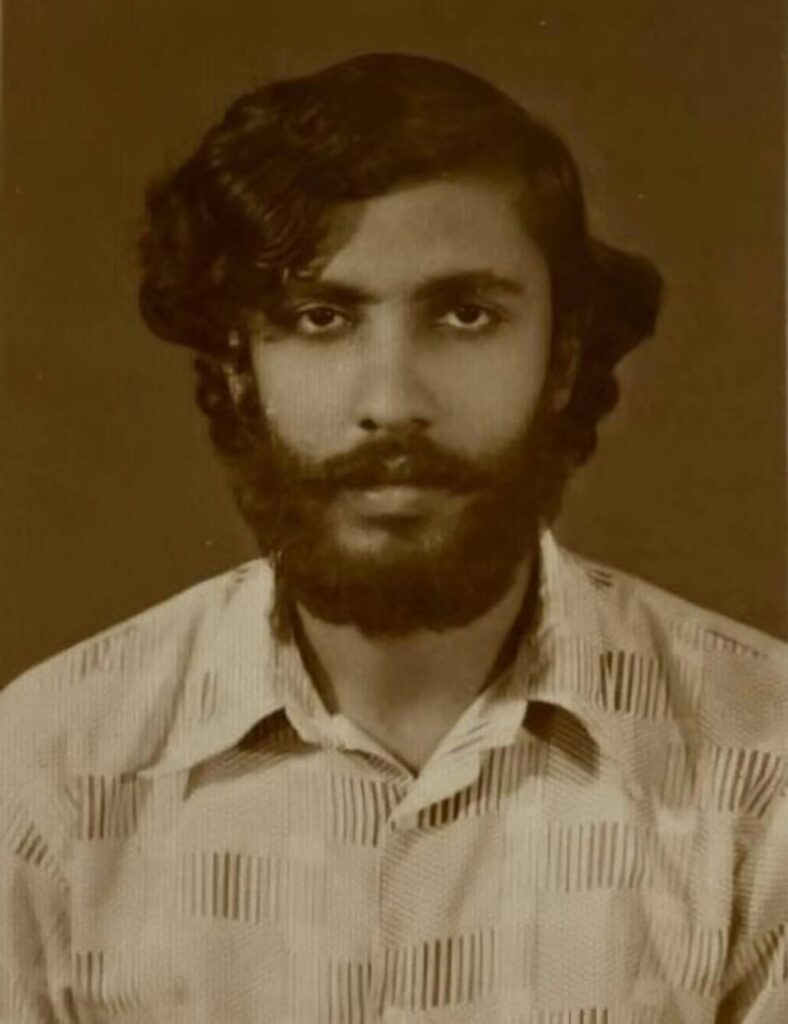
Yapa first encountered Jeyaraj in the early 1980s at The Island.
Ajit Samaranayake, then the newspaper’s deputy features editor, recommended a young Tamil journalist who could help readers in the South understand developments in Jaffna and the Tamil areas.
Yapa had expected someone with a bushy moustache.
Instead, a clean-shaven young man walked into the office.
The surprise did not last long.
Jeyaraj spoke fluent English and expressed himself with unusual clarity. Yapa sent him to cover a Cabinet press conference as a test.
Within an hour, Jeyaraj returned with a report Yapa considered better than the work normally produced by the newspaper’s regular correspondent.
Yapa offered him three times the salary he had requested.
When Jeyaraj said he could start in a month, Yapa told him to come the next morning.
He did.
What soon became apparent was that Jeyaraj could do something more important than cover politicians.
He could provide context.
As the crisis in the North deepened, Yapa saw the need for journalism that went beyond official statements and explained what was happening on the ground.
That became Behind the Cadjan Curtain, a column on the political and social realities of the North and East.
For readers in the South, it offered a view into a part of the country that was becoming increasingly remote — geographically, politically and emotionally.
“He was trying to explain what was happening in the North and East and in the Tamil areas,” Yapa recalled. “How can that be explained to the people in the South?”
That question would define much of Jeyaraj’s career.
Journalism at the fault line
The stakes became painfully clear in July 1983.
As anti-Tamil violence spread through Colombo, Jeyaraj had nowhere safe to stay and slept in the newspaper office.
Yapa took him home.
Mobs were moving through the streets and Tamils were being targeted, but Yapa refused to abandon his journalist.
“The newspaper has stood for the unity of the Sri Lankans,” he recalled. “I have no fear.”
Jeyaraj stayed with Yapa’s family during the violence.
Years later, when Yapa launched The Sunday Times, he sought him out again.
One of Jeyaraj’s early front-page stories involved the Indian High Commission. Living near the residence of Indian High Commissioner J.N. Dixit, Jeyaraj noticed black smoke rising from the area and went to investigate.
The resulting story angered Indian diplomatic officials.
But it demonstrated the instinct that had impressed Yapa years earlier: Jeyaraj saw something, questioned it and pursued it.
That instinct came at a cost.
He was seriously injured while reporting in the North. After moving abroad, he continued writing critically about the conflict and militant groups. He was later attacked while shopping and suffered broken legs.
Threats were also made against distributors of his newspaper.
He continued publishing.
For Yapa, the pattern was unmistakable: Jeyaraj did not easily submit to political or militant pressure.
He belonged to the truth
Thanabalasingham, sees Jeyaraj’s career in broader historical terms.
He describes him as a political chronicler who documented and analyzed Sri Lankan politics, particularly Tamil politics, as events unfolded.
“Jeyaraj dedicated his life to analyzing and writing fearlessly, and to documenting the complex dimensions of Sri Lankan politics, especially Tamil politics, as they unfolded in real time,” Thanabalasingham said
His columns connected immediate events to the history, personalities and geopolitical forces behind them.
They became required reading for politicians, diplomats and others trying to understand the conflict.
“His pen did not merely record the trends of history; it also helped us understand the depths from which those trends flowed,” Thanabalasingham says.
Jeyaraj’s position was often uncomfortable.
Different sides accused him of disloyalty and betrayal. At times, he was even accused of being a terrorist.
David (Marianne) believes that was partly because he refused to become an instrument of any side.
“His cause, I think, was always this country and its people,” she says.
Ibrahim (Hana) remembers the same quality.
“You have to admire his journalism because he did not compromise on truth,” she says. “For him, facts were sacred.”
“He favored the truth.”
The mentor behind the byline
Jeyaraj’s influence was not limited to what he published.
Ibrahim remembers him as a quiet, protective presence — a “very protective big bear.”
She recalls an incident around 1987, when she was asked to carry a parcel into several major buildings to assess their security.
She was young and did not question the assignment. She entered prominent buildings, including the Central Bank, and found that security checks were minimal.
When she returned, Jeyaraj was furious.
Not because she had found a good story.
Because she had put herself in danger.
“As soon as I walked in, he grabbed me by the arm and said, ‘You stupid, you’re so careless,’” Ibrahim recalled.
He warned her that her life mattered as much as the story.
“Your story is important, but your life is also important.”
That lesson stayed with her.
“Every time I think of him, that’s what I try to draw out.”
He was also the journalist she turned to when she needed help with a difficult story.
“If I want advice on how to do a story, what I need to do, all the details, he was the guy,” she says.
The columnist young editors feared
David first knew Jeyaraj through his copy.
When she joined The Sunday Leader in 2001 as a sub-editor, she and her colleagues took turns editing his columns.
They could run 3,000 or 3,500 words and were packed with unfamiliar terminology, political analysis and intricate details about the North and East.
“It was really being thrown into the deep end,” David said.
Most of the sub editors were barely out of their teens.
“You don’t necessarily want to edit a 3,500-word copy about the war and politics.”
But the work taught them.
She edited his work for about six years at The Sunday Leader. Later, at The Nation, their professional relationship became a friendship.
Jeyaraj joked that his “co-author” was following him everywhere.
Behind the formidable columnist, David discovered a remarkably affectionate man.
He encouraged young journalists whose work impressed him, often tracking down their contact details simply to tell them so.
He remembered birthdays.
He sent David messages in both English and Tamil.
And he could be wonderfully exasperating.
If I did not respond to an email, he might send the same through another email account and Facebook Messenger.
He knew he was doing it.
“I panic about these things. I get anxious,” he would tell her.
David found it endearing.
It was another glimpse of the person behind the political commentator. Someone who valued reassurance, connection and friendship.
He left Sri Lanka. He never left it behind.
Jeyaraj left Sri Lanka in the late 1980s as threats surrounding his journalism intensified.
In 1988, he became a Nieman Fellow at Harvard University. He later settled in Canada and continued writing about Sri Lanka.
But those who knew him say he never stopped thinking about home.
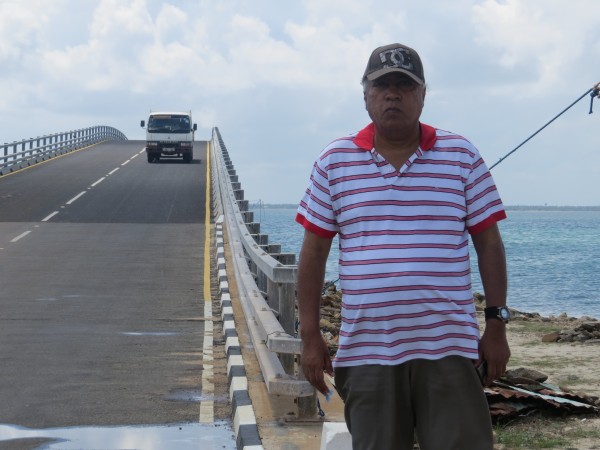
David saw that most clearly when he returned to Sri Lanka in 2013 after about 25 years away.
“He was anxious about the visit and concerned about the possibility of arrest. He kept the trip quiet and avoided political meetings.”
Instead, he saw friends, family and places that mattered to him.
He visited Colombo and Jaffna, travelled in the South and returned to newsrooms that had been part of his life.
He also visited his ancestral property. The house was no longer familiar. Some of the trees were.
The old well remained. He drank its water.
“He was very sentimental about it,” David said while adding “he was very tender, very sensitive, very emotional.”
She said that Jeyaraj chose the same date he left the country 25 years ago to return to Sri Lanka 25 years later.
He also wanted to eat the food he remembered.
He planned to return.
He wanted to see Polonnaruwa, Kandy and Galle, and visit Wilpattu and Sinharaja.
He never did.
Journalist with a cultural memory
Politics and war dominated much of Jeyaraj’s professional life, but they did not define the full range of his interests.
Thanabalasingham remembers his deep affection for Tamil and South Indian culture.
Jeyaraj could write about geopolitics and militant movements with the same enthusiasm with which he wrote about cinema.
He wrote profiles of M.G. Ramachandran (MGR), Sivaji Ganesan and Jayalalithaa, as well as Sri Lankan artists.
“He could write a full-page article in English even about the movie songs he loved to listen to,” Thanabalasingham said.
That breadth was part of his understanding of Sri Lanka.
The country he wrote about was not simply a political map. It was made up of language, memory, food, music, cinema, personalities and places.
A friendship that survived distance
Thanabalasingham’s friendship with Jeyaraj lasted nearly half a century.
They both began at Virakesari, although their careers soon took them in different directions.
Jeyaraj joined the newspaper in April 1977 as a staff reporter. He later worked as its Jaffna and Batticaloa correspondent before moving into English-language journalism.
By 1981, he was at The Island.
The friendship remained.
“We never called him by his full name; to us, he was always just ‘D.B.S.,’” Thanabalasingham says.
Even from Canada, Jeyaraj called regularly. Conversations could last two hours, sometimes extending into the early morning.
In later years, he sometimes asked a haunting question:
“We wrote so much for so many years — was it all in vain?”
Thanabalasingham does not think so.
For four years before Jeyaraj’s death, he translated his political articles into Tamil and arranged for their publication in Virakesari.
The work continued.
The archive he never finished
David had urged Jeyaraj for years to turn his journalism into a book.
They had discussed it for about 15 years.
His website, had been created largely as a platform for his own writing. But as illness affected his ability to write, preserving the archive became increasingly important.
The book remained unfinished.
So did the larger task of ensuring that decades of his journalism survived in accessible form.
The disappearance of old newspaper websites made the problem more urgent.
For a journalist who had spent his career documenting Sri Lanka’s conflict and political history, losing those articles would mean losing part of the country’s memory.
A final piece of writing
Jeyaraj did, however, leave one last piece.
Thanabalasingham had recently published Pathirigaithuraiyil En Kathai (My Story in Journalism), a book about his life in journalism.
Jeyaraj wrote its foreword in English and sent it on March 9, 2026.
Thanabalasingham published it in English, exactly as Jeyaraj had written it.
He believes it may have been Jeyaraj’s last piece before illness overtook him.
The book was launched May 17 at the Colombo Tamil Sangam.
As preparations were underway, Thanabalasingham received a WhatsApp message from Jeyaraj’s wife.
His friend had died.
What he left behind
Jeyaraj’s career began at Virakesari in 1977 and took him through some of Sri Lanka’s most important newsrooms. He wrote for The Island, The Sunday Times, The Sunday Leader, The Nation, The Hindu and Frontline, among others.
He founded Tamil-language publications after moving to Canada, became a Nieman Fellow and received major recognition for his journalism.
But his former colleagues remember more than the résumé.
They remember the journalist who walked into Yapa’s office and produced an exceptional Cabinet report.
The colleague who slept in a newsroom during Black July because he had nowhere safe to go.
The reporter who saw smoke and went looking for the story.
The demanding columnist whose 3,500-word articles forced young editors to learn.
The mentor who called young journalists simply because he admired their work.
The protective colleague who believed a reporter’s life mattered as much as a scoop.
The friend who remembered birthdays and worried when messages went unanswered.
The Sri Lankan who returned after 25 years and drank water from an old well on his family’s former land.
And the chronicler who, after decades of writing about war, politics and nationalism, still wondered whether it had all been in vain.
Perhaps his colleagues have already answered that question.
Jeyaraj did not simply record Sri Lanka’s divisions.
He tried to make one part of the country understand another.
He questioned every side.
He challenged power.
He protected people.
And he kept writing.
For a journalist who spent his life explaining Sri Lanka, that may be the most enduring explanation of all.
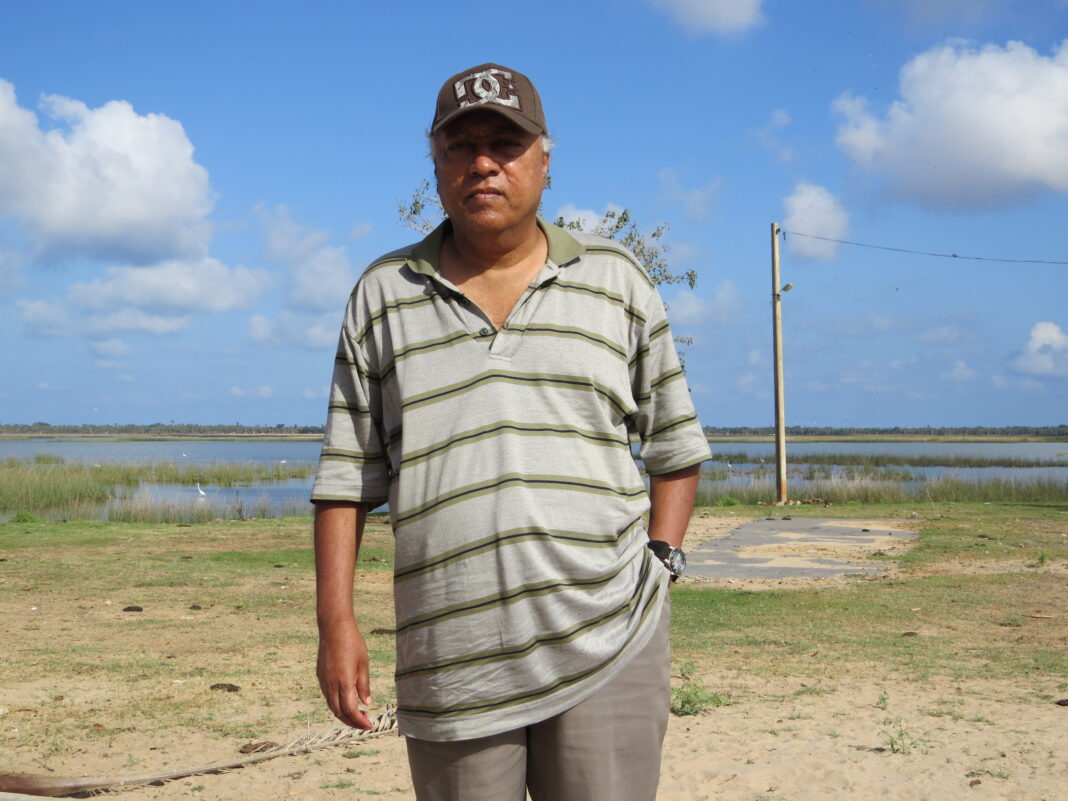
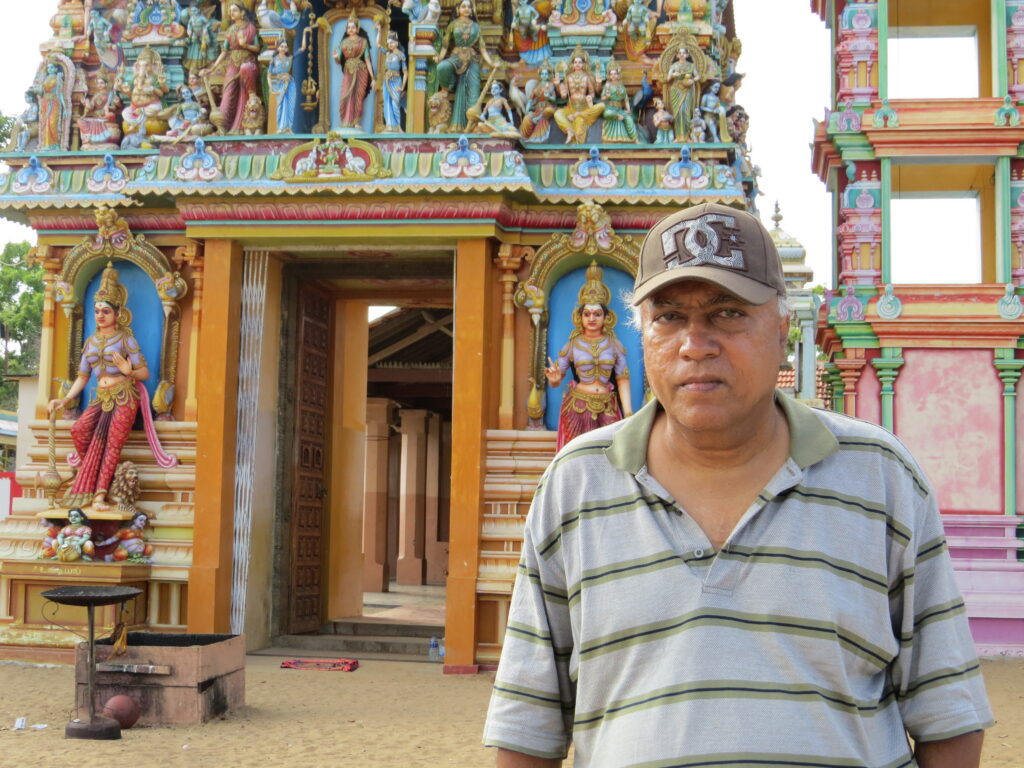
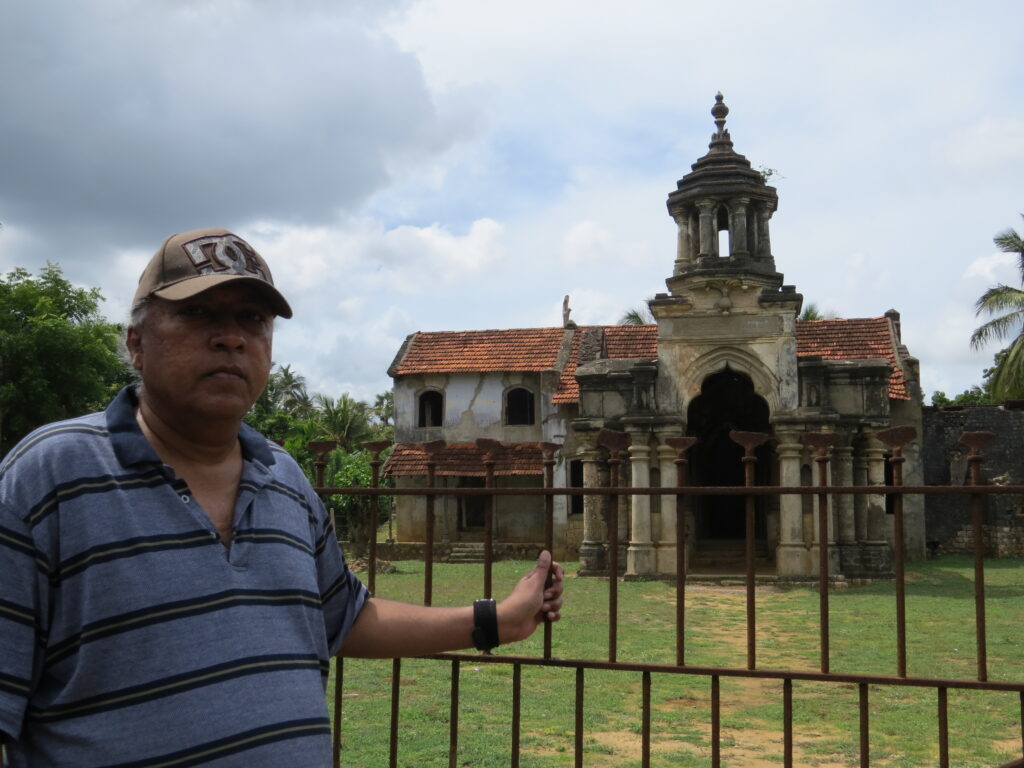
Banner Image: DBS at Nanthikkadal Mullaitheevu lagoon during his visit to Sri Lanka in 2013. Image courtesy of Dushiyanthini Kanagasabapathipillai.
This story was written and edited by Gagani Weerakoon. She leads the editorial at the Center for Investigative Reporting (CIR).