

Speed Read
- Sri Lanka has recorded nearly 49,000 dengue infections and 30 deaths by June 25 this year, with more than 14,000 cases reported in June alone.
- More than 5,000 lawsuits have been filed against individuals and institutions for facilitating mosquito breeding grounds.
- Schools account for nearly 60% of identified dengue breeding sites, the highest among all inspected locations, followed by religious institutions at 28%.
- Health authorities warn major hospitals are nearing capacity and say the outbreak could escalate into a full-scale epidemic without sustained public cooperation.
COLOMBO — Sri Lanka’s worsening dengue outbreak has triggered an unprecedented nationwide response, with authorities filing action against more than 5,000 individuals and institutions for facilitating mosquito breeding. Meanwhile, health officials warn that schools and religious institutions have emerged as some of the country’s most significant transmission risks.
The outbreak has already infected more than 49,000 people and claimed 30 lives by June 25 this year, prompting the government to launch a nationwide anti-dengue campaign and intensify enforcement measures against those who fail to eliminate mosquito breeding sites.
Out of 30 fatalities reported so far, five are children under 15 years of age.
For Ganga Nayomi, whose daughter is sitting the G.C.E. Advanced Level examination in August, the increasing numbers are extremely worrying.
“Despite keeping our environment clean, all five members of my neighboring family have been admitted to the hospital with dengue. At least 10 in my daughter’s school have tested positive for dengue and receiving treatments. How can I be sure that my children will not get affected? Our biggest concern is my daughter as she is getting ready to face one of the most decisive exams,” she said.
Strict scrutiny begins
In response, the authorities have quickly turned toward legal enforcement as public health officials struggle to contain the outbreak.
Secretary of the Public Health Inspectors’ Union, Chamil Muthukuda told CIR, more than 5,000 cases have already been filed in the magistrates’ court against individuals and entities found responsible for maintaining mosquito breeding grounds in the past two weeks.
Approximately 3,000 red notices too have been issued while nearly 1,000 offenders faced spot fines.
The government’s tougher stance comes amid growing frustration among health officials, who argue that recurring outbreaks are largely driven by preventable environmental conditions.
Muthukuda said authorities repeatedly observe the same pattern: once dengue cases decline, both the public and institutions become complacent, allowing breeding grounds to re-emerge.
“We cannot reduce dengue cases to zero, but we definitely can bring the numbers down and control dengue from reaching epidemic levels by destroying breeding grounds,” he said.
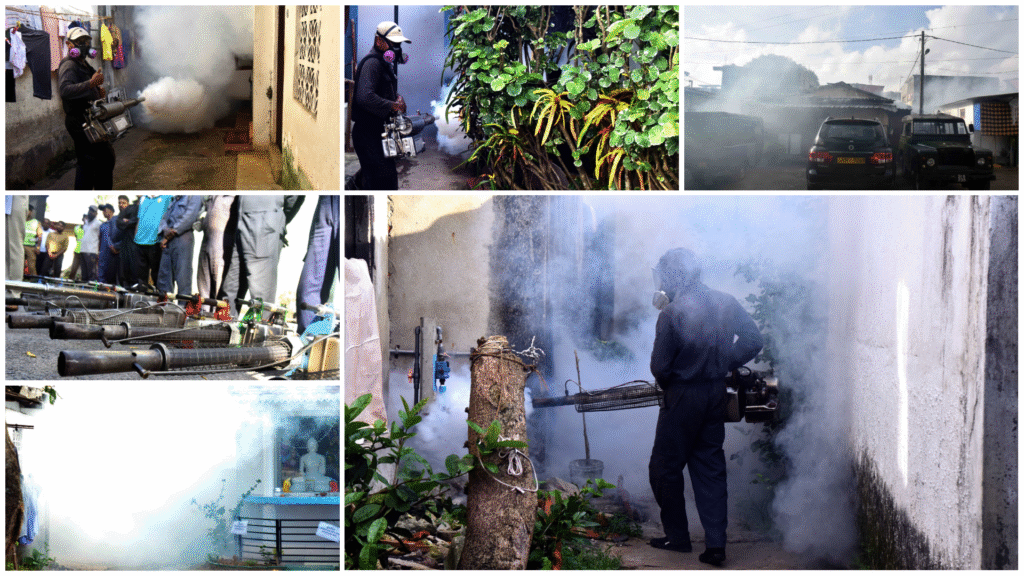
He said fogging operations are carried out when multiple dengue cases are reported from the same area but cautioned against fogging being viewed as a long-term solution to disease control.
“When several cases are reported from a particular area, we conduct fogging using chemical agents. However, people should not mistake this for a lasting solution. Fogging only kills adult insects, whether they are mosquitoes, bees or other flying insects. It does not eliminate mosquito larvae, and cannot by itself end the mosquito threat,” he said.
Muthukuda added that authorities regularly rotate the chemicals used in fogging operations to prevent mosquitoes from developing resistance.
“To ensure mosquitoes do not become accustomed to a particular chemical, different provinces use different formulations, and these are alternated approximately every six months,” he said.
The Presidential Secretariat meanwhile has warned that individuals, businesses and institutions that fail to comply with dengue prevention measures will face legal action under the Quarantine and Prevention of Diseases Ordinance and other public health regulations.
Schools lead the list
One of the most troubling findings emerging from recent inspections is the extent to which educational institutions have become breeding grounds for dengue-carrying mosquitoes.
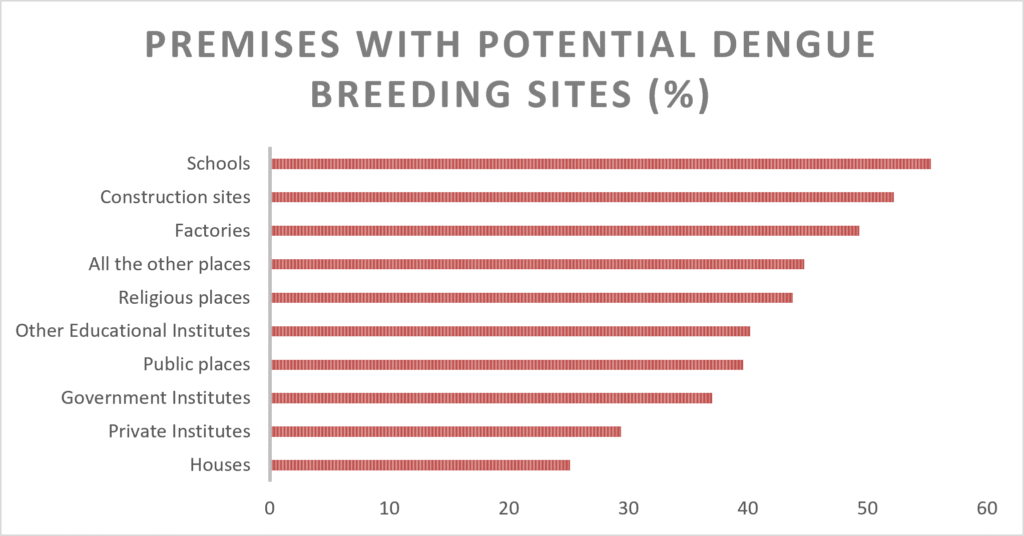
Dr. Kapila Kannangara, acting director of the National Dengue Control Unit (NDCU) told CIR that schools accounted for nearly 60% of over 70,000 locations identified as mosquito breeding sites, making them the highest-risk category countrywide.
“There are mosquito breeding conditions in 268 schools across the country, including 67 schools in the Western Province alone.”
Religious institutions accounted for 28% of breeding sites, while industrial premises accounted for 26%.
The findings have prompted authorities to introduce stricter preventive measures throughout the education sector.
Provincial directors of education have been instructed to take immediate action to reduce mosquito breeding risks in schools, while institutions have been directed to conduct mandatory 30-minute cleanup programs every Monday and Friday.
Schools have also been instructed to establish school health promotion committees and work closely with public health inspectors to ensure compliance with prevention measures.
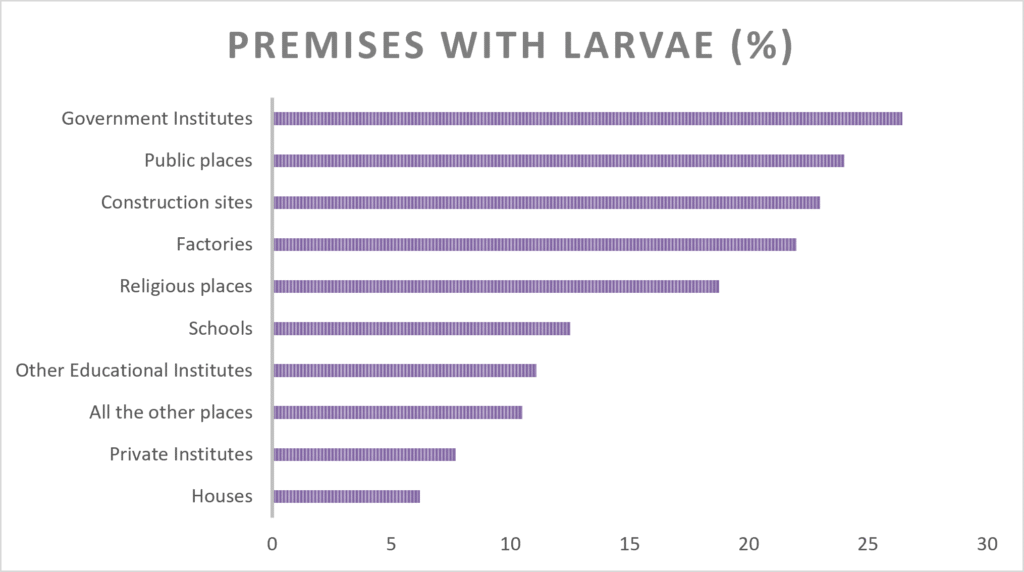
Consultant Community Physician Prashila Samaraweera on June 20 told media that entomological surveys continue to identify a significant number of breeding grounds in schools, government institutions, factories and places of worship.
She called upon parents to not send children to school if they develop fever symptoms, saying that early medical intervention remained critical in preventing severe dengue complications.
Religious places under scrutiny
The identification of breeding sites in nearly one-third of inspected religious institutions has raised concerns among health officials.
According to the NDCU, temples, churches, mosques and other places of worship often contain water-holding containers, neglected outdoor areas and structures that can become mosquito breeding grounds.
The government’s latest dengue prevention directive specifically includes religious institutions among locations requiring intensified inspections and cleanup efforts. Public health inspectors have been tasked with conducting regular inspections and taking legal action where necessary.
Hospitals approaching capacity
However, the rapid increase in infections is placing a growing strain on Sri Lanka’s healthcare system.
According to NDCU’s Kannangara, several major hospitals including the National Hospital of Sri Lanka and Infectious Diseases Hospital (IDH)are operating near maximum capacity as patient numbers continue to rise.
Kannangara said nearly 750 new dengue cases are being reported daily while a record number of 1,069 new cases of dengue fever were reported on June 22 alone.
More than 14,400 cases have been recorded during June, making it one of the most severe monthly outbreaks in recent years.
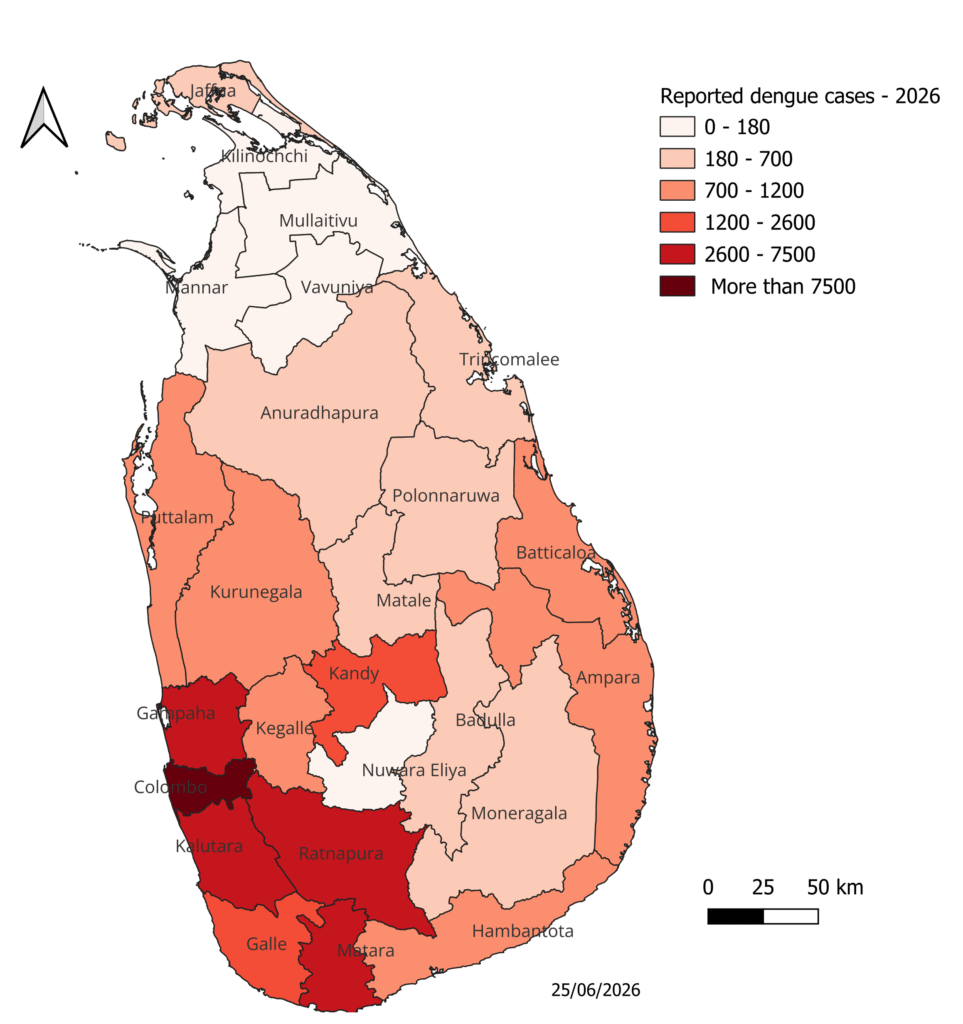
The Western province accounts for more than half of all reported cases, with 52.12% of infections, followed by the Southern province with 16.04% and Sabaragamuwa province with 9.15%.
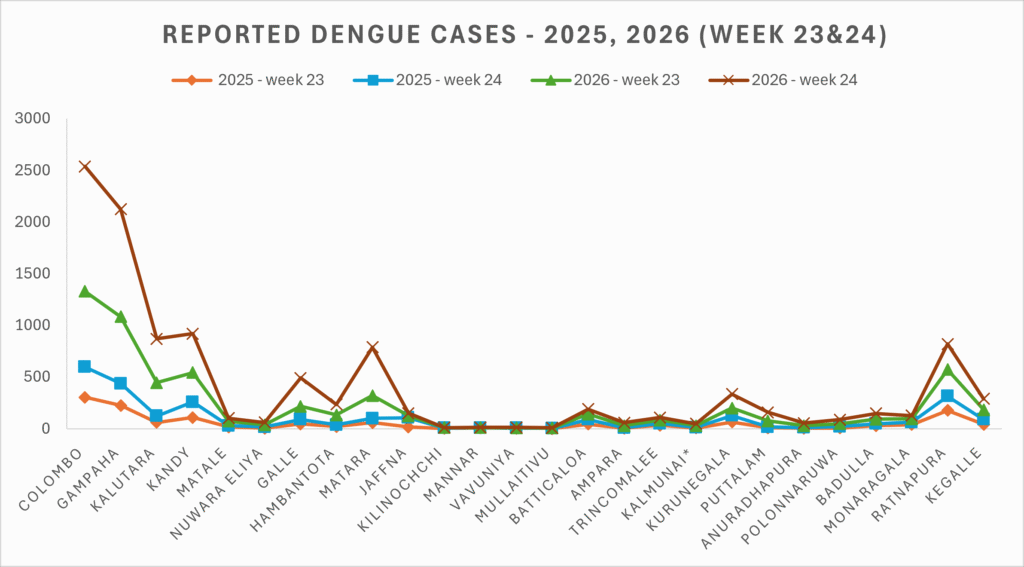
The highest number of dengue cases so far – 186,000 – was reported in 2017 which recorded 440 deaths, Kannangara noted.
Calls for a presidential task force
As dengue continues steadily rise, the Government Medical Officers’ Association (GMOA) described the current outbreak as approaching “super epidemic” proportions and called for the immediate establishment of a presidential task force to coordinate the national response.
GMOA Media Spokesperson Chamil Wijesinghe said dengue transmission is now approaching levels last seen during Sri Lanka’s devastating 2017 epidemic.
“In May, 8,600 patients were reported. However, in June, more than 9,000 cases were reported within the first two weeks alone. This highlights the danger inherent in this situation,” he said.
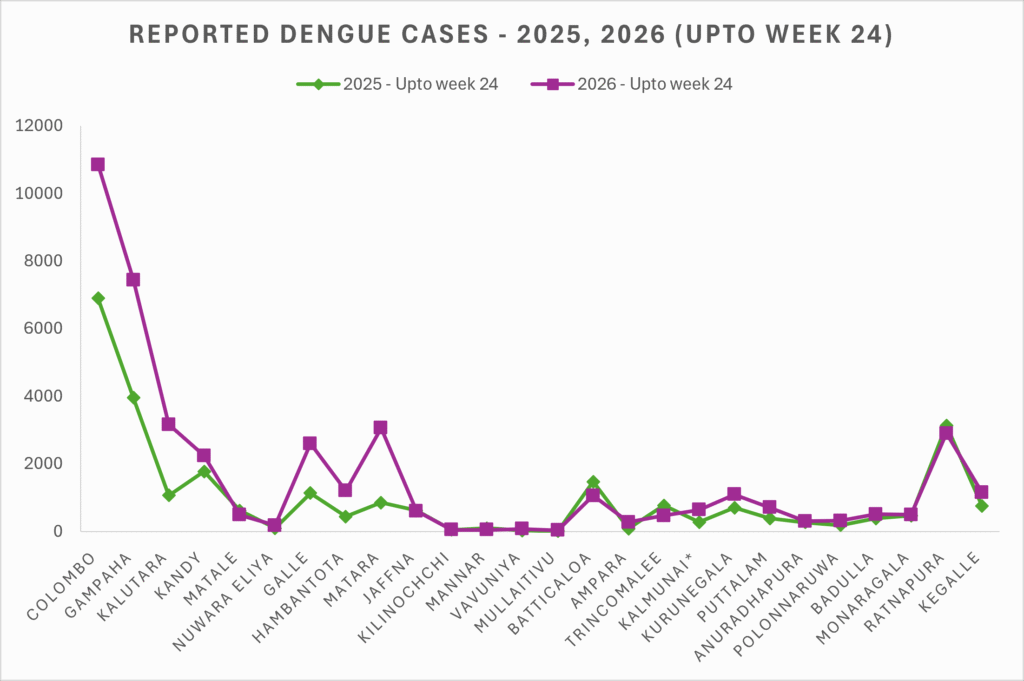
Wijesinghe also noted that weekly dengue cases in Colombo district have increased by approximately 200% compared with the same period last year, while more than half of all patients continue to originate from the Western province.
The medical practitioner warned that the healthcare system is reaching its limits even before dengue infections peak.
“The most serious issue is that although the number of dengue patients has not yet reached its maximum level, the healthcare system is reaching its maximum capacity,” he said, while adding: “If this situation escalates any further, the healthcare system will not be able to withstand it.”
To prepare for this scenario, the GMOA has proposed a centralized national action plan led by a presidential task force capable of coordinating resources across ministries, local authorities, healthcare institutions and community organizations.
Three-day national operation
In response to the escalating crisis, the government has launched a special three-day dengue suppression campaign between June 24-26 covering 14 high-risk districts.
The operation targets 112 Medical Officer of Health (MOH) divisions and 600 Grama Niladhari (village officer) divisions identified as having elevated transmission risks.
As part of the initiative, the Sri Lanka Air Force, Colombo Municipal Council and the Clean Sri Lanka Secretariat have deployed drones to identify breeding locations in rooftops, abandoned structures and other difficult-to-access areas in Colombo.
A special dengue operations center established by the Department of Government Information has also begun receiving public complaints.
On the first day alone, the center recorded 47 complaints, including 19 reports of blocked drains and stagnant water, 15 related to improper waste disposal, nine concerning overgrown or abandoned lands and four requests for information and general queries .
Officials said the reports illustrate how environmental neglect continues to fuel mosquito breeding across many communities.
Poor drainage key drive
Beyond household negligence, public health inspectors noted how structural issues are contributing significantly to the outbreak.
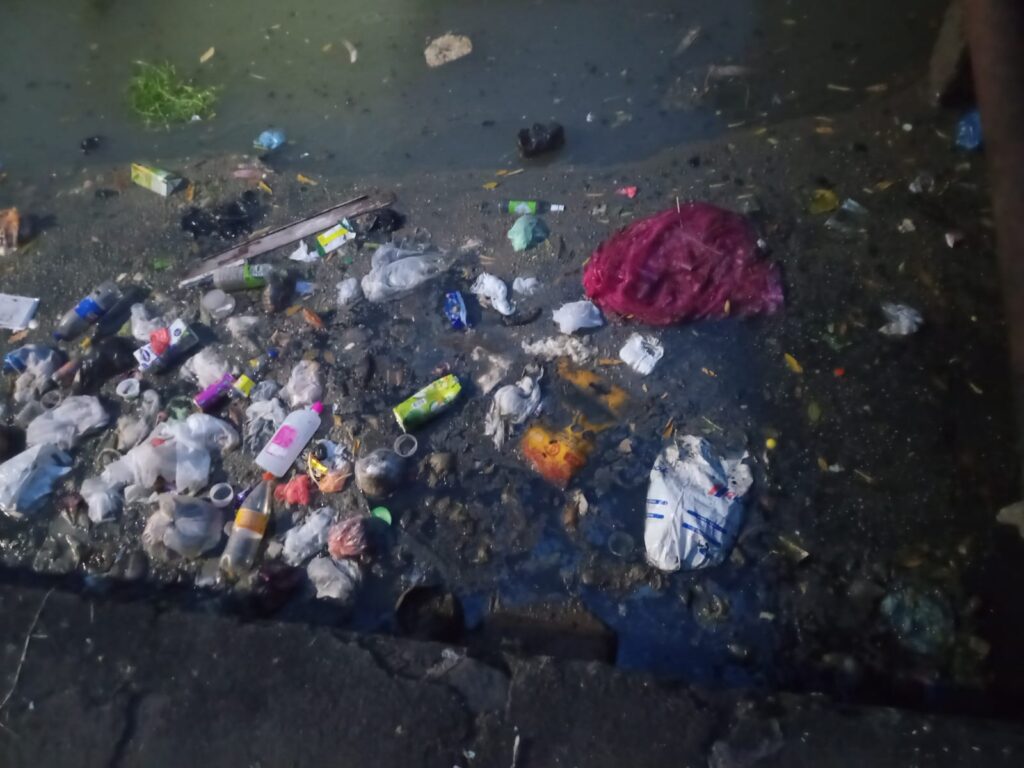
Muthukuda of the Public Health Inspectors’ Union said clogged drainage systems caused by illegal garbage dumping and inadequate maintenance by local authorities were major contributors to mosquito breeding.
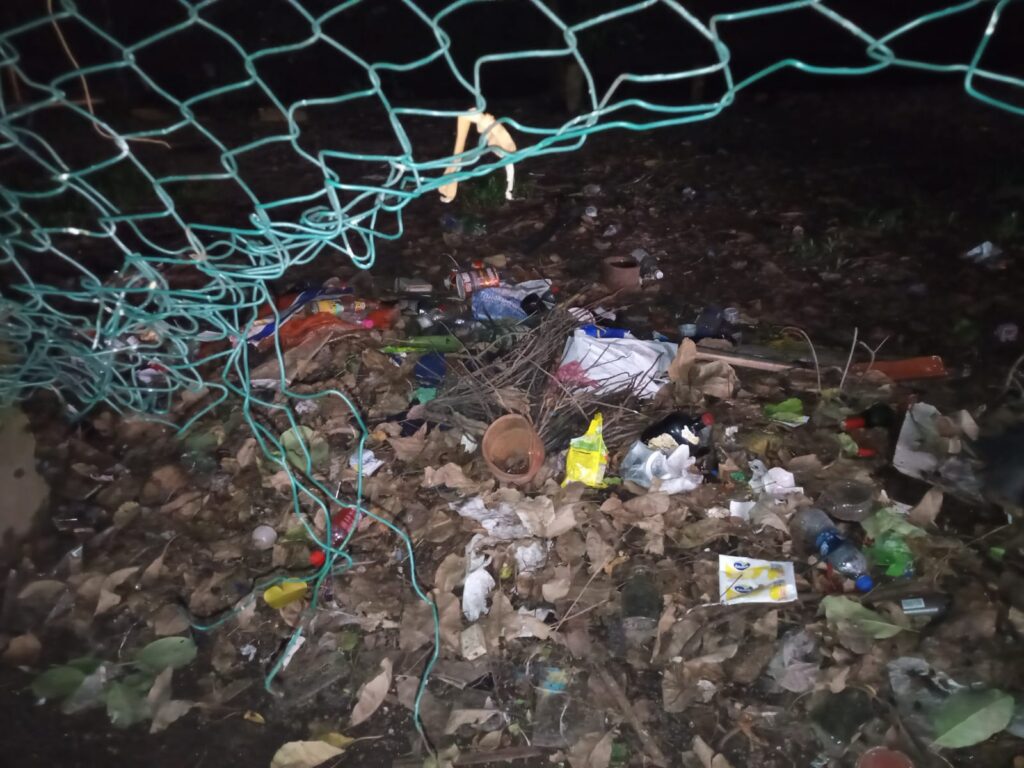
He highlighted poor drainage design in urban areas, arguing that many drainage systems are constructed without proper gradients, allowing water to stagnate and become ideal breeding environments for dengue-carrying mosquitoes.
“The Urban Development Authority should revisit drainage systems and rectify those issues,” he said.
Public cooperation decisive
Despite the government’s expanded enforcement efforts and nationwide cleanup operations, health officials insist that long-term success depends on sustained public participation.
Muthukuda said many citizens still fail to recognize the seriousness of the threat despite the rapidly rising caseload.
The NDCU and PHIs also noted that mosquito populations cannot be reduced solely through inspections, fines and legal action. Eliminating breeding grounds at homes, schools, workplaces, religious institutions and public spaces remains essential to preventing a larger epidemic.
With nearly 49,000 reported infections and hospitals operating under mounting pressure coupled with the southwest monsoon creating favorable conditions for mosquito breeding, health officials say the coming weeks will be critical in determining whether Sri Lanka can contain the outbreak or face a repeat of the devastating epidemics that overwhelmed the country in previous years.
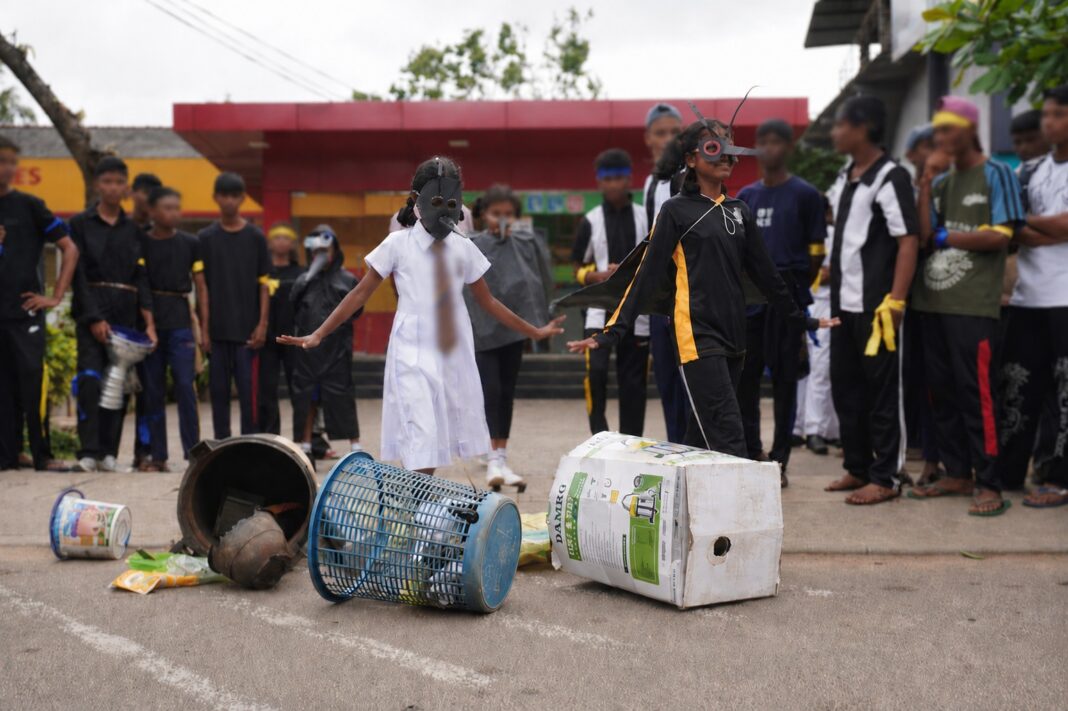
Banner Image: As schools emerge among the country’s highest-risk locations Students in Eppawala, Anuradhapura, participate in a dengue awareness campaign urging communities to eliminate mosquito breeding sites. Image courtesy of Thisara Samal.
This story was written and edited by Gagani Weerakoon. She leads the editorial at the Center for Investigative Reporting (CIR).
This story was produced with support from Report for the World, a global media service strengthening local independent journalism