


Speed Read:
- 1.13 million cases remain pending across Sri Lanka’s 293 courts, with more than 818,000 stuck in Magistrates’ Courts alone.
- Eight vacancies remain unfilled in the Supreme Court and Court of Appeal even as the government seeks to extend judges’ retirement age by two years.
- A recent recruitment drive filled only 33 of 50 magistrate positions, underscoring the judiciary’s growing shortage of judges.
- Sri Lanka has only 20 judges per one million people, a ratio the government says has contributed to years of mounting court delays
COLOMBO—Sri Lanka’s courts are buckling under the weight of more than one million unresolved cases. Courtrooms remain overcrowded, judicial vacancies persist, and litigants often wait years for justice.
Meanwhile, the government’s latest effort to improve the justice system has triggered a constitutional debate over judicial independence.
The National People’s Power (NPP) government’s proposal to extend the retirement age of Supreme Court and Court of Appeal judges has become one of its most contentious legal initiatives. Supporters argue the measure would retain experienced judges and improve court efficiency. Critics counter that changing the tenure of sitting judges without broad consultation risks undermining public confidence in the judiciary while doing little to address the systemic causes of Sri Lanka’s court backlog.
At the center of the dispute is a broader constitutional question: Can a reform intended to improve judicial efficiency be justified if it is perceived to weaken judicial independence?
The answer has sharply divided the government from nearly every major institution representing Sri Lanka’s legal profession.
The Bar Association of Sri Lanka (BASL), the Judicial Service Association of Sri Lanka (JSASL), retired judges, senior attorneys and legal academics maintained that the government should first fill long-standing judicial vacancies, modernize court administration, strengthen institutional capacity and implement reforms that have remained dormant for years.
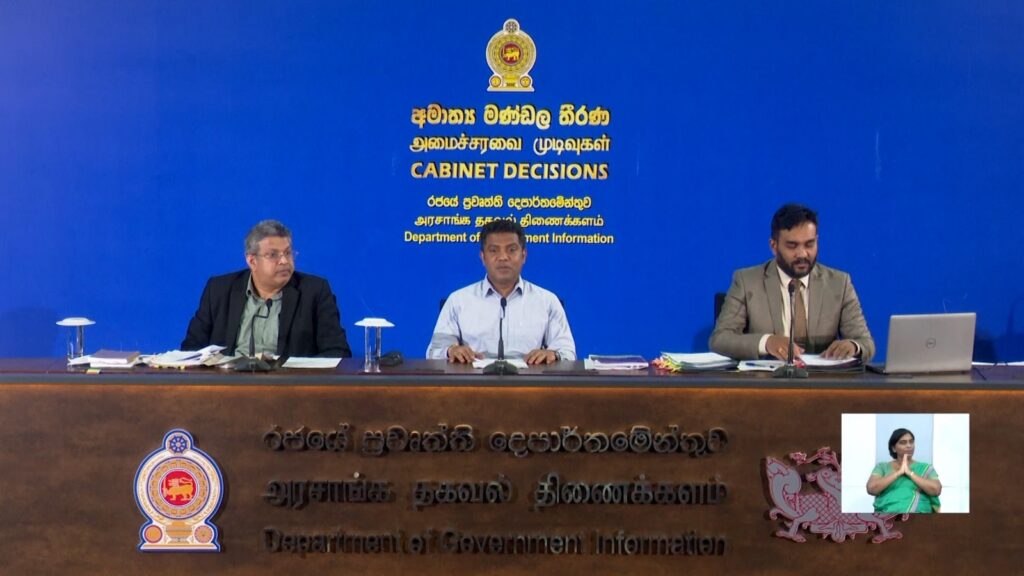
Justice minister Harshana Nanayakkara rejected claims that the proposal threatens judicial independence, saying it forms only one part of a broader strategy to reduce delays and strengthen the justice system.
“The judiciary must become more efficient, just like other systems. Increasing the retirement age of judges is only one aspect of improving efficiency. We are intervening in several other areas as well,” Nanayakkara said.
System under pressure
The scale of Sri Lanka’s court backlog underscores the urgency of reform.
According to Justice Ministry figures, courts were handling 1,134,474 pending cases across 293 courts as of June 30, 2025. More than 818,000 were before Magistrates’ Courts, while District Courts accounted for nearly 260,000. The Supreme Court and Court of Appeal together had more than 5,000 pending cases.
The backlog reflects years of institutional strain rather than a sudden breakdown.
Sri Lanka has roughly 20 judges for every one million persons, significantly fewer than many developed judicial systems, according to the Justice Ministry. Recruitment has also failed to keep pace with demand. A recent drive to recruit 50 magistrates attracted only 33 applicants, leaving vacancies unfilled at the entry level of the judiciary, Nanayakkara said.
The shortage extends to the country’s highest courts, where four vacancies remain in the Supreme Court and another four in the Court of Appeal. Many lawyers claimed those positions should be filled before the government considers constitutional amendments extending the tenure of sitting judges.
Nanayakkara acknowledged that years of inadequate planning contributed to the current crisis.
“To be frank, the root cause of this crisis is that, over the past 10 to 15 years, there should have been proper forecasting and a corresponding increase in the number of judges. That did not happen, and as a result, we are now facing a massive accumulation of cases.”
The minister said retaining experienced judges for an additional two years would help courts dispose of cases more quickly while broader reforms are implemented.
Those reforms include increasing court staff, addressing delays at the Government Analyst’s Department, reforming the Attorney General’s Department and strengthening institutional capacity across the justice sector.
Legal organizations, however, argue that the government’s solution does not match the underlying problem.
The BASL says extending judicial tenure neither resolves the shortage of judges nor addresses the institutional weaknesses responsible for chronic delays. Instead, it argues that constitutional amendments affecting superior court judges should be considered only as part of a comprehensive judicial reform program supported by broad public consultation and independent expert review.
The association has urged the government to prioritize filling judicial vacancies through the existing constitutional process and implement recommendations contained in the Justice Sector Assessment and Strategic Action Plan 2023.
Ripple effect
The government’s proposal has drawn its strongest resistance not from political opponents but from within the judiciary itself.
The JSASL, which represents district judges and magistrates, warned that extending the retirement age of Supreme Court and Court of Appeal judges would create a ripple effect throughout the judicial hierarchy, delaying promotions and disrupting career progression.
According to the association, keeping sitting judges in office for an additional two years would postpone appointments to the Supreme Court and Court of Appeal, delay promotions to the High Court and create bottlenecks throughout the judicial service.
The association argued that slower promotions would weaken morale, reduce professional motivation and make judicial service less attractive to experienced lawyers considering appointments to the bench.
The BASL has framed the issue more broadly as one of constitutional governance.
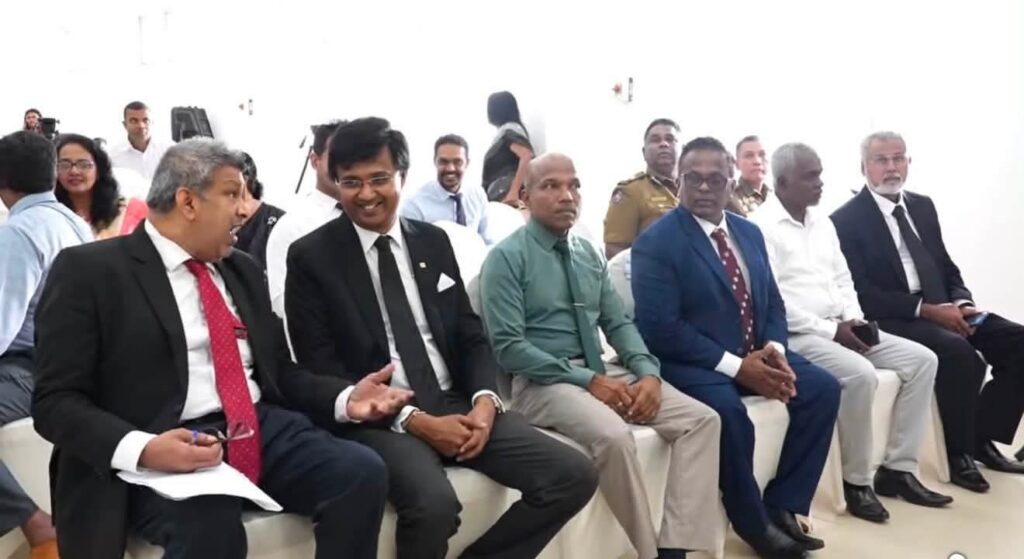
At a special general meeting on July 29, the association unanimously adopted a seven-point resolution opposing the amendment unless the government could demonstrate a clear institutional need supported by transparent evidence, meaningful consultation and a comprehensive assessment of its constitutional implications. It also urged the government to fill existing judicial vacancies before altering the tenure of serving judges.
Calls for consultation
Facing mounting criticism, Nanayakkara met a BASL delegation led by President Rajeev Amarasuriya on July 29.
Following the meeting, Amarasuriya said the BASL reiterated that the amendment should not proceed in its current form and urged the minister to present the association’s concerns to President Anura Kumara Dissanayake before the government makes a final decision.
Nanayakkara assured the delegation he would brief the president before determining the government’s next steps.
Despite the meeting, neither side appeared to shift its position.
The BASL maintained that the proposal had been developed without meaningful consultation and questioned why constitutional amendments affecting the superior judiciary were being pursued before addressing more immediate institutional shortcomings.
The government continued to insist that extending judicial tenure is only one component of a broader reform package intended to improve efficiency.

Constitutional question
The debate has become more complicated because of public confusion over the Supreme Court’s role if the amendment is challenged.
Ruling party legislator and attorney Lakmali Hemachandra said many people misunderstand the court’s constitutional function during the review process.
She explained that the Supreme Court is not asked to determine whether extending judges’ retirement age is good policy or whether judges themselves support it. Instead, its role is limited to deciding what level of constitutional approval the amendment requires.
“In practical terms, the court will determine whether Parliament alone has the authority to enact the amendment or whether it must also receive approval through a national referendum.”
Either outcome, she said, should not be interpreted as judicial support for—or opposition to—the proposal.
Hemachandra cautioned that portraying the court’s determination as an endorsement or rejection of the amendment misrepresents the constitutional process and risks drawing the judiciary into a political debate it is not required to resolve.
Her explanation underscores a distinction often lost in public discussion. The controversy is no longer simply about when judges should retire. It has evolved into a debate over how constitutional reforms affecting the judiciary should be made and who ultimately determines their legitimacy.
Treating the symptoms
The government’s case is rooted in practicality.
Officials argue that courts overwhelmed by more than one million pending cases need experienced judges to remain in office while wider reforms take effect.
Few within the legal profession dispute the scale of the crisis.
Instead, they question whether extending the tenure of sitting judges addresses its underlying causes.
Critics point to vacancies in the superior courts, recruitment failures at lower levels, outdated court infrastructure and years of unimplemented reform recommendations. Those structural deficiencies, they argue, cannot be resolved simply by postponing retirements.
The BASL has also argued that the recent expansion in the approved number of superior court judges has already increased judicial capacity, making it difficult to justify altering constitutional tenure provisions solely on efficiency grounds.
More than a retirement debate
The dispute has grown far beyond the retirement age of a handful of judges.
It has become a test of how Sri Lanka intends to modernize one of its most strained public institutions while preserving the constitutional safeguards that protect judicial independence.
There is broad agreement that the justice system needs more judges, faster appointments, stronger court administration, better forensic capacity and modernized institutions. The disagreement lies in whether extending the tenure of sitting superior court judges should be part of that reform.
The government views the amendment as a practical step to improve efficiency. Much of the legal profession sees it as a constitutional change that demands far greater scrutiny.
Whatever Parliament ultimately decides, the controversy has exposed a deeper truth. Sri Lanka’s judicial crisis is rooted not in the retirement age of a few judges but in years of underinvestment, delayed appointments and neglected institutional reform. Extending judicial tenure may buy time, but it cannot substitute for rebuilding the foundations of a justice system burdened by more than one million pending cases. Lasting reform will depend not only on clearing court dockets, but also on preserving public confidence that judicial independence remains beyond political expediency.
Banner Image: BASL call for a special general meeting on July 29 where they passed a resolution unanimously agreeing to oppose government’s proposal to extend the retirement age of Supreme Court judges by two years. Image courtesy of Lakmal Sooriyagoda.
This story was written and edited by Gagani Weerakoon. She leads the editorial at the Center for Investigative Reporting (CIR).