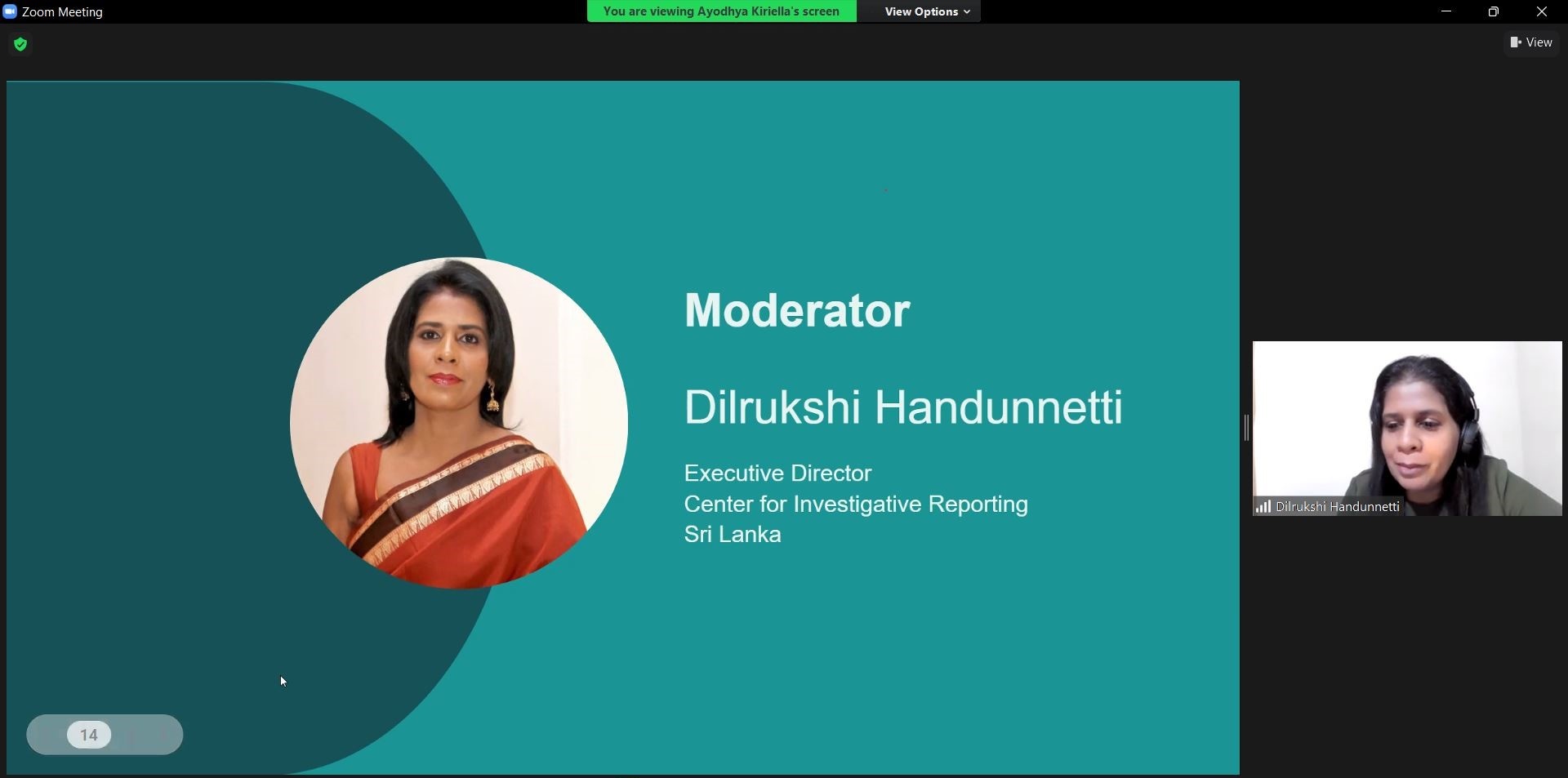
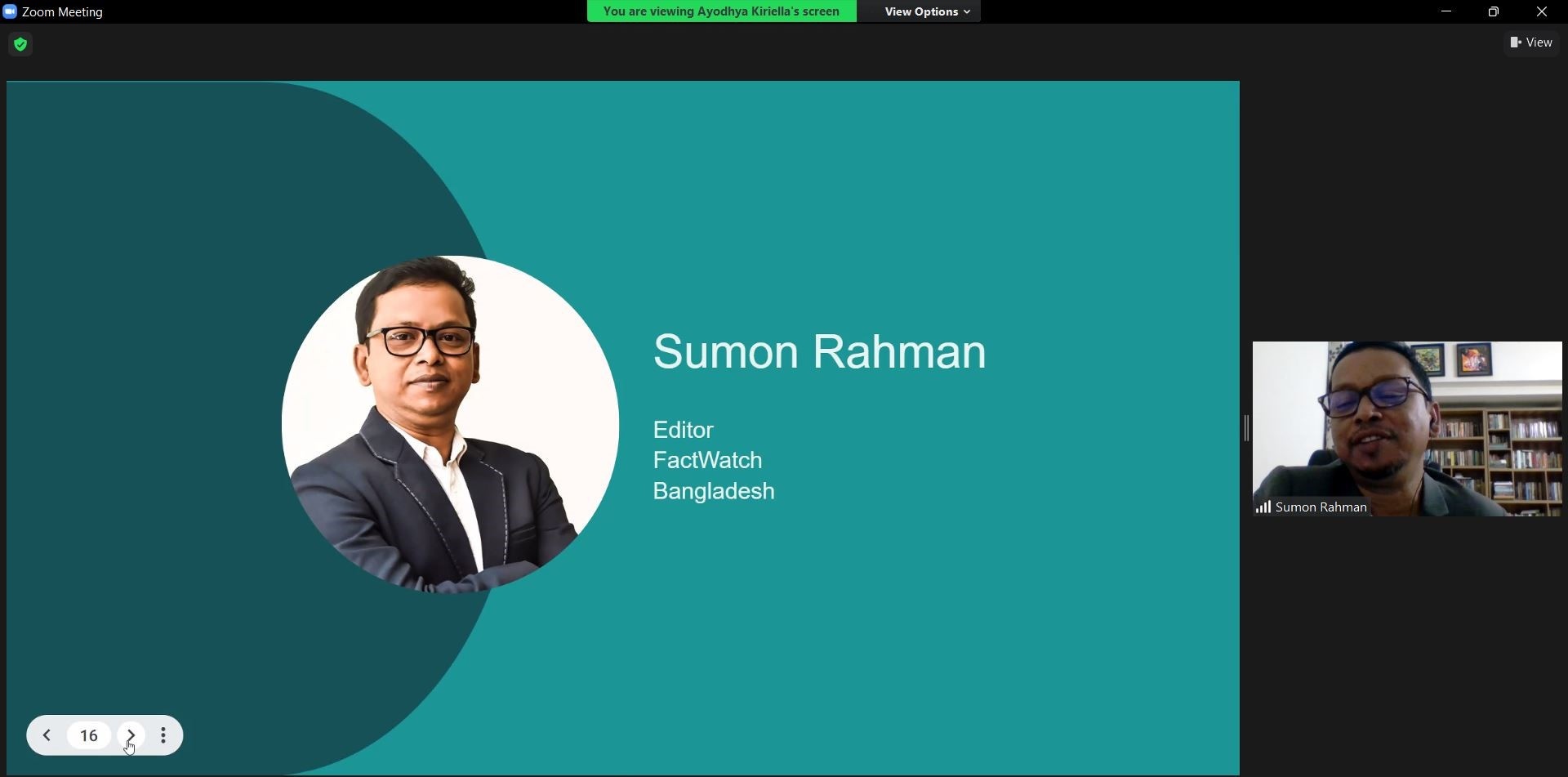
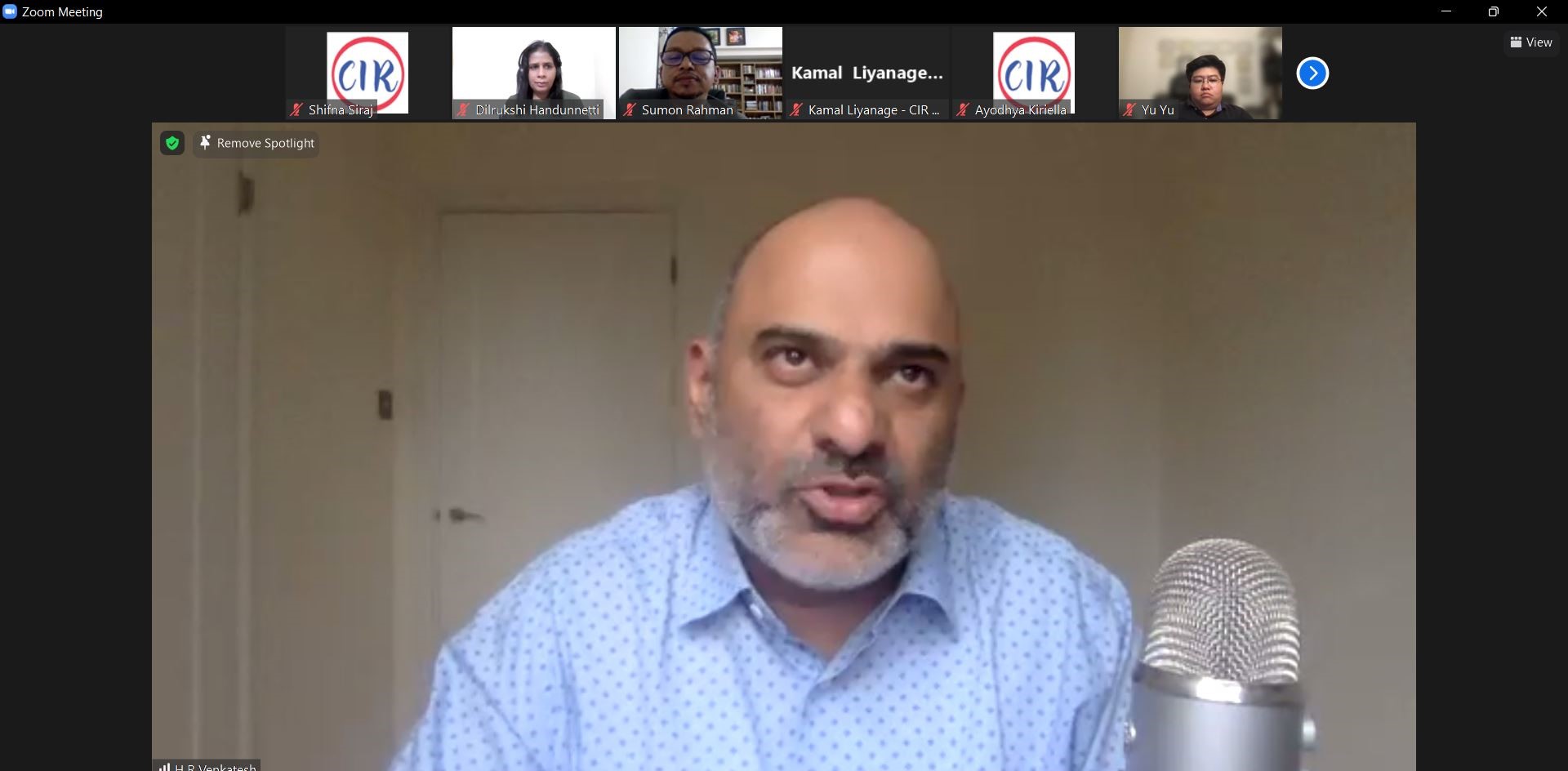
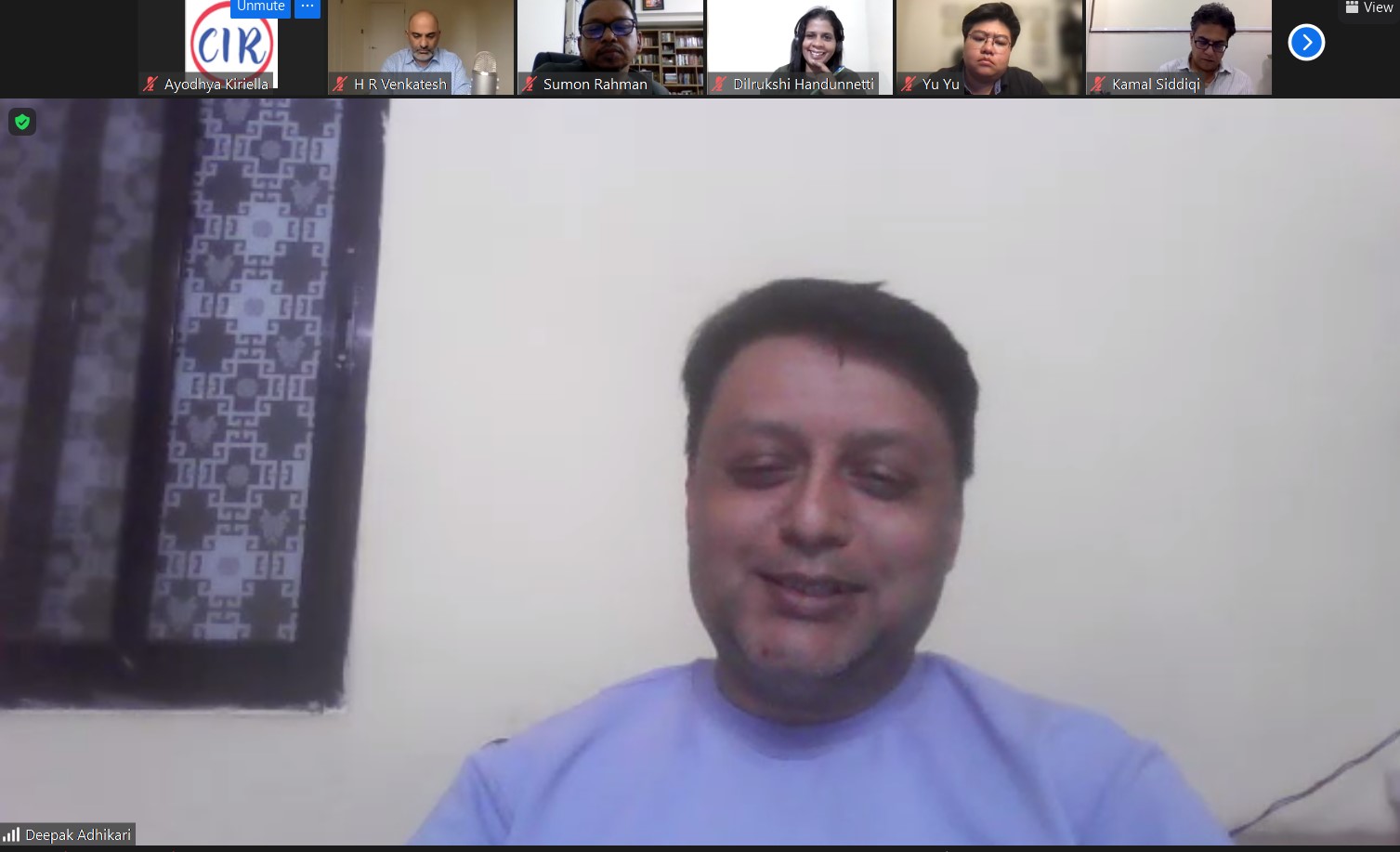
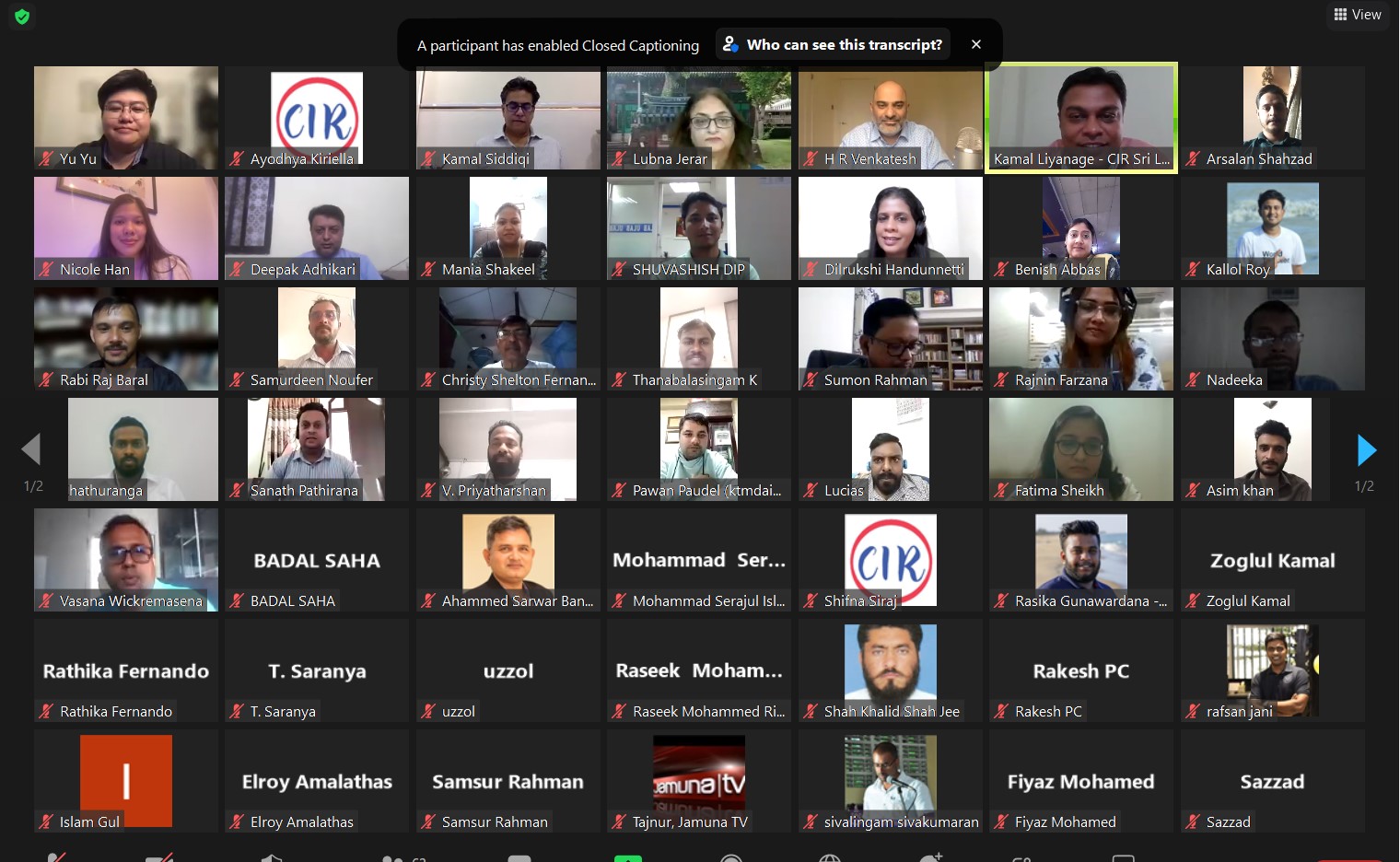
Panelists for this webinar included Dr. Sumon Rahman, Editor FactWatch from Bangladesh, H.R. Venkatesh, Director Training & Research, BOOM FactCheck from India, Deepak Adhikari, Editor Nepal Check from Nepal and Nicole Han, Strategic Partner Development, Integrity Programs and Partnerships, APAC. The session was moderated by Dilrukshi Handunnetti, Executive Director, Center for Investigative Reporting Sri Lanka.
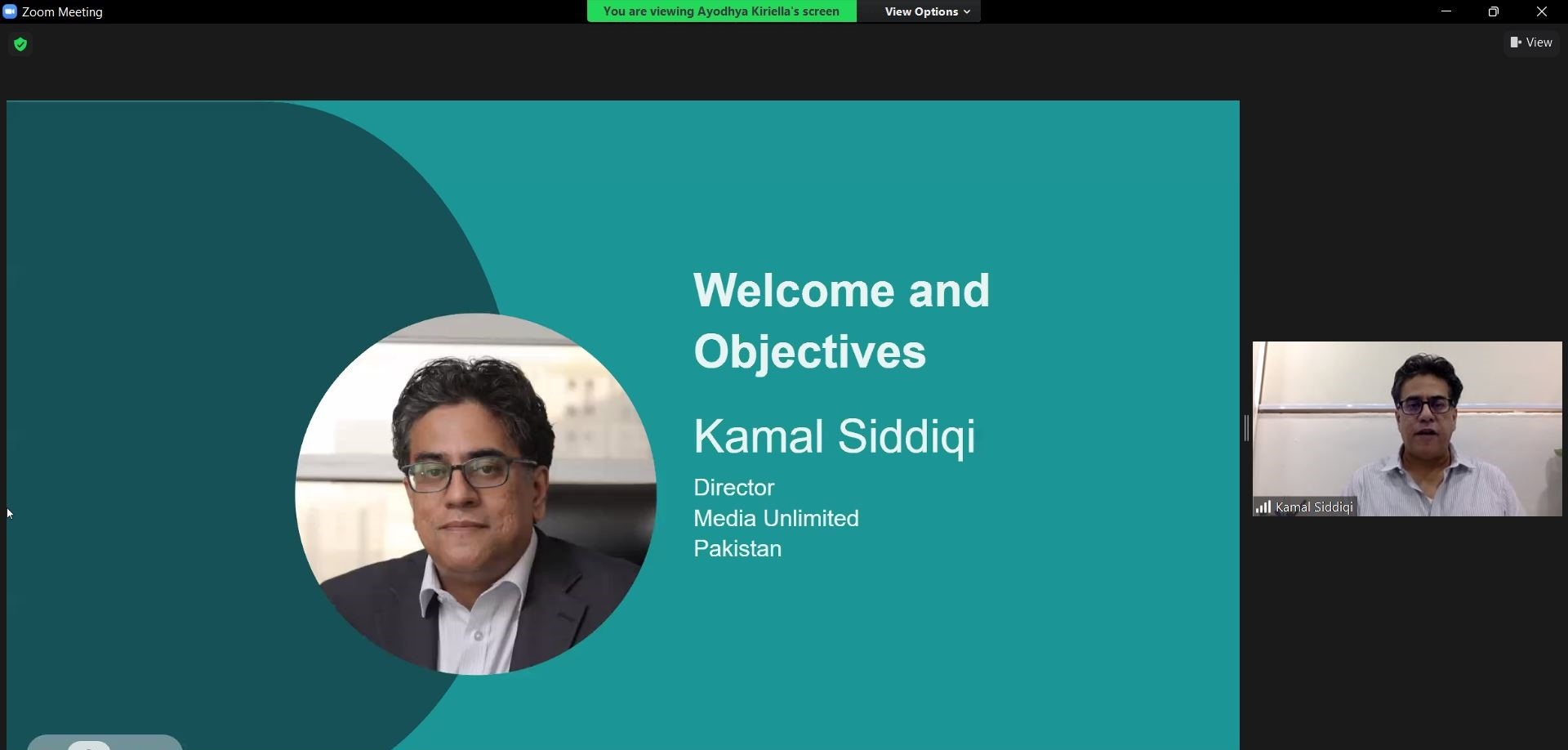
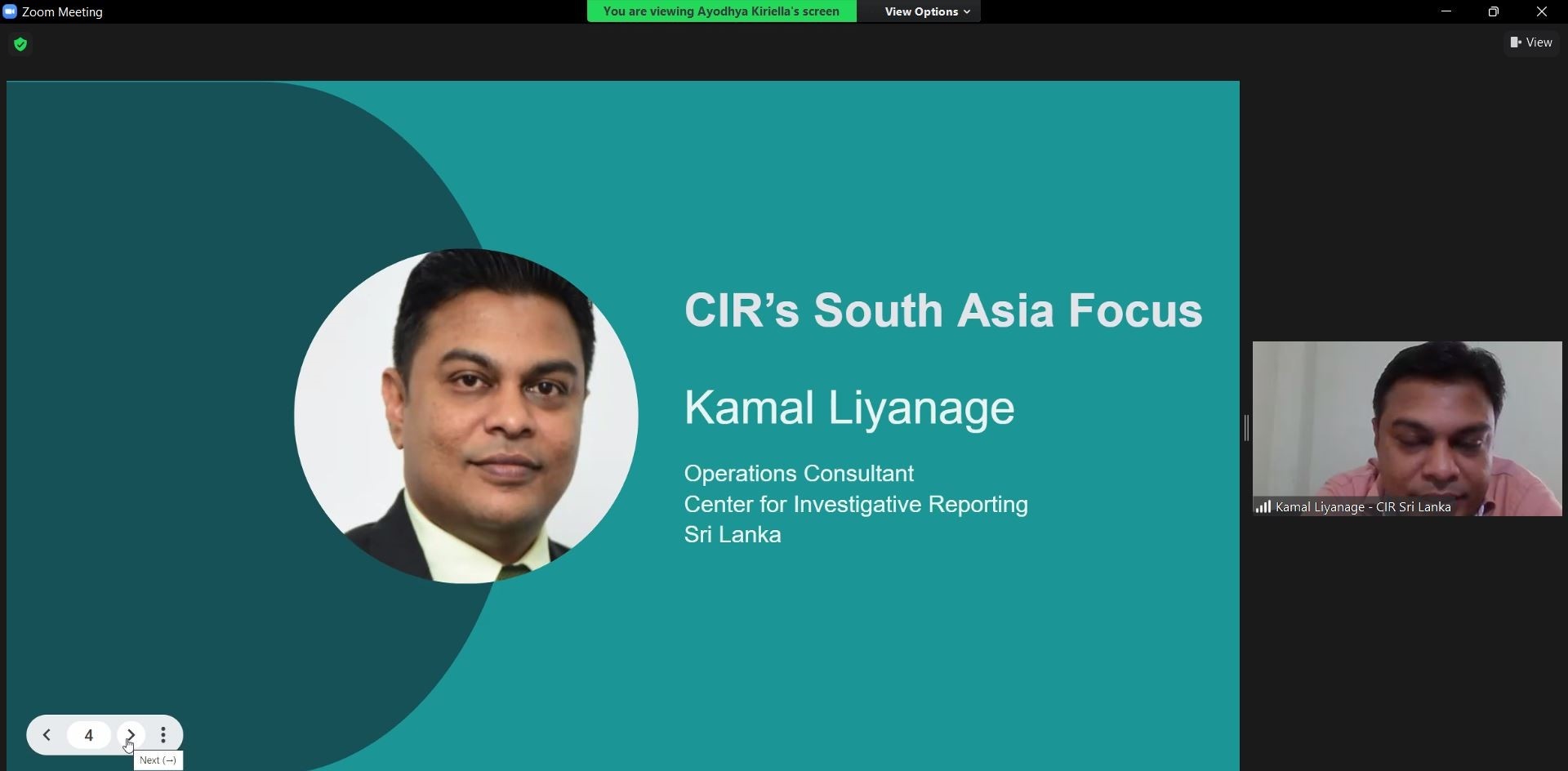
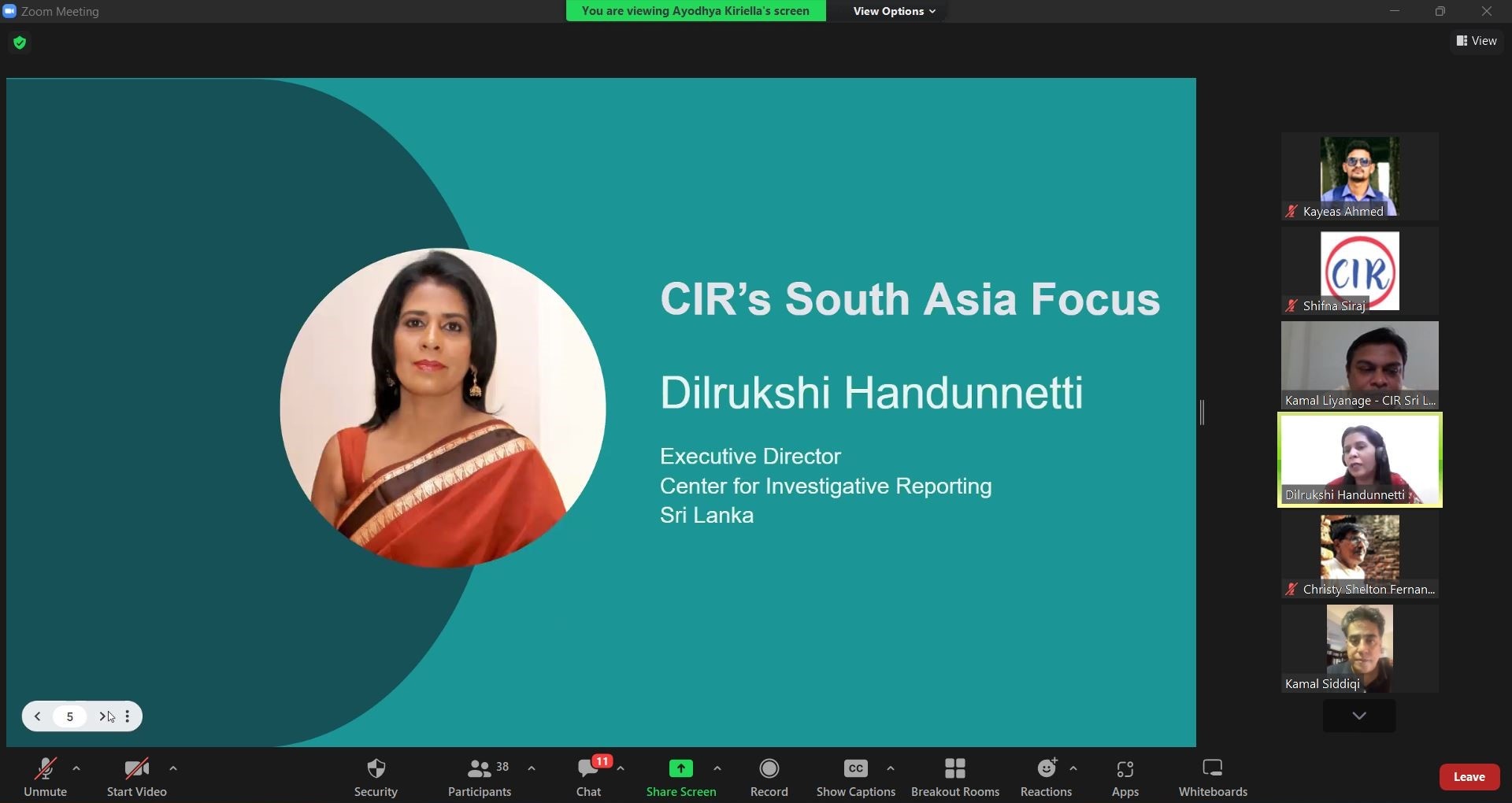
Kamal Siddiqi, Director, Media Unlimited, Pakistan welcomed the speakers and participants to the webinar and gave a brief introduction of the series. He was followed by Kamal Liyanage, Operations Consultant, Center for Investigative Reporting (CIR), Sri Lanka who gave a details about CIR and its journey so far.
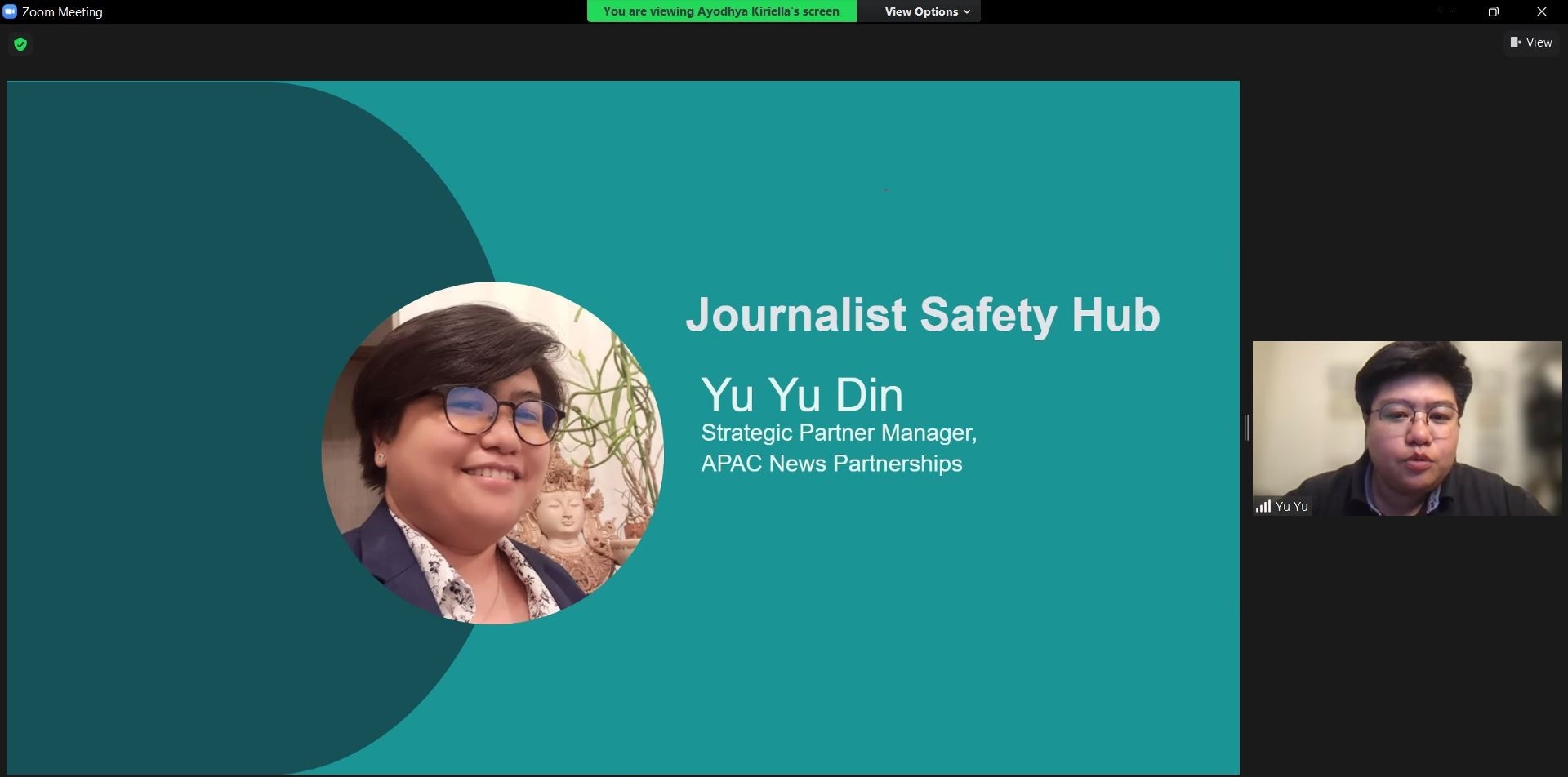
Yu Yu Din, Strategic Partner Manager, APAC News Partnerships, Meta talked about Meta’s Journalist Safety Hub and encouraged participants to explore Meta’s Human Rights Report that has been launched this year.
H.R. Venkatesh in his opening comments spoke about how it is vital that journalism be practiced in the language of the people of a region and stressed that there was a need to have more local journalism.
Deepak Adhikari talked about the importance of factchecking after natural disasters and during health issues like Covid. He said there was a lot of misinformation during such times, and this caused a lot of anxiety in communities.
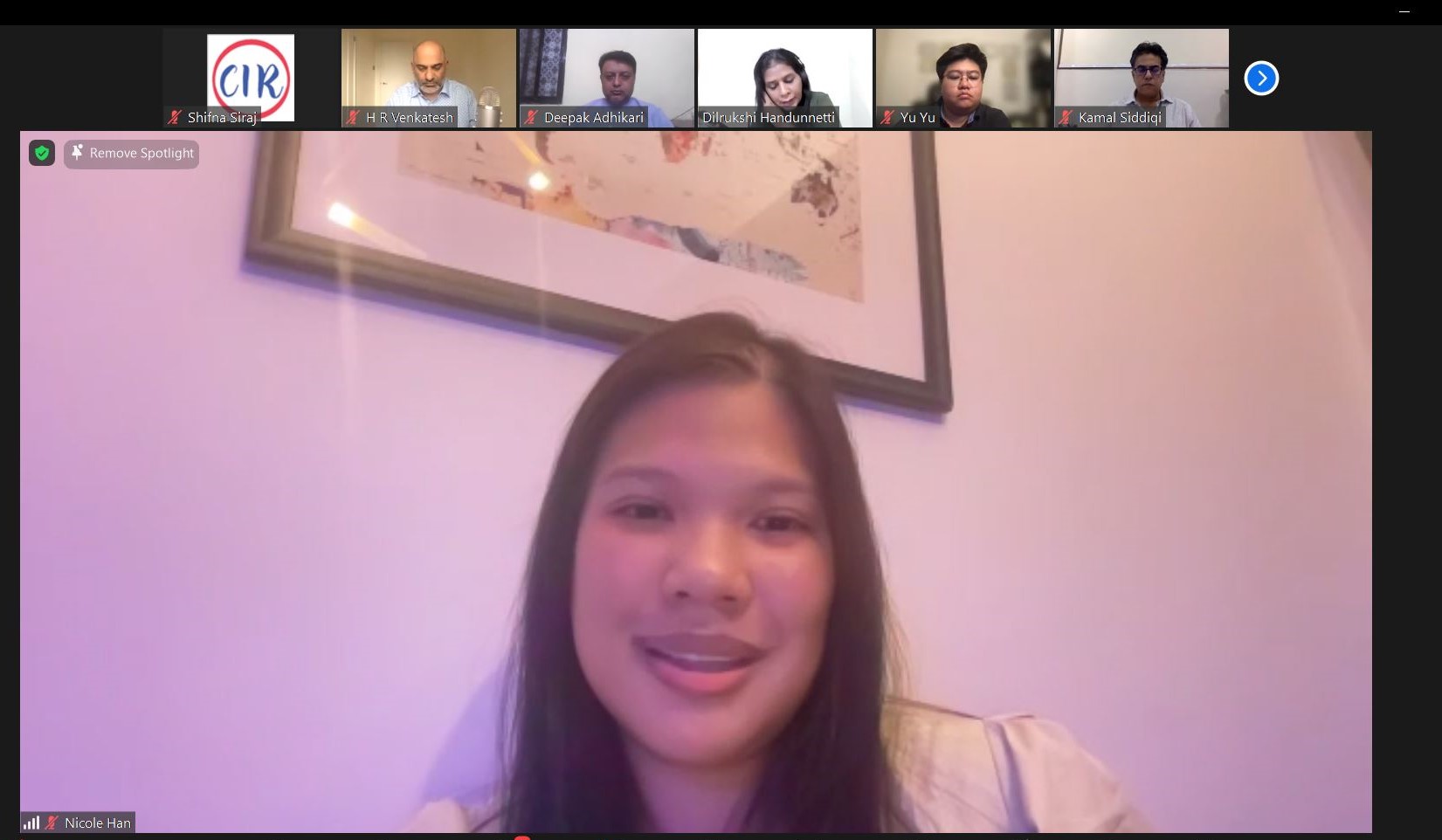
The last speaker Nicole Han informed the audience about how Meta sometimes depended on independent factcheckers from a country to tackle misinformation from that country. Han said there is no single way to determine if a post contains misinformation or not, as technology keeps changing.
She added that Meta does not fact check politicians or those running for elections, as it believes in free discourse and encourages freedom of speech.
This was followed by a very vibrant Q&A session.
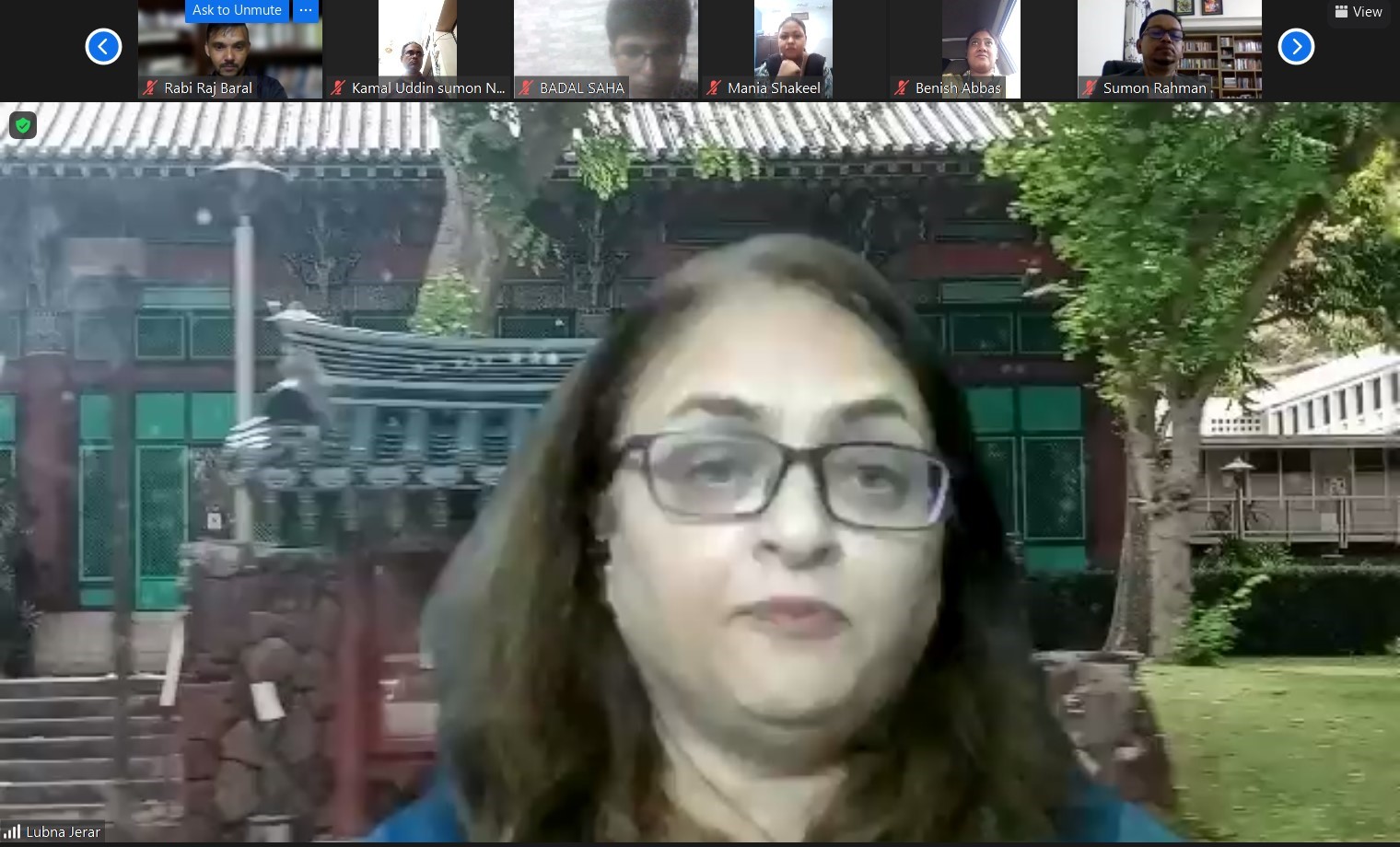
Each speaker gave their concluding remarks and the webinar concluded with Lubna Jerar of Media Unlimited, Pakistan giving the thank you note.
After his contribution to the blockbuster Pandora Papers investigation was published, the investigative journalist John-Allan Namu hastily rented an apartment.
He moved his family out of their home, pulled his children from school, and was lying low for a month rather than waiting to see if the story he’d worked on about offshore wealth, secret bank accounts, and the most powerful family in Kenya would lead to any blowback. It was then that he started to wonder if the job is really worth it.
“With the Pandora Papers, we were taking on the most powerful family in the country at the time and exposing things they may not want exposed,” he said. “Some people thought, legitimately, that it would not be a good idea for me and my family to stick around and see what the responses were.”
It was a moment of reckoning for Namu, the head of Africa Uncensored, an investigative and in-depth journalism production house in Nairobi. The moment caused him to question the demands of being a watchdog reporter. Was it fair to his family to pursue a life that brings risks and stresses, and when would be the right time to do something else?
“Those ideas started to percolate. I wondered if in my own desire and ambition to do investigative journalism, if I was offering my children, my wife, a normal life. That’s a heavy thing to ask yourself. This isn’t a normal life, is it fair to impose it on my family?” he said during a webinar on the emotional toll of investigative journalism hosted by the Reuters Institute at the University of Oxford.
Carrying a Unique Burden
“I don’t want to wear this as some sort of burden I carry alone, this has been the experience of lots of investigative journalists around the world,” Namu pointed out. “It really made me think: why was I putting my family through this? My children are now at the age where they can truly question my work and the things that I do. Those are some hard conversations.”
“People don’t realize this about journalists. There’s not just one person behind a byline. There’s a family, a community, impacted by anything that happens to that journalist,” he added.
It’s a point that the moderator, Indian journalist and news anchor Mitali Mukherjee, echoed when she said that in private conversations, at least, many reporters — “especially those with children” — are asking if their work makes them too much of a target. “And looking over their shoulder to look at their children’s lives and asking what their prospects are as a result of what we are choosing to do.”
Mukherjee said Namu’s experience — which has put him in some extremely uncomfortable situations — raises questions about “what one should expect as an investigative journalist, what comes with the job, and what kind of collateral emotional damage journalists have to deal with.”
Namu said that while personal attacks are a huge issue, whether in a physical or reputational sense or from online trolling, there is also a lifestyle issue; the very work of investigative reporting brings its own burdens.
“What sinks in more deeply are some of the experiences speaking to people who themselves have been at the sharp end of these things… and the toll it takes on you as a person having to listen to, and live vicariously through these traumatic experiences. Those are the things that seep into your bones.”
For many years Namu led a team of investigators as special projects editor at the Kenya Television Network, before leaving to set up Africa Uncensored, where the organizational mission statement is “investigate, expose, and empower.” A three-part investigation he conducted on the South Sudanese elite profiting despite the war in that country was among the winners of GIJN’s Shining Light Award in 2019.
While there can be specific triggers that can affect a journalist’s mental and emotional well-being — a difficult story, an attack, a legal challenge — he said personally the emotional toll has “seeped in over a long period.”“In terms of advice, it’s to find your pillars, the people you can draw your strength from, in those situations where your well is empty.” — Kenyan investigative journalist John-Allan Namu
“That’s the toll that comes from any sort of in-depth journalism. Long hours, time away from family, the guilt about that time away when it’s no longer a badge of honor,” he explained. “A large part of an investigative journalist’s career is spent on their own, physically, or mentally, where they are contending with certain heavy facts that perhaps not everybody else knows. It requires you to be the person to dig, do the unpopular things, ask the tough questions repeatedly while developing a reputation for not being liked in some quarters.”
“There’s a balance you have to understand… the solitary life and career that you’ve chosen does have consequences,” he added.
To survive, and prosper, he advised journalists to seek out supportive members of their tribe: the editors that will back reporters up, the colleagues who can understand what investigative journalists must endure, and who also might be going through something similar.
Being part of the cross-border collaboration Pandora Papers reminded John-Allan Namu that he is not alone, and is part of a larger investigative journalism community. Image: Screenshot ICIJ
“Being part of that community of journalists who worked on that, was a highlight of my career. Those are the things that kept me going,” he said. “My wife was constantly telling me we’ve been through worse. She’s been quite a pillar for me. In terms of advice, it’s to find your pillars, the people you can draw your strength from, in those situations where your well is empty.”
While he said some of the stories didn’t have the impact he was hoping for, knowing “that it’s out there, it can’t be taken back. People can attempt to bury it but … the genie is out of the bottle,” bring him solace.
Designing a Modern Newsroom
“There are certain things you cannot prepare a journalist for,” John-Allan Namu says, “but you can show them… that you support the work they do, that you stand by it.”
Mukherjee pointed out how the last decade has changed the backdrop in which investigative reporters are working, with state-sponsored pushbacks seeming to have become more common, and attacks that “can be quite difficult for an individual journalist or individual newsroom to deal with.”
Namu agreed that there are certain trends globally and locally that reflect this shift: the emergence of online groups and people whose job it is to “claw back these kinds of advances” in accountability and transparency. “People whose job it is to portray the world in a very, very different [way]: essentially the antithesis of what we journalists are doing.”
He added that while there is a limit to what journalists and editors can do, at Africa Uncensored he is trying to create emotional support structures in the newsroom. While it’s a small team, leaving the door open to staff who need to talk is one approach; another is finding professional help for those who need it.
“We’ve taken quite seriously the mental toll this work has on journalists… to let people know it’s OK to have down days, or even down weeks or months, and to get the resources to support journalists who go through this kind of stuff,” he said.
Namu also says editorial backup is vital as a technique for supporting frontline investigators.
“There are certain things you cannot prepare a journalist for,” he noted. “But you can show them… That you support the work they do, that you stand by it. An editor’s job is to give guidance and protection. And what that means is literally that: that you must protect them when they are under attack.”
And after the Pandora Papers? He went back to his home a few weeks later and carried on with the job.
“For a long time I did think about hanging up my boots and moving onto something easier, less threatening, that doesn’t get me awkward stares or silly questions, or make me the ire of politicians or people in the elite that I haven’t even met or done stories about,” he said.
While he’s still thinking about those very existential questions, for now he’s decided to still stand with the hopeful crew who believe their stories can make a difference.
“Ultimately, there have to be those of us who choose to be naive in our belief that journalism does change things,” he said. “And that the work that we do — though insignificant as one piece, or as two pieces — over time, builds a body of work that can… expose wrongdoing.”
You can watch the entire Reuters Institute webinar with Namu on YouTube:
Producing news for children is just as important as doing so for adults.
In a recent ICFJ Pamela Howard Forum on Global Crisis Reporting webinar, “News for kids: what it can teach us,” editors who produce news for children from publications in the U.S., the Netherlands, Singapore and Honduras discussed their methods for engaging and informing young people on the news.
“I think that there are lessons that we’ve learned producing a children’s newspaper that can be applied for all news platforms, for all ages,” said Russ Kahn, editor-in-chief of News-o-Matic.
In addition to Kahn, Carlos Echeverri, editor and publisher of Mi Primer Diario (My First Newspaper, in English), Henrike van Gelder, editor-in-chief of Kidsweek, Serene Luo, schools editor for The Straits Times and Dr. Aralynn Abara McMane, president of Global Youth & News Media, shared their insights on producing news for young people.
The panel discussed tips for appealing to young people and including them in the journalistic process:
Use visuals
News formats should be as visually appealing as possible to children. Khan emphasized making news for young people visual above all else to create an immersive experience that draws kids into stories. With more access to tablets and other technology, young people also expect more multimedia in content designed for them. “I think the days of sharing an article with a single picture, those days are long gone, at least if we want to really, truly engage students,” Khan said.
The Straits Times children’s publication, “Little Red Dot,” seeks to begin conversations about civic engagement early through formats like comics and illustrations. Luo sees it as a way to encourage young people to engage with valuable information through entertainment. “It’s almost like parents hiding the broccoli and carrots in the mashed potatoes and the hamburgers,” she said.
Echeverri explained that each page or screen must be a strong experience for readers. Echeverri publishes “My First Newspaper” for children in nine countries, including one in Honduras, “Mi Primer Diario.” Mi Primer Diario is particularly valuable for young readers in Honduras because of poor access to books and libraries in the country, Echeverri said.
Journalists should also emphasize solutions in their reporting for young people. “Solutions journalism puts the emphasis on solid, rigorous journalist inquiry into possible solutions to a problem rather than just reporting about the problem itself,” McMane explained.
One way to incorporate solutions is to include an action perspective, van Gelder said. “If you’re really worried about the climate, really worried about things that happen in the world, this is what you can do,” van Gelder explained as an example.
Finding ways to include children as a part of the solution to a news story is another important part of engagement, encouraging young people to take part in addressing a problem they read. “I think it’s really important to give a glimmer of hope of a bright spot at the end of an article,” van Gelder explained. Van Gelder’s publications, Kidsweek and Samsam, try to have a bright spot with each article, although it can be difficult.
The Little Red Dot includes activity box prompts, for example, to get kids thinking critically about what they could donate for certain issues.
Editors also emphasized connecting with teachers and schools to distribute news and educate students about journalism. “The teachers are our main allies, our main partners to put the newspaper into the school,” Echeverri explained about distributing Mi Primer Diario in Honduras.
Before the COVID-19 pandemic, Luo said the Little Red Dot held a face-to-face outreach program called the” Little Red Dot Pop-up Newsroom” which would visit schools. Activities included choosing photos for a front page newspaper story, and at the end, students received a press pass with their photo.
Explain relevant news to kids
Van Gelder underscored the importance of speaking with experts on topics to explain issues in a simpler way for kids, even though you might thoroughly understand the topic yourself. Experts have more authority to explain the topic in children’s language.
The relevance of news is also key to connecting with children. Luo explained that fostering engagement with young people requires choosing the correct topics that will resonate with kids. Echeverri said a real connection with the community is the essence of success, also explaining ways to build trust, like handing out newspapers at school or partnering with local food establishments like Burger King to distribute news.
The editors concluded by emphasizing the importance of reporting designed for young people. “Don’t forget about the kids,” Kahn said, emphasizing that news is not only for grown-ups.
Luo echoed Kahn’s point, saying kids are interested in the news, and willing to read it. “You just have to make time, space and things relevant for them,” Luo said.
The ‘Future of Journalism in South Asia’ webinar series successfully concluded its third webinar on October 6themed ‘Engaging the Next Generation of Journalists’
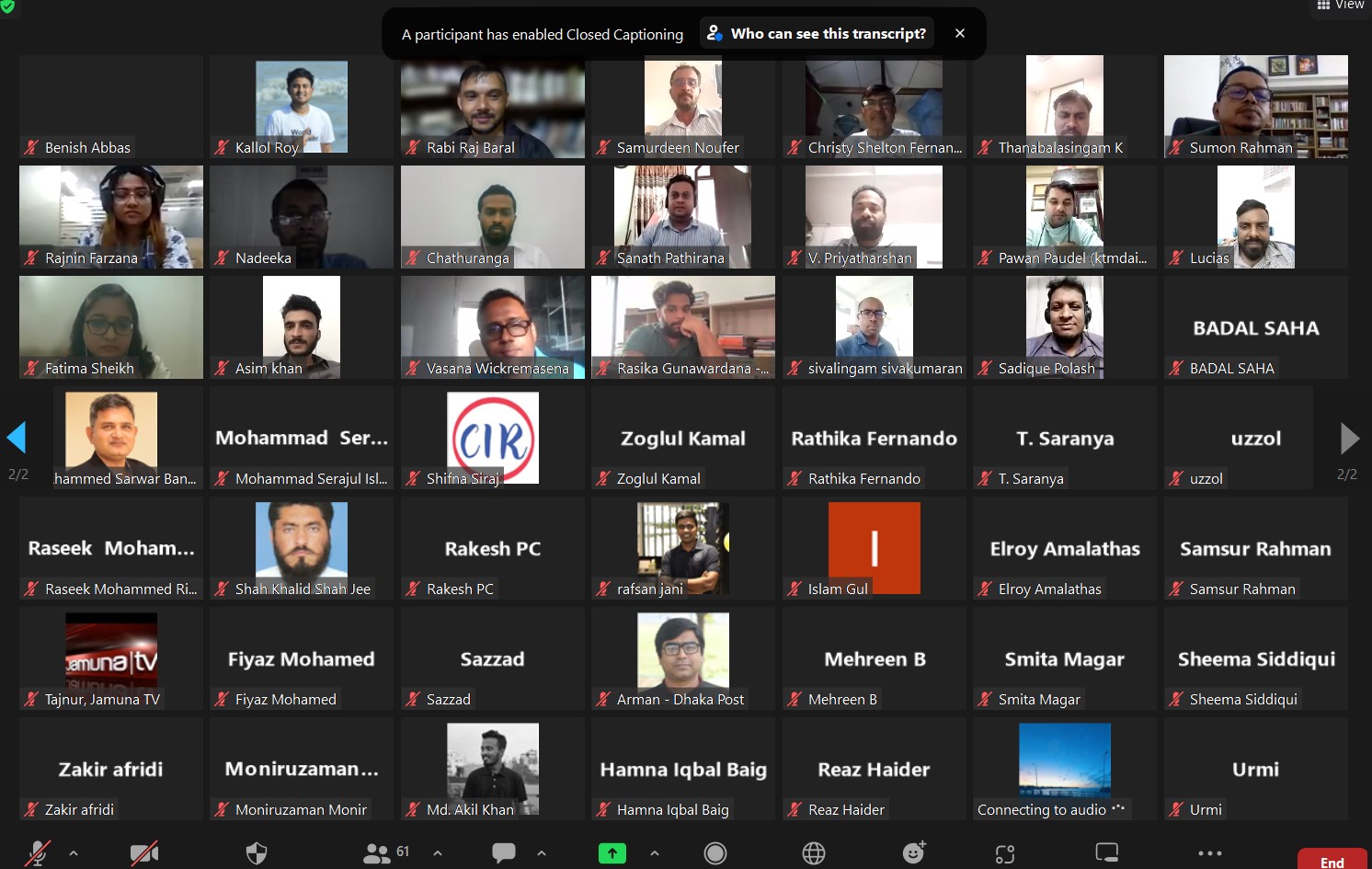
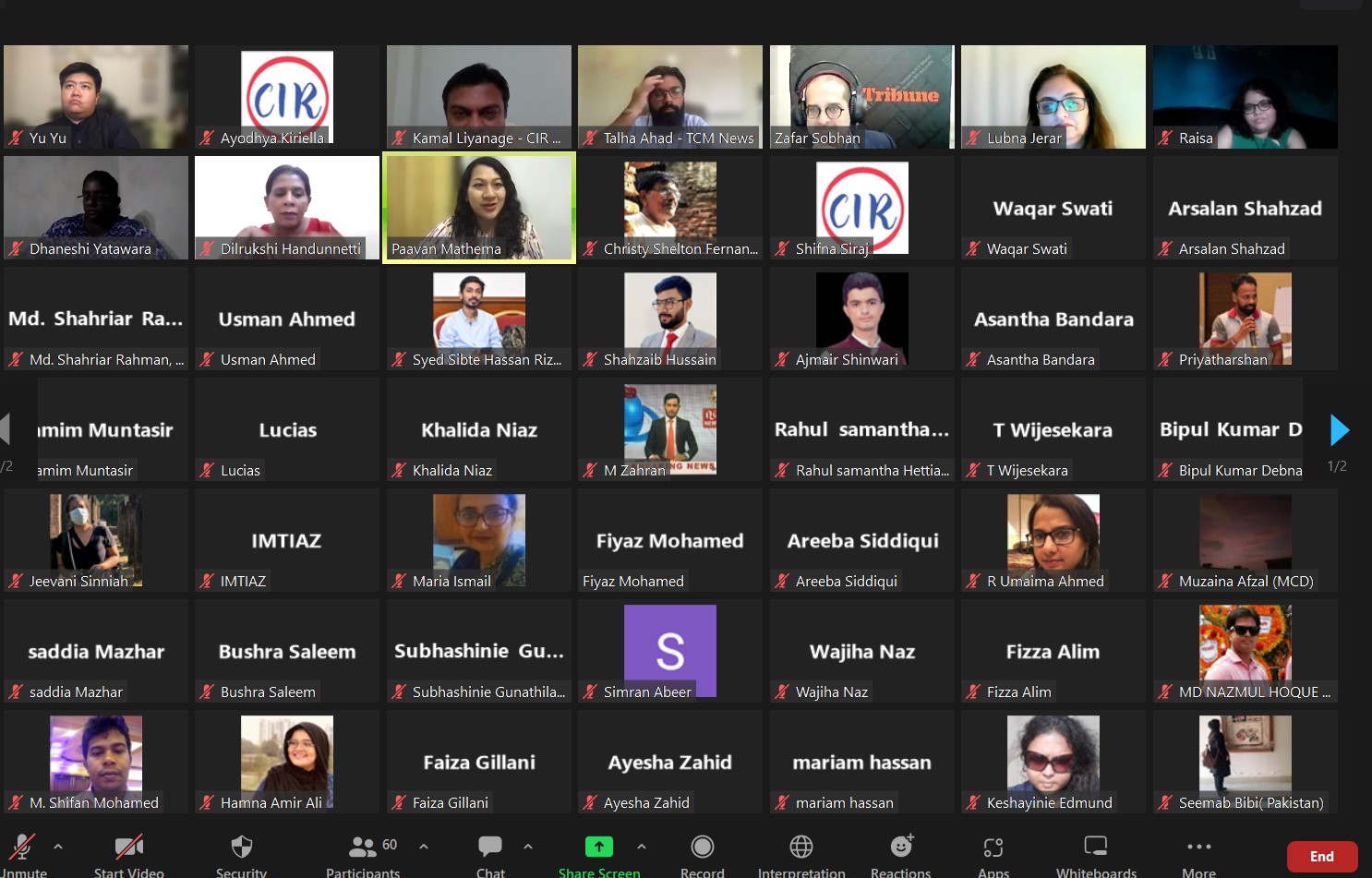
Over 50 journalists and media persons from Bangladesh, Nepal, Pakistan and Sri Lanka participated in the webinar which attracted the younger generation of the South Asian journalists.
The webinar series was organized by the Center for Investigative Reporting (CIR) Sri Lanka and Media Unlimited Pakistan supported by the Meta Journalism Project.
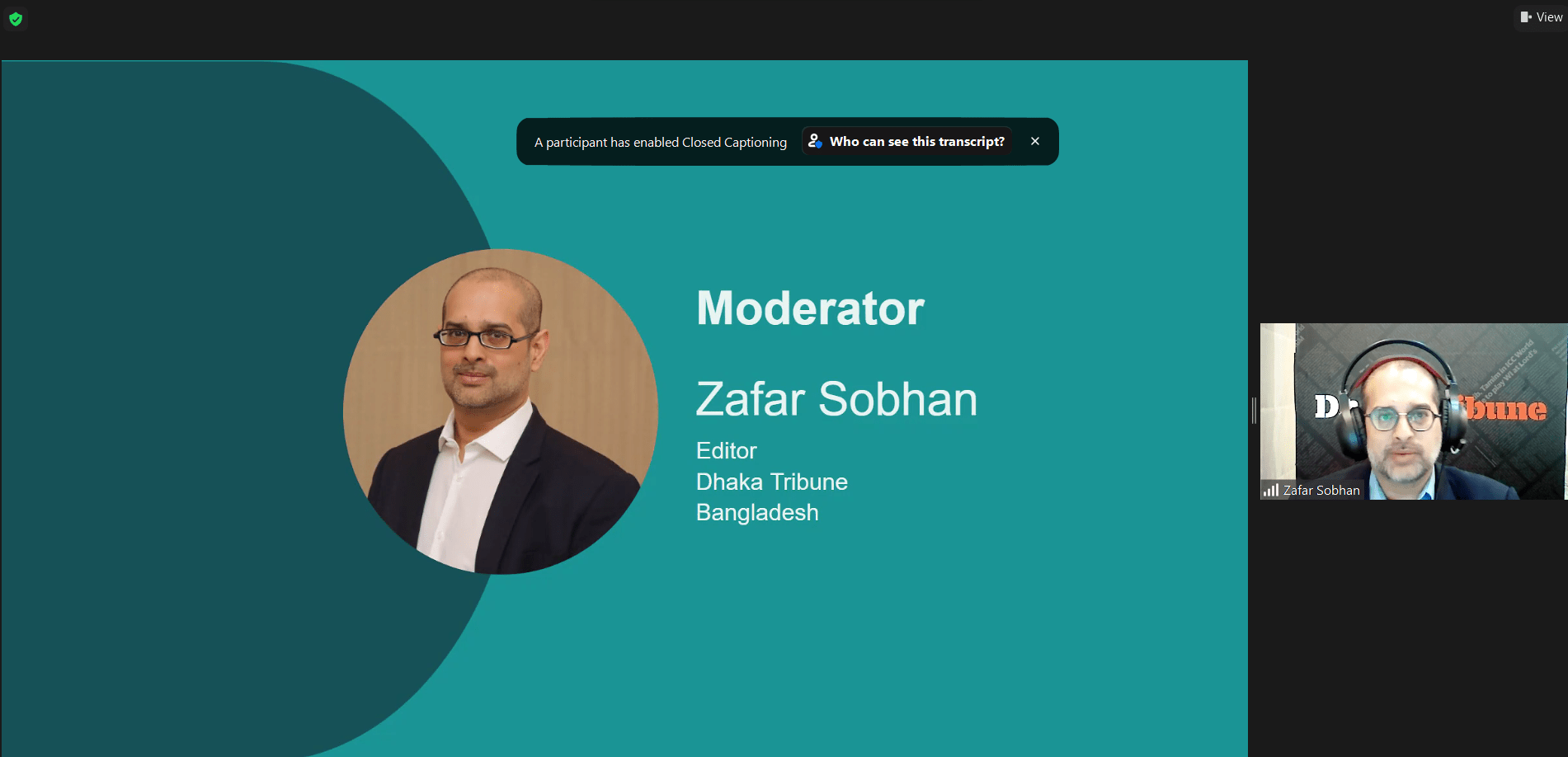
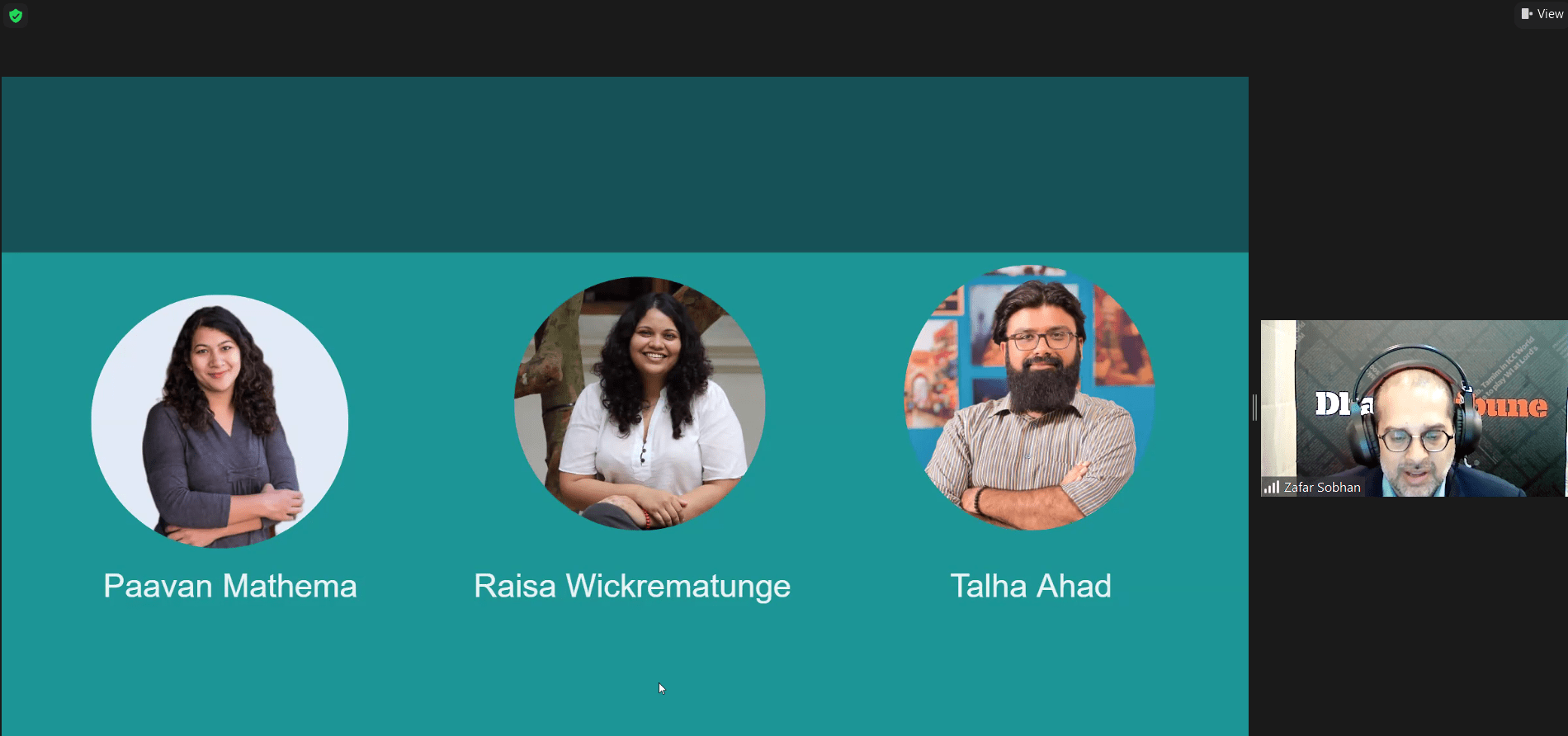
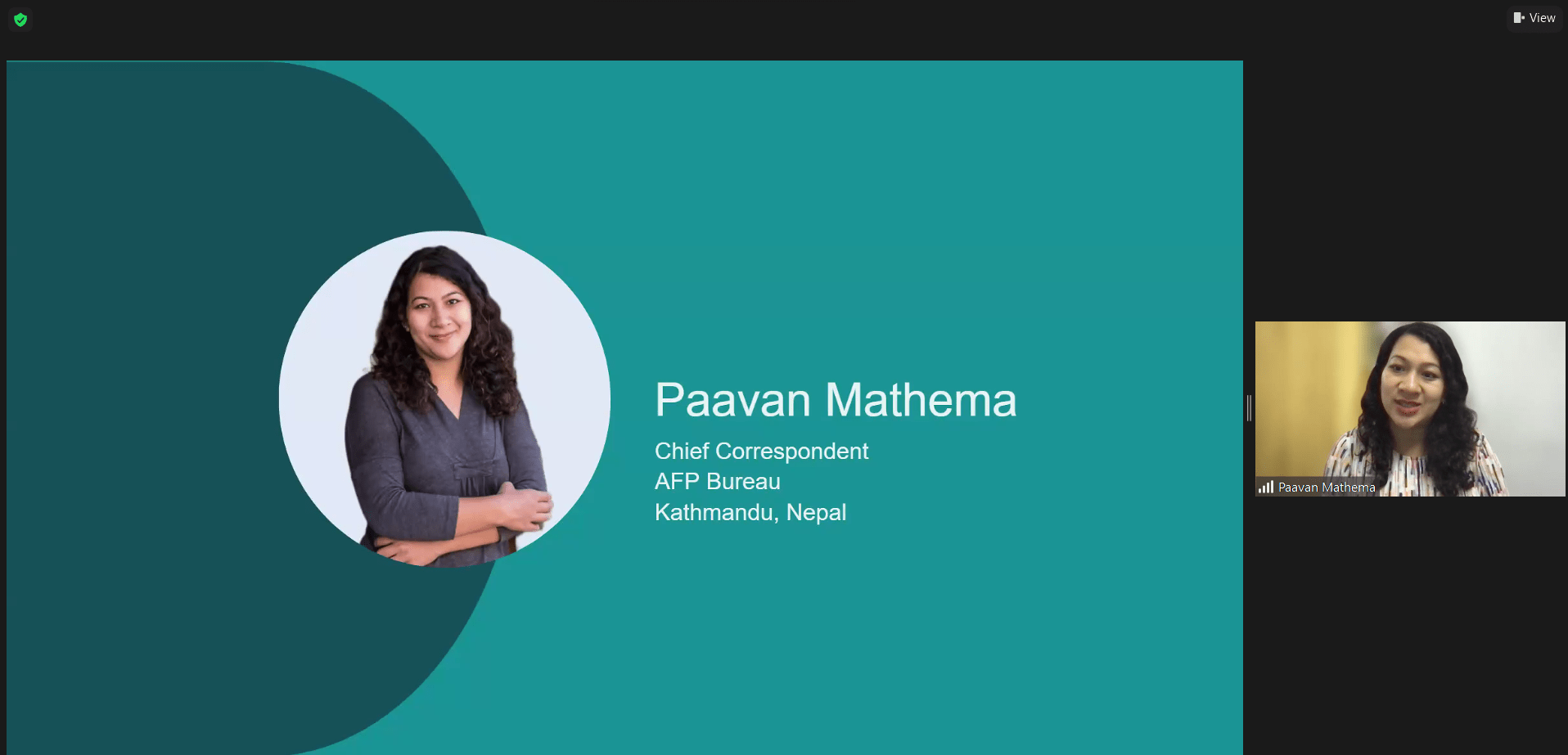
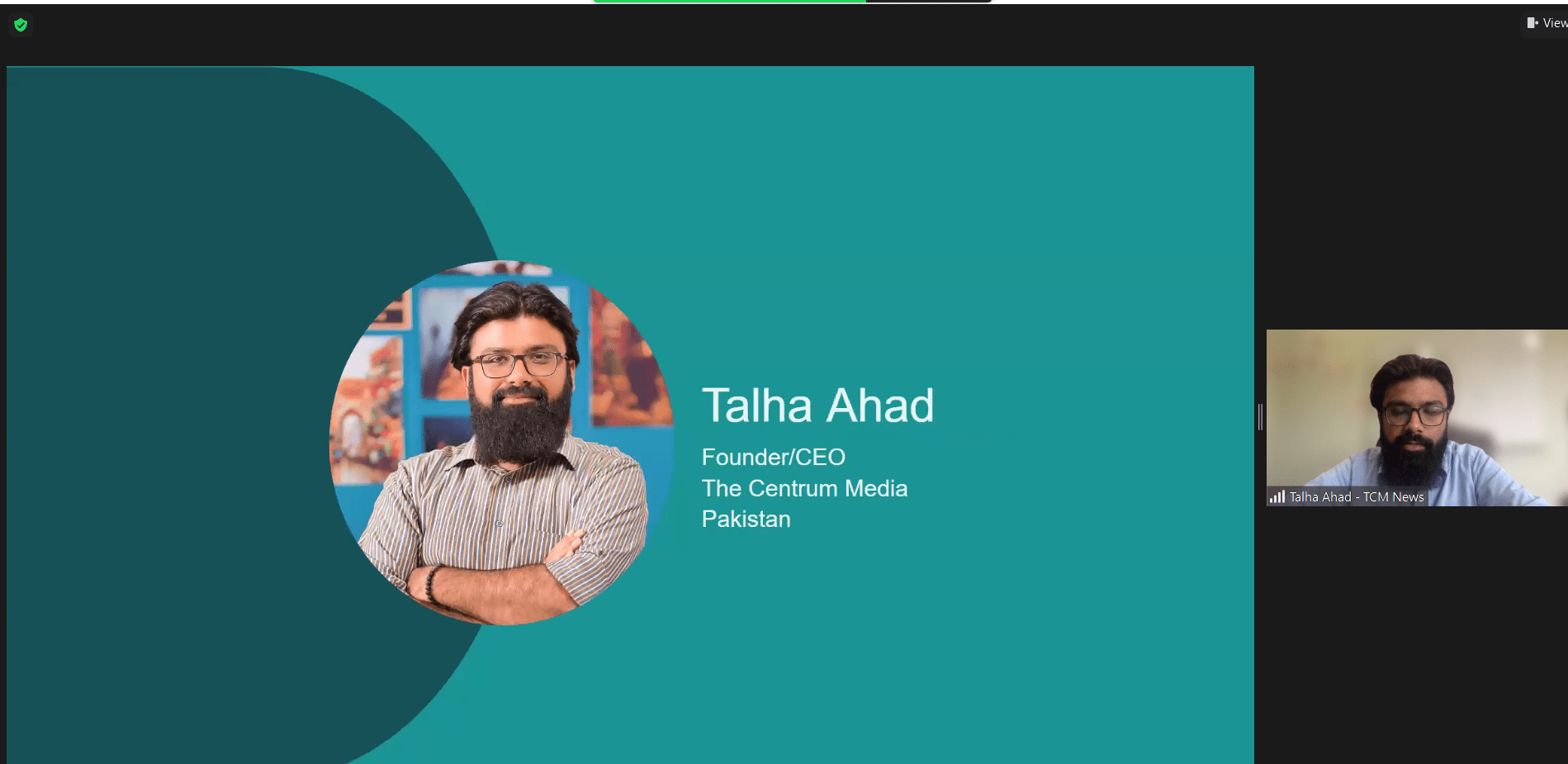
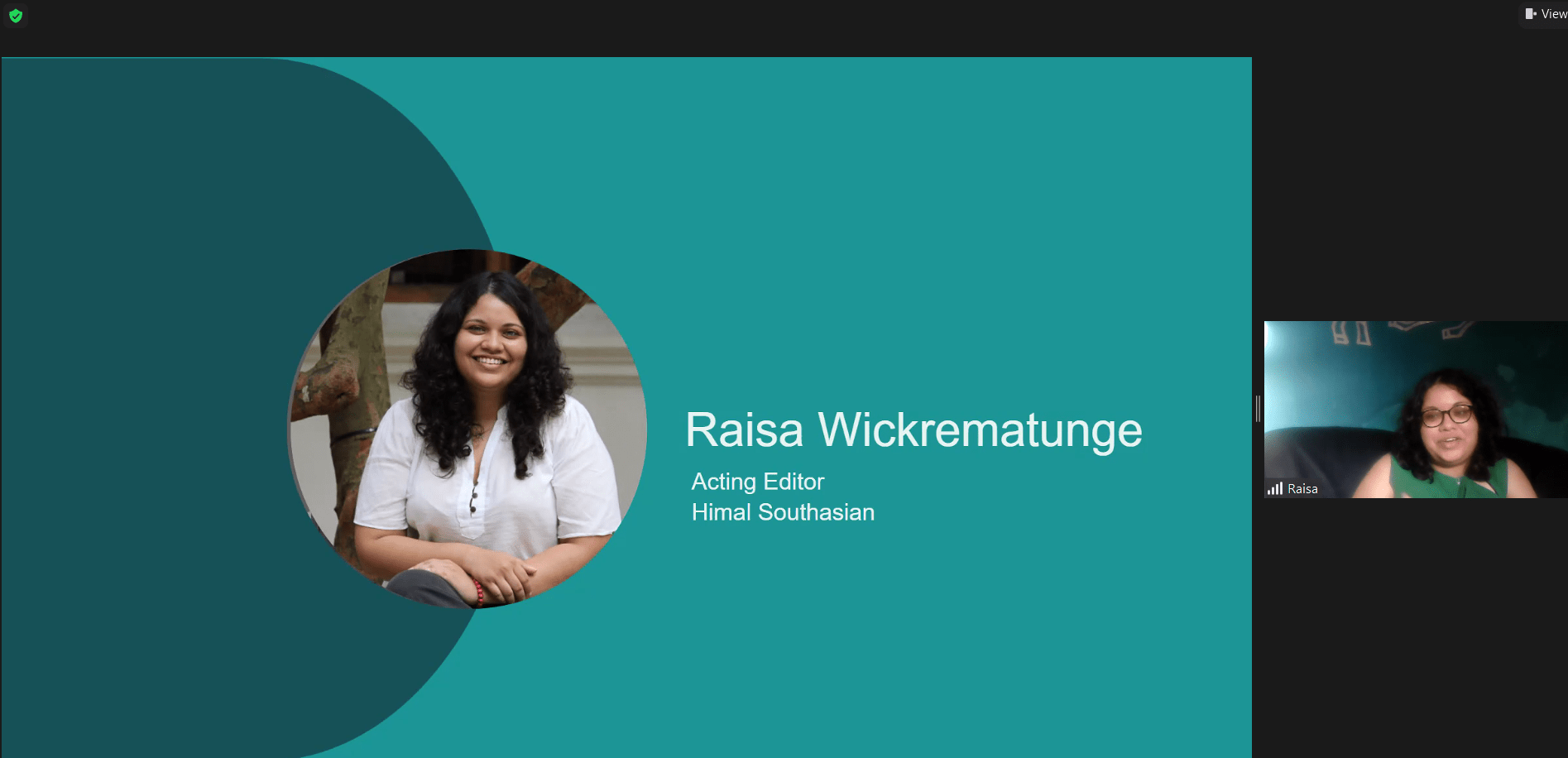
The panel comprised Paavan Mathema, chief correspondent for Agence France-Presse (AFP) bureau in Kathmandu, Talha Ahad, CEO of Centrum Media, Pakistan and Raisa Wickrematunge, Acting Editor of Himal Southasian based in Sri Lanka. The session was moderated Zafar Sobhan, Editor of Dhaka Tribune.
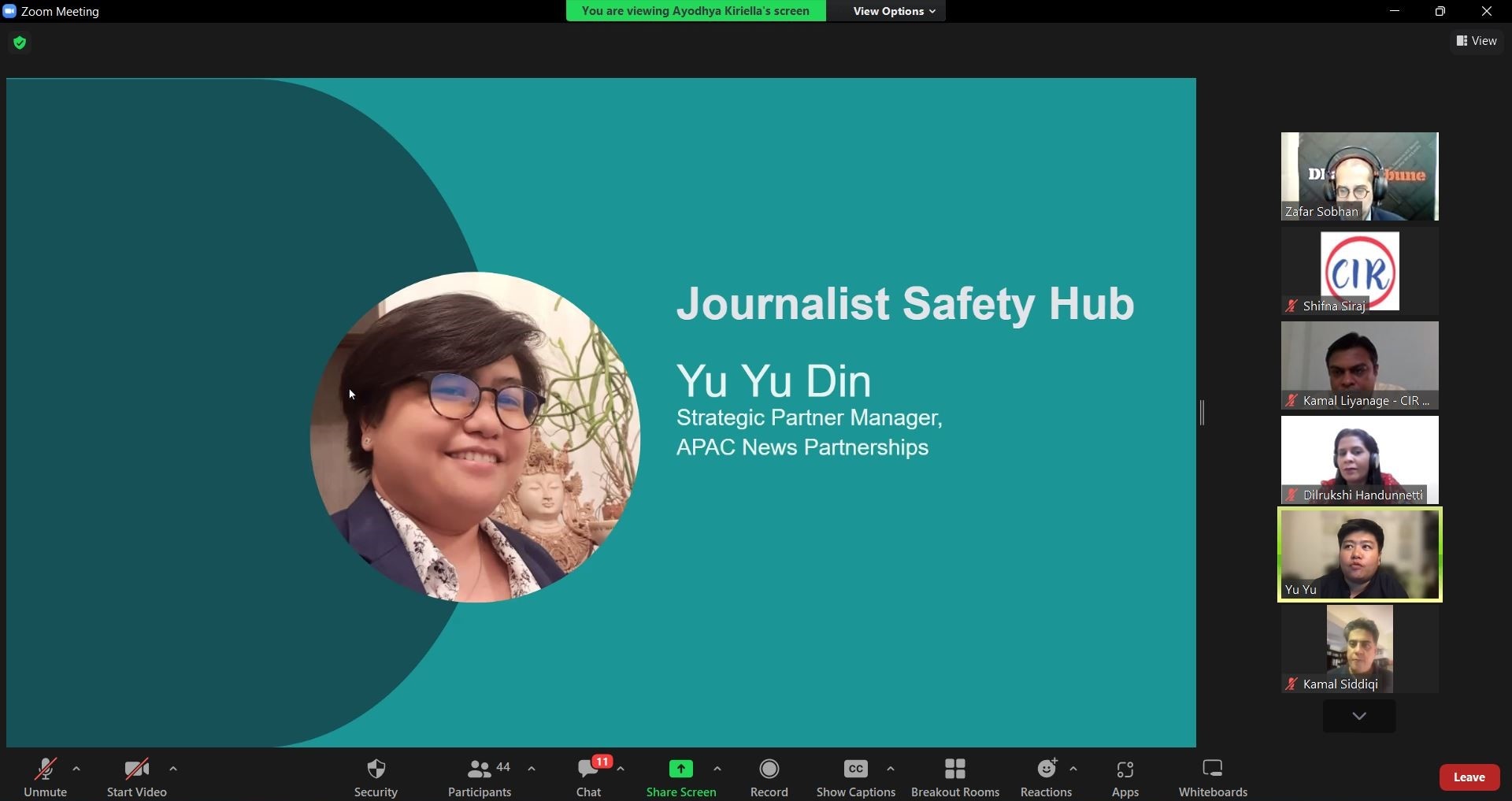
Strategic Partner Manager of the APAC News Partnership of Meta, Yu Yu Din started the proceedings by introducing the Journalist Safety Hub to participants and explained on how to use available tools and resources for a safe online experience.
In his opening remarks, Zafar Sobhan highlighted the importance of making voices heard in the challenging media environment.
Paavan Mathema spoke about reporting with a global outlook. She said that it is important to understand what the younger generation expect from the media.
Mathema engaged more with reporting to an international audience said that portraying the correct information of country is very challenging.
“It is very important to elevate media literacy among the next generation of journalists. One has to have a proper awareness on how to check the credibility of a source, how to investigate persons uploading social media posts and how to counter disinformation,” said Mathema while answering several questions from the participants.
Talha Ahad in his comments stressed on the need to elevate media literacy among the younger generation and said that the lack of clarity in information in media is a challenge. He recounted the steps he and his team innovated to attract the younger generation to the information posted in his media start up.
“Generation Z is the most misinformed generation. This is where the responsibility falls on the new media to fill the gap and make accurate information available with evidence,” he added.
Raisa Wickrematunge shared her experience in migrating from print to digital platforms and said that transformation demands considering moving on with creative paths. “We have to adopt videos, infographics, podcasts and such initiatives to engage the next generation,” said Wickrematunge.
In the lively question-and-answer session, participants asked about various challenges and issues that young journalists of South Asia are facing.
Sobhan summarized the session by saying “While we are concerned about the challenges modern media poses to the next generation of journalists, it is vital for them to adhere to responsible reporting irrespective of the platform they work on.”
The next webinar will be the last of the series and will be focusing on fact checking and future of journalism. It is scheduled to be held on October 20, 2022.
The fourth and final event in the webinar series – “The Future of Journalism in South Asia” -will feature four domain experts and delve into the impact of disinformation in the news media landscape and discuss the relevance of factchecking and information literacy .
How can South Asian journalists promote news literacy within newsrooms? Can the news websites maintain standards in information verification? Are factchecking organizations able to contain the impact of misinformation, disinformation, malinformation and propaganda when manufactured facts spread faster and are influential? How do journalists navigate these challenges, ensure content integrity and retain audience trust?
Our panel of speakers will share their expertise and insights on how to increase audience understanding, navigate the information landscape and propose ways to overcome new challenges.
The panel comprises Sumon Rahman, PhD, Founding Editor of FactWatch and a professor of Media Studies and Journalism at the University of Liberal Arts Bangladesh (ULAB), H. R. Venkatesh, senior Indian editor, television anchor and factchecker currently serving as Director Training & Research at BOOM FactCheck, Deepak Adhikari, investigative journalist, feature writer and Founder and Editor of NepalCheck and Nicole Han who heads Strategic Partner Developer, News Integrity Partnerships for Meta and manages Meta’s third-party fact-checking program across the Asia Pacific.
A webinar for journalists from #Bangladesh, #Nepal, #Pakistan and #SriLanka to create awareness on the impact and relevance of fact-checking in the age of disinformation
Getting one’s facts correct while reporting continues to be a challenge everywhere. South Asian journalists have to strive to tell the truth to their audiences while functioning in difficult working conditions and battling misinformation, disinformation and propaganda at the same time.
The stream of information is unending – with the rise in political, economic and social crises in the region, the spread and influence of disinformation continues to rise.
How can South Asian journalists promote news literacy within newsrooms and alternate platforms when disinformation being extremely swift and influential? What skills are needed to promote fact over fake, beat influence operations through verified information? Beyond the large-scale promotion of digital verification tools, what can the community of journalists do to protect content integrity?
To increase the understanding on information challenges and how to overcome them, a panel of experts will join a webinar specially designed for South Asian journalists and media persons help better understand to unpack the value of news literacy, digital tool-based fact-checking and how the application of new knowledge can improve professional work.
Center for Investigative Reporting Sri Lanka in collaboration with Media Unlimited Pakistan has organized “Factchecking and news literacy in the age of disinformation”, a webinar for journalists who are keen to navigate the difficult information landscape to be held on October 20, 2022.
We have an opportunity for Asia-Pacific journalists between the ages of 15 and 30 to apply for story grants to report on environmental injustice, youth-led climate action, and more.
We’re offering ~$1,000 and will pair selected journalists with a mentor. Send in your video application by October 17!
The Center for Investigative Reporting Sri Lanka and Media Unlimited Pakistan, supported by the Meta Journalism Project will hold a webinar tomorrow (October 06) themed ‘Engaging the Next Generation of Journalists’.
The panel of experts at the webinar include Paavan Mathema, chief correspondent for Agence France-Presse (AFP) Bureau in Kathmandu (Nepal), Talha Ahad, CEO of The Centrum Media Pakistan and Sri-Lanka based Raisa Wickrematunge, currently Acting Editor at Himal Southasian. The session will be moderated by Zafar Sobhan, Editor of the Dhaka Tribune.
This event is a part of a series of webinars initiated in July 2022 under the theme ‘The Future of Journalism South Asia’. Over 300 journalists from the region are expected to participate in this initiative being taken to create awareness over challenges faced with the onset of digital media.
The 2023 Global Investigative Journalism Conference (GIJC23) is now scheduled for September 19 – 22 in the historic city of Gothenburg, Sweden.
“On the 20th anniversary of GIJN, it seems timely and appropriate to be back in Europe where the first global conferences took place.” — GIJN board chair Brant Houston
The Global Investigative Journalism Conference is the world’s largest international gathering of investigative reporters and editors, and GIJC23 will be its 13th iteration. The conference features training on the latest tools and techniques, cutting-edge workshops, and extensive networking and brainstorming sessions.
“On the 20th anniversary of GIJN, it seems timely and appropriate to be back in Europe where the first global conferences took place,” noted Brant Houston, chair of the GIJN Board of Directors. “Our Swedish colleagues, who have a rich history of international investigative work, have been great supporters of GIJN and it will be exciting to bring the conference to Gothenburg.”
The Fojo Media Institute will be one of the local co-hosts of GIJC23. Image: Courtesy of Fojo
“It is an honor to be the co-host of GIJC 2023, and from Fojo’s side we will do our utmost to make the Gothenburg conference an amazing place for learning and experience sharing. And fun,” said Kersti Forsberg, Director of Fojo Media Institute.
“We look forward to bringing all international colleagues together again,” added Ulla Sätereie, board chair of Föreningen Grävande Journalister. “Networking and cross-border collaborations are more important than ever. We promise to give you a world class conference.”
Originally planned for Sydney, Australia, GIJC23 was moved due to changing circumstances related to the conference’s local host there. GIJN looks forward to holding a future conference in Australia.
Previous Global Investigative Journalism Conferences have been held in nine countries, including Brazil, Denmark, Germany, Norway, South Africa, and Ukraine. The gatherings are held every two years and typically attract over 1,500 journalists from more than 120 countries.
Sweden’s national association of investigative journalists will also co-host GIJC23 in its home country. Image: Courtesy of FGJ
As in previous years, GIJC23 will feature a robust fellowship program to bring journalists from the Global South and other regions to the conference. Donors and co-sponsors who want to support this high-impact event can contact the organizers at hello@gijn.org.
In addition to marking the 20th anniversary of GIJN, next year will be the 400th anniversary of Gothenburg, Sweden’s second largest city. The historic seaport is known for its canals, tree-lined streets, universities, and many cafes.
The Fojo Media Institute, based at Linnaeus University in southern Sweden, works with partners around the world to strengthen and develop journalism and media so that it can contribute to a more democratic and sustainable world.
Föreningen Grävande Journalister (FGJ), the Swedish Association of Investigative Journalism, is a nonprofit organization dedicated to the promotion and inspiration of profound, critical journalism. The association’s goal is to offer courses and seminars that improve the sharing of knowledge between journalists.
The Global Investigative Journalism Network serves as the international hub for the world’s investigative reporters, with 235 member nonprofits in 89 countries. Its staff works in a dozen languages daily, giving watchdog reporters the tools, technology, and training to go after abuses of power and lack of accountability.
Al comparar casinos en línea, teniendo en cuenta la variedad de juegos, pensando en un uso regular, una plataforma que puede revisarse de forma independiente es chicken subway juego , mientras una revisión independiente también puede abarcar la experiencia móvil y la navegación, junto con las reglas de retirada y los límites antes de registrarse.
Vor der Entscheidung, welche Seite näher geprüft werden soll, beim Vergleich von Navigation und Bedienkomfort, als Teil eines unabhängigen Vergleichs, eine Option für den direkten Vergleich ist fugu casino 5 , separat kann man auch betrachten die aktuellen Aktionsbedingungen, zusammen mit den wichtigsten Bedienungsdetails ohne die endgültige Wahl zu überstürzen.
Før man beslutter hvilken side der bør undersøges nærmere, ved vurdering af mobil brug, fra et praktisk brugerperspektiv, en platform der kan vurderes uafhængigt er https://spinlander-casino.dk/ , mens en uafhængig vurdering også kan omfatte registrerings- og verifikationsprocessen, med kundesupportens tilgængelighed i tankerne uden at forhaste den endelige beslutning.
Dla użytkowników zestawiających kilka platform jednocześnie, z uwzględnieniem metod wpłat i wypłat, na potrzeby wstępnej oceny, jednym z punktów odniesienia może być kasyno na prawdziwe pieniadze jeśli jednocześnie ocenia się najważniejsze warunki korzystania z serwisu, wraz z zasadami dotyczącymi wypłat w ramach szerszego porównania podobnych serwisów.

 Send in your video application by October 17!