
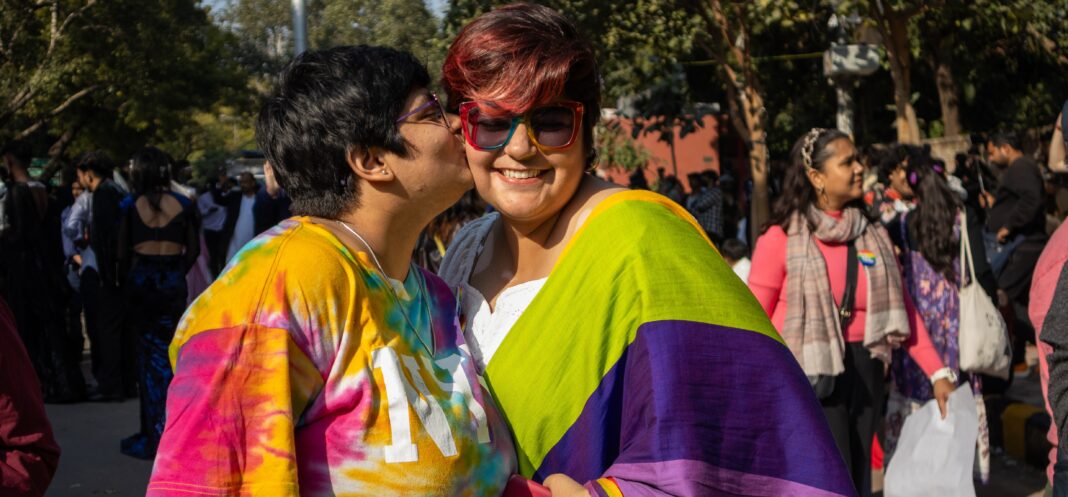

by Shivansh Srivastava.
Introduced during British rule, Section 377 and its variants continue to shape laws and public attitude toward the LGBTQ+ communities in parts of South and Southeast Asia.
The year is 2026 — the 21st century. Decades have passed since the British decolonised Asia but some of the colonial-era laws continue to govern the lives of individuals in the countries the empire once ruled in. One of them is Section 377 that criminalised homosexuality.
It might come as a surprise to you but of the 48 countries in Asia, only three have legalised gay marriage. While some countries have decriminalised homosexuality, others continue to treat the queer community as “criminals”.
Section 377 — a colonial era law that sets the foundation of anti-queer laws in the former British colonies — is one of the biggest challenges for the LGBTQ+ community in these countries.
The law bans “unnatural sex” and has been used to punish individuals since 1862 (written in 1861), the first time when the British empire introduced it as a part of the Indian Penal Code. The Section was later introduced to other British colonies including Sri Lanka, Malaysia, Brunei, Singapore, Pakistan, and Bangladesh.
“Long before colonialism, gender diversity wasn’t even seen as a disruption. It was the very thing that kept the world in harmony. But then the British arrived and with them they brought along Victorian laws, [which turned] moral codes into an offence,” says Andy Suraidah, founding director, Legal Dignity, a human rights organisation advancing non-discriminatory access to justice for LGBTQ+ persons in Malaysia.
Suraidah goes on to say that through colonial education, religion, and bureaucracy, a whole new moral vocabulary was introduced. This divided people and labelled them as “moral, normal, abnormal, civilised, and sinful”.
Through this story, we trace the origin of Section 377, look at when it was introduced, where it stands today, and how it has impacted the lives of individuals in some of these former British colonies.
Inside the Mindset of Victorian Lawmakers
Earlier, in 1533, England had passed the Buggery Act, which called same-sex acts a “detestable and abominable vice”. The Act was repealed and replaced by the Offences against the Person Act 1828. This Act remained in force until it was replaced by the Offences against the Person Act 1861.
It was in 1860, the British imperial administration in India completed a penal code that would outlast the empire and travel the globe. The Indian Penal Code, drafted by a law commission chaired by Thomas Babington Macaulay, included Section 377 that made “carnal intercourse against the order of nature” a criminal offence punishable by imprisonment.
British administrators copied it into the laws of territories across Asia, Africa, and the Caribbean. They believed that they were bringing “moral order” to their colonies. Their thinking came from Victorian England, where strict ideas about sex, family, and religion shaped the law.
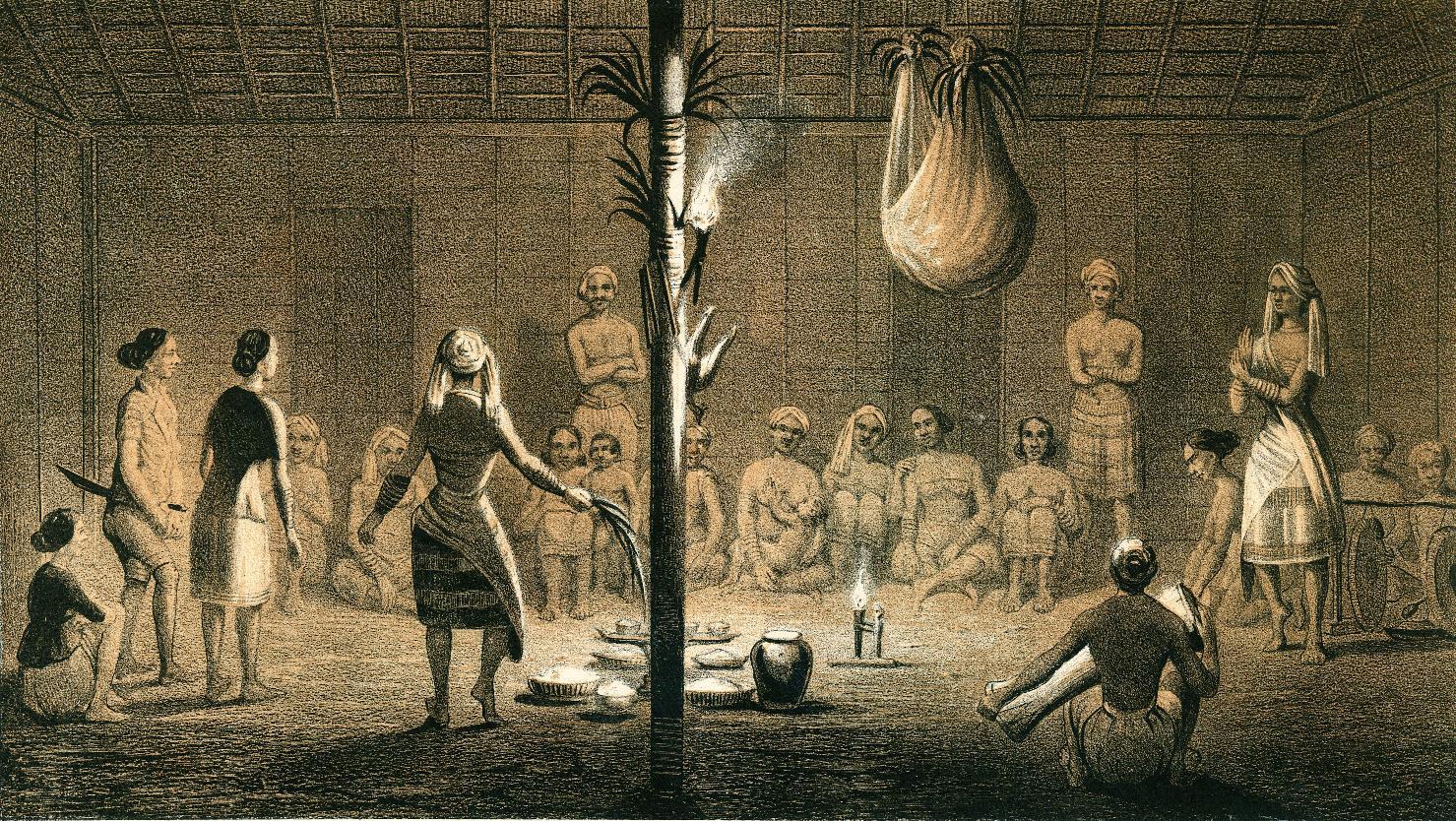
Many societies in South and Southeast Asia had accepted gender and sexual diversity, but as the British colonised them, that changed. Britishers saw these identities as signs of “uncivilised” behaviour. So they used criminal law to enforce their own standards.
By the early 20th century, versions of Section 377 existed across more than 40 British colonies. Interestingly, the Sexual Offences Act 1967 decriminalised private homosexual acts between men aged over 21 in England and Wales. The law changed for Scotland and Northern Ireland in 1980s.
In 1994, the age of consent for gay men was reduced from 21 to 18, and it was further lowered to 16 in 2001. More than a decade ago the British government made same-sex marriages legal, but a lot of its erstwhile colonies in Asia continue to follow the archaic laws written in the 1800s.
A Timeline of Events
A look at some of the former British colonies and where do they stand today.
| Pakistan | |
| Year | What happened |
| 1947 | Partition of India After Partition, Pakistan (then West Pakistan) retained Section 377 under Pakistan Penal Code.  Image: Press release | PDF: Penal Code |
| 1979 | Hudood Ordinances Introduced Islamic laws were introduced through the Hudood Ordinances in 1979. According to this, the law prohibited zina (adultery) and the punishment for it was stoning to death. However, no clarity was provided on whether this also applied to individuals of the same sex. Hudood Ordinance | Source: ILGA |
| 2018 | Transgender Persons (Protection of Rights) Act Passed Pakistan passed a law recognising the rights of transgender persons, allowing self-identification of gender.  Photo: Wikimedia Commons | Source: Al Jazeera |
| 2023 | Federal Shariat Court Ruling on Transgender Act The Federal Shariat Court struck down key provisions of the Transgender Persons (Protection of Rights) Act 2018. The Court ruled that individuals do not have full autonomy to self-identify their gender and declared parts of the law inconsistent with Shariah, following claims that the Act could “provide cover for homosexuality.”Document | Source: ILGA |
| 2026 | Same-Sex Relations Remain Illegal Consensual same-sex sexual acts remain criminalised under Section 377 of the Pakistan Penal Code. Punishment ranges from life imprisonment to fine. |
| Brunei | |
| Year | What happened |
| 1951 | Section 377 Introduced Under the Penal Code 1951 Source: HDT |
| 1984 | Brunei Gains Independence Brunei became independent but it retained the colonial Penal Code, including the provisions that criminalised same-sex relations.Source: HDT |
| 2013 | Shariah Penal Code Order Announced Sodomy, musahaqah (lesbian acts), sexual activity between men, were all deemed illegal under the Shariah Penal Code, with punishment ranging from death penalty to whipping, fine, and imprisonment. Law in the Constitution of Burnei | Source: ILGA |
| 2017 | Increased Punishments Under Section 377 In 2017, the Penal Code was amended and the punishment for same-sex relationships was changed to maximum 30 years of imprisonment and whipping. Source: ILGA |
| 2019 | Death by Stoning as Punishment Imposed Same-sex sexual acts between men were punishable by stoning to death, if proven by strict evidentiary standards. Source: The Guardian |
| 2019 (May) | Moratorium on Death Penalty Announced Following global outrage, Brunei announced it would not carry out executions under the Shariah Penal Code. Source: BBC |
| 2026 | Same-Sex Relations Remain Illegal Same-sex sexual acts remain criminalised under both civil and Islamic law.Punishment includes imprisonment, fines, corporal punishment, and death penalty still written in law. However, there is limited evidence to no evidence of the law being enforced in recent years. |
Click here to watch the full video.
| Bangladesh | |
| Year | What happened |
| 1947 | India-Pakistan Partition After partition, Bangladesh (then East Pakistan) retained Section 377, criminalising same-sex relationships, under Pakistan’s Penal Code. |
| 1971 | Bangladesh Gains Independence Bangladesh became independent from Pakistan but retained the colonial-era Penal Code, including Section 377.  Photo: Wikimedia Commons |
| 2013 | Transgender Recognition The government officially recognised transgenders as the third gender. However, several reports by human right groups have highlighted a gap in implementation of this policy change in the absence of clear framework and guidelines.  Image: Wikimedia Commons | Source: HRW |
| 2025 | Anti-Gay Intimidation and Violence Continues Various reports have documented cases of harassment, violence, and intimidation against the LGBTQ+ individuals in Bangladesh. Source: Human Dignity Trust |
| 2026 | Same-Sex Relations Remain Illegal Consensual same-sex sexual acts are still criminalised under Section 377 of the Penal Code. Punishments continue to include imprisonment and fines.Source: ILGA |
“Police have arrested gays, lesbians, transgender and and Hijra people in Bangladesh during rates calling them a threat to public order. Some were detained simply for being in public spaces. In other cases politicians and public figures have openly described LGBTQ+ people as mentally ill without consequences. There have also been raids in public gatherings and online harassment has increased.”
–Shaikh Md. Mominul Islam, Human Rights Educator
| Malaysia | |
| Year | What happened |
| 1871 | British Introduce Penal Code (Straits Settlements) The British introduced a Penal Code in colonial Malaya, including Section 377, which criminalised “carnal intercourse against the order of nature”.  Source: Malaysiakini |
| 1936 | Penal Code Introduced to the Federated Malay States “Carnal intercourse against the order of nature” was criminalised under Section 377 of the Penal Code of the Federated Malay States. Source: ICJ |
| 1976 | Penalties Raised Malaysia gained independence in 1957 and maintained the Federated Malay States (FMS) Penal Code. The application of the code was extended to the entire country in 1976. The same year, penalties under Section 377 were raised from 10 to 20 years in prison. Whipping was also introduced as an alternate form of penalty.  Photo: Amendment |
| 1989 | Federated Malay States Penal Code Amended (Sections 377A, 377B & 377D clarified) Section 377A clearly defined “carnal intercourse against the order of nature” as sexual “connection with another person by the introduction of the penis into the anus or mouth of the other person”. Section 377B maintained the punishment at 20 years in prison. It removed the fine and added whipping as an additional (not alternative) penalty. Section 377D criminalised “gross indecency,” punishing public or private acts with up to two years in prison. Source: ILGA |
| 2021 | Federal Court Strikes Down Selangor Shariah Law Malaysia’s Federal Court ruled that the Selangor state law criminalising “unnatural sex” was unconstitutional because criminal law falls under the jurisdiction of federal law. Source: Malaysiakini |
| 2024 | Federal Court Struck Down 16 Shariah Provisions in Kelantan The court ruled that states do not have the power to legislate on criminal matters that fall under federal jurisdiction, declaring the provisions “null and void”. |
| 2026 | Same-Sex Relationships Continue to be Illegal in Malaysia |
What does that mean for the queer community in Malaysia?
“Many judges hesitate to engage with the substance of morality laws. Not because constitutional arguments are weak, but because the political consequences are heavy. To strike down such laws is to risk being accused of defying religion, of eroding faith. It is a moral mind field where judicial independence meets with political vulnerability.
It’s one of history’s cruel ironies that the very laws once imposed by the British Empire to control the colonised are now defended as “Asian” values. And what began as colonial control has been rebranded as cultural pride. And queer Malaysians, you know, live with this contradiction every day.” –Andi Suraidah, Legal Dignity.
Click here to watch the full video.
| Singapore | |
| Year | What happened |
| 1938 | Section 377A Introduced Under British Rule The British colonial government introduced Section 377A into the Penal Code, criminalising “acts of gross indecency” between men, whether in public or private. Source: UNAIDS |
| 1965 | Separation from Malaysia After separating from Malaysia, Singapore retained Section 377A in its Penal Code. It gained independence from the British in 1963.  Photo: Wikimedia Commons |
| 2007 | Government Reviews but Retains Section 377A Parliament debated repeal of Section 377A but decided to retain the law. The government stated the law would not be “proactively enforced,” though it remained in force.PDF | Source: Law Gazette |
| 2014–2019 | Legal Challenges Dismissed Multiple constitutional challenges were filed against Section 377A.In 2020, Singapore’s High Court upheld the constitutionality of Section 377A. Source: ILGA |
| 2022-2023 | Section 377A Repealed Singapore’s Parliament formally repealed Section 377A. At the same time, the Constitution was amended to protect Parliament’s authority over the definition of marriage.Official doc | Source: Singapore Parliament |
| 2026 | Same-Sex Relations Legal; Marriage Not Recognised Singapore decriminalised homosexuality in 2022 by repealing Section 377A, but same-sex marriage remains legally unrecognised. |
What does that mean for the queer community in Singapore?
“I came out to my parents when I was 18 and it was not very pleasant. But, however my mom actually sort of accepted over time and during that period of struggle I actually stayed outside and I would say that and I would say that I managed to survive. Right now, I’m so-called like reunited with my parents and of course things got better. There’s a change. That’s how I feel that together as a society we have progressed. At least in the people around me that I see. So I just feel that is slowly progressing.” –Briano Sim, Florist, Singapore
| Sri Lanka | |
| Year | What happened |
| 1841 (in force 1842) | Vagrants Ordinance The British introduced the Vagrants Ordinance, allowing police to arrest people for being “idle” or “disorderly.”  Source: SriLanka Law | ICJ | Photo: Colin Campbell, the head of government of Ceylon during 1841-1847 |
| 1883 (came into force 1885) | Penal Code Sections 365 & 365A British colonial authorities introduced Sections 365 and 365A criminalising same-sex relations. Source: Penal Code |
| 1948 | Sri Lanka Gained Independence but Retained British-Era Criminal Laws Continued arrests of LGBTQ+ people after 1948 under the colonial Penal Code provisions. |
| 1995 | Penal Code Amendment Section 365A was amended from acts between “men” to acts between “persons”.Criminalisation expanded to include lesbian relationships. Source: ILGA |
| 2017 | Cabinet Rejects Move to End Discrimination Based on Sexual Orientation Sri Lanka’s cabinet rejected a proposal to remove discrimination based on sexual orientation from the National Human Rights Action Plan, saying it would “legitimise homosexuality”. Source: HT |
| 2022 | Decriminalisation Bill Introduced A Private Member’s Bill was introduced to repeal Sections 365 and 365A. Source: IBA | Bill |
| 2023 | Supreme Court Clears Path for Decriminalisation of Homosexuality The Supreme Court ruled that decriminalising same-sex relations is constitutional. Supreme Court Decision | Source: Reuters |
| 2026 | Sections 365 & 365A remain in law with 10 years of imprisonment and fine. |
What does that mean for the queer community in Sri Lanka?
“It [Section 365 and 365A] is like a lingering ghost that has been there for the longest time and was introduced in Sri Lanka in 1883. It reformed into being gender neutral in 1995. These laws enable the law enforcement [agencies] to discriminate and also use violence against [the] community.
We have had cases [in Sri Lanka] where parents go to the police station and file a case against their very own children, saying ‘please, police officer, save my child. This person is trying to influence my kid to have a relationship with another person of the same sex’.”
– Wathsala Herath, Human Rights Activist, Sri Lanka.
Click here to watch the full video.
| India | |
| Year | What happened |
| 1860 | Section 377 Introduced Under British Rule The British enacted the Indian Penal Code, including Section 377, criminalising “carnal intercourse against the order of nature”.Penal Code |
| 2009 | Delhi High Court Decriminalises Same-Sex Relations The Delhi High Court held that Section 377 was unconstitutional insofar as it criminalised consensual same-sex relations between adults. Official doc | Source: Amnesty  |
| 2013 | Supreme Court Reinstates Section 377 The Supreme Court overturned the 2009 ruling. Section 377 was reinstated, and same-sex relations became criminal again.Official Doc | Source: HDT |
| 2014 | Transgender Rights Recognised The Supreme Court recognised transgender persons as the “third gender” and affirmed the right to self-identify gender. However, Section 377 remained in force.Source: Amnesty |
| 2018 | Section 377 Struck Down The Supreme Court decriminalised consensual same-sex relations between adults. Section 377 now applies only to non-consensual acts, acts involving minors and bestiality. Source: Official Doc |
| 2023 | Marriage Equality Petitions Rejected The Supreme Court declined to legalise same-sex marriage, stating the issue falls within Parliament’s domain.Source: BBC |
| 2026 | Same-Sex relations Between Adults Are Legal in India However same-sex marriage is not legally recognised and adoption and family rights remain limited. |
The landscape in Asia is deeply divided for the queer community. Even with homosexuality decriminalised in several countries, the LGBTQ+ community continues to fight for equal rights. Individuals that Asian Dispatch spoke to in countries such as Brunei, Bangladesh, Malaysia, and Sri Lanka, highlighted societal discrimination, harassment, and stigma.
“Recently, police have arrested gays, lesbians, transgender, and hijra people in Bangladesh during raids calling them a threat to public order. Some were detained simply for being in public spaces. In other cases politicians and public figures have openly described LGBTQ+ people as ‘mentally ill’ without consequences,” Sheikh, a human rights educator and a non-binary queer person in Bangladesh, told us.
Despite all this, the community is hopeful. Human rights groups say while reforms in some countries might be slow, with support from civil groups, legal aid, health providers and various other stakeholders, there is hope for change.
This story was produced by Asian Dispatch and originally published on March 13, 2026. It has been republished by Center for Investigative Reporting with permission.
Credits:
Reporter: Shivansh Srivastava
Editor: Kritika Goel
Producer: Anoushka Dalmia


#/media/File:Pakistan_PID_Release_for_Independence_Series_1948.jpg)

.jpg)


#/media/File:Sir_Colin_Campbell_by_William_Salter.jpg)