
Speed Read:
- Up to 5,000 tuberculosis patients annually go undetected in Sri Lanka despite availability of free treatment.
- Only 7,500–8,500 cases are reported each year, far below the WHO target of 14,000 detections.
- Colombo accounts for 25% of total cases, driven by overcrowding and poor living conditions.
- Around 750 patients die each year, highlighting persistent gaps in early detection and medical care.
COLOMBO — Sri Lanka’s tuberculosis (TB) program tells a reassuring story: free treatment, widespread diagnostic facilities, and a relatively low disease burden compared to its South Asian neighbors. But a closer look at the data, and the voices behind it, reveals a more troubling reality.
Thousands of TB patients are still missing from the system. They are not included in the official statistics. They are not receiving treatment. And they are quietly sustaining transmission across communities.
According to the latest data from the World Health Organization (WHO), Sri Lanka recorded an estimated TB incidence of 62 cases per 100,000 population. This translates to a calculation of nearly 14, 000 detections annually, which is not the case.
According to director of Sri Lanka’s National Programme for Tuberculosis Control and Chest Diseases (NPTCCD) and a top public health professional, Pramitha Shanthilatha, currently around 7,500 – 8,500 patients are reported within the country. This means, around 4,000-5,000 patients are undiagnosed or underreported and missing from the records each year.
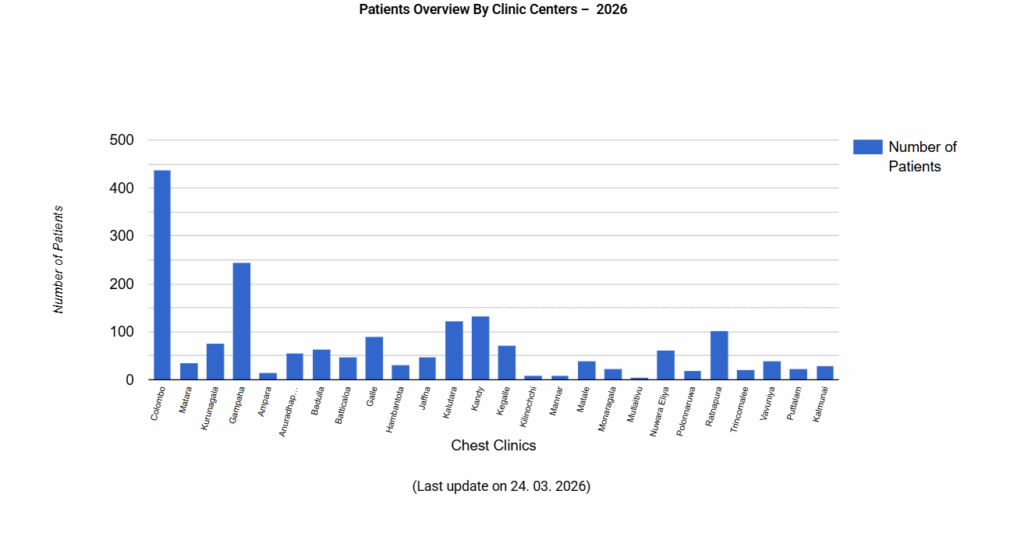
Tuberculosis remains the leading cause of death among communicable diseases in Sri Lanka. Of the patients reported last year, 5,622 were men, with the highest number of cases recorded in the Colombo district, Shanthilatha told CIR. The highest prevalence of TB patients is in urban areas while the Western province tops it.
According to the NPTCCD, 8,748 tuberculosis (TB) cases were reported in 2025. As of March 24, Sri Lanka has recorded 975 TB cases this year. Of these, 43 are pediatric cases. Both figures include a combination of new and relapse patients.
“Sri Lanka’s detected cases of TB has remained static for the past decade or so with the exception of 2019, the COVID-19 pandemic year. In 2023, we recorded 9,538 cases, 9,200 in 2024 and 8,726 in 2025. Our main issue is whether these statistics are accurate as WHO has set us a target of detecting approximately 14,000 cases per annum,” NPTCCD’s director said.
Leading cause of death
According to her, deaths during TB treatment remain comparatively high.
“On an average, 750 TB patients die while receiving treatment. Even though, they may not die directly due to TB, such as death due to a stroke, we still count it as a TB-related death as the patient was receiving treatment. In 2023, 745 TB patients died while 780 and 749 died in 2024 and 2025 respectively,” Shanthilatha added.
If TB patients follow treatment plans properly, after two weeks, chances of that patient spreading the disease bacteria to others reduces.
“Of all the areas, Colombo municipal limits remain a high risk area. High density, overcrowding, ventilation issues, malnutrition, alcoholism, drugs and smoking can be listed as some of the reasons for Colombo’s high prevalence rate. According to our statistics, TB patients found within Colombo city limits, 25% of the total patients detected annually are form Modara, Mattakkuliya, Borella, Wanathamulla, and Grandpass,” explained the NPCTTD director.
While Colombo, Gampaha and Kalutara districts have been topping the list of high TB prevalence areas, the NPTCCD noted that Kandy has beaten Kalutara and has become the district with the third highest TB cases. This may be due to high detections by authorities under various programs. While Vavunia and Mullaithivu record the lowest number of cases, likely due to less population and spaciousness, this is still not a best-case scenario. “Given their population, the number of cases remain high in average,” Shanthilatha explained.
Vulnerable categories
Individuals considered highly vulnerable to tuberculosis (TB) include immediate family members and close contacts of TB patients, organ transplant recipients, people with diabetes, the elderly, those with weakened immune systems, and prison inmates.
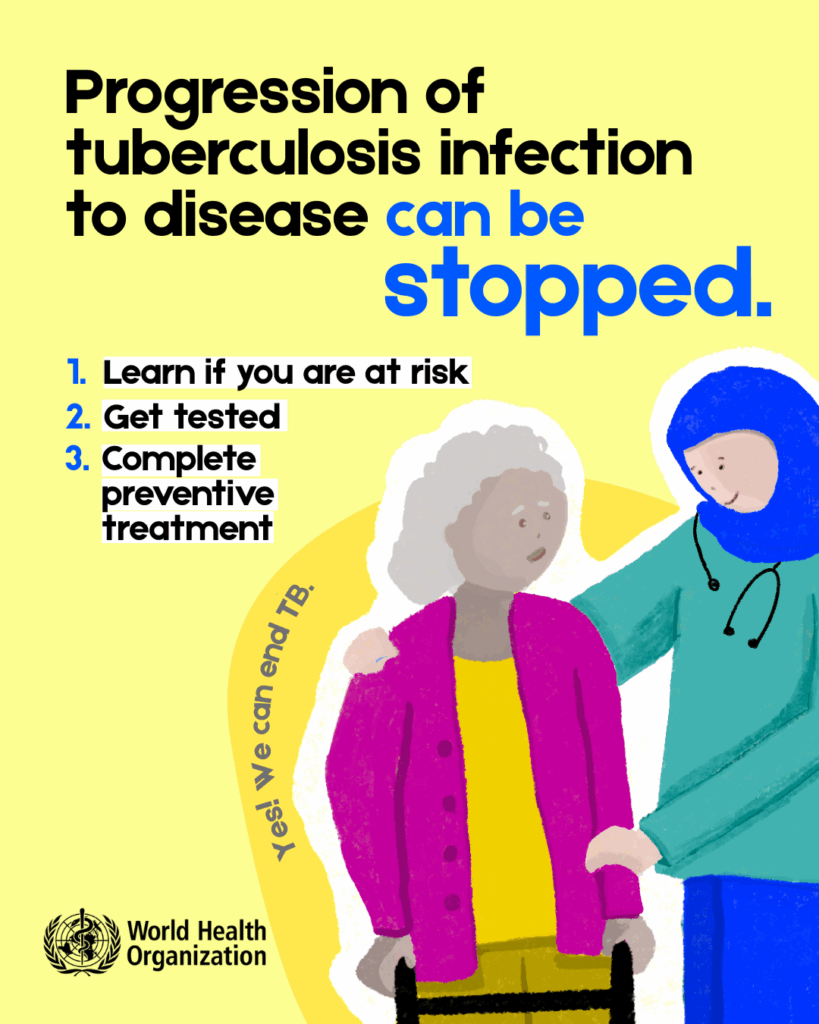
A major challenge in reaching the WHO’s 2035 TB targets is the continued reliance on passive case detection, where patients are identified only when they seek care, alongside persistent barriers to screening close contacts and family members.
The most common detection method is sputum smear microscopy, in which a patient’s sputum sample is examined under a microscope to identify TB bacteria. Another widely used test is the tuberculin skin test, where a small amount of tuberculin is injected into the forearm to check for a reaction that may indicate TB infection. Chest X-rays and GeneXpert tests are more advanced diagnostic tools used for more comprehensive detection.
“While nearly all public hospitals in Sri Lanka are equipped to conduct basic TB screening, the country currently has 35 GeneXpert machines and two mobile X-ray units – apart from standard X-ray machines available in hospitals, provided through the Global Fund, she observed.
She however, noted that their lack of human resources and free availability of equipment like mobile x-ray machines are major challenge to carry out field investigations.
“Lack of public awareness and our limitations in carrying out field investigations frequently remain a challenge to achieve WHO end TB strategy for 2035 According to the strategy, the patients detected should come down to about 2,000 while annual deaths should be reduced to 50. On the other hand, the catastrophe health cost of the patient should be zero Catastrophe cost is defined as out-of-pocket payments for treatments borne by the patient and the family including those spent on investigations/ testing, personal care, specific dietary requirements,” she said.
Achieving catastrophe cost zero target is extremely unlikely as it means the patient will have no cost. However, given the still prevailing social stigma and practical issues may continue to leave TB patients unemployed or underemployed.
“They have to come for routine clinics at least once a month and this may pose concerns to job opportunities and job security, on the other hand, TB patients need nutrition and if they come from lower income families, this will be problematic. We feel if the government can arrange a proper aid system for TB patients, it will help in reducing their treatment cost..” she noted.
At present, an allowance varying from Rs 5,000 to Rs 500 is provided depending on which province or district the patient comes from. Patients in Colombo receive Rs 3,000 allowance and this is arranged by the Ministry of Social Empowerment and Welfare.
This story was written and edited by Gagani Weerakoon. She leads the editorial at the Center for Investigative Reporting (CIR).
This story was produced with support from Report for the World, a global media service strengthening local independent journalism.