
Seven years ago, on 21 April 2019, sun dawned to just another Sunday. Churches in Sri Lanka were crowded than on any other Sunday as worshipers gathered for early morning mass to celebrate Easter, a holy day that marks Jesus rising from the dead, three days after his execution. In Colombo, hotels were prepared for another day of tourists seeking the island’s post-war calm and special breakfast offers to mark Easter Sunday.
Families gathered in quiet rituals as on any other Easter. For the rest of the Sri Lankans, it was a ‘normal Sunday’. Yet, by nightfall, the country was counting its dead.
A morning of fire
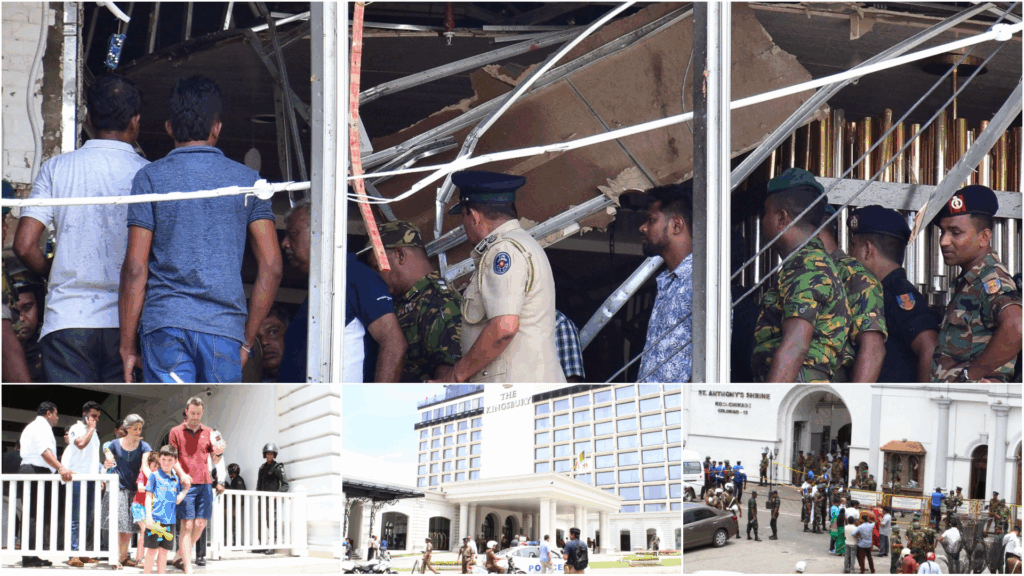
At approximately 8:45 a.m., the first explosion tore through St. Anthony’s Shrine, Kochchikade, in the heart of Colombo. Minutes later, blasts followed in rapid succession – St. Sebastian’s Church Katuwapitiya, Zion Church, Batticaloa, and then Colombo’s luxury hotels: the Shangri-La, Cinnamon Grand, and Kingsbury.
Witnesses would later recall scenes of disorientation and horror, pews splintered, stained glass shattered, bodies strewn across aisles.
Within an hour, Sri Lanka had come under attack. By midday, it was clear this was no isolated incident but a coordinated assault. Additional explosions in Dehiwala and Dematagoda confirmed the scale.
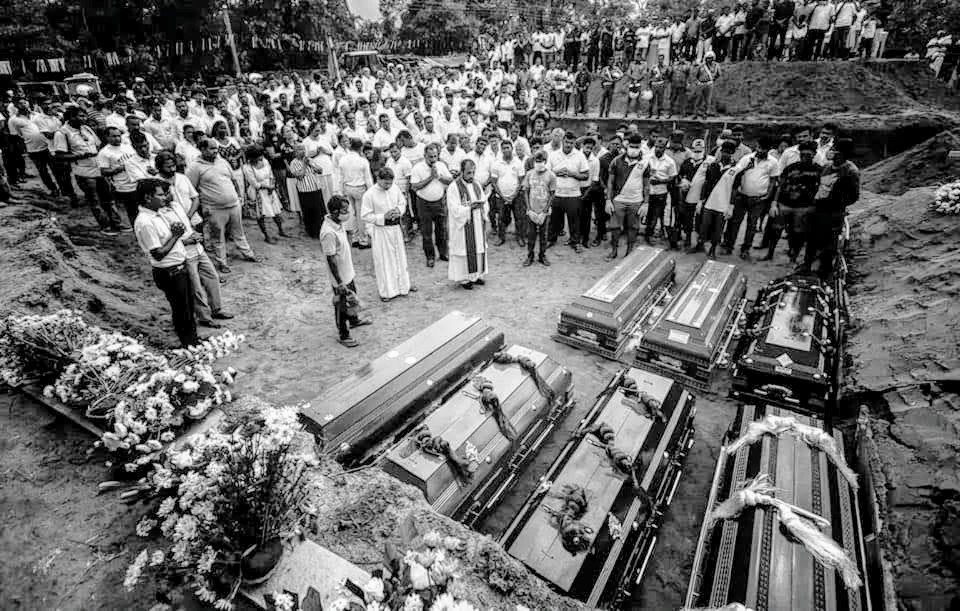
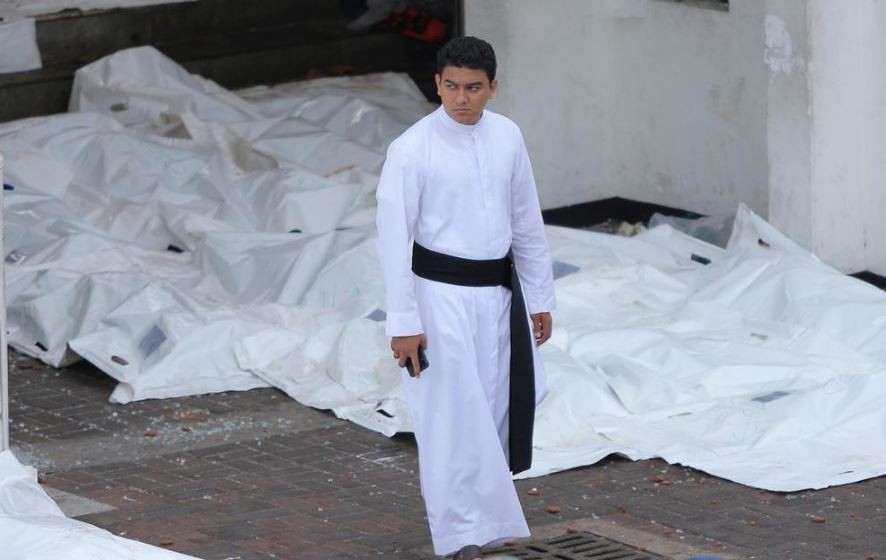
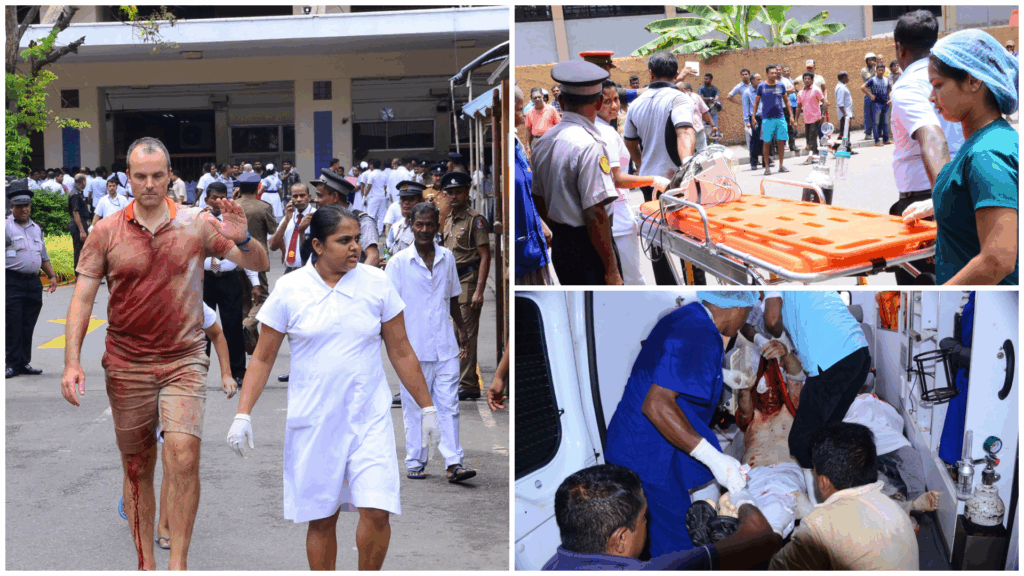
The final toll: 279 people killed, more than 500 injured. Among them were children, entire families, and dozens of foreign nationals. It was the deadliest violence the island had witnessed since the end of its civil war a decade earlier.
Unheeded warnings
In the weeks that followed, a troubling narrative began to emerge, not just of terror, but of failure.
Intelligence warnings had existed but not heeded.
Days before the attacks, a detailed alert circulated within security circles, naming individuals linked to a little-known extremist group, National Thowheeth Jama’ath, and warning of planned suicide bombings targeting churches. The name of a radical preacher, Zahran Hashim, appeared prominently.
The information was specific. It was actionable. It was not acted upon.
Subsequent investigations revealed a fractured chain of command at the highest levels of government. Key figures, including then President Maithripala Sirisena and Prime Minister Ranil Wickremesinghe, were not operating in coordination. Intelligence, though gathered, was not effectively shared.
The immediate aftermath was defined by urgency and fear. A nationwide curfew was imposed. Social media platforms were blocked in an attempt to curb misinformation and prevent further unrest. Security forces launched sweeping operations across the country.
Hundreds were detained. Safe houses were raided. Explosive materials were seized. Authorities confirmed that the attackers were Sri Lankan nationals, radicalized locally but inspired by global jihadist ideology. The Islamic State (also known as ISIS and ISIL) claimed responsibility, though the operational planning appeared rooted within domestic networks.
Churches closed their doors. Armed guards stood at entrances when they reopened weeks later. Tourism, one of the country’s key economic pillars, collapsed almost overnight.
Sri Lanka had entered a new and uncertain phase.
Accountability and Its discontents
In the months and years that followed, the search for accountability became as complex as the attacks themselves.
A presidential commission of inquiry documented “serious lapses” in intelligence handling and national security decision-making. It recommended action against senior officials. Legal proceedings began against both alleged perpetrators and state actors accused of negligence.
Yet, progress has been uneven.
The Catholic Church, representing many of the victims, has remained one of the most persistent voices demanding justice. “We cannot accept half-truths,” Archbishop Malcolm Cardinal Ranjit said during a commemorative service. “The people deserve to know who allowed this to happen.”
For many families, grief has hardened into suspicion.
The attacks reshaped Sri Lanka’s political landscape. National security became the defining issue in the months that followed, culminating in the election of Gotabaya Rajapaksa later in 2019, on a platform promising stability and strength.
But the politicization of the tragedy has also deepened divisions. Competing narratives—of incompetence, conspiracy, and calculated inaction—have complicated efforts to establish a single, authoritative account.
In 2023, an international documentary reignited controversy, alleging possible links between elements of state intelligence and the attackers. Though strongly contested, the claims prompted fresh investigations and renewed public scrutiny.
For survivors, the memory is not confined to a single day. It lingers in empty seats at family tables, in annual memorials, in unanswered questions.
A case that refuses to close
Recent developments suggest the story is far from over.
In 2026, authorities arrested former intelligence chief Suresh Sallay, accusing him of aiding and abetting the attacks, an allegation that, if proven, could fundamentally alter the narrative of what occurred.
Multiple cases remain before the courts. The main criminal case (Case No. HC 2972/21) is being heard before a Trial-at-Bar in the Colombo High Court against 24 accused (originally 25, with one passing away in prison). They face 23,269 charges under the Prevention of Terrorism Act (PTA), including conspiracy to murder, aiding and abetting, and collecting explosives.
Investigations continue to probe not only the attackers but the systems and individuals that failed to stop them.
Seven years on, the physical scars of Easter Sunday have largely healed. Churches have been rebuilt. Hotels have reopened. Life, in many ways, has resumed.
But the deeper wounds remain.
For survivors, the memory is not confined to a single day. It lingers in empty seats at family tables, in annual memorials, in unanswered questions.
Was this merely a catastrophic failure of coordination? Or was there something more deliberate, more troubling, behind the inaction?
The answer continues to elude Sri Lanka.
And until it is found, Easter Sunday 2019 will remain not just a tragedy but an unfinished story.
This explainer was written and edited by Gagani Weerakoon. She leads the editorial at the Center for Investigative Reporting (CIR).
This explainer was produced with support from Report for the World, a global media service strengthening local independent journalism.