Home Blog Page 21

Asian Dispatch Explainer: Why the 2024 Indian Election Results Shook the Nation

As Prime Minister Narendra Modi and BJP reel from a shaky but rare third victory, analysts explain how polling agencies missed the mark in the world’s largest democracy.

Pallavi Pundir and Riyaz Wani | June 6, 2024

On Tuesday morning, just as vote counting for India’s General Elections began, a video of a man crying on a prime-time news show went viral. 

Pradeep Gupta, the chairman and managing director of a poll survey company called Axis My India, had predicted a landslide victory for Prime Minister Narendra Modi’s Bharatiya Janata Party (BJP), with a vote share of almost 400 seats out of total 543 in the Parliament.

The result, however, was wildly different. 

Although BJP has been declared victorious for a rare third consecutive time, it fell short of the 272 seats that are needed to form the government, thereby relying on allied parties to constitute the majority.

Poll predictions aren’t a definitive indicator of election outcomes. Nevertheless, Axis My India’s survey had been splashed all over mainstream media channels and social media before and during elections, which took over a month. 

Modi’s comeback, according to Gupta, was not just imminent but also signalled his strongman persona and the enduring cult of the BJP. Coinciding with the exit polls arrived Modi’s own post on X, formerly known as Twitter: “I can say with confidence that the people of India have voted in record numbers to re-elect the [BJP alliance] NDA government.” 

But the results on Tuesday were a far cry from the dominant stronghold that BJP had established in the last two elections. This stumble also constituted a symbolic victory for INDIA (Indian National Developmental Inclusive Alliance), a multi-party alliance formed in 2023 led by India’s largest opposition party, the Indian National Congress. 

INDIA was formed directly in opposition to NDA, but was predicted to lose by a huge margin. However, they won 234 seats, putting up a legitimate fight against NDA’s 272. For comparison, in the last general elections in 2019, NDA won 353 seats while the Congress-led alliance won only 91. This rearrangement marks a monumental shift for the political sentiments in India, which had been overwhelmingly supportive of BJP, at least in vote shares.

On June 4, as vote numbers started to form a clear picture, Gupta was grilled by news anchors on how predictions went so wrong. He started weeping, prompting journalist-anchor Rajdeep Sardesai to comment, “All pollsters need to introspect…that [poll predictions are] terrible.”

In the theatre of the world’s largest electoral process this year, Axis My India was among a flurry of opinion polls that predicted Modi’s landslide victory. But in the world’s most populated country – with over 640 million voters this year – exit polls are tricky, and their purpose can lean toward self-fulfilment.

“Some goals of [exit polls] may be flattery, but there can also be attempts to create or strengthen a narrative,” said Joyojeet Pal, a professor at the School of Information at the University of Michigan. “For instance, by repeatedly stressing that one party is likely to win in a big way, the coalition partners of the likely winner may be moved to be more acquiescent to the wishes of the broader coalition.”

Indian journalist and researcher Pamela Philipose called it a money-making system: “Pollsters are often supported by political parties, especially the ruling party, who stand to benefit from their projections even if it is only for a short time. It creates a narrative which helps in government formation.” 

“Media channels mint money through advertising for such programmes,” she added, referring to how exit polls have historically boosted Television Rating Point (TRP) of English and Hindi news channels. “And then there’s the stock market.”

This week saw India’s stock market’s worst tumble in four years after BJP lost its parliamentary majority. India’s stocks recorded losses on both June 4 and June 5, driving investors to react negatively to the election results. On June 6, opposition leader Rahul Gandhi accused the BJP’s top leaders, including Modi, of misleading people into buying stocks before elections, which led to the market crash. 

Before the results, another opposition leader Sitaram Yechury had told Indian news channel NDTV  that exit polls were done to influence share markets. 

“The way the stock markets behaved,” Philipose added, “shows how this system fuels financial speculation.”

****

In the lead up to the 2024 elections, the BJP had the ambitious slogan, “Ab ki baar, 400 paar”, or “This time, we’ll cross 400 (seats).” As per the final count, BJP won 240 seats, down from 303 seats it won in 2019. 

This discrepancy left most of the country shocked with the results.

All the biggest private survey agencies such as  Today’s Chanakya, Matrize and C-Voter, got it wrong. An aggregate of 14 such exit polls predicted that the NDA would win 365 Lok Sabha seats, an increase from the 352 seats it secured in 2019. INDIA  was predicted to receive just 146 seats. This, when there was no visible wave in favour of any party or politician, including Modi.

The most astonishing were the results in Uttar Pradesh, India’s most populous state which sends 80 members to the Parliament, and had been BJP’s flagship supporter in the last two elections. This is where Modi’s Ram Mandir project, which was built in Ayodhya city on a site contested by the Muslim minority, galvanised millions of Hindu supporters worldwide. 

Exit polls had predicted that the BJP would secure between 64-68 seats in the state on the back of, among other aspects, the Ram Temple popularity. Instead, it secured only 36. INDIA, on the other hand, secured 43. The BJP, ironically, also lost in the Faizabad constituency, which includes Ayodhya city, to INDIA.
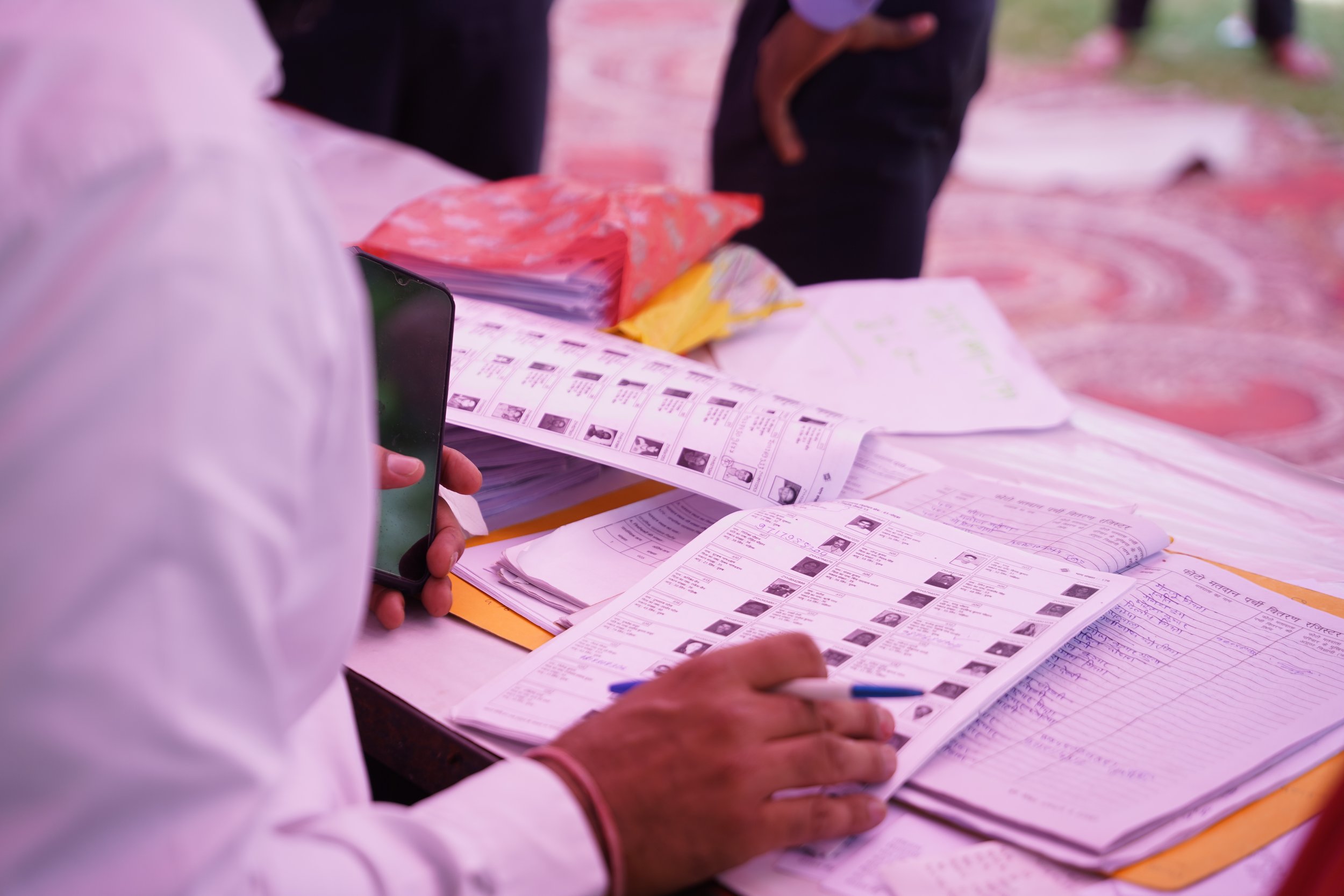
Voting takes place at a poll station in Noida, Uttar Pradesh, on April 26, 2024. Photo Credit: Vijay Sadasivuni

The pattern continued in West Bengal, where the BJP was predicted to win between 20-30 seats, but ended up with just 12, and Maharashtra, where the NDA secured 17 seats out of 48.

Praveen Dhonti, an analyst at International Crisis Group, says one of the biggest reasons why the exit polls missed the clear shift of voting preferences away from the BJP was fear. 

“There is a fear [among the people] towards the Modi government, the BJP and its supporters,” said Dhonti. “The masses kept the cards close to their chest. They didn’t open up to most of the media or the agencies conducting these exit poll surveys.” 

Pal, the professor, echoed this sentiment, calling it a “spiral of silence”, in which “people may be slightly afraid to admit to not voting for the BJP since it is very well organised on the ground.”

Polling agencies have confirmation bias too, Dhonti added. “They didn’t see or explore beyond what they thought would be a sure win for Modi,” he said. 

This isn’t the first time exit polls failed their own predictions. In 2004, the favourably placed Atal Bihari Vajpayee-led NDA government failed to secure a second term despite running a high-decibel campaign. 

Experts are now questioning whether the tradition of exit polls should continue after all. 

For one, exit polls operate opaquely, says Pal. “[They] are not clear about their sampling, enumeration process, and framing of questions – all of which may have biassing impacts,” he said. “It has been suggested that over-sampling of urban, middle class populations may have caused systematic failure in accurately capturing the mood.”

“The opacity is likely intentional in part because a lot of the agencies which run these are not empirically trained to do these,” Pal added.

The polls may have exaggerated but Modi will be sworn in as Prime Minister for his third consecutive term on Sunday, June 9, at 6 pm IST. BJP’s alliance parties are expected to demand key positions in return for their support.

The political impact of this week’s turn of events are yet to be seen, but the failure of exit polls in predicting national sentiment will not be forgotten anytime soon.

“Exit polls are a bit of a mystery to me,” said Michael Kugelman, the director of South Asia Institute at The Wilson Center. “If they’re meant to bolster the ruling party, then why would they put themselves out there and risk looking silly later on, as was the case with just about every exit pollster this time?”

Asian Dispatch is a cross-border journalism initiative focusing on public interest journalism. Our series, Asian Dispatch Explainer, is meant to be an informative guide for major events in Asia.

This story was originally published on 6 June 2024 on Asian Dispatch.net

There’s growing concern about Sri Lanka’s shrinking civic space – Dept. Ambassador Rutjens

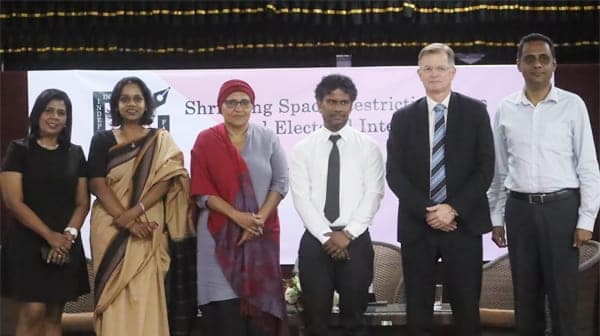
Both Sri Lanka’s civil society and the international community have raised concerns about recently adopted legislation and proposed laws that could contravene people’s freedom of expression and shrink civil space. A discussion on shrinking civic space and repressive laws in the context of electoral integrity is therefore especially significant said Iwan Rutjens, Deputy Head of Mission at the Embassy of the Kingdom of the Netherlands delivering special remarks at a recent panel discussion titled “Shrinking space, repressive laws and electoral integrity”.

He said: “The discussion is also relevant because Sri Lanka is heading for a national election later this year and the first opportunity that the nation must express its opinion at an election after the unprecedented public uprising, Aragalaya, two years ago.

Aragalaya has become a part of Sri Lanka’s history as the people expressed their opinion clearly. Usually in democracies, change of government happens through elections. But when the socio-economic situation changes so drastically, particularly after the prolonged COVID 19 pandemic, and when an economy hits rock bottom and creates huge stress in public life, it is understandable that people demand relief and solutions”.

Things eventually snowballed within a few months, resulting in the change of political leadership in Sri Lanka, and the rest is history. From the fundamental right’s perspective, it was an apex moment in freedom of expression, association, and dissent, he added.

One of the major concerns of Sri Lankans is that their elected representatives have not delivered what the public had expected for several decades under different governments. The trust gap between the successive governments and their electorate is widening and is hard to bridge. When a country does not have a strong institutional framework and solid governance system, this trust gap contributes to making governments more unstable and fragile. This has a negative ripple effect on society and economy as well. Elections can serve as a reset button to temporarily get rid of this situation and raise hopes of entering a new social contract.

“Elections always bring new social contracts and give a fresh start to resolve an unimaginable number of current issues and residual issues for the elected public representatives to deal with and produce results. It is a sign of our times that everyone expects quick fixes and immediate results. Due to the exponential expansion of social media, governments across the world have to respond quicker than they used to, to any major or smaller issues. Receiving a letter from the government by mail within a month was considered a quick response not too long ago. A reply by e-mail after one week nowadays is considered slow,” the diplomat said.

He said, admittedly, this has limited the authorities’ ability to do thorough analysis and to weigh options because expectations are high, and the public wants instant solutions. This is becoming more challenging for developing nations rather than developed countries, which have more solid governance structures, resources at their disposal and much higher government capacity. But it is not an easy task.

On the other hand, public expectations are reasonable, and they expect effective solutions and reassurance for their present and future. This reassurance is required to ensure the rights they enjoy remain intact, so they can be hopeful of their future, he noted.

“The social contract I earlier mentioned may become more fragile and unstable. Inevitably there will be more people in dire straits. These conditions automatically make authorities resort to more tough options endangering democratic values and civil space. It is all the more important now for Sri Lanka to defend civic space and to protect freedom of expression in the island to ensure electoral integrity is safeguarded in the context of national elections,” he added.

Organized by the Center for Investigative Reporting (CIR), the discussion was the third in a series of dialogues focused on electoral integrity.

Promoting Electoral Integrity: Role of Political Parties

The Center for Investigative reporting (CIR) will host a panel discussion titled ‘Promoting Electoral Integrity: Role of Political Parties” on 12 June 2024 from 3.00 pm – 5.00 pm at the Sri Lanka Foundation. 

The panel comprises Prof. Ranjith Bandara (SLPP), M. A. Sumanthiran PC (ITAK) Dr. Harsha de Silva (SJB), Rauff Hakeem (SLMC) and Harshana Nanayakkara (NPP). The discussion will be moderated by Mr. Amal Jayasinghe, AFP Bureau Chief for Sri Lanka and the Maldives.

This is the fourth and final discussion in CIR’s dialogue series focused on electoral integrity. 

If interested, please register using the link provided below on or before 8 June 2024.

https://docs.google.com/forms/d/e/1FAIpQLSei9Wj8_kbp1bZAFtspRg1M1tbQ57EUO32WUUoJpaVPrsri3g/viewform?usp=sf_link

CIR Fellowships on Digital Dictatorship, Online Threats, and Women’s Political Representation

Call for Applications

For women everywhere, the cost of doing politics is steep. The existing challenges have increased with the tide of online violence targeting women in politics, leaving women politicians to battle a toxic internet while competing for a slot in mainstream politics.

Online violence targeting women is intentional and a political tactic of anti-democratic forces in their effort to deliberately reduce the numbers of politically active women and to restrict the diversity of their voices. It is an attempt to make women invisible as well as the issues they want to address.

While technology has reshaped democracy and expanded opportunities for greater participation, digital dictatorships are on the rise and there are serious attempts to silence, censor, and reduce the voices of women in politics and create conditions to reduce their engagement in politics.

More and more women politicians are forced to deal with a toxic internet and are feeling discouraged and violated. While online gender-based violence and hate pose significant threats to women in politics, the harmful impacts are not restricted to the women but also extend to their loved ones. Increasing online violence and hate impact those already in active politics and aspiring women politicians, effectively discouraging both entry and continuity in politics.

Despite positive global developments to increase women’s participation in politics and improve representation, women remain a marginalized minority in politics. Political disinformation/ hate campaigns play a huge role in driving women away from politics and offline, as they encounter a toxic, discriminatory and judgmental internet. The social media platforms often are spaces for sexism and misogyny than inclusion and diversity. These traits become more pronounced during election time, with tech platforms becoming engines of disinformation, hate and gender-based violence where women are discredited, and their role/s and contributions are undermined.

The Center for Investigative reporting (CIR) is now offering a cutting-edge training opportunity for a highly motivated cohort of women journalists (and those identifying with sexual and/or gender minorities) working in Sri Lanka interested in deep diving into the increasing challenge of women in politics as they become targets of threats, harassment, hate speech, and other forms of violence online.

Women journalists (and those identifying with sexual and/or gender minorities) experienced in reporting on politics, governance and human rights with a keenness to explore the impact of online violence and hate targeting women in politics are encouraged to submit their applications for CIR’s latest training and journalism fellowship initiative titled “Digital Dictatorship, Online Threats, and Women’s Political Representation”.

Those interested should submit their duly completed applications together with not less than five work samples on or before 31 May 2024.

Successful candidates will join a two-day residential training scheduled for 8-9 June 2024 in Kalutara and the best story ideas up to five shall qualify for CIR Reporting Fellowships.

Applications –https://docs.google.com/forms/d/e/1FAIpQLSdQu2PvbPsonNydcHqllvbwI1u76eY3hYq8vpgIKPpL1fvcZA/viewform?usp=sf_link

Post of Journalist (English Language)

Want to make a career in investigative reporting?

Then we are looking for you.

For the right candidate, we offer an attractive package, opportunities to advance your career, networking with local and international training opportunities. You will become a part of a modern lean and impactful editorial that produces investigative stories for the local and international audiences.
Send in your CV addressed to jobs@cir.lk with the subject line as ‘Post of Journalist (English Language)’ along with a statement of interest not exceeding 300-500 words. Please send contact information of two non-related referees. Apply before 17 May 2024.

To learn more about the work we do, please visit our website: https://cir.lk/

Only those who meet the criteria will be shortlisted and contacted. Lobbying will be a disqualification.

Asian Dispatch – A Pan-Asia Newsroom and Reporting Network focused on Innovative Collaborations and Championing Journalism

Asian Dispatch, an initiative dedicated to amplifying Asian voices and perspectives in the global media landscape, proudly announces its first cohort of independent Asian newsrooms. With this milestone, Asian Dispatch marks a crucial step towards bridging the gap in representation and providing a platform for nuanced storytelling from across the diverse tapestry of Asia. The platform is an initiative by DataLEADS.

The inaugural cohort of 18 newsrooms are People’s Archive of Rural India (India), Prothom Alo (Bangladesh), Tokyo Investigative Multimedia Journalism Network (Japan), Malaysiakini (Malaysia) and Project Multatuli (Indonesia), PhilStar Global (Philippines), MindaNews (Philippines), Tribal News Network (Pakistan), Dhaka Tribune (Bangladesh), Queer Beat (India), Nepal Investigative Multimedia Journalism Network (Nepal), East Mojo (India), Center for Investigative Reporting (Sri Lanka), Suno India (India), Nepal Republic Media (Nepal), Mizzima (Myanmar), and Earthwise (Pakistan). 

Together, this cohort presents a comprehensive and authentic portrayal of Asia through their fierce dedication to public service journalism, innovation and efforts to create sustainable media business models. The cohort will actively engage in cross-border collaborations and capacity building exercises to foster a greater understanding of the complexities within the continent.  

Syed Nazakat, Founder and CEO of Asian Dispatch, expressed his enthusiasm for the initiative by stating, “At Asian Dispatch, we are bringing together a diverse coalition of member newsrooms. We are committed to illuminating the multifaceted realities of Asia and amplifying voices that have long been marginalised or overlooked. Our aim is to unite voices across Asia to bring a shift in the way Asia positions itself and the way the world sees Asia, by creating cutting-edge, globally relevant cross-border stories, developing meaningful conversations, and innovative collaborations to build communities of action in the region. It is time for new conversations and reimagining the way we inform the world’s view on Asia.”

Pallavi Pundir, Editorial Lead at Asian Dispatch, emphasised the significance of the initiative in addressing the imbalance in media representation. “For too long, Asia has been misrepresented or underrepresented in western media, leading to stereotypes and oversimplifications. Through Asian Dispatch, we aim to provide a platform for authentic storytelling that reflects the rich diversity and complexity of the continent”.

With the launch of its first cohort of member newsrooms, Asian Dispatch reaffirms its commitment to promoting inclusivity, diversity, and accuracy in media representation. Through collaborative storytelling initiatives, educational programs and advocacy efforts, the organisation seeks to empower journalists and storytellers across Asia to reclaim their narratives and contribute to a more informed and interconnected global community.

Shrinking Space, Restrictive Laws and Electoral Integrity

The Center for Investigative Reporting (CIR) is hosting a series of discussions on electoral integrity and the role of various stakeholders in protecting democracy in Sri Lanka. It is aimed at promoting more nuanced election reporting in Sri Lanka as well as to bring key stakeholder groups to discuss the need for active citizenship and defend democracy, taking special note that 2024 will prove a politically decisive year with multiple elections likely to be held.

Recent months saw further shrinking of civic space, the introduction of a shut-up law, hounding of dissenters, protests being regularly attacked and continuous undermining of civil liberties. These developments make it more difficult for citizens to have political engagements and to express themselves without fear of reappraisal. The disinformation around elections will make the separation of fact from fiction, thus making it further difficult to make political decisions as informed citizens.

In the current backdrop, the third of the four-session series titled “Shrinking space, restrictive laws and electoral integrity” explore how the recent developments are likely to impact people’s political decisions and even have a bearing on electoral outcomes as well as how transparency and accountability in the electoral process can still be a framework for the political discourse.

An eminent panel of speakers will join the discussion scheduled for March 27, 2024, from 3.00 -5.30 pm at the Sri Lanka Foundation Institute (SLFI).

Speakers:

• Bhavani Fonseka

Senior Researcher

Center for Policy Alternatives

• Prabodha Rathnayake

Operations Director

Media Law Forum

• Thyagi Ruwanpathirana

Regional Researcher

Amnesty International

The discussion will be moderated by Hana Ibrahim, Editor-in-Chief, Daily/Weekend Express and the Convenor of Free Media Movement.

A limited number of seats are available for interested journalists. Please register using the link provided below.

https://docs.google.com/…/1FAIpQLScRf6YDtnp…/viewform…

The slots will be filled on a first come first serve basis and CIR will inform via email personally on joining the event.

The discussion series on electoral integrity is supported by the Netherlands Embassy in Colombo.

Media experts call for proactive interventions to promote electoral integrity

Media plays a critical role in defending democracies everywhere, and in 2024, considered by many to be a year of elections, Sri Lanka’s media will be tested for the ability to hold authorities accountable and for keeping the public informed of facts that help people make informed choices, said the Ambassador for the Netherlands in Colombo, Bonnie Horbach, at a recent gathering of journalists in Colombo.

Ambassador Horbach spoke of the inalienable role of journalists in speaking truth to power, holding authorities accountable while overcoming the new challenge of disinformation to keep the public well-informed. “In my view, there are not only the recognized three pillars of democracy: there’s two more – the media and civil society. The information landscape impacted often by the proliferation of disinformation. With the emergence of social media, there is increased space for free expression, and at the same time, the media landscape has become both complex and challenging to navigate. There can be the extensive use of technology and an increase of deep fakes, all of which can undermine the integrity of elections. This highlights the role and relevance of mainstream media in the promotion of truth,” she said, speaking at a discussion organized by the Centre for Investigative Reporting (CIR) to examine the role of media in promoting electoral democracy, held on March 6 at the Sri Lanka Foundation Institute.

The ambassador recalled a time when there was no requirement to factcheck information. A decade ago, factchecking was not an integral part of the information landscape and the newsrooms functioned with relative ease. But this is no longer the case. Today there is a need for separating fact from fiction. There is also a need to help the public develop the capacity to do the same. Mainstream media today has a far greater responsibility; there is a need to remind the authorities of their social contract and to create plural media spaces for people to call for accountability and transparency. Media today has a far more responsible role to play in restoring public’s faith in democracy.” she added.

Four experts joined the panel discussion highlighted both opportunities and challenges before the media industry when covering elections, including media capacity, ownership, evolving political situation, role of public institutions such as the Election Commission and the Department of Police and the role of technology in future elections.

The panel of experts comprised of Dr. Ranga Kalansooriya, Advisor for Asia Pacific International Media Support (IMS) and Advisor of Factum, Asoka Dias, Director of MTV/ MBC, Jamila Husain, Editor in Chief of Daily Mirror and Harshana Silva, Lead Fact-Checker and Specialist in Countering Disinformation of Hashtag Generation.

Dr. Ranga Kalansooriya said the media and elections are inextricably linked just as much as elections and social media are interconnected today. He noted that the media will have to play a more dynamic role in educating voters and encouraging people to cast their vote given the increasing political disengagement. He said the voters are disenchanted both with the electoral system and the politicians and to protect electoral integrity, there was a need to increase the level of public trust in the electoral process itself.

Jamila Husain, Editor-in-Chief, Daily Mirror highlighted the need to educate the public in selecting candidates capable of delivery. She said there was no erosion in editorial independence yet and urged the public to play a more proactive role in questioning the authorities and demanding election manifestos be implemented.  

The process must be transparent and serve the collective needs of all sections of society, specially the marginalized, said Hashtag Generation’s Harshana Silva. He noted that recently introduced laws such as the Online Safety Law would negatively impact the public and silence dissenting voices due to fear of reprisal. He said this was a tactic of authoritarian regimes and despite the increase influence and reach of social media, there is a chilling effect that prevents robust online engagement due to the recent law.

Asoka Dias of MTV/MBC said new challenges will emerge during future elections with technology playing a bigger role including campaigning and influence operations. He noted that the media should understand that there are proxy candidates and parties and understanding the reality of the political landscape can contribute towards more nuanced reporting. He noted that it would also be the first time Sri Lanka holds elections as a bankrupt nation and said, reporting too will have new frameworks as a result.

Manjula Gajanayake, Executive Director, Institute for Democratic Reforms and Electoral Studies (IRES) moderated the discussion.

𝐄𝐥𝐞𝐜𝐭𝐨𝐫𝐚𝐥 𝐈𝐧𝐭𝐞𝐠𝐫𝐢𝐭𝐲: 𝐑𝐨𝐥𝐞 𝐨𝐟 𝐭𝐡𝐞 𝐌𝐞𝐝𝐢𝐚

The Center for Investigative Reporting (CIR) has initiated discussions on electoral integrity and the role of various stakeholders in protecting democracy in Sri Lanka. The discussion series is organized to improve the reporting skills on elections among journalists and to create awareness among citizens on the need for active citizenship to defend democracy, taking special note that 2024 will prove a politically decisive year with multiple elections being held. 

The second of the four-session series will focus on the role of the media in protecting electoral integrity.

An eminent panel of speakers will join the discussion scheduled for March 6, 2024, from 3-5 pm at the Sri Lanka Foundation Institute (SLFI). 

Ambassador of the Kingdom of Netherlands, Her Excellency Bonnie Horbach will address the gathering at the commencement.

Speakers:

  • Dr. Ranga Kalansooriya

Advisor -Asia Pacific

International Media Support (IMS)

Advisor – Factum

  • Asoka Dias

Director MTV/ MBC

MTV Channel Pvt Ltd

MBC Networks Pvt Ltd

• Jamila Husain

Editor in Chief

Daily Mirror

  • Harshana Silva

Lead Fact-Checker

Specialist – Countering Disinformation

Hashtag Generation

The discussion will be moderated by Manjula Gajanayake, Executive Director of Institute for Democratic Reforms and Electoral Studies (IRES).

The forthcoming elections are likely to intensify political rivalries, further dividing the population along political and ethno-religious lines. Election disinformation and hate narratives are likely to get amplified with the potential use of Artificial Intelligence and political operatives. Concerns over bribery, corruption, election delays, lack of transparency and accountability, debt traps and an electoral system that had failed to serve the public are likely to be the key topics, reflecting people’s disenchantment with the political class. 

The first session of the discussion series titled “Making Elections Work for the People – Role of Civil Society” was held on 6 February 2024.

A limited number of seats are available for interested journalists. Please register using the link provided below.

https://docs.google.com/forms/d/e/1FAIpQLSd4yf5GLV7naEniPqL_n1-TzxQBcozKMto1T8nHAVMecu5GFw/viewform?usp=sf_link

The slots will be filled on a first come first serve basis and CIR will inform via email personally on joining the event.

The discussion series on electoral integrity is supported by the Netherlands Embassy in Colombo.

Civil society organizations call for active citizenship to defend democracy

Key civil society leaders at a discussion focused on electoral integrity on Tuesday (6 February) called for active citizenship to protect Sri Lanka’s fragile democracy and urged the public to demand integrity from their candidates as a first step towards systemic change.

The call to action came from four changemakers who spoke at a panel discussion titled “Making Elections Work for the People -Role of Civil Society” organized by the Center for Investigative Reporting (CIR).

The panel comprised Dr. Vinya Ariyaratne, President of Sarvodaya Shramadana Movement, Rohana Hettiarachchi, Executive Director of the People’s Action for Free & Fair Elections (PAFFREL), Nadishani Perera, Executive Director of Transparency International Sri Lanka (TISL) and Kanaka Abeygunawardana, Convenor of the Gender & Elections Working Group (GEWG).

The speakers emphasized the need for electoral literacy, the need to create a demand for better politics and politicians and the need for playing the role of concerned citizen at all times, not just during election periods.

Dr. Vinya Ariyaratne defined electoral integrity as public confidence and the ability to trust their representatives and for governance in the best interests of people. He said Sri Lankans are affected by a financial and socio-political crisis and overcoming the huge challenges before the nation requires citizens actively taking the lead. He said polls need to be free and fair, but people should be able to see it.

Nadishani Perera spoke about citizens’ contribution to making democracy work and the need for active campaigning against political corruption. She said that governing bodies show minimal commitment towards accountability, and unless the public challenges the rulers and demands accountability, the status of state capture will continue and kleptocrats will continue to reign.

It is not only about candidates and the problem of selections by political parties but also about voters not being concerned about selecting the most suitable people to represent them, said Rohana Hettiarachchi. He emphasized that voters have a responsibility to vote for candidates with a reliable track record and hold democratic values.  

Kanaka Abeygunawardana focused on the poor representation of women in elected bodies including the parliament. She said despite a 56% of registered voters being women, their candidacy was controlled by men in political parties and women were never considered winning material.

The discussion was moderated by Dilrukshi Handunnetti, Co-Founder and Director of the Center for Investigative Reporting (CIR).

The gathering included journalists, civil society representatives, UN agencies and senior public officials.  

The second panel discussion of CIR’s six-part series will be held on March 6.