Home Blog Page 53

Horrifying rise in ‘jaw bombs’ brings agonising death to jumbos

By Malaka Rodrigo

Playful baby elephants were half of casualties

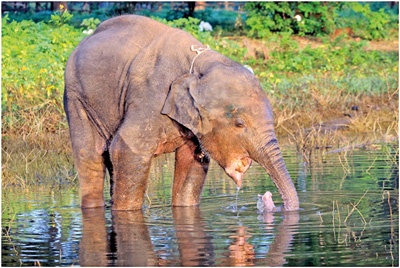
The female elephant calf was thirsty. Standing in the shallows of a water hole at dusk, it hurriedly sucked water into its trunk. It then curled its little trunk toward its mouth in an attempt to quench its thirst but there wasn’t a proper mouth to take in the trunk: the calf had lost his tongue; the small, fleshy base of what used be his tongue made a futile effort to guide the water down his throat.

Elephant calf with a damaged mouth trying to drink water. Playful calves like this often fallen victim to Hakka Patas with nearly half of the elephant calves died in 2019 are fallen victim to Hakka Patas (c) courtesy Department of Wildlife Conservation

The three-year-old elephant’s upper mouth palate had been totally smashed, creating a large wound that was infected. Its jaw and teeth were all blasted and the torn lower lip was rotting, attracting swarms of flies.

This has been the sad plight of victims of the little jaw bombs – illegal improvised explosive devices often hidden in food to explode in mouth when an unwary animal munches them. The bombs are commonly called hakka patas – hakkameaning jaw and patas denoting the sound of a blast.

The veterinary surgeon and team of the Department of Wildlife Conservation’s (DWC) Central Wildlife Region rushed to Nildandahinna area in Walapane after villagers told them about the injured calf.

They found it standing on the bank of the Uma Oya, sedated it, cleaned its mouth and provided saline as the suffering animal was weak: it was unable to eat or drink.

The vet, Dr. Akalanka Pinidiya, also injected strong antibiotics against infection in the injuries but he clearly knew the elephant would not survive its wounds.

“It is actually nearly impossible to successfully treat a hakka patas victim,” Dr. Tharaka Prasad, who heads the DWC’s veterinary unit said. “Our veterinary surgeons are helpless in most cases and can just employ painkillers until certain death ends the victim’s agony.”

The Anuradhapura wildlife range is one of the worst hotspots for hakka patas. The veterinary surgeon in charge of the range, Dr. Chandana Jayasinghe, said he had encountered hundreds of hakka patas victims during his 15 years of service.

“We saved the lives of only a handful of hakka patas victims, those that had minor injuries,” Dr. Jayasinghe said.

Hakka patas are a relatively new threat to Sri Lanka’s dwindling elephant population, with the first victims recorded around 2008.

The improvised device is made by mixing gunpowder with tightly-packed small stones or other hard materials. A chewing motion makes the hard bits grind against each other and set off sparks that ignite the gunpowder.  

Because the device is tightly packed the pressure makes an explosion. This explosion is usually powerful enough to kill its main target, wild boar, but larger animals such as elephants do not die instantly.

Hakka patas became the main cause of elephant deaths in 2017 and 2018, overtaking the deaths by gunshot wounds. In 2019, out of a total of 395 elephants killed, hakka patasdeaths were high as 67, only four fatalities short of the 71 gunshot deaths.

Data from the wildlife department shows a sharp decrease in elephants dying from gunshots in 2010-2013 and a sharp increase of hakka patas mortalities during the same period. These deaths have kept increasing.

Last year, 67 elephants fell victims to hakka patas and, tragically, half – 35 – were less than 10 years old.

Hakka patas deaths are the main cause of deaths for elephants less than five years of age: 14 baby elephants less than five years were victims of hakka patas last year, 13 of them being male. Elephant experts point out that male elephant babies are more playful and curious about their surroundings.

In 2016, a 10-year-old boy in Hambegamuwa died when a hakka patas exploded in his mouth. On several other occasions, children playing with hakka patas laid for animals suffered injuries when the devices exploded.

It is not easy to apprehend the culprits who set these explosive devices, DWC Director-General Chandana Sooriyabandara said.

“When an animal is killed using a gun or poison, poachers leave some traces but in case of these explosive devices, it is extremely difficult to trace culprits as the victims are often found in a different area from where the devices were placed,” Mr. Sooriyabandara said.

Also, unlike when using a gun, it is easier for offenders to hide or throw away these little devices when they encounter law enforcement officers, he added.

Elephant researcher Dr. Prithviraj Fernando stressed that the issue must be addressed both from elephant conservation and anti-poaching angles  since these devices are mainly set up for wild boar.

“The only way to address the issue is to use peer pressure to try to stop poachers from using this inhumane killing method,” Dr. Fernando said.

The Centre for Environmental Justice conducts a number of awareness campaigns in hakka patas hotspots for schoolchildren, using temples as venues, to raise awareness of the agony of deaths caused by these disguised explosives.

Experts say the problem could be alleviated by using intelligence networks in villages. Hakka patascannot be made by everybody: there is a technique to making them and only a few people in a village would have the skills; most often, other villagers know who is responsible.

It is suggested that police or the Civil Defence Force to be authorised to set up such intelligence networks.

[This report was produced under the CIR Investigative Journalism Fellowship Program 2019/2020]

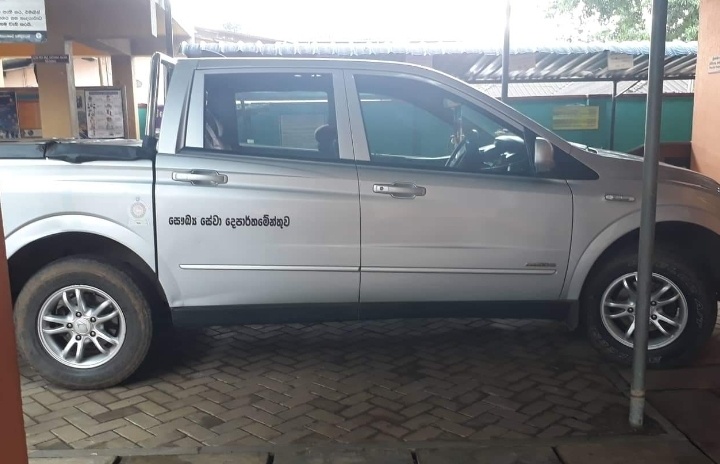
මයික්‍රෝ කැබ් නඩත්තු කිරීම සඳහා සෞඛ්‍ය අමාත්‍යංශය විශාල මුදලක් වැය කරයි

0

By Rahul Samantha Hettiarachchi

සෞඛ්‍ය මධ්‍යස්ථාන තුනක් කැබ් රථ 03ක් නඩත්තුකිරීම සඳහා රුපියල් මිලියන 8.14ක්

  හම්බන්තොට දිස්ත්‍රික්කයේ සුරියවැව , වීරකැටිය  සහ තිස්සමහාරාම යන ප්‍රාදේශීය සෞඛ්‍ය සේවා මධ්‍යස්ථාන සදහා 2009 දී දේශීය ව්‍යවසායක මයික්‍රෝ කාර්ස් (පුද්ගලික) සමාගම විසින් කොරියාවෙන් ගෙන්වන ලද  අමතර කොටස්  මගින් සකස්කරන ලද  මයික්‍රෝ ඇක්ටියොන් දිවිත්ව  කැබ් රථයක් මිල දී ගැනීමේ පරමාර්ථය වූයේ දේශීය ව්‍යාපාරයට උදව් කිරීම ය.

  නමුත් ඉතා ඉක්මනින් ප්‍රාදේශීය  සෞඛ්‍ය සේවා මධ්‍යස්ථානවල තාක්ෂණික නිලධාරීන් විසින් වාහනවල නඩත්තු පිරිවැය වාහනයේ මුල් පිරිවැයට වඩා වැඩි වන බව සොයා ගන්නා ලදී.

රුපියල් මිලියන 3.5 පමණ මිලකට මෙම කැබ් රථ මිලදී ගෙන ප්‍රාදේශීය සෞඛ්‍ය සේවා මධ්‍යස්ථාන වෙත ලබා දී   තිබෙන අතර පසුගිය වසර 10 තුල මෙම කැබ් රථ නඩත්තුවට පමණක් රුපියල් මිලියන 08 කට වඩා( 8,145,098.46 ) වැඩි මුදලක් ගෙවා තිබෙන බව තොරතුරු දැනගැනීමේ පනත මගින් සිදුකළ  සොයා බැලීමේදී අනාවරණය විය.

 2018 වසරේදී පමණක්  සූරියවැව සෞඛ්‍ය වෛද්‍ය නිලධාරී කාර්යාලය  යටතේ පවතින PB 7069 දරන කැබ් රථය මාස 10කුත් දින 20 ක් , වීරකැටිය සෞඛ්‍ය වෛද්‍ය නිලධාරී කාර්යාලය යටතේ පවතින PB 7908 දරන කැබ් රථය මාස තුනකුත් දින 03 ක් , තිස්සමහාරාම සෞඛ්‍ය වෛද්‍ය නිලධාරී කාර්යාලය තුල තිබෙන PB 7098 දරන කැබ් රථය මාස තුනක කාලයක් විවිධ  අලුත්වැඩියා  කටයුතු වෙනුවෙන් ගරාජ්වල තැබීමට සිදුව තිබේ . එමෙන්ම 2018 වර්ෂයේදී පමණක්  මෙම කැබ්  තුනෙහි අලුත්වැඩියා කටයුතු වෙනුවෙන් පමණක් රුපියල් ලක්ෂ තිස් හතක (රු3781521) මුදල් වැයකර තිබේ.  WP PB -7069, WP PB -7098, සහ WP PB -7908 යන ලියාපදිංචි අංක සහිත කැබ් රථ මිලදී ගත් දින සිට 68 වතාවකට වඩා  වැඩි වාර ගණනක් අලුත්වැඩියා කර තිබෙන බවද එම තොරතුරු  මගින් හෙළි වේ.

මෙම දත්ත විශ්ලේෂණයේදී එක් කැබ් රථයක් අලුත්වැඩියා කිරීමේ කටයුතු වෙනුවෙන්  වසරක් සදහා රුපියල් ලක්ෂ දෙක හමාරකට අධික මුදලක් වැයකර ඇති බව පෙනී යයි.  ඒ අනුව පසුගිය වසර 10 තුලදී PB 7069 යන කැබ් රථය නඩත්තු කිරීම සදහා රුපියල් 2483763.87ක මුදලක්ද ,PB 7908 යන කැබ් රථය නඩත්තු කිරීම සදහා රුපියල් 2779406.14 ක මුදලක්ද ,PB 7098 යන කැබ් රථය නඩත්තු කිරීම සදහා රුපියල් 2881928ක මුදලක් ද යොදවා තිබෙන බව අනාවරණය වේ.

මෙම කැබ්රථ මයික්‍රෝ සමාගමේ SUV වර්ගයේ නිපැයුමක් වන අතර  ලීටර් 2.0 ධාරිතාවෙන් යුත් ඉන්ටර් කූලර් ටර්බෝ ඩීසල් එන්ජිම(3rd Generation VGT A200XVT) අශ්ව බල 141 හා මිනිත්තුවට වට 4000ක බලයක් උත්පාදනය කරයි. ගියර් 6කින් යුතු ස්වයංක්‍රීය / ටිප්-ට්‍රොනික් ගියර් පද්ධතිය හෝ ස්වයංක්‍රීය නොවන ගියර් 5කින් යුතු ගියර් පද්ධතියකින් සමන්විත වේ.  4 වීල් රථයක් වන මෙය ධාවනය වන අතරතුර 2 වීල් තත්වයට පත් කිරීමට හැකියාව ඇත.

   එමෙන්ම මෙම කැබ් රථ තුල සිදුවන නඩත්තු කටයුතු දිස්ත්‍රික් සෞඛ්‍ය සේවා අධ්‍යක්ෂ කාර්යාලයේ තාක්ෂණික නිලධාරියාගේ අධීක්ෂණය හා තක්සේරු කිරීම් මත හම්බන්තොට සන්ධ්‍යා මෝටර්ස් යන පුද්ගලික ආයතනය මගින් හෝ අදාල කැබ්රථ නිශ්පාදන  ආයතනය මගින් සිදුකිරීමට කටයුතු සලසන බවයි කළ  විමසීමකදී  හම්බන්තොට දිස්ත්‍රික් සෞඛ්‍ය සේවා අධ්‍යක්ෂක  දීපිකා පටබැදිගේ මහත්මිය කියා සිටියේ ,

 ඒ අනුව මේ සම්බන්ධයෙන් අදාළ නඩත්තු කටයුතු සිදුකරන ආයතන මගින් හා දිස්ත්‍රික් සෞඛ්‍ය සේවා අධ්‍යක්ෂ කාර්යාලයේ අදාල කැබ්රථ පදවනු ලැබූ රියදුරන්ගෙන් කළ   විමසිකමදී ඔවුන් කියා සිටියේ මෙම කැබ්රථ තුල වැඩි වශයෙන් දෝෂ වාර්තා වනු ලබන්නේ එන්ජින් තුල බවයි .

  ”මෙම කැබ්රථ වල බොහොමයක් දෝෂ  වාර්තා වන්නේ ඉන්ජෙක්ටර්වල. එමෙන්ම  තවත් බොහෝ දෝෂ වාර්තා වෙනවා.  හරියට නඩත්තු කරන්නේ නැති වුනාම තමයි ගොඩක් දෝෂ එන්නේ ”යැයි  නඩත්තු කටයුතු සිදුකරනු ලබන ගරාජ් හිමියෙකු කියා සිටි අතර තම ව්‍යාපාර කටයුතු සදහා බාධා  ඇතිවිය හැකි නිසා තම නම පල නොකරන ලෙසද ඔහු ඉල්ලා සිටියේය.

  මේ ආකාරයෙන් අදාළ කැබ්රථ නඩත්තු කටයුතු සදහා යෙදවීම තුලින්  ප්‍රාදේශීය සෞඛ්‍ය සේවා මධ්‍යස්ථානයන්හි කටයුතු සඳහා විශාල බාධාවක් ඇති වී තිබේ. විශේෂයෙන්ම නඩත්තු හේතුවෙන් මාස කීපයක් ගරාජ්හි තැබීමට සිදුවූ අවස්ථා බොහොමයක් වේ. මෙම කාලය තුළ  සායන පවත්වාගෙන යාමේ අපහසුතාවන් මෙන්ම විවිධ රාජකාරි කටයුතුවලට ද මහත් සේ බාධා ඇතිවීම තුල සෞඛ්‍ය අංශයේ කටයුතු අඩාල වීම පමණක් නොව ඒ වෙනුවෙන් වෙනත් වාහන යොදා ගැනීම තුල සෞඛ්‍ය දෙපාර්තමේන්තුවට විශාල මුල්‍යමය පාඩුවක් තවත් අතකින් සිදු වේ.

මෙය හම්බන්තොට පමණක් නොවේ

කරුණු සොයා බැලීමේදී  මෙම පාඩුව සිදුවන්නේ හම්බන්තොට දිස්ත්‍රික්කයේ පමණක් නොවේ. විශේෂයෙන්ම දිවයිනේ අනෙකුත් දිස්ත්‍රික්කයන්හි ඇති ප්‍රාදේශීය සෞඛ්‍ය සේවා මධ්‍යස්ථාන 50කට පමණ මෙම කැබ්රථ ලබා දී තිබේ. හම්බන්තොට දිස්ත්‍රික් සෞඛ්‍ය සේවා කාර්යාලය යටතේ පවතින මෙම කැබ්රථ නඩත්තු වියදම් මෙන්ම අනෙකුත් දිස්ත්‍රික්කයන්හි ඇති කැබ්රථ සඳහා යන නඩත්තු වියදම් ද සලකා බැලීමේ දී සෞඛ්‍ය අමාත්‍යාංශයට අලුතින් වාහන මිලදී ගැනීමට යෙදවිය හැකි තරම් මුදලක්, මේ වනවිට මෙම කැබ් රථ නඩත්තුව වෙනුවෙන් යෙදවීමට සිදුව තිබේ .

එමෙන්ම ටෙන්ඩර් මගින් වාහන මිලදී ගෙන විකිණීමේ ව්‍යාපාරයක නිරතවී සිටින ගම්පහ ප්‍රදේශයේ ව්‍යාපාරිකයෙකු මෙන්ම මෙම වාහන භාවිත කරන්නෙකු වන ජි .කේ. ප්‍රේමතිලක මහතා කියා සිටියේ   ‘’නඩත්තු කරන්න ගියාම කෑලි ගන්න කොම්පැණියටම  යන්න ඕන ,ඒ ගිහිල්ලත් කෑලි ගෙනැල්ල දෙනකන් බොහෝ අවස්ථාවන්හි බලන් ඉන්න ඕන .’’

මයික්‍රෝ කාර්ස් (පුද්ගලික) සමාගම වැඩි කාලයක් අලුත්වැඩියා කිරීමේ කාලය පිළිබඳ චෝදනා ප්‍රතික්ෂේප කරයි

කෙසේ නමුත් මයික්‍රෝ කැබ්රථ සම්බන්ධයෙන් පැන නැගී ඇති මෙම ගැටළු සහගත නඩත්තු කටයුතු සම්බන්ධයෙන් කළ විමසීමකදී අදහස් දැක්වූ  එම සමාගමේ අමතර කොටස් සම්බන්ධයෙන් කළමනාකරු ලෙස සේවය කරනු ලබන අමිල පල්ලියගුරු මහතා කියා සිටියේ මෙම වාහන සදහා ඒ ආකාරයේ දෝෂ නොපවතින බවයි.

”ඇත්තටම මෙම කැබ් අපි දීලා තියෙන්නේ සෞඛ්‍ය අමාත්‍යංශයට විතරක් නොවේ. වෙනත් බොහෝ පාරිභෝගිකයන් ද  මෙම කැබ් භාවිත කරනවා. දැනටත් විවිධ ආයතන ඔය ආකාරයෙන් අලුත්වැඩියා කටයුතු කරගන්නවා. එය  එක් එක් වාහනයෙන් වාහනයට වෙනස් වෙනවා. මේක ඩිසල් වාහනයක් නිසා එවැනි අලුත්වැඩියා කටයුතු සදහා යන මුදල වැඩියි . ඒ වගේම වාහන වර්ගය  වෙනස් වෙනකොට අමතර කොටස් ප්‍රමාණයත්  ටිකක්  අඩුවෙනවා. එහෙම වුනත් සති දෙක තුනකින් එම අමතර කොටස් ගෙනත් දීමේ හැකියාව තියෙනවා .ඒ වගේම වාහනය කිලෝ මීටර් 5000 ක් ගියාම සර්විස් කරන්න ඕන එක මසකට දෙකක් උනත් වෙන්න පුළුවන්’’ බවයි ඔහු කියා සිටියේ ”

2018 වර්ෂයේ සේවයට වඩා වාහන ගරාජ්තුල

dav

කෙසේ නමුත් කරුණු සොයා බැලීමේදී අනාවරණය වුයේ හම්බන්තොට දිස්ත්‍රික් සෞඛ්‍ය සේවා අධ්‍යක්ෂ කාර්යාලය යටතේ ඇති තිස්සමහාරාම ප්‍රාදේශීය සෞඛ්‍ය වෛද්‍ය නිලධාරී කාර්යාලයේ PB 7098යන අංක දරන මයික්‍රෝ කැබ් රථය 2018.12.19 වන දින අලුත් වැඩියා කටයුත්තක් සදහා මයික්‍රෝ සමාගමට භාර දී ඇතත් එය මේ වනතෙක් ලබා දීමට සමාගම අපොහොසත් වී තිබේ . ඒ සම්බන්ධයෙන් කණගාටුවද ප්‍රකාශ කරමින් 2019.07.15 දින ලිපි අංක HDH /GF යටතේ දිස්ත්‍රික් සෞඛ්‍ය සේවා අධ්‍යක්ෂ විසින් මයික්‍රෝ සමාගමේ කළමණාකරු වෙත ලිපියක් ද යවා තිබේ .

මේ ආකාරයෙන් සෞඛ්‍ය අමාත්‍යංශයේ මිලියන ගණනක මුදල් වාර්ෂිකව ගිලගනිමින් ඇති මෙම කැබ්රථ සම්බන්ධයෙන් තවදුරටත් නිසි බලධාරීන්ගේ අවධානය නොමැති වුවහොත් සිදුවන්නේ සෞඛ්‍ය අමාත්‍යංශයට තවත් මිලියන ගණනක මුදල් අහිමිවීමකි.

මේ සම්බන්ධයෙන් කරුණු විමසීම සදහා සෞඛ්‍ය අමාත්‍ය පවිත්‍රා වන්නි ආරච්චි සහ  සෞඛ්‍ය සේවා අධ්‍යක්ෂ ජනරාල් අනිල් ජාසිංහ මහතා සම්බන්ධ කරගැනීමට කීප අවස්ථාවකදීම උත්සහ කළත් එය ව්‍යර්ථ විය.

[This report was produced under the CIR Investigative Journalism Fellowship Program 2019/2020]

Howard G. Buffett Fund for Women Journalists – Rolling Deadline

Promoting the work and advancing the role of women in the news media across the globe is critical to transparency and a diversity of voices. The Howard G. Buffett Fund for Women Journalists, the first funding initiative of its kind, enables the IWMF to dramatically expand its support of women journalists. Established with a $4 million gift from the Howard G. Buffett Foundation, the Fund will support projects including educational opportunities, investigative reporting and media development initiatives. 

For more information, please visit the following link

https://iwmf.submittable.com/submit/159321/howard-g-buffett-fund-for-women-journalists-rolling-deadline

Announcing the GroundTruth Global Migration, Refugees and Resettlement Reporting Fellowship

The GroundTruth Project today announces an ambitious reporting fellowship covering a critical moment for global migration and resettlement.

We’re looking for story proposals that examine how the global migration crisis is unfolding at the local level, and solutions-oriented stories that explore the different approaches and challenges to permanent resettlement of refugees, even as anti-refugee sentiment fuels public backlash.

With support from the MacArthur Foundation and The Henry Luce Foundation, GroundTruth plans to select a team of fellows working across key regions, telling narrative-driven, multimedia stories of migration shaped by climate change, economic and social instability, war and famine.

Deadline: March 3, 2020

For more information, please visit the following link
https://reportforamerica.submittable.com/submit/159624/groundtruth-migration-reporting-fellowship

Journalism fellowship accepting applications [Asia]

Journalists based in Asia with at least five years of professional experience can apply for this residential fellowship.

The Temasek Foundation International and Institute of Policy Studies at the National University of Singapore organize the Asia Journalism Fellowship program, which enables about 15 journalists to spend three months in Singapore.

This year’s fellowship runs July 13 to Oct. 2. Fellows take part in seminars and workshops designed to sharpen their professional skills and deepen their understanding of key journalism trends. 

The organizers provide airfare, accommodations and a stipend to cover basic living expenses.

The deadline is March 2.

For more information, please visit the following link
http://www.ajf.sg/

East-West Center’s 2020 Senior Journalists Seminar

The East-West Center is now accepting applications for the 2020 Senior Journalists Seminar, which will bring together 10-12 multinational journalists for an immersive three week dialogue, study, and travel program to Washington, DC; Charlotte, North Carolina; Colombo, Sri Lanka; Kuala Lumpur, Malaysia. The Seminar will begin in Washington, DC with an overview of the American political system, including the U.S. Constitution’s First Amendment, federalism, the separation of powers, and congressional influencers on foreign policymaking. Other foundational sessions will examine the religious make-up, diversity of religious identity, and the prayer and attendance practices of the American public. The Washington, DC study tour will also feature participant presentations summarizing religion’s role in their home countries. In Charlotte, journalists will experientially explore America’s multicultural and multi-religious society, the experiences of minority religious communities, initiatives bridging faith divides, and how religious identity is expressed in the literary, visual, performing, and media arts. As the study tour in Charlotte is intended to coincide with the Republican National Convention, journalists will also have unique access to American voters, including both Trump supporters and opponents.Throughout the U.S. study tour, journalists will consider the geopolitical and cultural engagement of the U.S. with Muslim majority regions. Interactive experiences will also be included to deepen journalists’ understanding of Islamic culture through the arts and new media. Travel to Colombo, Sri Lanka and Kuala Lumpur, Malaysia will contextualize and compare religion’s role in the public sphere across democratic nations; provide first-hand exposure to and more nuanced understanding of the diversity of religious societies; and build the professional networks of participating journalists. Finally, the media’s role in choosing, framing, and disseminating stories with a religious element and its effective shaping of public perception and U.S. relations with Muslim majority regions will be explored.

Dates:  August 19 – September 11, 2020

Study Destinations:  Washington, DC; Charlotte, North Carolina; Colombo, Sri Lanka; Kuala Lumpur, Malaysia **The study tour in Charlotte is intended to coincide with the Republican National Convention**

Funding:  The 2020 Senior Journalists Seminar is funded by the East-West Center, Doris Duke Foundation for Islamic Art, Doris Duke Charitable Foundation, and the Roshan Cultural Heritage Institute and supports the participation of 10-12 journalists from the United States and countries with substantial Muslim populations. All participants are responsible for the Senior Journalists Seminar fee of USD$800.00, visa fees, health insurance and airline baggage charges. EWC encourages additional participant cost-sharing of programmatic costs and considers cost-sharing in the selection of applicants.

Eligibility:  Media professionals from print, broadcast, online, and multi-media news organizations, including editors, reporters, columnists, editorial writers, producers, bloggers, videographers, and photo journalists with a minimum of ten years of experience are eligible to apply. The Senior Journalists Seminars will include a total of 10-12 journalists from the United States and countries with substantial Muslim populations. For more information regarding eligibility, please visit the Senior Journalists Seminar webpage.

Deadline:  Thursday, March 12, 2020

For more information, please visit the Senior Journalists Seminar webpage.

You may also email sjs@eastwestcenter.org or call Liz A. Dorn at 808-944-7368.

Call for applications: Training in fact-checking and integrity tools with reporting grants

To mark the first anniversary of the Center for Investigative Reporting (CIR) in Sri Lanka, we are calling for applications from interested, early to mid-career journalists for a training workshop on fact-checking and integrity tools coupled with reporting opportunities under a grants scheme.

Selected participants will be trained by DataLEADS, a data-driven Indian initiative aimed to create new platforms of data research and storytelling, at a tailor-made residential training workshop on February 29 & March 1, 2020.

Subsequent to the training, CIR will mentor the participants to undertake specialized reporting, using the skills on fact-checking tools. Participants are required to produce at least two reports as part of the program. A grant of up to Rs. 20,000 will be available for research and development of each such report.

Application deadline: Closed

Waste containers from UK: Tug-of-war Among Officials Delays Sending Waste Back

By Gagani Weerakoon

When Nuwan (name withheld) along with 30  manpower contract workers came to a Katunayake Export Processing Zone site to load waste piled up on the ground back to containers, a mask and a pair of gloves were all they were given to wear. 

However, after the first day, Nuwan and 12 others developed a rash on both hands and had to seek medical treatment as the blisters and the irritation were unbearable.

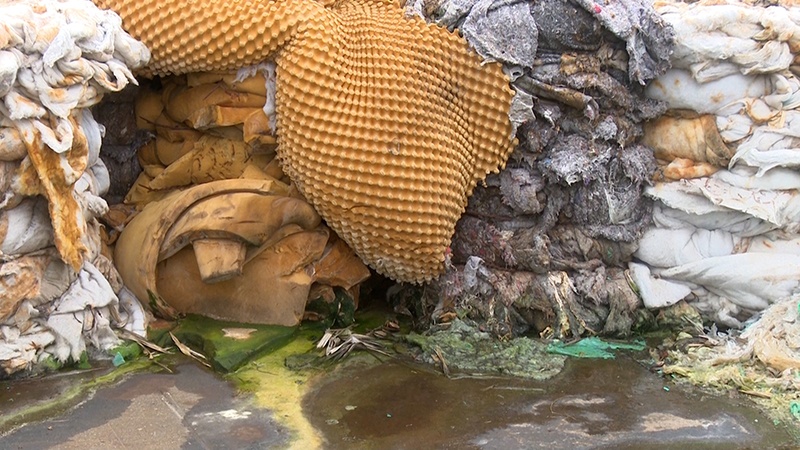
They were told it was just a pile of mattresses. However, they found it was otherwise . 

“There were items that resembled carpets, sheets, linen resembling those in hospitals and the stench was unbearable. Within  hours our skin started burning – probably due to toxic fumes escaping from the waste,” Nuwan said.

https://ceylontoday.lk/site-api/uploads/media/a8d71cbbe799dd57632b5f7b76d3ee5c781df9cd.jpg

Nuwan was given an ointment to apply on the skin where irritation was felt while some of his colleagues continued working in the yard. He didn’t return.

“I felt disgusted.  Even though we didn’t know what was in that waste dump, it was more than mattresses.

Every time I think of that waste pile, my body subconsciously responds as I vigorously scratch my hands,” Nuwan said while unintentionally scratching his hands, where marks remained from healed blisters, recalling what happened months ago.

https://ceylontoday.lk/site-api/uploads/media/8f76eff0e27f3a9eb3dc059b01925f56a0abd863.jpg

Saman (name withheld),  a permanent employee of Hayleys Free Zone Limited (HFZL) said they were told the containers carried mattresses  from a UK company which will be processed and re-exported.

He said a machine was brought down and the processing of mattresses continued for a few months since October 2017. However, once the machine broke everything that was unloaded was piling up on the ground for almost two years, he said.

https://ceylontoday.lk/site-api/uploads/media/3c6a20e4b2f99c24bc762743f2639290a52e899c.jpg

Clinical waste

Later Saman and Nuwan realised that they had been working with probable clinical waste including human body parts from waste sent in containers from the UK.

“After CEA officials visited the site for inspection, the management asked us to delete all photos and videos we had in possession. They made sure all such photos taken from 2017 are deleted,” he said.

Asked as to why none of them alerted any authority about the waste dump, Saman admitted that they did not realise the gravity of the matter, even though they felt like they were working at the Meethotamulla garbage dump.

“The stench was unbearable. Unlike others in the Free Trade Zone we are not part of any trade union. We are more concerned about job safety than our health,” Saman added.

It later transpired the containers  Saman and Nuwan unloaded came to Sri Lanka as part of a trade deal.

https://ceylontoday.lk/site-api/uploads/media/7339b01b7fd7d0334cd664a85336590a2d2cb78f.jpg

Unaware of trade deal

But local authorities including the Central Environment Authority (CEA), the apex body of protecting the country’s environment, were unaware of any such trade deal where post consumer waste is imported till Sri Lanka Customs informed them in May 2019 of suspicious containers at the Colombo International Container Terminal (CICT).

It was after several weeks that the CEA and the Customs found out that a stock of over 2,400 metric tons of post consumer waste imported from the UK was openly dumped at a site of Hayleys Free Zone Limited – a few hundred metres from the BIA , posing a threat to the environment and people in the area. 

The heap of waste still lies unattended for more than two years and speaks loud and clear of the need for strict environmental regulations and the inability of local authorities to take stern action against perpetrators due to the lack of resources and expertise.

Despite institutions and individuals raising concerns of possible health threat as it was suspected to include clinical waste, local authorities are still struggling to ensure public that they are completely safe and there is no cause to panic.

A total of 242 containers have been imported by the Ceylon Metal Processing Corporation (Pvt) Ltd and their Freight Forwarder ETL Colombo (Pvt) Limited.

However, 130 containers have been cleared by Hayleys Free Zone, under Government concessions. 

The other 112 containers are still detained by Customs. Workers including Nuwan and Saman from two manpower agencies loaded the waste dumped on the ground from 130 containers to 333 containers.  

https://ceylontoday.lk/site-api/uploads/media/29c2a4d16b7366b860a23550ae444cd4ec297a72.jpg

Nothing happened

No tangible action has been taken on the suspicious waste dumping even though it is more than six months since the authorities were alerted and Sri Lankan authorities threatened the UK of taking action based on the BASEL Convention on waste dumping.

In contrast, Malaysia last month sent back 150 containers packed with plastic waste to 13 wealthy nations, putting the world on notice that it will not be the world’s garbage dump. 

The countries receiving their trash back include the US, the UK, France and Canada. Unfortunately, Sri Lanka is still struggling with the waste.

There were dozens of letters and reports exchanged between Sri Lanka Customs, the CEA, the Government Analyst’s Department, Atomic Energy Authority and the Medical Research Institute (MRI).

https://ceylontoday.lk/site-api/uploads/media/3713c13347280091d4b391e7cbf9315c039a4618.jpg

Failed

However, these institutions have so far failed to assure residents and thousands of workers in the Free Trade Zone that there was no foreign waste contamination in both water and air in the area. 

The repatriation of waste to the country of origin appears a far-fetched task with the Environment Agency in UK demanding more clarity regarding the waste containers.

“Inform us of the location of the containers that were emptied at Hayleys Free Zone Ltd? How can you be sure that the waste emptied here was waste which originated from the original 130 containers?,” Lesley Worswick in his letter to CEA Director General Hemantha Jayasinghe on 1 November 2019 has queried.

The Environment Agency of UK has communicated with the CEA and the Ministry of Justice to send a team of specialists to Sri Lanka to carry out further investigations.

When contacted, spokesperson of the British High Commission in Colombo stated that the UK was committed to tackling the illegal export of waste and UK authorities were working closely with their Sri Lankan counterparts to ensure that the export of these waste containers is fully investigated. 

 The UK is also working with the Sri Lankan authorities to ensure the waste is returned to the UK as soon as is practicable, the spokesperson said.

“The Environment Agency is seeking agreement for investigators to visit Sri Lanka to collect evidence with the assistance of the relevant Sri Lankan authorities. It is important that investigations are conducted with due care,” he added.

https://ceylontoday.lk/site-api/uploads/media/68c9d09676d4accbe787571fe73e11aab682745c.jpg

Lengthy discussions

However, Justice Secretary J.J. Ratnasiri said after having lengthy discussions with the CEA, the Attorney General’s Department and the Justice Ministry, it was decided to enhance resources currently lacking in relevant institutions.

“Why should we let a foreign team to carry out investigations? If we have shortcomings in expertise or available laws these need to be addressed. 

Anyway, the future of the UK waste will be decided once the Court ruling is given,” he said. The Court ruling was scheduled to be given on 13 February, however, it was put off for another day.

The CEA meanwhile said they were unaware of the outcome of the discussion at the Justice Ministry. “We have not been officially notified whether they took a decision to allow the UK expert team or not. They have sought permission to visit and meet the parties involved,” CEA spokesperson said.

While authorities engage in this tug-of-war, the imported waste dump will continue to rot along with Sri Lanka’s reputation as the world’s number one tourist destination being at stake.

Officials from the CEA during their July 2019 inspection observed that leachate generated due to absorption of rain water was flowing through the storm water drain system to the environment as the site does not have a storm/waste water treatment facility.

Approximately 2,400 metric tons of waste in these 130 containers was dumped at the site. Following CEA’s visit in July 2019, the Hayleys FZL was ordered to cover the waste dump so that it will not be exposed to rain water.

It was also observed that fibre particles of mattresses spread into the environment with the wind due to processing activities.

CEA Director General Hemantha Jayasinghe, in a letter to HFZL Director strictly advised that the BOI-registered company should take immediate action to re-export all the waste to the country of origin, and until such time, the waste dump should be covered to prevent the generation of leachate and dispersing of fine fibre particles.

It was as a result of this directive, that Nuwan and 30 others loaded the waste heap to 333 containers.  

 The Court of Appeal entrusted the responsibility of determining the exact nature of the goods in waste containers with the Government Analyst.

However, determining the exact nature of goods has been problematic as the Government Analyst Department found it difficult to carry out investigations due to a lack of resources as the subject did not fall within their area of expertise.

Following this, in a report to BOI Director General, Sri Lanka Atomic Energy Regulatory Council in August 2019 informed that measured radiation levels around the containers and waste were free from radioactive contamination.

However, the Bio Safety Committee of the MRI has recommended to consider this consignment as infectious material when handling the contaminated cargo.

https://ceylontoday.lk/site-api/uploads/media/280ec24c6919f43b58d5811e9058b48cd0be20ff.jpg

Access denied

Sarath Peiris, Chairman of Seeduwa-Katunayake Urban Council, under whom Free Trade Zone comes, is appalled by the ignorance displayed by the BOI in letting foreign waste dump piling up and aggressively denying any access to outsiders when residents got to know about ‘foreign waste’.

“The Free Trade Zone may come under BOI jurisdiction. The people in the area who may have come into contact with soil, air or water contaminated by this waste dump come under my jurisdiction,” Peiris said.

“It is ironical that the BOI which doesn’t even allow a single person to enter the Free Zone without a licence, allowed foreign waste to pile. Don’t’ they have a responsibility to know what actually comes into the Zone.”

‘No-entry’ zone

He also noted that the BOI and Hayleys management decision to treat the site strictly as a ‘no-entry’ zone for people’s representatives like him and the Media, will not serve any purpose.

“People have a right to know  what sort of toxic waste they have been inhaling in the past two years,” he said.

Director of the Hazardous Waste and Chemical Management Unit of the CEA, Ajith Weerasundara insisted that according to the National Solid Waste Management Policy and the Basel Convention, importation of post consumer waste was prohibited.

“Also, due to health risks associated with imported materials, the CEA cannot permit the entry of such material” he said.

https://ceylontoday.lk/site-api/uploads/media/d68d17a6b141b7711fcb412519602305af216430.jpg

[This report was produced under the CIR Investigative Journalism Fellowship Program 2019/20]
Consumer security deposits: CEB fails to deduct interest from electricity bills

By Yahiya Rikas Ahamed

A news investigation has found that the CEB, which is still running at a loss, has reportedly failed to deduct the interest income of its consumer security deposits from consumer electricity bills, according to the law.

The CEB has earned an interest income of Rs 1 billion at the end of 2018, according to the COPE Committee Report, and according to RTI information, Rs 14.3 billion has been deposited as security deposits from 2009 through the end of 2018.

An owner of one of the large rubber factories in Kandy said, “I paid Rs 1 million as a security deposit during the expansion of my business, but neither did the CEB pay interest income for that security deposit, nor did it deduct it from the electricity bill.”

He did not mention his name, fearing a reprisal. He also stated “a few of my factories have already been closed, but the CEB has still not paid either security deposit or interest income.”

Under CEB regulations, if a factory is closed or power is withdrawn from use, the security deposit must be repaid. Consumers are charged security deposits according to their average electricity usage, with the aim of avoiding non-payment for used electricity. Under the rule, where the deal with the CEB has been terminated, customers have the right to receive security deposits and interest income through it.

However, only very few customers were given the security deposits by the CEB, and most of that was after consumers brought legal proceedings against the CEB. The Public Utilities Commission of Sri Lanka (PUCSL) stated that a lack of knowledge of the public about this law is the main reason.

CEB spokesman, Sulakshana Jayawardena, said, “In accordance with the law, interest income must be returned to the public, but at the moment we have faced immense losses, which is why it is difficult to pay the security deposits,” and added “we knew that the interest on income must be paid for the security deposits.”

In 2018, the CEB suffered a loss of Rs 28.9 billion, and this loss was forecast at Rs 85 billion last year, and Rs 120 billion next year.

Rs 650 is collected as security deposits from ordinary home users, and Rs 1,500 is collected as security deposits from organisations. The CEB mentioned that Rs 1,000 must be charged for each kilo-volt-ampere (KVA) electrical unit from large-scale businesses and factories.

From CEB reports, it has been uncovered that, since 2009, the total amount of security deposits has doubled to the last 10 years.
The CEB has not yet mentioned any information concerning the repayment of interest income and security deposits. 

Public Utilities Commission Communication Director and Media Spokesman, Jayanath Herath, said “there were 3 complaints received from customers about the non-payment of interest income.”

He further claimed that “it is unfair for the CEB to claim that they have not yet taken any details on repaying interest income and security deposits. 

Based on the Central Bank’s average weighted fixed deposit rate, the Public Utilities Commission gave clear guidance to CEB on the interest rate.” Nonetheless, CEB Spokesman, Sulakshana Jayawardena, said “I don’t know about interest income and interest rate.”

The PUCSL sent the interest payment instructions for the security deposit to CEB and Lanka Electricity Company Private Limited (LECO) at the beginning of 2017, according to electricity law.
The Public Utilities Commission of Sri Lanka (PUCSL) agreed and approved 8.93 per cent as an annual interest rate on the security deposit in 2017. “Yet, the CEB was not interested, did not implement it, and did not even take action to deduct from the bill for electricity,” Herath said.

[This report was produced under the CIR Investigative Journalism Fellowship Program 2019/2020]