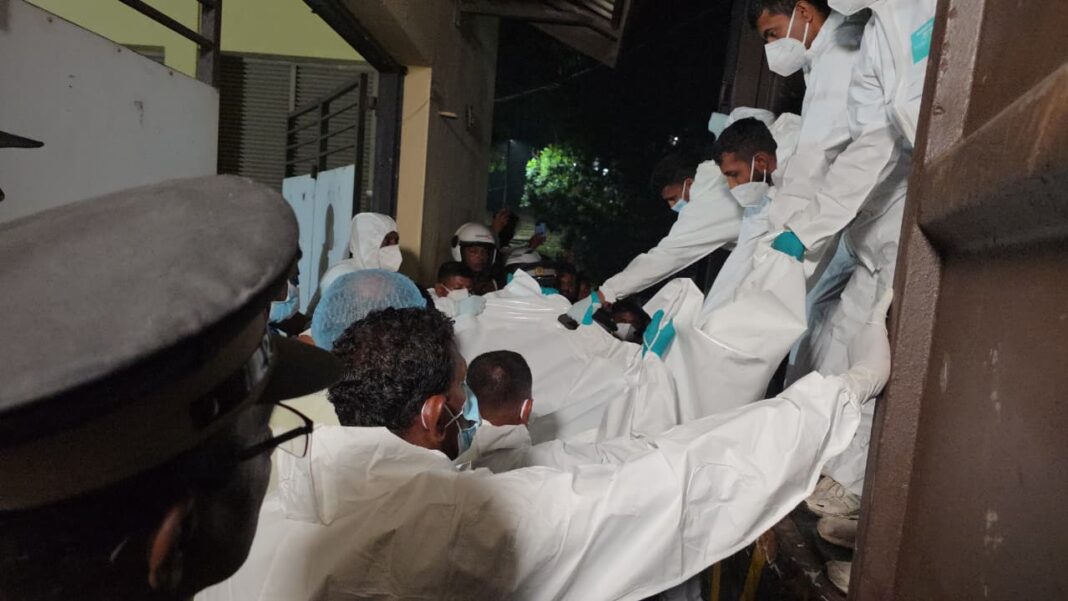
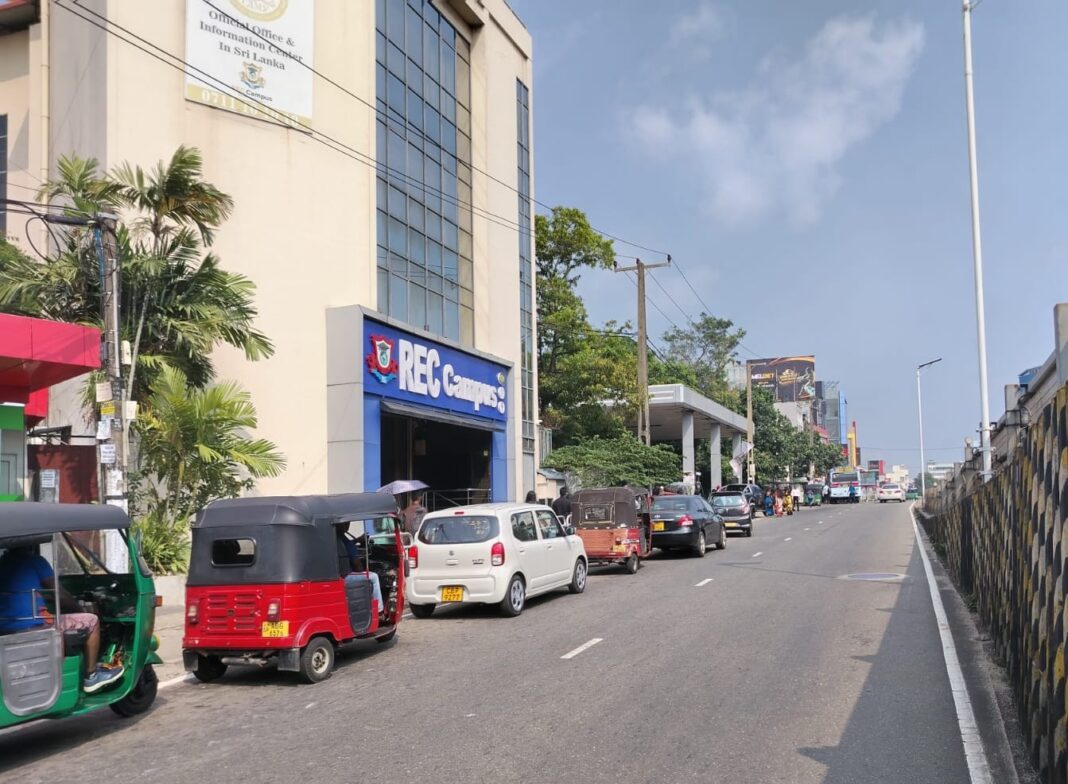

COLOMBO – By the evening of March 1, queues had begun to snake out of filling stations once again — a sight that instantly transported many Sri Lankans back to the dark days of 2022.
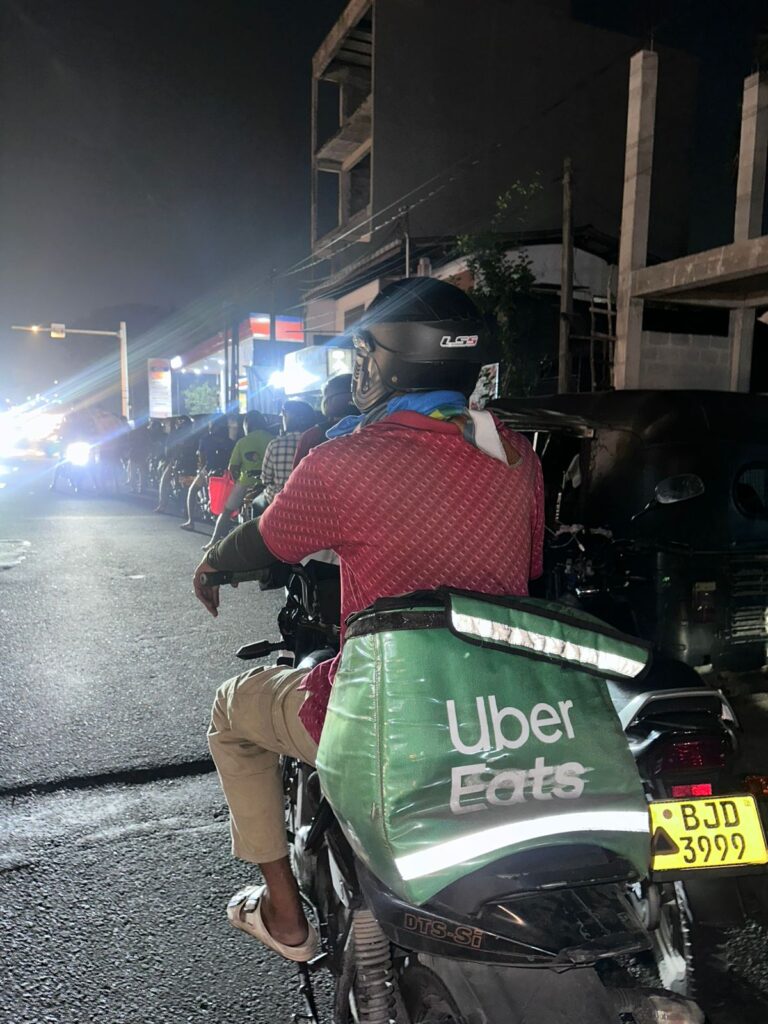
For 26-year-old Uber Eats rider Ranuka Dilshan, the long queue was more than an inconvenience. It was a threat to his survival.
“My petrol tank is almost empty, and I have a target to reach before midnight,” he said, visibly frustrated while waiting in line. “If I fail to meet today’s delivery expectations, I will not earn what I need at the end of the month. I don’t understand why people are trying to fill their tanks to the brim. How long are those stocks going to last anyway?”
For Ranuka, a few hours in a queue means losing peak delivery hours and ending up with what he describes as “a peanut income” that barely covers rent. Like thousands of ride-hailing drivers and delivery workers, his earnings depend entirely on staying on the road.
Across Colombo and in several other towns, similar scenes unfolded as motorists rushed to fill up their tanks following rising tensions in the Middle East.
Why are Sri Lankans afraid?
The fear was triggered after Iran came under attack in the escalating Middle East crisis. While Sri Lanka does not primarily import refined petrol and diesel from Iran, a widespread public belief persists that the country depends heavily on Middle Eastern oil supplies.
For many citizens, the logic is simple: if the Middle East is unstable, fuel supplies will be disrupted. And if fuel is disrupted, Sri Lanka — still fragile after its worst economic crisis since independence— may experience hardships.
Memories of 2022 remain fresh. That year, a severe foreign exchange shortage left Sri Lanka unable to pay for fuel shipments. Vehicles queued for days. Public transport collapsed. Businesses shut down. Some people even slept in their vehicles for days to secure a few litres of petrol.
The trauma of that period has not faded, in fact rekindled by the unfolding crisis.
Even a rumour of disruption is enough to trigger panic buying. Many drivers fear that if they do not fill up today, they may not be able to obtain fuel the next day.
CPC: “No fuel crisis”
However, authorities insist that the situation today is quite different from 2022.
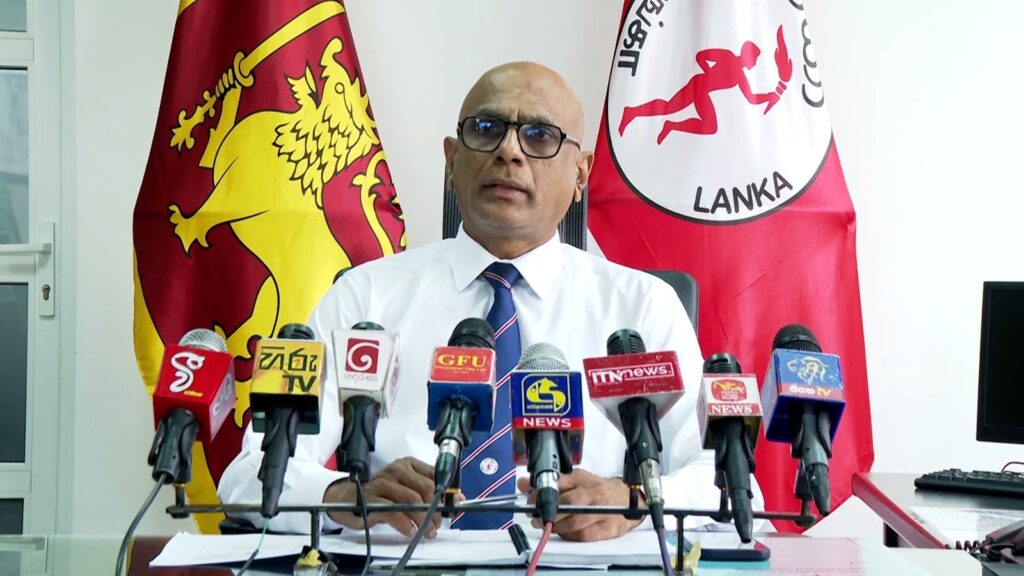
Shantha Rajakaruna, chairman of Ceylon Petroleum Corporation (CPC), told CIR that Sri Lanka has sufficient fuel stocks to avoid any shortage despite tensions in the Middle East.
“There is no fuel crisis in the country,” he stressed, urging the public not to panic.
According to Rajakaruna, current reserves, along with incoming shipments, are adequate for more than a month even if no additional cargo arrives and offered numbers:
• Overall fuel stocks are sufficient for 37 days
• Diesel stocks are adequate for 35 days
• Aviation fuel stocks will last 47 days
He explained Sri Lanka does not mainly import refined petrol and diesel from Middle Eastern countries. Recent shipments have arrived from India, Singapore, Malaysia, and South Korea, largely because freight costs are lower and distances are shorter.
Any potential impact from Middle Eastern instability would primarily relate to crude oil imports, he added. Even then, existing reserves would allow operations to continue for about a month.
Rajakaruna noted that unnecessary panic buying could create artificial shortages and disrupt distribution.
Distribution strained by panic buying
While authorities maintain that stocks are sufficient, distributors admit that panic buying has temporarily strained supply networks.
The Sri Lanka Petroleum Private Tanker Owners’ Association (SLPPTOA) said it would take at least three days to fully normalize distribution across the country due to the sudden surge in demand.
Shantha Silva, Joint Secretary, SLPPTOA, said the dispatching of fuel from CPC storage terminals had already begun. However, he explained that transporting fuel to filling stations that had placed urgent orders takes time.
“Fuel stocks are being released, but delivery and redistribution cannot happen instantly,” he said.
The sudden spike in demand, driven by fears of supply disruptions linked to the Middle East war, led to long queues at stations and increased pressure on tanker operators.
Silva assured that fuel distribution activities would continue uninterrupted, to stabilize the situation as quickly as possible.
He urged the public to purchase only what is necessary, warning that panic buying prolongs recovery.
Police crackdown on hoarding
Meanwhile, Sri Lanka Police have also stepped in.
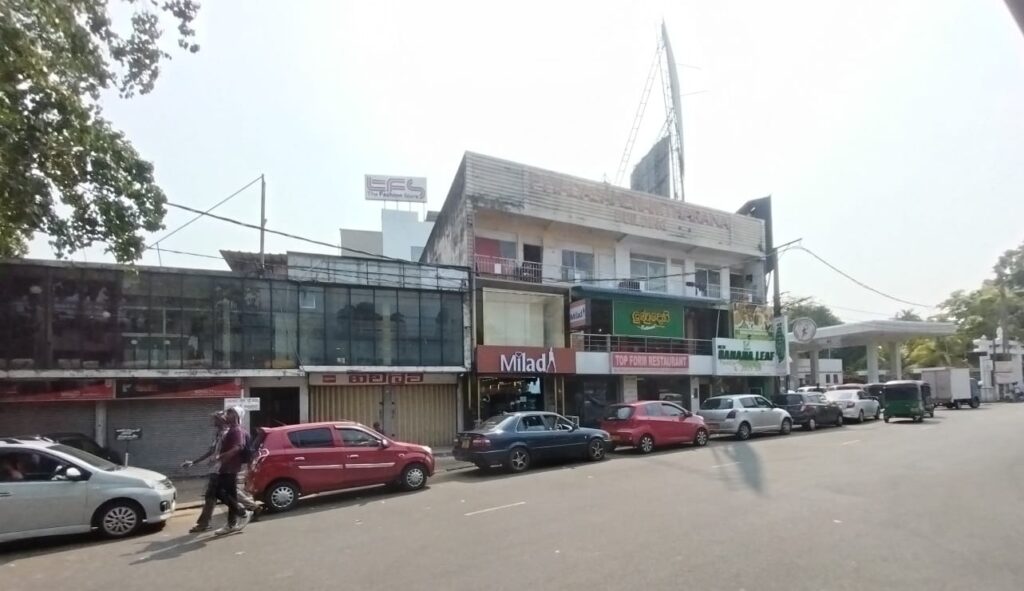
In a statement dated March 1, the Police Media Division said some individuals were attempting to stockpile fuel in cans, barrels, and other containers due to anxiety over provincial developments.
Police stations across the country have been instructed to work with filling station owners to prevent improper fuel collection.
Until further notice, fuel will not be dispensed into cans, bottles, or other containers except for legitimate needs such as fishing vessels, industrial operations, agriculture, and essential domestic purposes.
Police also warned investigations and legal action against those involved in hoarding, reselling fuel at inflated prices, or spreading false information about fuel shortages on social media.
Kumara Jayakody, Minister of Power and Energy, echoed the warning. He told CIR that legal action will be taken against individuals hoarding fuel and against filling stations that issue fuel for storage in barrels or cans.
“Issuing fuel to cans, barrels, and bottles is illegal,” he said, adding that law enforcement agencies have been instructed to conduct raids where necessary.
Jayakody emphasized that sufficient stocks are available for more than a month and appealed to the public to avoid unnecessary stockpiling.
In a move aimed at reassuring the public, the CPC issued fuel supplies on Sunday and distributed on Monday (Full Moon Day), days when fuel is usually not issued.
QR code system may return
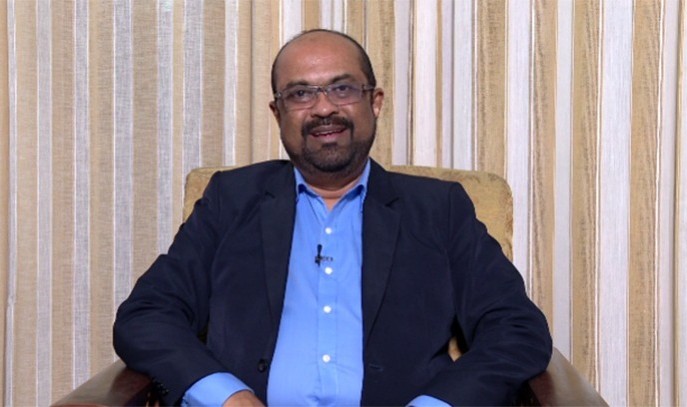
Muhammadu Ilyas Muhammadu Arkam, Deputy Minister of Energy, told CIR that the QR code fuel distribution system introduced during the 2022 crisis may have to be reactivated if panic buying continues.
“If people start gathering more fuel than required, we will have to resort to the QR code system again to manage distribution properly,” Akram said, reiterating that the country has sufficient fuel reserves.
The QR system, while effective in rationing fuel during the crisis, was also a reminder of severe scarcity — something many citizens hope never to experience again.
At the provincial level, officials sought to calm fears.
The Depot Superintendent of the Ceylon Petroleum Storage Terminal Ltd (CPSTL) branch in Matara, Chamila Hewagampolage, said there were adequate stocks for three days and assured uninterrupted supplies from the Kolonnawa and Muthurajawela terminals.
As of Sunday (1), Matara alone had 300,000 liters of diesel and 350,000 liters of petrol in reserve.
Fuel had already been distributed to stations in Matara town, while southern stations in Tangalle, Dikwella, and Hakmana were scheduled to receive supplies within hours. Deliveries were also being made to Thanamalwila, Suriyawewa, and Kirinda.
“The panic buying will only lead to unnecessary exhausting of prevailing stocks,” he noted.
Fear vs. reality
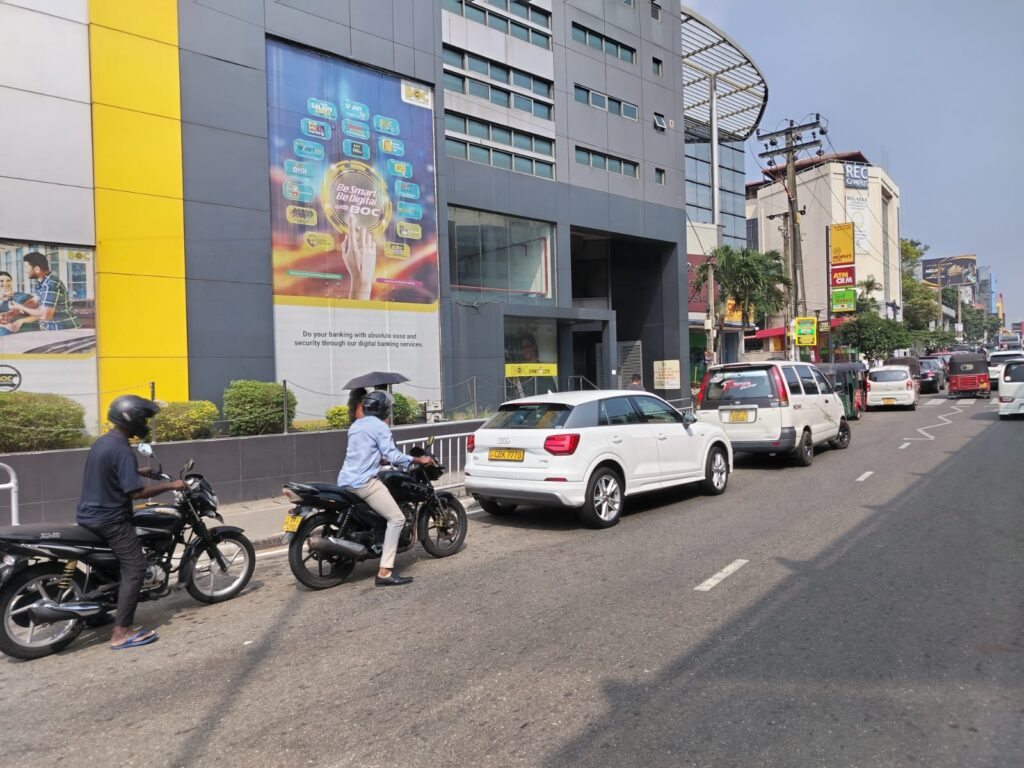
The current rush appears driven more by fear than by an actual supply breakdown.
Sri Lanka’s economic recovery remains fragile. The country only recently stabilized its foreign reserves, restructured debt, and restored regular fuel imports. For many citizens, the mere possibility of disruption feels like standing on the edge of a cliff again.
There is also a deeper psychological factor at play. In 2022, official assurances often preceded worsening shortages. As a result, public trust in institutional reassurances remains low.
For workers like Ranuka Dilshan, however, the issue is immediate and practical. He does not analyze geopolitical supply chains. He calculates kilometers and delivery targets.
“If this panic buying leads to an actual shortage like in 2022, that will be the end of the story for us in rider and delivery services,” he said.
For him and thousands of others in the gig economy, fuel is not just a commodity — it is income, rent, groceries, and survival.
As authorities continue to insist that stocks are stable and distribution uninterrupted, the coming days will test whether reassurance can outweigh memory.
For now, the queues stand as a powerful reminder: in Sri Lanka, fuel is not merely about energy, it is about confidence.
Reporting and Editing: Gagani Weerakoon
This story was produced with support from Report for the World, a global media service strengthening local independent journalism.