
As Sri Lanka takes measured steps, experts call for heightened maritime surveillance
COLOMBO – Sri Lanka allowed a second Iranian ship to dock in Trincomalee, an eastern port known for its strategic location and world’s fourth largest natural harbour, after evacuating 208 personnel on board IRINS Bushehr.
On March 5 evening, President Anura Kumara Dissanayake, in a television address, said Sri Lanka wished to remain neutral while dealing with the unfolding humanitarian crisis. “No one deserves to die. Every life is precious,” President Dissanayake noted.
This development comes a day after the United States torpedoed an Iranian warship 40 nautical miles (74 kilometers) off the Galle coast in southern Sri Lanka. The frigate joined a multinational naval exercise, International Fleet Review 2026, organized by India in the Bay of Bengal from 18 to 25 February before the incident.
The sinking of the Iranian naval vessel in waters close to Sri Lanka has intensified regional security concerns, while the government has urged political leaders to act responsibly amid a rapidly escalating geopolitical crisis.
Speaking in parliament on Thursday (5), Nalinda Jayatissa, cabinet spokesman and minister of health and mass media confirmed that a second Iranian vessel remains near Sri Lanka’s maritime boundary but has not entered the country’s territorial waters. The ship was positioned within Sri Lanka’s Exclusive Economic Zone (EEZ), an area extending beyond the nation’s 12-nautical-mile territorial limit.
His remarks followed claims made in parliament by Opposition Leader Sajith Premadasa, who revealed that Another Iranian ship had been located near the Port of Colombo.
Jayatissa responded by stating that the government had much more information about the situation than was shared with the public, and that it was carefully managing the crisis to maintain stability in the region.
“We know many more facts than those presented by the opposition leader,” Jayatissa said.
“The government is acting with full knowledge to resolve this issue, minimize
casualties and safeguard regional peace. The ship mentioned is still not within our territorial waters. It is in the EEZ close to our territorial waters.
He stated that after completing all necessary tasks and evaluations, a comprehensive report would be submitted to parliament.
Rescue operations after attack
There is growing concern following the sinking of IRIS DENA by the US Marines in international waters but within Sri Lanka’s EEZ.
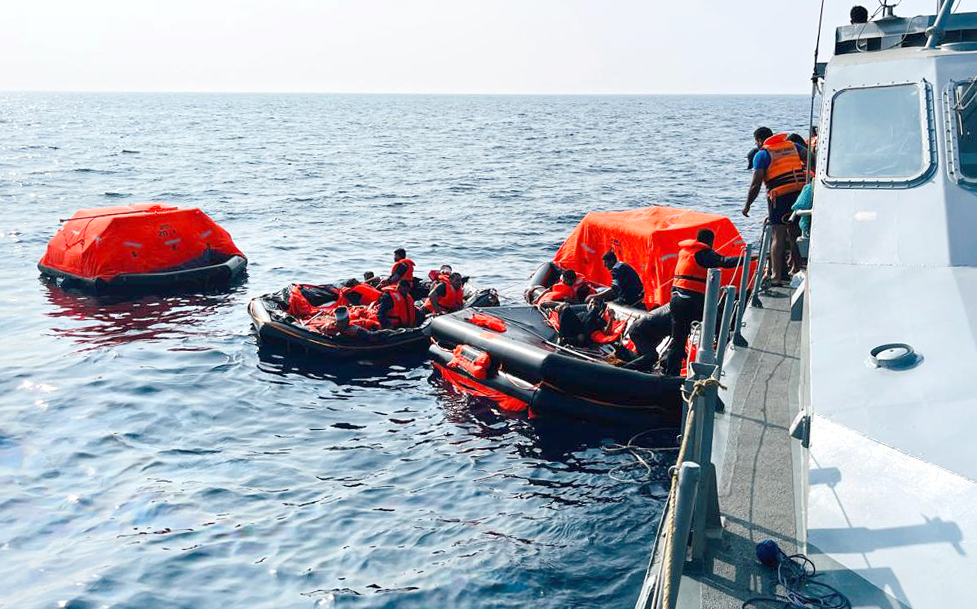
Buddhika Sampath, spokesman for the Sri Lanka Navy, said the Navy first received an alert at 5: 08 a.m. on Wednesday (4), indicating that bodies had been sighted floating in the sea, rather than a direct distress call about an attack.
In less than an hour, the navy launched search-and-rescue operations in coordination with the Ministry of Defense and other authorities.
“At that moment, the priority was not to investigate the attack but to save lives on humanitarian grounds,” Sampath said.
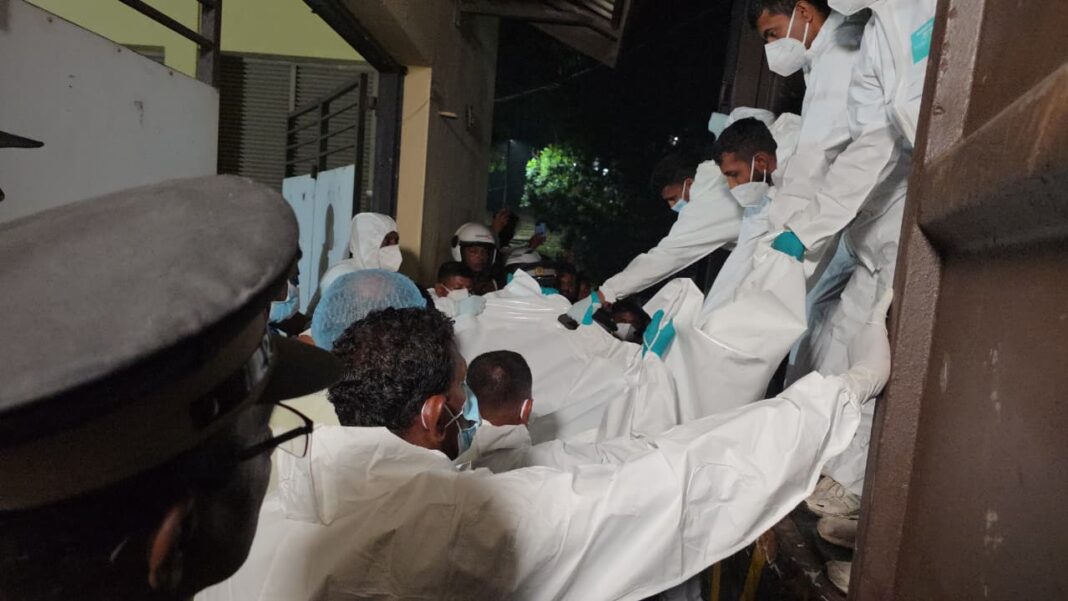
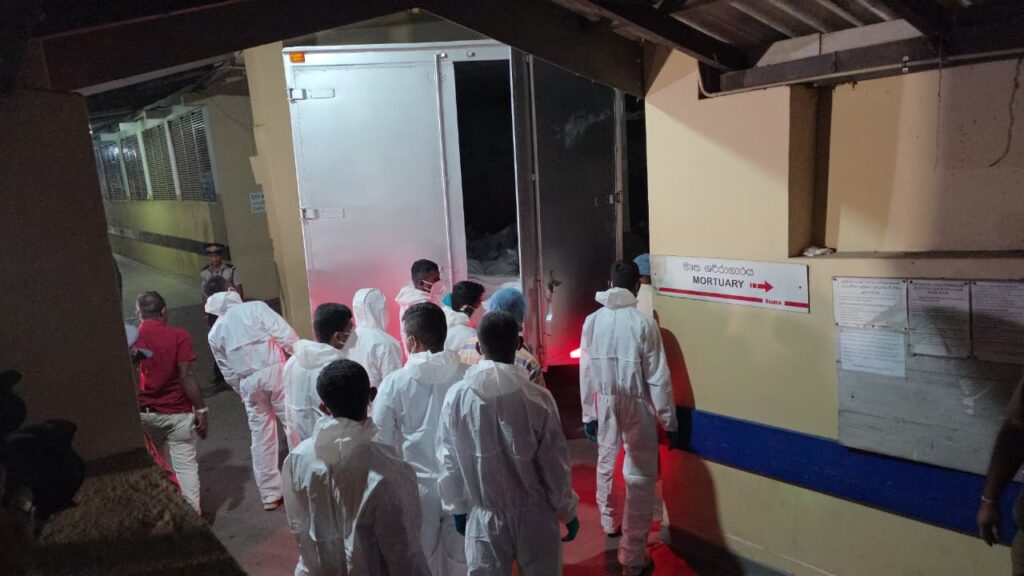
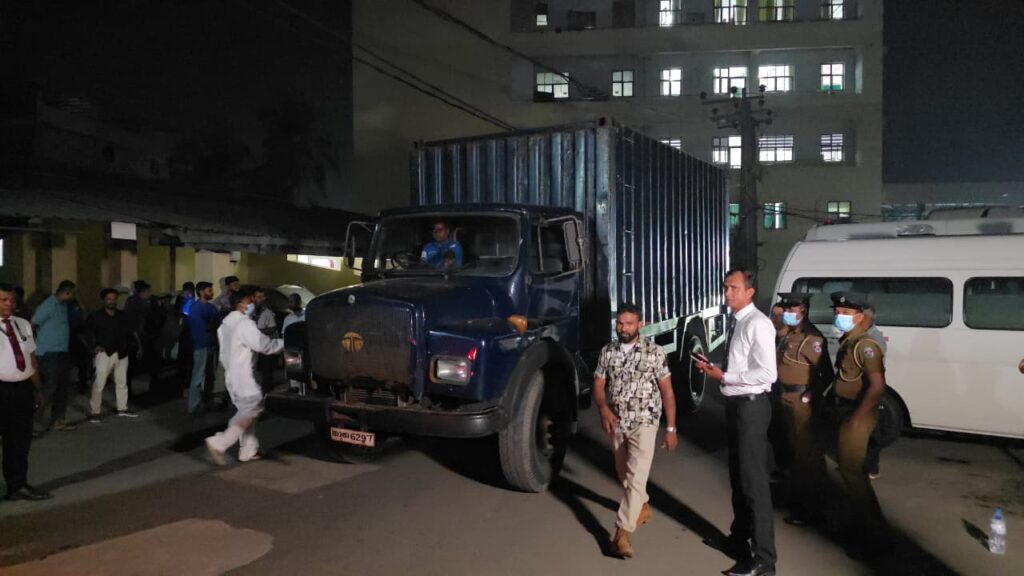
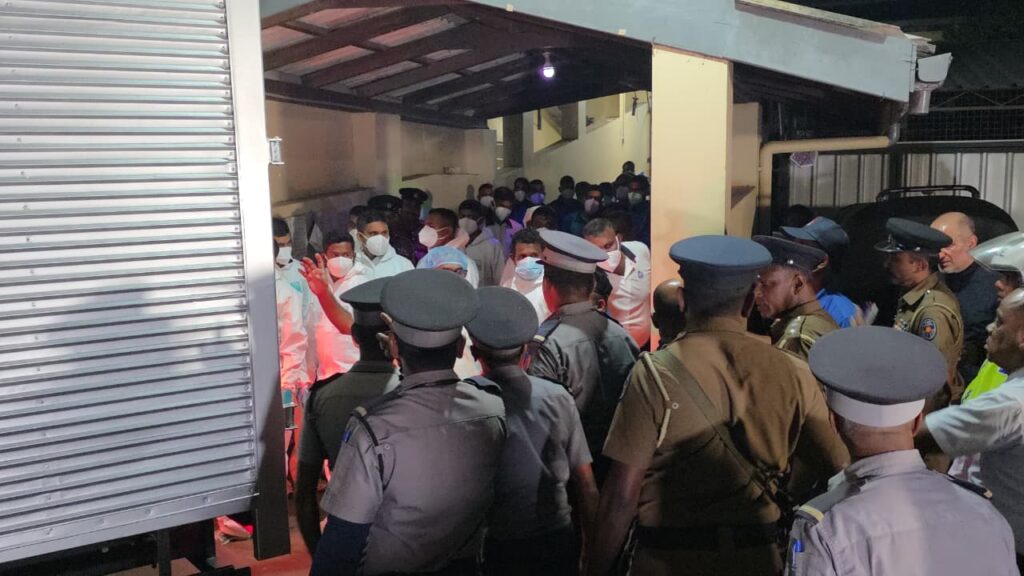
Rescue teams brought 32 survivors ashore, all of whom were admitted to Galle National Hospital, with one individual currently receiving treatment in the intensive care unit. Authorities have so far recovered 87 bodies from the sea.
Jayatissa also noted that the hospital’s mortuary facilities had reached capacity. The government is therefore seeking assistance from the private sector to store the bodies, with two additional refrigeration units, are expected to arrive from Colombo, he said.
Attack linked to wider conflict
The ship sinking occurred against the backdrop of mounting hostilities in the Middle East, where the United States and Israel have been conducting strikes on Iranian targets, with Tehran responding through missile and drone attacks.
At a Pentagon press briefing, Pete Hegseth, U.S. Secretary of Defense, confirmed that a U.S. submarine had destroyed the Iranian vessel.
“An American submarine sank an Iranian warship that thought it was safe in international waters,” Hegseth said. “Instead, it was sunk by a torpedo. Quiet death.”
A video released by the Pentagon purportedly shows a large explosion striking
the rear section of the vessel, causing severe structural damage and leading it
to sink from the stern. Although independent verification of the footage is lacking, analysts pointed out that the vessel’s deck and mast closely resemble those seen in images of the Iranian warship IRIS DENA.
Security implications for Sri Lanka
Security analysts warn that the incident highlights the growing strategic tension in the Indian Ocean, one of the world’s busiest maritime regions.
Mahil Dole, senior security analyst and former head of counter-terrorism at the State Intelligence Service (SIS), said the incident underscored the need for Sri Lanka to strengthen maritime surveillance.
“Sri Lanka must examine the Iranian crisis not only through a geopolitical lens but also through a social and national security perspective,” Dole said. “The incident sends a clear message that we must remain prepared and vigilant, as there is clearly an increasingly aggressive presence in the Indian Ocean.”
He noted that Sri Lanka currently lacks sophisticated undersea monitoring systems capable of detecting submarine threats.
“The Iranian ship itself may also have lacked the necessary facilities,” he said. “Otherwise, they would likely have detected the submarine. The vessel was reportedly used as a troop carrier in a naval exercise.
Diplomatic response and legal obligations
Former diplomat and retired admiral Jayanath Colombage noted that Sri Lanka’s response to the incident was guided primarily by international maritime obligations.
“As a maritime nation, Sri Lanka has a duty to respond to distress calls at sea,” he explained. “Under international conventions, we must rescue those in danger and bring them to safety.”
He cited three key legal frameworks that require such action: The United Nations Convention on the Law of the Sea, the Safety of Life at Sea Convention, and the International Convention on Maritime Search and Rescue.
According to Colombage, diplomatic responses to incidents of this magnitude often require careful consideration rather than immediate public statements.
“Diplomacy does not always react instantly in the public domain,” he said. “A proper A response requires information from many sources. Until the Pentagon confirmed the attack, there was no certainty about what had actually happened.”
However, he cautioned that complete silence could also carry risks.
“Not Responding at all—acting as if nothing has happened—is not advisable.”
Colombage noted. “This incident occurred very close to Sri Lanka’s maritime
boundary and along one of the busiest shipping lanes in the Indian Ocean, where nearly 300 vessels pass each day.”
He added that the event raises broader concerns about maritime security in the region.
“What if There had been a mistaken identity involving a commercial vessel?” he asked.
“Sri Lanka has long advocated for the Indian Ocean to remain a zone of peace. An incident like this is deeply concerning, and it may require at least a diplomatic message urging such actions not to occur near our waters again.”
Call for responsible political discourse
Amid the growing tensions, Jayatissa also urged political leaders and public
representatives to avoid making speculative or inflammatory remarks.
With a war-like situation unfolding in the Middle East, he said, “This is not the time to make jokes, settle political scores, or provoke groups through the media or parliament using false or half-true information.”
Instead, he emphasized the need for responsible communication during a crisis with potentially global implications.
“Sri Lanka is acting in accordance with international law and responding to the unraveling humanitarian crisis to safeguard lives and maintain peace in the Indian Ocean,” the minister said.
Reporting and Editing: Gagani Weerakoon
This story was produced with support from Report for the World, a global media service strengthening local independent journalism.