
COLOMBO — Sri Lanka has found itself navigating a delicate diplomatic and security challenge after responding to a maritime incident involving an Iranian naval vessel near its waters, highlighting the island nation’s strategic position in the Indian Ocean and the complexities of maintaining neutrality amid global geopolitical tensions.
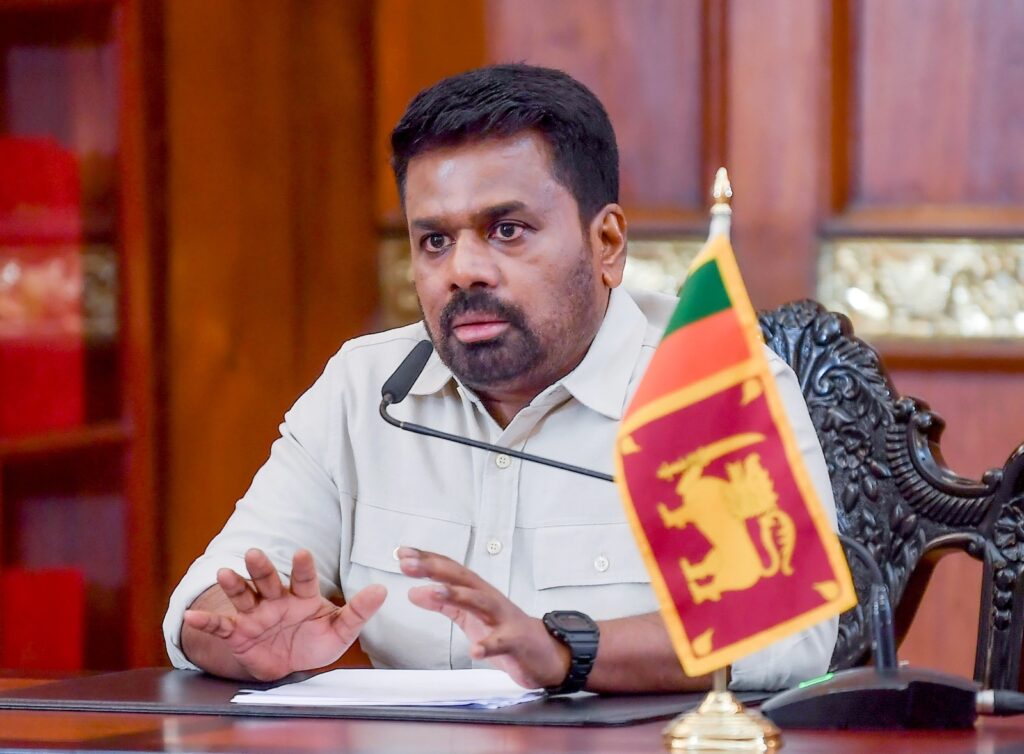
President Anura Kumara Dissanayake on March 5 night reaffirmed that Sri Lanka would remain neutral in the escalating tensions between the United States and Iran, while emphasising that humanitarian considerations would guide the country’s actions in emergency situations.
Addressing a special media briefing at the Presidential Secretariat in Colombo, the president said Sri Lanka would not allow its territory, maritime zones or airspace to be used in a manner that favours any party involved in the conflict.
“Particularly in the context of this Middle East conflict, as well as in any international dispute, our position and neutrality dictate that we shall not, under any circumstances, permit our land territory, maritime zones or airspace to be utilised in a biased manner by any nation engaged in a conflict,” he said.
Rescue and humanitarian response
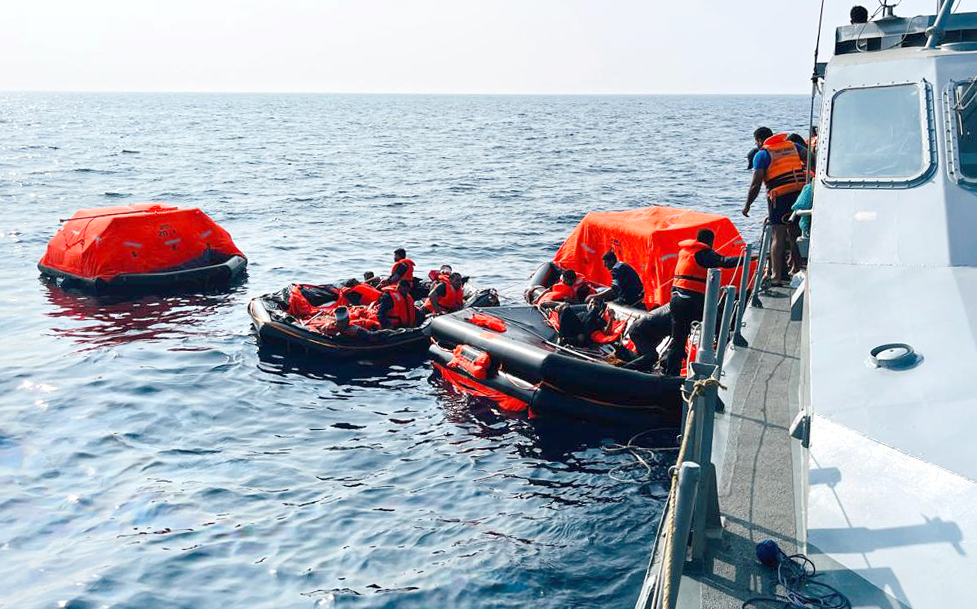
Sri Lanka’s response came after an Iranian naval vessel operating close to the country’s maritime boundary reported mechanical difficulties and sought assistance.
According to President Dissanayake, the vessel, identified as IRIS Bushehr, requested permission to enter a Sri Lankan port after reporting engine damage. Following consultations with diplomatic missions and Sri Lanka’s naval authorities, the government decided to evacuate the crew and relocate the vessel.
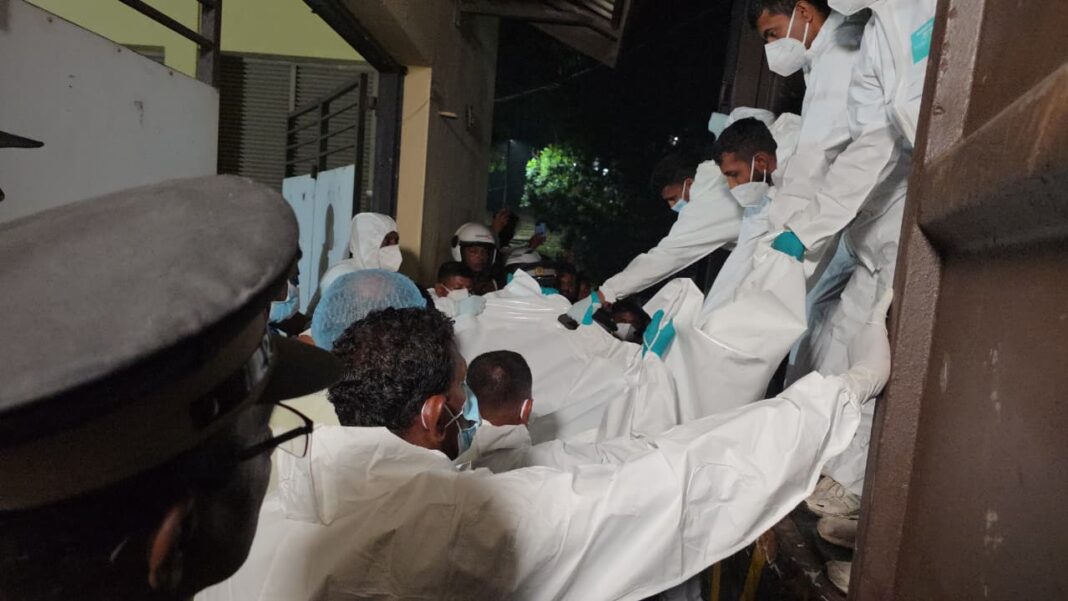
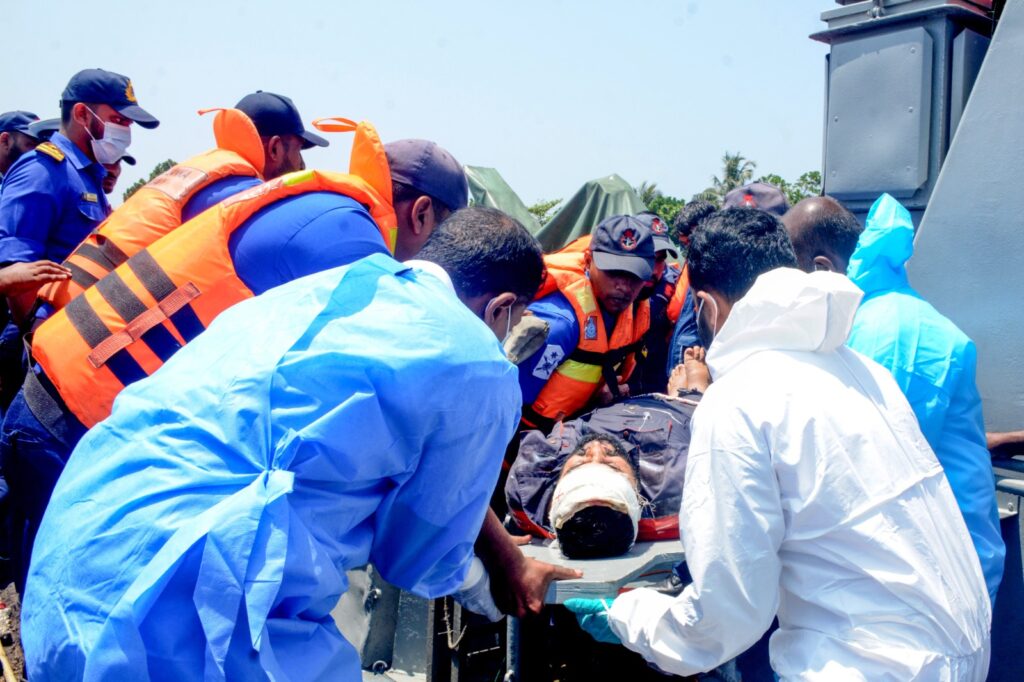
A total of 208 personnel aboard the vessel are currently being brought ashore to Colombo.
“According to the latest reports, arrangements have been made to bring 208 individuals ashore. This group includes 53 officers, 84 cadet officers, 48 senior sailors and 23 sailors,” the president said.
Once the evacuation is completed, the vessel itself will be moved to the Port of Trincomalee rather than being held in Colombo.
“Colombo is our principal commercial port. Retaining such a vessel within our main commercial port carries the risk of adversely affecting our maritime industry,” he explained.
The decision to relocate the vessel reflects Sri Lanka’s attempt to balance humanitarian assistance with economic and diplomatic sensitivities.
Legal obligations and neutrality
Officials said the government carefully assessed the situation in light of international law, including the United Nations Convention on the Law of the Sea(UNCLOS) and the Hague Convention of 1907, both of which outline the responsibilities of neutral states during armed conflict.
“Neutrality does not mean ignoring humanitarian obligations,” the president said, adding that Sri Lanka would take necessary steps to protect human life without compromising its non-aligned stance.
The incident occurred within Sri Lanka’s Exclusive Economic Zone (EEZ), though outside its territorial waters, placing the response within the country’s search and rescue responsibilities.
Strategic concerns in the Indian Ocean
Security analysts note that the incident underscores the strategic challenges facing Sri Lanka as a small state located along one of the world’s busiest maritime corridors in the Indian Ocean.
Former Foreign Secretary Ravinatha Aryasinha said Sri Lanka must carefully balance its foreign policy to avoid being drawn into rivalries between major powers.
“Global powers such as the United States, India and China may prefer Sri Lanka to align with them, but in practice they are more concerned that the island does not firmly align with their rivals,” he said at a recent policy discussion.
Aryasinha argued that Sri Lanka should adopt what he described as a “smart hedging” strategy, maintaining constructive relations with multiple partners without becoming overly dependent on any single country.
“In a zero-sum geopolitical environment, the best way to avoid getting trapped is to hedge. In simple terms, that means not putting all your eggs in one basket,” he said.
Maritime security challenges
The incident has also drawn attention to the country’s growing maritime security responsibilities.
Former foreign secretary and security expert Jayanath Colombage noted that Sri Lanka’s designated search and rescue region is vast, extending far beyond its land territory and covering an area roughly 27 times the size of the island.
“Our search and rescue region is about 27 times the size of our land mass. We share this responsibility with neighbouring countries such as India, Indonesia, Australia and Maldives,” he said.
The scale of this responsibility requires improved maritime surveillance, reconnaissance and rapid-response capabilities, particularly as the Indian Ocean becomes increasingly militarized.
Colombage also highlighted the emerging threat posed by submarines operating in the region, noting that recent reports suggested the presence of underwater military activity linked to the maritime incident.
“In reality, there may be many submarines moving through the Indian Ocean, some nuclear-powered and potentially carrying nuclear weapons,” he said.
Diplomatic balancing act
For Sri Lanka, the episode has become a test of its long-standing commitment to non-alignment while maintaining cooperative relations with multiple global powers.
The government has emphasised that its actions were guided by humanitarian principles rather than political alignment.
“We do not act in a biased manner towards any state, nor do we submit to any state. We are a sovereign and independent state,” President Dissanayake said.
At the same time, analysts warn that incidents involving foreign naval vessels can quickly become diplomatically sensitive, particularly when they occur against the backdrop of wider geopolitical tensions.
As the crisis in the Middle East continues to unfold, Sri Lanka’s response to the Iranian vessel highlights the complex intersection of humanitarian duty, maritime security and diplomatic caution faced by smaller states situated at the heart of global trade routes.
Ultimately, the episode has served as a reminder that for countries such as Sri Lanka, neutrality is not merely a policy declaration but a delicate balancing act requiring constant vigilance, careful diplomacy and strong maritime capabilities.
Reporting and Editing: Gagani Weerakoon
This story was produced with support from Report for the World, a global media service strengthening local independent journalism.