

Speed Read:
- Sri Lanka’s lowland rainforests support many endemic butterfly species that depend on intact forest habitats.
- Disturbance and fragmentation reduce forest cover, threatening butterfly populations that need continuous and undisturbed forest.
- From 2002 to 2024, according to Global Forest Watch, Sri Lanka’s lowland rainforests lost 710 hectares (7.1 km²) of primary forest and about 30,000 ha (300 km²) of tree cover.
- Loss of larval host plants and microhabitats drives decline, making butterflies useful bio-indicators.
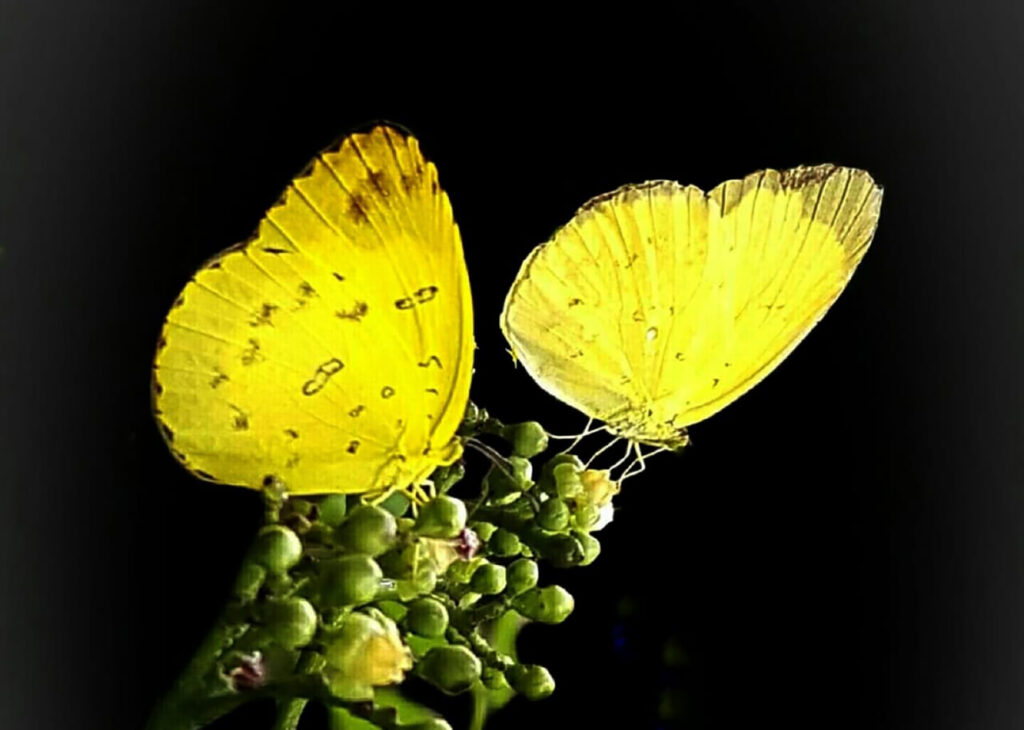
KANNELIYA, Sri Lanka — Around the 1960s, the skies above Sri Lanka’s southern forests could turn yellow with butterflies during seasonal migrations. Gunadasa Pathirana, a 74-year-old wildlife guide from Koralegama near the Kanneliya Forest Reserve, recalls swarms of more than a 100 butterflies flying together toward Adam’s Peak, a major site of pilgrimage.
Today, such mass migrations are rarely seen, reflecting how much the landscape and forest habitats have changed over the decades.
The Kanneliya-Dediyagala-Nakiyadeniya Forest Complex (KDN) is found in Sri Lanka’s southwestern wet zone and is among the few remaining lowland rainforest systems situated adjacent to the Sinharaja Forest Reserve, a globally recognized biodiversity hotspot. These forests rank among South Asia’s richest ecosystems, supporting a remarkable diversity of endemic species, particularly butterflies.
Sri Lanka hosts 248 recorded butterfly species, with 31 of them found nowhere else on Earth. Many of them are forest-dependent and restricted to the wet zone, a 2019 national assessment of butterflies states.
Under threat
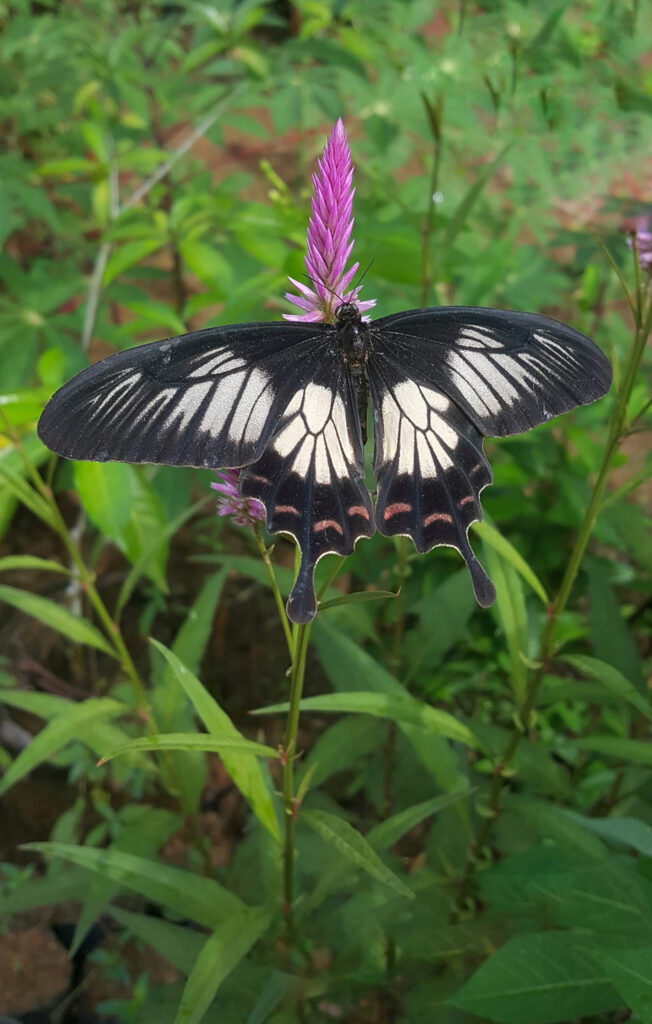
The most threatened butterflies in Sri Lanka are confined to the wet zone, which supports nearly all endemic species, according to the Butterfly Conservation Action Plan of Sri Lanka 2014. Among the endemic butterflies, the Ceylon Rose (Pachliopta jophon), largely restricted to Sri Lanka’s wet-zone forests, stands out. The IUCN Red List records it as endangered, making it one of the few butterflies at global risk of extinction.
The final national assessment of species, or Sri Lanka’s National Red List of 2012, includes butterfly data. It lists 21 species as critically endangered, 38 as endangered, 40 as vulnerable, 21 as near threatened, and another 6 as data deficient.
Conservation biologist Rajika Gamage notes the absence of an update on the conservation status of butterflies for 13 years as problematic. It is possible for about 80 % of butterflies, especially the wet zone species, to potentially fall into threatened categories, he tells CIR.
In the KDN forest complex, long-term observations made by conservationist Vishan Pushpamal show that clearing buffer vegetation reduces semi-open areas crucial for egg-laying, resulting in a decline in butterfly numbers.
Habitat loss and degradation remain major threats, especially in the wet zone forests where many species depend on specific microhabitats. Tree felling, pesticide use, invasive plants, and changing weather can disrupt these environments and affect butterfly survival, observes Himesh Dilruwan Jayasinghe in his 2015 publication, Common Butterflies of Sri Lanka. Species relying on pristine wet zone forests are particularly vulnerable as these habitats continue to decline, it adds.
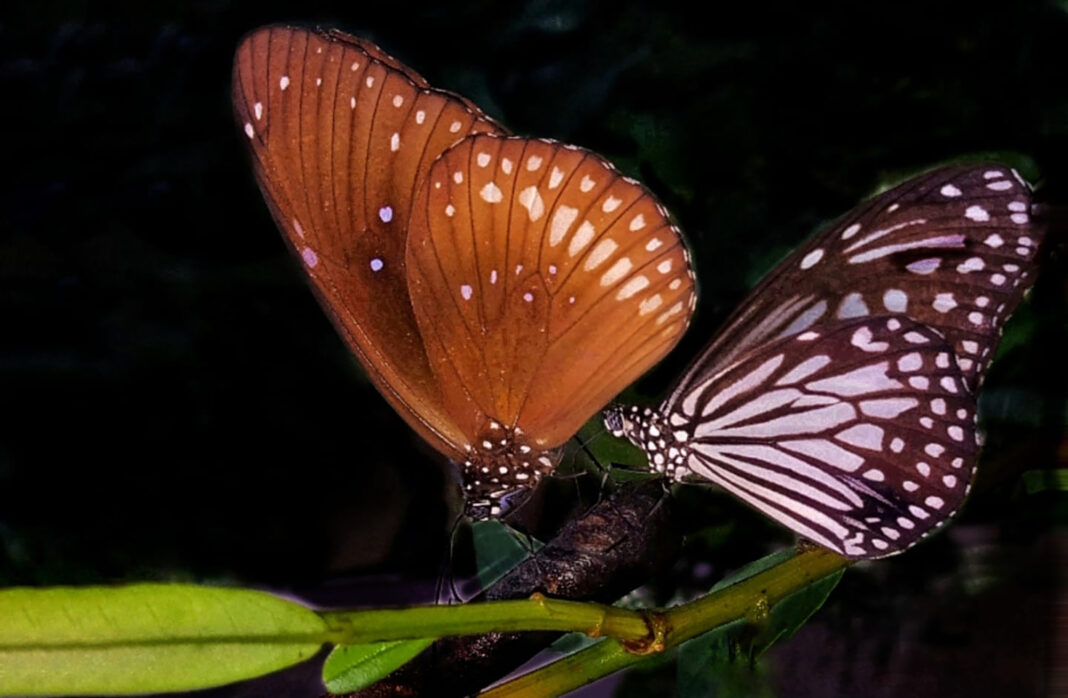
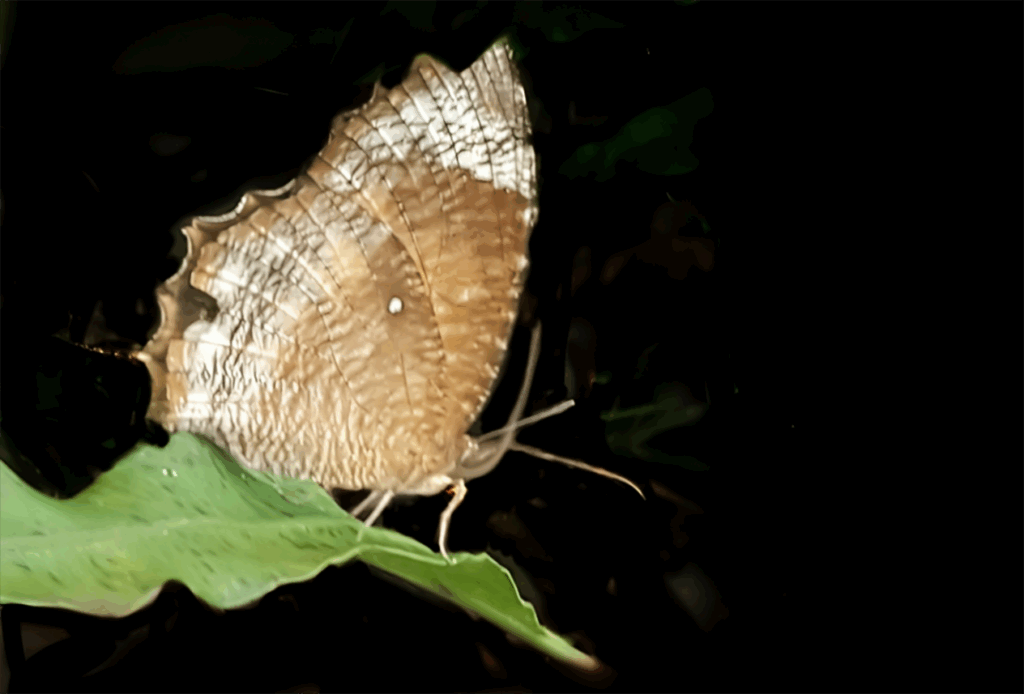
As for Gamage, habitat loss is the most critical threat for species with narrow ecological requirements. The red spot duke (Dophla evelina) prefers dark forest interiors, while the Sri Lanka birdwing (Troides darsius), the national butterfly, depends on intact rainforest canopies. Similarly, the clipper (Parthenos sylvia cyaneus) prefers dense forests and is rarely seen near human-modified habitats.
In The Butterfly Fauna of Sri Lanka (2016), researchers George Michael van der Poorten and Nancy E. van der Poorten identify agriculture, urbanization, and invasive plants as major drivers of habitat loss. Forests and forest edges in the island’s wet zone are increasingly embedded within plantation landscapes dominated by tea and rubber, with natural vegetation often confined to small forest patches and estate margins, a 2025 study titled “The Impact of Land Use and Climatic Factors in Indirect Biodiversity Conservation of Sri Lanka’s Plantation Landscape” claims.
Gamage says that some plants found in tea landscapes such as little ironweed(Cyanthillium cinereum), can support certain butterfly species. However, forest-dependent host plants like Wight’s adenia (Adenia wightiana) and Anantamul (Tylophora cordifolia) require dense forest habitats and are unable to survive in plantation environments, causing the butterflies associated with them to decline.
When cultivated land is abandoned, invasive species such as hard alstonia (Alstonia macrophylla) can become the dominant species, reducing plant diversity to only a few species and further limiting butterfly habitats.
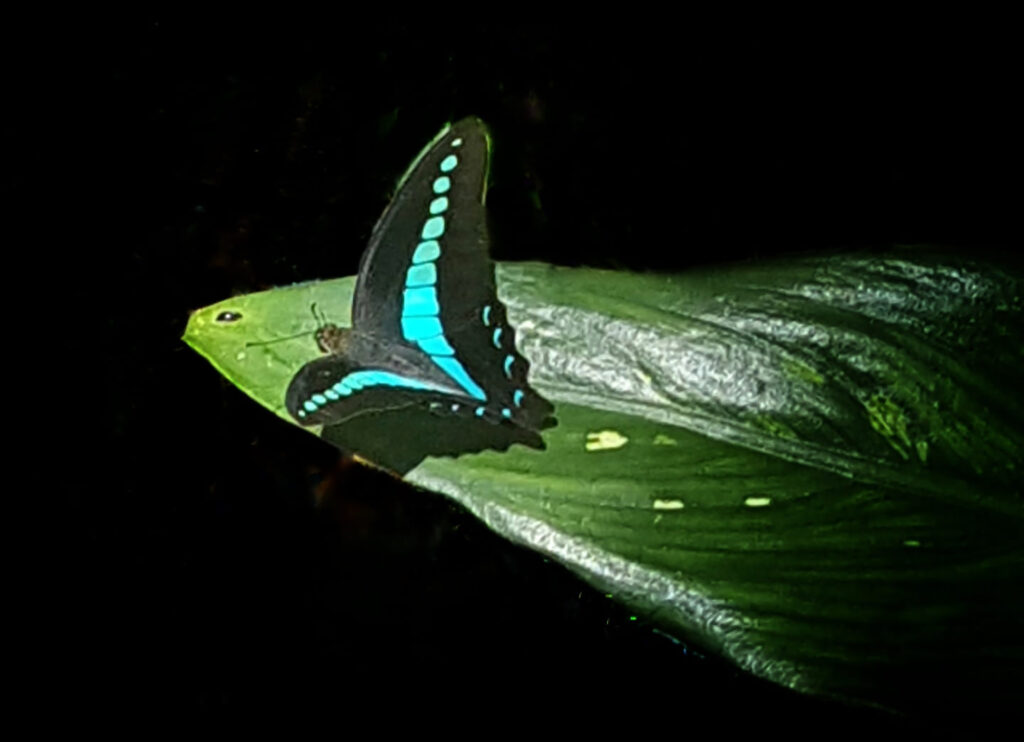
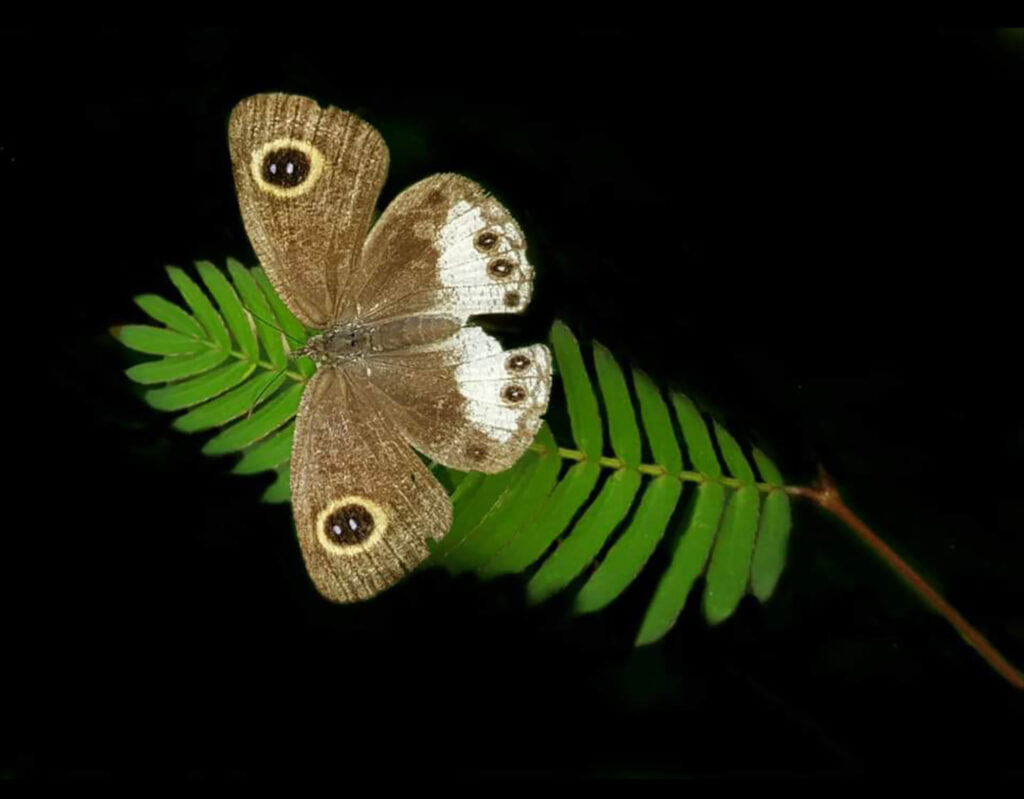
The 2012 assessment also highlights how the removal of small understory plants such as herbs and shrubs, often removed for firewood or fencing, can contribute to habitat loss. Key larval host plants, such as little amherstia (Humboldtia laurifolia), false ashoka (Polyalthia species), and chakrani (Thottea siliquosa), are lost, altering the understory microclimate. This affects shade-loving butterflies like the southern duffer (Discophora lepida) and disrupts specialized plant–butterfly relationships, including that of the endemic Sri Lankan rose (Pachliopta jophon).
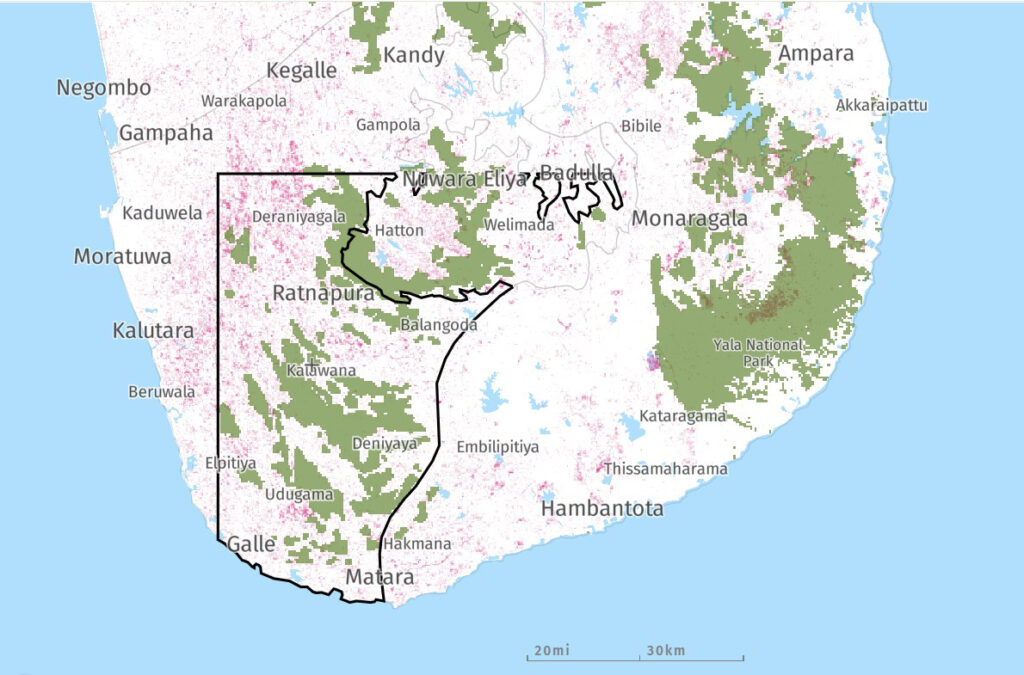
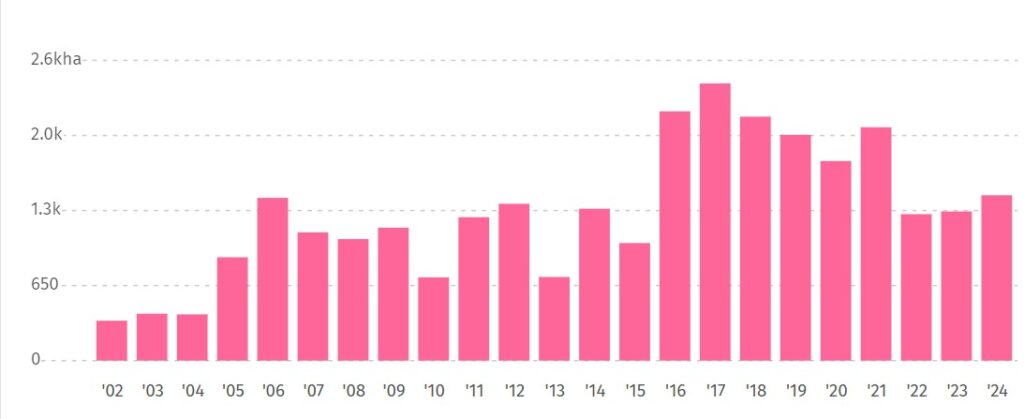
“Even small vegetation changes can strongly impact butterflies, as many species depend on specific larval host plants and forest microhabitats,” adds Pushpamal. The pressures experienced by the local habitats also reflect broader forest changes that could be detected through satellite imagery.
Source: Global Forest Watch (GFW).
Source: Global Forest Watch (GFW).
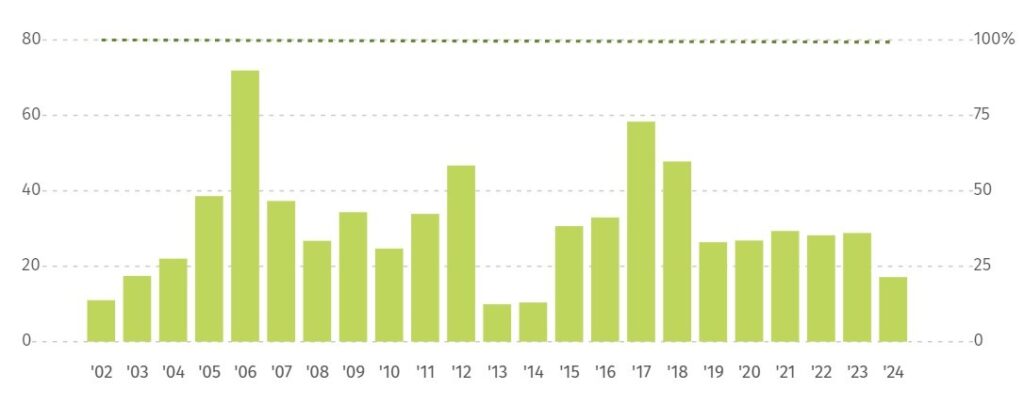
At present, Sri Lanka’s lowland rainforests cover approximately 652,190 ha (6,521.9 km²) and are classified as a terrestrial ecoregion by the Global Forest Watch (GFW). Data analyses from 2002 to 2024 by GFW show measurable forest loss. During this period, about 710 ha (7.1 km²) of humid primary forest have disappeared, representing a 0.70% decline in primary rainforest cover. The Sinharaja and KDN regions have lost roughly 30,000 ha (300 km²) of total tree cover, equivalent to about 5.0% of the tree cover that existed in 2000.
This shows an annual loss of 1,304.3 ha (13.04 km²) of tree cover and 30.9 ha (0.31 km²) of forest cover.
Indicators of habitat stability
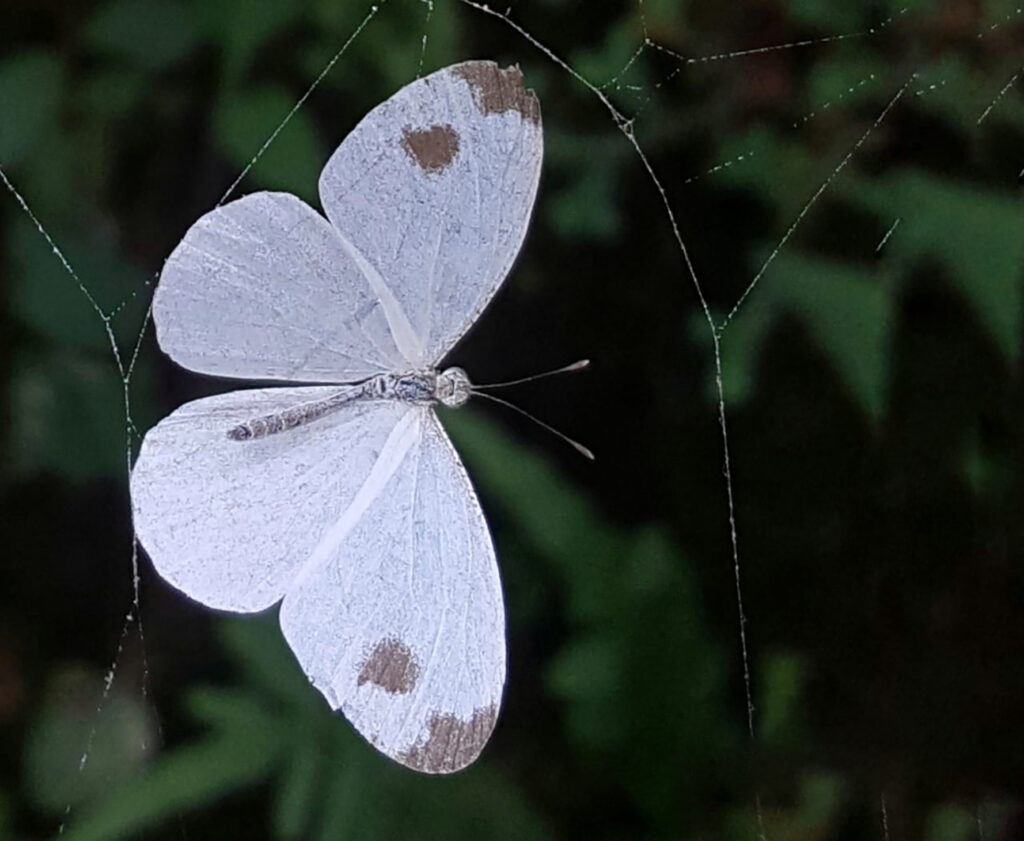
“High butterfly populations are the hallmark of ecological success. They represent a flawless food chain and a habitat rich in plant and animal life,” explains Gamage who works extensively on butterflies. “Butterflies are not just part of the scenery, they are essential indicators of a world in biological balance,” he adds.
Gamage suggests linking plant and butterfly diversity using 100 meters × 100 meters vegetation plots to understand habitat richness and the distribution of butterflies, adding that such studies could reveal how changes in vegetation directly impact butterfly populations, as there is ongoing forest loss in the lowland rainforests, threatening butterflies and their habitats, making forest protection and restoration essential for ecological balance and conservation.
Reporter: Ayodhya Kiriella