

Growing geopolitical tensions in West Asia are having a ripple effect and far beyond the region, raising concerns about the security of critical international maritime routes.
The March 4 attack on the Iranian frigate IRIS Dena by the U. S. Navy submarine USS Charlotte’s has sparked a fresh debate over the security of the Indian Ocean Region (IOR), a vital corridor for global trade and energy supplies.
For Sri Lanka, positioned at the center of these sea lanes, the torpedoing of the Iranian-flagged vessel has reignited questions about maritime security, regional stability and the country’s preparedness to deal with emerging security threats.
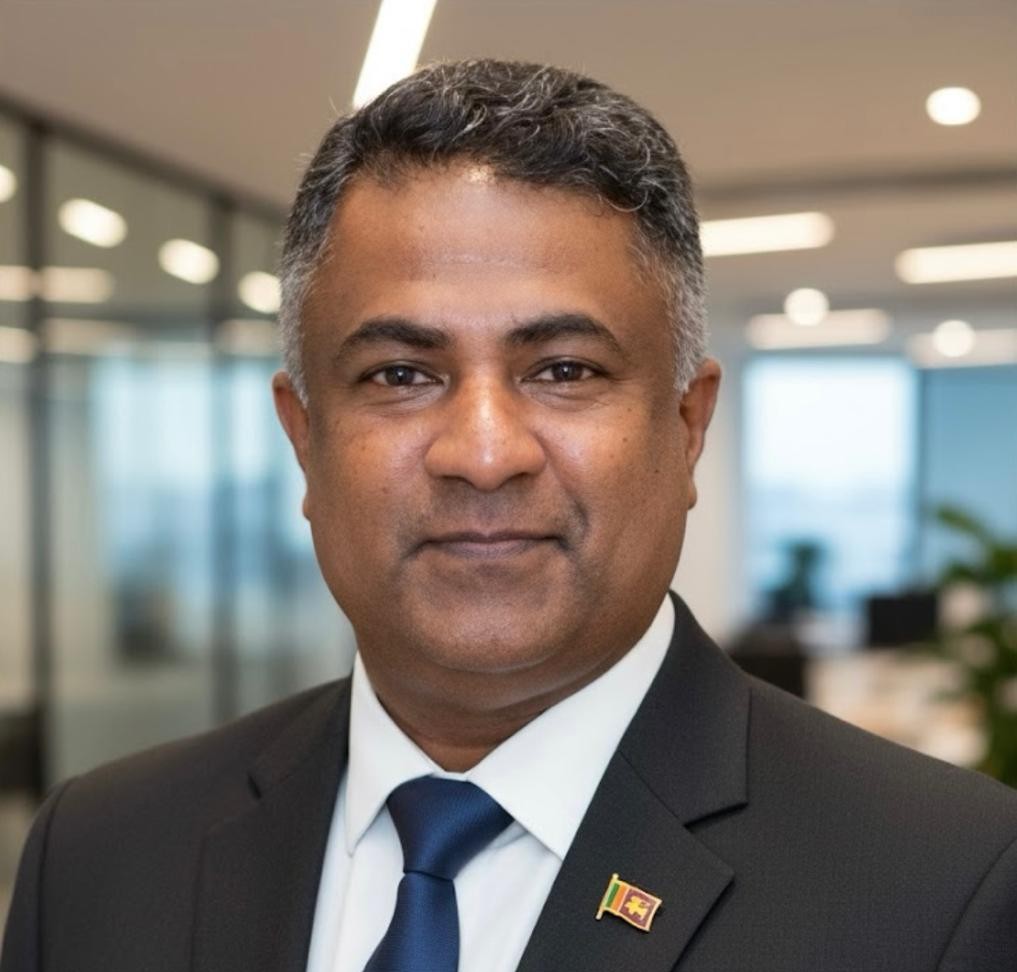
Former director general of the Institute of National Security Studies (INSS) Col. Nalin Herath believes the developments highlight a deeper structural issue: the absence of a comprehensive national security strategy for Sri Lanka.
In this interview with the Center for Investigative Reporting(CIR), Herath discusses the future of the Indian Ocean Peace Zone, vulnerabilities in Sri Lanka’s underwater domain awareness (UDA) , and the need for a proactive security framework that balances defence, diplomacy and economic realities. Excerpts from the interview:
Q: Following the recent U.S. submarine attack on an Iranian vessel, there is tensed discussions whether the Indian Ocean Region (IOR) can still be considered peaceful. Some argue Indian Ocean Peace Zone may no longer be viable. What is your view?
A: Sri Lanka has been advocating the concept of the Indian Ocean Peace Zone since the early 1970s. However, this is not something that Sri Lanka alone or, even India alone, can achieve. Maintaining the peaceful character of the Indian Ocean must be a collective effort involving all regional stakeholders.
Today, nearly 65 % of global commercial shipping passes through the Indian Ocean Region. If the stability of this maritime space is compromised and it becomes volatile, the consequences will affect the entire region. This is especially important because shipping routes to China and the broader Asia-Pacific region also rely heavily on these waters.
Therefore, regional states must remain committed to ensuring stability in the IOR.
At the same time, South Asia remains the least connected region in the world. Even basic travel between countries such as Bhutan, Pakistan and India often requires flights rather than land connectivity. Yet the region represents around 25 % of the global population. Instability in the Indian Ocean would therefore have serious economic and geopolitical consequences for all of us.
From a legal perspective, the recent attack itself cannot necessarily be categorised as illegal because the U. S. and Iran are engaged in hostilities. In a context of war, vessels, whether logistic ships, warships or even unarmed vessels, may become targets. As analyst Nitin A. Gokhale observed, the real debate is less about legality and more about whether such an attack is ethical.
Q: What consequences could this incident have for Sri Lanka’s national security? There are concerns about the presence of Israeli nationals in the country and strong expressions of solidarity with Iran among sections of the Muslim community.
A: The top priority should be the establishment of a national security strategy. Sri Lanka currently does not have one, whereas almost every other country does.
In 2019 an initiative was launched to draft a national security strategy, but the process was later abandoned. There are now renewed discussions about developing such a strategy, and several think tanks have proposed frameworks. However, it is ultimately the government’s responsibility to formulate and implement it.
We are already late in doing so, but it is better to act now than continue without a coherent strategy.
When discussing national security, it should not be limited to terrorism alone. Both traditional and non-traditional threats must be considered. This includes climate change, natural disasters and pandemics, which can significantly affect national stability.
Countries such as the United Arab Emirates, the U.S, Australia, India, Pakistan and Japan have comprehensive national security strategies. Sri Lanka must adopt a similar integrated approach.
In today’s geopolitical environment, conflicts rarely remain confined to a single region. The impact of a crisis can easily spill over to other parts of the world. The recent attack on the Iranian naval vessel IRIS Dena illustrates how developments elsewhere can have implications for our region and the country itself.
Q: What are the key considerations when developing a national security strategy?
A: One useful framework is the DIME model — Diplomacy, Information, Military and Economy.
These four components should form the foundation of any national security policy. Security cannot be viewed purely through a military lens. Civilian institutions, including the ministries responsible for environment, disaster management and public health, must also be involved.
National security is a whole-of-government responsibility. As far as I am aware, the current government, along with defence hierarchies, keen on finalising the security strategy soon.
Q: What prevents Sri Lanka from acquiring the technology needed to strengthen maritime and underwater security?
A: The main challenge is balancing security needs with economic realities. When a country is going through an economic crisis, national security investments become more difficult.
Nevertheless, Sri Lanka must prioritise maritime security, primarily because we are an island nation. Additionally, many forms of illegal activity occur within or near our waters. These include human trafficking, illegal arms smuggling, narcotics trafficking and terrorism.
We must also be prepared to deal with environmental disasters, such as the X-Press Pearl maritime disaster, which posed serious risks to marine ecosystems and public health.
Another important factor is the sheer size of the maritime area for which Sri Lanka is responsible. Our Search and Rescue (SAR) region is roughly 27 times larger than our land area. This means that if a distress situation arises at sea, Sri Lanka has an obligation to respond.
Operating vessels in mid-sea for surveillance or rescue missions requires substantial fuel and logistical resources, which can be challenging for a country still recovering from an economic crisis.
There is also a technological gap. For instance, our underwater domain awareness is virtually non-existent. We lack advanced technologies required for underwater surveillance. While India is somewhat ahead of us, even India does not yet possess the most advanced capabilities required to monitor modern submarine operations conducted by major powers.
At present, we are also discussing the rightsizing of the military. The key question is: if manpower is reduced, how will we fill the resulting capability gaps? Do we have the financial capacity to transition towards a technologically advanced force?
Historically, Sri Lanka has tended to react to crises rather than act proactively. This approach needs to change.
Q: Some groups have called for the Colombo Security Conclave to be convened following this incident. Why has that not happened?
A: The Colombo Security Conclave was originally proposed with support from India and was expected to receive funding from them. However, it has not fully materialised as initially envisioned.
For such a mechanism to function effectively, there must be a dedicated secretariat and a properly appointed national security adviser.
Institutionalising such roles is essential if we are serious about strengthening national security coordination.
Q: There have also been discussions about building a connectivity bridge between Sri Lanka and South India. Some sections believe such a connection could pose national security risks. What is your view?
A: In my view, connectivity should not be dismissed outright.
Consider the economic trajectory of Tamil Nadu, which is projected to become a $1 trillion economy by 2030 and potentially reach $3 trillion by 2035. In contrast, Sri Lanka’s economy has remained around $80 billion in GDP for many years.
Over decades, the Board of Investment (BOI) has attracted approximately $7 billion in investments. Given current projections, investors may increasingly prefer South India as an investment destination.
Sri Lanka therefore faces an important strategic choice: whether to remain isolated due to historical anxieties or to position itself to benefit from the growth of the neighbouring region.
Personally, I believe connectivity can be beneficial. However, such decisions must ultimately be made by policymakers after conducting comprehensive security assessments.
In other words, it is better to remain securely connected rather than completely disconnected.
Reporting and Editing: Gagani Weerakoon
This interview was produced with support from Report for the World, a global media service strengthening local independent journalism.