
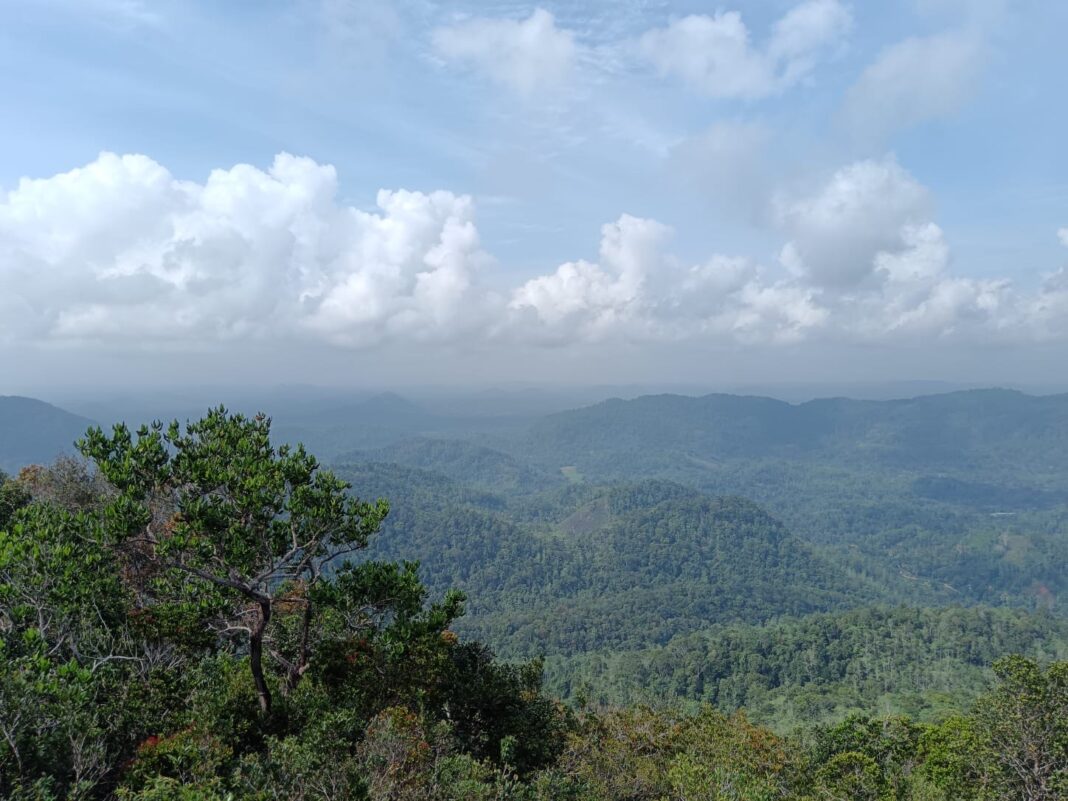

- Introduced to Sri Lanka during the 1950s to control deforestation and to support the plywood industry, hard alstonia or hard milk wood (Alstonia macrophylla), has turned out to be a fast-spreading invasive species.
- Kanneliya is part of a larger forest complex adjacent to the Sinharaja forest reserve, a UNESCO man and biosphere reserve, and the second largest remaining rainforest in Sri Lanka.
- Invasive species compete with native plants for resources like sunlight, and their early flowering can attract pollinators—alstonia is one example.
- Among the experiments carried out so far, a forest ecosystem restoration initiative within a degraded forest patch in the eastern part of Kanneliya has proved successful.
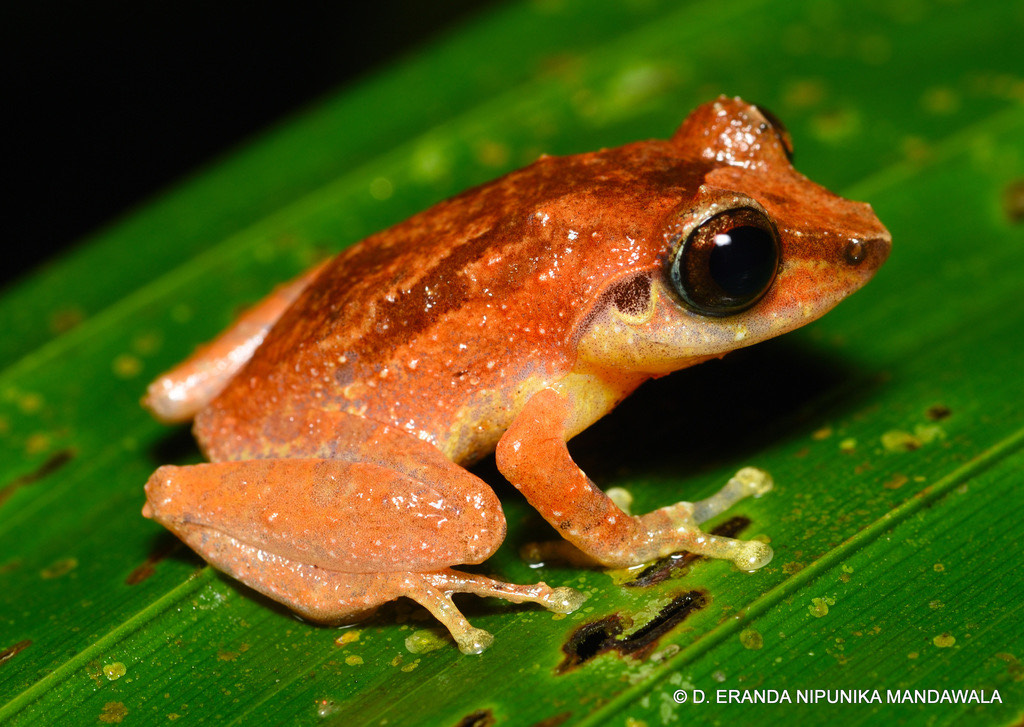
KANNELIYA, Sri Lanka – Back in 2009, a team of researchers was assessing the threat status of amphibians in Kanneliya, a lowland rainforest in southern Sri Lanka. They observed several species of shrub frogs belonging to the subfamily Rhacophoridae, locally known as panduru madiya. According to the study, these shrub frogs indicated morphological differences and generic diversity from the known shrub frogs (Pseudophilautus) found in Sri Lanka. They also identified critically endangered and extremely rare amphibian species including the whistling shrub frog (Pseudophilautus nemus), restricted to the rainforest, highlighting the importance of Kanneliya as a major centre of amphibian diversity in Sri Lanka.
But today, these shrub frogs are threatened by habitat degradation and the spread of invasive species such as hard alstonia (A.macrophylla).
The alstonia connection
Alstonia was introduced to Sri Lanka during the 1950s when man-made forest plantations were promoted by the Forest Department.
A 2019 review on the floral composition of the Kanneliya-Dediyagala-Nakiyadeniya (known as the KDN forest complex) by Lakmali Gunathilaka, an ecologist and postdoctoral scientist in aquatic ecology and environmental science, shows how the entire KDN complex was subjected to selective logging from 1970 to 1987. The result: Several native plants have been removed and replaced with new plant species like alstonia and mahogany (Swetinia macrophylla).
Gunathilaka told CIR how selective logging has significantly altered its floral composition, causing a decline in native species and enabling the encroachment of exotic species. “While the forest has shown resilience, the legacy of this disturbance persists in its current vegetative structure. Even though Kanneliya retains high overall endemism, the areas that were historically logged have lower concentrations of endemic species compared to undisturbed or primary patches,” she said.
Siril Wijesundara, a research professor at the National Institute of Fundamental Studies (NIFS) said that it was deliberately introduced by the governments during 1950s for purposes such as light wood, to manufacture matchboxes, tea boxes and similar products.
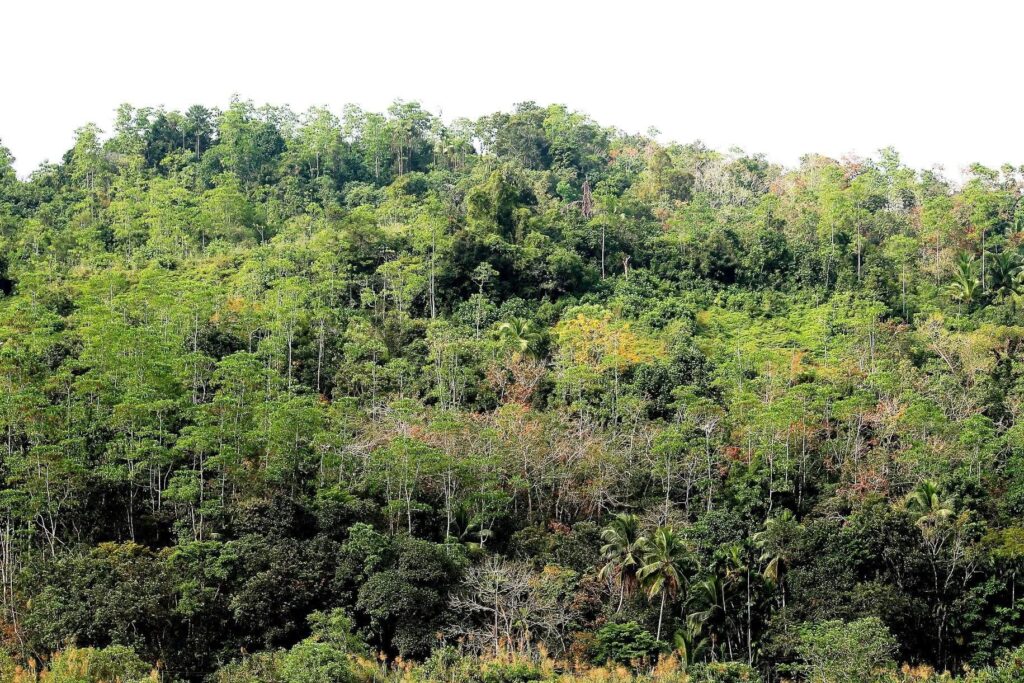
Competition for natural resources
The growth of invasive species increases competition among native species for natural resources, explained Rohan Pethiyagoda, biodiversity scientist, amphibian and freshwater taxonomist and conservationist. The main ‘resource’ they compete for is sunlight.
Pethiyagoda noted that most of trees and shrubs considered invasive in Sri Lanka cannot establish themselves in undisturbed forest. “Pretty much all the woody species usually termed “invasive”, such as soap bush (Clidemia hirta), Simpoh air (Dillenia suffruticosa) and Pond Apple (Annona glabra) were established only after the natural forest canopy was already lost to deforestation. All these species need to begin their lives in environments with more sunlight. They do not flourish beneath the forest canopy and the main ‘resource’ they compete for is sunlight,” he explained.
There is also competition between invasive and native plants for pollinators, said Wijesundara, an authoritative botanist. “Invasive plants start flowering before native plants. Pollinators, despite being used to native species will be drawn to invasive species due to this. By the time the native species begin to flower, pollinators are already occupied with invasives and are less available for native species. This means, even though native species flower later, they will not be pollinated, impacting the production of fruits, seeds and flowers. There won’t be a regeneration of seeds of native species, and this often goes unnoticed,” he said.
Impact on amphibians and lizards
A 2008 study on the species diversity and the status of amphibians in Kanneliya forest establishes the presence of 33 species within the ecosystem.
According to Vishan Pushpamal, a conservationist who has studied Kanneliya forest for two decades and a co-author of the study, certain amphibians lay eggs only on leaves of native species. The endemic leaf-dwelling shrub frog (Pseudophilautus folicola) a species found in rainforests, lays eggs on leaves of trees like the endemic Ceylon elimi (Canarium zeylanicum). “Once dried, the leaves curl up to retain water. But when leaves from trees such as alstonia fall on dried leaves of native trees, this system of retaining water gets disrupted and impacts smaller animals. Serpents and lizards drink water from such sources and the spread of invasive species leave an impact on such things,” he added.
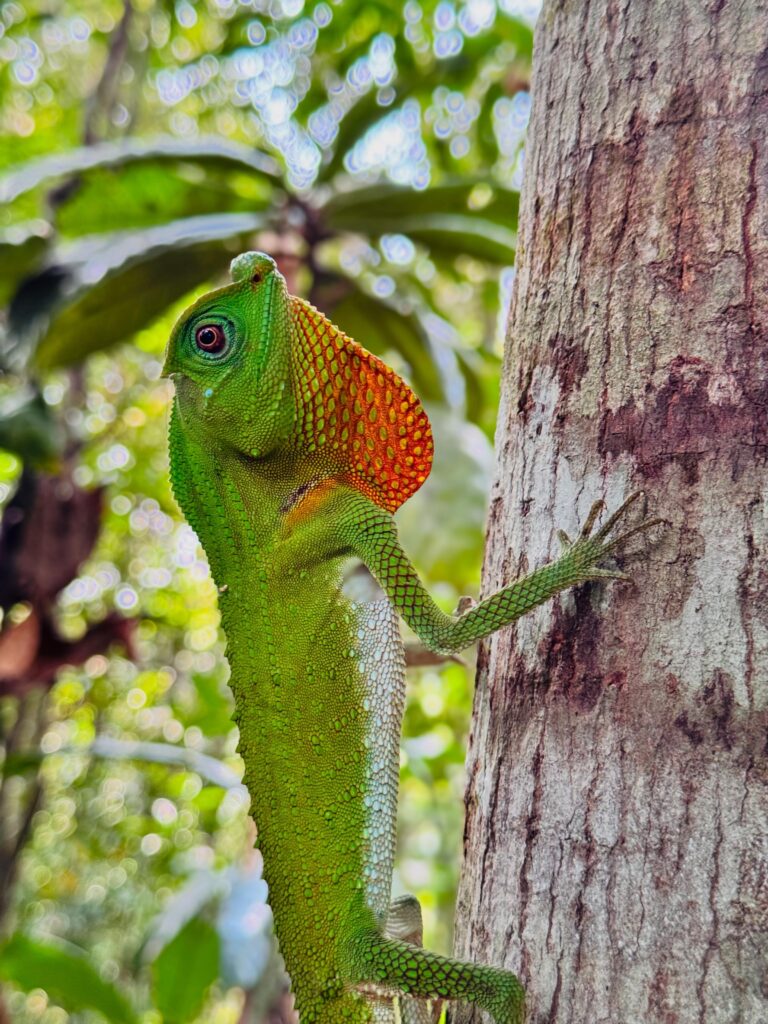
Lizards being carnivorous species, are heavily dependent on trees but invasives have a strong impact on lizard species, said Madhava Boteju, zoologist and head of science at Environmental Foundation Limited (EFL).
“The endemic hump-nosed lizard is a wet zone keystone species and not found beyond certain altitudes. The only species of the genus Lyriocephalus it is a vulnerable species requiring a wet, cool climate for survival. They mimic mosses for camouflaging. They will not be able to activate their camouflage while resting on invasive species. From food to survival needs will change drastically when environmental conditions change due to a reduction of native trees,” he said.
Managing invasive species
Once an invasive species has been established, it poses a challenge to the natural plants and shrubs. “If you’re averse to herbicides, the only method of control is shade,” Pethiyagoda added. “I have seen masses of invasive common gorse (Ulex) being removed from Horton Plains by well-meaning volunteers. In the long term, this does not work. Ulexproduces hundreds of thousands of seeds, and uprooting only causes the seeds to fall to the ground and remain buried, allowing the shrubs to re-emerge decades later. The best way to prevent invasives is to not disturb the native forest,” he explained.
In 2018, the Forest Conservation Department, Biodiversity Sri Lanka and the IUCN initiated the LIFE Project, a collaborative attempt at forest ecosystem restoration. The project aimed to restore a forest patch covered with Old World forked fern (Dicranopteris linearis) in Opatha, near Kanneliya’s eastern border.
According to Sandun Perera, program ccoordinator at IUCN holds a doctorate in environmental science and is a subject expert, to restore an ecosystem it must be degraded from its original state. To restore the selected area, the fern trees were systematically removed, soil was conditioned, composted, watered and chemically fertilized before plants were introduced from a nursery maintained within the forest itself. Perera said around 14 hectares (0.14 km²) have been restored under LIFE, a successful forest ecosystem restoration initiative in the country. “During monitoring surveys in 2025, we found some land snail species found interior in the forest returning to this patch, indicating how the restored forest patch is mimicking the rainforest,” he noted.
Citations:
Gunathilaka, M. D. K. L. (2019). A review on the floral composition of the Kanneliya-Dediyagala-Nakiyadeniya (KDN) Forest Complex in Sri Lanka. International Journal of Science and Research, 8(2).
Bopage, M. M., Krishan Wewalwala, Milivoje Krvavac, Jovanovic, O., & Vishan Pushpamal. (2011). Species diversity and threat status of amphibians in the Kanneliya Forest, lowland Sri Lanka. Salamandra, 47(3), 173–177.
Kumar Rai, P., & Singh, J. S. (2020). Invasive alien plant species: Their impact on environment, ecosystem services and human health. Ecological indicators, 111, 106020. https://doi.org/10.1016/j.ecolind.2019.106020
Weidlich, E. W. A., Flórido, F. G., Sorrini, T. B., & Brancalion, P. H. S. (2020b). Controlling invasive plant species in ecological restoration: A global review. Journal of Applied Ecology, 57(9), 1806–1817. https://doi.org/10.1111/1365-2664.13656
Reporter: Kamanthi Wickramasinghe