

Speed Read
- Ex-CEO of SriLankan Kapila Chandrasena found dead under suspicious circumstances hours after court ordered re-arrest in Airbus bribery case
- Raises new concerns over accountability in Sri Lanka’s Airbus corruption probe
- TISL warns Chandrasena death could undermine justice process in high-profile Airbus investigation
- Legal experts say death of key suspect may weaken Sri Lanka’s ongoing Airbus corruption prosecution
COLOMBO- Former SriLankan Airlines CEO Kapila Chandrasena was found dead at a residence in Colombo’s Kollupitiya on Friday (7 May), in a development that has intensified scrutiny over Sri Lanka’s long-running Airbus corruption investigation and raised wider concerns about the integrity of accountability processes surrounding high-profile financial crime cases.
The death came just days after Chandrasena was released on bail over allegations linked to a multimillion-dollar Airbus bribery scandal, and only hours after the Colombo Magistrate’s Court issued an order for his re-arrest over alleged violations of bail conditions.
The incident has rapidly evolved beyond an isolated criminal investigation into a broader national debate about corruption prosecutions, witness protection, judicial accountability, and the vulnerability of individuals connected to politically sensitive cases.
It also marks the second death under suspicious circumstances linked to high-profile investigations in Sri Lanka within less than two weeks, a pattern that is likely to fuel further public concern over the safety of individuals connected to politically and financially sensitive proceedings.
According to Police Media Spokesperson Assistant Superintendent of Police F.U. Wootler, Chandrasena’s body was discovered at a residence on Pedris Road, Kollupitiya.
The Colombo Chief Magistrate’s Court had on Thursday ordered Chandrasena’s immediate arrest after the Commission to Investigate Allegations of Bribery or Corruption (CIABOC) informed court that he had allegedly breached bail conditions imposed earlier in the week.
Chief Magistrate Asanga S. Bodharagama issued the arrest warrant after considering submissions made by CIABOC, which alleged Chandrasena had paid two individuals $47 (Rs. 15,000) each to appear as bail sureties for $3,114 (Rs. 1 million) bonds required under his bail conditions.
The court had earlier granted Chandrasena bail on Tuesday after ordering his release on a cash bail of $1557 (Rs. 500,000) and three sureties of $3,114 (Rs. 1 million) each.
CIABOC argued that arranging paid sureties constituted a direct violation of the conditions imposed by court and represented a breach of judicial trust. The Commission requested that bail be suspended under Sections 14(1) and 14(3) of the Bail Act No. 30 of 1997 and sought Chandrasena’s remand under provisions of the Prevention of Corruption Act.
After hearing submissions, the Magistrate ordered Chandrasena’s arrest and production before court.
At center of corruption allegations
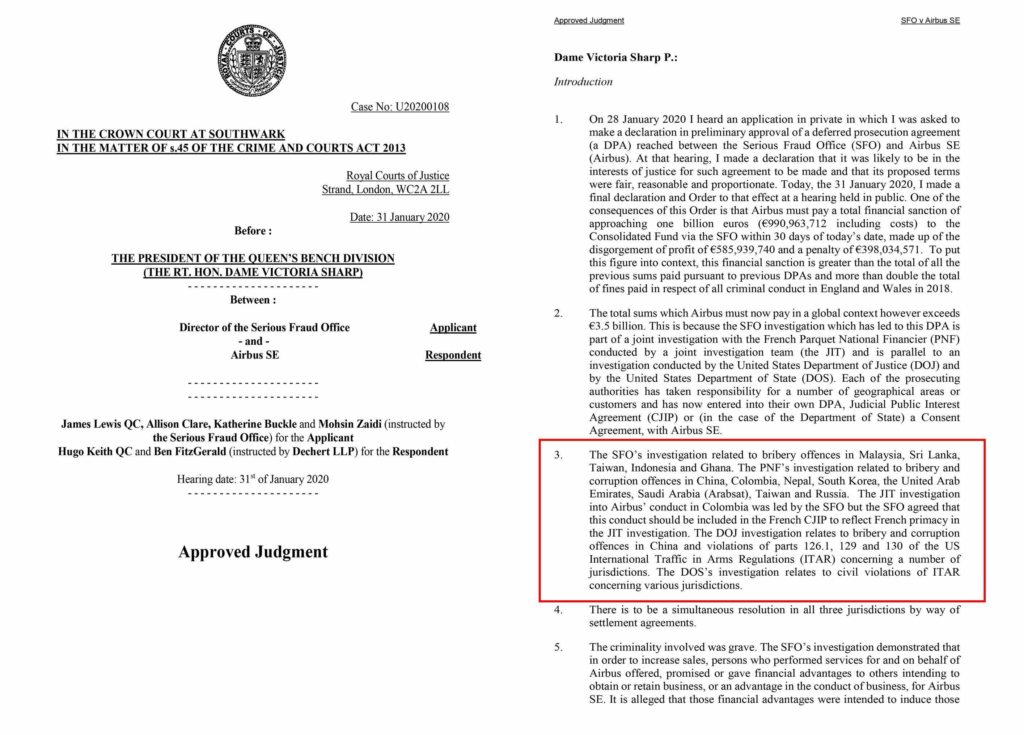
Chandrasena served as CEO of SriLankan Airlines during the controversial 2013 aircraft procurement deal involving the purchase of 10 Airbus aircraft valued at approximately US$2.3 billion.
Prosecutors allege that Chandrasena conspired to solicit and accept bribes linked to the deal, including claims that US$16 million in kickbacks had been arranged through offshore structures. Investigators allege that €1.45 million was transferred into a Singapore bank account linked to a shell company allegedly established in Brunei under his wife’s name.
The Airbus deal has long been regarded as one of Sri Lanka’s most politically sensitive corruption probes due to the scale of the transaction and allegations that senior political figures may have benefited from illicit payments.
Affidavit claims duress
Complicating the case further, Chandrasena’s legal representatives released an affidavit dated March 18 2026, in which he claimed that statements previously made to CIABOC implicating senior political figures had been extracted under intimidation and coercion.
The affidavit emerged after CIABOC informed court that Chandrasena had stated that $186,875 (Rs. 60 million) from funds connected to the Airbus transaction had allegedly been paid to former president Mahinda Rajapaksa in three installments, while an additional (Rs. 20 million) $62,291 had allegedly been paid to former civil aviation minister Priyankara Jayaratne.
In the affidavit, Chandrasena denied voluntarily making those claims and alleged that investigators pressured him to implicate Mahinda Rajapaksa, MP Namal Rajapaksa, and members of the Rajapaksa family.
He further alleged that he had been threatened with arrest, intimidated by officials including the Director General of CIABOC, and denied access to legal counsel while his statement was being recorded.
The allegations added a politically explosive dimension to an already sensitive corruption investigation and intensified questions surrounding investigative procedures.
Judicial medical board ordered
Following submissions made by Kollupitiya Police, Fort Magistrate Pasan Amarasena ordered that the post-mortem examination be conducted by a five-member judicial medical board appointed by the director of the Colombo National Hospital.
The magistrate further directed that the findings be submitted to court by May 12.
The appointment of a multi-member judicial medical panel reflects the sensitivity of the case and the heightened public scrutiny surrounding the circumstances of Chandrasena’s death.
Concerns on accountability and process
Transparency International Sri Lanka (TISL) expressed deep concern over the death, cautioning that the loss of a key suspect in such a major corruption prosecution represented a serious setback to accountability efforts.
The organization stated that regardless of the circumstances surrounding the death, the incident risks undermining public trust in the justice process and could obstruct efforts to uncover the full extent of systemic corruption tied to the Airbus procurement deal.
TISL also stressed that the Government carries a heightened responsibility to ensure the safety and security of all individuals connected to ongoing high-profile investigations and prosecutions.
The organization called for a full, transparent, and credible investigation into the death and urged authorities to ensure that accountability efforts connected to the Airbus case continue without obstruction or delay.
Meanwhile, a past president of the Bar Association of Sri Lanka (BASL) President’s Counsel Saliya Peiris said the death of a prime suspect or key witness can significantly weaken investigations and future prosecutions.
Responding to questions from the CIR, Peiris noted that when a principal witness or suspect dies before or during prosecution, investigators lose the ability to further probe allegations through that individual.
“When a high-profile witness dies before a prosecution or during the course of an investigation, the prosecution will not be able to use that person’s evidence at trial. Investigators are deprived of the opportunity to probe matters through him. To that extent, investigations or prosecutions would be affected,” he said.
Peiris also addressed questions surrounding the court-ordered re-arrest of Chandrasena, stating that police are generally expected to act “as soon as possible,” although practical delays may occur depending on available resources and information regarding a suspect’s whereabouts.
His remarks underscore the broader implications of Chandrasena’s death, particularly in a case involving international financial transactions, offshore entities, and allegations of political corruption at the highest levels.
Wider concerns over high-profile deaths
The death is likely to deepen already growing public unease over a recent pattern of deaths and sudden incidents involving individuals linked to politically sensitive or financially significant investigations.
Coming less than two weeks after another suspicious death connected to a separate high-profile case, Chandrasena’s death is expected to intensify calls for stronger safeguards, enhanced witness protections, and greater institutional transparency in Sri Lanka’s justice system.
For many observers, the incident has shifted attention away from the immediate question of individual criminal liability toward a broader concern: whether Sri Lanka’s legal and investigative institutions are adequately equipped to sustain complex corruption prosecutions involving powerful political and financial interests without key cases collapsing before reaching trial.
This story was written and edited by Gagani Weerakoon. She leads the editorial at the Center for Investigative Reporting (CIR).