
Speed Read
COLOMBO—A candidate can spend more than the legally permissible limit, fail to properly disclose where the money came from or leave key campaign expenses out of a financial return and the system may still struggle to do much about it.
That is the central weakness emerging from Sri Lanka’s first major attempt under the 1978 Constitution to regulate election spending.
The Regulation of Election Expenditure Act, No. 3 of 2023 was meant to level the playing field by setting limits on campaign spending and requiring candidates and political parties to disclose their election expenses. But the experience of the 2024 presidential and parliamentary elections, followed by the 2025 local government elections, has exposed a basic problem— having a law is not the same as having an effective campaign finance system.
“The Act has many shortcomings and loopholes,” R.M.A.L. Rathnayake, chair of the Election Commission of Sri Lanka (ECSL) said during the launch of three research reports developed under the Clean Money in Elections (CME) project of the Transparency International Sri Lanka (TISL).
The commission is now considering amendments to several election laws, he said, including the campaign finance legislation.
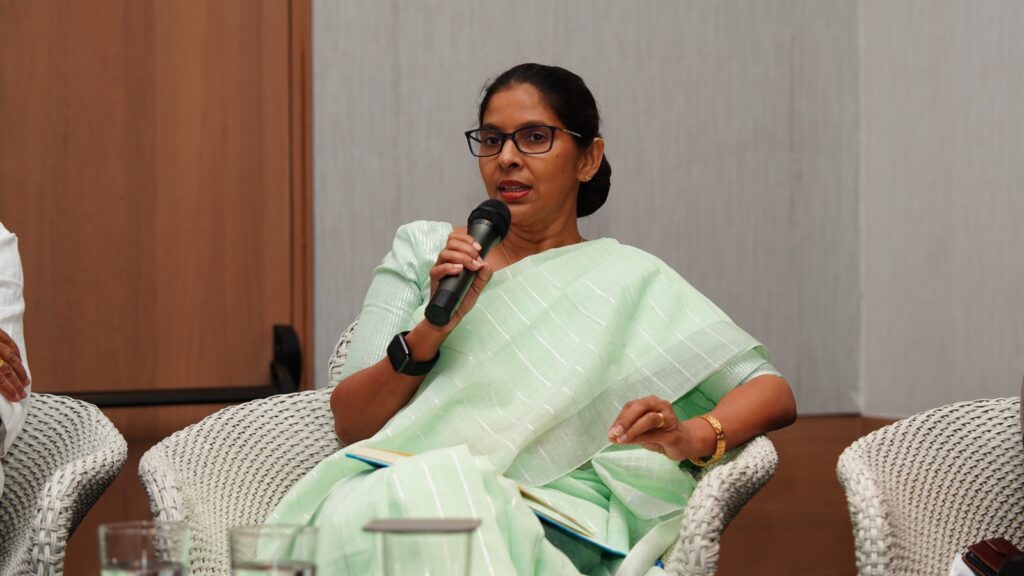
For Gayani Premathilake, chief legal officer of the Pubic Administration, Provincial Councils and Local Government Ministry, legal reform should start by upgrading the law to be in par with digital age.
She said that almost every major political party and candidate now uses Facebook, YouTube, X and other platforms to reach voters. Yet the existing legal framework does not specifically address online aspects of campaigning and online advertising.
“There should be a provision to regulate social media platforms,” Premathilake said.
That gap matters because political campaigning has moved far beyond rallies, posters, newspaper advertisements and television commercials. A candidate can now pay for targeted advertisements, work with influencers, use digital marketing companies and direct supporters into private messaging groups — all without the same level of transparency expected from traditional campaign spending, she added.
Actual campaign starts way ahead
One of the most obvious loopholes is the timing of campaign spending.
Under the current law, expenses incurred from five days after nominations are filed until the final result is announced are covered.
But candidates often begin campaigning well before nominations are filed.
Chinthaka Kularatne, additional election commissioner (legal and investigation) of the Election Commission, said this creates a significant gap.
“In practice we know candidates start campaigning even before election is officially announced,” he said. “The money spent during that period is not covered.”
That means a candidate can build visibility, advertise and mobilize supporters before the statutory campaign period begins without those expenses necessarily counting toward the campaign spending limit.
The problem is particularly important in an era in which political campaigns are continuous. Social media pages, influencer relationships and political advertising do not necessarily start when an election is officially announced and stop when voting ends.
The law, however, remains largely tied to a defined election period.
Transparency International Sri Lanka’s recent report on campaign finance makes a similar point, arguing that the legislation focuses on election-period expenditure rather than political finance more broadly.
That leaves political party funding, donations and other financial activities outside election periods largely beyond the system’s reach.
Who really paid?
Another weakness is the difficulty of tracing the original source of campaign money.
Kularatne gave an example involving foreign funding.
If a foreign entity sends money to one person, who then transfers it to another person supporting a candidate, the campaign finance return may identify only the immediate source of the money.
“If a foreign entity is sponsoring a particular candidate and that foreign state or entity is sending money to the account of X and the latter transfer that money to Y, only details about X is mentioned in the report,” Kularatne said.
“Therefore, all such foreign sponsors go unrecorded.”
The problem is made worse because candidates are not currently required to maintain dedicated bank accounts exclusively for campaign finance.
Kularatne said a 2017 draft amendment had proposed a separate bank account during campaign period, similar to provisions in the 1946 State Council Ordinance. That provision did not make it into the current law.
As a result, tracing the movement of campaign money can be difficult.
“Even if we get a blank sheet as the report, we can’t do anything about it until and unless public (even one individual) make a complaint about certain candidate’s expense returns report,” Kularatne said.
However, Gayani Premathilake claimed the Election Commission could address part of this problem even without waiting for parliament to amend the law.
The Commission could issue guidelines, circulars or published orders requiring candidates to use dedicated bank accounts for campaign transactions, she said.
Such accounts would create a clearer financial trail and make it easier to audit campaign spending.
A law that counts too late
Timing is also a problem when it comes to disclosure.
Candidates and political parties are required to report their campaign finances, but the information is generally available only after the election.
By then, voters have already made their decisions.
The TISL, election observers and Premathilake said Sri Lanka should move toward real-time disclosure, allowing candidates and parties to report funding as it is received.
She endorsed proposed online dashboard where voters could see who funds candidates and political parties while an election campaign is underway.
That would turn campaign finance disclosure from a post-election accountability exercise into information voters could actually use, the TISL report observed.
The current system does not provide that.
The TISL report found that candidate financial returns are not available through a permanent centralized online platform. The Election Commission is required to make returns publicly available for only 10 days, after which people may have to physically inspect documents at election offices or use Right to Information requests.
For voters, journalists and researchers, that makes meaningful scrutiny far more difficult.
Manjula Gajanayake, executive director, Institute for Democratic Reforms and Electoral Studies (IRES) said greater transparency could even influence election results.
Gajanayake noted that greater public awareness of candidates’ financial transparency could influence voter choices and potentially affect election outcomes. The argument is simple. “Financial disclosure is not merely about catching wrongdoing. It can give voters information about who stands behind a candidate.”
The new blind spot
The biggest challenge may be the rapid growth of online political campaigning.
The current law does not clearly spell out how spending on Facebook, YouTube, X, Google advertisements, boosted posts, influencers or digital marketing agencies should be reported.
That leaves a significant part of modern campaigning in a gray area.
Gajanayake told CIR third-party campaigning also needs to be brought under clearer regulation.
Businesses, individuals, advocacy groups, influencers and other organizations can campaign on behalf of a candidate or party without necessarily being captured in the same way as the candidate’s own expenditure.
“If a third party is campaigning on behalf of some other candidate or a political party, there should be a way to track those kinds of campaigns,” he said.
The TISL report recommends extending disclosure requirements to third parties that spend above a defined threshold on election-related campaigning.
It also recommends requiring digital marketing agencies to register and disclose which candidates or parties they represent.
The Election Commission could establish a dedicated digital audit function to monitor online political advertising using tools such as Meta’s Ad Library and Google’s advertising transparency systems, Premathilake noted.
Without such measures, a campaign’s official financial return may show only part of what voters actually saw during an election.

Donation limits remain a gap
The law limits what candidates can spend but does not cap how much individuals, companies or other entities can donate. This could allow wealthy donors to exert disproportionate influence while candidates remain bound by spending ceilings.
The TISL report recommends aggregate limits on individual and corporate donations, adjusted periodically for inflation, campaign costs and median income.
Corporate donations raise another concern. Companies can contribute to political campaigns without necessarily having to disclose those payments in their financial statements, making it harder to identify links between donations, business interests and government contracts or other benefits, it was stated in the report.
A key weakness is the Election Commission’s limited power to independently investigate and punish campaign finance violations.
EC chair said the commission can act against candidates who fail to submit expense reports but must inform the police.
“We cannot study, analyze the content of the documents submitted and take action on those reports,” he said.
The process can therefore be slow and cumbersome. Rathnayake said Commission officials worked extensively to ensure candidates submitted their expense reports after the local government elections. But cases still require returning officers to prepare detailed statements and refer them to the police.
“If majority did not submit,” Rathnayake said, “imagine what would be the scenario.”
Where returns raise questions about missing documents or spending above the legal ceiling, the commission’s ability to act independently remains limited. The system consequently relies on complaints, police investigations and referrals to the Attorney General’s Department.
A law that requires several agencies to act before violations have consequences is unlikely to provide a strong deterrent when enforcement is slow.
Campaign finance and gender
The weaknesses in Sri Lanka’s campaign finance system have implications beyond money and transparency.
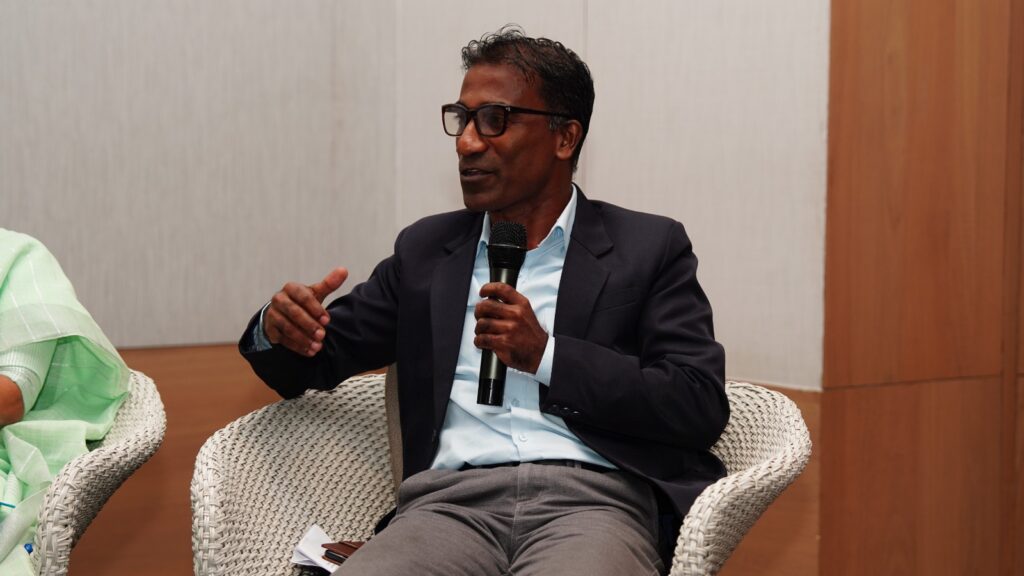
Gajanayake argued that campaign finance rules must also account for the barriers women face when entering politics. Sri Lanka has held nearly 78 elections since 1947 and elected about 3,200 MPs, of whom only 159 have been women, he said.
There are currently 22 women in Sri Lanka’s 10th Parliament, but Gajanayake noted that they come from only two political parties, limiting political diversity among women lawmakers.
Campaign financing can be one of the barriers. He cited the case of parliamentarian Ambika Samuel, who he said received Rs. 480,827 in campaign funding.
Political parties therefore play a major role in determining who has the resources to compete.
“The deciding factor is the political party,” Gajanayake said.
Campaign finance reform, therefore, cannot focus only on individual candidates. It must also examine how political parties raise, allocate and spend money and whether their financing systems give women and other underrepresented groups a fair chance to compete.
The enforcement gaps
Sri Lanka’s campaign finance law was an important first step. Before 2023, the country had no dedicated campaign finance legislation of this kind since 1977.
But its first test has exposed a familiar problem — rules that appear strong on paper can be ineffective when they are difficult to monitor and enforce.
A campaign finance system cannot rely on voters discovering financial irregularities months after an election. Nor can it depend entirely on complaints, police investigations and lengthy legal proceedings, Gajanayake noted.
Money moves faster.
Campaigns now operate through social media, influencers, messaging apps, digital agencies, businesses and informal networks. Spending can begin before an election is officially called and be routed through people and organizations far removed from candidates, TISL report observed.
If the law does not follow the money, spending limits become easier to circumvent, Gajanayake said.
The next phase of reform, therefore, needs to go beyond adding clauses to existing legislation. Sri Lanka needs a system that can track where campaign money comes from, where it goes and who benefits — while voters still have time to use that information.
Otherwise, the country risks having a campaign finance law without the enforcement needed to make it meaningful.
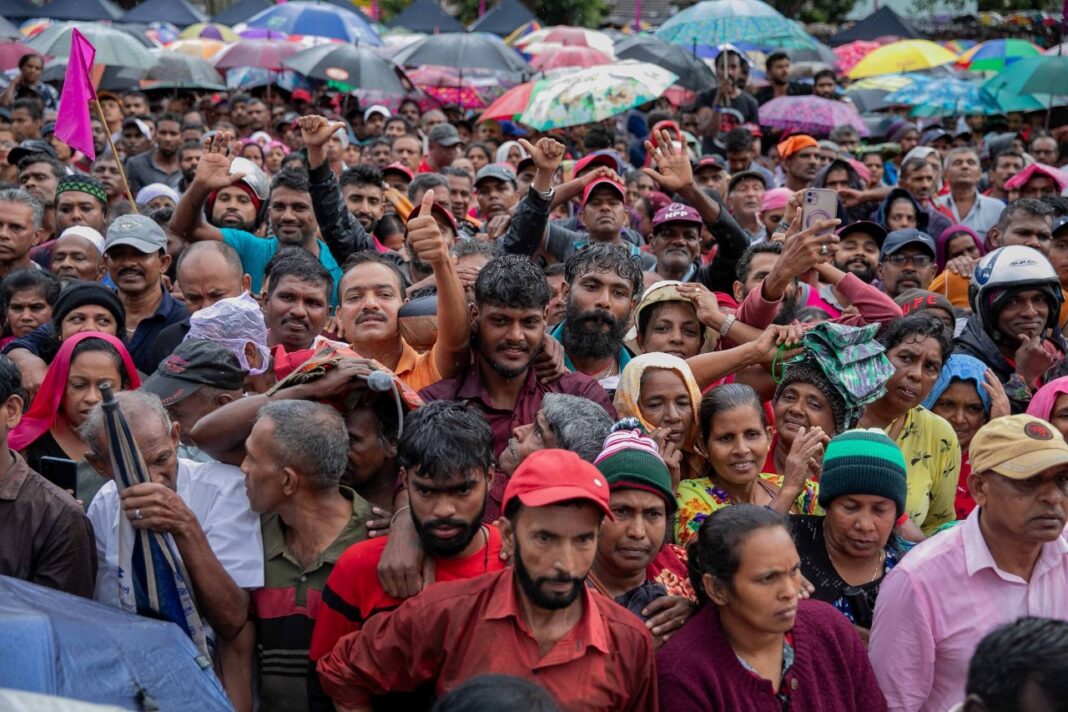
Banner Image: Greater public awareness of candidates’ financial transparency could influence voter choices and potentially affect election outcomes. The image shows an election rally during parliamentary election campaign. Image courtesy of National People’s Power media Unit.
This story was written and edited by Gagani Weerakoon. She leads the editorial at the Center for Investigative Reporting (CIR).
This story was produced with support from Report for the World, a global media service strengthening local independent journalism.