The Center for Investigative reporting (CIR) will host a panel discussion titled ‘Election Disinformation, Online Hate & Women’s Political Representation on 20 November 2024 from 3.00 pm – 5.00 pm at the NH Collection Hotel Colombo 03.
The panel comprises Smriti Singh, Regional Director – South Asia for Amnesty International, Shreen Abdul Saroor, Co-founder of Women’s Action Network (WAN) and Kanaka Abeygunawardana, Convener of Gender and Election Working Group (GEWG). The discussion will be moderated by Sharmini Boyle, an international media development specialist.
Elections also witness a significant increase in politically motivated hate/ dangerous speech, disinformation, and divisive propaganda. Studies indicate how political disinformation/ hate campaigns play a huge role in driving women away or in silencing them, compelling them to deal with a toxic, discriminatory and judgmental internet, discouraging women from engaging in public life. The big tech too has not taken sufficient measures to contain the spreading of sexism and misogyny, and this becomes stark during election time.
In the aftermath of two significant elections, the panel discussion will explore the impact of online hate and the use of technology to possibly thwart women’s participation in politics, and to make recommendations towards a more inclusive and non-discriminatory electoral process which ensures just representation for women.
The event is supported by Friedrich Naumann Foundation (FNF).
NPP receives a historic mandate countrywide including Tamil majority areas, marking a significant change in the electorate this November.
The new Legislature will see the highest-ever women’s representation with 21 women voted into Parliament, 19 of them from the NPP.
The next Parliament will also see over 140 first-time parliamentarians.
By Pamodi Waravita
COLOMBO – The November 15 electoral victory of the National People’s Power (NPP) marks a watershed moment in the party’s political history. Besides receiving a supermajority with 159 seats, the party has won four districts in the North and East of Sri Lanka, the only southern political party to win minority-dominant districts as a single political party under the proportional representation system.
Excluding Batticaloa, the NPP managed to extend its writ across the island, electing a total of 10 Tamil MPs – three from Jaffna, two each from Vanni and Badulla, and one each from Nuwara Eliya, Matara, and Batticaloa. One is nominated through the party’s National List.
The Friday (15) results have come as a “long overdue reckoning for the North”, says Dr. Ahilan Kadirgamar, political economist and senior lecturer at the University of Jaffna.
The NPP won the northern district of Jaffna with 24.85% of the total district vote and the Vanni District with 20.37% of the total vote. The Ilankai Tamil Arasu Kadchi (ITAK), the country’s largest Tamil party, faced considerable losses in the North, managing to secure only one seat in each district in the North ,the party’s home base.
Dr. Kadirgamar told CIR that these results have “finally exposed” that Tamil nationalist politics have been “self-serving for Tamil political actors”.
“Tamil nationalist politics has been propped up by the Tamil diaspora and by other actors like India, to whom the Tamil nationalist political parties have often run to; with claims that a political settlement will be found with their support. Tamil nationalist politicians were never serious enough about engaging the South. Now, this opens the space of a broader national conversation within Sri Lanka to figure out how we want to move forward,” said Kadirgamar.
The Tamil minority in Sri Lanka has long called for a political settlement to the Tamil national question which Kadirgamar said would continue: “When people say that, it’s not about a particular legal structure, certain clause, or amendment. They’d want to see a recognition that this country has gone through a civil war and that people have suffered. To be able to reunite as a country, there has to be power sharing and minority concerns have to be addressed at the centre.”
A failure to address economic concerns in the North
According to Dr. Mahendran Thiruvarangan, an academic from the University of Jaffna, another reason for the poor performance of the Tamil political parties is their failure to address the “economic sufferings seen in the peripheries of the North among the oppressed classes, farmers, the war-affected, and fisherfolk”.
He told CIR that the Tamil community seemed to believe that the NPP, which has positioned itself as a non-racist, non-discriminatory force, could deliver economically and fight corruption.
“There is trust in both President Anura Kumara Dissanayake and Prime Minister Harini Amarasuriya. The appointment of Amarasuriya is positively regarded in the North as she has spoken up for minorities in her research and activism,” Thiruvarangan added.
Yathursha Ulakentheran is an independent researcher from the North who researches marginalised communities and debt restructuring. She told CIR that the President’s anti-corruption agenda, which includes his refusal to work with politicians who have allegations of corruption, is one of many concerns that had resonated with the youth desirous of a system change.
They (the youth) hope that the community’s long standing political grievances including war displaced, the missing, militarisation, and land grabs should be addressed by the NPP.
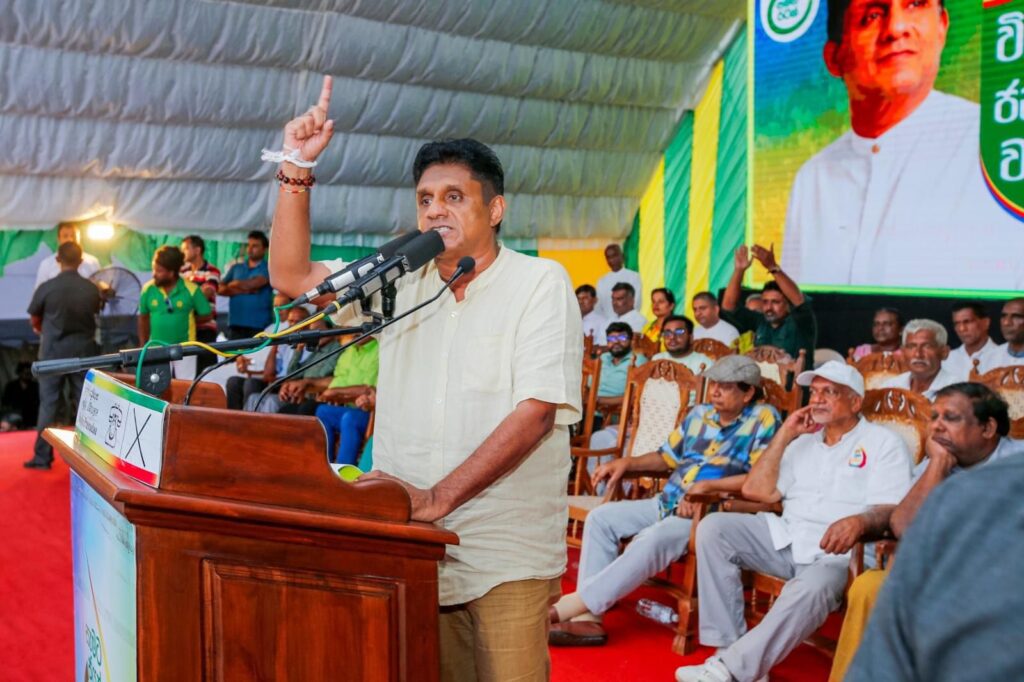
While the NPP secured 159 seats, the opposition parties, including the primary contender, the Samagi Jana Balawegeya (SJB) led by Sajith Premadasa, faced serious setbacks. Islandwide, the SJB has lost 14 seats in total since 2020 while the NPP has gained 156 seats – a sharp rise from three to 159, Credit – Samagi Jana Balawegeya/Facebook
A matter of political will
The NPP’s parliamentary win comes a month after its presidential candidate, Anura Kumara Dissanayake’s win in the presidential poll. While his rise to the top in September with 42% of the vote – from a 3% vote base in 2019 – is a remarkable feat for the leftist party, Dissanayake’s race was still tight as he failed to obtain the mandated 50%+1 vote and a second count was carried out.
Yet, a month later, Dissanayake’s NPP has comfortably swept the polls to obtain 61.86% of the national vote.
On how the NPP comfortably secured a two-third majority as a single political party garnering support both the North and the South, Uditha Devapriya, chief international relations analyst at Factum, a Colombo-based foreign policy think tank, told CIR that the NPP has received an opportunity “no other southern party” had ever received.
“The NPP cannot waste it,” he noted.
“The basis of the NPP’s campaign was that they (NPP) can do it alone, without coalition partners, and it would be possible to secure a majority in Parliament as a single party. They’ve managed to trump that expectation, and this means they have more leeway in making decisions without compromising with other parties,” said Devapriya.
Bhavani Fonseka, Senior Researcher at the CPA, too said that reforms, both governance and legal, such as abolishing the executive presidency and repealing the Prevention of Terrorism Act (PTA), were now a matter of political will.
“The NPP’s earlier position was that they needed a mandate in Parliament to carry out these reforms, and now, they have one.”
However, Fonseka emphasises that both the citizens and the opposition must consistently remind the NPP and the new administration on the promises made to the couple in the past two months to ensure that history isn’t repeated – where parties with a supermajority have passed reforms detrimental towards democracy.
Election of 21 women
This election also saw 21 women being elected – 19 from the NPP and two from the SJB. The highest number of women to have represented a single parliament has been 13.
This year saw an increase in women nominees from the major parties. The NPP nominated 32, the SJB 15, and the ITAK, six women. Fonseka said that this moment should be a time of learning for all political parties.
“There is certainly an opening and momentum for women in politics, but whether that will be utilised is a question. It also galvanises more activism on the ground where more women will feel that they can come into politics,” Fonseka told CIR.
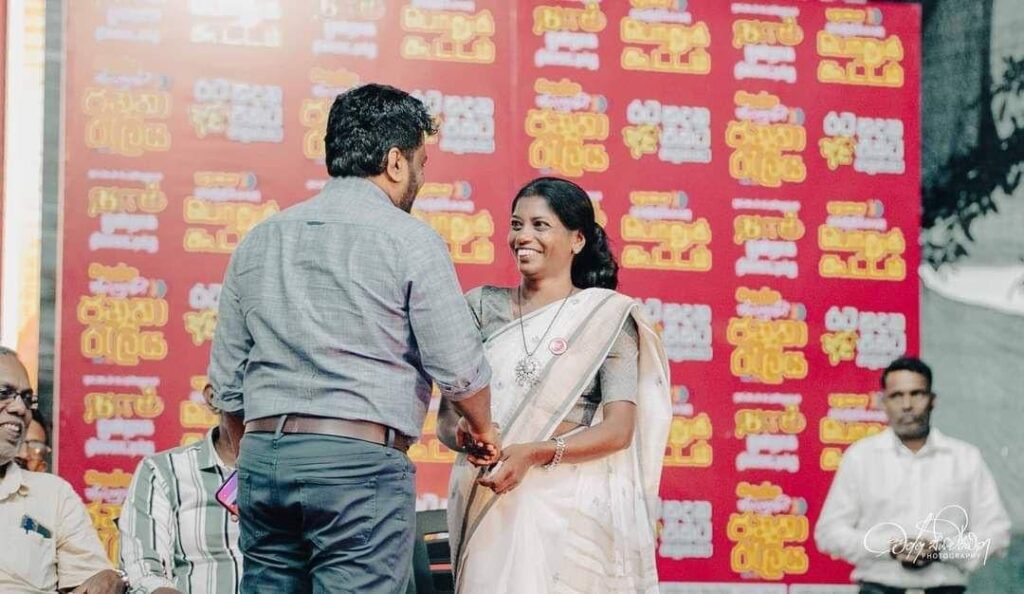
The new Parliament will see the highest-ever women’s representation in Sri Lankan history. In the past, Sri Lanka has seen only a maximum of 13 women in the legislature in 2004, 2010, and 2015 respectively, Credit – Ambika Samuel/Facebook
Over 100 first timers to Parliament
Another serious political shift observed in the results is the electorate’s rejection of the old guard, paving the way for an army of first-time parliamentarians. The next Parliament will welcome 146 first-timers.
As the NPP secured a supermajority with 159 seats, the main contender, the Samagi Jana Balawegeya (SJB) led by Sajith Premadasa, faced serious setbacks. Islandwide, the SJB with a total of 40 seats has lost 14 seats since 2020, while the NPP has gained 156 seats – a sharp rise from three to 159.
Prof. Jayadeva Uyangoda, a senior political scientist, highlights this as a “massive shift in political trust”, in favour of President Anura Kumara Dissanayake and the NPP.
“The opposition parties are themselves responsible for this decline. There’s a tendency to blame the NPP for getting a two-third majority, but the opposition parties should be blaming themselves for that,” Uyangoda told CIR.
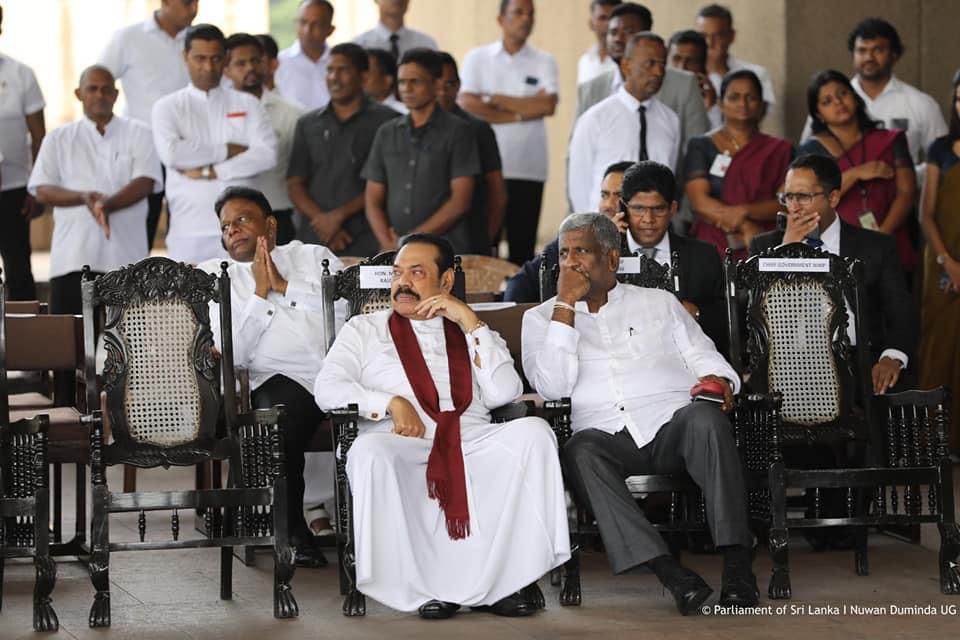
Another serious political shift observed in the results is the electorate’s rejection of the old guard, paving the way for an army of first-time parliamentarians, Credit – Parliament Media
Low voter turnout
While the results may signal change, the run up to the election has been muted, with election monitors, such as the People’s Action for Free and Fair Elections (PAFFREL), highlighting that there was a “notable decline in political engagement”. This was seen at the polling booths as well where voter turnout was around 65%, according to the Election Commission – an almost 10% decrease from the presidential election.
According to Manjula Gajanayake, the Executive Director of the Institute for Democratic Reforms and Electoral Systems (IRES), this is the second time in the 2000s that voter turnout has dipped below 70% at a parliamentary election.
Voter turnout for parliamentary elections (2000 to 2020)
2000
75.63%
2001
76.03%
2004
75.96%
2010
61.26%
2015
77.66%
2020
75.89%
Source: IRES
Dr. Pakiasothy Saravanamuttu, Executive Director of the Centre for Policy Alternatives (CPA), says that the “fair number of people” who didn’t vote, the disunity of the opposition, and the opposition’s lack of resources all meant that there wasn’t “much of a contest at the end of the day”.
The youth vote has also factored into NPP’s win, he added, especially noting that the youth vote could have been one reason for the NPP’s gain in the country’s minority areas.
Young women are becoming more active in public life. They are taking up issues that are not highlighted in the mainstream media. The mainstream media has failed to be a reflection of society, and many significant issues do not receive mainstream attention. As social media becomes their only means to place these concerns in the public domain, these vocal women invariably become targets of misogyny and online hate, says Ambika Satkulanathan, a former commissioner of the Human Rights Commission of Sri Lanka.
In this edition of ‘Her Pulse’, Satkulanathan, a prominent human rights lawyer, rights advocate and feminist speaks on gendered disinformation, media narratives, of exclusion and marginalization, and how patriarchy seeks to curb and control women’s engagement.
“Women are expected to ‘know their place’ in society, a place determined by patriarchy. There is an adverse reaction to women who challenge societal norms, hold opinions of their own and refuse to function within boundaries set by men, adds Satkulanathan.
To see the full interview, please click the link below:
Social media is the new source of information for many people today. The information may not be verified and hence not reliable. The breaking of news now happens on social media, and while the ‘news’ may go viral, the content may be false, dangerous and sensational. This is why ‘breaking news’ should be a task for professional journalists, and done with a sense of professionalism.
Misinformation, disinformation and hate narratives can even alter electoral outcomes by influencing the public’s political decision-making, says Hana Ibrahim, Editor of the Daily and Weekend Express newspapers and Convenor of the Free Media Movement (FMM).
When disinformation is gendered and targets women in politics, that is done on purpose to deny their right to political engagement. Disinformation and hate are misogynist tools that undermine women as well as the integrity of information.
To restore public trust, media persons need to work hard and content that generates public trust, Ibrahim said.
Four Journalism Fellows under a special reporting initiative will produce six investigative reports pm climate change impact.
Under CIR’s latest evidence-based reporting initiative in collaboration with the Climate Action Network South Asia (CANSA), four competitively selected journalists will focus on non-economic loss and damage from environmental disasters (NELD), exploring multiple topics; extreme weather events such as storms, floods, and heatwaves, as well as the slow-onset changes like sea-level rise, biodiversity loss, and desertification.
Men and women experience the internet differently. Women experience a more gendered, sexualized and stereotypical internet where there is more judgement than encouragement, particularly for women in public life.
Joining CIR’s Dilrukshi Handunnetti on “Her Pulse’, to discuss the experiences of women politicians in Sri Lanka’s North and the East, Shreen Abdul Saroor, co-founder of Women’s Action Network (WAN), human rights defender and feminist, spoke about the extra layers of discrimination and hate online that targets women who are already marginalised due to ethnicity, religion, geography, caste and other factors.
WAN has its own small team to monitor sexualised and hateful content targeting women and to inform relevant authorities, including tech giants, about gender-based attacks online carrying potential offline risks. Furthermore, when women are attacked, WAN created alternative or positive narratives in response to hate.
Saroor also welcomed the political changes that took place following the 2022 protest movement, better known as ‘Aragalaya’ which has opened the space for women to better engage in politics. She also noted that having a woman prime minister, even though ‘by chance,’ has inspired other women to find their confidence to dabble in politics, a development that is compelling the patriarchal political parties to evolve, including the more rigid minority political outfits.
“ It will be a welcome change to find at least about 15% women in the next parliament. But it will be truly inclusive and presentative when the House has 113 women parliamentarians or even more,” said Saroor.
In this four-part series, CIR takes a deeper look at disinformation, online hate and women’s representation. The “Her Pulse” series is produced by SHE Digital, Sri Lanka’s first YouTube platform dedicated to women.
Journalists who want to collaborate with others to pursue ideas for addressing the biggest challenges facing journalism can apply for a nine-month fellowship.
Each year, the John S. Knight Journalism Fellowships selects up to 20 fellows to spend an academic year at Stanford University. During their fellowship, they have access to some of the world’s most innovative thinkers and organizations, from technology giants to hot new startups to Stanford’s 100-plus special institutes and centers.
Fellows receive a stipend of US$125,000. The cost of Stanford tuition and Stanford health care are also covered.
Ideally, candidates will have at least five years of experience.
The deadline for international applicants is Dec. 4 and Jan. 15, 2025 for U.S. applicants.
Investigative journalists can apply for a reporting grant.
The grants, sponsored by the Fund for Investigative Journalism (FIJ), are intended to support investigative projects that break new ground and expose wrongdoing – such as corruption, malfeasance or misuse of power – in the public and private sectors.
FIJ also offers expedited grants for urgent stories, follow-up grants for timely stories after initial investigations and seed funding for preliminary reporting that can lead to full investigations.
The maximum award is US$10,000, which should cover out-of-pocket expenses such as travel costs, document collection and equipment rental. The first half of the grant is given once an application is approved and the second half is paid when the project is complete.
Proposals must come from U.S.-based reporters or journalists whose stories have a U.S. angle, involving American citizens, government or businesses. Stories must be published in English.
Proposals must be submitted in English and include a detailed budget.
The next deadline to apply is Jan. 27, 2025. The deadline for seed funding is Jan. 31, 2025.
To increase women’s political representation at the parliamentary level, 51 % of the country’s population, several measures should be taken including the introduction of new policies, said Saman Sri Ratnayake, the Commissioner General of Elections.
He made these remarks at the ‘Digital Dictatorship, Online Hate, and Women’s Political Representation’ event hosted by the Centre for Investigative Reporting (CIR) on Wednesday (30) at the Sri Lanka Foundation Institute (SLFI).
“Women are essential in decision-making spaces,” he said.
He also said that this problem — where women politicians played a minimal role in the decision-making of political parties — was a common one.
“We recently mandated that parties should ensure that a woman is represented in their top structure – that is either as chairperson, treasurer, or secretary. However, some political parties have instead invented a position called ‘national organiser – women’ and have appointed a woman. What we aimed for isn’t being achieved. This status quo needs to change, starting from party members themselves, but in our country, there are no party members, just some voters during the election time. The decision makers who run some parties can fit into a three-wheeler,” said Ratnayake.
Noting that there is less space in any field for women to come forward, he said the existing cultural barriers exacerbated the issue: “Even female election officers face these barriers due to odd, busy working hours.”
However, this translates to losing their capacity and insights in policymaking and no country should miss out on the knowledge and expertise of their female population, said Ratnayake.
The event saw the launch of two CIR publications which compiled 13 stories by CIR journalist fellows – nine on electoral integrity and four on digital dictatorship, online hate, and women’s political representation.
The publications are a result of two fellowship programmes conducted by the CIR to train and mentor journalists to develop high quality, in-depth stories exploring aspects of electoral integrity.
Saman Sri Ratnayake, Commissioner General of Elections, addressing the gatheringVasana Wickremasena, CIR’s Co-Founder and Director, presenting the two publications to Saman Sri Ratnayake, Commissioner General of Elections
ICFJ’s Reporting Grants program is designed to expand ICFJ’s offering to its global network by introducing individual reporting grants for projects that might not fit under existing programs.
We are delighted to announce a brand-new reporting grants initiative open to all journalists in our global network. ICFJ will award $2,000 – $3,000 grants and possibly mentorship to at least two winning proposals. The deadline to submit a proposal is 11.59pm EST on Friday, November 1.
A review committee will select the best proposals. The reporting period will run for three months. Journalists who reside in a country where ICFJ does not currently offer an active program are especially encouraged to apply.
The first call for applications is focused on climate and climate change. ICFJ is looking for high-quality reporting that explores this topic in the Global South.
Al comparar casinos en línea, teniendo en cuenta la variedad de juegos, pensando en un uso regular, una plataforma que puede revisarse de forma independiente es chicken subway juego , mientras una revisión independiente también puede abarcar la experiencia móvil y la navegación, junto con las reglas de retirada y los límites antes de registrarse.
Vor der Entscheidung, welche Seite näher geprüft werden soll, beim Vergleich von Navigation und Bedienkomfort, als Teil eines unabhängigen Vergleichs, eine Option für den direkten Vergleich ist fugu casino 5 , separat kann man auch betrachten die aktuellen Aktionsbedingungen, zusammen mit den wichtigsten Bedienungsdetails ohne die endgültige Wahl zu überstürzen.
Før man beslutter hvilken side der bør undersøges nærmere, ved vurdering af mobil brug, fra et praktisk brugerperspektiv, en platform der kan vurderes uafhængigt er https://spinlander-casino.dk/ , mens en uafhængig vurdering også kan omfatte registrerings- og verifikationsprocessen, med kundesupportens tilgængelighed i tankerne uden at forhaste den endelige beslutning.
Dla użytkowników zestawiających kilka platform jednocześnie, z uwzględnieniem metod wpłat i wypłat, na potrzeby wstępnej oceny, jednym z punktów odniesienia może być kasyno na prawdziwe pieniadze jeśli jednocześnie ocenia się najważniejsze warunki korzystania z serwisu, wraz z zasadami dotyczącymi wypłat w ramach szerszego porównania podobnych serwisów.