This is an opportunity provided by the Building the Capacity of Journalists in Asia and the Pacific programme: Find out more
Please note: This programme is only open to South Asian journalists who are nationals of and based in Bangladesh, Bhutan, India, Maldives, Nepal, or Sri Lanka.
This training programme from Thomson Reuters Foundation (TRF), in partnership with the Asian Development Bank (ADB), offers journalists an opportunity to expand their expertise in reporting about social inclusion as the countries emerge from the COVID-19 pandemic. The course will draw on contemporary best practices of good reporting and writing, and will also focus on the use of data and digital assets as well as online safety for journalists.
The training will be delivered to two groups of journalists during the weeks of 18-22 July 2022 and 25-29 July 2022.
Reporting on social inclusion as South Asia emerges from the COVID-19 pandemic
South Asia is one of the most vulnerable regions to climate-related impacts, such as growing poverty, agricultural price volatility, spread of disease, and child mortality. As the pandemic has worsened socioeconomic inequalities, the need for inclusive development policies is more pressing than ever. Social exclusion – often due to gender, disability, age, economic and education status, as well as caste, religion and ethnicity – exacerbates the already disproportionate exposure to hazards of vulnerable populations. These populations often lack access to information and resources to adequately respond to and recover from disasters. Besides that, over half of the young population in the region is projected to leave education without the skills required to be employable in the future. Yet, it is important to note that marginalized groups are not only victims of disasters; they also have unique abilities to contribute to the resilience of their communities. (Sources: World Bank, 2021 and National Herald)
Countries are also striving to meet the Sustainable Development Goals by 2030. A key consideration in this is the degree of inclusion felt by all members of society and their access to economic, social and political resources, as well as opportunities to participate in agenda-setting that impacts their lives. Entrepreneurship development, early disaster warnings for people with visual and hearing difficulties, youth employment support, and joint ownership by men and women of lands and assets are examples of advancing social inclusion. The more people feel empowered, the more likely they are to engage and help accelerate development policies, leading to more prosperous, inclusive, and sustainable societies.
The media has a pivotal role to play in raising awareness, putting social inclusion on the policy and public agendas, giving a voice to the marginalized and disadvantaged, and debunking myths and stereotypes that breed discrimination and exclusion.
This programme will help journalists to:
Identify underlying issues and challenges that impact social inequality and financial inclusion; understand how they are inextricably linked, and what it means for the future of the young people, as their country emerges from the pandemic.
Report more confidently, accurately, and ethically on the topic, exploring various angles, including government programmes and non-government initiatives.
Get tips on how to write balanced stories, find good sources online, and learn interviewing skills for sensitive topics as well as topics involving vulnerable and/or marginalised communities.
Learn the Solutions Journalism approach and use case studies to highlight some responses in their country or across borders in their region.
Use data more effectively, including learning the fundamentals of data visualisation.
Manage their work online safely with tools and tips to protect privacy and confidentiality.
Experienced Thomson Reuters Foundation trainers will help participants to further enhance their skills in writing stories that are both powerful and accurate, and that explore the framing of issues of social inclusion as the region emerges from the pandemic.
The programme contents may be modified after assessing participants’ needs.
Who Can Apply
Applicants must be journalists who are nationals of and based in Bangladesh, Bhutan, India, Maldives, Nepal, or Sri Lanka, and must be able to demonstrate a commitment to a career in journalism in South Asia, with a minimum of two years’ professional experience and a good level of spoken and written English.
If they are not full-time staff members, applicants should be able to demonstrate considerable experience as a freelancer, including very recent publications with client organizations.
Applicants will need to have access to reliable internet capable of handling multiple hours of video calls. They should also have access to a computer from which to attend the training.
Course Logistics
The intensive, online programme will run over five consecutive days, each with four hours of learning, observation, and discussion. There will be instructor-facilitated group sessions with a lead trainer and a co-trainer interspersed with individual or group tasks. Participants will also hear from subject matter experts on social inclusion issues. On the final day, participants will pitch a story idea to incorporate what they’ve learned from the sessions and receive feedback from TRF trainers.
The training will be delivered to two groups of journalists during the weeks of 18-22 July 2022 and 25-29 July 2022. Please indicate your training week preference in the application form via the APPLY button.
On completion of the course, successful participants will receive a certificate from TRF and ADB.
Following the training programme, selected participants will have the opportunity to receive further mentoring and support from TRF trainers who will help them work on their approved story pitches to be published within a set deadline.
Meet Our Experts
Emmy Abdul Alim is a consultant and trainer for the Thomson Reuters Foundation. Emmy currently reports, writes and edits for several news agencies and publishers including The Straits Times (Singapore), Zawya (UAE), and Refinitiv. She was previously Editor at Thomson Reuters where she led correspondents and analysts covering business and finance news and intelligence. Emmy has lived and worked in her native Singapore, as well as in the UK, Egypt, Malaysia and the UAE.
Yan Naung Oak is the founder of Thibi, a consultancy specialising in data visualization and human centered design. Yan was part of the founding team at Phandeeyar, Myanmar’s first and leading innovation hub. He focused on building their social impact and data programs from 2015-2018. He remains senior advisor at Phandeeyar where he’s consulted on strategy and tech for social impact in Myanmar. He is heavily involved in open data and data journalism initiatives in Myanmar and the region. Yan has a BA in Physics and Economics from Middlebury College and an MSocSci in Economics from the National University of Singapore.
Please complete the application form at the link below and fill in thisbrief pre-training questionnaire. You will be required to submit samples of recent work, either as links or documents.
If you have difficulty applying, please email sanne.breimer@thomsonreuters.com with the title of the course in the subject line.
Internews’ Earth Journalism Network (EJN) is offering around 20 reporting grants to support the production of in-depth stories that will call attention to critical environmental issues in the Asia-Pacific region.
EJN will provide story grants and one-on-one mentorship to selected journalists in the Asia-Pacific region. Through this activity, EJN aims to increase the quality and quantity of environmental stories from the region; and build the capacity of local journalists to improve their coverage of climate and environmental topics.
They aim to support the production of stories that raise awareness about environmental and climate issues, amplify the voices of those most impacted and drive meaningful conversation among communities and policymakers at the local, national, and regional level, bringing about positive change.
They encourage stories that report on potential solutions and highlight how vulnerable communities are responding to environmental challenges. They are interested in supporting stories that use relevant data to illustrate the issue in a compelling and easy-to-understand way.
They are specifically seeking story pitches on cross-sectoral stories, especially stories that explore the impacts of environmental threats on other sectors.
Topics
Journalists may explore topics including (but not limited to):
The disproportionate impacts of environmental degradation and climate change on women and other vulnerable groups (including the poor, youth, Indigenous Peoples, ethnic minorities, people with disabilities)
The interdependence of the health and wellbeing of humans, animals, and their environments (such as zoonotic diseases, environmental contamination, antimicrobial resistance, etc) and One Health approaches to address these connected concerns in a multidisciplinary and integrated way
Efforts to protect land and marine biodiversity from the impacts of logging, mining, fishing and other extractive activities
The net zero transition: local, national and regional efforts to incentivize renewable energy and decarbonize economies
Under-reported threats to wildlife, biodiversity conservation and climate resilience, and viable, potentially scalable solutions to counter these challenges
Communities threatened by air and water pollution, displacement and/or rights violations
On-the-ground challenges to implementing good governance measures, policies and regulations to manage waste, sustain natural resources and/or protect the environment
Funding Information
Earth Journalism Network (EJN) is pleased to offer up to 20 story grants of around USD 2,000 each to selected journalists from the Asia-Pacific to produce in-depth or investigative stories on environmental and climate issues in the region.
Eligibility Criteria
Journalists from countries within the Asia-Pacific region are welcome to apply. For the purposes of this grant call, they are accepting applications from South Asia (note that applicants from Pakistan would require an overseas bank account to receive grants), Southeast Asia, East Asia and the Pacific region but not Australia or New Zealand.
Groups of journalists, including from different countries, are eligible. However, the application must be made in the name of one lead applicant. Lead applicants are responsible for communicating with EJN and receiving funds on the group’s behalf, if awarded.
For the purposes of this grant opportunity, they will accept applications in English. Unfortunately, they do not have the ability to consider applications in other languages at this time. Applicants must either have a working understanding of English or have a translator available to assist with communication with Internews staff.
Applications are open to journalists working in any medium (online, print, television, radio, multimedia) and other expert media practitioners with professional reporting experience. They welcome applications from early-career journalists and experienced reporters with a track record of reporting on environmental issues. They encourage applications from freelance reporters and staff from all types of media organizations – international, national, local and community-based.
EJN reserves the right to disqualify applicants from consideration if they have been found to have engaged in unethical or improper professional conduct.
For more information, visit https://earthjournalism.net/opportunities/asia-pacific-climate-and-environmental-story-grants-2022
In this series of In Ten, Lisa Millar speaks to prominent journalists and presenters around their experience and exposure to some of the more confronting sides of journalism.
When I first heard that the man who had given me my first news story to write had been attacked and that chances were slim of him surviving, I immediately put on a mask. I wore a mask of bullet proof journalism and tried to cover this intimately personal tragedy as a story. Looking back, I guess, I did a reasonably good job with the reporting, spread over several years. Personally, that reportage broke me, it made me confront deep, dark fears that I had kept bottled inside me for years.
It was also the start of another journey. A journey of self-discovery. In this short podcast I talk about how the murder of Lasantha Wickrematunge promoted me to examine my craft of story-telling and how in doing that I became a better, honest, professional story-teller and a better human being.
Global Investigative Journalism Network (GIJN) will feature Centre for Investigative Reporting (CIR) Executive Director Dilrukshi Handunnetti as a panellist at a webinar on ‘Funding Independent Journalism in South Asia’ on Wednesday, May 11 at 3.30pm.
Organised jointly by the GIJN and Center of Excellence in Journalism in Pakistan, this webinar will discuss how to make independent news organisations economically sustainable.
Badar Alam, Editor,Sujag (Pakistan), Sunil Rajshekhar, CEO, Independent and Public Spirited Media Foundation (India), and Munizae Jahangir, Co-Founder and editor, VoicePk (Pakistan) are the other panellists of the webinar. It is moderated by Amel Ghani, Regional Editor for GIJN.
Usgoda Arachchi, 34, has worked for five years as a newspaper reporter and freelancer, including stories and photography for the Ravaya newspaper, the Sunday Observer, the Center for Investigative Reporting and Reuters.
Indunil Usgoda Arachchi
During the fellowship program, Usgoda Arachchi will work for Investigate West, a regional digital outlet based in Seattle.
Usgoda Arachchi’s Sinhala-language newspaper Ravaya is an alternative publication started by an investigative journalist and is training young journalists. The OCCRP in late 2021 hired her as an editor for South Asia projects.
Arachchi has done stories on people shot and tortured to death in police custody, illegal sand mining and internally displaced people still living in camps 10 years after the end of the 30-year civil war. She won a fellowship to attend an investigative journalism conference in Germany.
From her application essay: “I have a plan to start a new media outlet to find the solutions for (critical social) issues. I hope it will make an independent platform for ethical and in- depth reporting… I believe that we should expand investigative reporting in crime and corruption in Sri Lanka to push the government for accountability and transparency.
Recommendation from director Center for Investigative Reporting: “Her recent work in highlighting anomalies in Sri Lanka’s COVID-19 response have been commended by readers for the insights and risks personally undertaken to demand a better response from public authorities, reflecting her commitment to the craft.
Recommendation from the director of her newspaper: “Some of the reporting done by her was able to create huge social discourses. Some of those stories have forced the authorities to take immediate action. I especially remember that her investigations on a huge hotel being built illegally by a brother of the former president caused a great deal of controversy.”
From January 2021 to February 2022, a small group of Sri Lankan journalists dug into under-reported environmental issues in Sri Lanka, with EJN’s support.
The effort was led by EJN’s media grantee, the Center for Investigative Reporting (CIR), Sri Lanka’s first investigative journalism center aimed at promoting excellence in investigative journalism within Sri Lanka and South Asia.
Entitled ‘Stories from the Margins,’ this project offered fellowships to five journalists, launched Sri Lanka’s first bilingual environmental content website, the BufferZone.lk, convened three discussions with experts from the environmental field and three public discussions to engage with the public.
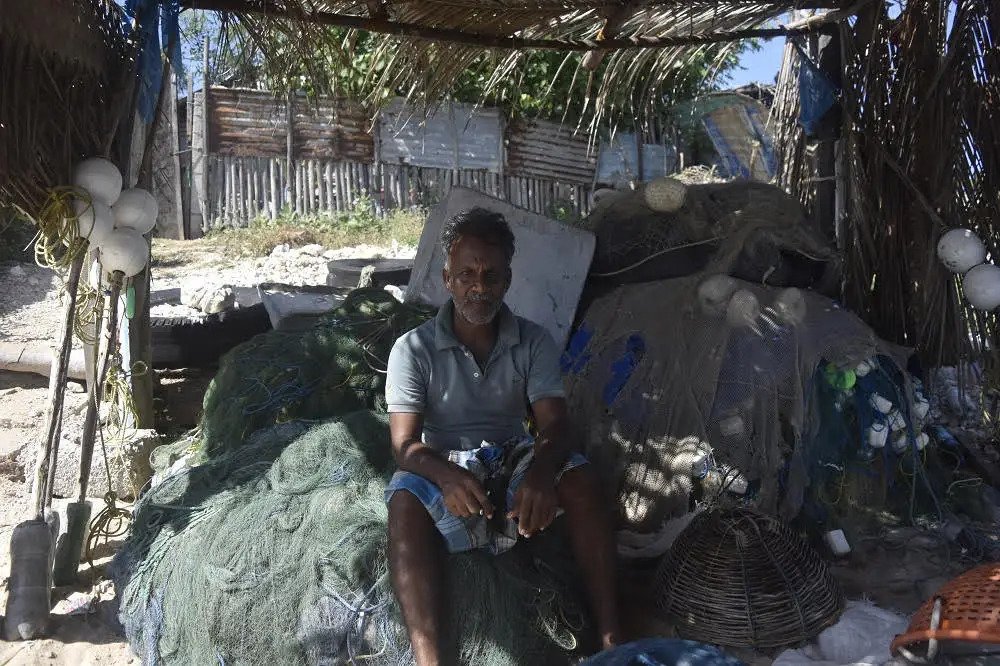
Fishers like Kathiramalai Kamalanathan face a bleak water as Indian vessels continue to fish in Sri Lankan waters / Credit: The Sunday Times.
The youngest journalist involved in the project was Thameenah Razeek (24), a reporter with Ceylon Today, a Colombo-based English publication. “As a news features writer, I was not exposed to investigative reporting. I have not had to rewrite a story pitch, work on multiple drafts or create lists of sources for interviews beforehand,” she said. “The fellowship taught me how to probe a specific issue in a systematic manner and benefit from continuous mentoring to mold the story.”
She says the CIR fellowship helped her learn how to gather and analyze information to ‘uncover’ something in the public interest. “The research element was huge and so was the legwork. It’s been a huge learning experience,” she added, describing the experience as a “career milestone.”
Another fellow, Malaka Rodrigo, is an award- winning environmental journalist who regularly contributes science and environment reports to both local and foreign media outlets. This was the first time he took on an international collaboration to unearth Sri Lanka’s emerging status as an illegal wildlife transit hub. “It was both a challenge and an opportunity for me to try my hand at two international collaborations, ensuring that each story accommodated perspectives from two countries and identified common links in an authentic manner,” he said.
Besides the opportunity to build his skills as a journalist, Rodrigo said the biggest incentive was to discover the impact of in-depth storytelling. “There have been queries for follow-ups on my stories by foreign journalists and global media outlets. I have had public officials seeking my research support to gather more information on wildlife crimes. The stories demanded a response from the authorities, and they could not deny the hard evidence in my reports,” he said.
Through a series of webinars or “GreenPoint discussions”, the EJN-supported project also helped build greater connectivity between the scientific and journalistic communities in Sri Lanka. “We created a way for journalists to connect with researchers, to discuss and debate issues, understand perspectives and learn how to communicate science better,” said Kamal Liyanage, who managed the initiative for CIR.
For their part, the scientific experts, drawn from the fields of climate science, biology, hydrology and ecology, expressed interest in sharing their expertise with journalists to help improve the standards of environmental reporting in Sri Lanka.
To better understand the status of environmental reporting in Sri Lanka, CIR produced a report on how to improve environmental media coverage and journalism standards in the country. This capsule report is expected to be submitted to the Ministerial Consultative Committee on Environment in Sri Lanka’s Parliament shortly.
As part of the initiative, CIR also launched Sri Lanka’s first ever bilingual environmental news portal, The BufferZone, to create awareness on critical environmental issues in both Sinhala and Tamil, offering global knowledge to local audiences through translated media content and original reporting.
“CIR’s effort to produce stories that are under-reported or neglected in Sri Lanka has set an example in environmental reporting in the country,” said Ramesh Bhushal, EJN’s senior South Asia coordinator.
Learn about other initiatives supported by EJN’s Asia-Pacific project here.
Banner image: Elephant calves that were taken from the wild / Credit: Sajeewa Chamikara.
Meta has announced a new, online digital security and safety training course for journalists and human rights defenders.
The free program is created and managed by the International Center for Journalists (ICFJ) in partnership with the Border Center for Journalists and Bloggers (BCJB).
“We are proud to support the launch of this very important program that will teach journalists and human rights defenders best practices on how to stay safe,” said Anjali Kapoor, Director of News Partnerships, Meta Asia Pacific. “This represents Meta’s ongoing commitment to support the safety of journalists and those who defend human rights around the world, the course will equip them with a strong foundation in digital security.
”Journalists and human rights defenders can get the program’s complete details via ICFJ’s website. The curriculum was developed with input from the community and speaking with journalists in the region.
Supported by the Meta Journalism Project, the self-paced 90-minute course will teach journalists and human rights defenders how to protect their digital assets and increase the security of their operations. This will include specific training on:
Laying a strong digital security foundation
Secure social media usage
How to report from difficult situations in a secure fashion
Countering online harassment
“The increasing threat of cyber attacks against journalists and civil society is putting lives in danger and has no bounds,” said Luis Botello, ICFJ’s deputy vice president of global impact and strategy. “This innovative online course on digital security is full of resources, which are a lifeline for journalists and civil society advocates who do essential work providing information and support to their communities.”
ICFJ and BCJB will host a live webinar series beginning later this month where course participants can get additional context and supporting information on how to protect themselves. For additional details, please sign-up for the course.
The program will launch in English first, but will soon be available in other languages including Bahasa Indonesia, Bengali, Filipino, Khmer, Sinhala, Tamil, Thai, Traditional Chinese and Urdu.
The program is a part of our commitment to the Meta Human Rights Defenders Fund and Journalist Safety Initiative.
Recent programs that extend our support for journalists include the Reuters Digital Journalism Foundations course and the Facebook Fundamentals for News that includes training on staying safe across social media and on our platforms. Last year, Meta announced our partnership with the Rory Peck Trust to help freelance journalists globally who face challenging and traumatic events. More details about the program, including the link to sign up to the course is available here and the registration link is here.
மீத்தேன் மூலங்களைப் பற்றிய ஊடக அறிக்கையிடல் காலத்தின் தேவை கருதி மிக அவரசமாக உள்ளது.
காலநிலை விஞ்ஞானிகளின் கூற்றுப்படி, மீத்தேன் உமிழ்வைக் குறைப்பதே காலநிலை மாற்றத்தை எதிர்த்துப் போராடுவதற்கான விரைவாக உள்ள ஒரே வழியாகும். மிக அதிகமான பசுமை இல்ல வாயுக்களில் இரண்டாவதாக உள்ள (கார்பன் டை ஆக்சைடுக்கு- (carbon dioxide) பின்னால்) மீத்தேன் உமிழ்வானது, சடுதியாக அதிகரித்து புதிய உச்சத்தை அடைகிறது.
மீத்தேன் வாயு வெளியீடு தொடர்பான, GIJN இன் முழுமையான வழிகாட்டியின் இந்த சுருக்கமானது, புலனாய்வு ஊடகவியலாளர்களுக்கு மீத்தேன் உமிழ்வுகளின் குறிப்பிட்ட மூலங்களை கண்டறிந்து அதற்கு காரணமான நிறுவனங்களையும் நாடுகளையும் பொறுப்புக்கூற வைக்க உதவும் வகையில் வடிவமைக்கப்பட்டுள்ளது. நாங்கள் அவற்றினை இவ்வாறு விவரிக்கிறோம்:
எங்கள் உதவிக்குறிப்புகள் மற்றும் கருவிகளின் சுருக்கப்பட்ட பதிப்பு பின்வருமாறு:
தரவுகளை விசாசரனை செய்தல்
மீத்தேன் உமிழ்வுகள் வழக்கமாகக் குறைவாகக் கணக்கிடப்படுகின்றன அல்லது கவனிக்கப்படுவதில்லை என்பது தொடர்பில் விஞ்ஞானிகளிடையே ஓர் பரந்த உடன்பாடு உள்ளது. இதுவே அறிக்கையிடலுக்கு தகுதி வாய்ந்த ஒரு முக்கியமான விடயமாக கருதிக்கொள்ள முடியும்.
மீத்தேன் உமிழ்வு பற்றிய பல முதன்மையான மூலங்கள் உள்ளன.
ஒட்டுமொத்த மீத்தேன் உமிழ்வுகளைக் கண்காணித்து வெளியிடும், பாரிஸை தளமாகக் கொண்ட அரசுகளுக்கிடையேயான அமைப்பான
சர்வதேச சக்தி முகாமைத்துவ நிறுவனம் – International Energy Agency (IEA), சமீபத்தில் மீத்தேன் டிராக்கர் 2022-Methane Tracker 2022 அறிக்கையை வெளியிட்டுள்ளது. IEA இன் மீத்தேன் டிராக்கர் தரவுத்தளத்தில் நாடு ரீதியாக தரவுகள் வழங்கப்பட்டிருப்பதுடன், இது உமிழ்வு பற்றிய தகவல் மற்றும் உமிழ்வினை “குறைப்பதற்கான சாத்தியம்” பற்றிய மதிப்பீடுகளையும் கொண்டுள்ளன.
Illustration: Marcelle Louw for GIJN
கதை யோசனைகள்:
உங்கள் நாட்டின் உமிழ்வுகள் என்ன?
அவை எங்கிருந்து வருகின்றன?
அவற்றின் அளவீடுகள் துல்லியமாக உள்ளதா?
காலநிலை மாற்றத்திற்கான ஐக்கிய நாடுகளின் கட்டமைப்பு மாநாட்டிற்கு United Nations Framework Convention for Climate Change (UNFCCC) இணங்க, தேசிய அரசாங்கங்களால் UN காலநிலை மாற்றம் (UN Climate Change) தொடர்பான அலுவலகத்திற்கு தேசிய மீத்தேன் உமிழ்வு தரவு சமர்ப்பிக்கப்படுகிறது.
அபிவிருத்தியடைந்த நாடுகள் தங்கள் பசுமை இல்ல வாயு வெளியேற்றம் பற்றி National Inventory Reports (NIRs) எனப்படும் வருடாந்திர அறிக்கைகளை சமர்ப்பிக்கின்றன. (UNFCCC தளத்தில் தேசிய வருடாந்த சமர்ப்பிப்புகள் 2021 ஐப் பார்க்கவும்). அபிவிருத்தியடைந்து வரும் நாடுகள் தங்கள் இரு வருட புதுப்பிப்பு அறிக்கைகளின் – Biennial Update Reports (BURs) ஒரு பகுதியாக தங்கள் உமிழ்வுத் தரவைச் சமர்ப்பிக்கின்றன.
மீத்தேன் உமிழ்வு அளவீட்டில் ஒரு முக்கியமான பலவீனம் ஏற்படுகிறது, ஏனெனில் ஒவ்வொரு நாடும் தனது மதிப்பீடுகளைச் மேற்கொள்ள வெவ்வேறு முறைகளைப் பயன்படுத்தஅனுமதிக்கப்பட்டிருப்பதால் இது கேள்விக்குரிய தரவுகளை உருவாக்குகின்றது.
அரசாங்கங்களால் சேகரிக்கப்பட்ட மீத்தேன் உமிழ்வு தரவுகளில் உள்ள மற்றொரு அடிப்படையான பிரச்சனை என்னவென்றால், அது உண்மையான அளவீடுகளின் அடிப்படையில் அல்லாது, மதிப்பீடுகள் மற்றும் சமன்பாடுகளை அடிப்படையாகக் கொண்டது. இந்தப் பிரச்சனைக்கு சில நாடுகள் தேவையான சட்டங்களைக் கூட இயற்றி உள்ளன.
Illustration: Marcelle Louw for GIJN
மீத்தேன் கசிவு குறித்து ஆராய்தல்
மீத்தேன் உமிழ்வுகளின் மூலங்கள் – குறிப்பாக இயற்கை எரிவாயு மற்றும் மசகு எண்ணெய் உற்பத்தி போன்றவை முழுமையாக பகிரங்கப்படுத்தலாம்.
இதற்கான மூலங்களை கண்டறிதலுக்கு அகச்சிவப்பு கேமராக்கள் (infrared cameras) மற்றும் செயற்கைக்கோள்கள் தேவை, அதாவது இச்செயன்முறைக்கு நிபுணர்களுடன் ஒத்துழைப்பு மிகவும் அவசியமாகும்.
GIJN அகச்சிவப்பு கேமராக்கள் (infrared cameras) கொண்ட இரண்டு சுற்றுச்சூழல் தொடர்பாக இயங்கும் குழுக்களை அடையாளம் கண்டுள்ளது, அவை ஊடகவியலாளர்களுடன் இணைந்து மீத்தேன் உமிழ்ப்பான்கள் குறித்து நில மட்டத்தில் புலனாய்வு நடத்த தயாராக உள்ளன.
கதை யோசனைகள்:
கசிவுகளைக் கண்டறியக்கூடிய அகச்சிவப்பு கேமராக்களைக் கொண்ட குழுக்கள் அல்லது விஞ்ஞானிகளுடன் இணைந்து பணியாற்றுங்கள்.
வளர்ந்து வரும் எண்ணிக்கையிலான மூலங்களில் இருந்து செயற்கைக்கோள் படங்களைப் பெற முயலுங்கள்.
Clean Air Task Force (CATF) ஐரோப்பா முழுவதிலும் உள்ள எண்ணெய் மற்றும் எரிவாயு நிலையங்களில் இருந்து வெளியேறும் உமிழ்வை ஆவணப்படுத்தியுள்ளதுடன் பிற பகுதிகளுக்கும் விரிவுபடுத்த எதிர்பார்க்கிறது. அத்திட்டம் தொடர்பான YouTube விளக்கமும்அகச்சிவப்பு (OGI) தொழில்நுட்பத்தைப் பயன்படுத்துவதற்கான விளக்கத்தினை தொடுப்புக்களில் காணலாம்.
அகச்சிவப்பு கேமரா திறனைக்கொண்டிருப்பதுடன் ஊடகவியலாளர்களுடன் ஒத்துழைக்க விருப்பம் கொண்ட மற்றொரு NGO Earthworks ஆகும். ஆர்வமுள்ள ஊடகவியலாளர்கள் ஜஸ்டின் வாஸர் (Justin Wasser) அல்லது ஜோஷ் ஐசன்ஃபீல்டை (Josh Eisenfeld) அணுக வேண்டும்.
செயற்கைக்கோள் படங்களின் அடிப்படையில் உமிழ்வு தகவல்களைப் பெற வணிக ரீதியான மூலங்கள் உள்ளன. இலவசமாக மற்றும் தள்ளுபடிகளை வழங்கக்கூடிய பல நிறுவனங்கள் வரையறுக்கப்பட்ட தகவல்களை வழங்குகின்றன.
Geofinancial Analytics என்பது புதிய MethaneScan Data Lake உள்ளிட்ட பல தயாரிப்புகளைக் கொண்ட ஓர் அமெரிக்க நிறுவனமாகும், இது வட அமெரிக்காவை மையமாகக் கொண்டு 100,000 சக்தி உற்பத்தியாளர்களுக்கு மீத்தேன் உமிழ்வு மதிப்பீடுகளை வழங்குகிறது. இதன் தரவுத்தொகுப்புகள் மற்றும் வரைபடங்கள் 50% தள்ளுபடியில் (மாதத்திற்குUSD1,000) லாப நோக்கமற்ற நிறுவனங்களுக்கும், தமது அறிக்கையிடலுக்காக நிதி உதவி தேவைப்படும் ஊடகவியலாலர்களுக்கும் கிடைக்க கூடியதாக உள்ளன.
Kayrros, ஒரு தரவு பகுப்பாய்வு நிறுவனம், எப்போதாவது ஊடக வெளியீடுகளை வெளியிடுகிறது அல்லது தனது கண்டுபிடிப்புகள் குறித்து ஊடகவியலாளர்களின் கவனத்திற்கு கொண்டுவருகிறது. ப்ளூம்பெர்க் (Bloomberg) ஊடக நிறுவனமானது கேய்ரோஸ் தரவுத்தளத்தை ஆராய ஓர் ஒப்பந்ததை மேற்கொண்டது, இவ்வசதி மற்றவர்களின் பாவனைக்கும் திறந்திருக்கும் என்று நிறுவனத்தின் நிர்வாகி ஒருவர் கூறினார்.
GHGSat தளம் கூட சில சமயங்களில் அதன் செயற்கைக்கோள்களால் கண்டறியப்பட்ட மீத்தேன் உமிழ்வு பற்றிய தகவல்களையும் வெளியிடுகிறது.
ஐரோப்பிய விண்வெளி நிறுவனம் (European Space Agency) மற்றும் விண்வெளி ஆராய்ச்சிக்கான நெதர்லாந்து நிறுவனமான SRON, ஆகியவற்றிலிருந்தும் அவ்வப்போது உமிழ்வு பற்றிய கண்டுபிடிப்புகள் வெளிவருகின்றன.
பல புதிய மூலங்கள், தகவல்களைப் பகிர்வதற்கான ஆணையுடன் வெளிவரத் தயாராக இருக்கின்ற போதிலும் 2023 வரை அவை வெளிவரப்போவதில்லை.
Carbon Mapper என்பது அமெரிக்க விண்வெளி நிறுவனமான நாசாவால் உருவாக்கப்பட்ட தொழில்நுட்பத்தையும் அதன் சொந்த மீத்தேன் உணர்திறன் கொண்ட செயற்கைக்கோள்களின் தரவையும் பயன்படுத்துவதாக உறுதியளிக்கும் ஒரு அமெரிக்க இலாப நோக்கற்ற கூட்டமைப்பு ஆகும், அவை 2023 இல் விண்ணிற்கு ஏவப்பட உள்ளன.
MethaneSAT சுற்றுச்சூழல் பாதுகாப்பு நிதியத்தின் -Environmental Defense Fund (EDF) துணை நிறுவனத்தால் உருவாக்கப்பட்டது ஓர் நிறுவனமாகும். இது 2022 பிற்பகுதியில் ஆரம்பிக்க திட்டமிடப்பட்டுள்ளது.
சர்வதேச மீத்தேன் உமிழ்வு ஆய்வகம் –International Methane Emissions Observatory (IMEO)நிறுவனங்களின் தரவுகள், செயற்கைக்கோள் தொழில்நுட்பம் மற்றும் அறிவியல் ஆய்வுகள் ஆகியவற்றைப் பயன்படுத்தி உமிழ்வைக் கண்காணிக்க ஐரோப்பிய ஒன்றியம் மற்றும் UN சுற்றுச்சூழல் திட்டத்தால் நிறுவப்பட்டது.
ஒரு அமெரிக்கத் திட்டமான Project Astra என்பது, “மசகு எண்ணெய் மற்றும் எரிவாயு உற்பத்திப் பகுதி முழுவதும் [மீத்தேன்] உமிழ்வைக் கண்காணிக்கும்” வலையமைப்பை நிலத்தடி உணரிகளின் மூலம் பயன்படுத்த திட்டமிட்டுள்ளது.
Global Gas Flaring Explorer என்பது, உலக வங்கியின் Global Gas Flaring Reduction Partnership (GGFR) 2021 அறிக்கையின்படி “புதிய மற்றும் மேம்படுத்தப்பட்ட இணைய அடிப்படையிலான பயன்பாடாகும், இது உலகளாவிய எரிவாயு எரியும் தரவை வரைபடமாக்குவதோடு மட்டுமில்லாது 2022 இல் அனைவரும் பயன்படுத்தக்கூடியதாக இருக்கும்” என்று கூறுகிறது.
உமிழ்வுகள் பற்றிய தகவல்களுக்கு படங்கள் மட்டுமே சாத்தியமான மூலங்கள் மட்டும் அல்ல. இதோ இது தொடர்பில் வேறு சில குறிப்புகள்:
கட்டுப்பாட்டாளர்கள் வைத்திருக்கும் பொது ஆவணங்களைத் தேடுங்கள்,
இந்த பகுதியில் பணிபுரியும் உள்ளூர் விஞ்ஞானிகள் மற்றும் தன்னார்வ தொண்டு நிறுவனங்களுடன் நட்புறவை வளர்த்துக் கொள்ளுங்கள், ஏனெனில் இது தொடர்பில் நிறைய ஆராய்ச்சிகள் நடந்து வருகின்றன
மசகு எண்ணெய் மற்றும் எரிவாயு வசதிகள் மற்றும் பிற சாத்தியமான உமிழ்வு தளங்களில் பணிபுரியும் தொழிலாளர்களுடன் பேசுங்கள்.
தற்போது கவனத்திற்கு உள்ளாகியிருக்கும் உமிழ்வுகளின் மூலங்கள் தொடர்பாக கருத்துகளைத் தேடுவது வழமையான ஊடக செயன்முறையாக இருக்கின்ற போதிலும் , சில சமயங்களில் அவற்றிற்கான பதில்கள் புரிந்துகொள்ள முடியாததாகவும், ஊடகவியலாளர்களை மிரட்டுவதும் போலும் இருக்கும்.
உமிழ்வுகள் சட்டப்பூர்வமானவை அல்லது இயல்பான இயக்க நடைமுறைகள் என்று அதற்கு பொறுப்பானவர்கள் கூறலாம். இந்த அறிக்கைகள் சரியாக இருக்கலாம் என்பதுடன் அவற்றை சரிபார்க்கவும் கடினமாக இருக்கலாம். ஆகவேதான் உள்ளூர், தேசிய அரசாங்க கட்டுப்பாட்டாளர்கள் மற்றும் அறிவாற்றல் கொண்ட அரசு சாரா நிறுவனங்களின் பக்கம் கவனத்தை திருப்புவது மிகவும் அவசியம் ஆகும். இது தொடர்பான புலனாய்வில் அருகிலுள்ள குடியிருப்பாளர்கள், தொழில் வல்லுநர்கள், மேலும் ஊழியர்கள் அல்லது தற்போது விசாரிக்கப்படும் நிறுவனத்தின் முன்னாள் ஊழியர்கள் மற்ற சாத்தியமான மூலங்களாக இருக்கக் கூடும்.
கார்ப்பரேட் நிறுவனங்களின் உமிழ்வுகளை ஆய்வு செய்தல் – மறக்கப்பட்ட வாக்குறுதிகள்
பல நிறுவனங்கள் தங்கள் மீத்தேன் உமிழ்வுகள் பற்றி வெளிப்படையாக இல்லை, ஆனால் அவை அது தொடர்பான மேலதிக தகவல்களை வெளியிடுவதற்கும் குறைவாக உமிழ்வு வெளியேற்றத்தினை மேற்கொள்ளவும் அதிக அழுத்தத்திற்கு ஆளாகி உள்ளன. அதிகரித்து வரும் இவ்வாறான எதிர்பார்ப்புகள் வர்த்தக துறை சார் ஊடகவியலாளர்கள் உட்பட பொதுவான ஊடகவியலாளர்கள் மேலும் கேள்விகளைக் கேட்கத் தூண்ட வேண்டும்.
மீத்தேன் உமிழ்வுகளில் மூன்றில் ஒரு பங்கிற்கு காரணமான மசகு எண்ணெய் மற்றும் எரிவாயு தொழில், கவனம் செலுத்த வேண்டிய மிக முக்கியமான ஓர் துறையாகும். அனைத்தும் அல்லாது பல நிறுவனங்கள் தங்கள் உமிழ்வுகள் தொடர்பில் அறிக்கைகளை வெளியிடுகின்றன ஆனால் அவை அறிக்கையிடும் முறைகள் சில சமயங்களில் சிக்கலாக இருக்கலாம்.
Illustration: Marcelle Louw for GIJN
கதை யோசனைகள்:
முக்கிய தொழில்களில் கவனம் செலுத்துங்கள்.
அறியப்பட்ட அல்லது மதிப்பிடப்பட்ட உமிழ்வு நிலைகள் பற்றி கேளுங்கள்.
குறிப்பிட்ட உமிழ்வு தொடர்பான இலக்குகள் மற்றும் தணிப்பு முயற்சிகள் பற்றி கேளுங்கள்.
அளவீட்டின் சிக்கலானது விசாரணைக்கு எதிராக ஒரு கவசத்தை உருவாக்குகிறது, ஆனால் ஊடுருவ முடியாதது அல்ல. அதை ஊடுருவ, காலநிலை மாற்றம் குறித்த கல்விசார் மற்றும் தன்னார்வ தொண்டு நிறுவன நிபுணர்களையும், கார்ப்பரேட் நிறுவன கண்காணிப்பாளர்கள் மற்றும் முதலீட்டாளர்களிடம் கலந்தாலோசிப்பது சிறந்தது. இது தொடர்பில் நிறுவனங்களிடம் கூட விளக்கம் கேட்க முடியும்.
மீத்தேன் பற்றிய பெரு நிறுவனங்களினால் அவை இருக்கும் இடம் தொடர்பாக வெளியிடப்படும் அறிக்கைகள் பொதுவாக “நிலைத்தன்மை”/ sustainability” என்ற தலையங்கத்தின் கீழ் அந்நிறுவனங்களின் இணையதளங்களில் கிடைக்கின்றன. சில கார்ப்பரேட் நிறுவன அறிக்கைகள், ஒருங்கிணைக்கப்பட்ட வடிவத்தில், இலாப நோக்கற்ற அமைப்பான CDP தளத்தில் கிடைக்கின்றன.
உமிழ்வின் ஒரு மூலம் எரியக்கூடிய கழிவு வாயுக்களை எரிப்பதாகும்.
உலக வங்கியின் Zero Routine Flaring (ZRF) முன்முயற்சி அரசாங்கங்கள் மற்றும் எண்ணெய் நிறுவனங்களை தங்கள் கழிவு வாயு எரிப்பு பற்றி பகிரங்கமாக தெரிவிக்க பட்டியலிடுகிறது. நாடுகள் மற்றும் பெருநிறுவனங்களால் சுயமாக அறிக்கையிடப்பட்ட எரியும் தரவு ZRF இணையதளத்தில் வெளியிடப்பட்டுள்ளது.
எண்ணெய் மற்றும் எரிவாயு துறையில் உமிழ்வுகள் பற்றிய சிறந்த நிறுவன அறிக்கையிடலை எளிதாக்க பல்வேறு முயற்சிகள் நடந்து வருகின்றன.
The Oil and Gas Methane Partnership (OGMP) என்பது 74 பெரிய கார்பரேட் நிறுவனங்களை உறுப்பினர்களாகக் கொண்ட ஒரு முயற்சியாகும், இது உலகின் எண்ணெய் மற்றும் எரிவாயு உற்பத்தியில் 30% ஆகும். பல்வேறு UN நிறுவனங்களும் EDF அமைப்பும் இதில் ஈடுபட்டுள்ளன. இவற்றின் மூலம் பெறப்பட்ட தரவுகளின் முதல் அறிக்கை நவம்பர் 2021 இல் வெளியிடப்பட்டது.
கார்ப்பரேட் நிறுவனங்களின் மீத்தேன் உமிழ்வுகளைப் பற்றி அறிக்கையிடும் போது, பின்வரும் கேள்விகள் புலனாய்வை தொடங்குவதற்கு ஒரு நல்ல ஆரம்பமாக இருக்கும்:
உங்கள் மீத்தேன் உமிழ்வு அளவுகள் என்ன?
அவை உயர்கின்றனவா அல்லது வீழ்ச்சியடைகின்றன, எவ்வளவில் மாற்றம் நிகழ்கிறது?
உங்கள் புள்ளிவிவரங்கள் எவ்வாறு கணக்கிடப்படுகின்றன?
கார்ப்பரேட் நிறுவனங்களின் செயல்பாடுகள் குறிப்பிட்ட தரநிலைகளை கொண்டிருக்கின்றன என்பதனை சான்றளிக்க பல சரிபார்ப்பு முறைகளும் வடிவமைக்கப்பட்டுள்ளன. அத்தகைய சரிபார்ப்பு முயற்சிகளில் அவர்கள் சேருவார்களா என்பது நியாயமான ஓர் கேள்வி. மீத்தேன் ஒழுங்குமுறை தொடர்பான முன்மொழியப்பட்ட அரசாங்கக் கொள்கைகள் குறித்து நிறுவனங்களின் நிலைப்பாடுகளைப் பற்றிக் கேட்பது மேலும் பல விடயங்களை வெளிப்படுத்தும்.
மீத்தேன் உமிழ்வைக் குறைப்பதாக வாக்குறுதிகளை வழங்கும் பெருநிறுவனங்களின் எண்ணிக்கையில் குறிப்பிடத்தக்க முன்னேற்றம் ஏற்பட்டுள்ளது. எவ்வாறாயினும், அவர்களின் உறுதிமொழிகளின் விவரங்கள் அவ்வளவு தெளிவாக இல்லாமல் இருக்கலாம், மேலும் அவர்களின் உறுதிமொழிகளின் வெளிப்படைத்தன்மை மிகவும் விவாதத்திற்குரியது.
உறுதிமொழி குறித்த தகவல்கள் மற்றும் வழிமுறைகளைப் பார்க்கவும். சில பரிந்துரைகள் கீழே உள்ளடக்கப்படுள்ளன:
குறிப்பிடப்பட்ட குறைப்பு இலக்குகள் நீண்ட காலங்களுக்கு, உதாரணமாக 10 அல்லது 20 வருடங்களுக்கு இருப்பதனால் குறுகிய கால மற்றும் இடைநிலை கால இலக்குகளைப் பற்றி கேட்கலாம்.
எப்பொழுதும் அதிகம் பேசப்படாத விடயமான, குறித்த திட்டம் எவ்வாறு சரியாக செயல்படுத்தப்படும் என்பதைப் பற்றி விசாரிக்கவும்.
ஆரம்ப இலக்குகளாக மிகப்பெரிய மீத்தேன் உமிழ்ப்பான்களைத் தேர்ந்தெடுப்பது அர்த்தமுள்ளதாக இருக்கிறது. தேசிய அளவில் அரசுக்கு சொந்தமானதாக இருக்கும் பெட்ரோலிய நிறுவனங்கள் குறித்து கவனத்தை செலுத்துவது நம்பிக்கைக்குரியதாக இருக்கும்.
மீத்தேன் வெளியேற்றம் பிரித்தெடுக்கும் இடத்தில் மட்டும் நிகழ்வதில்லை. விநியோகச் சங்கிலி முழுவதும் உமிழ்வுகள் மீது அதிக கவனம் செலுத்தப்படுகிறது.
மீத்தேன் உமிழ்வானது, விவசாயம், விமானம், கடல்வழி கப்பல் போக்குவரத்து மற்றும் பிற துறைகளில் இருந்து உருவாகின்றது.
குறிப்பாக விவசாய உற்பத்தியில் மீத்தேன் முக்கிய மூலமாக உள்ளது, முக்கியமாக நெல் சாகுபடி (வெள்ளம் நிறைந்த நெல்களில் பாக்டீரியாவால் வெளியிடப்படுகிறது) மற்றும் கால்நடை வளர்ப்பு போன்றவை பிரதான காரணிகளாகும். பண்ணை மட்டத்தில் மட்டுமல்ல, மூலப்பொருட்களைப் பயன்படுத்தும் பேரு நிறுவனங்களிடமிருந்தும், என்ன மாதிரியான தணிப்பு நடவடிக்கைகளை மேற்கொள்ள முடியும் என்ற கேள்விகள் எழுப்பப்படுகின்றன.
தீர்வுகள் பற்றிய சமீபத்திய ஆராய்ச்சியைப் பின்பற்றுவது மீத்தேன் பற்றிய அறிக்கையிடலுக்கு மிகவும் அவசியமான இணைப்பாக அமையும். புதிய யோசனைகள் விரைவான வேகத்தில் சோதிக்கப்படுகின்றன. இது தொடர்பில் அறிவியலைப் பின்பற்றுவது சரியான நேரத்தில் கேள்விகளை எழுப்பச் செய்யும்.
Illustration: Marcelle Louw for GIJN
கதை யோசனைகள்:
தேசிய குறைப்பு நிலைகள் எப்படி, ஏன் தேர்ந்தெடுக்கப்பட்டன?
இலக்குகள் எவ்வாறு நிறைவேற்றப்பதுவதுடன் அவை சரிபார்க்கப்படும்?
தனியான தேசிய அரசாங்கங்களால் சமர்ப்பிக்கப்பட்ட UN இன் Nationally Determined Contribution (NDCs) அறிக்கைகளில் இதே போன்ற உமிழ்வு உறுதிப்பாடுகள் பற்றிய தகவல்களைக் காணலாம். NDCகள் UN இன் NDC பதிவேட்டில்- NDC Registry வெளியிடப்படுகின்றன. UNFCCCகூட NDC தொகுப்பு அறிக்கைகளையும் தயாரிக்கிறது. (அக்டோபர் 2021 பதிப்பை இங்கே காணலாம்.)
சில நாடுகள் தங்களது தேசிய உமிழ்வு தரவுகளை இந்த அறிக்கைகளில் வெளியிடுகின்றன.
உலகளாவிய மீத்தேன் உறுதிமொழியில் (Global Methane Pledge) கையொப்பமிட்ட 111 நாடுகள் 2020 ஆம் ஆண்டிலிருந்து 2030 ஆம் ஆண்டிற்குள் 30% குறைப்பு என்ற உலகளாவிய இலக்கை ஒப்புக்கொண்டுள்ளன. இருப்பினும், இந்த உறுதிமொழியில் கையெழுத்திடுவது தனிப்பட்ட நாடுகளை குறிப்பிட்ட இலக்குகளுடன் பிணைக்காது.
இத்திட்டங்களின் விமர்சனங்களுக்கான சிறந்த மூலங்கள் உள்ளூர்/பிராந்திய சுற்றுச்சூழல் குழுக்கள், விஞ்ஞானிகள், வணிக சமூகம் மற்றும் அரசியல் பிரமுகர்களாக இருக்கலாம்.
உமிழ்வை அளவிடுவது ஒரு முக்கியமான தொடக்க புள்ளியாக இருப்பதால், உமிழ்வை மதிப்பிடுவதற்கு பயன்படுத்தப்படும் முறையை ஊடகவியலாளர்கள் ஆராயலாம்.
மாகாணங்கள் மற்றும் நகரங்கள் போன்ற துணை-தேசிய அதிகார வரம்புக்குட்பட்ட கட்டமைப்புக்களும் நிகர பூஜ்ஜிய உமிழ்வு உறுதிமொழியை மேற்கொண்டுள்ளன.
“மீத்தேன் வாயு உமிழ்வு ஒரு பெரிய பிரச்சனை என்பதில் எந்த சந்தேகமும் இல்லை, இது நமது கிரகத்திற்கு ஒரு முக்கியமான தருணத்தில் காலநிலை மாற்றத்தை மேலும் துரிதப்படுத்துகிறது” என்று தற்போது மேரிலாந்து பல்கலைக்கழகத்தின் பட்டதாரி பள்ளியின் இயக்குநரான ரஃபேல் லோரெண்டே(Rafael Lorente) கூறினார். “ஊடகவியலாளர்களின் பிரச்சனை அந்தக் கதையை அழுத்தமான முறையில் சொல்வது.”
டோபி மெக்கின்டோஷ் (Toby McIntosh) GIJN இன் வள மையத்தின் மூத்த ஆலோசகர் ஆவார். அவர் வாஷிங்டனில் ப்ளூம்பெர்க் (Bloomberg) BNA உடன் 39 ஆண்டுகள் இருந்தார். அவர் FreedomInfo.org இன் முன்னாள் ஆசிரியர் (2010-2017) ஆவார், அங்கு அவர் உலகளவில் FOI கொள்கைகளைப் பற்றி எழுதினார், மேலும் FOI வழக்கறிஞர்களின் சர்வதேச வலையமைப்பான FOIANet குழுவிலும் பணியாற்றுகிறார்.
Al comparar casinos en línea, teniendo en cuenta la variedad de juegos, pensando en un uso regular, una plataforma que puede revisarse de forma independiente es chicken subway juego , mientras una revisión independiente también puede abarcar la experiencia móvil y la navegación, junto con las reglas de retirada y los límites antes de registrarse.
Vor der Entscheidung, welche Seite näher geprüft werden soll, beim Vergleich von Navigation und Bedienkomfort, als Teil eines unabhängigen Vergleichs, eine Option für den direkten Vergleich ist fugu casino 5 , separat kann man auch betrachten die aktuellen Aktionsbedingungen, zusammen mit den wichtigsten Bedienungsdetails ohne die endgültige Wahl zu überstürzen.
Før man beslutter hvilken side der bør undersøges nærmere, ved vurdering af mobil brug, fra et praktisk brugerperspektiv, en platform der kan vurderes uafhængigt er https://spinlander-casino.dk/ , mens en uafhængig vurdering også kan omfatte registrerings- og verifikationsprocessen, med kundesupportens tilgængelighed i tankerne uden at forhaste den endelige beslutning.
Dla użytkowników zestawiających kilka platform jednocześnie, z uwzględnieniem metod wpłat i wypłat, na potrzeby wstępnej oceny, jednym z punktów odniesienia może być kasyno na prawdziwe pieniadze jeśli jednocześnie ocenia się najważniejsze warunki korzystania z serwisu, wraz z zasadami dotyczącymi wypłat w ramach szerszego porównania podobnych serwisów.