here is a reminder of some of the Meta Journalism Project-supported programs you can sign up for to improve your newsroom’s digital skills or assist with journalist safety. We also hope to inspire you with some of the most innovative and impactful success stories that news organizations had over the past year…
SUPPORTING JOURNALISM IN THE REGION
Image: Meta
CIR Facebook Foundation Training Program
Last year, we partnered with the Centre for Investigative Journalism to provide complimentary training to Sri Lankan journalist-trainers. Participants received training on the basic tools available on Facebook, including how to use Facebook Live to file video stories. The program offers modules on online safety, Page administration, and best practices for showcasing their reporting on the platform. Learn more about the CIR Facebook Foundation Training Program and how some journalists are now inspired to establish their own media business.
Introduction to Digital Journalism
The free e-learning Reuters Digital Journalism Course aims to support efforts to build stronger foundations in digital reporting and editing with modules that concentrate on digital news gathering, verification, social media publishing and wellness and resilience training.
Human Rights Defender Fund and Journalist Safety Initiative for Asia Pacific
The Human Rights Defender Fund and Journalist Safety Initiative is designed to support individuals who are targets of harassment, persecution and/or prosecution because of their activities in support of human rights. This is part of the commitment we made to protect human rights defenders and support for journalists, which includes a new online learning program with the International Center for Journalists and online safety
resources specifically for at-risk journalists.
The Rory Peck Trust Resilience Program
Freelance journalists often face challenges accessing support without the safety net of an organization behind them. To aid this critical cohort, we announced a partnership with the Rory Peck Trust to launch the Resilience Program for freelance journalists.
Meta Journalism Project Global Accelerator Program
Our global Accelerator program works with local publishers as they build sustainable futures. Since 2018, we’ve helped generate almost $75M in customer lifetime value, with almost 365,000 new paying supporters and more than 3.8M new registered audience members for roughly 331 participating newsrooms. Read about the Accelerators and other great newsroom case studies on the Meta Journalism Project website.
Case studies: 2021 Best Practices from Our Partners
Learn from our partners across the region on how to optimise our tools and products for audience and revenue
January 26, 2022, Sri Lanka: “CitizensConnect,” a cutting-edge mobile journalism initiative (MOJO) by the Center for Investigative Reporting (CIR), is looking to expand its pool of citizen journalists to develop stories using mobile and digital technology.
Interested individuals across the island can now become a part of the CitizensConnect initiative by registering through CIR’s official website: www.cir.lk. The stories generated in Sinhala and Tamil under the initiative will be published on the CitizensConnect website – to be launched in February 2022.
The program is designed to empower those interested in becoming impactful digital storytellers through training and upskilling opportunities conducted by media veterans. It is supported by the International Research & Exchanges Board (IREX) and the U.S. Government’s development agency – the United States Agency for International Development (USAID), whose mission is to increase Sri Lankans’ demand for and access to balanced, reliable, and objective news and information.
“CitizensConnect offers Sri Lanka’s digital journalists an opportunity to develop high-quality MoJo stories that fail to capture mainstream media attention. The platform is a space for citizen journalists to grow into digital storytellers,” said Dilrukshi Handunnetti, CIR’s Executive Director.
The program will bring together over 400 individuals, receiving training on the fundamentals of MoJo, ethics, and media law. Out of this, a select cohort of 100 will produce over 600 pieces of high-quality, mobile-based content in Sinhala and Tamil, prioritizing common issues faced by local communities.
The program was officially launched in December 2021 and has already conducted orientation sessions for over 100 journalists across the country, many of whom are now producing digital-format stories in their communities.
Jean MacKenzie, Chief of Party of IREX’s Media Empowerment for a Democratic Sri Lanka (MEND) project, was similarly enthusiastic. “We see CitizensConnect as a way of shedding light on issues and problems that often fall under the radar,” she said. “Ordinary citizens armed with a mobile phone, some fundamental training in journalism and boundless enthusiasm for their communities can work wonders.”
The island nation of Sri Lanka is a biodiversity hotspot in the Indian Ocean. Yet, in recent decades, it has experienced ongoing environmental degradation. In 2021 alone, news stories told of a massive chemical spill in its near-shore waters, illegal fishing conflicts just off the coast of Jaffna and hundreds of incidents of deadly human-elephant conflict.
Emerging from nearly three decades of civil war, Sri Lanka has yet to fully assess the threats to its environment. Many concerns have gone either under-reported or overlooked, resulting in information and knowledge gaps that must be addressed.
“Known for its outstanding natural resources, rich biodiversity and diverse landscapes, Sri Lanka is unfortunately now facing severe environmental problems as a result of deforestation, pollution, overdevelopment and inadequate environmental governance. People in Sri Lanka need to know more about these problems, what cause them, how their lives would be affected, and most importantly what needs to be done to minimize the impacts. ,” said Kok Eng Amy Sim, Senior Asia Program Manager, EJN.
To do just that, EJN specifically targeted Sri Lankan journalists to support the production of investigative and/or in-depth environmental stories that expose threats posed by human activities and corruption; highlight the impacts of climate change on communities, especially marginalized and Indigenous groups; and amplify existing good practices that mitigate environmental destruction.
Here’s the list of journalists who received story grants:
Grantees will report on topics including illegal sand mining, the environmental damage wrought by mega-infrastructure projects such as dams and ports, the over-exploitation of ilmenite, the burgeoning sea cucumber trade, and the impacts of climate change-induced soil salinity on paddy cultivation, among others.
They will produce stories in English, Sinhala and Tamil with support from mentors at Internews Sri Lanka and EJN.
These grants were awarded as part of EJN’s Asia-Pacific project, carried out with generous support from Sida. Look out for further updates on our website and social media.
Banner image: Elephants at the Elephant Orphanage near Kandy take their daily swim / Credit: McKay Savage via Flickr.
We are delighted to invite you and other changemakers to the Youth Community Leadership Initiative (YCLI), the flagship youth and community empowerment initiative co-organized by the National Youth Services Council (NYSC), United Nations Volunteers (UNV), World Health Organization (WHO) and United Nations Development Programme (UNDP) in Sri Lanka.
YCLI is a 12-month fully-funded leadership programme, for young people to enhance leadership skills and engage their communities to collectively contribute towards sustainable development in Sri Lanka. The programme is equipped with residential workshops, personal development plans, community action projects and other policy-level engagements that are intended to provide aspiring youth with competencies for building sustainable, just and peaceful communities through volunteer action.
If you are a young person with a dedicated interest to lead positive change, don’t miss out on this opportunity!
தேசிய இளைஞர் சேவைகள் மன்றம்(NYSC), ஐக்கிய நாடுகள் தன்னார்வலர்கள்(UNV), உலக சுகாதார அமைப்பு (WHO), ஐக்கிய நாடுகள் அபிவிருத்தி செயற்திட்டம் (UNDP) என்பன கூட்டாக இணைந்து, இலங்கையில் முதன்மையான இளைஞர் மற்றும் சமூக வலுவூட்டல் முன்னெடுப்பாக ஏற்பாடு செய்துள்ள “இளைஞர் சமூக தலைமைத்துவ முன்னெடுப்பு” க்கு உங்களையும் அழைப்பதில் மகிழ்ச்சியடைகிறோம்.
இளைஞர் சமூக தலைமைத்துவ முன்னெடுப்பு என்பது 12 மாதங்கள் கொண்ட முழுமையான நிதியுதவியுடன் கூடிய தலைமைத்துவ நிகழ்ச்சித்திட்டமாகும். இது, இளைஞர்களின் தலைமைத்துவ திறன்களை மேம்படுத்தி அவர்களின் சமூகத்தினை ஈடுபடுத்துவதனூடாக இலங்கையில் நீடித்து நிலைக்கும் அபிவிருத்திக்காக ஒன்றிணைந்த ஒத்துழைப்பை பெற்றுக்கொள்வதற்கானதாகும். இந் நிகழ்ச்சித்திட்டமானது வதிவிட செயலமர்வுகள், சுயவிருத்தி திட்டங்கள், சமூக செயல்திட்டங்கள் மற்றும் கொள்கைசார் பங்களிப்புகள் என்பனவற்றை உள்ளடக்கிய செயற்பாடுகள் மூலமாக நீடித்து நிலைக்கக்கூடிய, நியாயமான, சமாதானமான சமூகமொன்றை, தன்னார்வ செயற்பாடுகளினூடாக கட்டியெழுப்புவதற்கான தகுதியை, ஆர்வமுள்ள இளைஞர்களுக்கு விருத்தி செய்வதை நோக்கமாக கொண்டுள்ளது.
நீங்களும் விரும்பத்தக்க மாற்றத்திற்காக தலைமைத்துவம் வழங்கக்கூடிய இளம் நபராக இருப்பின் இவ் வாய்ப்பை தவற விட்டு விடாதீர்கள்!
undertake general admin and all finance related tasks linked to programs and institutional budgets.
Seamless maintenance of program and accounting records, generation of monthly financial forecasts, filing of financial documents, preparation of payment vouchers, collection of supporting documents, timely payments, attend to banking activities, general ledger maintenance, journal entries and accounts reconciliations.
Assist in grant management, preparation of organizational budgets and annual auditing process.
Preparation of letters, notices, meeting minutes.
We are looking for:
Degree/ Diploma or similar academic/ professional qualifications on accounting and finance.
At least 2 years’ experience in related field. Previous experience in the development sector will be an added advantage.
Sound conceptual and communication skills, interpersonal skills, ability to work independently, teamwork, meeting of deadlines.
Proficient in computer skills including MS Office packages and QuickBooks.
CIR is an equal opportunity employer. Selected candidates will be paid competitive remuneration.
Send in your CVs to hr@cir.lk mentioning the post applied for in the subject line on or before 22 January 2022.
Finance Uncovered is an independent non-profit journalism organisation set up to make important follow-the-money stories happen around the world. Through our training programme, we have improved the financial investigation skills of over 1,000 journalists and activists in more than 90 countries. We also help our alumni network — journalists who have completed our training — and the organisations they work for pursue financial leads on their own stories across all kinds of subjects, including human and labour rights, and climate change. In some cases, we collaborate further, publishing joint investigations in tandem with partner media outlets. In recent years, FU has worked on major collaborative projects, including GuptaLeaks, LuandaLeaks and Pandora Papers. Most staff work out of FU’s offices in London, while one reporter works remotely from Nairobi, Kenya.
The Role
A vacancy has arisen for an experienced reporter as a full-time member of our editorial team, which has plans to expand. Working closely with our Investigations Editor Simon Bowers, you will develop a strong relationship with members of FU’s alumni network, collaborating with them on investigative reporting assignments. Some collaborations will start from an idea proposed by a course alumnus, others will emerge from ideas pitched to our media partners by the FU editorial team. You will also take an active role in FU’s training work, bringing practical experience to the learning process.
You will ideally be based in London, but remote working from anywhere in the world is also possible.
What we are looking for:
A person with experience relevant to in-depth, cross-border journalistic investigations that have a strong financial component. (This might be familiarity with financial documents, but could also be language skills, OSINT research experience, data expertise, etc.)
A lateral thinker, able to identify, evidence and deliver public interest journalism.
An ability to write in English about complex investigations in a clear, engaging and accessible way.
A team-player, prepared to work collaboratively with media outside their own country, sharing their knowledge, skills and experience.
Strong presentation skills for contributing to follow-the-money journalism training sessions.
An excellent communicator, both internally and externally, with bags of ideas and who is comfortable managing collaborative projects across continents.
A willingness to wear multiple hats: we want more than just a reporter, we want someone who buys into what we do and who wants to shape our future.
Fully versed in digital security protocols.
Helpful skills:
Ability to produce video and info-graphics
Languages (especially French or Spanish)
Experience with sound production
Data analysis skills
OSINT research skills
Experience reporting on climate change
Salary
Competitive salary according to experience.
Application details
Please send the following to info@financeuncovered.org with “Investigative Journalist Application” in the subject field.
A cover letter of no more than 500 words detailing why you want to work at Finance Uncovered and what relevant experience you would bring to the role.
An up to date resumé.
Summaries of three past pieces of journalism you helped produce. Each summary item should be no more than 100 words. Please provide links if available.
Application deadline
All applications must be received by Monday 24 January. Only selected candidates will be contacted during the week beginning 31 January and invited to the next stage of our recruitment process.
Finance Uncovered exists to empower people all over the world and from all backgrounds, providing them with skills, knowledge and tools to hold power to account. We support equitable and inclusive journalism around the world and are committed to being an inclusive and diverse employer.
Just as a changing climate influences the mental health of those directly witnessing it, those reporting on it also face similar effects. Post traumatic stress disorder, depression, and anxiety have been linked to journalists covering disasters, while eco-anxiety, ecological grief, and solastalgia are other terms being linked to mental health and climate crisis. What is it about the nature of environmental journalism that triggers negative feelings? And, more importantly, what can media houses do to support a healthy work environment for their on-ground journalists?
I immediately sensed it—my question had caused discomfort. I was on a reporting assignment in Gujarat’s Santrampur district, speaking to a family that had been rehabilitated there over forty years ago, after a large dam and its waters swallowed their home. I was carefully nudging the five family members with my questions when 62-year-old Suma Bhai Talar took over the conversation, revealing the details of how they left their home, forests, and land behind. He spoke with pain of the initial chaotic months where they spent monsoons under a tarpaulin that doubled up as a house, before being duped into buying illegal land. “Hum par jo beeti hai, ben, wo sirf hum hi jaante hai [what we went through, sister, only we know],” he said, with slight frustration.
I felt guilty. Did my chase for a story come at the cost of Suma Bhai’s comfort? But if he did not tell his story, how would readers—including those who may be able to influence a policy decision—know the human costs of rehabilitation? As an environmental reporter, I had posed this question to myself more than once over the years. I did so when an old fruit seller from Delhi’s Khori Gaon explained in tears how authorities demolished his hand cart in front of him, and when a flood-impacted family in Himachal Pradesh requested me to call back for an interview once they finished piecing their damaged jhuggi back together. These were stories of loss and conflict that would feature in my reportage by day, and sometimes find ways into my dreams at night.
“These are hard stories to tell,” says Disha Shetty, an independent science writer. “We [journalists] are writing stories about distressed people and situations, death, and destruction, and yet most times, we receive a dismissive attitude [from supervisors and the industry] towards feeling emotions of despair [while doing this work]. We are asked to repress it, suck it up, and move on. Repressing these emotions is considered normal.”
Just as a changing climate influences the mental health of those directly witnessing it, those reporting on it also face similar effects. A 2019 US-based study found that after covering the devastating Hurricane Harvey of 2017, 93% of journalists interviewed experienced some symptoms of depression, while 90% witnessed some levels of Post-Traumatic Stress Disorder (PTSD). ‘Ecological Grief’ and ‘Eco Anxiety’ are other terms that have emerged in the context of the climate crisis, impacting not just those witnessing the changes first hand, but also those who are far away from the front lines, including journalists.
The range of vocabulary and phrases in existing literature illustrating various concepts related to eco-anxiety; source/The Bastion.
What is it about the nature of environmental journalism that triggers negative feelings? And, more importantly, what can media houses do to support a healthy work environment for their on-ground journalists?
The Baggage Of On-Ground Stories
Between 2018 and 2019, Shetty travelled to seven Indian states for a series documenting climate change, reporting on how communities dealt with Rajasthan’s drying lakes and Meghalaya’s uncertain rainfall patterns, amongst other topics. “When the series was coming to an end, I found myself asking existential questions about my own life decisions. Listening back to the interviews on my voice recorder while writing a story on how people’s lives were impacted by these changes also meant experiencing their trauma once more,” shares Shetty. “It took me a long time to understand that the slight alteration in my mood was a form of grief I was feeling after closely seeing that the climate was indeed changing. I realised this feeling had a name–’solastalgia’–after I read an article about other journalists experiencing the same [emotions].” Solastalgia has been described as a feeling of distress caused by environmental changes taking place close to home.
“It’s important to note that there are some journalists who are also personally impacted by stories they are covering,” says Amantha Perera, a Melbourne-based Sri Lankan journalist who is currently Regional Coordinator with the Dart Centre for Journalism and Trauma and a Researcher with Australia’s Central Queensland University. “For instance, if a reporter from the Asia-Pacific region is writing about rising sea levels, they would also be aware of the possibility of losing their own homes due to the changing climate. So, the details included in the story would also have a direct bearing on their lives as well, which means that there is an added layer of stress or trauma for the journalist.”
“It’s different [when] reporting from your own home about a disaster. It’s emotional,” says documentary photographer Ismail Ferdous during a Dart Centre workshop on disaster reporting; accessed via Dart Centre on Twitter/ The Bastion.
For other journalists, who report on stories without being a victim of the event, reportage can still leave a negative mental impact. “Journalists may forget that the people they are interviewing are more than headlines and articles. They end up going [to the field] unprepared for the trauma that their interviewees might have gone through,” says Gayatri Jayaraman, a therapist and counsellor at Shamah. “For the interviewees, these losses are very personal. If rainfall, with which the interviewees may have had a cordial relationship for generations, suddenly turns against them with too much or too little rain falling because of changing weather patterns, it feels like a personal betrayal to those families. And when reporters are covering such emotions, it’s almost impossible to come out unaffected. Ensuring a healthy mental space begins when journalists avoid depersonalisation and accept the reality that they are indeed impacted by the trauma and human stories they come across.”
There are more ways in which the profession—and these emotions—seep into the journalist’s personal space long after the story is written and published. “It is difficult to simply cut off from people we interview. Distressed about their situation, people might continue calling after the story is completed asking if our story resulted in any response from the government or civil society. When that happens, I sometimes feel their distress impacting me as well, which heightens as I start observing the politics of how the system around us works inefficiently,” says an environmental researcher-journalist who requested anonymity, and has been in the profession for three years.
Journalistic interviews with women on land rights in Dang, Gujarat, in 2021.| Courtesy of Kankana Trivedi / The Bastion.
This is not to say that the nature of ground reporting on the environment alone is a trigger for an unhealthy mind. As Sushmita, an environmental researcher and reporter points out, it is also attached to organisational culture.
The In-House Organisational Triggers
“Going to the field and interacting with communities always has an effect of ‘belongingness’ on me. When I travelled to some villages in Jharkhand and interacted with the women there for the first time after months of the first lockdown [in March of 2020], I felt like I had returned home,” Sushmita says. “However, it is the bureaucratic processes in organisations that I find more mentally taxing. There is a lack of recognition [from the organisations] that sensitive issues need time to report on, to ensure the correct facts are used. Organisations are still in a position where the mental and emotional work that goes behind writing in-depth pieces isn’t valued and appreciated. Moreover, sometimes one has to fight for basic issues like a byline or a decent payment and follow up several times on these.” Such day-to-day occupational stress for journalists has been connected to burnout, depression, anxiety, PTSD, alcohol and substance use, and high job turnover rates. When Sushmita sensed she was nearing a burn-out after two years of intense reporting, she slowed down by becoming selective about the stories she was writing.
For independent and freelance journalists, such occupational stress and triggers are even more challenging. “There is a higher level of uncertainty [for payment and publishing] that freelancers deal with,” adds Shetty. “A lot of the time, wherever ground reporting is needed by a media organisation, it is passed on to freelancers, many of whom are from smaller cities, and work without press cards and a sense of security.”
“In this way, the risks that come with reporting are often outsourced to freelancers.”
— Disha Shetty, independent science writer
Such risks are especially accentuated when covering sand mining or timber logging, which have also led to attacks on and murders of environmental journalists.
That the work culture within the organisation affects mental health was also reiterated by Jayaraman. “A lot of journalists that come to me are impacted by the toxicity of their work environment. It takes time for them to realise that the nature of their work mostly requires them to cover what’s going wrong around them, which causes stress and anxiety,” she says. “Additionally, they also talk about the unrealistic work schedules, deadlines, and the fact that they forget their own selves after being consumed by a story.”
So, how are environmental journalists keeping themselves mentally healthy?
Talking Mental Health in Newsrooms
For most media organisations, mental health is not yet a concern embedded into work policy. “While I notice that the stigma around talking about mental health has reduced, formal mechanisms [within organisations] are still lacking,” Shetty says. An in-house counsellor that journalists could go to debrief after an intense ground reporting trip could be a good step forward; so would asking media houses to pay counselling bills. “But so far, only very few organisations, like IndiaSpend are doing this after their reporters spoke up for the need of it; most of it [mental health support] is informally provided.”
“The biggest challenge in speaking about mental health amongst journalists is accepting that our stories impact our minds because this goes against one of the key pillars of journalism–objectivity,” adds Perera. “We have to find balanced understandings of the connections between mental health and the lived experiences of journalists.” In this regard, Dart Centre for Journalism and Trauma has produced a range of resources, including ‘Self Care Amidst a Disaster’ and ‘Style-Guide for Trauma-Informed Journalism’. They also organise and conduct region- and issue-specific workshops that can help journalists become more aware of signals of psychological distress or anxiety, and create peer support networks too.
While there are a few examples and anecdotes of supportive editors for environmental reporters, these are few and far between. “As a community, I think we [journalists] are talking about mental health, but we are not yet doing it as an industry,” Perera adds.
Given the lack of formal mental health policies, most journalists find their own coping mechanisms. In 2015, Shetty began trekking, an activity that she realised helped her immensely in coping with the difficult stories on health and malnutrition that she was covering at that time. “Since then, I have been trekking a lot more, and actively spending time in green spaces. After every intense field report, I consciously give myself time and pace out my next assignment. I do understand that this flexibility and balance is easier to achieve as a freelancer than as a full-time reporter.”
Sushmita finds respite with meditation, painting, and dancing. “Downtime or time that looks ‘unproductive’ to the outer world is actually the time when the brain is recuperating. Only by forgetting about something for a certain period of time can I come back to it with new thoughts or a deepened understanding of the same issue. Such ways of dealing with mental health have to be an important main agenda [for the media industry] and not just a side note. This is especially so when there are added triggers [journalists face nowadays] like online trolling, sexual threats, stalking, physical threats, and fatigue.”
Perhaps more research on reporters and mental health in India could shed light on the situation. “In the journalism community, we find so many peers falling back on alcoholism and smoking. Maybe it’s time to ask ‘why’ and see if these habits are a coping mechanism, and then study how this compares with other professions,” Shetty suggests.
As in other spheres, mental health discussions in journalism, and specifically environmental journalism, are slowly chipping away the taboo and stigma surrounding it in India. But the media industry is still miles away from arranging formal mechanisms for their reporters, creating safe spaces to talk about mental health, and discouraging toxic work environments. While encouraging conversation about mental health in the newsroom is a welcome step, it cannot be the only one. “The process starts with trauma awareness, but it ends with being armed with tools, resources, and skills to be resilient in face of environmental and climate reporting. This is important to become better, more empathetic storytellers, and get better at our work,” Perera says.
Featured image designed by Manasi Nene / The Bastion.
Midcareer journalists can apply for a fellowship at Oxford University, United Kingdom.
The Reuters Institute for the Study of Journalism seeks applicants for its Journalist Fellowship program, which will begin October 2022, January 2023 and April 2023, and last three or six months.
The program gives visiting journalists from around the world an opportunity to critically reflect upon their profession, to research a subject of their choice under the supervision of an academic specializing in that area, and to enjoy the breadth of academic, cultural and social life at the University of Oxford.
Applicants must have at least five years of journalism experience and strong English skills.
Most Journalist Fellowships are fully-funded and cover living costs and accommodation.
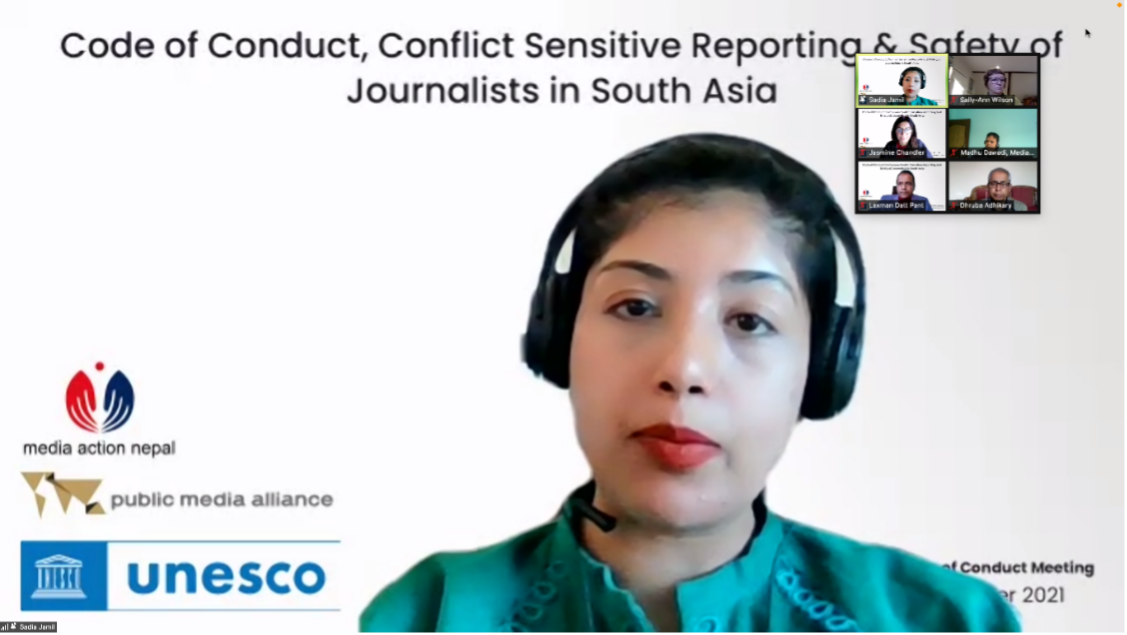
After nearly two years of work, the Public Media Alliance launched a South Asia Code of Conduct aimed at strengthening the region’s capacity in the areas of conflict sensitive reporting, journalist safety, and self-regulation.
On 23 November, media stakeholders from Bangladesh, India, Nepal, and Sri Lanka gathered virtually for the launch of the code. It was part of a wider project organised by the Public Media Alliance with support from its local partner Media Action Nepal, the UNESCO New Delhi Office, and the International Programme for the Development of Communication (IPDC).
The Code of Conduct was produced following a mapping exercise and a three-day workshop with 30 media workers from the four target countries. During the workshop, the participants contributed their respective local knowledge and expertise to the code’s finalisation. The draft code was subsequently reviewed by other South Asian media stakeholders, including editors, press council representatives, and academics.
“This code of conduct is truly distinct because it is based on a multi-stakeholder approach,” Dr. Sadia Jamil, Country Representative, Asian Media Information & Communication Centre (UAE) and Workshop Facilitator, said during the launch. DOWNLOAD CODE OF CONDUCT
Workshop facilitator, Dr. Sadia Jamil, during the launch of the code of conduct
The final report will act as a strategy document, advising journalists and media workers across South Asia on how they can cover areas such as conflict, human rights, and gender in an informed, fair, and safe manner.
Jasmine Chandler, PMA’s Projects & Membership Manager, explained the project had been two years of work, consisting of developing it, conducting research, and ultimately delivering the project. She said too that the project was reworked as a virtual one instead of a physical one in Nepal due to COVID-19 restrictions.
“This is a really, really difficult time for journalists everywhere… There’s been a lot of pushbacks to what we all do as a profession and that also involves many of us taking great risks, particularly in some regions of the world where conflict and the attacks on journalists are increasing day by day – and really it is worldwide. We see it everywhere, particularly with online and physical threats and these can be so damaging and undermining to your work.”
– Sally-Ann Wilson, CEO of Public Media Alliance
The launch event featured an overview by the workshop facilitators, Laxman Datt Pant and Dr. Jamil, as well as a keynote speech by veteran Nepali journalist Dhruba Hari Adhikary. In his speech, Mr. Adhikary applauded the selection of South Asia as the project region, noting that the region is known for “vast ethnic, cultural and linguistic diversity”, while the media landscape is similarly diverse. He emphasised the essential role of media workers in disseminating fact-based journalism while still safeguarding themselves against growing threats.
“The ultimate objective of taking initiative to develop the present code of conduct is to assure audiences about the credibility of the media as an institution. This is absolutely necessary to prevent erosion of public trust we all have collectively enjoyed thus far.”
– Mr. Dhruba Hari Adhikary, Advisor of Media Action Nepal & Senior Journalist
Among the areas covered by the 16-point Code of Conduct are:
Minimising risks to communal harmony through an intersectional and impartial journalism
Human rights and gendered approaches to reporting
Confidentiality of reliable sources
Recommendations for further improvements
“The code attempts to uphold impartial, accurate and credible media and it, at the same time, reminds journalists about safety measures they could possibly take during the time of conflict or even in post-conflict situations.”
– Mr. Laxman Datt Pant, Chairperson of Media Action Nepal and Workshop Facilitator
Also on the agenda were presentations by Sunanda Deshapriya, Sandhya Ravishankar, and Dilrukshi Handunnetti, three journalists who shared their experiences and knowledge on journalist safety threats and conflict sensitive reporting.
The code has been launched in English and will soon be available in Nepali, Hindi, and Bengali.
The project’s thirty media fellows also produced stories following individual mentoring sessions with Mr. Pant. The reports built upon principles included in the newly crafted Code of Conduct. Access them here.
Header Image: A press photojournalist is holding a camera with a zoom lens and is photographing war and conflict. Credit: chameleonseye/iStock/Public Media Alliance
Al comparar casinos en línea, teniendo en cuenta la variedad de juegos, pensando en un uso regular, una plataforma que puede revisarse de forma independiente es chicken subway juego , mientras una revisión independiente también puede abarcar la experiencia móvil y la navegación, junto con las reglas de retirada y los límites antes de registrarse.
Vor der Entscheidung, welche Seite näher geprüft werden soll, beim Vergleich von Navigation und Bedienkomfort, als Teil eines unabhängigen Vergleichs, eine Option für den direkten Vergleich ist fugu casino 5 , separat kann man auch betrachten die aktuellen Aktionsbedingungen, zusammen mit den wichtigsten Bedienungsdetails ohne die endgültige Wahl zu überstürzen.
Før man beslutter hvilken side der bør undersøges nærmere, ved vurdering af mobil brug, fra et praktisk brugerperspektiv, en platform der kan vurderes uafhængigt er https://spinlander-casino.dk/ , mens en uafhængig vurdering også kan omfatte registrerings- og verifikationsprocessen, med kundesupportens tilgængelighed i tankerne uden at forhaste den endelige beslutning.
Dla użytkowników zestawiających kilka platform jednocześnie, z uwzględnieniem metod wpłat i wypłat, na potrzeby wstępnej oceny, jednym z punktów odniesienia może być kasyno na prawdziwe pieniadze jeśli jednocześnie ocenia się najważniejsze warunki korzystania z serwisu, wraz z zasadami dotyczącymi wypłat w ramach szerszego porównania podobnych serwisów.