
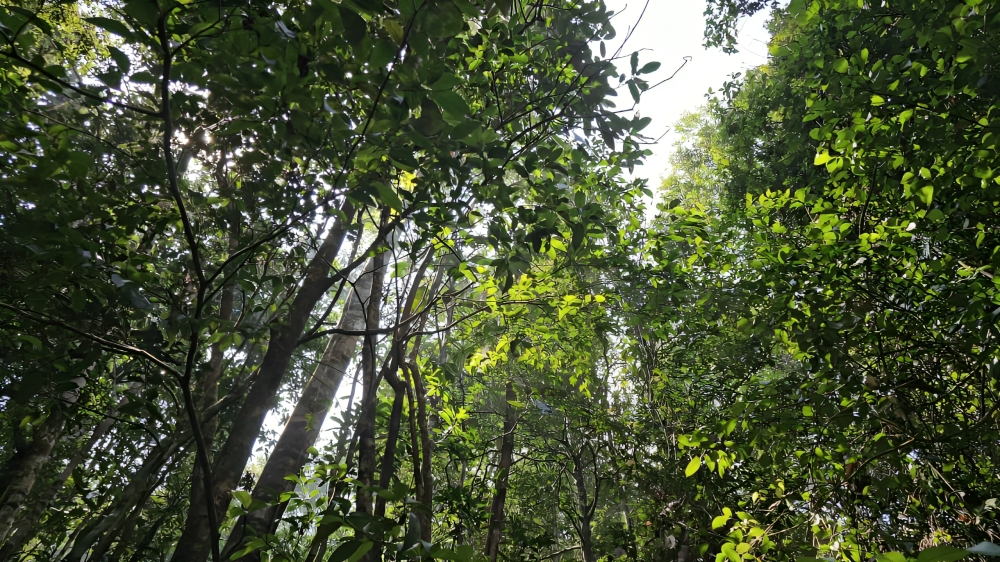

🔎 Await CIR’s latest OSINT-led investigation highlighting the extent of tree cover loss from 2002 to 2024 in one of Sri Lanka’s last remaining key lowland rainforests, Kanneliya, and its environs.
The investigation looks at the key drivers causing forest decline, with a focus on forest-edge changes in southern Sri Lanka, around Nagoda, Galle, and areas bordering the Kanneliya–Dediyagala–Nakiyadeniya Forest Complex, exploring what these shifts mean for biodiversity, water security, and the country’s environmental future.
Since 2001, Sri Lanka has lost around 230,000 hectares (2,300 square kilometers) of tree cover — or 6% of the island’s total forest cover — according to data from Global Forest Watch. From 2023 – 2024 over 540 hectares (5.4 square kilometers) have disappeared, much of it from natural forests, including the fragile lowland rainforests of the southern wet zone.
These rainforests are not simply clusters of trees. They are biodiversity strongholds, climate regulators, and lifelines for surrounding communities. As forest patches shrink and fragment under mounting development and changing land-use patterns, it has far greater implications for the country’s already stressed environment.