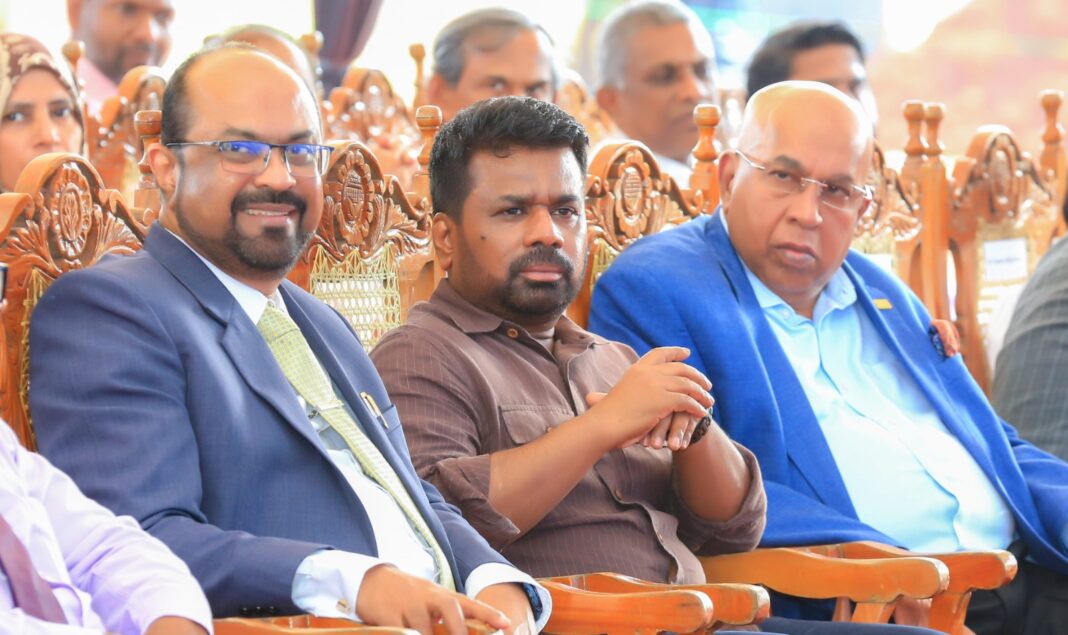

COLOMBO – Sri Lanka’s ruling National People’s Power (NPP) government is confronting its first major test of political credibility, as Energy Minister Kumara Jayakody faces a No-Confidence Motion while under indictment in the Colombo High Court over alleged corruption dating back to his tenure as a state official. The case, rooted in his role as a procurement manager at the state-owned Ceylon Fertilizer Company (CFC) in 2014, has thrust into sharp focus the tensions between due process and political accountability, as Jayakody continues to hold ministerial office despite formal charges.
For a government elected on an anti-corruption platform, the unfolding controversy is being widely seen as an early measure of whether its pledges on transparency and clean governance can withstand real-world political pressure.
Who is Kumara Jayakody?
Punya Sri Kumara Jayakody is an engineer by profession. He is a member and a national executive committee member of the ruling NPP. In November 2024, he entered parliament on the NPP’s national list and was appointed the minister of energy.
First public salvo
Jayakody is the first NPP minister or politician to be indicted for corruption. The NPP’s parliamentary group consists of 159 including 18 national list members.
On March 3, 2025 Batticaloa District ITAK parliamentarian Shanakiyan Rasamanickam speaking during the committee-stage debate of the Ministry of Energy on Budget 2025 proposals, said an individual who had been interdicted over a financial fraud in the Ceylon Fertilizer Corporation(CFC) was now a member of the NPP Cabinet and occupied a front row seat among the government benches.
He also said the person in question had been appointed to the Fertilizer Corporation when Anura Kumara Dissanayake was Minister of Agriculture in the UPFA Government under President Chandrika Kumaratunga.
The investigation into alleged corruption in procurement dates back to the time when Jayakody served the CFC started after the change of government in 2015.
The charges
Legal action was filed by the Commission to Investigate Allegations of Bribery or Corruption (CIABOC), Sri Lanka’s main anti-corruption authority in Agust 2025 acting under Section 70 of the Bribery Act.
Section 70 of the Bribery Act (Bribery Amendment Act No 20 of 1994) states: “Any public servant who, with intent, to cause wrongful or unlawful loss to the Government, or to confer a wrongful or unlawful benefit, favor or advantage on himself or any person, or with knowledge, that any wrongful or unlawful loss will be caused to any person or to the Government, or that any wrongful or unlawful benefit, favor or advantage will be conferred on any person.”
The alleged act of corruption dates back to early 2014, towards the end of Mahinda Rajapaksa ’s second term in office. At the time, Jayakody was serving as the procurement manager at the CFC.
The investigation, however, had been prolonged over several years before being concluded under the commission’s current leadership, amid a broader push to expedite long-pending corruption cases.
The case details show:
- The incident dates back to 2014, when Jayakody served as manager of the procurement and import division of the state-owned company.
- He has been indicted for alleged influencing of the procurement process involving carpeting work of CFC’s warehouse complex in Hunupitiya.
- Investigators have recorded a financial loss amounting to Rs. 8.86 million ($28,098.86) to the state, while benefiting a private company.
On March 27, Jayakody appeared before the Colombo High Court where indictments were formally served before High Court Judge Rashantha Godawela. He was granted bail on two personal bonds of Rs. 1 mn ($3,171) each. The case is scheduled for a pre-trial conference on May 6, 2026.
The significance
The matter is not linked to Jayakody’s conduct as a minister, but to his earlier role as a public official. However, the timing and implications of the case have made the indictment of Jayakody politically sensitive.
Several factors have amplified public attention and criticism.
- Jayakody remains to hold public office.
Despite the indictment, the government has allowed Jayakody to continue as a minister.
On March 31, speaking to Colombo journalists at the weekly Cabinet media briefing, Cabinet Spokesperson and Minister of Health and Mass Media Nalinda Jayatissa stated that no decision had been taken to remove him and emphasized that the matters refers to Jayakody’s past actions and importantly, that the NPP administration has allowed the legal process to continue without interference.
President Dissanayake on March 17, 2026 said he would not hesitate to remove any Minister of his Government from office the very next day if they are indicted before a court for a fraud committed through the use of ministerial powers.
The President made this remark while responding to a question raised by a journalist, at a special media briefing held, regarding allegations levelled against Minister of Energy Kumara Jayakody and the alleged corruption in coal procurement.
2. Calls for resignation
- Opposition politicians have demanded Jayakody to step down, stating that:
- Public accountability principles should apply regardless of when the alleged offense occurred.
- The government should not permit anyone charged with corruption charges to remain in office.
- Civil society group, Centre for Policy Alternatives (CPA) also urged his resignation, citing the need to maintain public trust in government institutions.
The coal procurement controversy
The situation has been further complicated by allegations relating to recent coal imports by Jayakody’s ministry.
Key allegations include:
The procurement of substandard coal for the Lakvijaya Coal Power Plant in Norochcholai. The first shipment of 60,000 metric tonnes (MT) of coal from South Africa for the Lakvijaya (Norochcholai) Power Plant that reached Colombo in the first week of January was substandard, and a $ 2 mn fine (approximately Rs 630,667,600) was imposed on the supplier.
The Ceylon Electricity Board (CEB) has informed the Parliamentary Sectoral Oversight Committee that the estimated direct loss from substandard coal imported through eight shipments amounts to $ 24,332 (Rs. 7,672 mn).
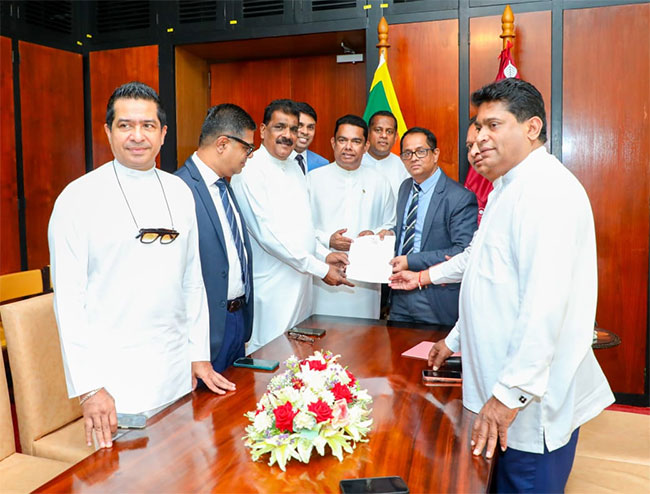
These concerns have led to a no-confidence motion against Minister Jayakody. On Marc h19, the motion was handed over by SJB parliamentarians to the Speaker of Parliament and is scheduled for debate on April 10. Further, the coal controversy has triggered questions around negligence in managing a critical national energy asset.
While this issue is separate from the corruption matter before courts, the overlap has intensified criticism about governance and oversight in the energy sector as well as the government’s ability to take action against internal corruption.
Public response and protests
Meanwhile, public pressure has begun to intensify. A public petition calling for Jayakody’s removal was launched in Maharagama, a Colombo suburb, by the Electricity Consumers’ Association. Organizers of the protest campaign express broader frustrations over both the corruption case and increasing energy sector concerns.
People seem to treat the Jayakody saga as the litmus test of the NPP administration’s anti-corruption stance. The current controversy has drawn attention due to the lofty electoral promises made by Anura Kumara Dissanayake and the ruling National People’s Power (NPP) alliance in the run up to the 2024 elections.
During their election campaign, the NPP positioned itself as a clean alternative to traditional political parties, promised to end corruption and impunity and to ensure accountability and transparency in public office.
What’s next?
Several parallel developments will shape how the matter unfolds in the coming weeks and months.
- The ongoing corruption case before the High Court will continue, with a pre-trial conference scheduled for May.
- Parliament is expected to debate the no-confidence motion against the minister on April 10.
- The current public and civil society pressure may intensify if more details are uncovered on the coal purchase or if the government fails to take interim action against the indicted minister.
For now, Jayakody remains in office, and the government maintains that the minister has not committed any wrong as the minister and the probe in to his past action is allowed to continue without political interference.
This explainer was written and edited by Gagani Weerakoon. She leads the editorial at the Center for Investigative Reporting (CIR).