
Speed read
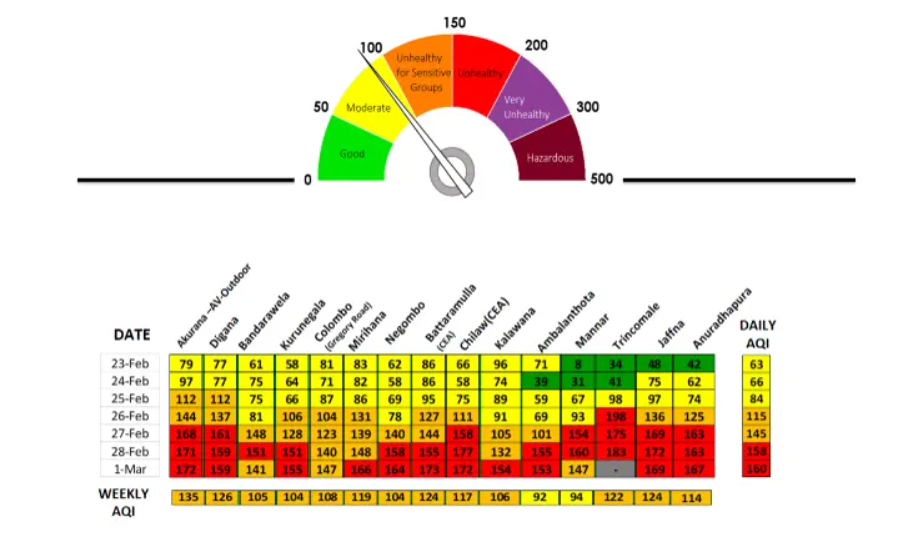
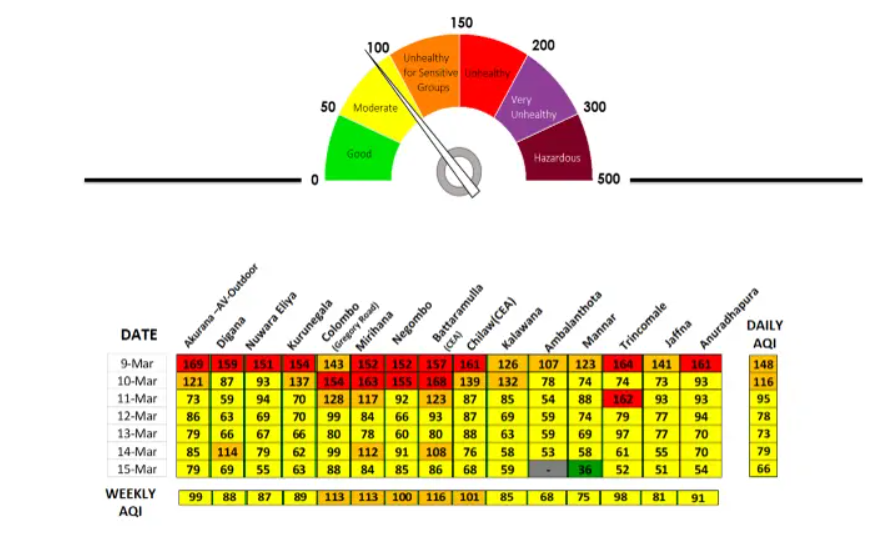
- In Sri Lanka, air quality consistently deteriorates between October and March, driven by monsoon wind shifts carrying polluted air toward the island.
- Data deficiency limits scientific attribution and policy response.
- Difficulties in substantiating transboundary impact continues to weaken legal and diplomatic action.
- National air quality limits lag far behind global benchmarks, potentially masking the true scale of the Sri Lanka’s air pollution crisis.
COLOMBO – Sri Lanka’s worsening air quality is no longer just a seasonal inconvenience. It is an increasingly complex environmental and public health challenge shaped as much by what is known as by what remains unmeasured. Despite recurring air pollution spikes between October and March, authorities continue to grapple with a critical lack of data sharing, limited monitoring technology, and resource constraints that hinder both scientific certainty and policy action.
This combination of weak institutional coordination and insufficient evidence has left the country struggling to definitively attribute pollution sources, particularly when it comes to transboundary air flows raising urgent questions about accountability, preparedness, and public health risk.
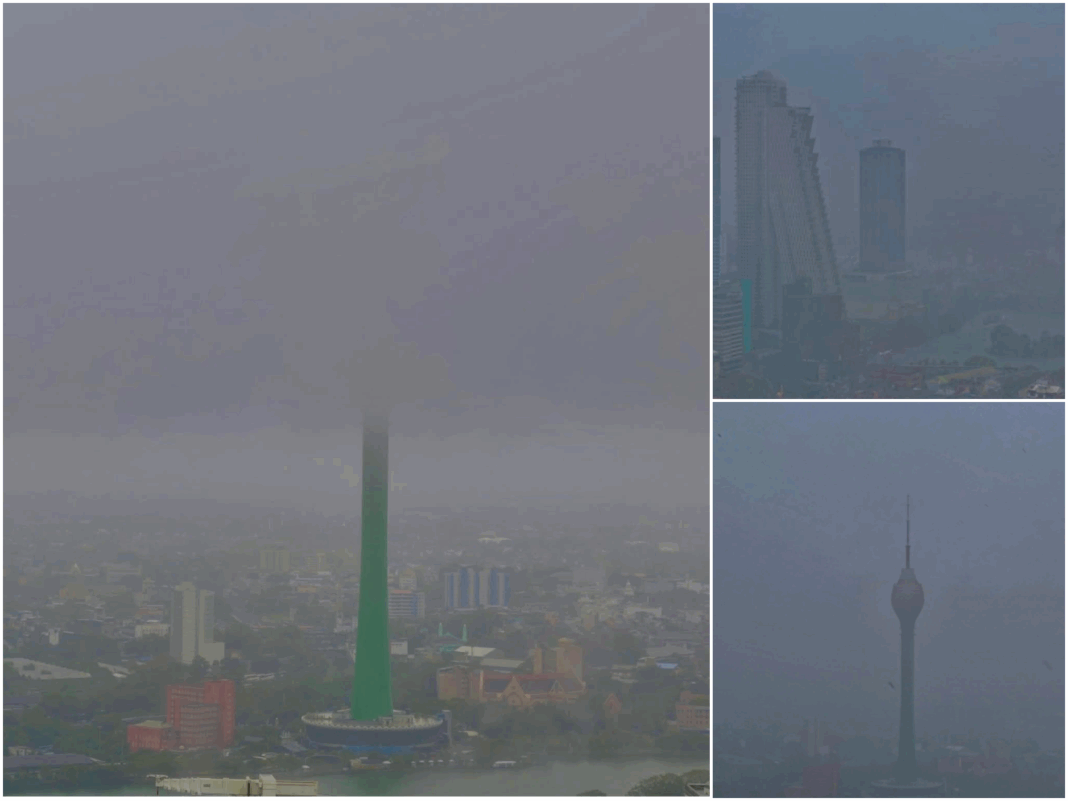
Sri Lanka has long recorded a cyclical decline in air quality during the inter-monsoon and north-east monsoon months from October to March. However, officials say the scale and spread of the problem have intensified in recent years.
Vernika Ranawaka Arachchi, director of air quality, noise and vibration monitoring at the Central Environmental Authority (CEA), said while overall ambient air quality remains within national standards, particulate matter tells a more concerning story.
“Earlier we detected a drop in ambient air quality in several areas in the Northern province. However, in recent years we have witnessed the prevalence of polluted air in several areas across the country. This depends on the wind pattern too,” she said.
Fine particulate matter (PM2.5), the most harmful pollutant due to its ability to penetrate deep into the lungs, rises sharply during this period. According to Ranawaka Arachchi, the increase is closely tied to shifting wind patterns that transport polluted air masses into Sri Lanka.

Problem without borders or proof
A significant driver of these pollution spikes is believed to be transboundary air pollution originating from parts of South Asia. Seasonal agricultural practices including post-harvest burning in countries such as India, Pakistan, and Bangladesh release large volumes of pollutants into the atmosphere.
“Generally, this is the time countries like India, Pakistan and Bangladesh engage in harvesting their corn, paddy, maize produce. After this, they burn the residue and these pollutants are carried to this part of the region by winds creating a haze in our atmosphere,” Ranawaka Arachchi explained.
Yet proving this link remains a major scientific and diplomatic challenge.
“Lack of sophisticated and upgraded technology and gaps in data sharing remain biggest obstacles in establishing our air quality is affected by transboundary pollutants,” she said.
Sri Lanka’s relatively small geographic and political footprint further complicates the issue.
“Since we are a very small country and other countries in the region experience extremely low air quality index, our case for cleaner air at international forums almost goes unnoticed,” she added.
Climatological factors reinforce this pattern. Lareef Zubair, principal scientist at the Federation for Environment, Climate and Technology (FECT), pointed to the decisive role of regional wind systems.
“During October to March, north-easterly winds originating over the Indian subcontinent and parts of Southeast Asia carry polluted continental air toward Sri Lanka. These air masses contrast sharply with cleaner marine air from the Indian Ocean, resulting in periodic spikes in pollution levels.”
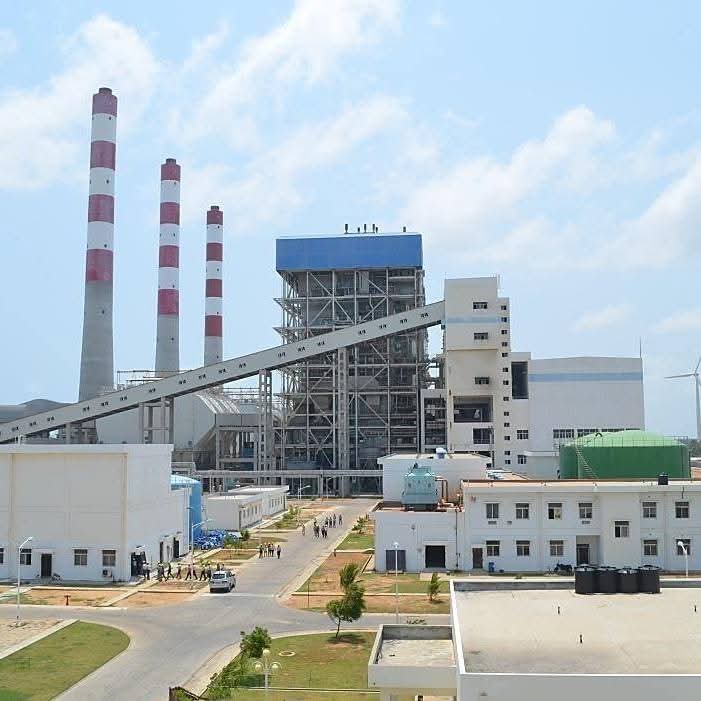
However, Zubair cautioned against attributing the problem solely to external sources. Domestic emissions—from traffic, open burning, and industrial facilities such as the Norochcholai Coal Power Plant—also contribute to pollution peaks. Under certain atmospheric conditions, these emissions can travel far beyond their source, affecting areas including Colombo.
The result is a layered pollution profile in which local and regional sources interact, complicating efforts to assign clear responsibility.
Public health risks -without the data
The health implications of deteriorating air quality are widely acknowledged but insufficiently documented.
Authorities have attempted to correlate pollution spikes with rising respiratory illnesses, particularly during high-risk months. However, the absence of integrated, time-linked health datasets remains a major obstacle.
“We have requested data from the Ministry of Health on respiratory diseases and other conditions that may have triggered an increase during October–March period. However, what we understood was that there is no such data available or there is no mechanism to share data,” Ranawaka Arachchi said.
This lack of coordination limits the ability to establish causal links between pollution exposure and health outcomes, leaving policymakers to rely on correlations rather than definitive evidence.
In response to worsening conditions, the CEA has developed a multi-agency contingency plan aimed at reducing local emissions during high-pollution periods.
The plan involves coordination with key ministries, including power and energy, transport, health, and foreign affairs but progress has stalled.
“Though it was almost two years since preparing this plan, we are yet to present it as a Cabinet paper. Also, due to lack of resources and funds, we couldn’t even test this contingency plan with drills,” Ranawaka Arachchi added.
Fiscal constraints and competing national priorities continue to delay implementation, raising concerns about the country’s readiness to respond to severe air pollution episodes.
Sri Lanka’s legal framework allows authorities to act against identifiable local polluters. Under the National Environment Act, activities such as open burning and improper waste disposal are punishable offences.
However, transboundary pollution presents a far more complex legal challenge. Environmental lawyer Ravindranath Dabare underscored the difficulty of pursuing accountability without definitive scientific attribution.
“If the source of pollution is certain, action can be taken. But with transboundary pollution, proving origin is extremely difficult,” he said.
Without verifiable data linking pollutants to a specific source, both legal action and diplomatic engagement remain constrained.
Compounding the issue is the inadequacy of Sri Lanka’s air quality standards. Established in 2008, current limits for PM2.5 stand at 50 micrograms per cubic meter—ten times higher than the World Health Organization (WHO) guideline of 5 micrograms.
This disparity raises concerns that official assessments may significantly underestimate the severity of air pollution.
“At the very least, Sri Lanka should move closer to WHO guidelines. The current limits are no longer scientifically justifiable,” Dabare noted.
Updating these standards is seen as a critical step toward strengthening both enforcement and public awareness.
A regional problem demanding regional solutions
Ultimately, Sri Lanka’s air pollution crisis cannot be addressed through domestic measures alone.
While local enforcement and policy reform remain essential, experts stress that meaningful progress will depend on regional cooperation, supported by robust scientific data and sustained diplomatic engagement.
“This is not a problem unique to Sri Lanka. The entire region is affected. What is needed is coordinated action—regional agreements and sustained diplomatic engagement to mitigate air pollution at its source,” Dabare said.
Until such frameworks are established, Sri Lanka remains caught in a difficult position, able to act on local violations, yet largely powerless against pollution that drifts across its borders, unseen, unproven, and unresolved.
Definitions

Fog
Much like the clouds, takes shape when air becomes saturated with water vapor – water in its gaseous state. Excess moisture is released, coalescing into myriad minuscule and densely-packed water droplets.
Haze
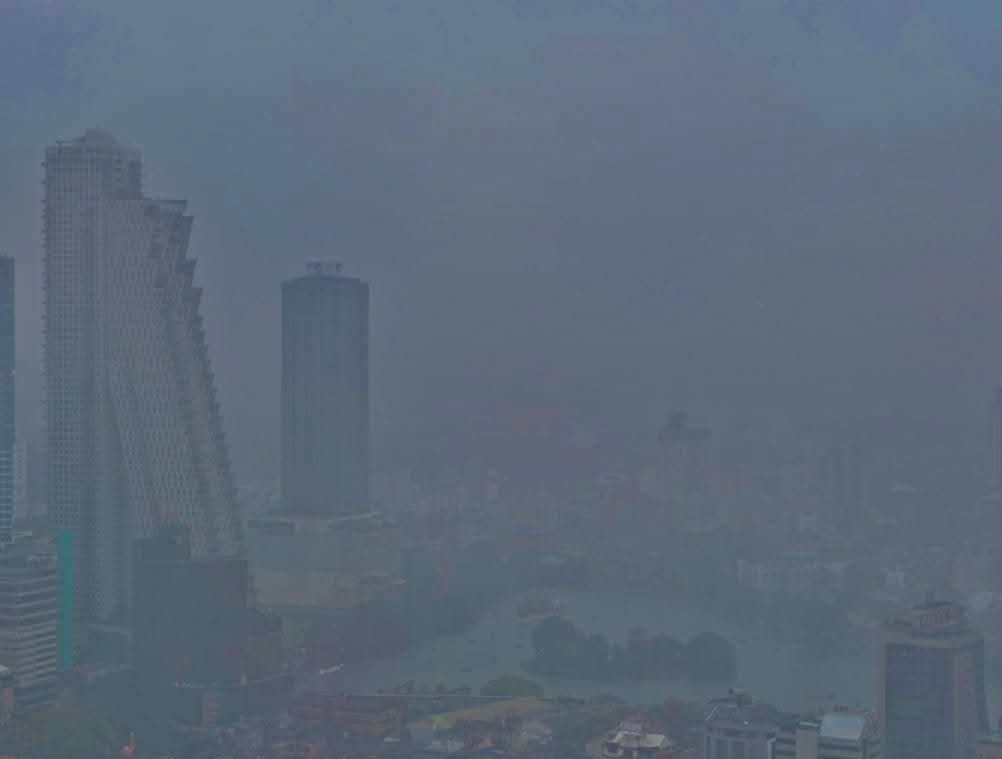
Unlike fog, which is composed of liquid or frozen water particles, haze is a condition in which the air’s lower layer, closest to the surface, contains a high concentration of solid and dry particles that remain suspended for an extended duration. These can include mineral dust, ash and even pollen.
Smog
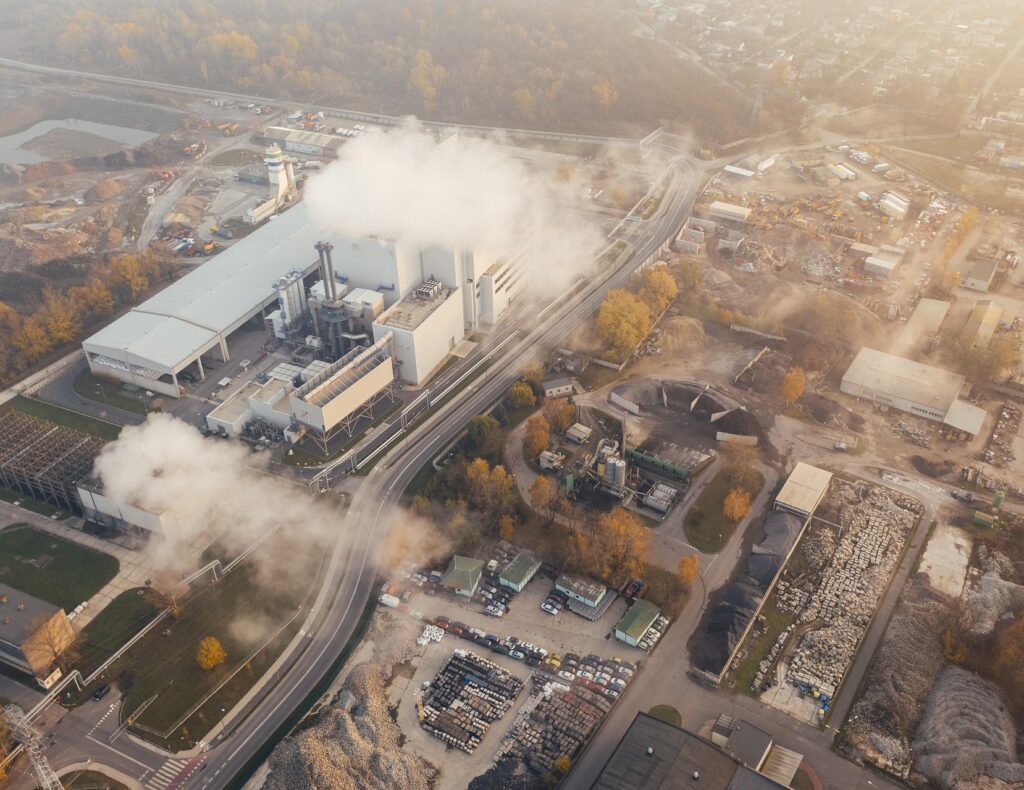
it is a combination of the words “smoke” and “fog”, and it was coined to describe a state of extreme air pollution, mostly caused by human activity like burning fossil fuels or industrial chemical processes.
This story was written and edited by Gagani Weerakoon. She leads the editorial at the Center for Investigative Reporting (CIR).
This story was produced with support from Report for the World, a global media service strengthening local independent journalism.