
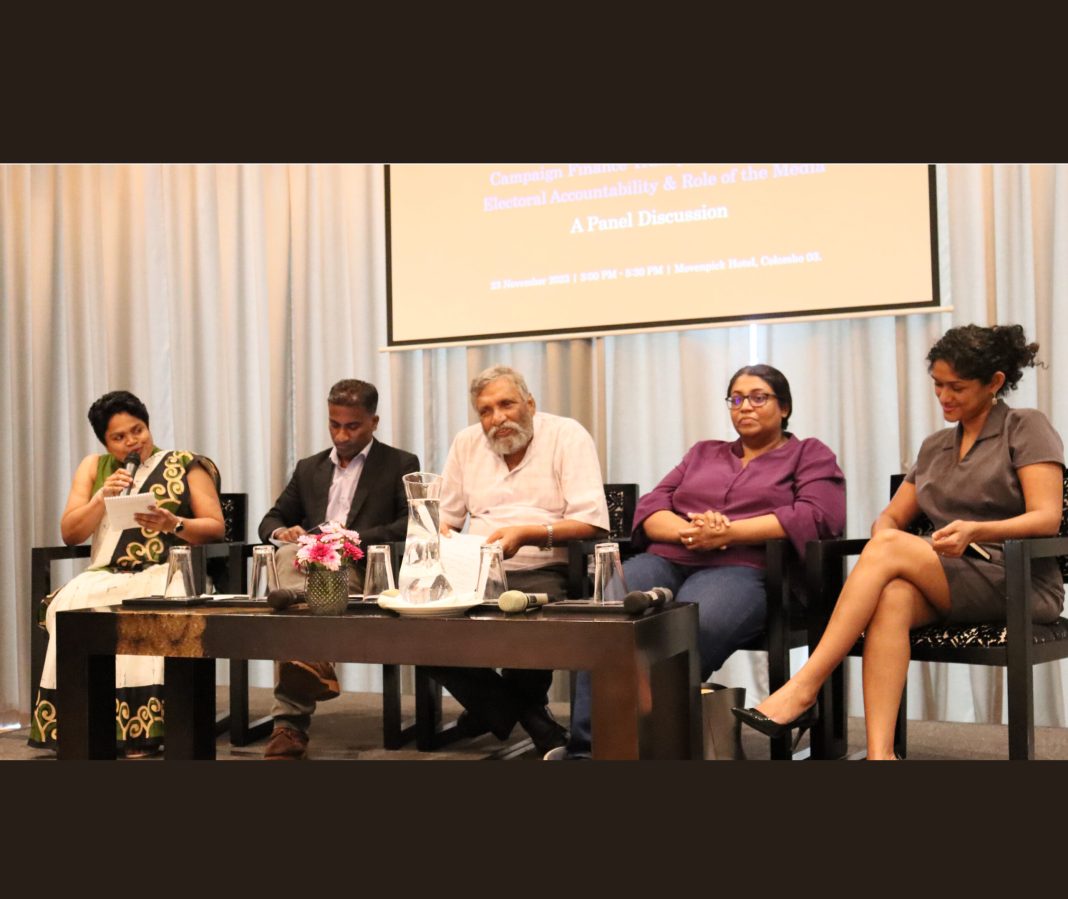

The Center for Investigative Reporting (CIR) held a panel discussion on Campaign Finance Transparency Towards Electoral Accountability and Role of the Media with an aim to promote in-depth reporting on campaign financing.
The event, which is the first of a series of electoral accountability initiatives by the CIR, was held on November 23 in Colombo with the participation of key experts and journalists from mainstream media.
Sri Lanka is likely to see both presidential and parliament elections in 2024 under the new campaign finance law passed in January this year and the panel discussion aimed at enhancing the understanding of the campaign financing which could help media to improve their reporting during the elections.
The panel comprised of Mahinda Deshapriya, retired Election Commissioner, Sankhitha Gunaratne, Deputy Executive Director of Transparency International Sri Lanka (TISL), Manjula Gajanayake, Executive Director of the Institute for Democratic Reforms and Electoral Studies (IRES), and Editor-in-Chief of the Sunday Morning, Mandana Ismail Abeywickrema.
Deshapriya urged a collective intervention of all stakeholders including media for an effective implementation of the Campaign Finance Act despite some loopholes, while Gunaratne emphasized the importance of unhindered access to financial documents submitted by candidates to enhance transparency and accountability.
Gajanayake of IRES explained the global perspective on the campaign financing through his experience as an election observer and a researcher and Abeywickrema discussed the practical constraints Sri Lankan journalists face in reporting on elections and campaign financing.
The panel collectively agreed for a stance to be together and urge for a satisfactory enactment of Campaign Finance Act and demand for accountability in future elections.
Sunanda Hettiarachchi, senior journalist and the former Director of Channel Eye, moderated the discussion.
The CIR has planned a few more panel discussions on electoral accountability in the next few months to improve in depth reporting skills of Sri Lankan journalists.