
Speed Read:
- The Negombo Prison riot became one of Sri Lanka’s deadliest prison disturbances in decades with 28 fatalities.
- Authorities are probing the violence, the use of lethal force and allegations of transferred inmates being tortured.
- Following the incident, overcrowding, drugs, poor intelligence and weak prison management are under renewed scrutiny.
- With more than 40,000 inmates held in prisons built for about 12,000, rights groups and the United Nations are calling for meaningful reform—not just new investigations or more prisons— to prevent another tragedy.
COLOMBO—When 27-year-old prison officer Darshana Tharanga reported for duty at Negombo prison on the morning of July 6, he expected another day in uniform. Instead, it became his last.
The member of the of Sri Lanka Prisons Emergency Action and Tactical Force (SPEAT Force) had been deployed from Welikada prison to help contain a clash between rival groups of inmates. It was his first assignment at the Negombo Prison. Unfamiliar with the sprawling facility, he had no idea where to run when violence erupted around him.
Back home, his seven-month-old daughter was waiting for a father who would never return.
For the family of 73-year-old Indian national Unnikrishanan Subramaniam, who was awaiting trial on drug trafficking charges, the outcome was equally devastating. They would never see him alive again.
Between them lies the story of a prison system that had long been under pressure and one that finally exploded into violence.
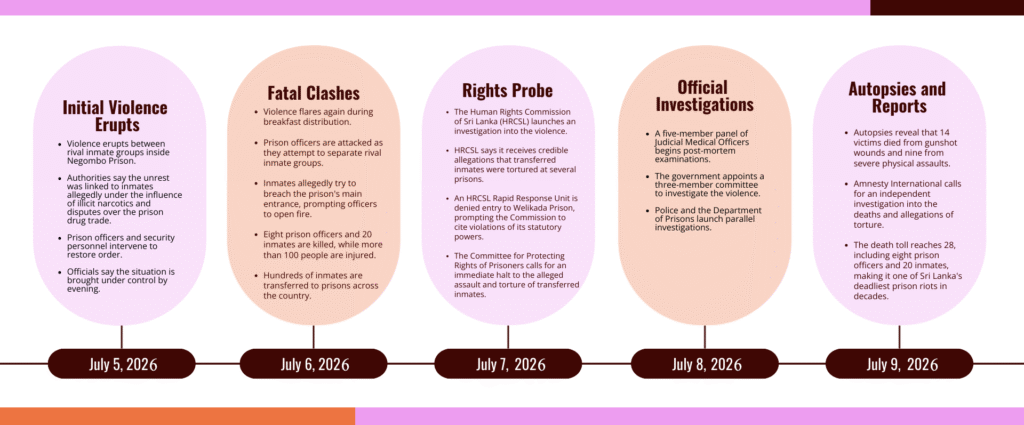
By July 9, 28 people were dead and more than 100 others had been injured in one of Sri Lanka’s deadliest prison riots in decades. Allegations of torture, excessive force and systemic failures have intensified as multiple investigations seek to determine what triggered the violence and how authorities responded.
What began as a clash between rival inmate groups at Negombo Prison on July 5 has quickly escalated into one of the bloodiest episodes in the country’s correctional history. The violence left at least eight prison officers and 20 inmates dead, according to government figures, while hundreds of prisoners were transferred to other facilities amid fears of further unrest.
The focus of the investigations has since expanded beyond the riot itself to broader questions about prison management, chronic overcrowding, intelligence failures, the use of lethal force and allegations that transferred inmates were subjected to torture. For many observers, the Negombo bloodshed was not an isolated tragedy but the latest manifestation of a prison system strained by years of neglect and structural failures.
Violence escalated, extraordinary brutality
Acting Commissioner General of Prisons Prasad Hemantha Kumara described the attacks on prison officers as unprecedented, saying the first officers who responded to the initial disturbance were overwhelmed by coordinated assaults from inmates before reinforcements managed to regain control.
According to prison authorities, preliminary investigations indicated the unrest began on July 5 after several inmates allegedly consumed illicit narcotic pills, triggering aggressive and erratic behavior. Officials also said some female inmates who allegedly consumed the substances made a series of allegations during the chaos.
Authorities maintained they had received no prior intelligence warning of an imminent riot, although officers had been deployed across the prison as a precautionary measure.
By the evening of July 5, officials believed the situation had been brought under control. Inmates had returned to their cells and were served dinner ahead of scheduled court appearances the following day.
The calm, however, was short-lived.
Violence erupted again on the morning of July 6 during breakfast distribution. Prison officials said officers attempting to separate rival inmate groups were attacked before being chased toward the prison’s main entrance, where inmates allegedly tried to breach the gates. Authorities said prison officers ultimately used what they described as the minimum force necessary to restore order.
A prison already under pressure
Investigators believe the initial confrontation may have been rooted in the prison’s illicit drug trade.
Police suspect rival inmate factions clashed after intelligence about drug trafficking inside the prison was leaked to authorities. Investigators allege that an inmate identified as “Katuwellegama Suresh,” believed to have links to the organized crime figure known as “Booru Moona,” orchestrated the attack against inmates suspected of providing information to prison officials.
As the violence spread, female inmates climbed onto the prison roof in protest, followed by a group of male prisoners. Part of the roof later collapsed, injuring several inmates.
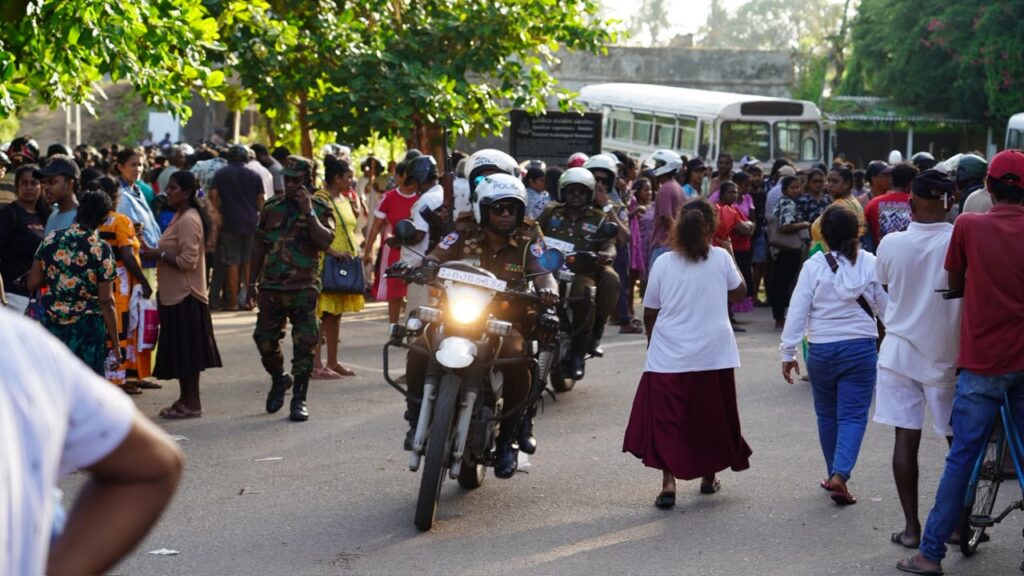
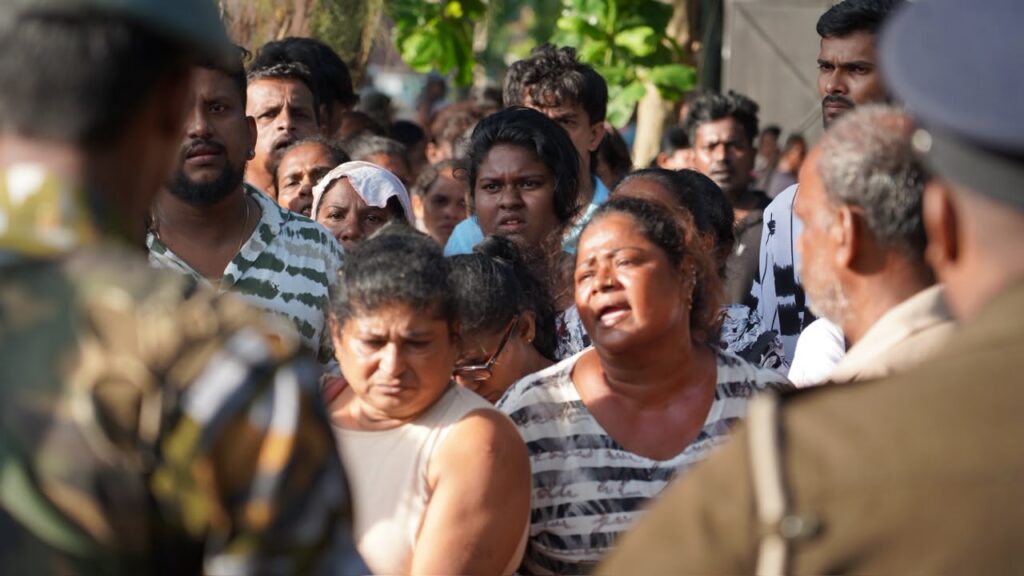
Outside the prison, anxious relatives gathered demanding information about the fate of family members inside, while security forces worked to contain the unrest.
Adding to the chaos, prison sources said inmates broke into the prison hospital and removed medication used to treat psychiatric patients.
Autopsies raise new concerns
Post-mortem examinations have revealed the brutality of the violence. A five-member panel of Judicial Medical Officers found that 14 victims died from gunshot wounds and nine from severe physical assaults, while one death remains under investigation with an open verdict.
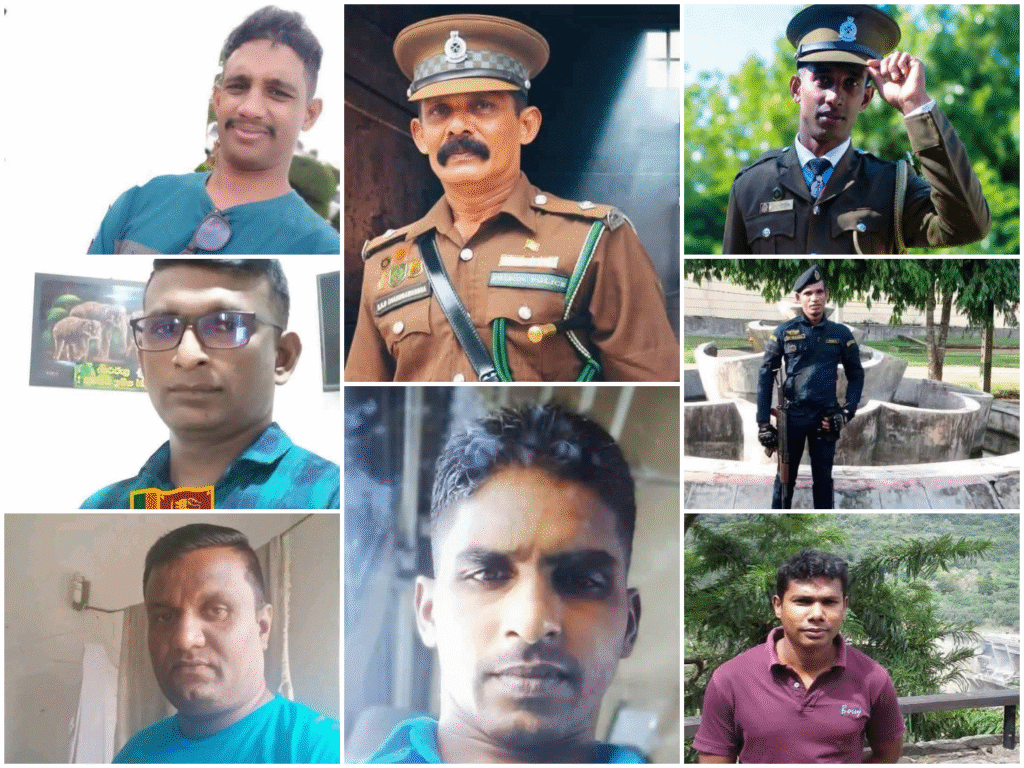
The examinations also showed that the prison officers who died suffered catastrophic head injuries, underscoring the ferocity of the attacks.
Negombo chief magistrate Shilani Perera has ordered comprehensive forensic investigations and directed police to submit a detailed report to the court.
Allegations shift focus to prison authorities
As investigators examine how the violence unfolded, allegations of abuse against inmates transferred from Negombo Prison have shifted scrutiny to prison authorities.
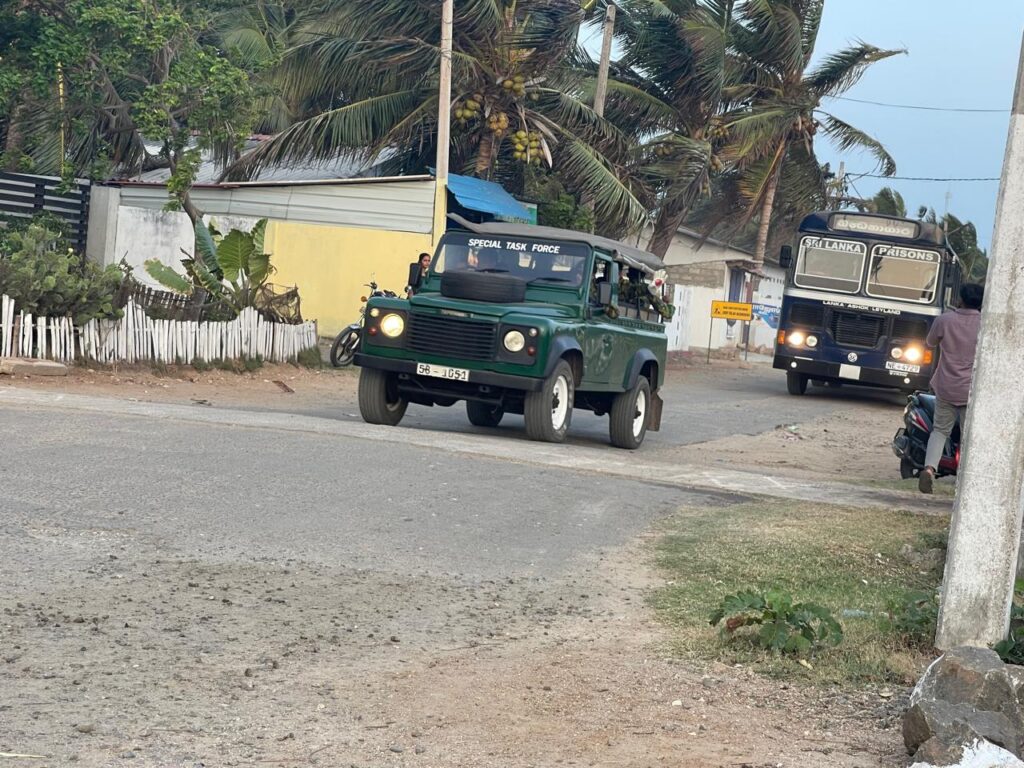
Prison spokesperson Chamika Gajanayake said 1,200 prisoners including foreign nationals from the Negombo prison were transferred to other prisons across the island.
The Committee for Protecting Rights of Prisoners (CPRP) said it had received credible reports that some inmates were subjected to severe beatings and torture, including at Welikada Prison.
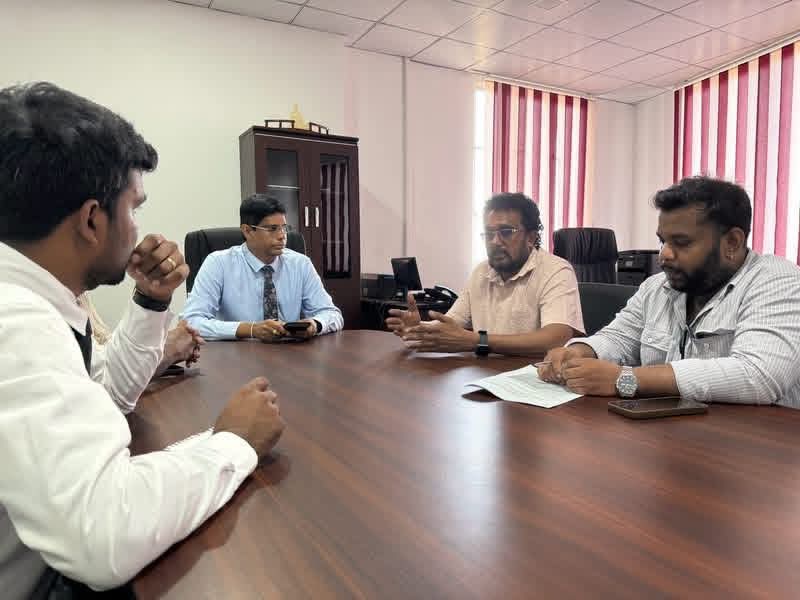
The Human Rights Commission of Sri Lanka (HRCSL) launched its own investigation, expressing concern over allegations that inmates transferred to Angunakolapelessa, Boosa, Dumbara, Batticaloa, Jaffna and Welikada prisons had been tortured or otherwise ill-treated. It also raised concerns over the reported death of an inmate in Welikada prison custody.
The commission criticized prison authorities for denying HRCSL’s Rapid Response Unit access to the Welikada prison on the night of July 7, saying the refusal violated its statutory powers to inspect places of detention. It ordered prison authorities to preserve evidence, protect inmates from reprisals, investigate allegations of abuse and take disciplinary action against any officials found responsible.
Meanwhile, Amnesty International has called for an urgent, independent investigation into the reported deaths of inmates transferred after the violence.
Deputy Regional Director for South Asia Babu Ram Pant described reports of torture and custodial deaths as “deeply alarming,” urging authorities to ensure the safety of all prisoners, grant the HRCSL unrestricted access, allow lawyers and family members to visit detainees, and provide timely medical care.
The organization also called for an independent and transparent inquiry, saying the violence highlights longstanding problems in Sri Lanka’s prison system, including chronic overcrowding, prolonged pretrial detention and poor prison conditions.
Government defends Its response
Cabinet spokesperson Nalinda Jayatissa rejected comparisons between the Negombo violence and the deadly prison riots at Welikada in 2012 and Mahara in 2020, arguing that the latest unrest was fundamentally different because prison officers were the direct targets of coordinated inmate attacks.
He said, in addition to the government’s three-member independent committee, police and the Department of Prisons are conducting parallel investigations.
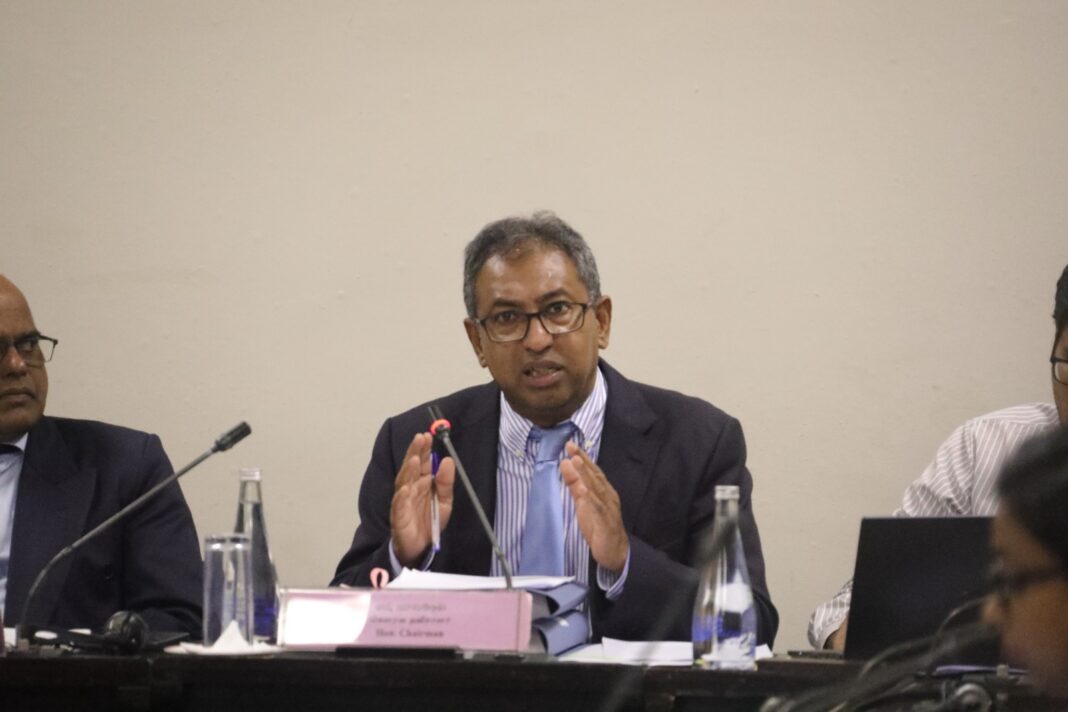
Justice minister Harshana Nanayakkara has accepted ministerial responsibility for the tragedy and pledged a thorough investigation, while prison officers have defended colleagues who opened fire during the unrest, saying their actions prevented a mass prison escape that could have posed a serious threat to public safety.
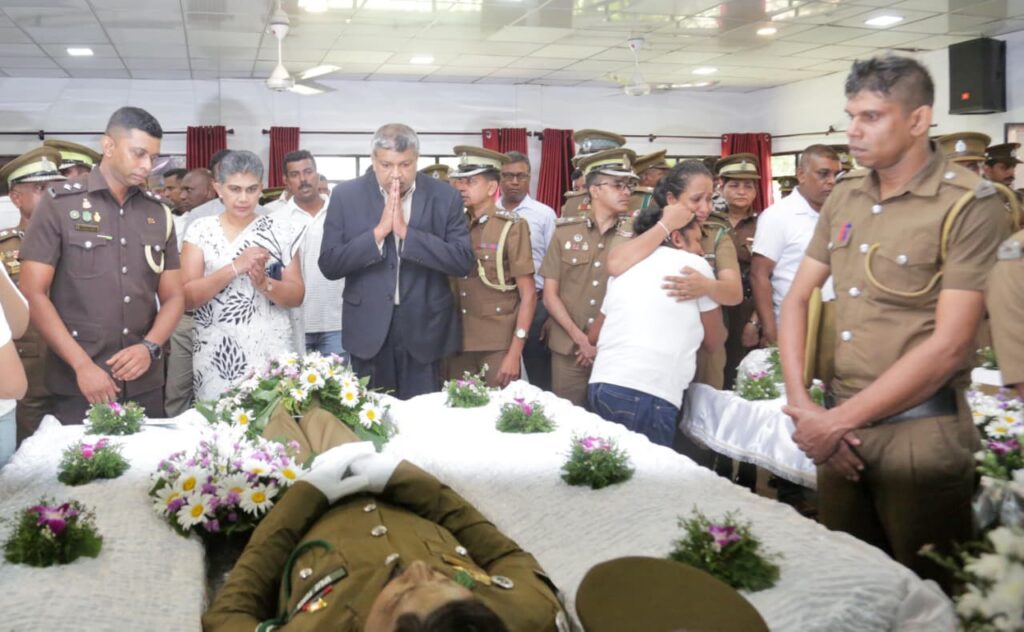
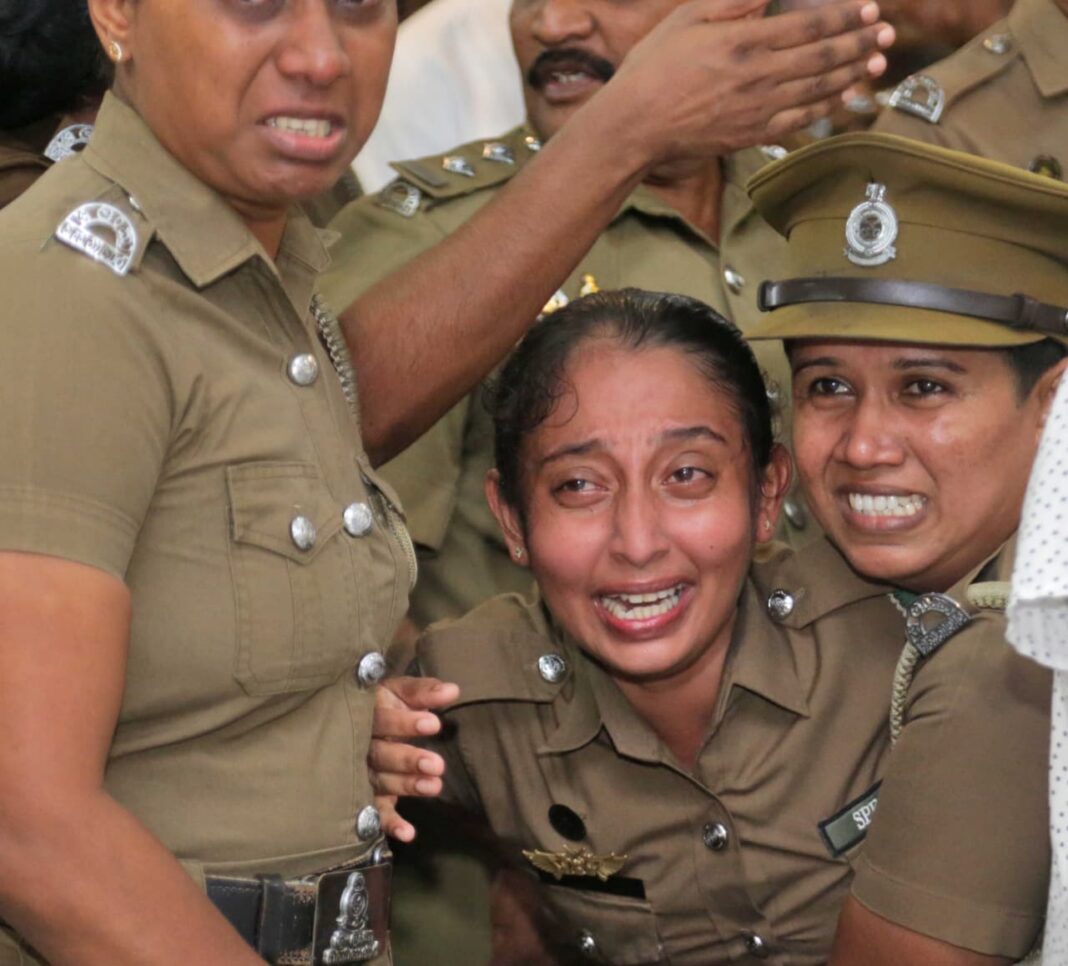
“Sir, this could have nipped at the bud had we received proper orders on time,” an extremely emotional prison officer claimed as minister Nanayakkara visted the Welikada prison to pay his last respects to prison officers who died in the incident.
They also urged the minister to protect the prison officer who opened fire during the recent unrest at Negombo prison, claiming that ‘misleading information’ is being circulated about his response, endangering his life.
Opposition demands accountability
Opposition leader Sajith Premadasa accused the government of failing to prevent the tragedy, arguing that the deaths reflected deeper failures in governance and prison administration. He called for an independent investigation free from political influence and asked whether the government’s promised systemic reforms had materialized.
Former foreign minister G.L. Peiris also asked the deployment of prison intelligence officers and the use of live ammunition, demanding that authorities disclose who authorized the use of lethal force.
A system stretched beyond capacity
Beyond the immediate investigations, the violence has once again exposed the deep-rooted crisis within Sri Lanka’s prison system.
The country’s prisons currently house an estimated 40,000 to 42,000 inmates despite having an official capacity of just 11,000 to 12,000 as per official data. Rights groups estimate occupancy exceeds 286%, with some facilities operating at more than three times their intended capacity.
The CPRP recently informed a visiting United Nations delegation that severe overcrowding has forced inmates to sleep in shifts and, in some cases, beside toilets because of a lack of space. Government officials acknowledge the problem has worsened following large-scale anti-narcotics operations that significantly increased arrests.
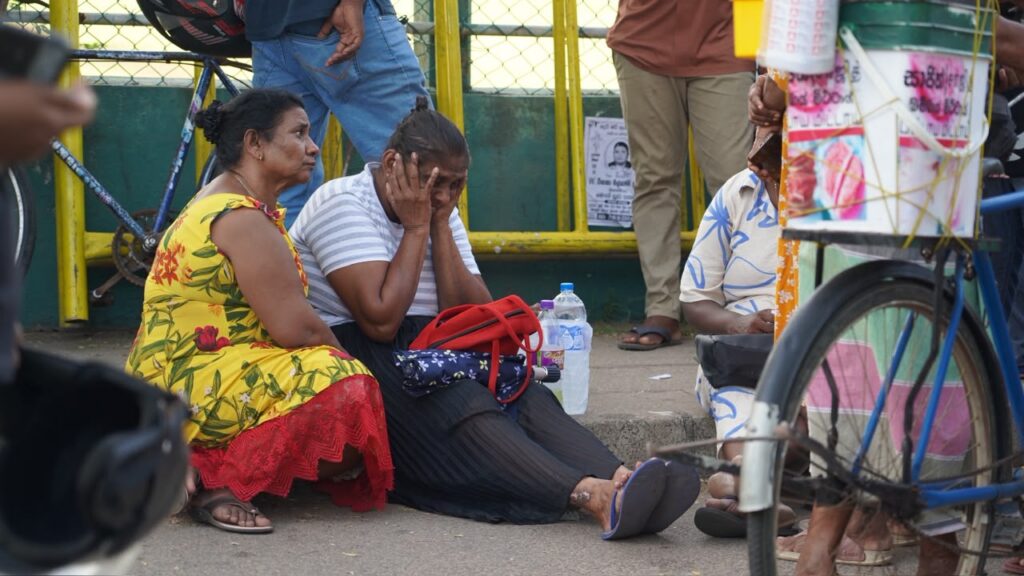
The Ministry of Justice and National Integration said the prison sustained extensive damage and could no longer safely accommodate detainees while investigations continued.
Although the government has designated the former Bogambara prison and approved a new prison in Mahamodara to expand capacity, critics argue that building more prisons alone will not address systemic problems such as corruption, drug trafficking, inadequate staffing, weak intelligence and poor accountability.
Echoing those concerns, the United Nations Resident Coordinator Marc-André Franche said the tragedy underscored the state’s responsibility to protect both prison officers and inmates, emphasizing that everyone deprived of liberty remains under the care and protection of the state.
Multiple investigations will eventually determine who fired the shots, who failed to act and whether crimes were committed during the violence at Negombo Prison.
The more difficult question, however, is whether Sri Lanka will finally confront the structural failures that have plagued its prison system for decades.
Successive commissions, court rulings, human rights bodies and international organizations have repeatedly warned about chronic overcrowding, drug trafficking, corruption, inadequate staffing and poor prison management. Many of their recommendations remain only partially implemented.
Whether the Negombo prison riot becomes another tragedy added to that long list—or the catalyst for meaningful prison reform—will depend not only on the outcome of the investigations, but on whether successive governments are willing to implement the reforms they have postponed for decades.
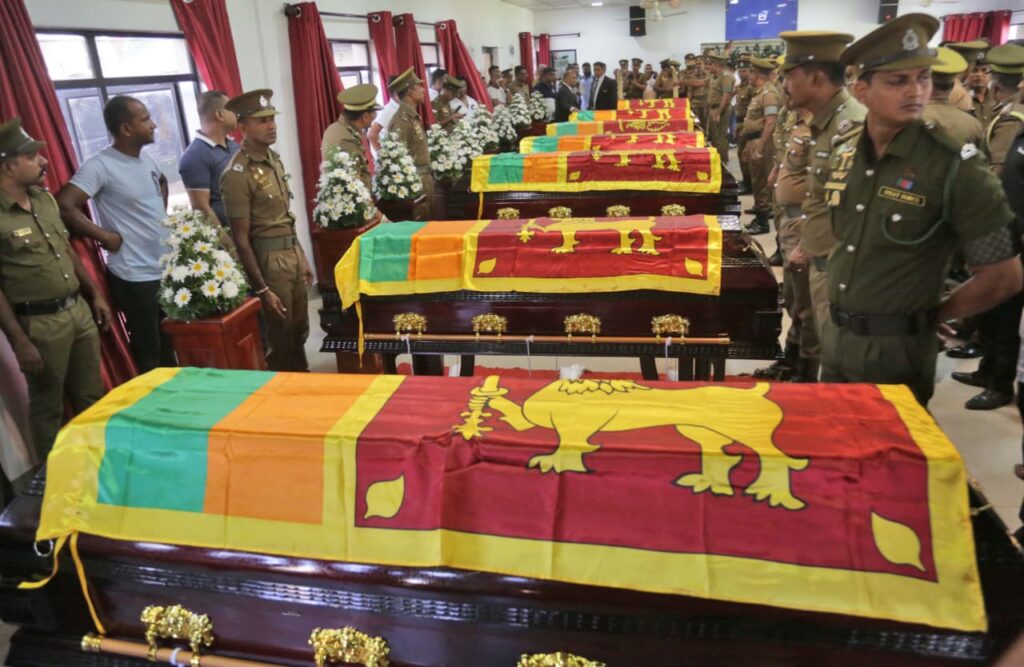
Banner: Hours after sharing breakfast with their colleagues, prison officers who were deployed to control Negombo prison riot returned in coffins. Left reeling by shock and grief, fellow officers struggled to comprehend how an ordinary morning ended in a brutal assault that claimed their comrades’ lives. Image courtesy of Saswin Kumar.
This story was written and edited by Gagani Weerakoon. She leads the editorial at the Center for Investigative Reporting (CIR).
This story was produced with support from Report for the World, a global media service strengthening local independent journalism