Home Blog Page 27

‘Skilled’ migration: Short-term problem and long-term solution

BY Sumudu Chamara

Prospective migrant workers emphasise upskilling as being one that does not provide economic relief in the short term but one that improves long-term professional prospects  

“I am not denying that migrating as a skilled worker could be advantageous in many ways. Employers should have a reason to hire us, and the best reason I think is the skills that we have. However, as people who barely make ends meet, we have to prioritise immediate solutions and relief over long term plans. We simply don’t have the time to wait and acquire skills.”

These are the words of a young, aspiring migrant worker, who, despite the knowledge that migrating as a skilled worker could increase his value in foreign job markets, believes that making an effort to achieve that is not worthwhile given his financial situation. Alarmingly, this is a sentiment shared by many aspiring migrant workers regardless of their profession.

With the severe economic crisis that broke out last year (2022) in Sri Lanka, going abroad for employment has become one of the very first options that Sri Lankans think of, and during the past year, many have left. While the need to migrate is understandable, one major issue that has emerged with increased migration is how skilled these migrant workers are. According to aspiring migrant workers that spoke with us, a multitude of factors seems to be holding them back from acquiring new skills or gaining formal recognition for existing, experience-based skills. While some of these challenges are related to a lack of knowledge about the importance of skills, some have a great deal to do with the prevailing socio-economic situation.  

A matter of priorities, struggles and logic

Economic hardships are at the centre of these challenges. On the one hand, some do not obtain the services of the institutions established to provide skills training due to poverty, while on the other hand, the urgency to leave the country for foreign jobs prevents many from spending time and money on skills training. According to those who spoke with us, this is despite the fact that they are aware of how skills training or formal recognition for existing skills could boost their value as an employee in the foreign job market.

“I know how important it could be to have some sort of certificate for my skills. But, who in this economy has the money or time to spend on skills training?,” 37-year-old self-taught graphic designer, R. Namal Sasanda questioned, adding that leaving the country as soon as possible even as a low-skilled worker should be everyone’s priority. Explaining the reasons that hold him back from obtaining formal recognition for his skills, Sasanda added: “I think that we all have to prioritise what is best for us based on our individual needs and abilities. In my case, I have a wife who does not earn, two children who are studying, and a sick father who is on treatment. My situation is such that I have to find a quick solution even if it is temporary. While I completely understand how a certificate recognising my skills could get me a better job and a bigger salary, I have to be realistic about what I can and cannot do. There are people who depend on me. I think that the benefits of leaving this collapsed country as soon as possible outweigh the benefits of going abroad as a skilled worker. I can always get skills training later. But, I cannot delay my family’s financial safety.” Sasanda, who has received a job offer from a Dubai, United Arab Emirates- based firm, is currently making arrangements to leave the country. He added that although the skills that he has gained are adequate for the said job, improving his skills as a graphic designer and gaining formal recognition for the same is certainly one of his long-term plans. 

Meanwhile, 30-year-old aspiring migrant worker who is interested in becoming an automobile mechanic, Saranga Pathirana (name changed on request), lamented that although he is willing to study the subject and become a qualified mechanic, he does not have the financial resources to follow a relevant course. Although Pathirana had been saving money to follow such a course since 2021, he has not been able to save enough, which, according to him, was due to the economic collapse that was triggered by the Covid-19 pandemic and the socio-economic crisis that emerged last year. In 2021, he lost his former job as an apparel factory worker as his former employer opted for layoffs in response to the decreased revenue, and last year, he had had to spend even his savings to survive the economic crisis. Although at one point he considered obtaining a loan to follow a course in order to become a qualified automobile mechanic, he changed his mind, as he was not confident about his financial ability to repay the loan on time. In this context, he is now considering leaving the country as a low skilled worker. “I have a friend of a friend who is willing to help me find a job in an apparel factory in India. While it is not the kind of foreign job that I wanted, I can make more than twice the money that I make in Sri Lanka as an apparel factory worker. My plan is to save as much money as possible to become an automobile mechanic someday,” he said, opining that it is his best chance since trying to save money in the prevailing economic situation is not practically possible.

A need of the hour; a need of the nation

Despite the above situation, the authorities providing skills training and also formal recognition for existing, experience based skills urge aspiring migrant workers to take skills seriously, as their value in foreign job markets as skilled migrant workers has a direct connection to what they are trying to achieve through foreign jobs. While there is a question as to whether aspiring migrant workers’ concerns have received sufficient attention, the authorities have paid attention to the high demand for foreign jobs and the growing tendency among Sri Lankans to seek the same. They are increasing their capacities and are devising new plans in a bid to cater to the recently increased demand for skills, especially in the form of vocational training.

Explaining the ongoing, renewed efforts, including in relation to the concerns raised by those who spoke with us, the Education Ministry’s Skills Development and Vocational Training Unit’s Director (Skills Development), Attorney-at-Law Dasitha Niroshana said: “In a context where more and more people are planning to go abroad for employment, in order to cater to them, we have increased and improved the highly sought after courses. The medium in which certain courses are conducted has also been changed, while courses with a high demand, such as caregiver and hospitality sector courses, have been increased. In addition, for the convenience of service seekers, we have introduced online courses, and we have increased part time courses including night time courses as opposed to the traditional approach which involves the full time physical conduct of courses.”

According to him, this is a collective approach, supported by around 500 Government-run skills and vocational training institutions and authorities that come under the Unit’s purview, and plans are afoot to improve and expand these approaches in the coming months. Taking into account some individuals’ urgency to leave the country, short-term courses that can be completed in around one and a half months have already been introduced, as opposed to the traditional course structure which takes months. In addition, Niroshana added that the private institutions that are approved and monitored by the Unit are also being directed to pay more attention to skills training that have a demand in foreign job markets. These efforts are complemented by awareness raising programmes, some of which, according to him, are supported by private firms as well.

Leaving no one behind

Boosting skilled migration is also a matter of recognising and certifying existing skills. There are a large number of people with skills gained through experience and various forms of informal methods, who can, with the professionals’ support, reach the level of a formally recognised skilled worker. According to the authorities, the process of assessing, sharpening and formally certifying existing skills, known as the Recognition of Prior Learning (RPL), is an integral part of Sri Lanka’s foreign employment targets.

Adding that RPL has received their attention in the current economic context, Niroshana explained how these efforts have reached Sri Lankan migrant workers of different backgrounds. Connecting the gap between experience based skills and the job market’s skills and standards related demands, he noted, has the potential to strengthen Sri Lanka’s status as a provider of capable workers. He added that these efforts have reached not only aspiring migrant workers, but also those who have migrated without any formal recognition for their skills: “Recently, a team went to Dubai, and conducted an assessment there. There are Sri Lankans who migrated to that country either legally or illegally and are living there without any certified qualifications. Due to that reason, they don’t have access to high salaries and protection provided by that country’s labour laws. A certificate has a huge value. We are also planning to go to Israel to conduct the RPL process for around 700 Sri Lankan migrant workers”.

Sharing similar opinions about the pressing need to formally certify experience based skills, the National Apprentice and Industrial Training Authority’s (NAITA) Director General Dr. W.M.S. Wijesinghe explained that the RPL process is applicable for almost all the courses provided by the NAITA. Noting that there is a noticeable rise in the number of people seeking to obtain formal recognition for their skills, he said that thus far this year (2023), over 7,000 persons have been awarded such certifications.

Meanwhile, those who spoke with us pointed out the need to allow the country’s elderly population with skills to also be a part of this national struggle. They are of the opinion that there are so many senior citizens with expertise in the specific fields who can still work, but are in need of a little support.

In this regard, 45-year-old Sriyani Perera, another person making arrangements to leave the country to accept a foreign job, said: “I think that it is time for the Government to look into a concern that senior citizens have raised on many occasions. Sri Lanka has the fastest ageing population in South Asia. While we cannot control people getting old, what we can control is their role and contribution. Instead of treating the elderly as a social and economic burden and allowing them to believe the same, I think that those who can still work using their brains, not physical strength, should be supported and encouraged to seek foreign employment. There are so many retired experts. If we cannot give them jobs or good living conditions, why do we not help them go abroad and work. Such measures will make the rest of their lives comfortable and useful and the country will get a few more United States Dollars as remittances.” Without such steps, she claimed, it would be impossible to resuscitate the economy by relying only on the younger population. The importance of devising special programmes to support differently abled individuals to contribute to the economy as skilled migrant workers was another concern she raised.

Being practical and prudent

However, the concerns surrounding low skilled migrant workers are not confined to industry related skills. According to the authorities, there are certain necessary skills which may or may not come under skills and vocational training but still play a considerable role in determining whether a person gets hired in a foreign country.

“In many cases, issues surrounding going abroad for employment pertain more to language related issues than courses and skills-related issues. If we take Japan for example, it is not sufficient for a person to follow our courses as improving the necessary language proficiencies is also important. We teach languages in addition to the main courses. However, it is in the hands of the students to pass the relevant language-related courses,” Dr. Wijesinghe said, adding that many who fulfil the technical requirements being unable to fulfil the language-related requirements is a challenge. As per Dr. Wijesinghe, the practical challenges pertaining to obtaining and utilising skills for foreign employment go beyond language and technical skills. Even if one manages to fulfil those skills-based requirements, they still have to pass the relevant interviews, at which, unfortunately, many Sri Lankans fail to show a satisfactory level of competency. He underscored this as a considerable issue seen among aspiring migrant workers. In response to the question as to whether some sort of programme needs to be introduced to address this issue, he explained that Sri Lanka should provide such training as well, adding that although such training have commenced, there are not too many training programmes with a specific focus on this requirement.

Meanwhile, attitudinal issues among aspiring migrant workers were also pointed out by the authorities. Niroshana expressed concerns that skills have become such a national-level concern because many choose the easy path, which is not sustainable although fast, instead of the right path, which involves acquiring skills and finding suitable, stable jobs.

This article was originally published on The Daily Morning newspaper on 17 August 2023

Meet Our Fellows!

The Center for Investigative Reporting (CIR) is pleased to announce 33 winners of journalism fellowships to undertake nuanced reporting on skilled labour migration.

Following a series of intensive training programs conducted in June 2023 on skilled labour migration, journalists submitted nearly 60 story ideas out of which 33 merit-based selections have been made by a panel of eminent journalists who will now serve as mentors to the group of journalists.

The Fellows are:

Ajith Wasantha Epa, Chandani Dissanayake, Christy Shelton Fernando, Dini Jayasekara, Farook Suhail, Harsha Sugathadasa, Indika Garusinghe, Jude Samantha, Lalantha Wanniarachchi, Mangalanath Liyanaarachchi, Mithun Jayawardana,Nadeeka Daya Bandara, Nimal Abeysinghe, Prasad Purnimal, Prasanna Pradeep, Radika Gunaratne, Rahul Samantha Hettiarachchi, Roshan Gunasekara, Ruwan Meegammana, Sakeef Sam, Soba Koliyawansa, Farik Mohamad, Fathima Nirmin, H. M. Halaldeen, Irfan Cader, K. Prasannakumar, Maharajah Manochithra, Nivetha Arichandran, R. Maheshwary, R. Ramkumar, Siritharkumar Nilushan, Vasantha Mary and Sumudu Chamara.

“Reporting for Change on Skilled Migration” is CIR’s latest training and nuanced reporting initiative.

Congratulations to the 33 Fellows!

වාර්තාකරණ අවස්ථා ලද මාධ්‍යවේදීන් මෙන්න!

නිපුණ ශ්‍රමික සංක්‍රමණය පිළිබඳ හරවත් වාර්තාකරණයක නියැලීම සඳහා ජනමාධ්‍වේදීන් 33 දෙනකු විමර්ශනාත්මක වාර්තාකරණ මධ්‍යස්ථානය (CIR) විසින් තෝරාගෙන ඇති බව සතුටින් දැනුම් දෙමු.

නිපුණ ශ්‍රමික සංක්‍රමණය පිළිබඳ 2023 ජුනි මාසයේදී පවත්වන ලද විස්තීර්ණ පුහුණු වැඩසටහන් මාලාවකින් අනතුරුව, මාධ්‍යවේදීන් විසින් ඉදිරිපත් කරන ලද වාර්තාකරණ සංක්ෂිප්ත 60 කට ආසන්න ප්‍රමාණයක් අතරින් කුසලතා පදනම මත සංක්ෂිප්ත 33 ක් ස්වාධීන ජේ‍යෂ්ඨ මාධ්‍යවේදීන් කණ්ඩායමක් විසින් තෝරා ගැනුණු අතර ඉදිරියේදී තෝරා ගත් කණ්ඩායමේ වාර්තා සම්පාදනයේදී එම ජේ‍යෂ්ඨ මාධ්‍යවේදීන් විසින් උපදේශනය සපයනු ඇත.

වාර්තාකරණ අවස්ථා සඳහා තෝරාගත් මාධ්‍යවිදීන් වන්නේ:

අජිත් වසන්ත ඈපා, චාන්දනී දිසානායක, ක්‍රිස්ටි ෂෙල්ටන් ප්‍රනාන්දු, දිනී ජයසේකර, ෆාරුක් සුහේල්, හර්ෂා සුගතදාස, ඉන්දික ගරුසිංහ, ජූඩ් සමන්ත, ලලන්ත වන්නිආරච්චි, මංගලනාත් ලියනආරච්චි, මිතුන් ජයවර්ධන, නදීක දයා බණ්ඩාර, නිමල් අබේසිංහ, ප්‍රසාද් පූර්ණමාල්, ප්‍රසන්න ප්‍රදීප්, රදිකා ගුණරත්න, රාහුල් සමන්ත හෙට්ටිආරච්චි, රොෂාන් ගුණසේකර, රුවන් මීගම්මන, සකීෆ් සෑම්, සෝබා කෝලියවංශ, ෆාරික් මොහොමඩ්, ෆාතිමා නිර්මින්, එච්. එම්. හලාල්දීන්, ඉර්ෆාන් කාදර්, කේ. ප්‍රසන්නකුමාර්, මහරාජා මනෝචිත්‍රා, නිවේතා අරිචන්ද්‍රන්, ආර්. මහේෂ්වරී, ආර්. රාම්කුමාර්, ශ්‍රීදර්කුමාර් නිලූෂන්, වසන්තා මේරි සහ සුමුදු චාමර.

“වෙනසක් සඳහා වූ නිපුණ ශ්‍රමික සංක්‍රමණ වාර්තාකරණය” යනු විමර්ශනාත්මක වාර්තාකරණ මධ්‍යස්ථානය විසින් මෙහෙයවන නවතම පුහුණු සහ වාර්තාකරණ වැඩසටහන වේ.

වාර්තාකරණ අවස්ථා ලද මාධ්‍යවේදීන් 33 දෙනාට අපගේ සුබ පැතුම්!

எமது வெற்றியாளர்கள்!

புலனாய்வு அறிக்கையிடல் மையம் (CIR) திறன் தொழிலாளர் புலம்பெயர்வு பற்றிய ஆழமான அறிக்கையிடலை மேற்கொள்வதற்காக தகுதிபெற்ற 33 ஊடகவியலாளர்களையும் அறிவிப்பதில் மகிழ்ச்சி அடைகிறது.

திறன் தொழிலாளர் புலம்பெயர்வு குறித்து ஜூன் 2023 இல் நடத்தப்பட்ட தீவிர பயிற்சிகளை தொடர்ந்து, பங்குபற்றாளர்கள் அண்ணளவாக 60 கதைகளுக்கான யோசனைகளைச் சமர்ப்பித்தனர், அவற்றில் 33 அறிக்கையிடல் கதைகளுக்கான யோசனைகளை தகுதி அடிப்படையில் சிரேஷ்ட ஊடகவியலாளர்கள் குழுவினால் தெரிவுசெய்யப்ட்டுள்ளன.

வெற்றியாளர்கள் விபரம்:

அஜித் வசந்த எபா, சாந்தனி திஸாநாயக்க, கிறிஸ்டி ஷெல்டன் பெர்னாண்டோ, தினி ஜயசேகர, பாரூக் சுஹைல், ஹர்ஷ சுகததாச, இந்திக்க கருசிங்க, ஜூட் சமந்த, லலன்த வன்னியாரச்சி, மங்களநாத் லியனாரச்சி, மிதுன் ஜயவர்தன, நதீக தயா பண்டார, நிமல் அபேசிங்க, பிரசாத் பூர்ணமால், பிரசன்ன பிரதீப், ரதிகா குணரத்ன, ராகுல் சமந்த ஹெட்டியாரச்சி, ரொஷான் குணசேகர, ருவன் மீகம்மன, சகீப் சாம், சோபா கோலியவன்ச, ஃபாரிக் மொஹமட், பாத்திமா நிர்மின், எச்.எம்.ஹலால்தீன், இர்பான் காதர், கே.பிரசன்னகுமார், மகாராஜா மனோசித்ரா, நிவேதா அரிச்சந்திரன், ஆர்.மகேஸ்வரி, ஆர்.ராம்குமார், ஸ்ரீதர்குமார் நிலூஷன், வசந்தா மேரி மற்றும் சுமுது சாமர.

“திறன் புலம்பெயர்வு பற்றிய மாற்றத்திற்கான அறிக்கையிடல்” என்பது CIR இன் சமீபத்திய பயிற்சி மற்றும் ஆழமான அறிக்கையிடல் முயற்சியாகும்.

33 வெற்றியாளர்களுக்கும் வாழ்த்துக்கள்!

CIR completes journalism training series on skilled labour migration

Reporting fellowships announcement this week

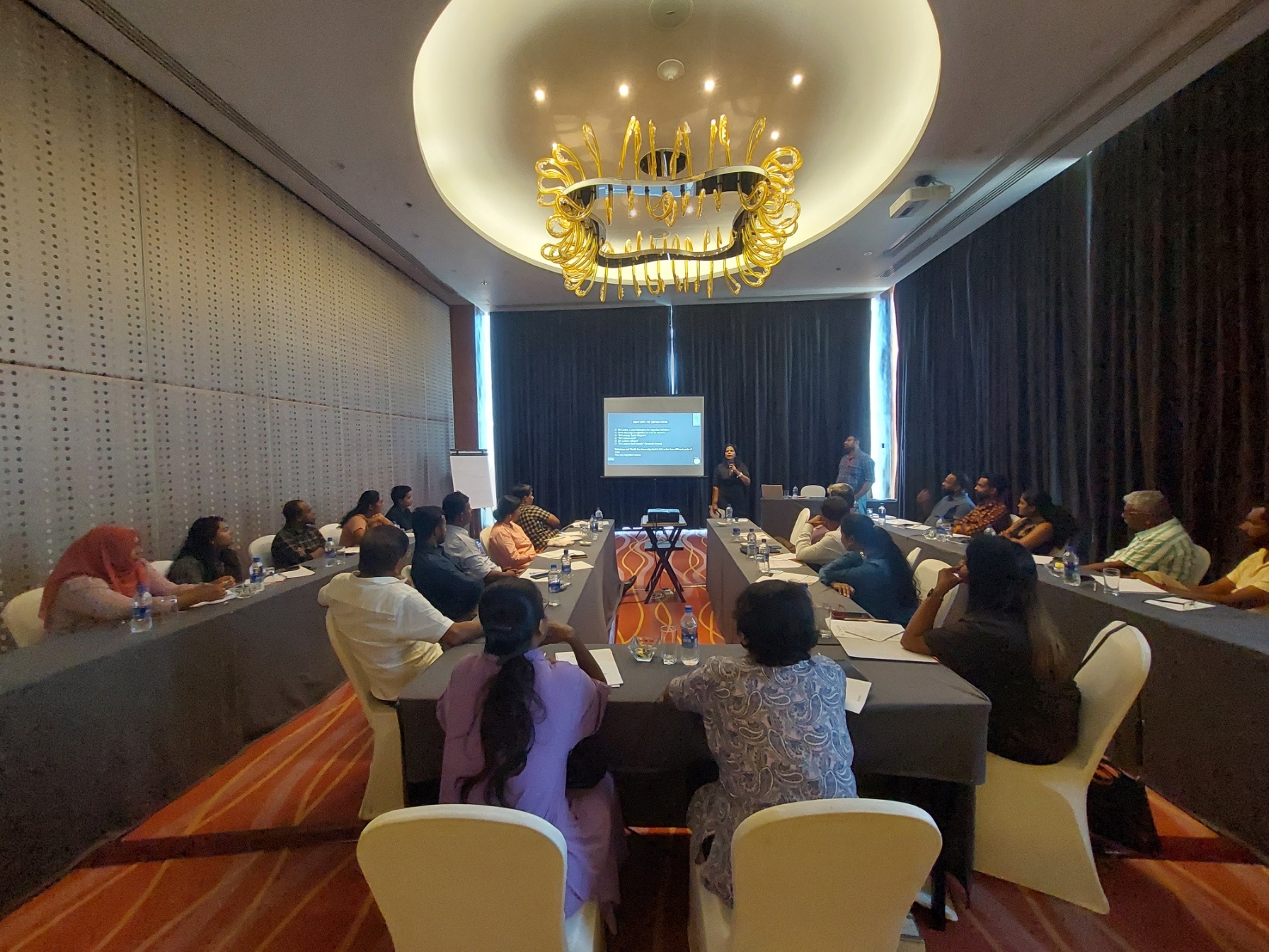
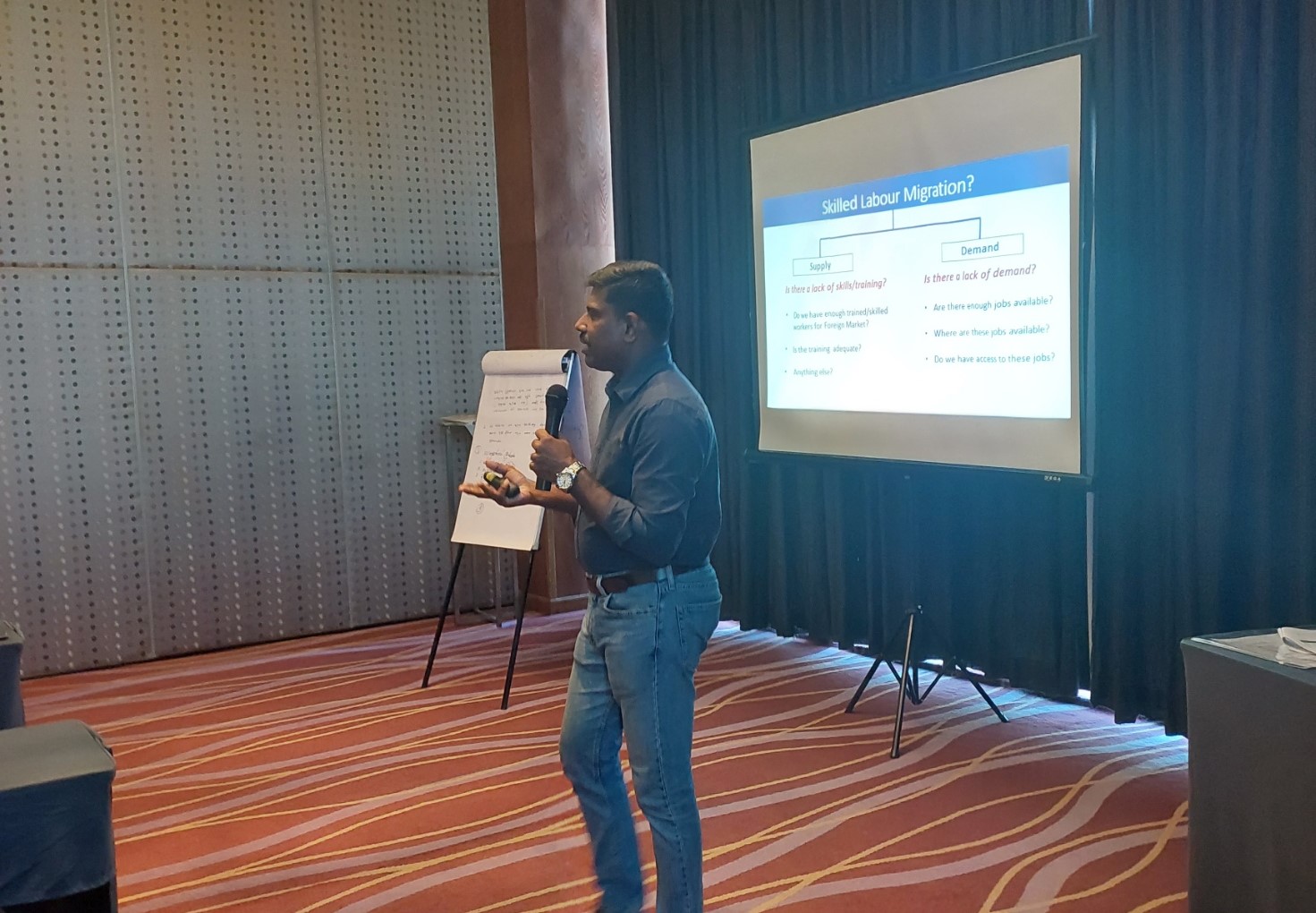
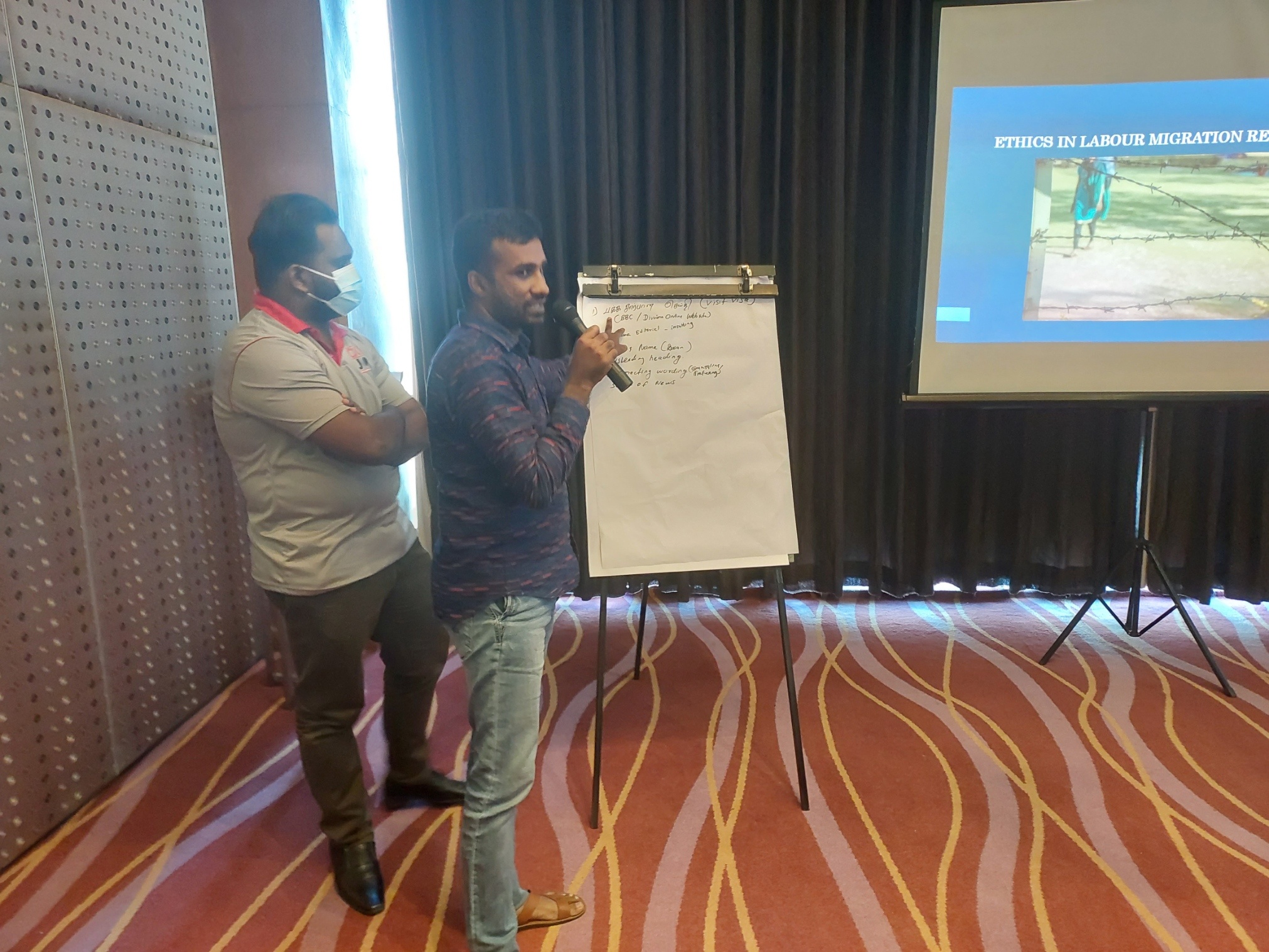
Bringing a three-part training series on reporting on skilled labour migration to an end, the Center for Investigative reporting (CIR) recently conducted two residential workshops in Anuradhapura for 39 journalists drawn from different districts in the country. Most participants were from districts with the highest percentage of migrant workers.

Conducted under CIR’s latest initiative titled “Reporting for Change on Skilled Migration”, two parallel training programs in Sinhala and Tamil were held on 25-26 June 2023 with a view to increasing the reporting skills of select journalists on skilled migration.

Senior journalists/ media trainers Dilrukshi Handunnetti and Shihar Aneez delivered the training programs. Chrishan Pereira, Deputy Chief of Party of IESC, YouLead, Sunil Hindaramulla, Senior Manager (North Central Province), Sri Lanka Bureau of Foreign Employment (SLBFE) and Imthath Basar, Senior Project Coordinator, International organization for Migration (IOM) contributed to the program as resource persons.

Participants have been offered an opportunity to apply for 30 reporting fellowships to produce in-depth stories on skilled migration. A panel of senior editors/ channel heads will provide mentoring support to the fellows. Fellowships will be announced later this week.

The ongoing program offered 60 journalists a training opportunity on how to report on international labour migration with a focus on skilled migration.

විමර්ශනාත්මක වාර්තාකරණ මධ්‍යස්ථානය විසින් පැවැත්වූ නිපුණ ශ්‍රමික සංක්‍රමණ වාර්තාකරණය පිළිබඳ පුහුණු අදියර සාර්ථකව අවසන්

වාර්තාකරණ අවස්ථා පිළිබඳව ප්‍රකාශයට පත්කිරීම මේ සතියේ

දිවයිනේ විවිධ ප්‍රදේශ, විශේෂයෙන්ම ඉහල ශ්‍රමික සංක්‍රමණයක් වාර්තා කෙරෙන දිස්ත්‍රික්ක, නියෝජනය කරමින් එක්වූ මාධ්‍යවේදීන් 39 ක ගේ සහභාගීත්වයෙන් නිපුණ ශ්‍රමික සංක්‍රමණ වාර්තාකරණය පිළිබඳ අවසන් නේවාසික පුහුණු වැඩමුළු දෙක පසුගිය සතියේදී සාර්ථකව පැවැත්විණි.

විමර්ශනාත්මක වාර්තාකරණ මධ්‍යස්ථානයේ නවතම මුලපිරීම වන “වෙනසක් සඳහා වූ නිපුණ ශ්‍රමික සංක්‍රමණය” තේමාව යටතේ, නිපුණ සංක්‍රමණය පිළිබඳ වාර්තාකරණය සම්බන්ධයෙන් මාධ්‍යවේදීන්ගේ ශක්‍යතාව ඉහළ නැංවීම වෙනුවෙන් වූ පුහුණුවීම් ද්විත්වයක් 2023 ජුනි 25 සහ 26 යන දිනවල සිංහල සහ දෙමළ භාෂාවලින් සමාන්තර ලෙස පවත්වන ලදී.

ජ්‍යෙෂ්ඨ මාධ්‍යවේදීන් වන දිල්රුක්ෂි හඳුන්නෙත්ති සහ ෂිහාර් අනීස් විසින් පුහුණු වැඩසටහන මෙහෙයවන ලදී. යූලීඩ් ((IESC, YoLead) හි නියෝජ්‍ය ප්‍රධානී ක්‍රිෂාන් පෙරෙයිරා, ශ්‍රී ලංකා විදේශ සේවා නියුක්ති කාර්යාංශයේ (SLBFE) ජ්‍යෙෂ්ඨ කළමනාකරු (උතුරු මැද පළාත) සුනිල් හින්දරමුල්ල සහ සංක්‍රමණය සඳහා වන ජාත්‍යන්තර සංවිධානයේ (IOM) ජ්‍යෙෂ්ඨ ව්‍යාපෘති සම්බන්ධීකාරක ඉම්තාත් බසාර් ආරාධිත කථිකයන් ලෙස සහභාගි විය.

පුහුණුවෙන් පසුව, සීමිත වාර්තාකරණ අවස්ථා ප්‍රමාණයක් සඳහා වාර්තාකරණ සංක්ෂිප්ත ඉදිරිපත් කිරීමට සහ නිපුණ සංක්‍රමණය පිළිබඳ විමර්ශනාත්මක වාර්තාකරණයක නියැලීම සඳහා අවස්ථාව සලසා දෙනු ඇත. ජ්‍යෙෂ්ඨ සංස්කාරකවරුන්/ ප්‍රවෘත්ති නාලිකා ප්‍රධානීන්ගෙන් යුත් මණ්ඩලයක් හරහා තෝරාගත් මාධ්‍යවේදීන්ට උපදේශන සහාය ලබා දෙනු ඇත. වාර්තාකරණ අවස්ථා මෙම සතිය අගදී ප්‍රකාශයට පත් කෙරේ.

නිපුණ ශ්‍රමික සංක්‍රමණය කෙරෙහි අවධානය යොමු කරමින් අන්තර්ජාතික නිපුණ ශ්‍රමික සංක්‍රමණය පිළිබඳව වාර්තා කරන්නේ කෙසේද යන්න පිළිබඳව මාධ්‍යවේදීන් 60 දෙනෙකුට පුහුණු අවස්ථාවක් මෙම වැඩසටහන මගින් ලබා දෙන ලදී.

புலனாய்வு அறிக்கையிடல் மையத்தின் திறன் தொழிலாளர் புலம்பெயர்வு பற்றிய ஊடகவியல் பயிற்சி நிறைவு

ஆழமான அறிக்கையிடலுக்காக தகுதிபெற்றோர் விபரம் அடுத்த வாரம் வெளியிடப்படும்

திறன் தொழிலாளர் புலம்பெயர்வு பற்றிய அறிக்கையிடல் தொடர்பான மூன்று பகுதிகளை கொண்ட பயிற்சித் தொடரை நிறைவு செய்யும் வகையில், புலனாய்வு அறிக்கையிடல் மையம் (CIR) அண்மையில் அனுராதபுரத்தில் நாட்டிலுள்ள பல்வேறு மாவட்டங்களில் இருந்தும் தெரிவுசெய்த 39 ஊடகவியலாளர்களுக்காக இரண்டு நாள் வதிவிட பயிற்சிகளை நடத்தியது. பெரும்பாலான பங்கேற்பாளர்கள் அதிக புலம்பெயர் தொழிலாளர்களை கொண்ட மாவட்டங்களைச் சேர்ந்தவர்களாவர்.

CIR இன் சமீபத்திய முயற்சியான “திறன் புலம்பெயர்வு பற்றிய மாற்றத்திற்கான அறிக்கையிடல்” என்ற தலைப்பில் நடத்தப்பட்ட, திறன் புலம்பெயர்வு குறித்த தெரிவு செய்யப்பட்ட ஊடகவியலாளர்களின் அறிக்கையிடல் திறனை அதிகரிக்கும் நோக்கில் 2023 ஜூன் மாதம் 25-26 திகதிகளில் சிங்களம் மற்றும் தமிழ் மொழி மூலம் இரண்டு பயிற்சிகள் சமாந்தரமாக நடாத்தப்பட்டன.

சிரேஷ்ட ஊடகவியலாளர்கள்/ ஊடகப் பயிற்றுவிப்பாளர்களான தில்ருக்ஷி ஹந்துன்நெத்தி மற்றும் ஷிஹார் அனீஸ் ஆகியோர் பயிற்சிகளை வழங்கினர். IESC, YouLead இன் பிரதித் தலைவர் கிரிஷான் பெரேரா, இலங்கை வெளிநாட்டு வேலைவாய்ப்புப் பணியகத்தின் (SLBFE) சிரேஷ்ட முகாமையாளர் (வடமத்திய மாகாணம்) சுனில் ஹிந்தரமுல்ல மற்றும் புலம்பெயர்வுக்கான சர்வதேச அமைப்பின் (IOM) சிரேஷ்ட திட்ட ஒருங்கிணைப்பாளர் இம்தாத் பாசார் ஆகியோர் வளவாளர்களாக பங்கேற்றனர்.

பங்குபற்றாளர்களுக்கு திறன் புலம்பெயர்வு பற்றி 30 ஆழமான அறிக்கையிடல் கதைகளுக்காக விண்ணப்பிப்பதற்கான வாய்ப்பு வழங்கப்பட்டுள்ளது. சிரேஷ்ட தலைமை ஆசிரியர்கள்/ அலைவரிசை பிரதானிகள் அடங்கிய குழாம் தெரிவுசெய்யப்படும் ஊடகவியலாளர்களுக்கு வழிகாட்டுதல்களை வழங்கும். தகுதி பெற்றோர் விபரம் இந்த வார இறுதியில் அறிவிக்கப்படும்.

இப்பயிற்சி தொடரானது 60 ஊடகவியலாளர்களுக்கு திறன் புலம்பெயர்வுகளை மையமாகக் கொண்டு சர்வதேச தொழிலாளர் புலம்பெயர்வு பற்றி அறிக்கையிடுவது எவ்வாறு என்பது குறித்த பயிற்சியை வழங்கியது.

CIR to conduct two intensive trainings on skilled migration in Anuradhapura

The second and third of a three-part training series under CIR’s latest initiative titled “Reporting for Change on Skilled Migration” will be held on 25-26 June 2023 in Anuradhapura.

The training will bring together 40 journalists, majority of them working in districts having the highest numbers of labour migration, to prepare them for   insightful and nuanced reporting on labour migration with special emphasis on skilled migration. After the training, those who submit the best pitches will qualify for a limited number of reporting fellowships and mentoring support from a panel of eminent senior journalists. The two training programs will be conducted in Sinhala and Tamil languages.

The intensive training will offer a sectoral overview of labour migration in Sri Lanka, migration patterns, challenges faced by workers abroad and how increased knowledge, skills and attitudes could contribute to enhanced incomes, work safety, increased options and ensuree secure, sustainable employment.

“Reporting for Change on Skilled Migration” is CIR’s latest training and in-depth reporting initiative and offers 60 Sri Lankan journalists an opportunity to receive intensive training on how to report on international labour migration with a focus on skilled migration. The top 30 will qualify for reporting fellowships.

නිපුණ ශ්‍රමික සංක්‍රමණය පිළිබඳ විස්තීර්ණ පුහුණු වැඩමුළු දෙකක් අනුරාධපුරයේදී

විමර්ශනාත්මක වාර්තාකරණ මධ්‍යස්ථානය විසින් “වෙනසක් සඳහා වූ නිපුණ ශ්‍රමික සංක්‍රමණය” තේමාව ඔස්සේ මෙහෙයවන ත්‍රිත්ව පුහුණු වැඩසටහන් මාලාවේ දෙවැන්න සහ තෙවැන්න 2023 ජුනි 25 – 26 දිනයන්හි අනුරාධපුරයේදී පැවැත්වේ.

ඉහළ ශ්‍රම සංක්‍රමණයක් දක්නට ලැබෙන දිස්ත්‍රික්කවල වාර්තාකරණයේ නියැලෙන මාධ්‍යවේදීන් බහුතරයක් ඇතුලත් වන පරිදි තෝරා ගත් මාධ්‍යවේදීන් 40 දෙනෙකු මෙම පුහුණු වැඩසටහන සඳහා තෝරා ගෙන ඇති අතර නිපුණ ශ්‍රමික සංක්‍රමණය පිළිබඳ විශේෂ අවධානයක් යොමු කරමින් හරවත් සහ සාධනීය වාර්තාකරණයක් සඳහා ඔවුන් සූදානම් කෙරෙනු ඇත. පුහුණුවෙන් පසු, හොඳම වාර්තාකරණ සංකල්පයන් ඉදිරිපත් කරන මාධ්‍යවේදීන් පිරිසකට සිය වාර්තාවන් ප්‍රකාශයට පත් කිරීම සඳහා සීමිත වාර්තාකරණ අවස්ථාවන් ප්‍රමාණයක් ප්‍රදානය කෙරෙන අතර ප්‍රවීණ මාධ්‍යවේදීන්ගෙන් සැදුම්ලත් මණ්ඩලයක් වෙතින් උපදේශන සහාය ලබා ගැනීමට ද අවස්ථාව සැලසේ. මෙම පුහුණු වැඩසටහන් ද්විත්වය, සිංහල සහ දමිළ භාෂාවලින් පැවැත්වේ.

මෙම පුහුණු වැඩසටහන් හරහා ශ්‍රී ලංකාවේ ශ්‍රම සංක්‍රමණය, සංක්‍රමණ රටා, විදේශගත ශ්‍රමිකයන් මුහුණ දෙන අභියෝග මෙන්ම දැනුම, කුසලතා සහ ආකල්ප වැඩි දියුණු කර ගැනීම මගින් ආදායම් ඉහළ නැංවීම, රැකියා සුරක්ෂිතභාවය, විකල්ප අවස්ථාවන් ඉහළ නැංවීම සහ සුරක්ෂිත, තිරසාර රැකියා සම්බන්ධයෙන් පැහැදිලි කෙරෙනු ඇත.

“වෙනසක් සඳහා වූ නිපුණ ශ්‍රමික සංක්‍රමණය” යනු විමර්ශනාත්මක වාර්තාකරණ මධ්‍යස්ථානය විසින් ගෙන එනු ලබන නව්‍ය මුලපිරීමක් වන අතර මේ හරහා ශ්‍රී ලාංකික මාධ්‍යවේදීන් 60 දෙනෙකුට නිපුණ ශ්‍රමික සංක්‍රමණය කෙරෙහි අවධානය යොමු කරමින් අන්තර්ජාතික ශ්‍රම සංක්‍රමණය පිළිබඳ වාර්තාකරණ පුහුණුවක් ලබා ගැනීමට අවස්ථාව සැලසේ. පුහුණුවේදී ඉහළ කුසලතා දක්වන මාධ්‍යවේදීන් 30 දෙනකු සඳහා ප්‍රායෝගික වාර්තාකරණ ප්‍රතිපාදන පිරිනැමේ.

CIR இன் இருநாள் திறன் புலம்பெயர்வு பயிற்சி அனுராதபுரத்தில்

புலனாய்வு ஊடக மையத்தின் (CIR) சமீபத்திய முயற்சியான “திறமையான தொழிலாளர் புலம்பெயர்வு பற்றிய மாற்றத்திற்கான அறிக்கையிடல்” இரண்டாம் மற்றும் மூன்றாம் பயிற்சி தொடர்கள் ஜூன் மாதம் 25ம் 26ம் திகதிகளில் அனுராதபுரத்தில் நடைபெறும். இந்த பயிற்சிகள் சிங்களம் மற்றும் தமிழ் மொழிகளில் நடாத்தப்படும்.

இந்த பயிற்சியில் அதிகமாக தொழிலாளர் புலம்பெயர்வு காணப்படுகின்ற மாவட்டங்களில் அறிக்கையிடலை மேற்கொள்கின்ற 40 ஊடகவியாளர்களை ஆழமான மற்றும் நுணுக்கமான அறிக்கையிடலுக்கு தயார்படுத்தும். பயிற்சி தொடருக்கு பின்,சிறந்த கதைக்கருக்களில் ஆழமான அறிக்கையிடலுக்காக தெரிவுசெய்யப்பட்டு பத்திரிகையாளர்கள் சிரேஷ்ட ஊடகவியலாளர்கள் குழாம் மூலம் வழிகாட்டல்களை பெறுவர்.

பயிற்சி தொடரானது இலங்கையில் தொழிலாளர் புலம்பெயர்வின் துறை சார் கண்ணோட்டம், புலம்பெயர்வு முறைகள், வெளிநாட்டில் தொழிலார்கள் எதிர்நோக்கும் சவால்கள் மற்றும் விருத்திசெய்துகொண்ட அறிவு, திறன்கள், மற்றும் நடத்தைகள், அதிகமான வருவாய், தொழில் செய்யும் போதான பாதுகாப்புக்கு, அதிகரிக்கப்பட்ட வாய்ப்புகள் என்பவற்றுடன் பாதுகாப்பை உறுதிசெய்தல் மற்றும் நிலையான தொழிலை செய்வதிலும் பங்களிப்பு செய்கின்றன.

திறன் தொழிலாளர் புலம்பெயர்வு பற்றிய மாற்றத்திற்கான அறிக்கையிடலானது CIR இன் புதிய அறிக்கையிடல் முயற்சியாகும். இதன் மூலம் சர்வதேச தொழிலாளர் புலம்பெயர்வு தொடர்பில் எவ்வாறு அறிக்கையிடுவது என்பது பற்றிய தீவிரபயிற்சியை 60 ஊடகவியலாளர்களுக்கு வழங்கப்படும். பயிற்றுவிக்கப்பட்ட ஊடகவியலாளர்களில் முப்பது பேர் மேலதிக ஆழமான அறிக்கையிடலுக்கான பயிற்சிகளை பெற தகுதிபெறுவர்.

COLOMBO, June 21, (CIR Authenticator) – Social media message claims “SriLankan Catering now sells food packs commercially”

Caption: WhatsApp message, source: WhatsApp messenger.

Context: SriLankan Catering is a fully owned subsidiary of loss-making national carrier, SriLankan. The government is in the process of divesting the airlines under the reforms it has undertaken with the $3 billion loan from the International Monetary Fund (IMF). The social media message circulating now suggests that SriLankan Catering has only recently begun selling meal packs commercially as if to cover for losses.

CIR Authenticator found that the new venture has been started in the fourth quarter of 2020. The food packs displayed in the picture are a range of ready to eat frozen meals released to the local supermarkets, under the branding of ‘Cuisine Gastronome’. As per the Annual Report of SriLankan Airlines for 2020-2021, the venture was expedited as an alternate revenue source during COVID-19 struggle.

Caption: Sri Lankan Airlines Annual Report 2020-21, source: https://www.srilankan.com/pdf/annual-report/SriLankan_Airlines_Annual_Report_2020-21_English.pdf

Currently, these meals are shelved in most supermarkets in Colombo and the suburbs, while also being exported to Australia, USA and Canada. These products are made in the same flight kitchen at the Bandaranaike International Airport used to prepare in-flight meals for the airline.

VERDICT: True, but the venture was launched in 2020, and not recently. During 2020/21 SriLankan Catering was running at a net loss (before taxation) of 960 million Sri Lankan rupees. However, the Annual Report 2021/22 reveals that the company recorded an operating profit of 474 million rupees. While this is mainly owing to the increase in passenger arrivals after the pandemic, it was also reported that the turnover from other ancillary business activities (to which this venture belongs) increased by 195%.

Caption: Sri Lankan Airlines Annual Report 2021-22, source: https://www.srilankan.com/pdf/annual-report/SriLankan_Airlines_Annual_Report_2021-22_E.pdf

Climate Change Media Partnership Reporting Fellowships to COP28

The Climate Change Media Partnership (CCMP), led by Internews’ Earth Journalism Network (EJN) and the Stanley Center for Peace and Security, is pleased to announce the CCMP COP28 Reporting Fellowship Program for journalists interested in covering the 28th United Nations Climate Change Conference of the Parties (COP28). Hosted this year by the United Arab Emirates, the conference is scheduled to take place in the city of Dubai from 30 November to 12 December 2023.


Overview

Now in its 16th iteration since its launch in 2007, the CCMP has brought more than 400 journalists from low- and middle-income countries to attend and report on the annual UN climate talks. This has enabled journalists from around the world to cover the climate negotiations for their home audiences, while benefiting from working alongside knowledgeable media trainers and gaining a multifaceted understanding of the actions countries are taking — or not taking — to address climate change’s global impact.

This year, the CCMP Reporting Fellowship aims to bring up to 20 journalists from low- and middle-income countries to report in-person at COP28.

In addition, CCMP organizers will award 10 virtual fellowships this year, with spots for up to five journalists from the Middle East and North Africa (MENA) region and up to five from the Lower Mekong region in two separate cohorts. Each cohort will have a dedicated media trainer supporting them from on the ground in Dubai. In the application, journalists will be asked to indicate which Fellowship track they are most interested in.

Applications for the CCMP COP28 Reporting Fellowship will be accepted from June 7-30. Decisions will be communicated in August. Applications submitted after the deadline will not be accepted, so please consider submitting at least one day before the deadline to avoid any issues.
 

In-Person Fellowship track logistics

CCMP In-Person Fellows will travel to Dubai to attend the entire duration of the UN climate negotiations, with arrival planned for November 28, 2023 and departure on December 14, 2023.

The CCMP will cover non-refundable economy-class airfare, accommodation, meals, travel medical insurance and ground transportation costs related to Fellowship participation. Organizers will also facilitate the press accreditation process and provide logistical support relating to the trip. Please note that the process of obtaining any necessary visas is the Fellow’s individual responsibility, though the CCMP will reimburse visa costs.

Prior to the start of COP28, Fellows will receive resources and technical support to help prepare for reporting at the conference, including a pre-COP virtual workshop to meet the team, discuss reporting opportunities, and ask any questions. Once in Dubai, Fellows will participate in a series of specially designed activities over the two-week period on the ground, including an orientation session with seasoned climate journalists and experts on the key issues at this COP, daily briefings, networking events and interviews with high-level officials. They will also be guided by EJN trainers, who are senior journalists with experience covering UN climate summits.

Virtual Fellowship track logistics

Virtual Fellowships will run from 30 November to 13 December 2023.

Virtual Fellows will be supported by a media trainer who will be on the ground in Dubai. Virtual Fellowships will include a number of online activities, mostly conducted over Zoom, including:

  • Regular meetings with trainers one-on-one and in groups about the latest COP news.
  • Support in accessing information about the COP, including documents and live-streamed events.
  • Group interviews with officials or other experts.
  • Assistance with sourcing and interview scheduling.
  • Mentoring and editing support for story development.
  • Possible virtual networking opportunities.
     

Eligibility  

To be eligible for the In-person Fellowship track, the applicant must: 

  • Be a professional journalist from or representing an established media house and reporting from a low- or middle-income country. 
  • Be available and willing to travel to Dubai to attend COP28 in person, arriving on November 28 and departing no earlier than December 14, 2023.
     

To be eligible for the Virtual Fellowship track, the applicant must: 

  • Be a professional journalist from or representing an established media house and reporting from a low- or middle-income country in the MENA or Lower Mekong regions, and a list of eligible countries is available here. 
     

To be eligible for either Fellowship track, the applicant must:

  • Have a good command of the English language.
  • Have previous experience reporting on climate change issues and clearly indicate the kinds of stories you might pursue about the conference.
  • Commit to participate in all Fellowship activities.
  • Provide a letter of support from an editor, producer, or supervisor who can confirm that your news reports will be published or broadcast in an established media outlet. Freelancers are welcome to apply but must provide a letter of support from a media outlet for which they intend to report.
  • Provide recent, relevant and journalistic work samples on climate change topics, which can be uploaded as documents or web links. Stories can be in any language as long as they are accompanied by a short English synopsis. Clips must focus on climate change topics. 

Note: You’ll be asked to upload these supporting documents once you start the application process, so please have them ready. 

For the purposes of this opportunity, we will only be accepting applications in English. Unfortunately, we do not have the capacity to consider applications in other languages at this time. Applicants must be able to participate fully in an English-language Fellowship to be awarded.

Applications are open to journalists working in any medium (online, print, television, radio). We encourage applications from freelance reporters and staff from all types of media organizations — international, national, local and community-based.

Journalists who attended COP26 or COP27 with EJN’s support are not eligible for this opportunity.

EJN reserves the right to disqualify applicants from consideration if they have been found to have engaged in unethical or improper professional conduct.
 

Judging criteria   

We are looking for applicants who meet the following criteria:

  • Demonstrated experience covering climate change, climate policy and other environmental topics;
  • A clear and well-researched reporting plan for the COP, including potential story ideas, an estimated number of stories they’ll produce during the Fellowship and demonstrated intention to continue developing their plan as the COP draws closer;
  • A relationship with an established media house and a signed letter of support from an editor agreeing to publish or broadcast work produced at the COP.

EJN also considers the need to assemble a diverse cohort of journalists from different types of media houses, mediums and geographies. 
 

Story logistics 

Fellows are expected to produce stories regularly during the course of the Fellowship for their media house. Journalists may produce stories in any medium, including print, online, radio, broadcast and more. 

Throughout the program, participating journalists are free to report as they see fit; however, as part of our program we may provide extra training or activities related to certain thematic topics, and encourage stories on these topics. We do ask that Fellows adhere to some basic editorial standards (which will be shared at the start of the Fellowship) and these guidelines: 

Language of publication: Stories produced as a result of this Fellowship can be in any language. We ask that Fellows provide English summaries of stories produced in other languages and fully translate at least one of their stories into English so it can be shared with a wider audience. Fellows may use a tool like DeepL or other automated translation apps for this purpose.

Acknowledgement of support: Published stories and/or broadcasts must disclose CCMP support by including this tagline, “This story was produced as part of the Climate Change Media Partnership COP28 Fellowship, organized by Internews’ Earth Journalism Network and the Stanley Center for Peace and Security.”

Republication rights: Those who are awarded Fellowships are free to publish or broadcast stories produced as a result of the Fellowship first in their affiliated media as long as Internews’ EJN, its local and regional partner sites and the grant funders are also given rights to edit, republish, broadcast and distribute them freely. Stories from COP28 that are filed by participating journalists may be republished on EJN’s website and may be cross-posted on the Stanley Center’s website.
 

Travel requirements and safety protocols   

In-person Fellows are responsible for ensuring that they meet any requirements for travel to the UAE. Applicants will be asked to indicate that they understand that participation in the Fellowship in-person in the UAE requires compliance with government and venue requirements, which may include proof of vaccine status and/or testing for COVID-19 before and during the conference. Applicants may be required to sign risk acknowledgment documentation indicating they understand and accept the risks associated with travel and partaking in in-person meetings.

Internews and the Stanley Center will be continuously assessing travel and health risks and will communicate those with Fellows ahead of the conference. All travel to participate in this Fellowship will be voluntary.
 

Application process

  • Click the ‘Apply now’ button at the top of this page.  
  • If you have an existing account, you’ll need to log in. Since we recently updated our website, you might have to reset your password by clicking the “Forgot password?” link in the login page. If you don’t have an account, you must register by clicking “Log in” on the top right of the page and click on the “Sign up” link at the bottom of the page that opens. Click here for detailed instructions on how to create an account, and here for detailed instructions on how to reset your password.  
  • If you start the application and want to come back and complete it later, you can click ‘Save Draft.’ To return to the draft, you’ll need to go back to the opportunity and click ‘Apply now’ again to finalize the application.  
     

This year’s CCMP Fellowship is organized and implemented in collaboration with the Stanley Center for Peace and Security, with generous support from Sida, Marisla Foundation, Friends Family Foundation, Smart Family Foundation and Flora Family Foundation. Additional funders may be confirmed later.

Applications submitted after the deadline will not be considered.  Please consider submitting at least one day in advance of the deadline to avoid any issues.  

If you encounter difficulties with submitting your application or have questions about the grants, please email info.ejn@internews.org. Do not contact any other Internews email regarding this opportunity, as we will not receive it.     


Banner image: 2023 CCMP logo / Credit: Stanley Center. 

Story Grants to Support Indigenous or Ethnic Minority Journalists to Carry Out Environmental Reporting in Asia Pacific

EJN is offering reporting grants to journalists from Indigenous and ethnic minority groups to support the production of in-depth stories that will call attention to climate justice, biodiversity and other issues related to the rights and well-being of Indigenous peoples and communities.  

Please read the following sections carefully, as they contain important information on eligibility and the application process.

Overview 

The Asia-Pacific region is home to a large number of Indigenous peoples and ethnic minorities, who may self-identify as tribal peoples, hill tribes, forest peoples, scheduled tribes, orang asli and adivasis, among others.

They are the custodians of some of the most biologically diverse territories in the world; in fact, Indigenous peoples’ relationship to their lands and resources forms the core of their cultural, spiritual, social and political identity, as recognized in the UN’s Report on the State of the World’s Indigenous Peoples.

However, Indigenous peoples and ethnic minorities face the brunt of environmental injustice and climate impacts. Across Asia Pacific, as in other regions, their rights and territories are under extreme threat. For example, logging, now exceeding more than 19 times the sustainable rate, is decimating the forests stewarded by Solomon Islanders; the race to mine nickel and cobalt for electric vehicle batteries is costing Indonesia’s Indigenous tribes their lives. In many countries, the rights of Indigenous peoples and ethnic minorities are violated in the name of conservation – as when forest dwellers are evicted from their ancestral lands for the creation of national parks.

Yet, Indigenous perspectives on these critical environmental and climate issues are largely missing from the media landscape. A telling Oxfam report from 2019 found that less than 5% of the articles in Indian digital media were produced by journalists from Scheduled Castes/Scheduled Tribes. This under-representation has consequences, perpetuating stereotypes and misinformation about Indigenous communities and ethnic minorities around the world.

To address this issue, EJN’s Asia-Pacific project, with support from Sida, is pleased to offer approximately 20-25 story grants to selected journalists who identify as Indigenous or belonging to an ethnic minority from the Asia-Pacific region with a story grant to support the production of in-depth stories on key environmental and climate issues impacting Indigenous or minority communities, while highlighting the role of traditional knowledge systems and land-use practices that address these threats and build resilience. In addition to funding, selected journalists will receive support from experienced mentors through the story production process.
 

Story themes 

We welcome any environmental story ideas including, but not limited to:

  • how environmental and climate change issues impact the rights and well-being of Indigenous peoples and/or ethnic minorities. 
  • How conservation efforts and climate action impact the rights and well-being of Indigenous peoples and/or ethnic minorities.
  • how traditional knowledge is being harnessed as a solution to intersecting crises of health, biodiversity and climate at the community level or in international multilateral spaces. 


Journalists may also propose story ideas that focus on sustainable resource use, agroecological practices and traditional land management customs, insomuch as they address the role of Indigenous peoples and ethnic minorities as guardians of the environment.

We aim to support the production of stories that raise awareness about key Indigenous issues and drive conversation among communities and policymakers at the local, national, and regional level. We are particularly interested in cross-border collaborations and stories. Proposals that focus on topics or stories that have not been widely covered are preferred. Issues that have already received a lot of media coverage or don’t provide unique angles to environmental or climate challenges are less likely to be selected.


Eligibility

Applicants must self-identify as Indigenous and/or belonging to an ethnic minority and will be asked to provide details in the application. We will accept applications from journalists residing in low- and middle-income countries in Southeast Asia, South Asia, East Asia and the Pacific Islands. We will not accept applications from Australia, New Zealand, Central Asia or Middle East.

Journalists who are not Indigenous and/or belonging to an ethnic minority group are not eligible for this opportunity; however, we will accept applications from groups consisting of a mix of Indigenous and non-Indigenous journalists. In these cases, the Indigenous journalist must be the lead applicant. Lead applicants are responsible for communicating with EJN and receiving funds on the group’s behalf, if awarded. 

For the purposes of this grant opportunity, we will accept applications in any major language but those we receive that are not in English will be subject to machine translation. Applicants must either have a working understanding of English or have a translator available to assist with communication with Internews staff.

Applications are open to journalists working in any medium (online, print, television, radio) and other expert media practitioners with professional reporting experience and a history of covering Indigenous and/or environmental issues. We encourage applications from freelance reporters and staff from all types of media organizations – international, national, local and community-based.

For this call, EJN invites applicants to pitch their story ideas in the form of a written proposal or a short video. If you are submitting a video application, please include English subtitles. 

EJN reserves the right to disqualify applicants from consideration if they have been found to have engaged in unethical or improper professional conduct.

Please note: Advocacy-focused stories, opinion editorials and/or strategic communications pieces will not be considered for support.


Story logistics

We plan to issue 20-25 grants of up to $2000 each by mid-July 2023 with the expectation that all stories will be published by November 30, 2023 at the latest. Applicants should consider this timeline when drafting their work plan.  

Safety: We encourage reporters to follow best practices  for Covid-19 when out in the field, so you do not endanger yourself or the people you’re interviewing. If needed, you should include any Covid-related costs, such as tests or personal protective equipment, in your budget.   

Language of publication: Stories can be produced in any language. We encourage stories that are produced in local languages for local audiences. However, applicants who intend to write or produce stories in their local language need to also include an English translation. Please include the cost for translation in the budget, if necessary.  

Story budget: All applicants are required to provide a detailed budget with justification for the amount requested using the template provided below. We ask that the budgets be reasonable and account for costs necessary for reporting, such as travel, accommodation, translation and data visualization.  

Generally speaking, applications with smaller budgets will be more competitive, but we will consider larger grant amounts for stories using innovative, collaborative or investigative approaches that may be more resource-intensive and time-consuming.

We expect that proposals will largely reflect what equipment the applicant already has access to (including cameras, drones, lighting, tripods, etc.) and will not consider budgets that heavily focus on purchasing new equipment.   

We will consider a stipend for the reporters’ salary (not to exceed more than 30% of the total budget), particularly if the applicant is a freelancer. 

Acknowledgement of EJN support: Published stories and/or broadcasts must disclose EJN support by including this tagline: “This story was produced with support from Internews’ Earth Journalism Network.” Exceptions may be considered on a case-by-case basis.

Republication rights: Those who are awarded grants are free to publish or broadcast their stories first in their affiliated media as long as Internews’ EJN, its partners and the grant funder are also given rights to edit, publish, broadcast and distribute them freely.   


Judging criteria

Applicants should consider the following judging criteria when devising their story proposals.

  • Relevance: Does the proposal meet the criteria and objectives of the call? Why does this story matter and to whom? Is the main idea, context and overall value to the target audience clearly defined?
  • Objectivity: Is the proposed story likely to be a balanced and objective journalistic report? Journalists should take care that proposed sources represent (or at the very least, invite comment from) a diversity of stakeholders and perspectives: affected communities, scientists and researchers, policy experts and government officials and industry spokespersons. Advocacy-focused or communications pieces will not be considered.
  • Angle: If the story has been covered, does your proposal bring new insights to the topic or offer a fresh angle?
  • Impact: Does the proposal have a compelling narrative or investigative element that will inform and engage, draw attention, trigger debate and urge action?
  • Innovative storytelling: The use of creative approaches, multimedia and data visualization will be considered a plus.
  • Geographical diversity: Geographical distribution will be considered for the selection of grantees.
  • Outlet: Stories that will be published or broadcast by media outlets that target Indigenous and ethnic minority audiences will be prioritized.
  • Plan for timely publication: Reporters, whether freelance or employed at a media outlet, will need to include a letter of support from an editor in their application, committing to publish or broadcast their stories by November 30, 2023.
     

Examples of environmental stories about Indigenous Peoples


Application process

  • Click the ‘Apply now’ button at the top of the page.  
  • If you have an existing account, you’ll need to log in. Since we recently updated our website, you might have to reset your password by clicking the “Forgot password?” link in the log in page. If you don’t have an account, you must register by clicking “Log in” on the top right of the page and click the “Sign up” link at the bottom of the page that opens. Click here for detailed instructions on how to create an account, and here for detailed instructions on how to reset your password.  
  • You may apply for this opportunity by submitting a written proposal in any language or a short video. If you submit a video application, please include English subtitles. If you start the application and want to come back and complete it later, you can click ‘Save Draft.’ To return to the draft, you’ll need to go back to the opportunity and click ‘Apply now’ again to finalize the application. Applications should provide a detailed budget in an Excel spreadsheet with justification for the amount requested. Download the budget template now by clicking on this link. 


If you encounter difficulties with submitting your application or have questions about the grants, please email info.ejn@internews.org. Do not contact any other Internews email regarding this opportunity, as we will not receive it.

Applications submitted after the deadline will not be considered.


Banner image: The Ifugao, an Indigenous tribe from the northern Philippines, are particularly vulnerable to the impacts of climate change / Credit: Imelda Abaño.

CIR successfully concludes the first training on skilled labour migration reporting

The Center for Investigative Reporting (CIR) recently conducted a two-day training for 22 journalists on how to report on labor migration with special emphasis on skills.

The first of a three-part training series under CIR’s latest initiative titled “Reporting for Change on Skilled Migration,” the training was conducted on 9-10 June 2023 at the Raddison Hotel in Colombo.

An organization offering cutting edge training opportunities to journalists in Sri Lanka and South Asia, the intensive two-day program covered journalism best practices in reporting on migration and brought in domain experts to speak on highly relevant topics. The program included both informational and practical content.

Senior journalists Dilrukshi Handunnetti and Shihar Aneez conducted the training. Chrishan Pereira, Deputy Chief of Party of IESC, YouLead, Senarath Yapa, Deputy General Manager (Training & Recruitment), Sri Lanka Bureau of Foreign Employment ( SLBFE) and Imthath Basar, Senior Project Coordinator, International organization for Migration (IOM) served as guest speakers.

Following the training, participants were invited to pitch for a limited number of reporting fellowships and produce in-depth stories on skilled migration. A panel of senior editors/channel heads will offer mentoring support to the select fellows.

The next two trainings will be delivered in Anuradhapura end of this month.

“Reporting for Change on Skilled Migration” is CIR’s latest training and reporting initiative and offers 60 Sri Lankan journalists an opportunity to receive training on how to report on international labour migration with a focus on skilled migration with the top 30 receiving reporting fellowships.

නිපුණ ශ්‍රමික සංක්‍රමණ වාර්තාකරණය පිළිබඳ පළමු පුහුණුව සාර්ථකව අවසන්

විමර්ශනාත්මක වාර්තාකරණ වාර්තාකරණ මධ්‍යස්ථානය විසින් නිපුණතා පිළිබඳ අවධාරණයක් සහිතව නිපුණ ශ්‍රමික සංක්‍රමණ වාර්තාකරණය සම්බන්ධයෙන් වන දෙදින පුහුණු වැඩසටහනක් මාධ්‍යවේදීන් විසි දෙදෙනෙකුගේ සහභාගීත්වයෙන් පසුගියදා සාර්ථකව අවසන් කෙරිණි.

“වෙනසක් සඳහා වූ නිපුණ ශ්‍රමික සංක්‍රමණ වාර්තාකරණය” තේමාව ඔස්සේ පැවැත්වීමට නියමිත පුහුණු වැඩසටහන් මාලාවේ පළමුවැන්න ලෙස මෙම වැඩසටහන 2023 ජුනි 9 සහ 10 දෙදින පුරා කොළඹ රැඩිසන් හෝටලයේදී පැවැත්විණි.

ශ්‍රී ලංකාවේ සහ දකුණු ආසියාවේ මාධ්‍යවේදීන්ට අති නවීන පුහුණු අවස්ථා පිරිනමන සංවිධානයක් වශයෙන්, මෙම දෙදින විස්තීර්ණ වැඩසටහන මඟින් සංක්‍රමණ වාර්තකාරණයේ යහපිළිවෙත් සම්බන්ධයෙන් සාකච්ඡා කෙරුණු අතර සුවිශේෂී මාතෘකා ඉදිරිපත් කිරීම සඳහා ක්ෂේත්‍රයේ ප්‍රවීණයන් පිරිසක් සහභාගි කර ගැනිණි. වැඩසටහන සඳහා තොරතුරු සම්පිණ්ඩනයන් සහ ප්‍රායෝගික ක්‍රියාකාරකම් රාශියක් අන්තර්ගත විය.

ජ්‍යෙෂ්ඨ මාධ්‍යවේදීන් වන දිල්රුක්ෂි හඳුන්නෙත්ති සහ ෂිහාර් අනීස් විසින් පුහුණු වැඩසටහන මෙහෙයවන ලදී. යූලීඩ් (IESC, YoLead) හි නියෝජ්‍ය ප්‍රධානී ක්‍රිෂාන් පෙරෙයිරා, ශ්‍රී ලංකා විදේශ සේවා නියුක්ති කාර්යාංශයේ (SLBFE) නියෝජ්‍ය සාමාන්‍යාධිකාරී (පුහුණු සහ බඳවා ගැනීම්) සෙනරත් යාපා සහ සංක්‍රමණය සඳහා වන ජාත්‍යන්තර සංවිධානයේ (IOM) ජ්‍යෙෂ්ඨ ව්‍යාපෘති සම්බන්ධීකාරක, ඉම්තාත් බසාර් ආරාධිත කථිකයන් ලෙස සහභාගි විය.

පුහුණුවෙන් පසුව, සීමිත වාර්තාකරණ අවස්ථා ප්‍රමාණයක් සඳහා වාර්තාකරණ සංක්ෂිප්ත ඉදිරිපත් කිරීමට සහ නිපුණ සංක්‍රමණය පිළිබඳ විමර්ශනාත්මක වාර්තාකරණයක නියැලීම සඳහා අවස්ථාව සලසා දෙනු ඇත. ජ්‍යෙෂ්ඨ සංස්කාරකවරුන්/ ප්‍රවෘත්ති නාලිකා ප්‍රධානීන්ගෙන් යුත් මණ්ඩලයක් හරහා තෝරාගත් මාධ්‍යවේදීන්ට උපදේශන සහාය ලබා දෙනු ඇත.

මීළඟ පුහුණුවීම් ද්විත්වය මෙම මස අගදී අනුරාධපුරයේදී පැවැත්වීමට නියමිතය.

“වෙනසක් සඳහා වූ නිපුණ ශ්‍රමික සංක්‍රමණය” යනු විමර්ශනාත්මක වාර්තාකරණ මධ්‍යස්ථානය විසින් මෙහෙයවනු ලබන නවතම පුහුණු සහ වාර්තාකරණ මුලපිරීම වන අතර ශ්‍රී ලාංකික මාධ්‍යවේදීන් 60 දෙනෙකුට නිපුණ ශ්‍රමික සංක්‍රමණය කෙරෙහි අවධානය යොමු කරමින් අන්තර්ජාතික නිපුණ ශ්‍රමික සංක්‍රමණය පිළිබඳ වාර්තා කරන්නේ කෙසේද යන්න පිළිබඳ පුහුණුවක් ලබා ගැනීමට අවස්ථාව ලබා දෙයි.

CIR தொழிலாளர்புலம்பெயர்வு அறிக்கையிடலின் முதல் பயிற்சியை வெற்றிகரமாக நிறைவுசெய்தது.

புலனாய்வு அறிக்கையிடல் மையம் (CIR) அண்மையில் 22 ஊடகவியலாளர்களுக்கு தொழிலாளர் புலம்பெயர்வு அறிக்கையிடல் ஒன்றை மேற்கொள்வது எவ்வாறு என்பதோடு திறன்களை விருத்திசெய்வது தொடார்பான இரண்டு நாள் பயிற்சி ஒன்றை ஏற்பாடு செய்திருந்தது.

CIR இன் புதிய முயற்சியான ‘திறன் தொழிலாளர் புலம்பெயர்வு பற்றிய மாற்றத்திற்கான அறிக்கையிடலின்’

மூன்று பாகங்களை கொண்ட இந்த பயிற்சி தொடரின் முதல் கட்டமான பயிற்சி செயலமர்வு ஜுன் மாதம் 9ம் 10ம் திகதிகளில் கொழும்பு ரெட்டிஸன் ஹோட்டலில் நடைபெற்றது.

இந்த இரண்டு நாள் பயிற்சியானது மிக பொருத்தமான தலைப்புகளை கலந்துரையாடுவதற்கு துறைசார் நிபுணர்களையும், புலம்பெயர்வு அறிக்கையிடலுக்கான சிறந்த ஊடகவியல் நடைமுறைகளையும் உள்ளடக்கியதாக காணப்பட்டது. மேலும் இதில் நிரல் தகவல்கள் உட்பட பயிற்சி நடைமுறைகளும் உள்வாங்கப்பட்டிருந்தன.

சிரேஷ்ட ஊடகவியலாளர்களான தில்ருக்ஷி ஹதுன்னெத்தி மற்றும் ஷிஹார் அனீஸ் பயிற்சிகளை முன்னெடுத்தனர். மேலும் கிரிஷான் பெரேரா, துணை தலைவர் IESC, YouLead, செனரத் யாப்பா, பிரதி பொது முகாமையாளர் (பயிற்றுவிப்பும் ஆட்சேர்ப்பும் ) இலங்கை வெளிநாட்டு வேலைவாய்ப்பு பணியகம் (SLBFE) மற்றும் இம்தாத் பஸார், சிரேஷ்ட நிகழ்ச்சி ஒருங்கமைப்பாளர், புலம்பெயர்வு மற்றும் கடத்தல் தடுப்பு, இடம்பெயர்வுக்கான சர்வதேச அமைப்பு (IOM) ஆகியோர் சிறப்பு வளவாளர்களாக கலந்துகொண்டனர்.

பயிற்சி செயலமர்வை தொடர்ந்து, பங்குபற்றியவர்களிடம் இருந்து திறன் தொழிலாளர் புலம்பெயர்வு தொடர்பான ஆழமான அறிக்கையிடலுக்கான கதை கதைக்கருக்கள் வரவேற்கப்பட்டுள்ளன.

இந்த மாதம் இறுதியில் இரண்டாவது பயிற்சி செயலமர்வு அனுராதபுரத்தில் நடைபெற ஏற்பாடுகள் செய்யப்பட்டுள்ளன.

திறன் தொழிலாளர் புலம்பெயர்வு பற்றிய மாற்றத்திற்கான அறிக்கையிடல் ஆனது CIR இன் புதிய அறிக்கையிடல் முயற்சி என்பதோடு இதன் மூலம் இத்துறையில் சிறந்த ஊடகவியல் நடைமுறைகள் பற்றிய பயிற்சியை 60 ஊடகவியலாளர்களுக்கு வழங்குவதோடு பயிற்றுவிக்கப்பட்ட ஊடகவியலாளர்களில் முப்பது பேர் மேலதிக ஆழமான அறிக்கையிடலுக்கான பயிற்சிகளை பெற தகுதிபெறுவர்.

GIJN Names Emilia Díaz-Struck as New Executive Director

0
By GIJN Staff| June 8, 2023

“Empowering our network”: Emilia Díaz-Struck comes to GIJN after groundbreaking work that included the Pulitzer-winning Panama Papers. Image: ICIJ

Award-winning journalist Emilia Díaz-Struck has been named the incoming executive director of the Global Investigative Journalism Network, an association of more than 240 investigative journalism nonprofits throughout the world.

Díaz-Struck will join GIJN as editor-at-large in mid-August, and then become executive director in September at the biennial conference of the network in Gothenburg, Sweden, September 19- 22.

GIJN’s founding executive director, David Kaplan, announced last year his intention to retire in 2023. Kaplan has guided the dramatic expansion of GIJN in activities and staff for more than ten years.

Díaz-Struck comes to GIJN from the International Consortium of Investigative Journalists, where she has played a key role in groundbreaking global investigations into corruption and money laundering, including the Pulitzer-Prize-winning Panama Papers.

Brant Houston, chair of the GIJN board of directors, said that Díaz-Struck was unanimously chosen after an extensive five-month search.

“We are extremely pleased that Emilia Díaz-Struck will join GIJN as executive director,” Houston said. “Highly respected in the investigative journalism community, she brings a broad range of experience and skills; she’s been a reporter, a data editor, a co-founder of a local media organization, a journalism educator, and a manager at high-impact global investigative collaborations. She has the vision, passion, and experience to lead GIJN at a time of enormous challenges for investigative reporting worldwide.”

Díaz-Struck said: “I am thrilled to have been given the opportunity to work with GIJN’s excellent staff in 24 countries, the board, and the global investigative journalism community. Together, we will continue empowering our network and strengthening the reach we have as investigative journalists around the world.”

Díaz-Struck emphasized that GIJN plays an essential role for investigative journalists.

“These are exciting and challenging times for our profession,” she said. “We will continue developing a space that allows journalists to share knowledge, innovative techniques, and resources. This will help develop stories that are vital for democracies and citizens on all continents. The courage, quality, and passion that our global community puts into each investigation continues to be a great source of inspiration to me. I am immensely honored to be in a position that can help us build the future of our craft together.”

Kaplan praised the selection of Díaz-Struck and said he looked forward to working with her during the transition.

“Thanks to our extraordinary supporters around the globe, GIJN has never been stronger,” Kaplan noted. “At a time when watchdog media is under siege worldwide, we are in more languages, in more countries, and training more journalists with the latest tools and tech. What better time to pass the torch to a new generation of investigative journalists.”

“Emilia Díaz-Struck,” Kaplan added, “represents the best of our profession — a consummate reporting pro, a data journalism pioneer, an educator, and an inspiring leader. I have no doubt Emilia will take GIJN and our global community to the next level.”

Díaz-Struck will become the new executive director as GIJN celebrates its 20th anniversary at the Global Investigative Journalism Conference.

Díaz-Struck has worked for over a decade on more than 20 ICIJ award-winning investigative collaborations, including: Offshore Leaks, Panama Papers, Implant Files, FinCEN Files, and Pandora Papers. As part of her collaborative efforts, she has worked with journalists in more than 110 countries and territories and has been a popular speaker at GIJN’s conferences.

She also has led ICIJ’s data and research team, a multidisciplinary group that has mined millions of records, coordinated efforts with journalists to retrieve public data from dozens of jurisdictions using records requests, and produced datasets and resources for reporters around the world. Díaz-Struck also coordinated ICIJ’s partnerships in Latin America, helping expand the consortium’s network in the region.

Díaz-Struck began her journalism career in Venezuela where she was a pioneer in data journalism and investigative reporting collaborations. She also co-founded the investigative newsroom Armando.info and was a professor at the Central University of Venezuela.

She was investigative reporter and coordinator at the Press and Society Institute of Venezuela (IPYS Venezuela) and helped with fundraising efforts there.

She has been a contributor to many newsrooms, including the Washington Post, El Universal, and El Mundo in Venezuela, and was a reporter in residence for the New England Center for Investigative Reporting at Boston University and CONNECTAS. She also has been a guest lecturer at Columbia University.

As executive director, Díaz-Struck will assume the leadership of a network that has experienced phenomenal growth under the guidance of Kaplan and GIJN’s board of directors.

GIJN has grown from 35 member nonprofits in 2003 to 244 in 90 countries in 2022. It had an annual budget in 2022 of US$2.3 million with staff in 24 countries. It has more than 400,000 social media followers and since 2012 has trained more than 15,000 journalists at conferences, workshops, and webinars. It also has awarded more than 1,000 conference fellowships to journalists from developing and transitioning countries and developed a multilingual resource center with more than 1,500 tip sheets, reporting guides, and videos accessed by journalists daily from 140 countries.

Original Link – GIJN Names Emilia Díaz-Struck as New Executive Director – Global Investigative Journalism Network

CIR to conduct first journalism training on skilled migration in June

The first of a three-part training series under CIR’s latest initiative titled “Reporting for Change on Skilled Migration” will be held on 9-10 June 2023 in Colombo.

The training will bring together 20 journalists selected through a competitive process and having experience or aptitude to undertake in-depth reporting on labour migration.

The training will offer a sectoral overview, migration patterns, challenges faced by workers abroad and how increased knowledge, skills and attitudes could contribute to enhanced incomes, work safety, increase options and provide secure, sustainable employment. The two-day training will prepare journalists to undertake insightful and nuanced reporting. They will receive guidance from a panel of eminent journalists.

“Reporting for Change on Skilled Migration” is CIR’s latest training and in-depth reporting initiative and offers 60 Sri Lankan journalists an opportunity to receive training on how to report on international labour migration with a focus on skilled migration. The top 30 will qualify for reporting fellowships.

With a population of over two million Sri Lankans working abroad and a continuous outflow of workers each year, Sri Lanka continues to face multiple challenges regarding migrant workers despite a long history as a labour exporting country.

නිපුණ ශ්‍රමික සංක්‍රමණය පිළිබඳ පළමු පුහුණු වැඩසටහන ජූනි මාසයේදී

විමර්ශනාත්මක වාර්තාකරණ මධ්‍යස්ථානය විසින් “වෙනසක් සඳහා වූ නිපුණ ශ්‍රමික සංක්‍රමණය” තේමාව ඔස්සේ මෙහෙයවන පුහුණු වැඩසටහන් මාලාවේ පළමුවැන්න 2023 ජුනි 9 – 10 දිනයන්හිදී කොළඹදී පැවැත්වේ.

විවෘත සහ තරඟකාරී ක්‍රියාවලියක් හරහා වූ නිපුණ ශ්‍රමික සංක්‍රමණය සම්බන්ධයෙන් වාර්තාකරණ පළපුරුද්ක් සහිත හෝ ශක්‍යතාව සහිත මාධ්‍යවේදීන් 20 දෙනෙකු මේ සඳහා තෝරා ගැනිණි.

ක්ෂේත්‍රය පිළිබඳ විශ්ලේෂණයක්, ශ්‍රමික සංක්‍රමණ රටා, විදේශයන්හිදී ශ්‍රමිකයන් මුහුණ දෙන අභියෝග සම්බන්ධයෙන් මෙන්ම දැනුම, කුසලතා සහ ආකල්ප වැඩි දියුණු කර ගැනීම හරහා ආදායම්, රැකියා සුරක්ෂිතභාවය, විකල්ප රැකියා අවස්ථා සහ සුරක්ෂිත, තිරසාර රැකියා අවස්ථා ඉහල නංවා ගැනීමේ හැකියාව පිළිබඳව මෙහිදී අවබෝධයක් ලබා දෙනු ඇත. මෙම දින දෙකක පුහුණුව හරහා හරවත් සහ සියුම් වාර්තාකරණයක නියැලීම සඳහා මාධ්‍යවේදීන් සූදානම් කෙරෙනු ඇත. පළපුරුදු ජ්‍යේෂ්ඨ මාධ්‍යවේදීන් කණ්ඩායමක් මේ සඳහා සිය මග පෙන්වීම ලබා දෙනු ඇත.

“වෙනසක් සඳහා වූ නිපුණ ශ්‍රමික සංක්‍රමණය” යනු විමර්ශනාත්මක වාර්තාකරණ මධ්‍යස්ථානය විසින් ගෙන එනු ලබන නව්‍ය මුල පිරීමක් වන අතර මේ හරහා ශ්‍රී ලාංකික මාධ්‍යවේදීන් 60 දෙනෙකුට නිපුණ ශ්‍රමික සංක්‍රමණය කෙරෙහි අවධානය යොමු කරමින් අන්තර්ජාතික ශ්‍රම සංක්‍රමණය පිළිබඳ වාර්තාකරණ පුහුණුවක් ලබා ගැනීමට අවස්ථාව සැලසේ. පුහුණුවේදී ඉහළ කුසලතා දක්වන මාධ්‍යවේදීන් 30 දෙනකු ප්‍රායෝගික වාර්තාකරණ ප්‍රතිපාදන පිරිනැමේ.

ශ්‍රම අපනයන රටක් ලෙස දීර්ඝ ඉතිහාසයක් තිබියදීත්, විදේශයන්හි සේවය කරන මිලියන දෙකකට අධික ශ්‍රී ලාංකික ජනගහනයක් සහිත සහ සෑම වසරකම අඛණ්ඩව ශ්‍රමික ගලනයක් පෙන්වන ශ්‍රී ලංකාව සංක්‍රමණික ශ්‍රමිකයන් සම්බන්ධයෙන් බහුවිධ අභියෝගවලට නිරන්තරයෙන් මුහුණ දෙයි.

திறன் தொழிலாளர் புலம்பெயர்வு பற்றிய முதலாவது பயிற்சி ஜூன் மாதம் ஆரம்பம்

CIR இன் சமீபத்திய மற்றும் ஆழமான அறிக்கையிடல் முயற்சியான “திறன் தொழிலாளர் புலம்பெயர்வு பற்றிய மாற்றத்திற்கான அறிக்கையிடல்” இன் கீழ் நடைபெறும் மூன்று பகுதிகளை கொண்ட பயிற்சிதொடரின் முதல் பயிற்சி செயலமர்வு 2023 ஜூன் மாதம் 9ம் 10ம் திகதிகளில் கொழும்பில் நடைபெறும்.

இந்த பயிற்சி திறன் தொழிலாளர் புலம்பெயர்வு தொடர்பான ஆழமான அறிக்கையிடலை மேற்கொள்ளக்கூடிய அனுபவம் அல்லது ஆற்றலை கொண்ட தெரிவுசெய்யப்பட்ட 20 ஊடகவியலாளர்களை ஒன்றிணைக்கும்.

மேலும் இந்த பயிற்சியானது புலம்பெயர்வு முறைகள்இ தொழிலாளர்கள் எதிர்நோக்கும் பிரச்சினைகள் மற்றும் திறன்இ அறிவு ஆற்றல் மனப்பாங்கு என்பன எவ்வாறு வருமானத்தை அதிகரிக்க உதவும்இ தொழில் பாதுகாப்பு பாதுகாப்பை வழங்குதல் நிலையான வேலைவாய்ப்பு தொடர்பான துறைசார்ந்த கண்ணோட்டத்தை பெற்றுக்கொள்ள உதவும். இவ் இருநாள் பயிற்சியானது ஊடகவியலாளர்களை ஆழமான அறிக்கையிடலை மேற்கொள்ள வழிகாட்டுவதோடு புகழ்பெற்ற சிரேஷ்ட ஊடகவியலாளர் குழாமிடமிருந்து வழிகாட்டுதல்களையும் பெற்றுக்கொள்ள வழிவகிக்கும்.

CIR இன் சமீபத்திய மற்றும் ஆழமான அறிக்கையிடல் முயற்சியான “திறன் தொழிலாளர் புலம்பெயர்வு பற்றிய மாற்றத்திற்கான அறிக்கையிடல்” பயிற்சித்தொடரிற்கு தெரிவுசெய்யப்படும் 60 ஊடகவியலாளர்களுக்கு பயிற்சிபெற வாய்;ப்பளிக்கப்படுகிறது. இவர்களில் முப்பது பேர் மேலதிக ஆழமான அறிக்கையிடலுக்கான பயிற்சிகளை பெற தகுதிபெறுவர்.

தொழிலாளர்களை ஏற்றுமதி செய்யும் நாடாக நீண்ட வரலாற்றை கொண்ட இலங்கையிலிருந்து ஒவ்வொரு ஆண்டும் தொடர்ச்சியாக தொழிலாளர் புலம்பெயர்கின்றனர் இரண்டு மில்லியனுக்கும் அதிகமானவர்கள் வெளிநாட்டில் பணிபுரிகிற போதும் இலங்கை புலம்பெயர்வு தொழிலாளர்கள் தொடர்பாக பல சவால்களுக்கு தொடர்ந்தும் முகம்கொடுத்து வருகிறது.