

Speed Read:
- Rupee slides past Rs. 350 as Sri Lanka faces fresh economic pressure
- Fuel shock, inflation fears and forex strain test Sri Lanka’s recovery
- Exporters remain divided over the benefits of a weaker currency
- Construction and manufacturing sectors face rising operational costs and project disruptions
COLOMBO – Sri Lanka’s fragile economic recovery is facing renewed pressure as the Sri Lankan rupee rapidly depreciates against the US dollar, exposing the country to rising import costs, inflation risks and growing uncertainty across key sectors of the economy.
The rupee’s decline, which saw the dollar briefly exceed Rs. 350 in the local market this week, has triggered intense political debate, concern among businesses and warnings from economists over mounting pressure on foreign exchange reserves and living costs.
While the government insists the depreciation is being driven primarily by external shocks linked to the escalating Middle East conflict, opposition parties and some analysts argue that weakening market confidence, policy uncertainty and structural vulnerabilities are accelerating the pressure on the currency.
Deputy Minister of Finance and Planning Anil Jayantha Fernando defended the government’s handling of the situation, saying the depreciation was “not the result of any government policy or wrong decision,” but rather the consequence of a global crisis triggered by the conflict in the Middle East.
Speaking at a media briefing, he said the war had sharply increased global fuel prices, shipping charges, insurance costs, fertilizer prices and other import-related expenses, placing severe strain on Sri Lanka’s dollar demand.
“The demand for the dollar has increased while the supply available to meet that demand has become limited in the short term. As a result, the exchange rate rose abnormally and exceeded Rs. 350,” he said.
Fuel imports and rising dollar demand
The sharp increase in Sri Lanka’s fuel import bill has emerged as one of the main drivers behind the currency pressure.
Sri Lanka’s fuel import expenditure surged dramatically in recent months as global oil prices climbed amid fears of supply disruptions linked to tensions in the Middle East and concerns surrounding shipping routes such as the Strait of Hormuz and Red Sea corridors.
Deputy Minister Anil Jayantha said Sri Lanka’s monthly fuel import bill had risen from around $120 million-$200 million to approximately $521 million by May.
Central Bank (CBSL) Governor Nandalal Weerasinghe told the Parliament Committee on Public Finance that the country’s petroleum import expenditure during the first four months of the year had already reached nearly two-thirds of the total spent throughout 2025.
“At the same time, tourism also has slowed down. Although imports have increased significantly, exports have not performed to the same extent,” he said.
The imbalance between rising import expenditure and weaker foreign currency inflows has widened pressure on the foreign exchange market, causing the rupee to weaken further.
The National Chamber of Exporters (NCE) cautioned that while some exporters may experience short-term gains from a weaker currency, the broader economy remains highly vulnerable because Sri Lanka depends heavily on imported raw materials and intermediate goods.
Sri Lanka imported approximately $11.8 billion worth of intermediate goods in 2025, including fuel, textiles, chemicals, plastics and industrial materials critical for manufacturing and construction, according to the NCE.
Inflation fears return
The weakening rupee is also reviving concerns about inflation at a time when households are already struggling with high living costs following the 2022 economic collapse.
As an import-dependent economy, Sri Lanka is highly exposed to currency depreciation because a weaker rupee increases the cost of fuel, food, medicine, industrial inputs and other essential imports.
Government ministers have acknowledged that inflationary pressure is likely to intensify.
Minister Vijitha Herath said the weaker rupee could push up the price of imported goods and contribute to broader inflation across the economy.
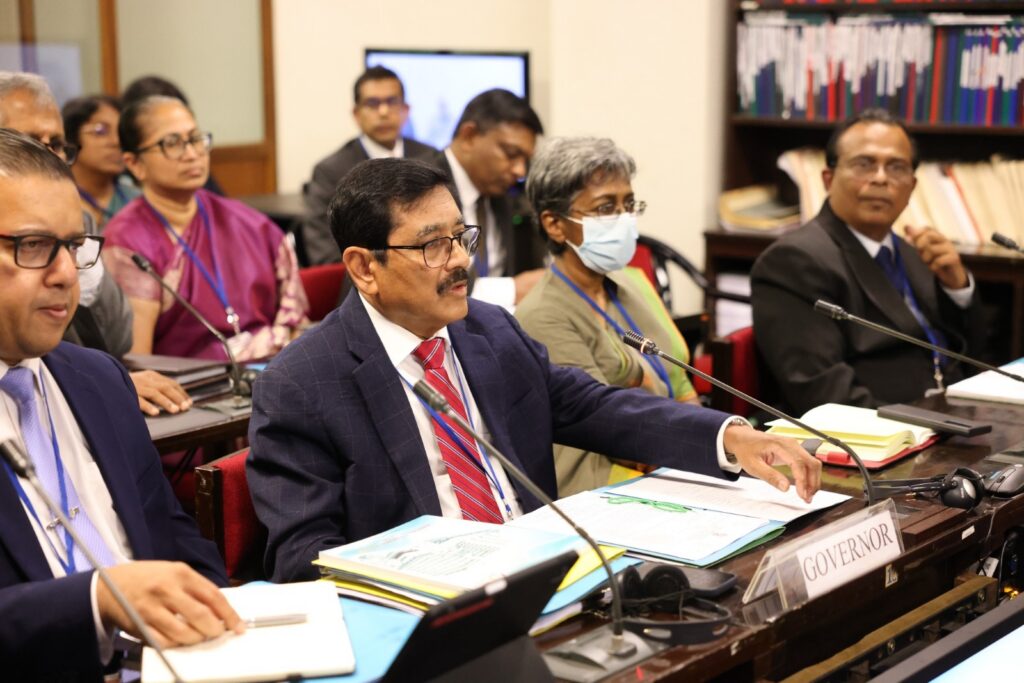
According to official data, Sri Lanka’s headline inflation rose sharply to 5.4% in April 2026 from 2.2% in March, partly driven by higher domestic energy prices.
Opposition parties have accused the government of failing to shield ordinary citizens from the impact of the depreciation.
The United National Party noted that while exporters may benefit from higher returns due to the weaker currency, “employees and the general public will suffer due to a rising cost of living.”
Opposition Leader Sajith Premadasa also questioned the government in Parliament over what measures were being taken to ease economic hardship and reduce pressure on middle- and low-income families.
“The people of this country are facing extremely difficult conditions. The government must explain what steps are being taken to provide relief,” he said.
Premadasa announced that the Opposition has decided to formally request President Anura Kumara Dissanayake to immediately convene an all party conference to discuss and develop urgent solutions.
Export sector divided
The depreciation has exposed divisions within Sri Lanka’s export sector over whether a weaker rupee is ultimately beneficial or harmful to the economy.
The Joint Apparel Association Forum (JAAF) maintained that the current depreciation should be viewed within the context of wider global currency pressures rather than as evidence of economic failure.
JAAF noted that several regional currencies, including the Indian rupee, Nepalese rupee and Indonesian rupiah, have also weakened against the US dollar in recent weeks.
“This is not a Sri Lanka-specific situation,” JAAF Chairman Felix Fernando noted issuing a statement.
“Global factors, including instability in the Middle East, higher fuel costs and rising shipping costs, are placing pressure on currencies across emerging and developed economies alike.”
Fernando said that a competitive exchange rate could strengthen export competitiveness, improve foreign exchange earnings and help protect jobs in sectors such as apparel manufacturing.
“A weaker rupee does not mean the economy is failing,” he said.
However, the NCE was of the view that the long-term costs of currency depreciation could outweigh short-term export gains because many Sri Lankan industries rely heavily on imported machinery, chemicals, textiles and industrial inputs priced in dollars.
For manufacturers, rising import costs are already squeezing profit margins and increasing operational uncertainty.
Cautions of project disruptions
Sri Lanka’s construction industry has also raised alarm over the impact of the depreciating rupee on infrastructure projects and material costs.
The National Construction Association of Sri Lanka cautioned that many projects could stall unless the government revises price fluctuation formulas used in public contracts.
Association’s Chairperson M. Darinton Paul told media contractors are struggling to absorb rapidly rising import costs for electrical, mechanical and petroleum-based materials.
“There is no way that we can construct these roads,” he said, referring to rising bitumen prices linked to Middle East oil market disruptions.
The industry also cautioned of shortages of imported materials and increasing uncertainty in the private construction sector, where many contracts do not include protection against exchange rate volatility.
Confidence crisis in the forex market
Beyond global pressures, some economists and opposition lawmakers argue that declining market confidence is worsening volatility in Sri Lanka’s foreign exchange market.
Economist and lawmaker Harsha de Silva warned of what he described as a “vicious cycle” driven by panic, speculation and weakening trust in the market.
“Markets operate on trust. If market trust collapses, the market itself collapses,” he said.
According to de Silva, exporters are delaying dollar conversions in anticipation of further depreciation, while importers are rushing to secure foreign currency before rates climb higher.
He also claimed that market activity had effectively frozen at certain points due to uncertainty over exchange rate direction and price discovery.
“Today there isn’t even a rate in the market. There isn’t a single bid or offer,” he said.
IMF support critical
Amid the uncertainty, the government is banking heavily on upcoming foreign financial inflows to stabilize the rupee and restore confidence.
Sri Lanka expects the International Monetary Fund (IMF) Executive Board to consider the combined fifth and sixth reviews of the country’s Extended Fund Facility program on May 27.
If approved, Sri Lanka is expected to receive approximately $700 million from the IMF, alongside additional financial support from the Asian Development Bank (ADB) and the World Bank.
Deputy Minister Anil Jayantha expressed confidence that the inflows would ease pressure on the currency market.
“At present, the midpoint in the interbank foreign exchange market has come down to around Rs. 330,” he said.
President Anura Kumara Dissanayake also sought to reassure the public that Sri Lanka would not return to conditions similar to the 2022 economic collapse.
“In 2022, the Central Bank did not have dollars either. Today, the CBSL holds nearly $7 billion in reserves,” he said.
“We will never allow any shortage of imported fuel, gas, milk powder or fertilizer.”
Still, Opposition Leader Sajith Premadasa has urged the government to begin negotiations for a successor IMF program beyond March 2027, warning that Sri Lanka remains vulnerable to external shocks and may struggle to meet reserve accumulation targets under the current arrangement.
“The window to negotiate from relative strength is open,” Premadasa said.
Global crisis testing Sri Lanka’s recovery
The current pressure on the rupee highlights how vulnerable Sri Lanka’s recovery remains to external shocks, particularly in energy markets and global financial conditions.
The escalation of conflict in the Middle East has disrupted shipping routes, increased oil prices and strengthened the US dollar globally, placing strain on import-dependent economies with limited fiscal space.
IMF Managing Director Kristalina Georgieva recently cautioned that prolonged instability and oil prices above $100 per barrel could slow global growth, increase inflation and force countries into tighter monetary policies.
For Sri Lanka, the challenge now extends beyond defending the rupee. The country must simultaneously manage inflation, maintain investor confidence, protect foreign reserves and prevent another crisis of public trust in the economy.
While the government insists the current pressure is manageable and fundamentally different from the collapse of 2022, economists warn that restoring confidence will require not only external financial support, but also clear policy direction, market transparency and credible long-term economic management.
This story was written and edited by Gagani Weerakoon. She leads the editorial at the Center for Investigative Reporting (CIR).
This story was produced with support from Report for the World, a global media service strengthening local independent journalism.