

Speed Read:
- Tea workers allege debt bondage and restrictions on movement in Sri Lanka’s private estates.
- Amnesty International documents labor abuses that may amount to forced labor under ILO indicators.
- Housing dependency and lack of social protections leave workers vulnerable.
- Government rejects allegations and promises improvements for estate communities.
COLOMBO- For years, Chithra Devi* counted down the days until she could escape.
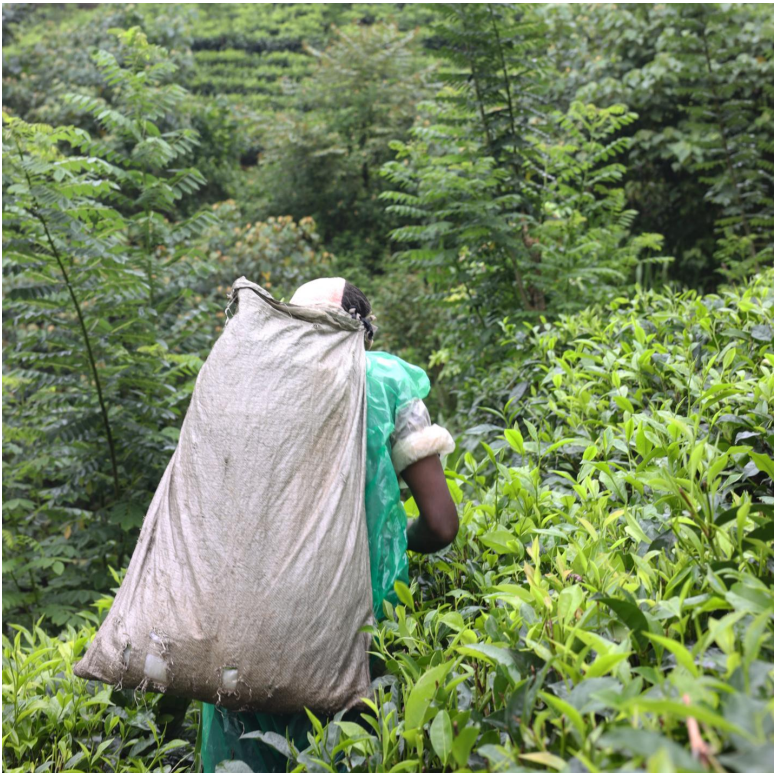
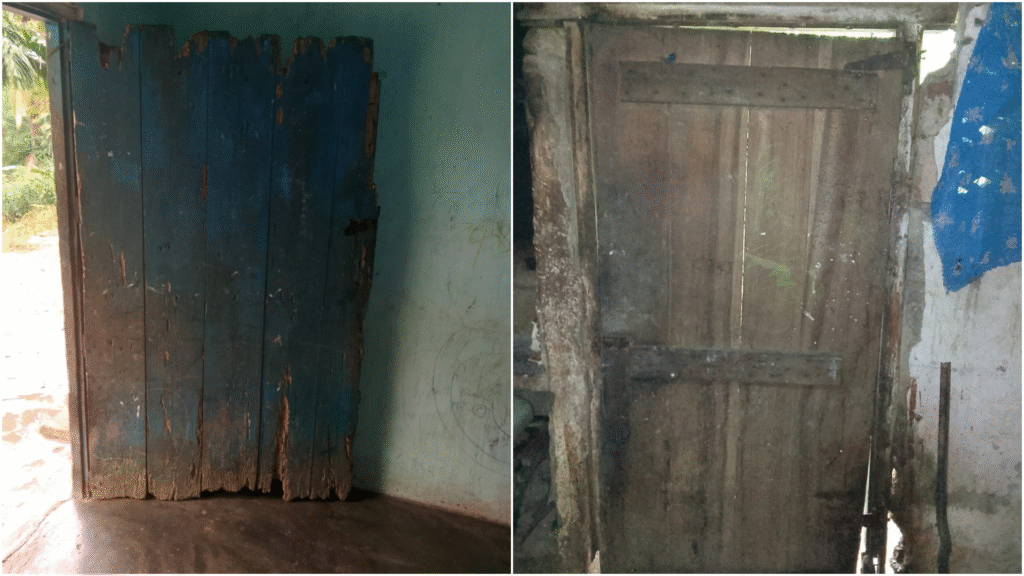
Every morning, she woke before dawn and walked into the tea fields of a privately owned estate in Sri Lanka’s Southern province. Every evening, she returned to a small house beside a fertilizer storage facility, where the smell of chemicals lingered in the air and breathing often became difficult.
Chithra, a Malaiyaha Tamil worker, married to a Sinhalese worker employed at the same estate, had one goal: escape.
“It felt like a prison,” she said.
Today, sitting in her mother’s modest home with her two-year-old child in her lap, Chithra recalls the night she finally fled.
Her husband left the estate earlier that day, telling management he needed medical treatment. Hours later, after midnight, Chithra quietly gathered a few clothes, picked up her sleeping child and slipped into the darkness.
“I had been waiting for that day for years,” she said.
What she left behind, she says, was a life controlled by debt, restrictions and fear.
Vicious cycle of debt
According to Chithra, workers on the estate were expected to meet strict daily tea-plucking targets.
Failure came at a cost.
“If we did not meet the target, two days of work would be counted as one,” she said. “That meant less money at the end of the month.”
The wages they earned rarely lasted.
Workers were compelled to buy groceries from a shop linked to the estate owner. Medical emergencies required loans from management. At month’s end, deductions were made from salaries to repay debts.
“The owner would calculate everything,” Chithra said. “We never really knew how much we owed. After deductions, there was never enough money left. Then we had to borrow again.”
The result was a cycle that many workers say they could not escape.
Debt became not merely a financial burden but a mechanism of control.
“When you owe money, you cannot leave,” Chithra said.
Even after fleeing, she says, debt followed her.
She and her husband later learned they were expected to continue repaying loans allegedly taken by her mother.
“We have worked on estates for more than five years,” she said. “We have never received records showing our Employees’ Provident Fund (EPF) or Employees’ Trust Fund (ETF) contributions. We do not have pay slips or documents proving anything.”
Documents taken; freedom restricted
Chithra says estate management held workers’ National Identity Cards (NIC) and restricted their movement.
“Only one person from a family could leave the estate at a time,” she said. “They kept our identity cards.”
Without identification documents, workers found it difficult to seek employment elsewhere, access government services or leave permanently.
Labor activists say such restrictions are not uncommon.
Devakumar, deputy secretary of the Ceylon Workers’ Red Flag Union, says his organization has handled numerous complaints involving debt disputes, confiscation of documents and restrictions on movement in privately owned estates across the Southern province.
“In many cases, workers borrow Rs. 10,000 and later discover the amount has become Rs. 100,000,” he said. “Identity cards, birth certificates and even children’s clinic cards are sometimes taken away so families cannot leave.”
According to him, fear often prevents workers from challenging employers.
“Many workers believe that if they complain, they could lose both their jobs and their homes,” he said.
Amnesty’s findings
Chithra’s experience is not an isolated case. According to a recent Amnesty International report titled “Abandoned by the State, Trapped in Private Estates: Rights Abuses Against Sri Lanka’s Malaiyaha Tamil Tea Workers,” hundreds of Malaiyaha Tamil workers in private tea estates across Sri Lanka’s Southern Province report similar patterns of debt, dependency and control.
The two-year investigation, conducted between January 2024 and January 2026, examined conditions in 45 private tea estates and smallholdings in Galle and Matara districts. Researchers interviewed 159 workers, estate managers and supervisors.
The report alleges that many workers are subjected to conditions that may amount to forced labor under indicators established by the International Labour Organization (ILO).
Researchers documented allegations of debt bondage, restrictions on movement, intimidation, physical and sexual violence, abusive working conditions and exploitation of workers’ economic vulnerability.
“Private tea estates in Sri Lanka are systematically violating labor laws in their treatment of Malaiyaha Tamil workers with no accountability,” said Smriti Singh, Amnesty International’s regional director for South Asia.
The report argues that historical discrimination against the Malaiyaha Tamil community has created conditions that make workers especially vulnerable to exploitation.
Landlessness and dependency
One of Amnesty’s most significant findings concerns housing.
Workers on all 45 estates visited said they depended on employers for accommodation.
This dependence, researchers argue, leaves families trapped.
Fear of eviction often discourages workers from reporting abuse, joining trade unions or seeking alternative employment.
For many, home and workplace are inseparable.
“If you lose your job, you lose your house too,” one worker told researchers.
Human rights advocates say this dynamic creates a powerful imbalance.
Attorney-at-law and social activist Balachandran Gouthaman described the situation as the result of decades of exclusion from land ownership programs and government housing initiatives.
“These communities have historically been left out of many state support systems,” he said during a panel discussion following the report’s release. “That creates a poverty trap that reproduces itself across generations.”
The cost of casual labor
Amnesty’s report found that nearly 90% of workers interviewed were classified as casual laborers despite working under conditions resembling permanent employment.
The designation carries serious consequences.
Workers reported having little or no access to maternity benefits, pensions, paid sick leave or employment protections.
Many said they did not know whether employers were making mandatory contributions to their Employees’ Provident Fund or Employees’ Trust Fund accounts.
For women workers, the consequences can be especially severe.
Lechchumanan Kamaleswari, project director of the Centre for Equality and Justice, said women often continue working despite injuries or illness because missing work means losing income.
“They have no social safety net,” she said. “Many continue working under extremely difficult conditions because they simply cannot afford to stop.”
Barriers to justice
Workers interviewed by Amnesty reported significant obstacles when attempting to seek legal remedies.
According to labor activists and attorneys, complaints to police, labor officials and other authorities frequently produce little result.
Activist Vijay Kumar Sukumaran said many workers fear retaliation.
“The barriers begin the moment a worker decides to make a complaint,” he said. “Workers know that reporting abuse could jeopardize their employment, housing and livelihoods.”
Some workers also reported hostility toward trade union activity.
Researchers found that many estates either discouraged union membership or lacked union representation altogether.
Labor advocates argue that the absence of independent worker representation allows abuses to continue unchecked.
Government pushes back
The Sri Lankan government has rejected Amnesty International’s conclusions.
Responding to concerns raised in Parliament on June 9, Plantation and Community Infrastructure Minister Samantha Vidyarathna said the government’s position was that the allegations were inaccurate.
“The government’s view is that the matters raised by the international human rights organization are not correct,” he said.
The minister noted that the government is preparing an official response and pointed to initiatives aimed at improving conditions for estate workers, including wage increases, housing projects and land ownership programs.
Vidyarathna also highlighted efforts to expand housing allocations for estate families and said the administration is accelerating implementation with support from the Indian government.
A midnight escape, but not freedom
Today, Chithra is free from the estate she once described as a prison. Yet the debt she thought she had escaped continues to shadow her family.
Still, she says she would make the same choice again.
On the night she fled, she carried her sleeping child through the darkness with no certainty about what would come next.
What she did know was that staying meant surrendering any hope of a different future.
“I wanted my child to have a different life,” she said.
For thousands of Malaiyaha Tamil workers living in private estates across southern Sri Lanka, that hope remains elusive—a future where work does not come with debt, housing is not tied to employment, and freedom does not require a midnight escape.
*Real name changed for their safety.
This story was written and edited by Gagani Weerakoon. She leads the editorial at the Center for Investigative Reporting (CIR).
This story was produced with support from Report for the World, a global media service strengthening local independent journalism.