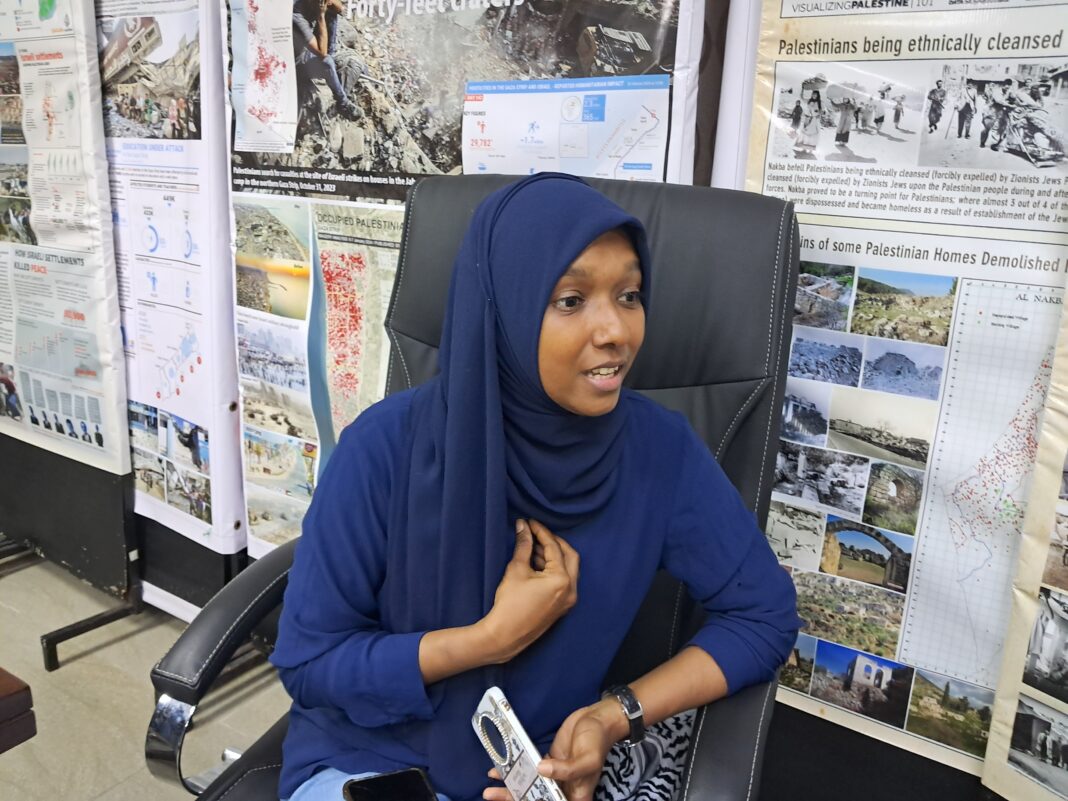

After days in detention and treating injured activists with improvised medical supplies, a mother of two, humanitarian worker and Gaza flotilla participant returned home with a message she says the world needs to hear.
COLOMBO- By the time Sameera Mahboobdeen stepped back onto Sri Lankan soil, she had spent days in detention, treated wounded activists with improvised medical supplies, endured what she describes as psychological and physical abuse, and witnessed suffering she says she will never forget.
Yet the 39-year-old mother of two was not thinking about rest. Instead, she decided to tell her story of her journey which she believes has “only strengthened her resolve to speak for Palestinians.”
“It sends a chill along my spine when I think about it,” she said. “But this is the truth that the world needs to know.”
A humanitarian activist, emergency medic, forensic psychologist, criminologist and mental health practitioner, Sameera became one of the most recognizable faces of Sri Lanka’s solidarity movement for Palestine after joining the international Global Sumud Flotilla mission to Gaza.
The mission sought to challenge Israel’s blockade of Gaza by delivering humanitarian aid to Palestinians facing acute shortages of food, medicine and essential supplies.
For Sameera, however, the decision was not driven by idealism.
“It wasn’t actually motivation,” she said. “The correct terminology is desperation.”
“This was the only thing we could do”
For years, Sameera had tried to support Palestinians through medical and humanitarian initiatives.
“As a Sri Lankan, as a medic, do we have any other means to support Palestine? It’s very limited,” she said.
She had previously worked with Palestinian medical students through online programs and counseling initiatives.
“I worked with medical students in Palestine. We lost students during the conflict. We lost children while we were doing lectures. My desperation was higher than ever.”
Attempts to enter Palestine through humanitarian organizations had repeatedly failed.
“Because of my ‘weak’ passport, many organizations were reluctant to take me. Joining the flotilla felt like the only direct action I could take to show that Sri Lankans care about Palestine.”
The decision came at a personal cost.
Her journey was largely self-funded. Her husband helped finance the mission, while portions of her travel expenses were later covered by organizers when her stay abroad extended beyond what she had anticipated.
“They are my biggest asset,” she said of her family. “I was so concerned about my children because I had never left them for that long. But they managed beautifully.”
Before departure, she underwent specialized disaster-response training in Turkey, preparing for what participants believed was a likely interception by Israeli forces.
Nonviolence was central to the mission.
Activists were trained not to resist physically if confronted.
Drones, warships and silence
The voyage began routinely enough.
Then came the drones.
“On May 17, we started seeing a lot of drone movement and warships in the distance,” Sameera recalled.
“We knew we were being followed.”
The following day, communications abruptly stopped.
“There was no mobile data. Our CCTV was cut. Our communications were cut. Shortly afterward, we were intercepted.”
According to Sameera, two Israeli warships approached the vessel.
“They asked us to stand up, put our hands up and turn toward their warship.”
The activists refused.
“They boarded our boat forcefully. We were in international waters. We were not in their territorial waters. We were not going to Israel. We were going to Gaza with aid.”
“The trauma started the moment we stepped onto the ship”
What followed remains vivid in her memory. The moment Sameera sensed all their lives are going to be in danger she threw her mobile phone to the sea as none of the activists didn’t want to compromise thousands of others involved in the mission. There were over 400 participants in 50 boats intercepted by Israeli forces. All members of the flotilla made sure their phones were not compromised and then they threw away all the tools and knives that could be used to harm any life.
“The trauma and brutality started the moment we stepped onto that ship,” she said.
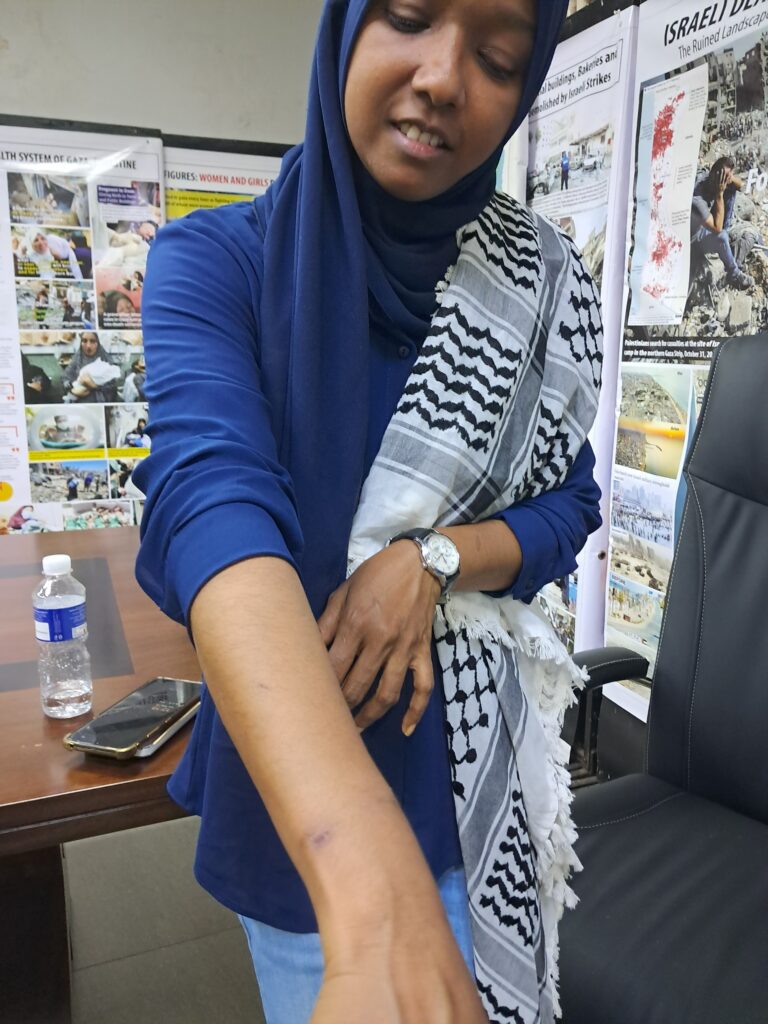
She alleges activists were dragged, forced to kneel and stripped of life jackets and warm clothing despite cold weather conditions.
“It was very cold. They took our warm clothes. They took our life jackets.”
One by one, detainees were taken into what she described as a dark container guarded by armed personnel.
“They tried to take off my hijab. I resisted.”
An Israeli soldier then demanded she remove her jewelry.
“He told me he would rip off my nose ring if I didn’t remove it myself.”
Moments later, she emerged to find fellow activists injured.
“I saw comrades beaten up, bleeding, with rib fractures.”
As one of the few trained medics among the detainees, she immediately began treating the wounded.
The problem was that there were virtually no medical supplies.
“We used frozen flatbread to bandage our comrades using T-shirts and water bottles.”
The injuries, she said, were severe.
“There were fractures, taser wounds and head injuries. People had been punched in the face. One of my comrades sustained 15 burn injuries from a taser.”
She also alleged that some women were physically assaulted.
“Women were punched in the face. Their noses were broken. They were beaten in their stomachs.”
“We didn’t think some would survive the night”
For the next three days, Sameera said, detainees were held in shipping containers.
The conditions were harsh.
The containers lacked proper protection from the cold and offered little comfort.
“We didn’t know the time. We didn’t know where we were.”
Medical concerns quickly mounted.
“We didn’t think some of them could make the night.”
Food and water, she said, were scarce.
“We had to fight and demand water. We had to demand food.”
She described nights punctuated by intimidation and fear.
“People were terrified and traumatized.”
According to Sameera, guards mocked detainees and celebrated their suffering.
“They laughed at us. They clapped when our people suffered.”
Inside Detention
After arriving in Ashdod, Sameera said conditions worsened.
She alleged detainees were subjected to prolonged restraints, humiliation and psychological pressure.
“We were handcuffed. Our legs were cuffed.”
She described overcrowded detention facilities where some detainees struggled to breathe.
“They put us into tiny rooms. People started screaming because they couldn’t breathe.”
Food and water remained limited, she said.
The detainees were repeatedly moved between cells and awakened throughout the night.
“They used dogs to traumatize us.”
One of the most haunting memories came from the prison cells themselves.
“We didn’t see any Palestinians, but we could feel their presence.”
Arabic writing covered the walls.
“There were children’s drawings. Alphabets were written on the walls.”
For Sameera, the markings were a reminder of those who had occupied the cells before them.
Sri Lanka Mobilizes
Back home, concern for the activists was growing.
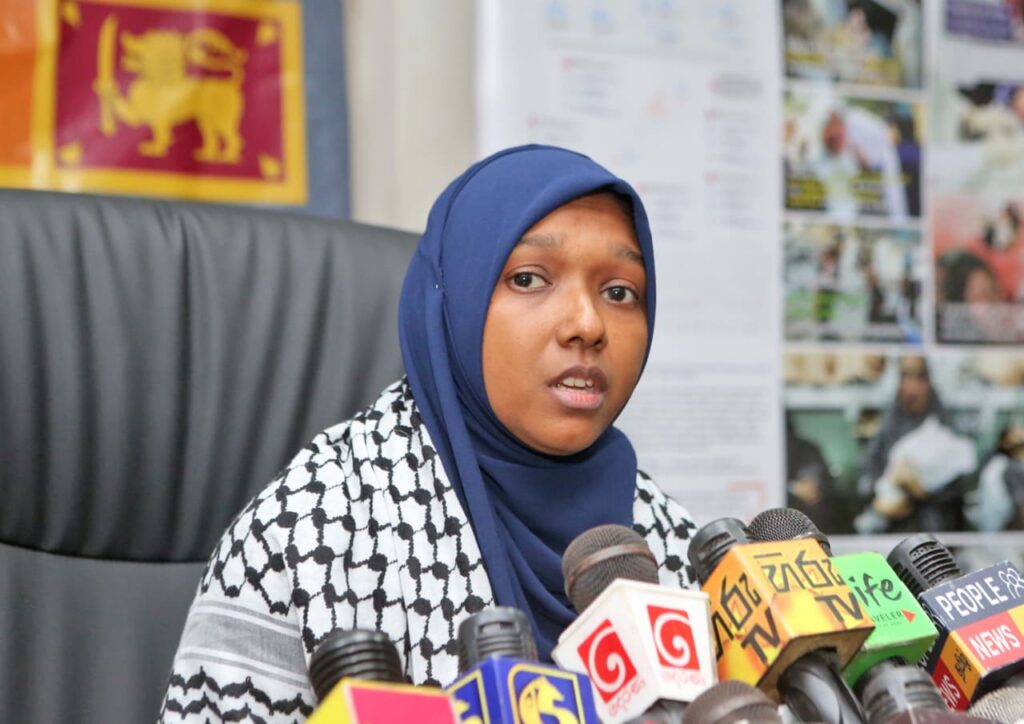
Sameera believed public pressure, media attention and diplomatic engagement played a crucial role in securing their release.
“From day one, Sri Lanka mobilized because of the voices of the people,” she said.
She credited government officials, parliamentarians and diplomats for actively engaging with the situation.
“Everyone was working. The Foreign Ministry was involved. Parliamentarians spoke about it. The president was briefed. Everyone was trying to ensure our safety and return.”
She also praised the Sri Lankan delegation supporting the mission.
“Our people worked 24 hours a day. They were coordinated, committed and determined.”
Despite her ordeal, Sameera repeatedly returned to one central message.
The suffering endured by international activists, she said, pales in comparison to what Palestinians experience daily.
“What we experienced was less than one percent of what Palestinians go through.”
Unlike Palestinians, she said, the activists had governments, organizations and international supporters advocating on their behalf.
“We had people fighting for us. We had delegations demanding our release.”
Palestinians, she noted, often do not enjoy the same protections.
Ambassador’s praise
Palestinian Ambassador in Colombo Ihab I.M. Khalil, who came to meet Sameera described her experience as evidence of the power of public solidarity.
“In the end, the voice of the people matters,” he said.
“You can send bombs or bullets, but the message that has been carried across the world is stronger than all of that.”
He thanked her for speaking publicly about her experience despite the trauma she had endured.
“On behalf of the Palestinian people, I thank you. We will not forget what you have done.”
The ambassador also praised the response of ordinary Sri Lankans.
“The love and support we have seen from people here had been amazing.”
When Sameera described her involvement as being driven by desperation, the ambassador offered a different interpretation.
“This is not a message of desperation,” he said. “It is a message of hope and strength.”
“There is something inside you that cannot be changed. It is your belief, your principles and your humanity.”
A mission far from over
Today, Sameera is back with her family.
But she says the mission that took her to Gaza’s waters is far from over.
“We wanted the world to see what is happening,” she said.
“We were desperate to bring aid to Gaza because there seemed to be no other way.”
The memories remain difficult.
The images of injured activists, frightened detainees and children’s drawings on prison walls still linger.
Yet amid the trauma, she says one lesson stands out.
“Every voice matters.”
For Sameera, that belief carried her across the Mediterranean, through detention and ultimately back home.
And it is the message she hopes the world hears.
This story was written and edited by Gagani Weerakoon. She leads the editorial at the Center for Investigative Reporting (CIR).
This story was produced with support from Report for the World, a global media service strengthening local independent journalism.