

Speed Read
- Legal and human rights bodies warn that two proposed laws could expand state powers over detention, surveillance and prosecution while weakening judicial oversight and fundamental freedoms.
- Broad definitions raise fears of arbitrary arrests. Clothing, tattoos, associations and offenses carrying prison terms of four years or more could bring people and conduct not ordinarily linked to organized crime within the law’s reach.
- Proposed executive detention orders of up to one-year, restricted access to bail and admissible police confessions raise concerns about judicial oversight and custodial abuse.
- Expanded surveillance powers, access to digital data and restrictions on reporting court proceedings could affect personal privacy and public-interest journalism.
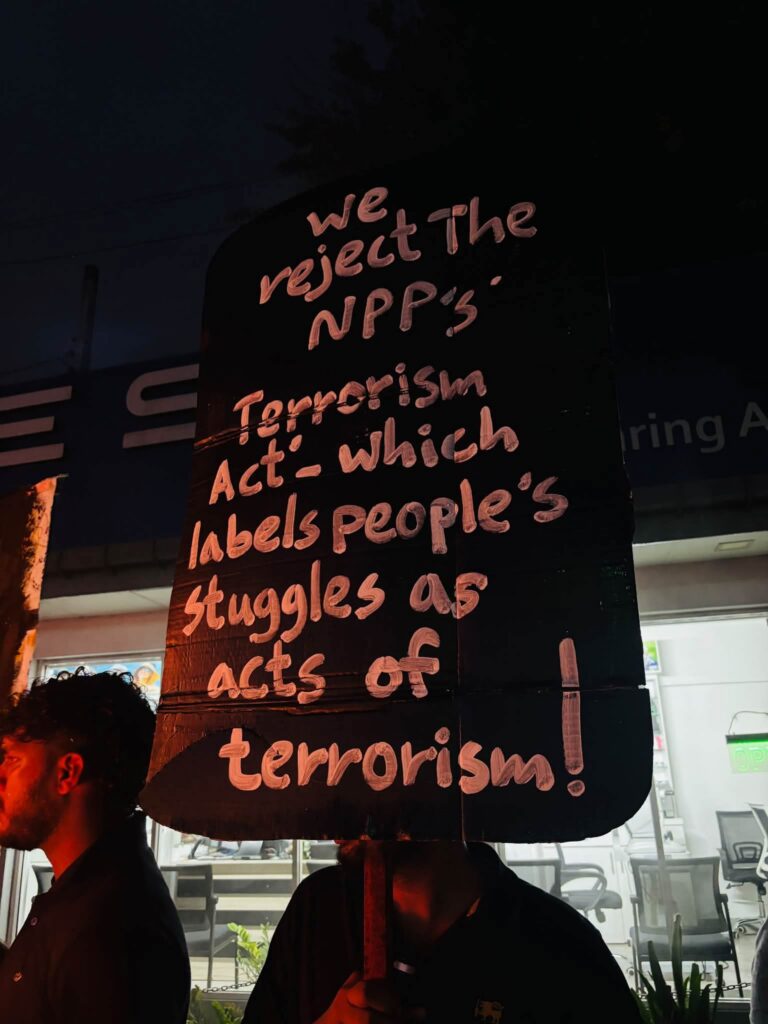
COLOMBO—Two proposed laws intended to strengthen Sri Lanka’s response to terrorism and organized crime are facing mounting criticism from legal and human rights bodies, which warn that their provisions could expose citizens to arbitrary arrest, prolonged detention and restrictions on fundamental freedoms.
The proposed Protection of the State from Terrorism Bill (PSTA) and the Prevention of Organized Crimes Bill would expand law enforcement powers. But the Bar Association of Sri Lanka (BASL) and the Human Rights Commission of Sri Lanka (HRCSL) have questioned whether adequate safeguards exist to prevent those powers from being abused.
Their concerns include broad definitions of criminal offenses, detention orders issued without prior judicial approval, restrictions on bail, the admissibility of certain police confessions and expanded surveillance powers. Several activists also claimed that the organized crime bill could allow people to be identified as members of criminal groups based partly on their appearance and associations.
The Prevention of Organized Crimes Bill was gazetted on Oct. 6 and presented to Parliament on Oct. 20.
Concerns over consultation and accountability
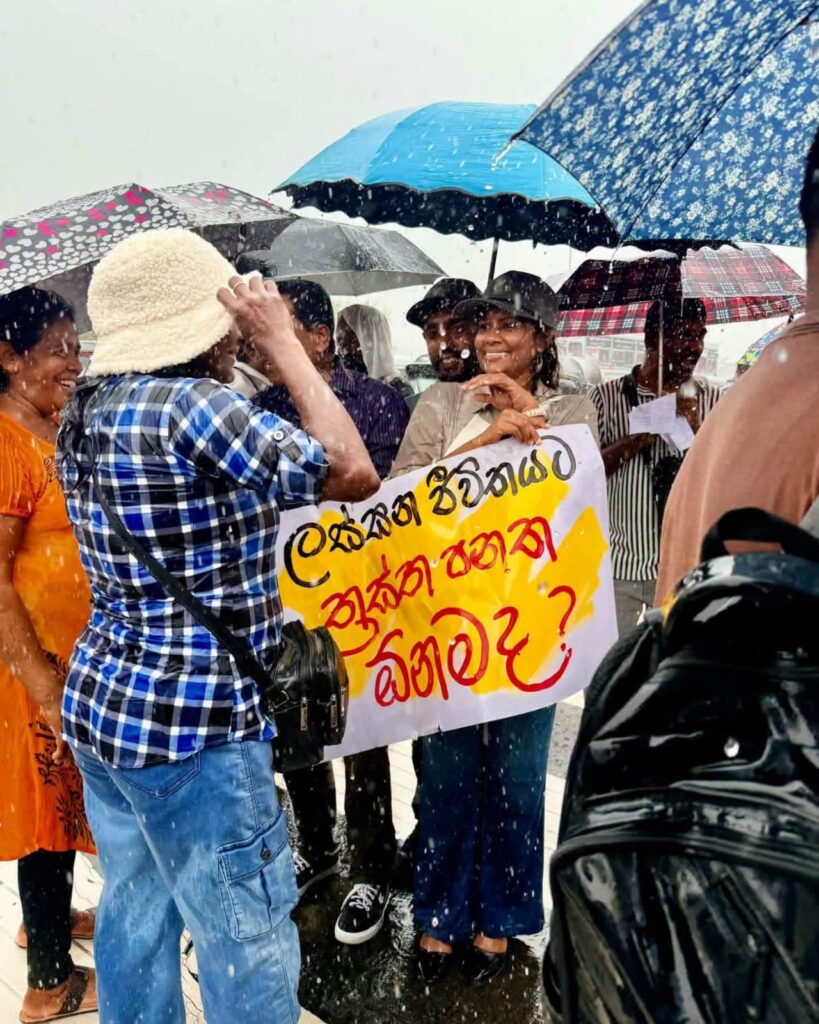
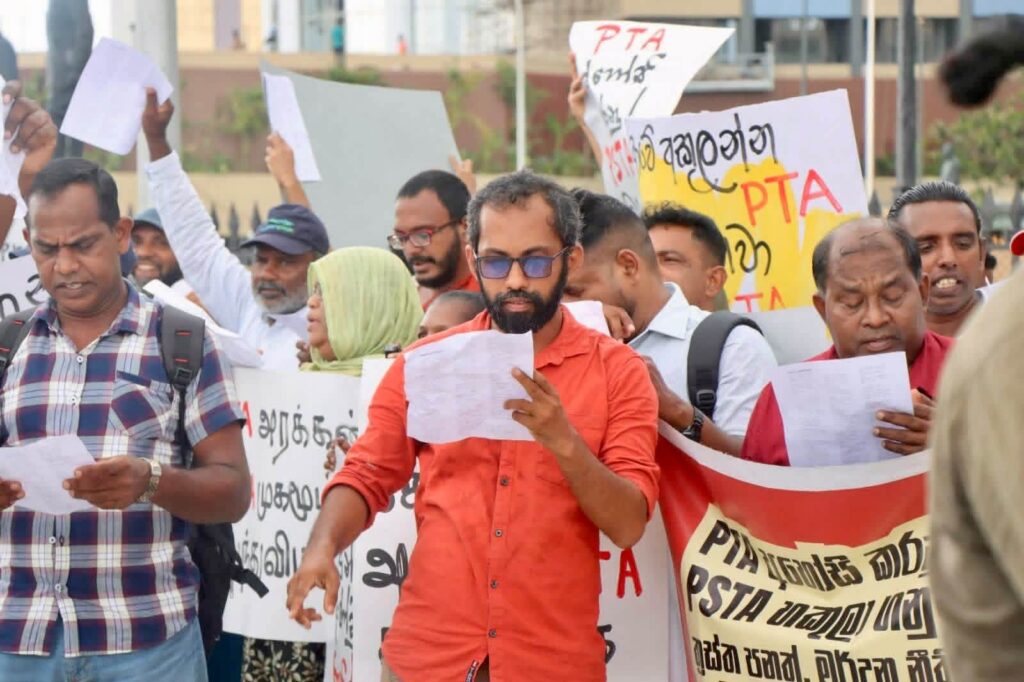
The BASL has called for both bills to be withdrawn in their present forms, claiming that their provisions risk repeating problems associated with existing counterterrorism legislation.
The association said the final gazetted version of the PSTA differed substantially from the draft considered by consultative committees, without informing committee members of the changes. It has filed a special determination application in the Supreme Court under Article 121 of the Constitution, arguing that the bill violates fundamental rights guaranteed under Articles 3, 4(d), 10, 11, 12, 13, 14 and 14A.
The BASL has called on the government to restore safeguards contained in the committee-approved draft, publish missing committee reports and dissenting opinions, and repeal the Prevention of Terrorism Act (PTA), which has been in force since 1979.
Former justice minister Mohamed Ali Sabry stated the importance of broad consultation when drafting legislation. Laws, he claimed, must serve the country and its people rather than the interests of a particular government or political party.
“Recognizing flaws and reconsidering a proposal are responsibilities of public service, not signs of weakness,” he said.
Risk of broad definitions
The HRCSL has recommended that the Prevention of Organized Crimes Bill be withdrawn and substantially revised. It said the proposed law is incompatible with the fundamental rights chapter of the Constitution and Sri Lanka’s international human rights obligations, warning that it could be more draconian than the PTA.
The commission acknowledged the need for effective legislation against organized crime but questioned the breadth of the offenses covered by the bill.
The proposed law defines a serious crime to include offenses punishable by imprisonment of four years or more, alongside specified offenses under other legislation relating to customs, intellectual property, forestry and wildlife protection.
The HRCSL warned that the definition could bring offenses not ordinarily associated with organized crime within the law’s reach.
The bill also allows courts to consider factors such as clothing, tattoos, hand signs, language, associations and places visited when determining whether someone belongs to an organized criminal group.
Raising concerns, former BASL president Saliya Pieris asked how police officers would decide whether a person’s appearance or tattoos were associated with a criminal group when making an arrest. He warned that the law grants extensive powers to police without sufficient safeguards against arbitrary decisions.
Frontline Socialist Party (FSP) education secretary Pubudu Jayagoda echoing similar sentiments cautioned that the bill could be used to suppress dissent. He cited the inclusion of offenses such as theft, copyright infringement, illegal gambling and obstructing police officers as examples of how the legislation could be interpreted broadly.
Justice minister Harshana Nanayakkara in parliament on Oct.20 said the bill would not restrict people’s freedom to choose their hairstyles or clothing. However, he said adopting hairstyles or wearing clothes associated with organized criminal groups would be considered an offense.
The unresolved question is how authorities would distinguish genuine involvement in organized crime from characteristics or associations that, on their own, do not establish criminal conduct.
Detention powers and restrictions on bail
The proposed organized crime law would allow senior police officers to seek detention orders from the secretary to the Ministry of Public Security or the ministry responsible for police. Each order could authorize detention for up to two months, with the total period capped at one year.
The HRCSL has raised concerns about detention on executive authority and provisions limiting magistrates’ discretion to release suspects, grant bail or order remand.
Under the bill, suspects generally must be produced before a magistrate within 72 hours of arrest, excluding specified travel periods. A magistrate may authorize a further period of police custody of up to 24 hours, provided reasons are recorded.
That differs from the ordinary procedure under Section 37 of the Code of Criminal Procedure Act, which generally requires a person arrested without a warrant to be produced before a magistrate within 24 hours.
Bail would have to be sought from the High Court. For offenses punishable by life imprisonment or death, bail would be available only in exceptional circumstances.
The bill would also permit people already in remand custody to be transferred back to police custody and held in isolation for periods of two weeks at a time, up to a cumulative six months.
Pieris cautioned that magistrates could be left with little room to intervene, even when the evidence presented by police does not justify continued detention. The HRCSL has stressed that judicial officers must retain meaningful authority to discharge suspects or grant bail.
Police confessions and surveillance
The admissibility of confessions made to police officers of the rank of assistant superintendent of police (ASP) or above is another major concern.
The HRCSL said the proposed provision closely resembles Section 16 of the PTA. It cautioned that allowing police confessions to be used as evidence could create incentives for torture and other cruel, inhuman or degrading treatment in custody.
Former BASL president Pieris also cautioned against the provision, pointing to past abuses under the PTA and emergency regulations and arguing that the risks associated with coercive police powers cannot be ignored.
The bill would also permit certain statements made by people who have died or cannot be found to be admitted in evidence, even if they are not present at trial or have not been cross-examined. Other provisions would allow evidence of past conduct and associations to help establish membership in a criminal group.
The proposed legislation would further expand investigative powers over electronic devices and private communications. Police could seek orders requiring people to unlock data storage devices and provide access to stored information. The bill also provides for the interception and recording of communications, including emails and telephone calls.
Senior police officers could obtain certain subscriber, call and location data from service providers without a court order, raising concerns about privacy and the reach of state surveillance.
Media freedom is also at stake. The bill would criminalize publishing information that identifies a person against whom a serious crime is alleged to have been committed. Publishing material relating to court proceedings involving such offenses without prior court permission would also be an offense.
Concerns have also raised that these restrictions could complicate reporting on criminal investigations and court proceedings, particularly where journalists are seeking to inform the public about matters of public interest.
Lessons from past legislation
Opposition to the bills reflects concerns about how laws granting extensive powers to the executive and law enforcement authorities can be used under successive governments.
The BASL cited the prolonged detention of attorney Hejaaz Hizbullah as an example of concerns associated with the existing counterterrorism framework.
Pieris claimed that legislation introduced to address genuine security threats can also be misused against political opponents, protesters and dissenting voices. The test, he argues, must be the protections built into a law, not simply the purpose stated by its proponents.
Sabry made a similar point, recalling that he decided not to proceed with a proposed bill on obscene publications after the BASL raised concerns that it could criminalize relatively minor conduct and impose disproportionate penalties.
The BASL wants the government to withdraw the PSTA in its present form, restore safeguards removed during drafting and repeal the PTA. It has also called for the organized crime bill to be withdrawn to allow meaningful public consultation.
The HRCSL has recommended that the organized crime bill be substantially revised to comply with constitutional and international human rights obligations.
The central issue is not whether Sri Lanka needs effective laws to combat terrorism and organized crime. It is whether those laws can achieve that objective without weakening judicial oversight, personal liberty and the protections citizens need against arbitrary state action.
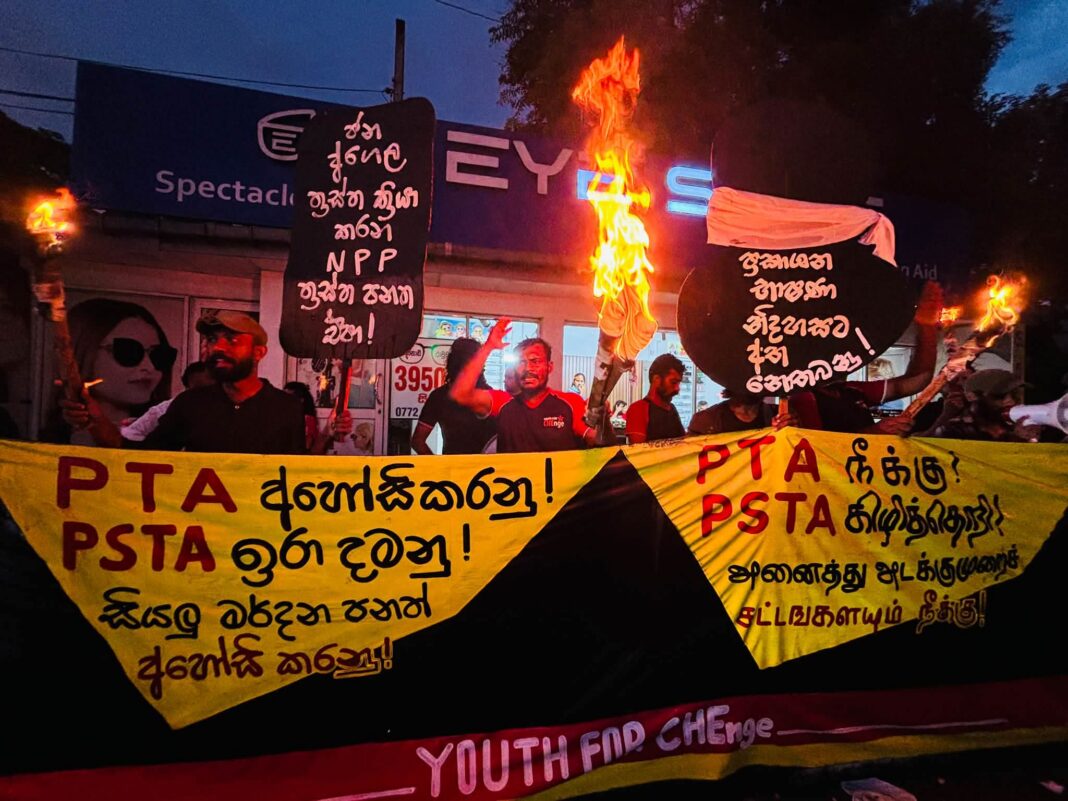
Banner Image: The proposed legislation would further expand investigative powers over electronic devices and private communications. Concerned groups held late night protests in Colombo suburbs in the past few days against the proposed laws. Image via Youth for CHEnge.
This story was written and edited by Gagani Weerakoon. She leads the editorial at the Center for Investigative Reporting (CIR).
This story was produced with support from Report for the World, a global media service strengthening local independent journalism.