
Speed Read
- A grade 4 student’s mastery of the periodic table contrasts with the unsafe, poorly equipped conditions at Rilamulla Arunodaya Hindu Primary School.
- Despite a government commitment to allocate land to plantation schools, it still operates in disused tea factory buildings, with inadequate water, sanitation and classroom facilities.
- A $ 12,700 renovation project raises questions about implementation, while children face dangerous journeys to school and frequent disruptions to learning.
- Advocates say plantation companies’ continued control over school land and infrastructure perpetuates inequality, leaving Malaiyaha Tamil children without educational opportunities promised by free education.
COLOMBO— “Hydrogen, helium, lithium, beryllium, boron, carbon, nitrogen, oxygen, fluorine, neon, sodium, magnesium, aluminum …”
In just two minutes, Kanshika recited the periodic table. She is only in grade 4.
There was reason to marvel at her ability. But the gathering did not break up in celebration. Instead, an unsettling question lingered. What future awaits a child with such promise when the school meant to nurture her potential, struggles to provide even the most basic conditions for learning?
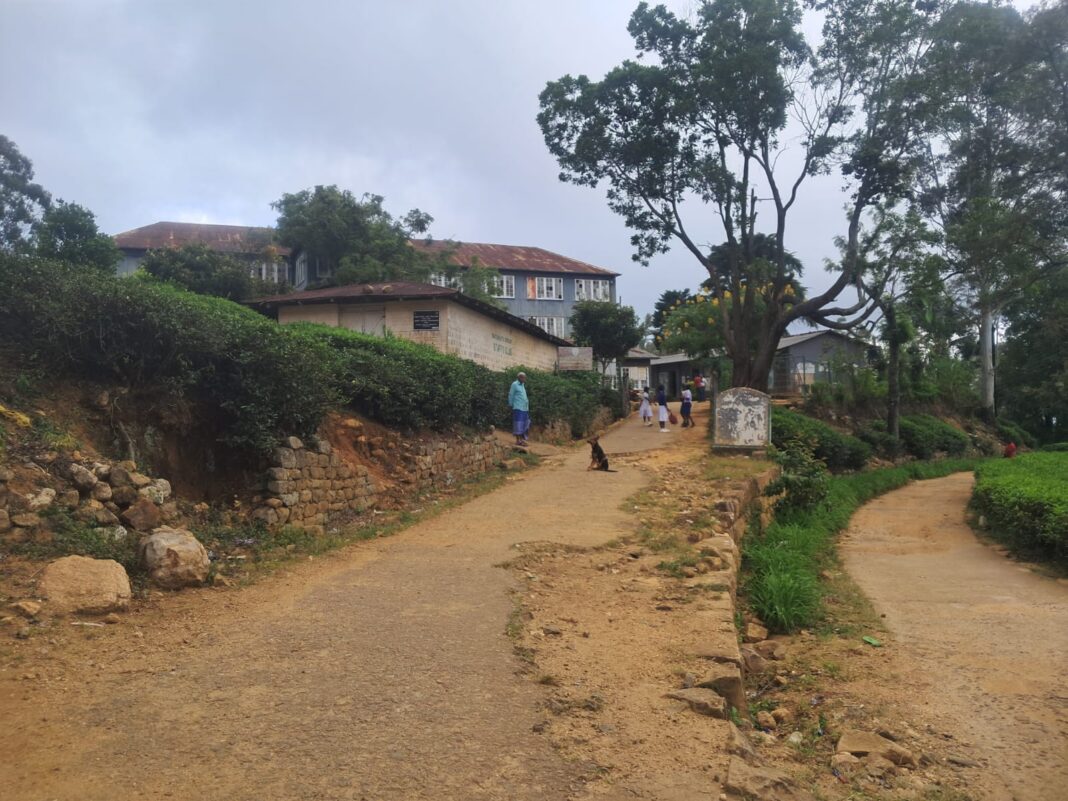
We were at Arunodaya Hindu Primary School in Rilamulla, Mathurata, in Sri Lanka’s Nuwara Eliya district, more than 5,000 feet above sea level. While thousands of schools across the country prepare to navigate the government’s new education reforms, children here are fighting for something more fundamental – a safe classroom, reliable water, adequate sanitation and a fair chance at an education.
For these children, even the promise of free education comes with formidable obstacles. They remain far removed from the administrative decisions made in Colombo that will shape their futures.
“The government promised to allocate two acres of land to every plantation school, but we have received nothing. We don’t have a reliable water supply. Water flows from the springs for only a few months of the year. During the yahapalana government, we raised the school’s problems with then deputy minister V. Radhakrishnan. He said he had made a request to the Mathurata Plantation Company, but nothing came of it,” principal V. Wijendran said.
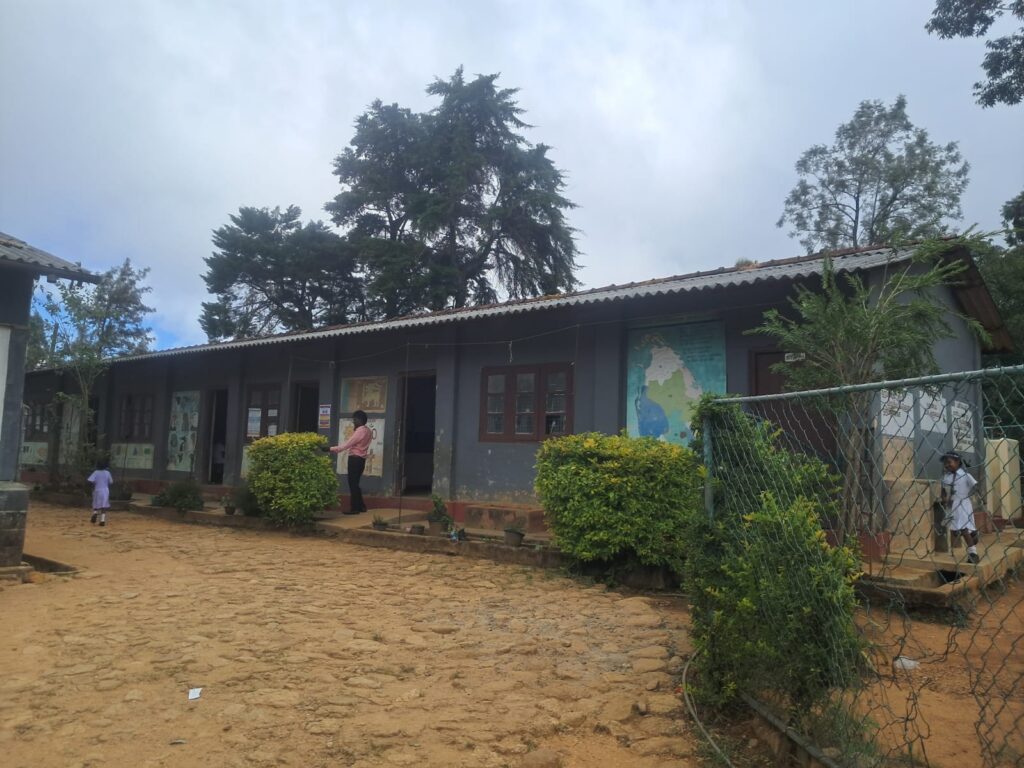
Students in grades 6–8 at this school also attend classes in the primary school’s buildings. There is dust everywhere. “Even when the public health inspector visits, nothing is done. We have no playground, so the children play on the road,” principal noted.
“Despite all this, two children passed the Grade Five Scholarship Examination. We also received approval for LKR 150,000 from UNICEF to build toilets. That is all.”
The principal’s account captures the daily struggle at Rilamulla Primary School, where the children’s aspirations far exceed the facilities available to support them.
A dangerous journey
Deputy Principal J. Navaratnam describes a similar disconnect between the government’s education reform agenda and the realities facing students.
Teachers were given training under the education reforms, but we don’t have equipment such as digital boards, he said.
“The first bus reaches here at 9 a.m., so the school day starts late. That means classes also finish late in the afternoon. A bus from Ragala arrives at 7:45 a.m., but the children who take it still have to walk two kilometers to reach school. The route is dangerous, too, with wasps attacking people along the way. Even today, about six children missed school because they were stung. Even if these children pass the grade five scholarship examination, they cannot transfer to another school because it is too far away.”
President Anura Kumara Dissanayake’s description of education as “wings” has become a recurring reference point in Sri Lanka’s education reforms debate. The sentiment is difficult to dispute. Free education can lift children beyond the circumstances into which they are born, opening doors to opportunities far beyond their immediate surroundings.
But the educational disadvantage experienced by Sri Lanka’s Malaiyaha Tamil community is not simply a story of poverty or inadequate resources. It is also a story of unequal power and entrenched social hierarchies. Rilamulla Primary School offers a stark illustration of that inequality, beginning with the unusual category to which it belongs: a plantation school.
Sri Lanka generally classifies schools as national or provincial, as well as boys’, girls’ or mixed schools. Plantation schools, however, occupy a distinct category, shaped by their location on land controlled by plantation companies and the complicated administrative arrangements surrounding them. This has contributed to their marginalization within the public education system.
A 2018 Cabinet memorandum submitted by then education minister Akila Viraj Kariyawasam identified 843 plantation schools. The document recorded a policy agreement to allocate two acres of land to each plantation school, although many lacked clearly demarcated land of their own.
Because state-owned plantations had been leased to private companies, land required for school development had to be secured from those companies. Cabinet subsequently approved a joint proposal by Kariyawasam, then minister of public enterprises and Kandy city development Lakshman Kiriella, and then plantation Industries minister Navin Dissanayake to acquire up to two acres for 354 plantation schools operating on restricted land across seven districts.
Yet those policy commitments have apparently done little to transform conditions at Rilamulla Arunodaya Primary School. Its classrooms still occupy disused buildings from an old tea factory, a reminder of how little has changed for children growing up in the plantation sector.
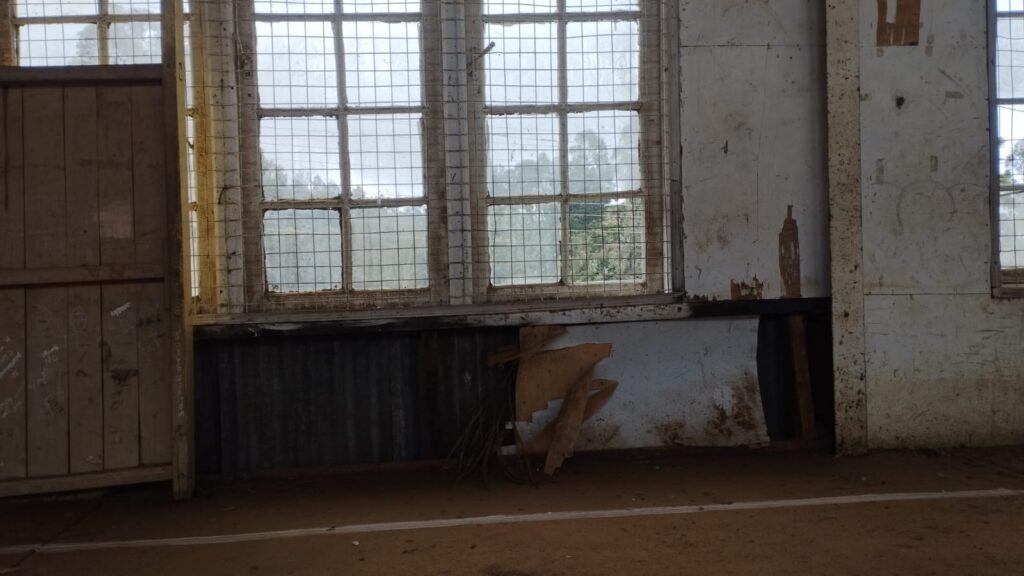
The school’s main hall offers an especially disturbing glimpse of their circumstances. With inadequate lighting in the classrooms, the principal and teachers have also been forced to use the loft of an old building resembling a tea factory storeroom as their main gathering space.
A thick layer of dust covers the wooden floor. Large holes have opened in several places, allowing anyone looking down through them to see the young children in the classrooms below. The same hazardous space is also used for volleyball practice.
The stench from pigeon droppings scattered across the floor is so overpowering that some members of the visiting team felt nauseated. If adults struggle to tolerate the conditions, how are the children expected to endure them every day?
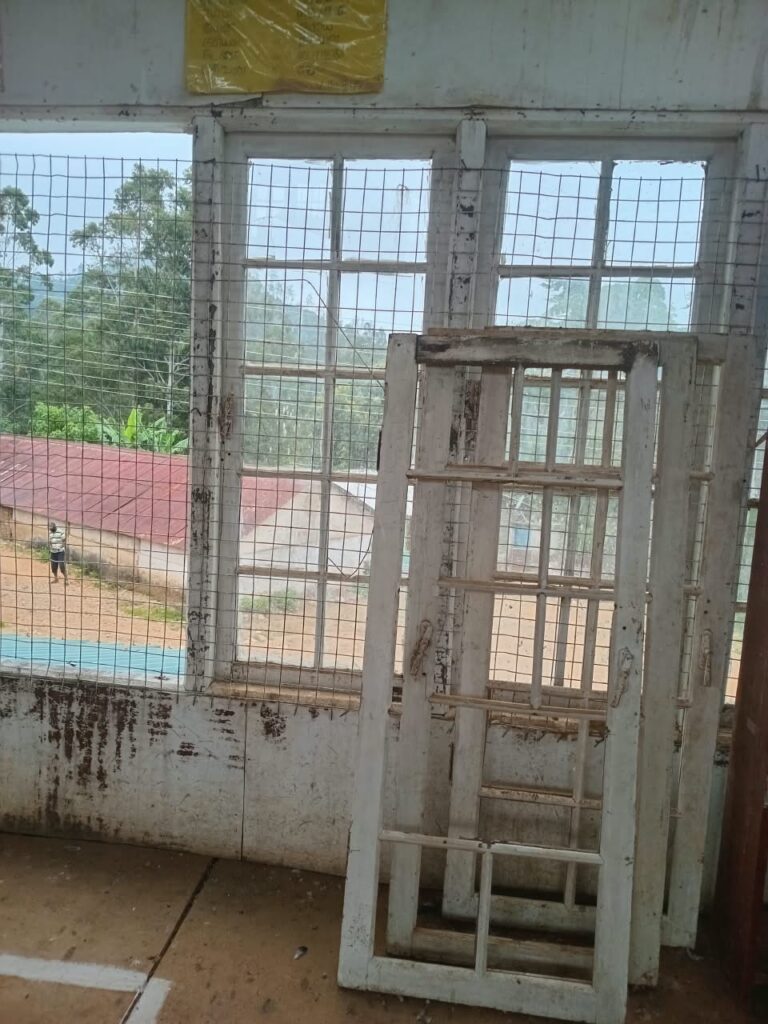
The windows offer little protection from the elements. Years of heavy rain and strong winds have left the shutters damaged, and even a light shower sends water seeping into the building. During the torrential rains common to the hill country, the situation is worse.
The loft, which doubles as the school’s main hall and meeting space, is plainly a death trap.
Anyone familiar with the facilities at one of Sri Lanka’s more privileged, well-known schools would likely be appalled by what passes for an assembly hall at Rilamulla.
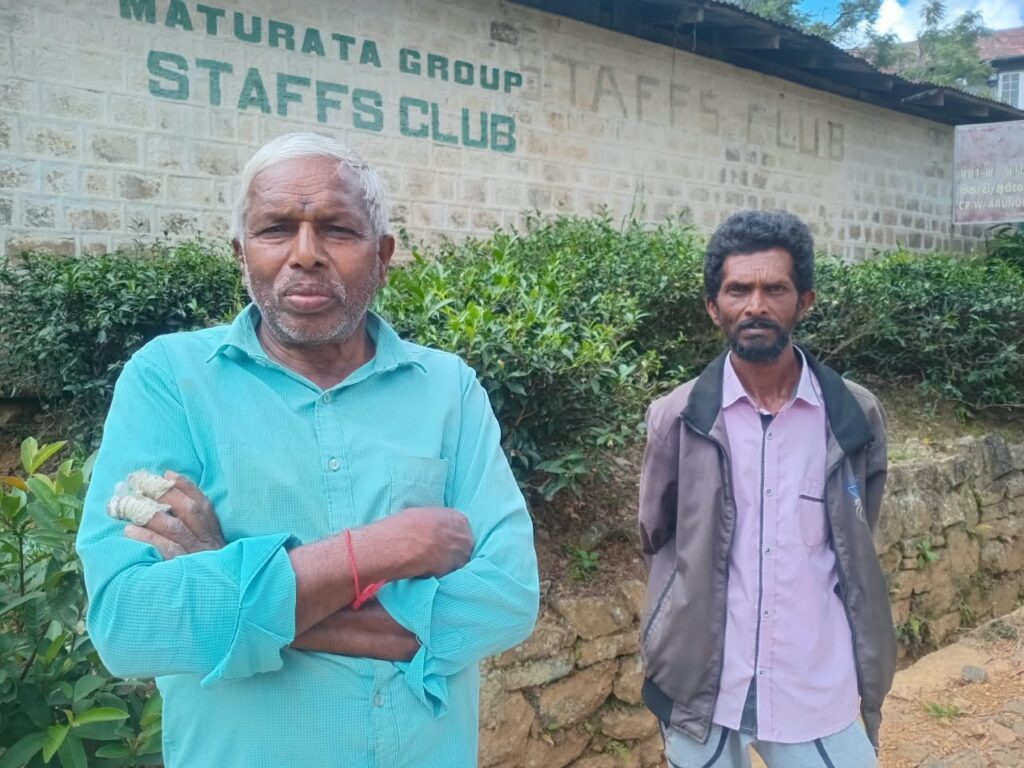
For P. Krishnasamy, 70, the danger is deeply personal.
“My grandchild also attends this school. The children don’t even have a proper place to hold assemblies. The government says it will do things, but nothing gets done. It would mean so much if someone could build a proper building for them,” he said.
Nawananthan Loganathan, 45, pointed to another consequence of the school’s precarious existence: its role as an emergency shelter.
“If there is a landslide in the houses downhill, everyone comes to this school. Then classes have to stop, and the children cannot study. Look at the condition inside. The windows are broken, and even a little heavy rain brings water into the classrooms. There isn’t even a bus to get to school. If people have money, they pay about 20 rupees to someone who can drop them part of the way,” he said.
Brocken promise
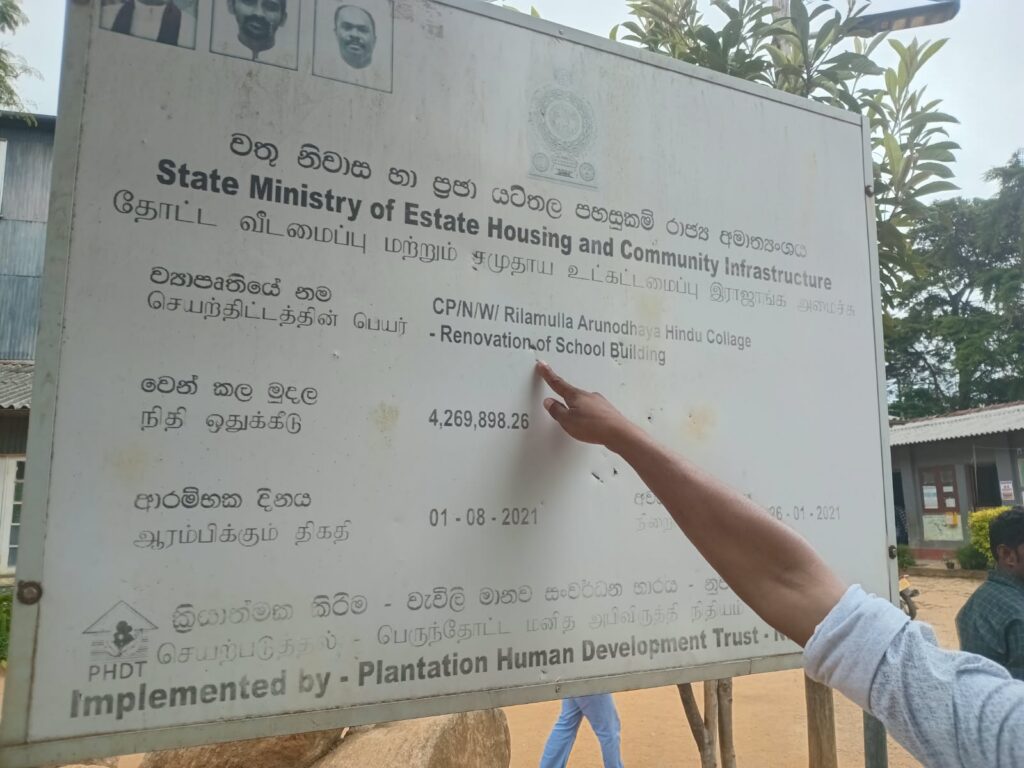
At the school entrance stands a signboard bearing smiling portraits of former president Mahinda Rajapaksa and former minister Jeevan Thondaman. It identifies a project under the State Ministry of Estate Housing and Community Infrastructure to renovate the school building.
The board lists an allocation of $ 12,709 (LKR 4.2 Mn). Yet anyone visiting the school would struggle to identify improvements commensurate with that sum.
The dates recorded on the signboard offer an additional, bitter irony. The project’s start date is listed as Aug. 1, 2021, while its completion date is given as Jan. 26, 2021 — more than six months before work supposedly began. The Plantation Human Development Trust is identified as the implementing agency.
The discrepancy raises questions about the project’s implementation and the extent to which the allocated funds translated into improvements at the school. The signboard alone, however, does not establish what happened to the money.
For Jeevaratnam Suresh, executive director of the iPEN organization, the school represents a broader failure to break the cycle of deprivation endured by the Malaiyaha Tamil community.
“Our lives are still where they began, and this school is a good example of that. Plantation workers have lived for five generations alongside tea and the factories. Now their children are being sent back into the same conditions. Education cannot take place in a shed. Is there equal treatment for these children?”
He also said Rilamulla is just one example.
“There is so much talk about digitalization. The prime minister recently spoke about system change, too. But there are still plenty of schools without even the most basic facilities. The entire system needs to change, and we stand by the principle that every child must have equal opportunities. The school system must be brought onto a common footing,” Suresh said.
Children at Rilamulla walk at least five kilometers to school. Is education reform about pursuing digitalization while ignoring realities like this? The authorities have not even managed to provide these children with a bus service or transport vouchers, he asked.
“The president has spoken about closing schools with fewer than 100 students. If a school in a remote place like this is shut down, will the children be able to travel to a school farther downhill? Development must begin by identifying the resources and needs of each community. A child attending Royal College and a child attending Rilamulla do not have the same learning conditions. Sri Lanka is not just Colombo, and Malaiyaham is not just Nuwara Eliya town. There are many more places like Rilamulla across the country,” Suresh noted
He has spent years campaigning for the rights of the Malaiyaha Tamil community, including taking the fight to the Supreme Court to secure access to registered postal addresses. He now sees the right to education as another front in the struggle for equality.
A system that keeps children behind
The problems extend well beyond Rilamulla.
In Meedumpitiya, in Badulla, children have to travel six kilometers to reach town. These are not paved roads. There are wasps, and the journey is dangerous. Families cannot afford to pay for three-wheelers, Suresh said.
“If the authorities cannot dismantle the system that keeps plantation schools under company control, they must at least provide transport for Malaiyaha children until meaningful change takes place. It has been 203 years, and the plantation companies are still in the middle of everything. We have yet to see a clear policy decision that changes this.
“Governments have repeatedly tried to make two acres of land available to every plantation school, but these schools have still not been freed from company control. The school may have moved farther back from the plantation housing, but the line rooms and the school remain intertwined. They are still called plantation schools. A school is a school. There should be no such category as a plantation school,” he added.
As parents of children in better-resourced schools across the country wait to see when the government’s education reforms will deliver results, Malaiyaha Tamil children in Nuwara Eliya, Badulla, Ratnapura and other districts continue to study within a system shaped by plantation companies and their managers.
In practice, these schools remain on the margins of the Education Ministry’s reach, with government policies and circulars often failing to translate into meaningful improvements on the ground. The result is a double deprivation: children are denied not only the full benefits of free education but also the freedom, dignity and opportunities that education is supposed to provide.
Kanshika can recite the periodic table. Her ability offers a glimpse of what a child can achieve despite the odds. But talent alone cannot compensate for unsafe classrooms, unreliable transport, inadequate sanitation or years of unfulfilled promises.
Sri Lanka’s education reforms promise to give children wings. At Rilamulla, the more immediate challenge is to give them a school in which they can learn safely, and a fair chance to fly.
If the law is equal for all, how can such a system of exclusion persist?
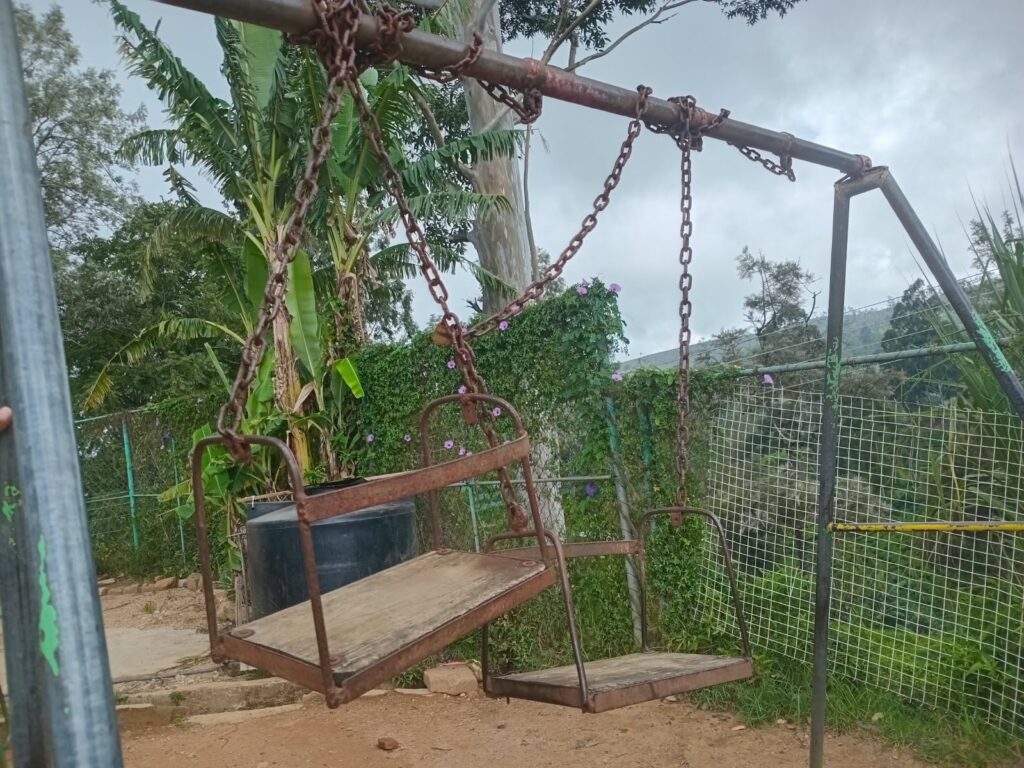
Banner Image: Unsafe classrooms, dangerous journeys and unresolved land issues expose the education inequalities facing children in Sri Lanka’s plantation communities. Image courtesy of Selvaraja Rajasegar.
This story was Written by Bingun Menaka Gamage and edited by Gagani Weerakoon.