

Speed Read
- Thousands of students in French-speaking Belgium have been protesting against education reforms and rising costs.
- The protests started in Liège, and spread to other cities in Belgium.
- Protests turned violent in the center of Brussels and more than a 100 people were detained on October 9th.
- The Flemish- speaking part of Belgium is not protesting as their education system is not affected, however it’s expected they will take to the street too in the coming days.
A stranger helped Hilde Bastiaens put her keffiyeh over her mouth as tear gas spread through a street in Brussels. The 59-year-old was struggling to breathe, and her eyes were watering as people surrounding her tried to help those affected by the gas.
On Oct. 9, Bastiaens had travelled to Brussels to join student protesters against government austerity measures. She encountered tear gas, water cannons and police force. But at the center of the unfolding unrest are students as young as 14 or 15, worried about what these reforms might mean for their future.
In French-speaking Belgium, thousands of students have been protesting over education reforms and rising costs. But clashes with the police and increasing unrest threaten to overshadow their concerns.
For Maxime, a 18-year old student, that future has become more difficult to afford. He worries that the rising cost of higher education will put more pressure on parents. “I might have to help my parents pay for it,” he said.
The demonstrations began on Oct. 1 in Liège, a city in the East of Belgium, with high school students at the forefront. The following days, it spread to other cities like the capital, Brussels, as university students, teachers and trade unions joined the protests.
On October 9th, demonstrations drew between 30,000 and 50,000 people, according to police and trade unions reports. For many young protesters, anger over government austerity measures and education reforms led them to take to the street.
“They were genuinely concerned about their education and their future,” says Jeremie Nzita Mambu, a 22-year-old journalist and founder of Yurbise, an independent Belgian news outlet. He attended the demonstration to cover the events. “There was a real sense of collective frustration, but also excitement at being politically active.”
Belgium’s education system
Understanding the protests starts with understanding the education system. Belgium does not have a single national education system. Responsibility for education lies with its language communities. The ongoing protests focus on the French-speaking Community, governed by the Wallonia-Brussels Federation, which oversees French-language education.
“A large number of students are looking for financial aid to pay this tuition because they can’t afford it and therefore can’t access higher education,” Maxime said.
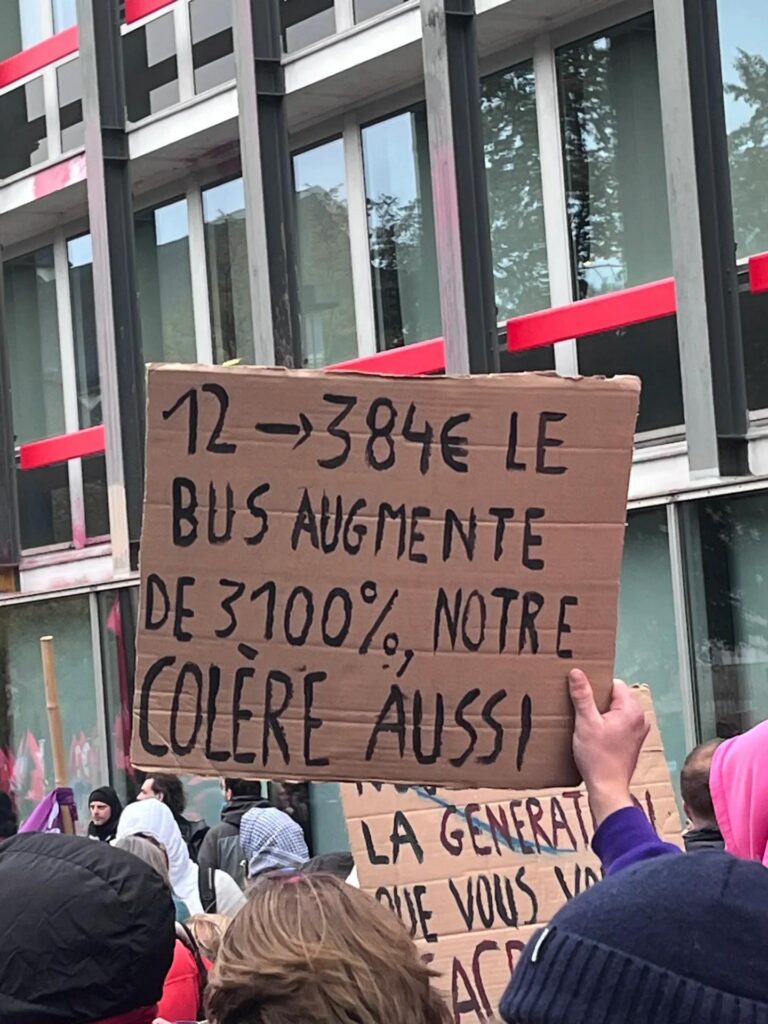
The reforms include a major increase in the standard annual tuition fee for university students, going from $937 (€835) to $1340 (€ 1,194). Protesters are also concerned about an increase in annual passes for the bus and tram in Wallonia with the price going from €12 a year to €384 a year. Changes in teachers’ conditions such as adding two teaching hours a week without an increase in pay are among the reforms as well.
From chants to violence
The demonstrations have not all remained peaceful. In Liège, media reports described projectiles thrown at police, property damage and fires. On 8 October, the city’s mayor, Willy Demeyer, introduced a ban on gatherings of more than three people, reported to remain in force until 16 October.
Maxime has participated in protests for two years but believes that previous protests have been unsuccessful. “We want to make our voices heard, and the protests are much more violent”, he said.
The demonstrations in Brussels the following day, remained largely peaceful. However, clashes broke out in central areas to which the police responded with tear gas and water cannons.
Mambu described the atmosphere as energetic, with students chanting and marching together. But he said it changed as tensions with police escalated.
Over 100 students have been detained since the start of October according to police reports.
Bastiaens says she was shocked by the destruction she witnessed, including rocks being thrown and a bus shelter being levelled. But she believes those incidents should not erase the reasons people came to protest.
“That’s not really helping — but it’s also not a reason to dismiss the message and requests the students and everyone at the syndical protest wanted to have heard,” she says.
While covering the protests, Mambu said he received footage and testimonies describing alleged violent arrests and excessive force against minors. These claims require independent verification and it’s not established if the force used by police was unlawful.
Who is behind the protests?
Belgium’s Interior Minister, Bernard Quintin, claimed Antifa, a radical-left and anti-fascist movement, from involvement in the protests and encouraging students to use violence.
But Mambu disagrees with the suggestion that the protests should be understood primarily through the actions of radical groups or individuals involved in violence.
“My biggest concern is how quickly the public debate shifted away from the students’ actual demands and towards accusations that they were being manipulated by radical or extremist groups,” he says.
He argues that the students’ concerns are rooted in the education policies affecting their lives. While acknowledging that violence and vandalism should not be ignored, he says it is important not to treat all protesters as responsible for the actions of some.
“I strongly disagree with treating an entire generation of young protesters as dangerous or manipulated because some individuals committed violent acts,” he says.
Beyond Belgium
The protests have unfolded alongside the student protests going on in France over education funding, school conditions and staffing.
For now, the demonstrations remain concentrated in French-speaking Belgium. Flanders has its own education policies. However, Bastiaens, who travelled from the Flemish part of Belgium, said the situation in Flanders was different, but added: “I expect students here won’t stay silent for long.”
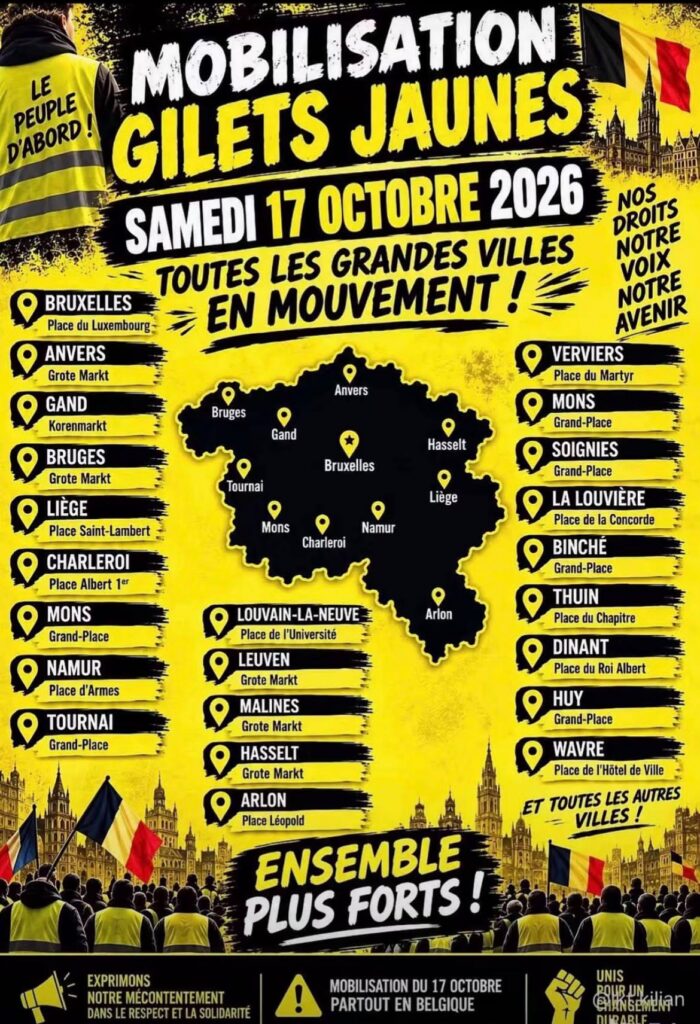
Protests across all major cities in Belgium held on Oct. 17 as France also heated with ongoing rigorous protests by students.
Banner Image: In French-speaking Belgium, thousands of students have been protesting over education reforms and rising costs. Image courtesy of Hilde Bastiaens.
This story was written by Evy Coeckelbergs and edited by Gagani Weerakoon.