
Speed Read
- As El Nino scorches Sri Lanka, electricity generation may drop by 127 gigawatt-hours
- Sri Lanka could face hotter and drier conditions from July to September, increasing risks to agriculture, water supply and electricity generation.
- Experts say a strong El Niño may reduce crop yields, strain reservoirs and increase food prices at a time when food insecurity is already rising along with the prices.
- The same phenomenon could later bring intense rainfall and flooding during October and November, creating a second wave of challenges.
COLOMBO — Sweat poured from Kandasamy Rasiah’s face as he piled garbage on to the municipal truck. “It has never been this warm. We are used to being exposed to the harsh sun, and even though it rains these days, during the day, it is not easy to work,” says the municipal garbage collector.
This means he consumes more water and enjoys the occasional king coconut. But the heat is something he says, “I cannot beat.”
The coming months are going to be scorching hot for the tropical Indian Ocean island and it will be felt more by people like Rasiah who is daily exposed to the burning sun. But scores of people like him, there is no way to prepare for the unusually hot spell triggered by an El Nino event.
Experts confirm that Sri Lanka could be heading into months of extreme weather that may affect everything, from food prices to electricity supply to drinking water availability and crop production. They warn of a strengthening El Niño event in the Pacific Ocean.
Meteorologists and agricultural specialists say the climate phenomenon is likely to bring hotter and drier conditions, increasing pressure on reservoirs, reducing crop yields and straining power generation. Later in the year, the same weather system could trigger intense rainfall and flooding, creating a second wave of challenges for the island’s population.
The warnings come at a particularly vulnerable time for Sri Lanka which is struggling to overcome the devastating impact of last year’s Cyclone Ditwah. Three years before that, in 2022, Sri Lanka also faced the nation’s worst financial collapse since independence in 1948, triggered by a toxic mix of unsustainable foreign debt, severe government tax cuts, and external shocks from the Easter Bombings and the COVID-19 pandemic.
The scenario is quite bleak according to the World Food Programme, which states that the proportion of households unable to meet essential food needs has risen from 14 % in 2024 to 20 % in 2026. If food prices continue to rise over the next three months, an additional 1.3 million people could face food insecurity, including nearly 300,000 poor urban households.
Experts say the threat extends far beyond weather forecasts. A strong El Niño could set off a chain reaction across agriculture, energy generation, water resources and food security, testing the country’s ability to manage multiple climate-related risks simultaneously.
The Government of Sri Lanka, meanwhile, says it is preparing for the impending threat. On June 11, President Anura Kumara Dissanayake chaired a high-level meeting involving agencies responsible for weather forecasting, irrigation, disaster management, agriculture, electricity generation and water management. During the meeting, food security, drinking water availability and energy supply emerged as the sectors most vulnerable to disruption.
Hotter and drier months ahead
According to meteorologists, the risks are becoming increasingly clear.
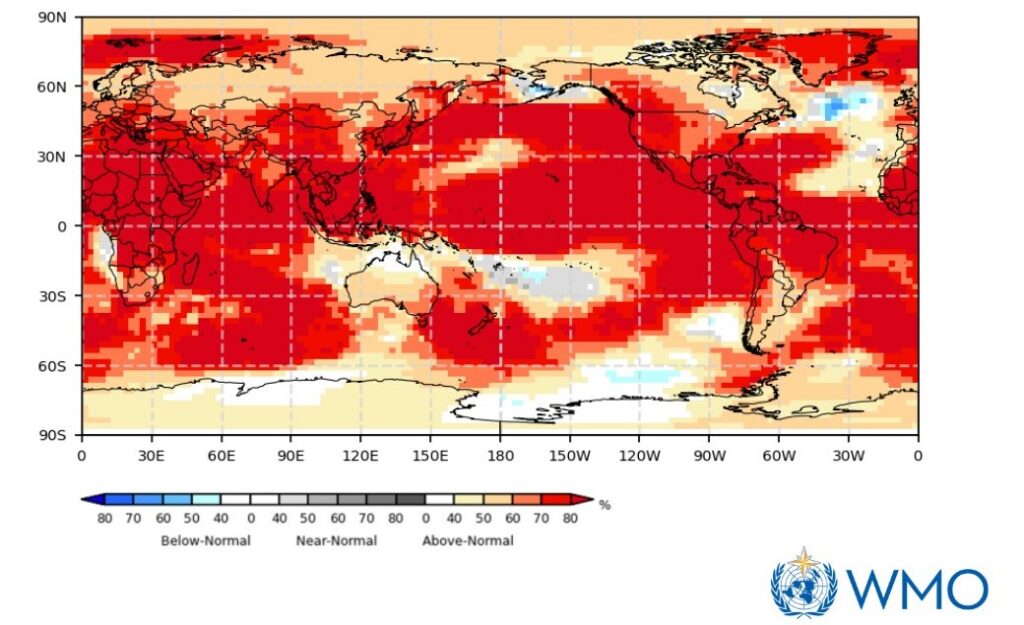
Ajith Wijemanna, director of forecasting at the Department of Meteorology, said El Niño conditions currently remain weak but are expected to strengthen during the coming months.
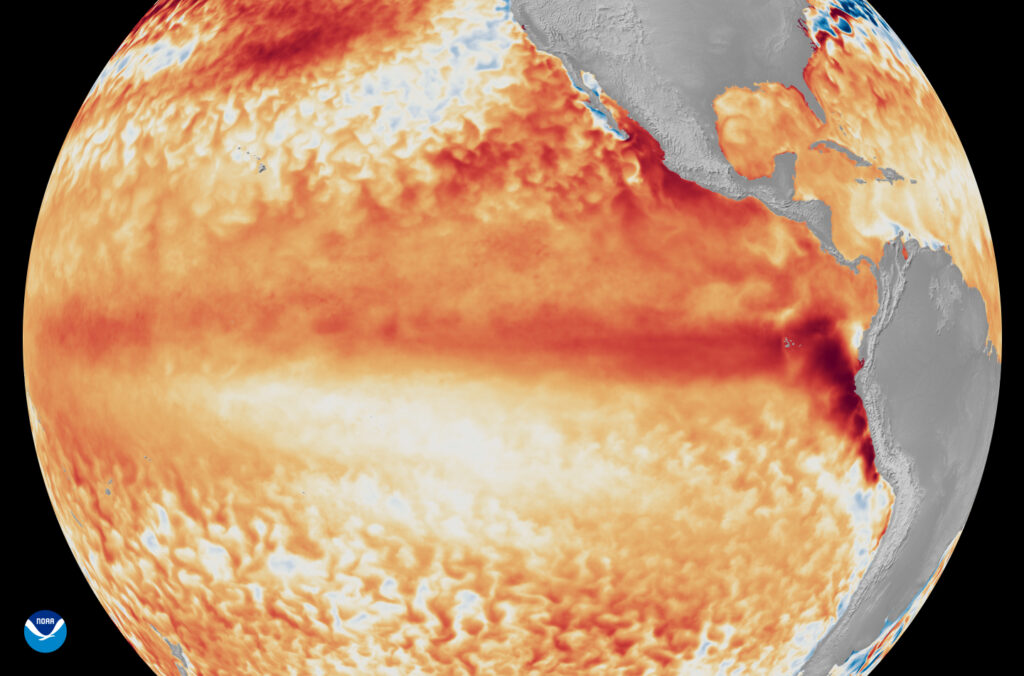
He said forecast from the U.S. National Oceanic and Atmospheric Administration indicate more than a 60 % probability that the event could intensify into a strong or very strong El Niño between December and February.
If current projections hold, Sri Lanka is likely to experience below-average rainfall during July, August and September, accompanied by above-normal temperatures, particularly in August.
“The concern is that rainfall may reduce sharply toward the latter part of June, resulting in hotter and drier conditions during July and August,” Buddhi Marambe, senior professor of crop science at the University of Peradeniya told CIR.
Agriculture faces first major test
For farmers, the consequences could be significant.
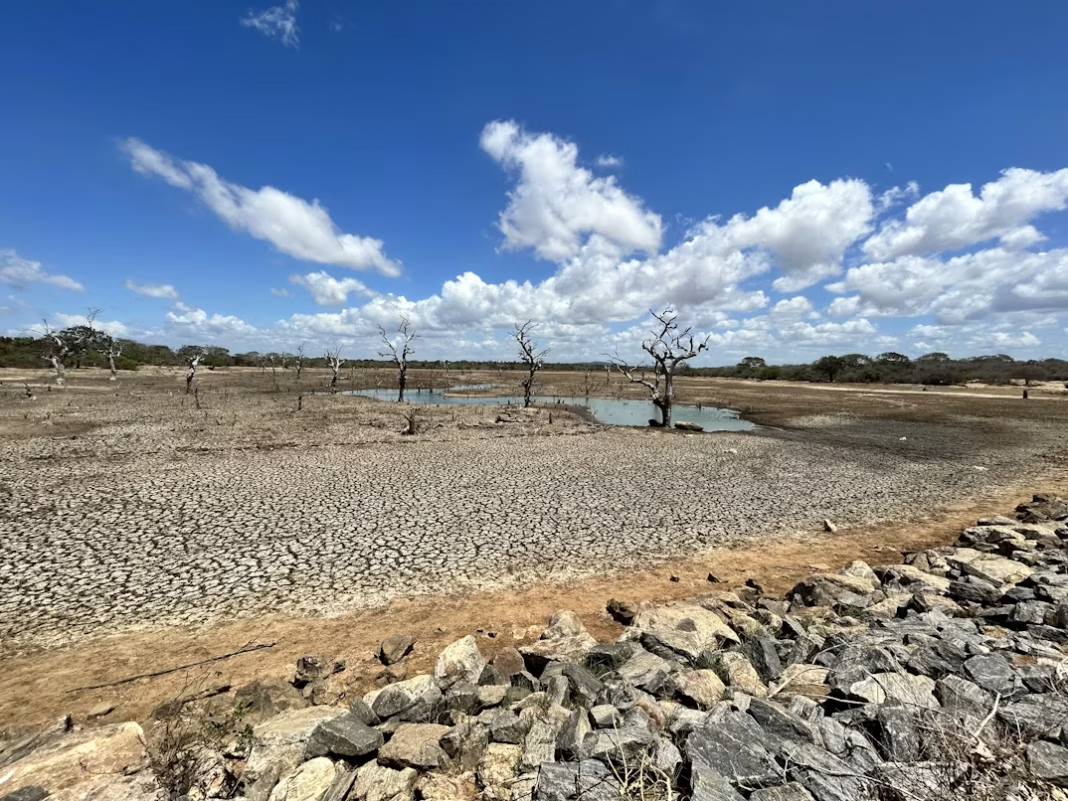
Higher temperatures increase evaporation from reservoirs and soils while placing crops under greater moisture stress during critical stages of growth. One of the biggest concerns is the impact on paddy cultivation during the latter stages of the Yala season.
Marambe pointed to a phenomenon known among farmers as “Ehala Pussa” – when extreme heat during July strongly impacts rice plants during their reproductive stage.
“The plant may look productive, but the harvest can be disappointing because many of the seeds could be empty,” he said.
High temperatures can dry out pollen before fertilization occurs, resulting in poorly filled grain despite otherwise healthy-looking crops.
The risk is particularly high for farmers who planted late, as flowering and grain formation may coincide with the hottest weeks of the season.
And that is not the whole story. The impacts extend beyond rice cultivation. Vegetables, fruits and other field crops may also suffer from declining soil moisture and higher irrigation requirements, increasing production costs and potentially reducing yields.
Water stress and power shortages
Beyond agriculture, the anticipated dry spell could create serious challenges for water and energy managers.
Sri Lanka’s reservoirs perform multiple functions simultaneously, supplying irrigation water, drinking water and hydroelectric power generation. Reduced rainfall during July and August could force authorities to make difficult decisions including limiting the supply of water to consumers.
Sustainability specialist Vidhura Ralapanawe cautioned that declining reservoir levels may reduce hydropower generation while electricity demand increases due to hotter weather and greater use of cooling systems.
The result could be a significant supply-demand imbalance during one of the most challenging periods of the year for the power sector.
Ralapanawe highlighted concerns over potential coal supply constraints and operational risks at the Norochcholai Power Plant, factors that could further tighten electricity supplies if weather conditions become severe.
Energy Minister Anura Karunathilaka recently told Parliament that El Niño could reduce electricity generation by approximately 127 gigawatt-hours (GWh) in the coming months. Energy authorities are already exploring alternative measures to offset potential losses and to maintain grid stability.
From drought to floods
Yet drought may only be the first phase of the challenge.
Researchers say El Niño events are frequently associated with a positive Indian Ocean Dipole, a climate pattern that can significantly increase rainfall over Sri Lanka during October and November.
Studies conducted by Marambe, former senior agro-climatologist Ranjith Punyawardena and Aruni Weerasekara, the deputy director at the Department of Agriculture in 2023, indicate that warmer waters in the western Indian Ocean can enhance atmospheric moisture and intensify rainfall across the island.
“If the El Niño develops as strongly as predicted, we could experience very heavy rainfall during October and November,” Marambe said.
Sri Lanka experienced a similar pattern during the 2023 El Niño event, when widespread flooding damaged crops and infrastructure in several regions.
Heavy rainfall can cause flooding, waterlogging and landslides, destroying crops and disrupting livelihoods. Even where crops survive, prolonged cloud cover can reduce photosynthesis and lower productivity, he noted.
“Plants need sunlight for photosynthesis,” Marambe explained. “If cloud cover remains for extended periods, crop productivity can decline even if the plants themselves are not destroyed.”
He described the scenario as a “double jeopardy” for farmers: direct damage from floods followed by reduced yields.
El Niño effect
El Niño is a naturally occurring climate pattern that develops when sea surface temperatures in the central and eastern Pacific Ocean become significantly warmer than normal.
It forms part of the El Niño-Southern Oscillation (ENSO), a large-scale ocean-atmosphere system that influences weather patterns around the world.
For South Asia, El Niño is often associated with disrupted rainfall patterns, higher temperatures and drought conditions, although impacts can vary significantly from region to region.
Sri Lanka’s location in the Indian Ocean leaves the country vulnerable to both rainfall deficits and excessive rainfall, depending on how the climate system evolves.
Meanwhile, scientists caution that El Niño itself should not be confused with climate change. “It is a result of natural climate variability, not climate change,” Marambe said.
While research suggests global warming may influence the frequency and intensity of El Niño events, the phenomenon has existed for centuries as part of Earth’s natural climate system.
Because El Niño interacts with other climate drivers, including tropical cyclone activity and the Indian Ocean Dipole, forecasting its precise impacts remains challenging.
Testing Sri Lanka’s preparedness
The challenge facing Sri Lanka is that El Niño does not arrive as a single disaster. Instead, it unfolds as a sequence of interconnected risks — drought, extreme heat, water stress, power shortages, flooding, crop losses and rising food prices.
Whether those risks develop into a full-scale crisis may ultimately depend not on the strength of El Niño itself, but on how effectively Sri Lanka prepares before the impacts begin to unfold in the months ahead.
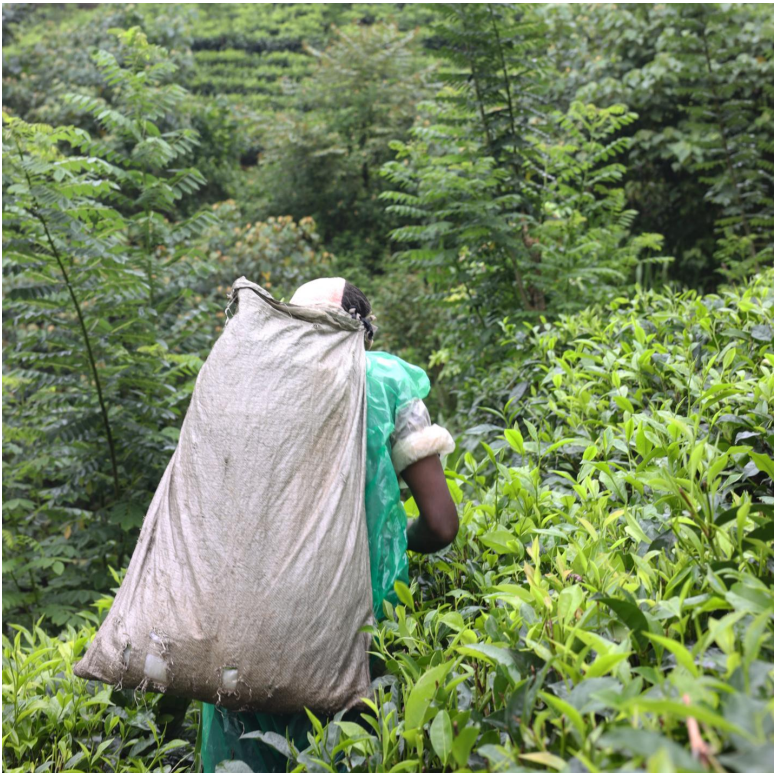
Banner Image: A strong El Niño could set off a chain reaction across agriculture, energy generation, water resources and food security, testing the country’s ability to manage multiple climate-related risks simultaneously. Image courtesy of Chamika Jayasri, Unsplash.
This story was written and edited by Gagani Weerakoon. She leads the editorial at the Center for Investigative Reporting (CIR).
This story was produced with support from Report for the World, a global media service strengthening local independent journalism.