

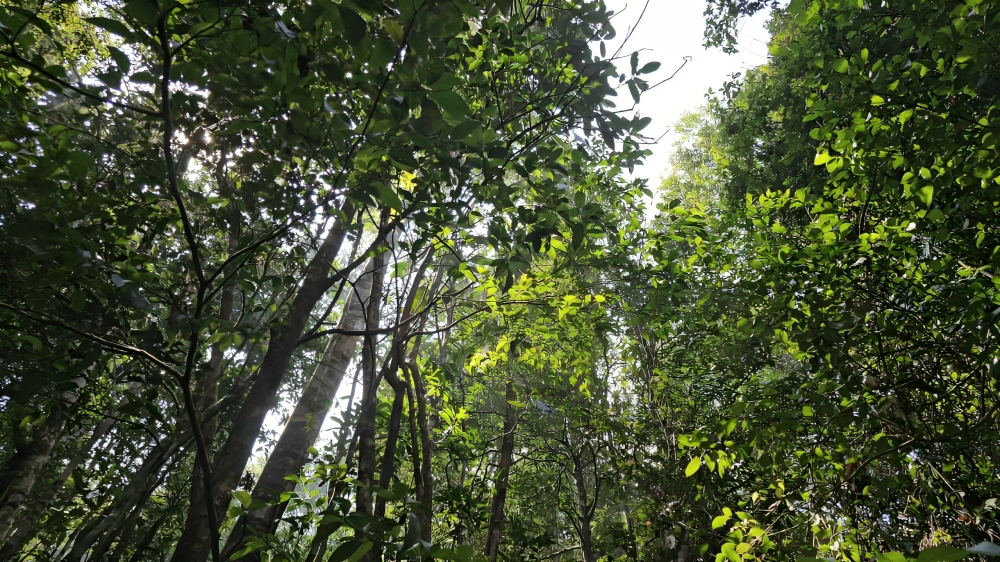
🌿 Sri Lanka’s tree cover on the edge

🔎 Await CIR’s latest OSINT-led investigation highlighting the extent of tree cover loss from 2002 to 2024 in one of Sri Lanka’s last remaining key lowland rainforests, Kanneliya, and its environs.

The investigation looks at the key drivers causing forest decline, with a focus on forest-edge changes in southern Sri Lanka, around Nagoda, Galle, and areas bordering the Kanneliya–Dediyagala–Nakiyadeniya Forest Complex, exploring what these shifts mean for biodiversity, water security, and the country’s environmental future.

Since 2001, Sri Lanka has lost around 230,000 hectares (2,300 square kilometers) of tree cover — or 6% of the island’s total forest cover — according to data from Global Forest Watch. From 2023 – 2024 over 540 hectares (5.4 square kilometers) have disappeared, much of it from natural forests, including the fragile lowland rainforests of the southern wet zone.

These rainforests are not simply clusters of trees. They are biodiversity strongholds, climate regulators, and lifelines for surrounding communities. As forest patches shrink and fragment under mounting development and changing land-use patterns, it has far greater implications for the country’s already stressed environment.

Hot this week

Protecting Sri Lanka’s Health, Food Systems and Future from AMR

An antibiotic that no longer works is more than...

‘Belonging’— A Deeply Personal Account of Sonia Gandhi’s Life in Public Eye

Sonia Gandhi’s memoir is a remarkable story of a...

Banned in Europe, Scanning Faces in India

Surveillance technology, heavily regulated in Europe, is freely deployed...

Visual Storytelling for Investigations: Tips and Tools

How can video introduce investigative journalism to new audiences...

Patriarchy & Social Norms are Failing the Rising Rung of Female Farmers in South Asia

Despite making 57 percent of the workforce across South...

Topics

Protecting Sri Lanka’s Health, Food Systems and Future from AMR

An antibiotic that no longer works is more than...

Banned in Europe, Scanning Faces in India

Surveillance technology, heavily regulated in Europe, is freely deployed...

Visual Storytelling for Investigations: Tips and Tools

How can video introduce investigative journalism to new audiences...

What the Supreme Court ignored in the PSTA Bill

Speed Read Supreme Court requires only four procedural amendments, leaving...

Training on Natural Disaster Safety for women journalists

On November 12th, the Center for Investigative Reporting (CIR)...

Colombo floods expose drainage gaps as authorities race to clear 469-km network

Speed read Colombo has about 469 km of drains and...

Related Articles

Popular Categories