

Speed Read:
- 10,813 Facebook records analyzed. Identified four betting-branded Facebook accounts (29,400 followers), 16 groups (116,700 members) and 13 additional betting pages.
- The investigation found 1,000+ WhatsApp group invitations and direct-chat links, with promoters using lifestyle content, cricket, influencers and affiliate marketing to funnel users into private betting networks.
- Study identified 2,755 duplicate posts, 5,227 template-based posts, 229 recurring author identities indicating a highly organized promotional ecosystem.
- Despite the Gambling Regulatory Authority Act taking effect on Dec. 1, 2025, the report found no public register linking licensed operators to affiliates.
COLOMBO — An unprecedented investigation into Facebook’s gambling ecosystem has found that offshore betting operators continue to openly target Sri Lankan users months after the Gambling Regulatory Authority Act took effect, using lifestyle content, cricket promotions, WhatsApp networks, and local payment agents to bypass enforcement.
The report, Betting on Facebook: Online Gambling Promotion, Offshore Operators, and the Limits of Regulation in Sri Lanka, by digital rights researcher and disinformation analyst Sanjana Hattotuwa, analyzed 10,813 public records from Meta’s content library and documented an extensive network linking Facebook pages, influencers, WhatsApp groups, cash agents and offshore betting platforms such as 1xBet and Melbet. Rather than hiding in the shadows, the study found the ecosystem operates largely in plain sight, exposing significant weaknesses in both platform moderation and Sri Lanka’s regulatory enforcement.
Although Sri Lanka introduced the Act on Dec. 1, 2025, the research argues that legislation alone has not translated into effective enforcement.
The study found an openly accessible promotional ecosystem consisting of more than 10,800 public Facebook records, four betting-branded Facebook accounts with roughly 29,400 followers, 16 Facebook groups with approximately 116,700 members, and another 13 betting-related Facebook pages identified through separate searches.
While these figures cannot be used to estimate the total number of gamblers in Sri Lanka because audiences overlap, they demonstrate sustained promotional activity over six months rather than isolated campaigns.
Following is the excerpts from an interview:
Q: How widespread is this gambling network in Sri Lanka? Is it growing?
A: I would hesitate to call it underground because much of it operates in plain sight. We documented more than 10,800 public Facebook records, four betting-branded accounts with around 29,400 followers, and 16 groups with about 116,700 members. While we cannot estimate the total size of the market, the data shows sustained activity and rapid replication across pages, domains and identities.
Q: Which social media platforms drive the most gambling engagement?
A: Our research focused on Facebook, so we can’t compare it directly with TikTok or Telegram. On Facebook, lifestyle posts and public pages generated far greater engagement than official betting accounts. WhatsApp was the main pathway from public content into private conversations, with more than 1,000 links directing users to groups or direct chats.
Q: Are young people being targeted?
A: We cannot prove who viewed the content because we don’t have audience data. However, the marketing clearly uses youth-oriented themes such as cricket, humor, sports, Sinhala and Singlish, WhatsApp, and low-cost betting options. Only 10 of more than 2,000 posts carried age restrictions, suggesting young people are particularly exposed.
Q: How do betting advertisements avoid detection?
A: They rarely look like traditional betting ads. Instead, promoters hide betting codes beneath lifestyle videos, cricket clips or entertainment content, use altered spellings such as “1XBAT,” rotate domains, and embed betting terms inside images. This makes the content appear organic while making automated detection much harder.
Q: What role do Facebook groups, WhatsApp channels, Telegram groups and influencers play in recruiting gamblers?
A: Each platform plays a different role. Influencers and sports pages attract users through lifestyle content and cricket coverage, often embedding betting codes and search instructions. Facebook groups facilitate deposits, withdrawals, and account registration, while WhatsApp moves users into private conversations to handle payments and support. Telegram is used mainly for betting signals, and YouTube for tutorials and affiliate promotions. Together, they create a coordinated recruitment and payment network, although activity within private messages could not be examined.
Q: How sophisticated are the affiliate networks operating behind these promotions?
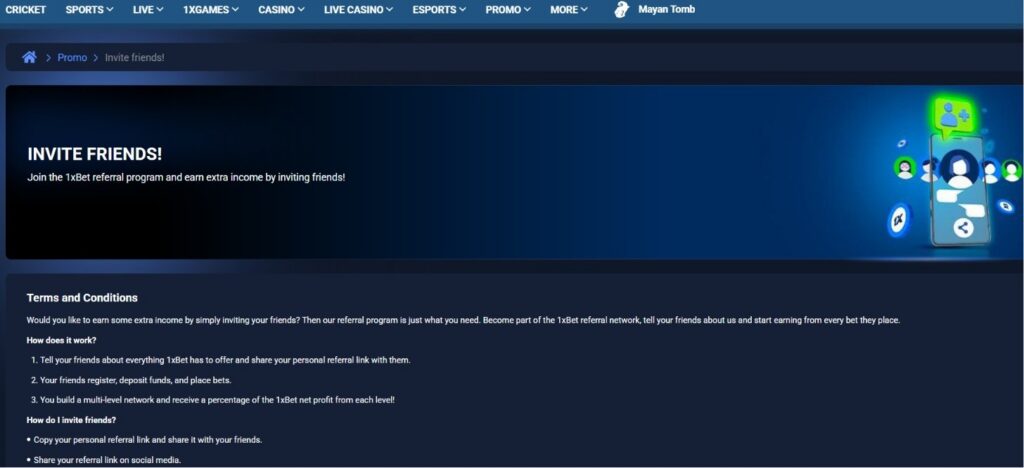
A: The affiliate networks appear highly sophisticated. Promo codes and tagged links track new registrations and deposits, while the 1xPartners program advertizes commissions starting at 25% of net profit from referred users. We identified thousands of duplicate and template-based promotional posts, hundreds of recurring authors across Facebook groups, and repeated phone numbers and WhatsApp contacts. Many promoters also provide end-to-end services, from account registration and deposits to withdrawals and betting tips, primarily through WhatsApp. Together, these patterns point to a well-organized referral network, though they do not prove a single company controls every promoter or agent.
Q: How does the payment system work?
A: Offshore betting platforms advertise Sri Lankan bank transfers, mobile wallets and cryptocurrencies. Local cash agents collect deposits, confirm payments via WhatsApp and credit offshore betting accounts. This makes gambling easier while complicating oversight, taxation and anti-money laundering enforcement.
Q: Does this point to regulatory failures within Sri Lanka’s financial sector?
A: Yes. It points to significant regulatory gaps, though it does not prove that any bank knowingly processed illegal gambling payments. Offshore betting platforms openly advertise local payment options, including iPay, Sampath Vishwa, eZCash, mCash, and major commercial banks, while cash agents publicly describe using Sri Lankan bank accounts to facilitate deposits and withdrawals. The Central Bank was also unable to provide satisfactory answers to 18 questions raised by Parliament’s Committee on Public Finance. At the same time, Sri Lanka had not introduced licensing rules for virtual asset providers, even as platforms such as Melbet and 1xBet offered cryptocurrencies, including Monero, alongside local payment methods. Financial institutions can see account holders, transfer patterns and settlement flows that researchers cannot. If regulators examine only the bookmaker’s domain and not agent accounts, payment references, wallets, crypto gateways and repeated counterparties, a domestic transfer can hide one step in an offshore gambling settlement.
Q: Why hasn’t the Gambling Regulatory Authority Act produced effective online enforcement?
A: The law is in place, but the enforcement system is not. Although the Act requires digital licenses and bans deceptive gambling advertising, key regulations remain incomplete and there is no public register linking licensed operators to their brands, affiliates, domains, or payment channels. Meanwhile, promoters continue to exploit social media, WhatsApp, rotating websites, and local payment networks faster than regulators can respond, leaving significant gaps in enforcement.
Q: Which institutions should lead the response?
A: The Gambling Regulatory Authority should lead the response, but no single agency can tackle this alone. The Authority should maintain a public register linking licensed operators to their brands, domains, affiliates, and payment channels. The Central Bank and Financial Intelligence Unit should monitor suspicious payment flows, while the police investigate illegal operations and financial crimes. The Telecommunications Regulatory Commission can restrict access to verified unlicensed services, although domain blocking alone will not stop operators from shifting to mirror sites. Meta also has a responsibility to detect and remove coordinated gambling promotions across Facebook and WhatsApp. Most importantly, these agencies need a permanent mechanism to share intelligence, coordinate enforcement, and report publicly on their actions.
Q: Are offshore operators exploiting legal loopholes?
A: Before the 2025 Act, online gambling operated in a regulatory gray area. While the law now requires licenses and bans deceptive advertising, enforcement has not kept pace. There is still no public register linking licensed operators to their brands, affiliates, social media accounts, or payment agents, allowing mirror sites, surrogate brands, WhatsApp channels, and cryptocurrencies to exploit regulatory gaps. However, the evidence does not prove that any operator deliberately designed these tactics to evade Sri Lankan law.
Q: How much responsibility do Facebook and WhatsApp bear?
A: Meta bears significant responsibility because Facebook drives public reach while WhatsApp enables private transactions. We found betting promotions embedded in lifestyle content, cricket posts, affiliate links, and gambling groups, with more than 1,000 WhatsApp group invitations and direct-chat links. Meta also labeled all 2,614 betting-related Content Library records as “unbranded,” limiting effective detection. While platforms did not create Sri Lanka’s regulatory failures, their systems make these networks easier to scale and harder to detect.

Q: Did your research find evidence of people losing life savings, borrowing money or falling into debt?
A: There’s no verified evidence that people lost their life savings or fell into debt because of these networks. However, users reported financial losses, blocked or delayed withdrawals, missing deposits, unresponsive agents, and repeated attempts to recover losses. These accounts document real harm and payment disputes, but the study does not include the financial records needed to verify claims of life-changing debt.
Q: Are there links between online gambling and fraud, money laundering, cybercrime or organized crime?
A: The Sri Lankan evidence identifies risk junctions, not a proven criminal enterprise. The combination of cash agents, local bank transfers, cryptocurrency and offshore operators warrants further financial investigation.
Q: Why is it so difficult to act against overseas operators like 1xBet and Melbet?
A: It is extremely difficult if authorities focus only on the foreign operator or its website. Offshore companies rely on rotating domains, mirror sites, affiliates, WhatsApp, local cash agents, and cryptocurrencies to evade enforcement. Blocking a single website does little if the wider network remains intact. Sri Lanka needs stronger disclosure requirements, better coordination with financial institutions and platforms, and greater cross-border cooperation. The real challenge is linking the offshore operator to local promoters, payment networks, and consumer harm.
Q: What can Sri Lanka learn from other countries?
A: Singapore demonstrates the value of strict licensing, age controls and spending limits. India shows the importance of following financial flows rather than focusing only on advertising. Sri Lanka needs both approaches.
Q: Is this unique to Sri Lanka or part of a wider South Asian trend?
A: The evidence suggests this is part of a broader regional trend, not a uniquely Sri Lankan problem. We found similar tactics in Sri Lanka and India, including surrogate branding, sports sponsorships, affiliate marketing, and local payment networks used to promote offshore betting platforms. While the study cannot measure the scale across South Asia, it shows a common cross-border business model rather than an isolated case.
Q: Did you find evidence that political, corporate or criminal interests protect these networks?
A: No. The study found no evidence that political actors, corporations, or criminal groups are protecting these networks. However, it does raise important accountability questions, including the use of the 1XBAT surrogate brand in Sri Lanka Cricket sponsorships, the public promotion of local payment methods by offshore operators, and concerns about the independence of the Gambling Regulatory Authority. These findings point to regulatory weaknesses and possible due diligence failures, but they do not establish corruption, collusion, or criminal protection.
Q: What might Sri Lanka face in five years if this environment continues unchecked?
A: Online gambling could become even more deeply embedded in everyday life, spreading through social media, private messaging, influencers, and local payment systems. More households, especially young people, could face financial losses, debt, and payment disputes, while regulators struggle to keep pace. The deeper cost will reach beyond gambling. Public trust will erode when visible, harmful commerce operates in plain sight under a law that appears unable to touch it.
Q: What single message should policymakers take from the report?
A: Regulate the entire ecosystem—not just gambling websites. Online betting operates through social media, affiliates, messaging apps, local payment networks, and offshore platforms. Sri Lanka has the legal framework, but it now needs effective regulations, stronger enforcement, better platform cooperation, financial oversight, and a public register that makes the entire network transparent and accountable.
Banner Image: The four Facebook accounts studied held roughly 29,400 followers at collection, and the 16 groups a combined membership of roughly 116,700. Image by besteonlinecasinos via Pixabay.
This interview was conducted and edited by Gagani Weerakoon. She leads the editorial at the Center for Investigative Reporting (CIR).
This interview was produced with support from Report for the World, a global media service strengthening local independent journalism.