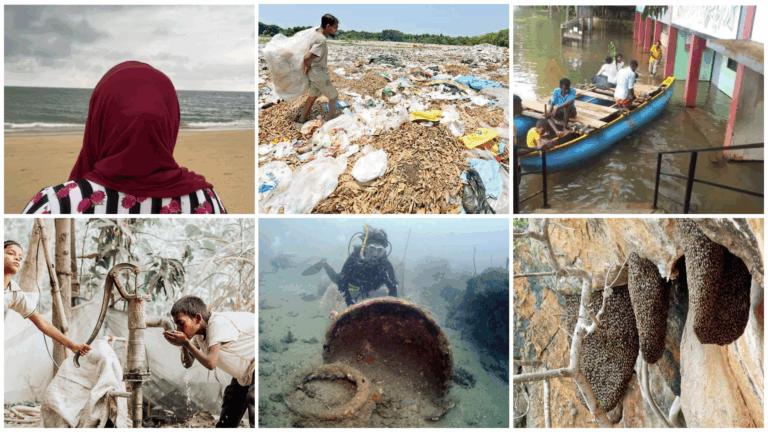
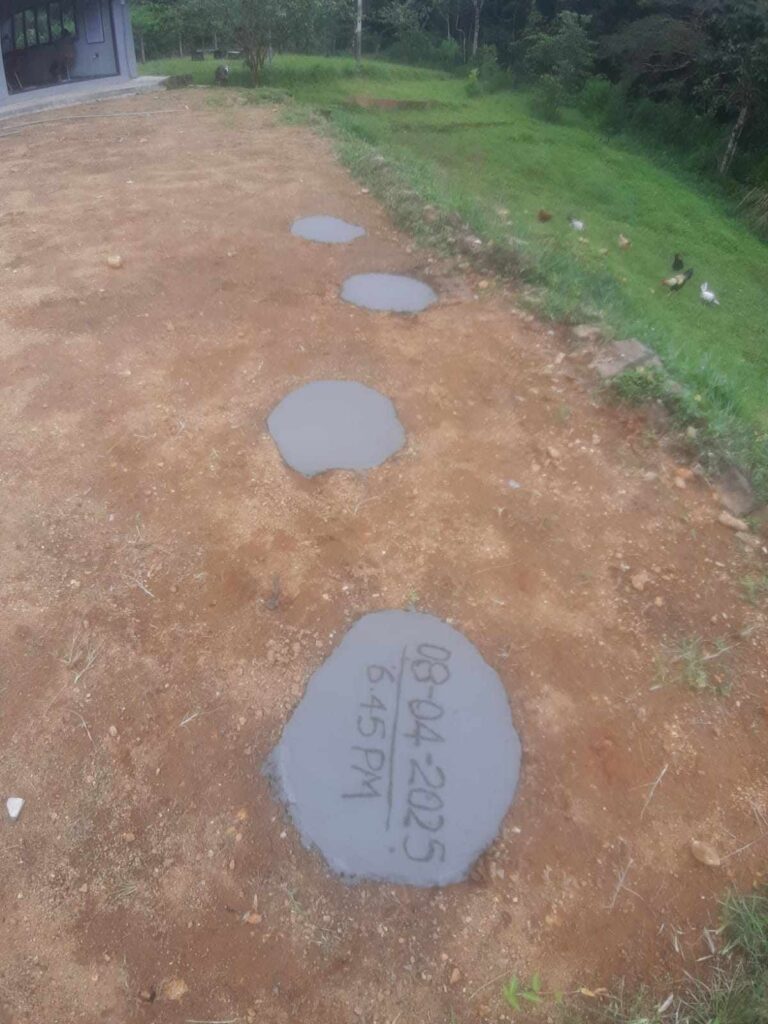
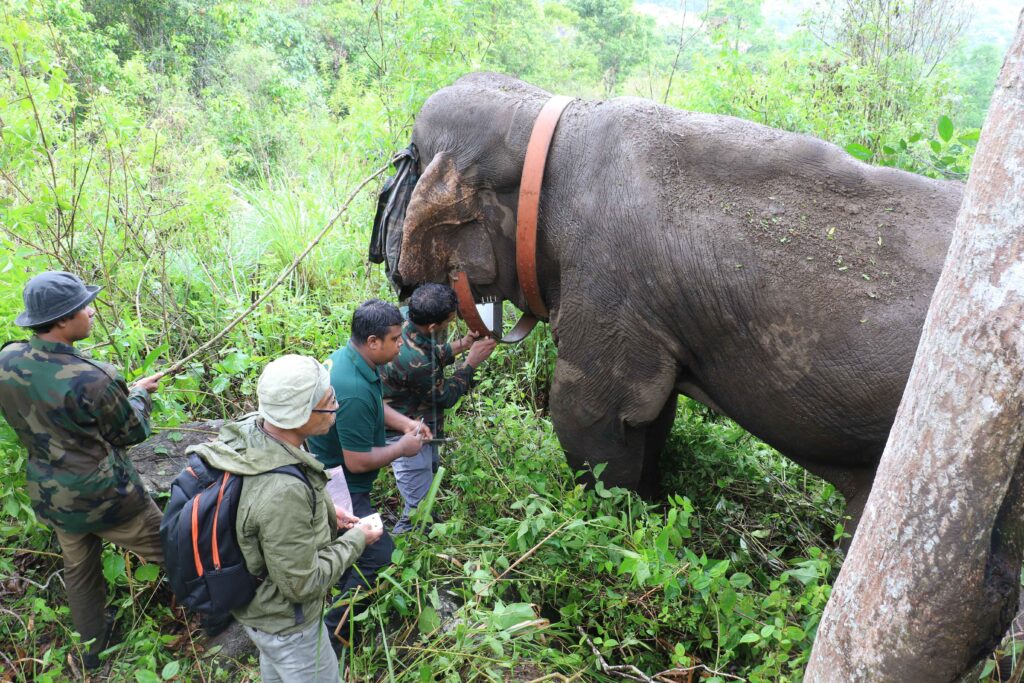
There are many climate change stories but those that often go missing in the media are linked to non-economic loss and damage (NELD) such as human life, cultural heritage, and biodiversity—that cannot be easily assigned a monetary value.
The Center for Investigative Reporting (CIR) in collaboration with Climate Action Network South Asia (CANSA) supported six reporting fellowships to produce six extraordinary stories representing intangible losses, covering the human cost of climate change, ranging from culture, health, indigenous knowledge, and biodiversity, highlighting the disproportionate impact of climate change on marginalized communities, women, children and indigenous groups.
Links to reports provided below:
Rathugala adivasis struggle to preserve ‘bee honey harvesting’ by Kamanthi Wickramasinghe
Sri Lanka’s relationship with neighboring India remains central to regional stability but cannot come at the expense of strategic autonomy.
The traditional non-aligned stance is no longer sufficient as Sri Lanka needs to actively engage with all major powers – India, China, the U.S., European Union and the Gulf nations– without overdependence on any single partner.
Delay in response exposed IRIS Dena to unnecessary risk.
Over the next decade, Sri Lanka will face mounting pressure due to lack of energy insecurity, competition for investment and great power rivalry.
COLOMBO – At a time when global power rivalries are intensifying and regional mechanisms like SAARC remain fragile, Colombo finds itself walking a delicate line balancing strategic autonomy with economic necessity, and neutrality with pragmatic engagement.
In this wide-ranging interview, former foreign minister Ali Sabry reflects on Sri Lanka’s handling of the IRIS Dena incident, the evolving role of India, and why Sri Lanka must move beyond traditional non-alignment towards a more agile, “multi-aligned” foreign policy. He also outlines the structural gaps in decision-making, the urgency of economic diplomacy, and the geopolitical risks that could shape the country’s trajectory over the next decade. Excerpts:
Q: How do you assess Sri Lanka’s handling of the recent geopolitical and maritime tensions in the region?
A: Given the complexity of the situation and the geopolitical realities Sri Lanka operates within, I think the country has handled it reasonably well, except for one shortcoming.
Overall, Sri Lanka maintained its independence and adhered to a non-aligned posture.
Q: What was the shortcoming?
A: The initial response to the IRIS Dena incident was delayed. By keeping the vessel in international waters for too long, it {vessel}was exposed to potential attack, including by the U.S. Sri Lanka could have acted more swiftly and allowed safe passage earlier, particularly since the vessel was not a combatant and was reportedly on a goodwill mission. Beyond that, the situation was handled well.
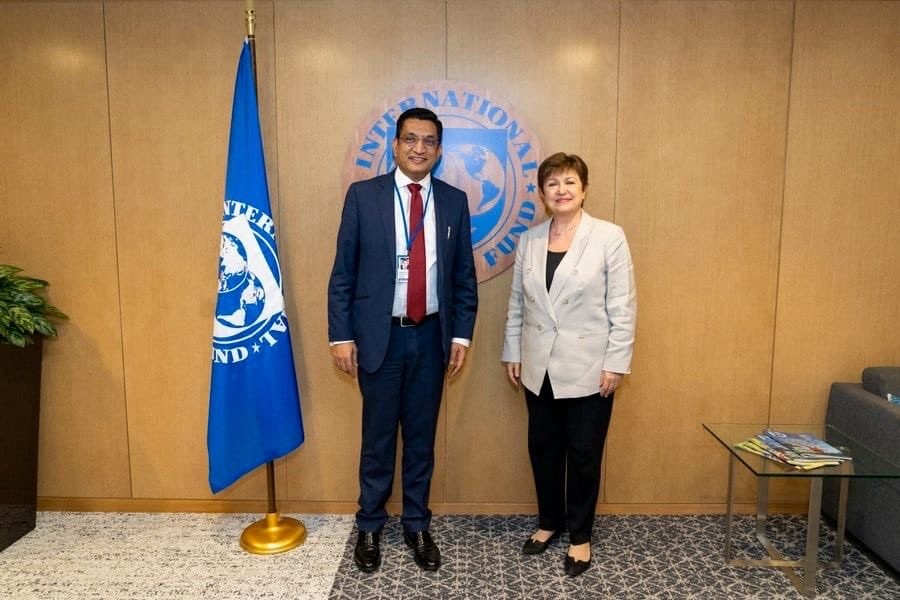
Sabry, during his tenure as the finance minister met Kristalina Georgieva, managing director of the International Monetary Fund ((IMF) at the IMF headquarters in Washington, D,C,. Image via X.
Q: Iran’s ambassador in Colombo recently insisted the vessels had been invited, while the government presented a different narrative. How might this affect bilateral relations?
A: Sri Lanka cannot act in isolation from geopolitical realities. It cannot afford to antagonize the U.S. While there may be a dent in relations in the short term, Iran is also likely to recognize that Sri Lanka responded to distress calls, ensured safety, and did not facilitate any external military action. In that sense, Iran would find it difficult to fault Sri Lanka entirely.
Q: Are current regional security frameworks sufficient to address emerging threats in the Indian Ocean?
A: Not really. Mechanisms like BIMSTEC and IORA need to be strengthened, while SAARC unfortunately remains largely inactive. India must take a leadership role in building consensus, particularly around intelligence sharing and limiting the presence of submarines within territorial waters and exclusive economic zones.
Q: How important is Sri Lanka’s relationship with India in ensuring regional stability?
A: Whether we like it or not, it is the most important bilateral relationship at this point. Sri Lanka must work closely with India. However, this cannot come at the cost of strategic autonomy. We cannot be subservient to any country.
It is a delicate balancing act, and we must not be seen as an extension of Indian policy. Because India is no longer the India of what we know. India has been a leader of the Global South and the Non-Aligned Movement. But over a period of time, it appears not willing to play that role.
It wants to be in the lead of the Global South but keeping one leg in the Global North. You can’t do that. Therefore, even a bigger disappointment is how India has slowly drifted away from the regional nuances. And, that’s a problem but we still have no option rather than continue to work with India.
Q: Should Sri Lanka play a more proactive role in regional security cooperation?
A: Yes, it should. Regional instability, whether in Pakistan, Bangladesh, Nepal, or Myanmar, has created a vacuum. India and Pakistan no longer talk to each other. Sri Lanka, despite its own crises, has maintained democratic governance and constitutional order. That gives us credibility.
We are seen as a neutral and respected actor in the region, and I have witnessed it as the country’s foreign minister. Sri Lanka can leverage that goodwill to act as a bridge between countries and revitalize regional mechanisms such as the Colombo Security Conclave, IORA or BIMSTEC, though this will depend significantly on India’s support.
Following the killing of Iran’s supreme leader Ayatollah Ali Khamenei in a targeted airstrike in February, Sabry visited the Embassy of Iran in Colombo to record his condolences. Image via Facebook.
Q: To what extent can foreign policy drive Sri Lanka’s economic recovery?
A: It is absolutely central. Economic recovery and foreign policy are closely intertwined. Sri Lanka must maintain strong ties with India but also avoid overdependence. China, the European Union, the U. S., West Asia, Japan, and South Korea are all critical partners.
I prefer the term “multi-aligned” rather than non-aligned. It reflects a strategy of engaging with all. Friendship with all, enmity towards none.
Q: Are we fully utilizing our diplomatic channels to attract investment?
A: Immediately after the economic crisis, yes. We effectively used diplomacy to secure debt restructuring and the IMF program, to revive the economy. However, beyond that, I have not seen sufficient evidence of new investments flowing in, apart from engagement with India. If efforts are underway, they are not yet visible as outcomes.
Q: Which sectors offer the strongest opportunities for economic diplomacy?
A: Sri Lanka’s geographic location is its greatest asset. It sits along one of the busiest maritime routes in the world, but that advantage must be commercialized.
Key sectors include; maritime and logistics, energy security, transit trade between East Asia, the West Asia, Europe, and India, tourism, IT and IT services and modernized agriculture targeting export markets.
Q: Could Sri Lanka position itself as an alternative hub amid instability in the West Asia?
A: Absolutely. There is an opportunity to attract businesses seeking diversification away from West Asia. Sri Lanka is strategically positioned between West Asia and major Asian hubs like Singapore and Hong Kong.
Developments such as Colombo Port City and energy infrastructure could be leveraged to position Sri Lanka as a competitive alternative.
Q: Has the recent crisis exposed structural weaknesses in Sri Lanka’s foreign policy and national security framework?
A: To some extent, yes. The lack of a unified response, different actors conveying different messages, suggests the absence of a coordinated structure.
Sri Lanka needs a formalized mechanism, possibly a national foreign policy council, working alongside the National Security Council and the Economic Council. This body should regularly assess geopolitical developments, coordinate responses, and ensure consistent communication through designated spokespersons.
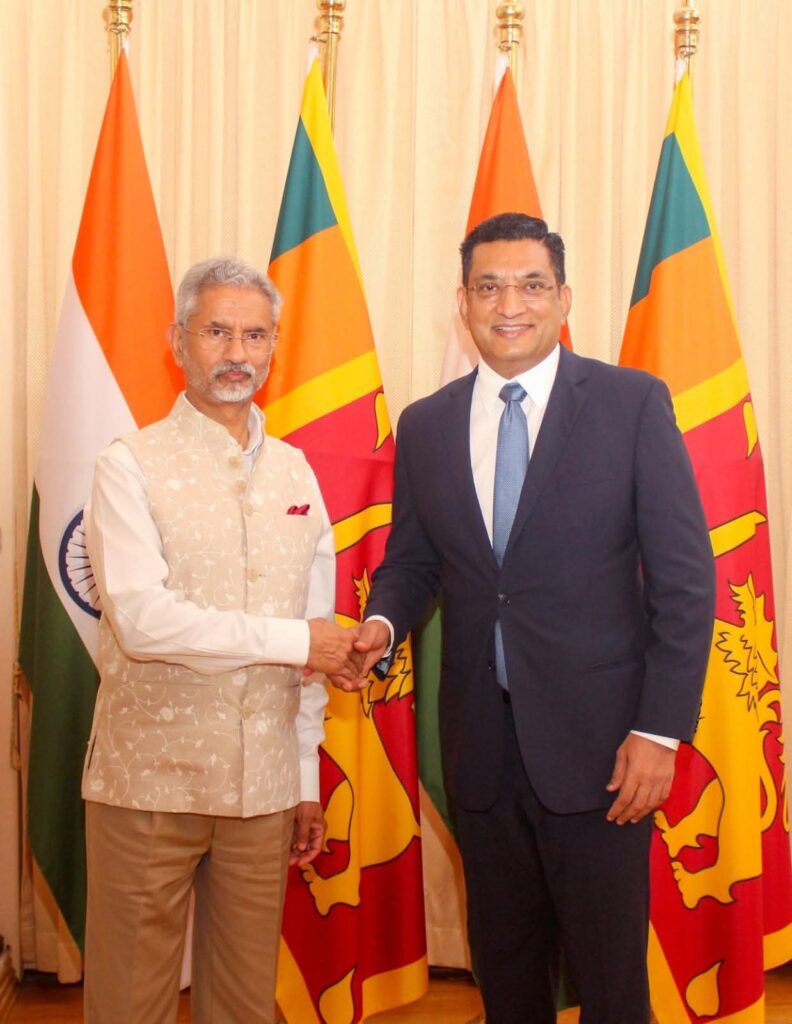
Sabry during a bilateral meeting with his Indian counterpart Subrahmanyam Jaishankar, external affairs minister of India. Image via Facebook.
Q: What are the biggest geopolitical risks Sri Lanka could face over the next five to ten years?
A: Much depends on how global conflicts, particularly in the West Asia, evolve. We are dealing with increasingly unpredictable leadership and outcomes.
However, key risks include; energy security challenges, competition for investment, the need to balance Chinese and Indian influence and shifts in global supply chains.
Sri Lanka must also position itself to attract diverted investments from volatile regions.
Q: If you were advising the current leadership, what strategic shifts would you recommend?
A: First, aggressively position Sri Lanka as an alternative investment destination, particularly for supply chain diversification.
Second, expand port infrastructure, liberalize aviation access rather than prioritizing a loss-making national carrier, offer targeted tax incentives to attract investors and establish an efficient “one-stop shop” for investment approvals. Bureaucratic delays are a major deterrent, investors are frustrated by inefficiencies.
Finally, in foreign policy, flexibility is key. Sri Lanka should avoid rigid commitments and instead keep its options open to navigate an increasingly fluid geopolitical landscape.
This interview was conducted and edited by Gagani Weerakoon. She leads the editorial at the Center for Investigative Reporting (CIR).
This interview was produced with support from Report for the World, a global media service strengthening local independent journalism.
Editor’s Note: This is the second excerpt taken from GIJN’s in-depth report on “The Investigative Agenda for Technology and AI Journalism,” based on a day-long pre-conference event held on November 20 at GIJC25, where 100 investigative journalists, editors, tech experts, and researchers from nearly 50 countries and territories convened to examine the most urgent technology-related challenges and opportunities facing investigative journalism today. Credits and acknowledgments for this project can be found here.
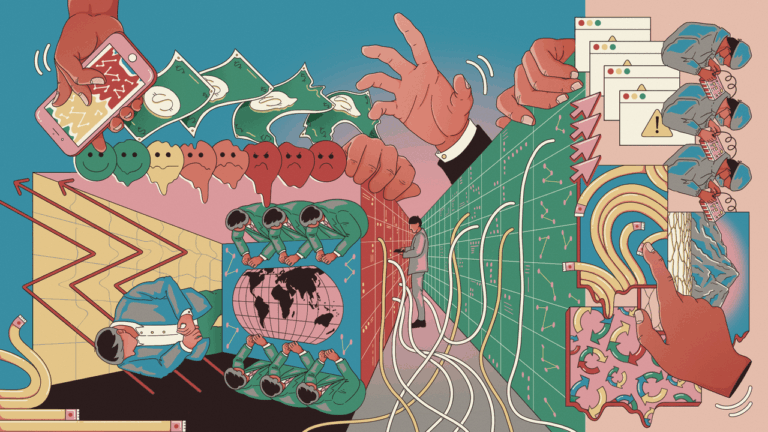
Reporting on AI is often driven by hype and focused on technological novelty, rather than on the questions of power, accountability, and impact. Too frequently, tech and AI are treated as technical subjects, instead of being examined as a system of influence that reshapes institutions, labor, knowledge production, and democratic processes.
Covering AI requires examining the power structures and decisions that shape how these systems are built and deployed, and who ultimately benefits from them.
One of the most compelling frameworks discussed during the pre-conference event was proposed by Karen Hao, who urged journalists to place power at the center of AI reporting. Drawing on her experience covering the industry since 2018 and her book “Empire of AI,” Hao argued that comparing leading AI companies to historical empires offers a useful lens for investigative journalism. These companies operate on a global scale and at historically unprecedented levels of size, accruing extraordinary economic and political power in ways that often involve dispossessing others.
As she explained, AI companies lay claim to resources that are not their own: they train systems on vast amounts of data scraped from the internet, drawing on the intellectual property of writers, artists, journalists and creators without consent; they rely on large-scale, often invisible labor, for data annotation and content moderation for example, frequently performed in countries from the Global South, without a proportional share of economic value flowing back to those workers. Participants also highlighted how this concentration of resources (data, compute, talent, and capital) is increasingly confined to a small number of firms, reinforcing structural asymmetries that make scrutiny and regulation more difficult.
Debunking Industry Narratives
For investigative journalists, the implications are clear. Covering AI requires examining the power structures and decisions that shape how these systems are built and deployed, and who ultimately benefits from them. This also means questioning the dominant narratives promoted by the AI industry, which often serve to limit scrutiny. Building on the analytical framework developed in Hao’s work and the discussions throughout the day, participants identified four recurring narratives that investigative journalists should challenge.
First, AI is framed as inevitable, an unstoppable force beyond political control, obscuring the human and institutional choices that shape its development and deployment. Several speakers noted that this rhetoric of inevitability is frequently reinforced through geopolitical framings (particularly narratives of technological “competition” or “war”), which discourage critique and present rapid deployment as a strategic necessity rather than a political choice.
As investigative journalist Gabriel Geiger explained, algorithms have become integral to core state functions over the past two decades, from welfare distribution and law enforcement to healthcare and housing allocation.
Second, AI is presented as neutral and objective, despite evidence that automated systems reflect the values, biases, and data limitations of their creators.
Third, AI is portrayed as immaterial, through metaphors such as the “cloud,” masking its physical footprint, environmental costs, and reliance on hidden labor, particularly in the Global South. Participants emphasized the importance of investigating the material infrastructure underpinning AI systems (data centers, energy and water consumption, extractive supply chains) as well as the communities most affected by these infrastructures.
Finally, the myth of the “everything machine” suggests that a single system can solve complex social problems. These technologies are not neutral, and they “break down” as soon as they are taken out of their original context (San Francisco, the English language, or US culture) and confronted with other global realities.
From Algorithmic Power to Accountability Gaps
Beyond artificial intelligence itself, several speakers stressed the importance of focusing more broadly on algorithmic power. Algorithmic power refers to a relationship of power exercised through automated decision-making, already deeply embedded in public-sector and private companies’ decision-making processes.
As investigative journalist Gabriel Geiger (Lighthouse Reports) explained, algorithms have become integral to core state functions over the past two decades, from welfare distribution and law enforcement to healthcare and housing allocation. This dynamic, for example, was documented in a joint investigation published by Lighthouse Reports, Wired, the Pulitzer Center, and others, which examined how automated fraud-detection systems were deployed across European welfare states. The reporting showed how opaque risk-scoring algorithms systematically flagged claimants as suspicious, leading to suspensions of benefits or investigations with little explanation, limited avenues for appeal, and disproportionate impacts on vulnerable populations. In many of these cases, individuals only became aware of the existence of an automated system after experiencing abrupt, life-altering consequences.
Image: Screenshot, Pulitzer Center/ GIJN
Algorithmic power is equally visible in the private sector, particularly through labor platforms. These systems often operate without clear explanations, leaving workers unable to contest decisions or even understand why they have been penalized. An investigation by Varsha Bansal supported by the Pulitzer Center documented how Uber’s facial recognition system in India automatically locked drivers out of their accounts, cutting off access to income based on opaque algorithmic decisions, with no clear explanation or effective appeal mechanism. Speakers highlighted how this opacity contributes to new forms of labor control and precarity, while shielding companies from accountability.
In both public and private contexts, the concentration of algorithmic power creates profound accountability gaps, especially when systems are shielded by claims of technical complexity or commercial secrecy.
Investigating the ‘Black Box’: Methods, Limits, and Power Imbalances
A recurring problem raised by participants was the “black box” challenge. Journalists are often confronted with systems whose inner workings are partially or entirely hidden, whether because of technical complexity, claims of trade secrecy by private companies, or institutional opacity within public administrations. As a result, reporters frequently have only a fragmented view of how automated systems function and how decisions are actually made.
Speakers emphasized that the black box is not an insurmountable obstacle. Investigative strategies can be adapted to work around limited access to source code.
In public sector cases, participants recommended using freedom of information laws in a layered and strategic way. Rather than immediately requesting complex datasets or source code, journalists can begin with foundational documents, such as procurement contracts, impact assessments, or user manuals, before moving toward more technical materials. Human sources can also provide reporters with internal training materials, presentations, and guidelines. These documents often reveal the assumptions, thresholds, and decision rules embedded in the technology, even when the code itself remains inaccessible.
When direct access to technical documentation is impossible, especially in the private sector, journalists can focus on analyzing the outputs of algorithmic systems. Examining real-world outcomes can make it possible to infer how a system operates and where its biases or failures lie. Investigations such as the one conducted by Rest of World cited during the GIJC25, relied on analyzing the outputs produced by algorithms themselves to demonstrate how these systems generate and reinforce bias. A Bloomberg investigation into Uber and Lyft in New York City relied on crowdsourced data from drivers to document pay restrictions and platform lockouts. By aggregating workers’ experiences and records, Leon Yin and the other journalists who authored the article were able to reveal patterns of algorithmic control shaping access to work and income, without access to the underlying code.
Aggressive legal tactics, including threats of litigation, non-disclosure agreements, and pressure on sources, were identified as common obstacles for journalists.
Another effective approach suggested involves encouraging users to export and share their own data. Tools such as Google Takeout or TikTok data exports generate standardized datasets that include metadata not visible through public interfaces. When analyzed at scale, these datasets allow reporters to statistically examine algorithmic behavior and decision patterns. Scraping publicly available data can further complement these methods, enabling journalists to reconstruct how automated systems operate in practice.
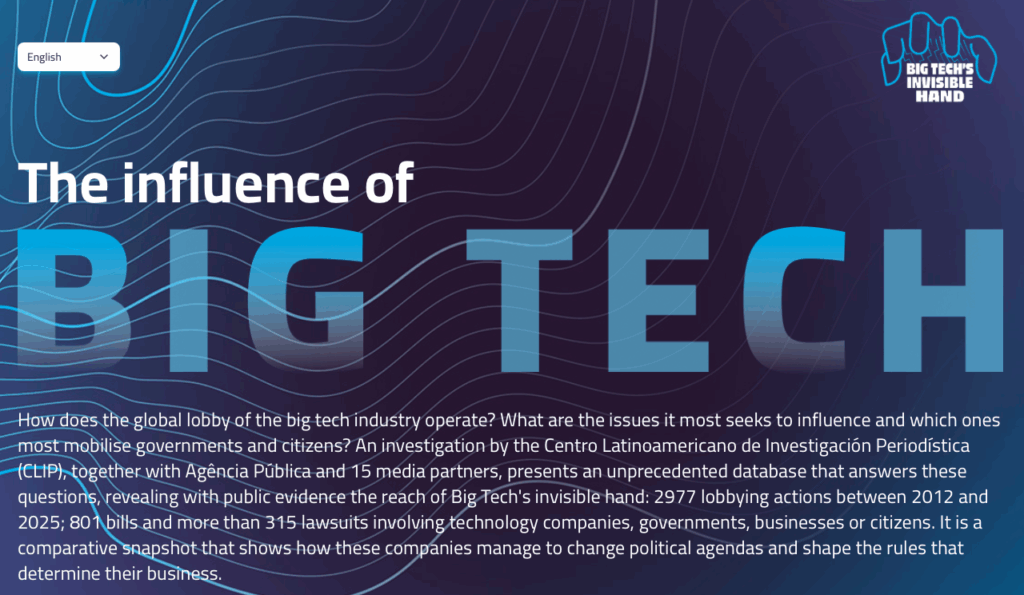
Collaborative investigations such as the Big Tech’s Invisible Hand — led by the Centro Latinoamericano de Investigación Periodística (El CLIP), together with Agência Pública (Brazil), and 15 other media partners — also show that AI accountability requires examining not only technologies, but the aggressive lobbying strategies of Big Tech companies. These investigations documented the scale of resources deployed, the tactics used, and the global reach of corporate influence aimed at shaping regulation and public debate around AI and digital technologies.
Pre-conference attendees emphasized that investigating AI and Big Tech companies involves a profound power imbalance between journalists and the actors they seek to hold accountable. This concentration of power creates heightened legal and digital security risks for journalists. Aggressive legal tactics, including threats of litigation, non-disclosure agreements, and pressure on sources, were identified as common obstacles for journalists. Several speakers called for greater collaboration across newsrooms, civil society, and academia to mitigate these risks and rebalance power.
Image: Screenshot, El CLIP/ GIJN
Priorities Identified:
Recenter AI reporting on power and accountability, moving beyond hype and technical novelty.
Challenge dominant industry narratives portraying AI as inevitable, neutral, immaterial, and universal.
Develop and share investigative methods to overcome the “black box”, including FOIA strategies, analysis of system outputs, and crowdsourcing.
Investigate lobbying and influence strategies of Big Tech, recognizing corporate political power as a central dimension of AI accountability.
Acknowledge and mitigate power imbalances and risks for journalists, including legal pressure and digital security threats.
Strengthen collaboration and coordination across borders, recognizing that AI systems and the companies behind them operate transnationally.
Sandrine Rigaudis the program director of GIJN. She is an investigative journalist, director, and Emmy-winning producer who served as editor-in-chief of Forbidden Stories from 2019 to 2024. In that position, she led international collaborations to continue the work of assassinated or under threat reporters, coordinating investigations involving up to 100 journalists and 30 media outlets, including Le Monde, The Washington Post, The Guardian, Der Spiegel, Haaretz, and El País. She teaches investigative journalism at the School of Journalism of Sciences Po Paris and is co-author of “Pegasus: How a Spy in Your Pocket Threatens the End of Privacy, Dignity, and Democracy.” A Nieman Fellow at Harvard in 2024/2025, she worked on global investigative collaborations, leaked data management, and Artificial Intelligence.
Ove the past year, the Center for Investigative Reporting (CIR) produced a collection of 12 in-depth reports, interviews and op-eds focused on disinformation, its impact on democracy and rights, with particular emphasis on electrical integrity.
In 2024, Sri Lanka concluded two national elections – presidential and parliamentary. This article series drew lessons from the recent elections and considered future scenarios where tech will play a decisive role in shaping public opinion and even electoral outcomes.
This initiative, “Strengthening Resilience Against Disinformation in Sri Lanka: Creating Counter-Narratives to Tackle Harmful Content,” focused on producing evidence-based, high-quality journalism covering a range of topics including information disorder, AI-driven disinformation, gendered disinformation, and crisis communications. Through this work, we aimed to strengthen public awareness, encourage critical thinking, and contribute to a more informed and resilient media landscape in Sri Lanka.
These stories reflect our continued commitment to in-depth reporting to unpack complex narratives, counter harmful content, and strengthen Sri Lanka’s democratic discourse.
Links to the in-depth reports, op-eds, and interviews are provided below.
Up to 5,000 tuberculosis patients annually go undetected in Sri Lanka despite availability of free treatment.
Only 7,500–8,500 cases are reported each year, far below the WHO target of 14,000 detections.
Colombo accounts for 25% of total cases, driven by overcrowding and poor living conditions.
Around 750 patients die each year, highlighting persistent gaps in early detection and medical care.
COLOMBO — Sri Lanka’s tuberculosis (TB) program tells a reassuring story: free treatment, widespread diagnostic facilities, and a relatively low disease burden compared to its South Asian neighbors. But a closer look at the data, and the voices behind it, reveals a more troubling reality.
Thousands of TB patients are still missing from the system. They are not included in the official statistics. They are not receiving treatment. And they are quietly sustaining transmission across communities.
According to the latest data from the World Health Organization (WHO), Sri Lanka recorded an estimated TB incidence of 62 cases per 100,000 population. This translates to a calculation of nearly 14, 000 detections annually, which is not the case.
According to director of Sri Lanka’s National Programme for Tuberculosis Control and Chest Diseases (NPTCCD) and a top public health professional, Pramitha Shanthilatha, currently around 7,500 – 8,500 patients are reported within the country. This means, around 4,000-5,000 patients are undiagnosed or underreported and missing from the records each year.
Tuberculosis remains the leading cause of death among communicable diseases in Sri Lanka. Of the patients reported last year, 5,622 were men, with the highest number of cases recorded in the Colombo district, Shanthilatha told CIR. The highest prevalence of TB patients is in urban areas while the Western province tops it.
According to the NPTCCD, 8,748 tuberculosis (TB) cases were reported in 2025. As of March 24, Sri Lanka has recorded 975 TB cases this year. Of these, 43 are pediatric cases. Both figures include a combination of new and relapse patients.
“Sri Lanka’s detected cases of TB has remained static for the past decade or so with the exception of 2019, the COVID-19 pandemic year. In 2023, we recorded 9,538 cases, 9,200 in 2024 and 8,726 in 2025. Our main issue is whether these statistics are accurate as WHO has set us a target of detecting approximately 14,000 cases per annum,” NPTCCD’s director said.
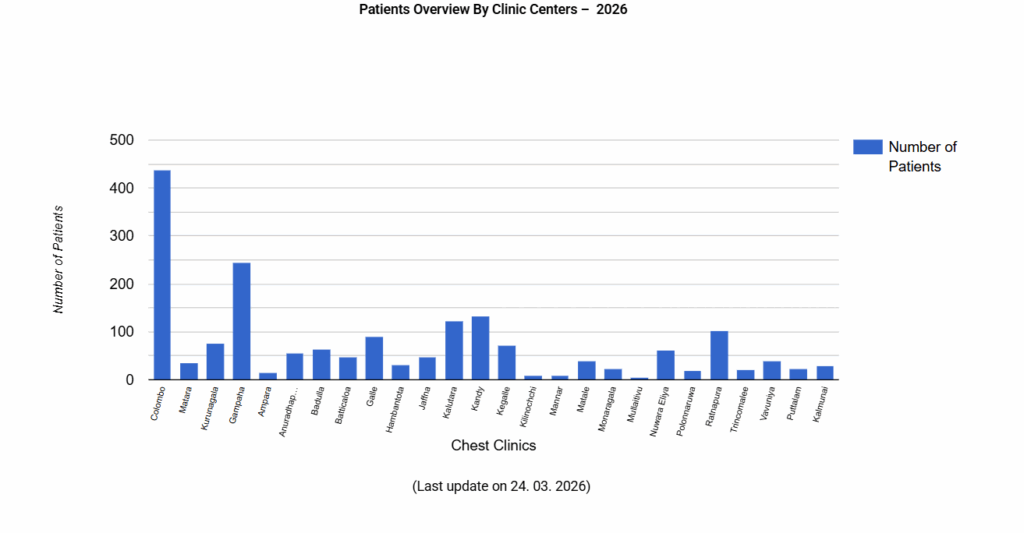
Patients overview by TB clinics across Ari Lanka. Graph by NPTCCD.
Leading cause of death
According to her, deaths during TB treatment remain comparatively high.
“On an average, 750 TB patients die while receiving treatment. Even though, they may not die directly due to TB, such as death due to a stroke, we still count it as a TB-related death as the patient was receiving treatment. In 2023, 745 TB patients died while 780 and 749 died in 2024 and 2025 respectively,” Shanthilatha added.
If TB patients follow treatment plans properly, after two weeks, chances of that patient spreading the disease bacteria to others reduces.
“Of all the areas, Colombo municipal limits remain a high risk area. High density, overcrowding, ventilation issues, malnutrition, alcoholism, drugs and smoking can be listed as some of the reasons for Colombo’s high prevalence rate. According to our statistics, TB patients found within Colombo city limits, 25% of the total patients detected annually are form Modara, Mattakkuliya, Borella, Wanathamulla, and Grandpass,” explained the NPCTTD director.
While Colombo, Gampaha and Kalutara districts have been topping the list of high TB prevalence areas, the NPTCCD noted that Kandy has beaten Kalutara and has become the district with the third highest TB cases. This may be due to high detections by authorities under various programs. While Vavunia and Mullaithivu record the lowest number of cases, likely due to less population and spaciousness, this is still not a best-case scenario. “Given their population, the number of cases remain high in average,” Shanthilatha explained.
Vulnerable categories
Individuals considered highly vulnerable to tuberculosis (TB) include immediate family members and close contacts of TB patients, organ transplant recipients, people with diabetes, the elderly, those with weakened immune systems, and prison inmates.
Awareness posters by WHO to promote seeking medical treatment as soon as one shows symptoms. Image via World Health Organization.
A major challenge in reaching the WHO’s 2035 TB targets is the continued reliance on passive case detection, where patients are identified only when they seek care, alongside persistent barriers to screening close contacts and family members.
The most common detection method is sputum smear microscopy, in which a patient’s sputum sample is examined under a microscope to identify TB bacteria. Another widely used test is the tuberculin skin test, where a small amount of tuberculin is injected into the forearm to check for a reaction that may indicate TB infection. Chest X-rays and GeneXpert tests are more advanced diagnostic tools used for more comprehensive detection.
“While nearly all public hospitals in Sri Lanka are equipped to conduct basic TB screening, the country currently has 35 GeneXpert machines and two mobile X-ray units – apart from standard X-ray machines available in hospitals, provided through the Global Fund, she observed.
She however, noted that their lack of human resources and free availability of equipment like mobile x-ray machines are major challenge to carry out field investigations.
“Lack of public awareness and our limitations in carrying out field investigations frequently remain a challenge to achieve WHO end TB strategy for 2035 According to the strategy, the patients detected should come down to about 2,000 while annual deaths should be reduced to 50. On the other hand, the catastrophe health cost of the patient should be zero Catastrophe cost is defined as out-of-pocket payments for treatments borne by the patient and the family including those spent on investigations/ testing, personal care, specific dietary requirements,” she said.
Achieving catastrophe cost zero target is extremely unlikely as it means the patient will have no cost. However, given the still prevailing social stigma and practical issues may continue to leave TB patients unemployed or underemployed.
A poster encouraging societies to set aside social stigma on TB patients. Image via World Health Organization
“They have to come for routine clinics at least once a month and this may pose concerns to job opportunities and job security, on the other hand, TB patients need nutrition and if they come from lower income families, this will be problematic. We feel if the government can arrange a proper aid system for TB patients, it will help in reducing their treatment cost..” she noted.
At present, an allowance varying from Rs 5,000 to Rs 500 is provided depending on which province or district the patient comes from. Patients in Colombo receive Rs 3,000 allowance and this is arranged by the Ministry of Social Empowerment and Welfare.
This story was written and edited by Gagani Weerakoon. She leads the editorial at the Center for Investigative Reporting (CIR).
This story was produced with support from Report for the World, a global media service strengthening local independent journalism.
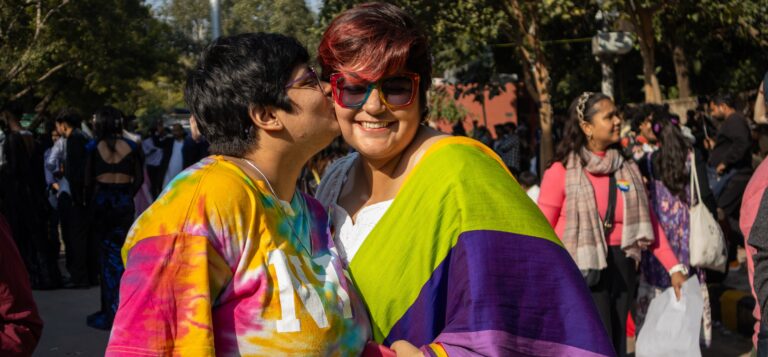
Introduced during British rule, Section 377 and its variants continue to shape laws and public attitude toward the LGBTQ+ communities in parts of South and Southeast Asia.
The year is 2026 — the 21st century. Decades have passed since the British decolonised Asia but some of the colonial-era laws continue to govern the lives of individuals in the countries the empire once ruled in. One of them is Section 377 that criminalised homosexuality.
It might come as a surprise to you but of the 48 countries in Asia, only three have legalised gay marriage. While some countries have decriminalised homosexuality, others continue to treat the queer community as “criminals”.
Section 377 — a colonial era law that sets the foundation of anti-queer laws in the former British colonies — is one of the biggest challenges for the LGBTQ+ community in these countries.
The law bans “unnatural sex” and has been used to punish individuals since 1862 (written in 1861), the first time when the British empire introduced it as a part of the Indian Penal Code. The Section was later introduced to other British colonies including Sri Lanka, Malaysia, Brunei, Singapore, Pakistan, and Bangladesh.
“Long before colonialism, gender diversity wasn’t even seen as a disruption. It was the very thing that kept the world in harmony. But then the British arrived and with them they brought along Victorian laws, [which turned] moral codes into an offence,” says Andy Suraidah, founding director, Legal Dignity, a human rights organisation advancing non-discriminatory access to justice for LGBTQ+ persons in Malaysia.
Suraidah goes on to say that through colonial education, religion, and bureaucracy, a whole new moral vocabulary was introduced. This divided people and labelled them as “moral, normal, abnormal, civilised, and sinful”.
Through this story, we trace the origin of Section 377, look at when it was introduced, where it stands today, and how it has impacted the lives of individuals in some of these former British colonies.
Inside the Mindset of Victorian Lawmakers
Earlier,in 1533, England had passed the Buggery Act, which called same-sex acts a “detestable and abominable vice”. The Act was repealed and replaced by the Offences against the Person Act 1828. This Act remained in force until it was replaced by the Offences against the Person Act 1861.
It was in 1860, the British imperial administration in India completed a penal code that would outlast the empire and travel the globe. The Indian Penal Code, drafted by a law commission chaired by Thomas Babington Macaulay, included Section 377 that made “carnal intercourse against the order of nature” a criminal offence punishable by imprisonment.
British administrators copied it into the laws of territories across Asia, Africa, and the Caribbean. They believed that they were bringing “moral order” to their colonies. Their thinking came from Victorian England, where strict ideas about sex, family, and religion shaped the law.
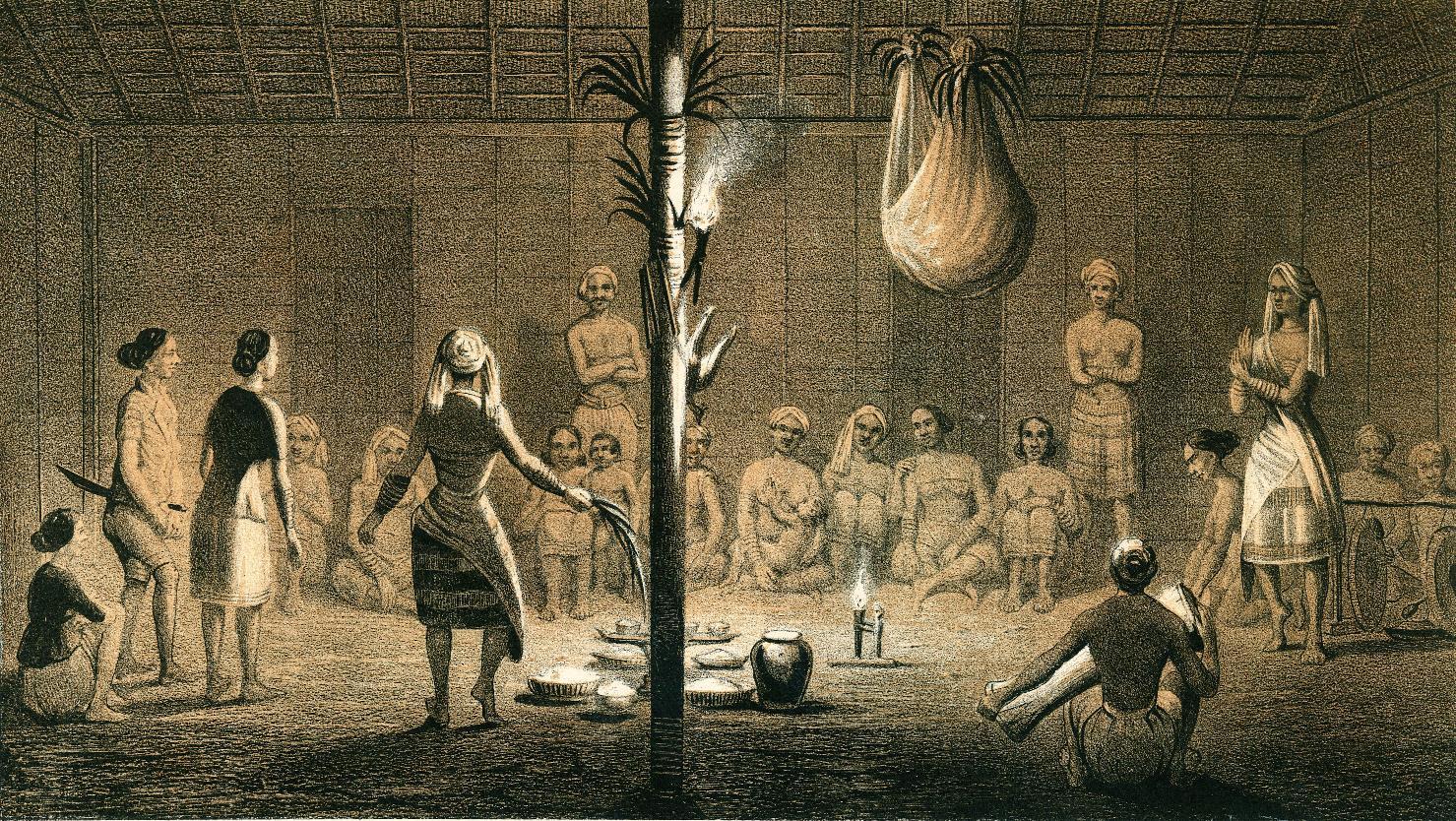
Manang bali is a group of gender non-conforming shamans from the indigenous Iban tribe in Malaysia. Photo: Wikimedia Commons
Many societies in South and Southeast Asia had accepted gender and sexual diversity, but as the British colonised them, that changed. Britishers saw these identities as signs of “uncivilised” behaviour. So they used criminal law to enforce their own standards.
By the early 20th century, versions of Section 377 existed across more than 40 British colonies. Interestingly, the Sexual Offences Act 1967 decriminalised private homosexual acts between men aged over 21 in England and Wales. The law changed for Scotland and Northern Ireland in 1980s.
In 1994, the age of consent for gay men was reduced from 21 to 18, and it was further lowered to 16 in 2001. More than a decade ago the British government made same-sex marriages legal, but a lot of its erstwhile colonies in Asia continue to follow the archaic laws written in the 1800s.
A Timeline of Events
A look at some of the former British colonies and where do they stand today.
Pakistan
Year
What happened
1947
Partition of India After Partition, Pakistan (then West Pakistan) retained Section 377 under Pakistan Penal Code. Image: Press release | PDF: Penal Code
1979
Hudood Ordinances Introduced Islamic laws were introduced through the Hudood Ordinances in 1979. According to this, the law prohibited zina (adultery) and the punishment for it was stoning to death. However, no clarity was provided on whether this also applied to individuals of the same sex. Hudood Ordinance | Source: ILGA
2018
Transgender Persons (Protection of Rights) Act Passed Pakistan passed a law recognising the rights of transgender persons, allowing self-identification of gender. Photo: Wikimedia Commons | Source: Al Jazeera
2023
Federal Shariat Court Ruling on Transgender Act The Federal Shariat Court struck down key provisions of the Transgender Persons (Protection of Rights) Act 2018. The Court ruled that individuals do not have full autonomy to self-identify their gender and declared parts of the law inconsistent with Shariah, following claims that the Act could “provide cover for homosexuality.”Document | Source: ILGA
2026
Same-Sex Relations Remain Illegal Consensual same-sex sexual acts remain criminalised under Section 377 of the Pakistan Penal Code. Punishment ranges from life imprisonment to fine.
Brunei
Year
What happened
1951
Section 377 Introduced Under the Penal Code 1951 Source: HDT
1984
Brunei Gains Independence Brunei became independent but it retained the colonial Penal Code, including the provisions that criminalised same-sex relations.Source: HDT
2013
ShariahPenal Code Order Announced Sodomy, musahaqah (lesbian acts), sexual activity between men, were all deemed illegal under the Shariah Penal Code, with punishment ranging from death penalty to whipping, fine, and imprisonment. Law in the Constitution of Burnei | Source: ILGA
2017
Increased Punishments Under Section 377 In 2017, the Penal Code was amended and the punishment for same-sex relationships was changed to maximum 30 years of imprisonment and whipping. Source: ILGA
2019
Death by Stoning as Punishment Imposed Same-sex sexual acts between men were punishable by stoning to death, if proven by strict evidentiary standards. Source: The Guardian
2019 (May)
Moratorium on Death Penalty Announced Following global outrage, Brunei announced it would not carry out executions under the Shariah Penal Code. Source: BBC
2026
Same-Sex Relations Remain Illegal Same-sex sexual acts remain criminalised under both civil and Islamic law.Punishment includes imprisonment, fines, corporal punishment, and death penalty still written in law. However, there is limited evidence to no evidence of the law being enforced in recent years.
India-Pakistan Partition After partition, Bangladesh (then East Pakistan) retained Section 377, criminalising same-sex relationships, under Pakistan’s Penal Code.
1971
Bangladesh Gains Independence Bangladesh became independent from Pakistan but retained the colonial-era Penal Code, including Section 377. Photo: Wikimedia Commons
2013
Transgender Recognition The government officially recognised transgenders as the third gender. However, several reports by human right groups have highlighted a gap in implementation of this policy change in the absence of clear framework and guidelines.
Anti-Gay Intimidation and Violence Continues Various reports have documented cases of harassment, violence, and intimidation against the LGBTQ+ individuals in Bangladesh. Source: Human Dignity Trust
2026
Same-Sex Relations Remain Illegal Consensual same-sex sexual acts are still criminalised under Section 377 of the Penal Code. Punishments continue to include imprisonment and fines.Source: ILGA
“Police have arrested gays, lesbians, transgender and and Hijra people in Bangladesh during rates calling them a threat to public order. Some were detained simply for being in public spaces. In other cases politicians and public figures have openly described LGBTQ+ people as mentally ill without consequences. There have also been raids in public gatherings and online harassment has increased.”
–Shaikh Md. Mominul Islam, Human Rights Educator
Malaysia
Year
What happened
1871
British Introduce Penal Code (Straits Settlements) The British introduced a Penal Code in colonial Malaya, including Section 377, which criminalised “carnal intercourse against the order of nature”.
Penal Code Introduced to the Federated Malay States “Carnal intercourse against the order of nature” was criminalised under Section 377 of the Penal Code of the Federated Malay States. Source: ICJ
1976
Penalties Raised Malaysia gained independence in 1957 and maintained the Federated Malay States (FMS) Penal Code. The application of the code was extended to the entire country in 1976. The same year, penalties under Section 377 were raised from 10 to 20 years in prison. Whipping was also introduced as an alternate form of penalty.
Federated Malay States Penal Code Amended (Sections 377A, 377B & 377D clarified) Section 377A clearly defined “carnal intercourse against the order of nature” as sexual “connection with another person by the introduction of the penis into the anus or mouth of the other person”. Section 377B maintained the punishment at 20 years in prison. It removed the fine and added whipping as an additional (not alternative) penalty. Section 377D criminalised “gross indecency,” punishing public or private acts with up to two years in prison. Source: ILGA
2021
Federal Court Strikes Down Selangor Shariah Law Malaysia’s Federal Court ruled that the Selangor state law criminalising “unnatural sex” was unconstitutional because criminal law falls under the jurisdiction of federal law. Source: Malaysiakini
2024
Federal Court Struck Down 16 Shariah Provisions in Kelantan The court ruled that states do not have the power to legislate on criminal matters that fall under federal jurisdiction, declaring the provisions “null and void”.
2026
Same-Sex Relationships Continue to be Illegal in Malaysia
What does that mean for the queer community in Malaysia?
“Many judges hesitate to engage with the substance of morality laws. Not because constitutional arguments are weak, but because the political consequences are heavy. To strike down such laws is to risk being accused of defying religion, of eroding faith. It is a moral mind field where judicial independence meets with political vulnerability.
It’s one of history’s cruel ironies that the very laws once imposed by the British Empire to control the colonised are now defended as “Asian” values. And what began as colonial control has been rebranded as cultural pride. And queer Malaysians, you know, live with this contradiction every day.” –Andi Suraidah, Legal Dignity.
Section 377A Introduced Under British Rule The British colonial government introduced Section 377A into the Penal Code, criminalising “acts of gross indecency” between men, whether in public or private. Source: UNAIDS
1965
Separation from Malaysia After separating from Malaysia, Singapore retained Section 377A in its Penal Code. It gained independence from the British in 1963.
Government Reviews but Retains Section 377A Parliament debated repeal of Section 377A but decided to retain the law. The government stated the law would not be “proactively enforced,” though it remained in force.PDF | Source: Law Gazette
2014–2019
Legal Challenges Dismissed Multiple constitutional challenges were filed against Section 377A.In 2020, Singapore’s High Court upheld the constitutionality of Section 377A. Source: ILGA
2022-2023
Section 377A Repealed Singapore’s Parliament formally repealed Section 377A. At the same time, the Constitution was amended to protect Parliament’s authority over the definition of marriage.Official doc | Source: Singapore Parliament
2026
Same-Sex Relations Legal; Marriage Not Recognised Singapore decriminalised homosexuality in 2022 by repealing Section 377A, but same-sex marriage remains legally unrecognised.
What does that mean for the queer community in Singapore?
“I came out to my parents when I was 18 and it was not very pleasant. But, however my mom actually sort of accepted over time and during that period of struggle I actually stayed outside and I would say that and I would say that I managed to survive. Right now, I’m so-called like reunited with my parents and of course things got better. There’s a change. That’s how I feel that together as a society we have progressed. At least in the people around me that I see. So I just feel that is slowly progressing.” –Briano Sim, Florist, Singapore
Sri Lanka
Year
What happened
1841 (in force 1842)
Vagrants Ordinance The British introduced the Vagrants Ordinance, allowing police to arrest people for being “idle” or “disorderly.” Source: SriLanka Law | ICJ | Photo: Colin Campbell, the head of government of Ceylon during 1841-1847
1883 (came into force 1885)
Penal Code Sections 365 & 365A British colonial authorities introduced Sections 365 and 365A criminalising same-sex relations. Source: Penal Code
1948
Sri Lanka Gained Independence but Retained British-Era Criminal Laws Continued arrests of LGBTQ+ people after 1948 under the colonial Penal Code provisions.
1995
Penal Code Amendment Section 365A was amended from acts between “men” to acts between “persons”.Criminalisation expanded to include lesbian relationships. Source: ILGA
2017
Cabinet Rejects Move to End Discrimination Based on Sexual Orientation Sri Lanka’s cabinet rejected a proposal to remove discrimination based on sexual orientation from the National Human Rights Action Plan, saying it would “legitimise homosexuality”. Source: HT
2022
Decriminalisation Bill Introduced A Private Member’s Bill was introduced to repeal Sections 365 and 365A. Source: IBA | Bill
2023
Supreme Court Clears Path for Decriminalisation of Homosexuality The Supreme Court ruled that decriminalising same-sex relations is constitutional. Supreme Court Decision | Source: Reuters
2026
Sections 365 & 365A remain in law with 10 years of imprisonment and fine.
What does that mean for the queer community in Sri Lanka?
“It [Section 365 and 365A] is like a lingering ghost that has been there for the longest time and was introduced in Sri Lanka in 1883. It reformed into being gender neutral in 1995. These laws enable the law enforcement [agencies] to discriminate and also use violence against [the] community.
We have had cases [in Sri Lanka] where parents go to the police station and file a case against their very own children, saying ‘please, police officer, save my child. This person is trying to influence my kid to have a relationship with another person of the same sex’.”
– Wathsala Herath, Human Rights Activist, Sri Lanka.
Section 377 Introduced Under British Rule The British enacted the Indian Penal Code, including Section 377, criminalising “carnal intercourse against the order of nature”.Penal Code
2009
Delhi High Court Decriminalises Same-Sex Relations The Delhi High Court held that Section 377 was unconstitutional insofar as it criminalised consensual same-sex relations between adults. Official doc | Source: Amnesty
2013
Supreme Court Reinstates Section 377 The Supreme Court overturned the 2009 ruling. Section 377 was reinstated, and same-sex relations became criminal again.Official Doc | Source: HDT
2014
Transgender Rights Recognised The Supreme Court recognised transgender persons as the “third gender” and affirmed the right to self-identify gender. However, Section 377 remained in force.Source:Amnesty
2018
Section 377 Struck Down The Supreme Court decriminalised consensual same-sex relations between adults. Section 377 now applies only to non-consensual acts, acts involving minors and bestiality. Source: Official Doc
2023
Marriage Equality Petitions Rejected The Supreme Court declined to legalise same-sex marriage, stating the issue falls within Parliament’s domain.Source: BBC
2026
Same-Sex relations Between Adults Are Legal in India However same-sex marriage is not legally recognised and adoption and family rights remain limited.
The landscape in Asia is deeply divided for the queer community. Even with homosexuality decriminalised in several countries, the LGBTQ+ community continues to fight for equal rights. Individuals that Asian Dispatch spoke to in countries such as Brunei, Bangladesh, Malaysia, and Sri Lanka, highlighted societal discrimination, harassment, and stigma.
“Recently, police have arrested gays, lesbians, transgender, and hijra people in Bangladesh during raids calling them a threat to public order. Some were detained simply for being in public spaces. In other cases politicians and public figures have openly described LGBTQ+ people as ‘mentally ill’ without consequences,” Sheikh, a human rights educator and a non-binary queer person in Bangladesh, told us.
Despite all this, the community is hopeful. Human rights groups say while reforms in some countries might be slow, with support from civil groups, legal aid, health providers and various other stakeholders, there is hope for change.
This story was produced by Asian Dispatch and originally published on March 13, 2026. It has been republished by Center for Investigative Reporting with permission.
In this wide-ranging interview, former foreign secretary and maritime security expert Jayanath Colombage speaks on Colombo’s decisive act within international maritime law, how the incident has exposed deeper structural gaps in national security, maritime governance, and foreign policy strategy. From navigating neutrality in a volatile global landscape to identifying emerging economic opportunities amid regional instability, Colombage outlines both the risks and the strategic openings facing Sri Lanka in an increasingly contested Indian Ocean. Excerpts:
Q: From a maritime security and diplomatic perspective, how do you assess Sri Lanka’s response to the incident of IRIS Dena and its aftermath?
A: Sri Lanka has an international obligation to respond to distress calls within its extensive ‘search and rescue region’ in the Indian Ocean.
When the distress signal was received, authorities acted immediately. The Maritime Rescue Coordinating Centre in Colombo coordinated a rapid response, with the Sri Lanka Navy, Coast Guard, and Air Force reaching the site swiftly. Initially, 34 survivors were rescued, followed by the recovery of 84 bodies.
At that stage, humanitarian responsibility took precedence over diplomacy. The priority was to save lives and ensure safety, which Sri Lanka ensured with efficiently.
Q: What followed the rescue operation?
A: Survivors were brought ashore for medical care, while the deceased were transferred to Galle National Hospital for testing and identification.
Meanwhile, another vessel, IRIS Bushehr, approached Sri Lankan waters fearing further attacks. Sri Lanka allowed it to anchor offshore but withheld immediate port access, reflecting a cautious approach. Around 200 crew members were later evacuated to a naval facility in Welisara, demonstrating a balance between humanitarian responsibility and neutrality.
Q: How did Sri Lanka balance neutrality, and was there any delay in response?
A: Sri Lanka’s response reflected a careful balance between humanitarian obligations, international law, and geopolitical neutrality. Despite the vessel’s link to Iran amid tensions involving the U.S. and Israel, authorities prioritized safety.
The vessel was kept in place while approximately 208 crew members were evacuated. Plans to move it to Trincomalee proved impractical due to technical, operational, and legal constraints. It remains off Colombo.
Sri Lanka fulfilled its obligations under international law while maintaining neutrality, and the response has been widely viewed as measured and effective. While some criticism of delays exists, the core actions such as rescue, evacuation, and repatriation, were carried out promptly.
Colombage during his tenure as the commander of Sri Lanka Navy. Image via Facebook.
Q: What are Sri Lanka’s challenges now?
A: Sri Lanka cannot allow the vessel to depart if it risks re-entering hostilities, as that could compromise neutrality. Both the vessel and crew must remain under supervision until a diplomatic or legal resolution is reached.
Q: What structural gaps has this incident exposed?
A: Sri Lanka lacks a formal national security strategy and a well-defined foreign policy framework. While the response was effective, reliance on ad hoc decision-making is not sustainable.
Various advisory documents exist, but the state must consolidate them into a coherent, government-led strategy. This crisis shows Sri Lanka can act decisively but, more complex crises in the future, may not yield similar outcomes without a structured framework.
Q: Given the unpredictability of global politics, is a fixed strategy still relevant?
A: The global environment is increasingly fluid, with weakening adherence to international law and multilateral institutions. While some argue that fixed strategies quickly become outdated, this underscores the need for a flexible, adaptive framework.
What Sri Lanka needs is a clear baseline; a national security and foreign policy framework that guides decision-making while remaining responsive to change.
Q: Should Sri Lanka consider the appointment of a national security advisor?
A: In principle, yes. But effectiveness depends on institutional design and independence. The National Security Council currently lacks a clear legal framework, and decision-making has often been ad hoc.
Similarly, past national security advisor roles have been informal and based on personal trust rather than structured, merit-based processes.
In countries like India, the role has evolved into a highly professional position held by individuals such as Ajit Doval and Shivshankar Menon, with significant expertise in intelligence and diplomacy. Sri Lanka, by contrast, faces both structural and political constraints.
The priority should be establishing clear legal frameworks and transparent appointment criteria. A system that balances trust with expertise is essential for building a credible national security architecture.
Q: What are the key gaps in Sri Lanka’s maritime security framework?
A: Maritime security extends far beyond a military function and is not the responsibility of the Navy alone. It involves a wide network of stakeholders, including shipping, ports, logistics, fisheries, tourism, and maritime services. Yet, a key gap in Sri Lanka is the absence of a clearly defined, comprehensive national understanding of what maritime security entails.
Threats range from piracy and smuggling to illegal fishing and environmental disasters. The MV X-Press Pearl incident showed how even non-deliberate events can have far-reaching consequences.
Addressing these risks requires a layered, coordinated approach. Sri Lanka maintains maritime surveillance through naval assets, Air Force reconnaissance, shore-based radar, and systems such as the Automatic Identification System (AIS) to track merchant vessels.
However, maritime security cannot be managed within national boundaries alone. The Indian Ocean is a shared space, prompting the development of regional cooperation frameworks, including the Colombo Security Conclave, which brings together Sri Lanka, India, Maldives, Mauritius, Seychelles, and Bangladesh to enhance coordination across multiple domains.
Regional cooperation mechanisms such as the Colombo Security Conclave exist, but recent incidents highlight gaps in detection and intelligence-sharing. Strengthening coordination and integrating advanced monitoring systems is essential.
A growing challenge is the increasing presence of submarines in the Indian Ocean. Unlike surface vessels, they operate undetected and may include nuclear-capable platforms, adding a largely invisible but significant strategic risk.
In this context, maritime intelligence is as important as physical surveillance. Integrating satellite monitoring, radio-frequency tracking, and real-time intelligence-sharing with regional partners, particularly India and the Maldives, is essential to achieving effective maritime domain awareness.
Colombage at the assumption of duties as foreign ministry secretary. Image via Facebook.
Q: With all these developments, is the idea of the Indian Ocean as a “Zone of Peace” still realistic?
A: The concept of the Indian Ocean as a “Zone of Peace,” first proposed in 1971 by Sri Lanka and Tanzania. It remains one of the most ambitious yet unrealized diplomatic visions of the post-colonial era.
Adopted by the United Nations General Assembly with strong support, the proposal aimed to prevent militarization and nuclearization, restrict new military bases, and preserve the region for peace, stability, and development. However, Cold War rivalries, particularly between the U.S. and the Soviet Union undermined its implementation, as major powers had little incentive to demilitarize a strategically vital region.
Today, revival appears even more complex. The global order is more fragmented, strategic competition has intensified, and the Indian Ocean has become increasingly contested. Yet, the core rationale remains highly relevant. For many regional states, the Indian Ocean is not just a geopolitical arena but a lifeline for trade, fisheries, and economic growth. Continued militarization risks undermining both stability and long-term development.
While a binding agreement among major powers is unlikely, regional states can still strengthen cooperation and promote shared principles of neutrality and stability.
Sri Lanka, which once played an active diplomatic role, could adopt a more outward-looking approach to help advance these efforts.
Q: Why has the government been relatively quiet on its position?
A: Concerns over the government’s apparent silence must be understood within the realities of diplomacy, particularly in a sensitive and polarized geopolitical environment.
Sri Lanka is effectively walking a diplomatic tightrope. Any premature or overt alignment could carry significant strategic and economic risks. The country maintains close ties with India and the U. S., while also managing its long-term friendly relationship with Iran. In this context, neutrality is not just a principle, it is a necessity.
This helps explain the government’s cautious, and at times ambiguous, public posture. Not all diplomacy is conducted in the open. While public expectations favor clarity and immediacy, effective diplomacy often unfolds away from the spotlight.
There is a deliberate balance between public signaling and “quiet” or backchannel diplomacy. Public statements are carefully calibrated to avoid escalation, while substantive engagement, negotiations, assurances, and coordination, typically occurs through direct, closed-door channels.
In this case, restraint should not be mistaken for indecision.
While calls for transparency are valid in a democratic context, diplomacy does not always allow full public disclosure. Its effectiveness is measured not by what is said openly, but by how skillfully complex situations are managed behind the scenes.
A: Without speculating on specific agreements, the broader issue highlights an important strategic lesson: reliance on external security guarantees has limits.
Several West Asian states, including the United Arab Emirates, Bahrain, Kuwait, Oman, and Qatar, have long maintained close security ties with the U. S. , hosting military bases as part of a broader strategic exchange. However, recent developments have exposed the limits of such arrangements. Even strong partnerships do not always translate into assured protection in every scenario, prompting concerns about overdependence.
For Sri Lanka, entering defense agreements or allowing foreign military presence requires careful long-term consideration. Such decisions shape strategic posture and carry risks of entanglement in external conflicts.
The goal should be balance – engaging with major powers while preserving strategic autonomy.
The lesson is not to reject partnerships, but to manage them carefully. For Sri Lanka, the challenge is to engage major powers without becoming dependent, and to strengthen its security without being drawn into conflicts beyond its control.
Former navy commander and foreign ministry secretary Jayanath Colombage. Image courtesy of Jayanath Colombage.
Q: Some suggest there is an opportunity to benefit from this crisis if Sri Lanka plays it smart. Do you agree?
A: While the situation is complex and carries risks, it also presents potential strategic opportunities, if approached with caution, clarity, and long-term planning.
One immediate avenue is diplomatic leverage. By extending humanitarian assistance to Iran, Sri Lanka has created space for constructive engagement on practical issues of mutual interest, including safeguarding energy shipments through the Strait of Hormuz. Such engagement must remain measured and non-transactional, but it underscores how responsible conduct can translate into diplomatic goodwill.
Beyond this, regional instability raises a broader question: whether Sri Lanka can position itself as a stable hub for energy, logistics, and financial services.
More broadly, the country could position itself as a stable hub for energy, logistics, and finance. The Trincomalee Oil Tank Farm and Port City Colombo offer potential in this regard.
However, attracting investment requires regulatory clarity, political stability, and strong infrastructure. Any move must also account for regional sensitivities, particularly with India.
Sri Lanka should not pursue short-term gains but focus on gradually establishing itself as a reliable and neutral node in regional networks.
The crisis presents both risks and opportunities. Sri Lanka’s ability to navigate them will depend on coherent policymaking, strategic balance, and its capacity to build long-term credibility in an increasingly contested Indian Ocean.
This interview was conducted and edited by Gagani Weerakoon. She leads the editorial at the Center for Investigative Reporting (CIR).
This story was produced with support from Report for the World, a global media service strengthening local independent journalism.
Sri Lanka, thrown unwittingly into the spotlight of the 2026 West Asia Conflict, has provided an abject lesson to the world in maintaining neutrality while prioritizing its own national interests.
The legendary French President Charles De Gaulle once said, “France has no friends, only interests.” De Gaulle was known for his cold pragmatism, considering international relations as a supremacy battle, and not based on sentimental friendships. This has become a truism in global international relations.
What are Sri Lanka’s interests in the ongoing war? The U.S. is a major market for Sri Lanka’s apparel and rubber products. Iran is a significant buyer of the famed Ceylon Tea. The Gulf Arab States employ a massive number of Sri Lankan migrant workers who send vital forex. India is Sri Lanka’s closest neighbor, and the island needs to stay loosely aligned with India’s policies. Aside from these geopolitical factors, Sri Lanka, after enduring a devastating 27-year war, should not be involved in the disputes of other nations. The island should prioritize its own strategic interests.
Global applause for Sri Lanka
President Anura Kumara Dissanayake is receiving global applause for standing up to the U.S. and declining to allow U.S. military aircraft to be refueled in Sri Lanka. The U.S. reportedly requested permission for two U.S. Navy warfare aircraft to land at the Mattala Rajapaksa International Airport (MRIA) on
February 26, just two days before the U.S. and Israel launched their military offensive against Iran. What Dissanayake did in fact, was to carefully place the country’s interests first. In his doing so, Sri Lanka appears to have avoided a potentially explosive situation for the Indian Ocean island.
The island of Diego Garcia, in the Chagos Islands south of the Maldives, is home to one of the largest U.S. military bases in the world. The outside world hardly ever hears of it because outsiders are not allowed there. This is the only base near the Middle East believed to be out of range of Iranian missiles, although Iran has attempted missile strikes against it that did not reach the American facility. During last year’s 12-day war, B2 stealth bombers flew missions out of Diego Garcia against Iran, and U.S. Navy warships operated out of the base.
But there is just one snag to Diego Garcia. It’s a British island, and the UK Government must approve any offensive operations from it. This January, when the Trump regime asked for approval to use it for operations against Iran, British Prime Minister, Sir Keir Starmer, said no. This is the cause of a massive public rift between Trump and Starmer.
American warplanes had to operate from Gulf bases that are easily accessible to Iranian missiles, or alternatively, from distant European bases, requiring mid-air refueling—a challenging procedure. In this backdrop, the request came to refuel a couple of aircraft if Sri Lanka. Seems innocent enough. But why would the U.S. need to do that when they can do so at Diego Garcia? Unless these planes were meant to be used against Iran. A complex conundrum indeed.
In the middle of all this came the request from Iran for its warships to enter Colombo, complicating matters further.
President Dissanayake took the wise approach of not rushing in to decide, which is a prudent approach. The matter was further compounded by the sinking of an Iranian warship, the frigate IRIS Dena, 20 nautical miles off Galle, in southern Sri Lanka. It was in international waters, but within the Search And Rescue (SAR) region that Sri Lanka is responsible for. To the immense credit of Sri Lanka, the navy rushed to answer the distress call, rescued 32 sailors, and recovered 84 bodies.
Meanwhile, Colombo politely declined the U.S. request. One Iranian auxiliary ship, the IRIS Bushehr, was allowed to enter our waters, and its crew taken off. It is likely to be returned to Iran after the conflict ends. The third vessel, the IRIS Lavan docked in Kochi.
President Dissanayake’s handling of the situation is in stark contrast to a similar situation that Sri Lanka was involved in during 1971.During the Bangladesh War of Independence, after East Pakistan seceded from Pakistan and declared itself as Bangladesh, military forces from West Pakistan rushed to quell the uprising. India closed its airspace to Pakistani aircraft, and the only route left was around India, for which Pakistani air force planes did not have the range. Inexplicably, Sirimavo Bandaranaike’s government agreed for Pakistani air force aircraft to refuel at the Bandaranaike International Airport (BIA).
Given that India is strategically and geographically more important to Sri Lanka than Pakistan, the decision was questionable, especially as India entered the war and crushed Pakistani forces within a few days, resulting in the birth of Bangladesh.
Watching national interest
It is fundamental that every country must identify its own interests. Economic interests often drive it. There are other considerations too. A country’s interests also include factors such as geographic closeness, shared languages, cultural similarities, religious beliefs, and more. But they are of secondary interest. Money talks: countries walk. Governments form alliances with partners that provide the most economic advantages, but these relationships often end when conditions change.
The 2026 West Asia conflict is forcing countries to choose sides, making it extremely difficult to stay neutral. Old alliances collapse as new ones are formed. Europe, Russia, China and India have opted to stay out of the war. But nations in proximity to the conflict have been drawn in deliberately by the primary combatants – the U.S., Israel and Iran. These include Azerbaijan, Turkiye, Lebanon, Jordan, Iraq, Saudi Arabia, Kuwait, Qatar, Oman, the United Arab Emirates, and even Cyprus. Meanwhile, the Houthis of Yemen, longtime allies of Iran, have chosen to stay silent, in a volte face that is dictated by their national interests.
Staying neutral is not without risks, however. Sri Lanka risks drawing the ire of Iran, Israel, and more significantly the irrational Trump administration. Although it is still uncertain, the balancing act has been successful up to this point.
Does non-alignment work?
Sri Lanka has for decades clung to the quaint notion that it is non-aligned. This is all genuinely nice on paper. Sri Lanka has frequently been aligned, either by choice or circumstance. Given independence in 1948 as the Dominion of Ceylon, we became a founding member of the Non-Aligned Movement (NAM) in 1961. Yet, the island continued to be a significant military base for the colonial masters the British, until we declared ourselves a republic in 1972.
The friendship between Prime Minister Sirimavo Bandaranaike and her Indian counterpart Indira Gandhi brought the neighbors closer in the 1970s. But with the 1977 victory of the United National Party (UNP), President J.R. Jayewardene shifted the foreign policy towards the West, where major markets existed for Sri Lankan products. India’s meddling in the ethnic issue led to much animosity through the 1980s raising serious suspicions of India’s interventionist attitude, creating a gulf.
Following the assassination of Indian Premier Rajiv Gandhi by the Liberation Tigers of Tamil Eelam (LTTE), India and Sri Lanka moved closer in the 1990s as they faced a common enemy. But the rise of the Rajapaksa dynasty led to the island aligning itself openly with China, and virtually ignoring the rest of the world, another inexplicable geopolitical decision.
However, the economic rise of India, coupled with the 2022 financial disaster of the Gotabaya Rajapaksa administration, has placed Sri Lanka once again firmly within India’s sphere of influence.
Where do Colombo’s interests lie?
Sri Lanka finds itself in a unique geographical location, with just one immediate neighbor, India. Since India has 75 times the population of Sri Lanka, there is no logic in expending resources for a military tussle with our neigbour. Indeed, Sri Lanka is under India’s military protection.
This leaves Sri Lanka solely with the task of taking care of the island’s economic security. As for imports, the island needs to ensure steady supplies of fuel, coal, food, and medicines. Given the current circumstances, it is necessary to develop international partnerships that can be relied on during times of crisis.
Sri Lanka also needs to take care of her revenue streams. This starts with labor, which means we need to ensure excellent relations with the Gulld countries where we have a significant migrant labor population. Tourism is another key industry, and it is vital to ensure that nothing internal disturbs the industry. Innovative approaches are essential for handling external disruptions, like losing airline connections during the current crisis.
Finally, Sri Lanka must carefully manage her export markets for apparel, tea, rubber, and other products. This calls for maintaining strong relationships with our existing markets. This may prove difficult when the same countries are at war with each other.
Meanwhile, it is hoped that the IRIS Dena and the US aircraft incidents will remain isolated ones. There are no more Iranian warships outside of Iran and the Persian Gulf. The chances of an air and naval battle 1,500 miles (2414 kilometers) away spreading to our shores is unlikely.
Life is about lessons learned, and Sri Lanka needs to examine the events that took place off our shores and plan our strategies for international relations according to the island’s geopolitical and economic priorities.
About the Author:
Niresh Eliatamby is a long-time investigative journalist based in Colombo, who has significant experience in journalism across a wide range of social media platforms, as well as television, radio, and print media. Views are strictly personal and do not represent the views of the organization.
This story was produced with support from Report for the World, a global media service strengthening local independent journalism.
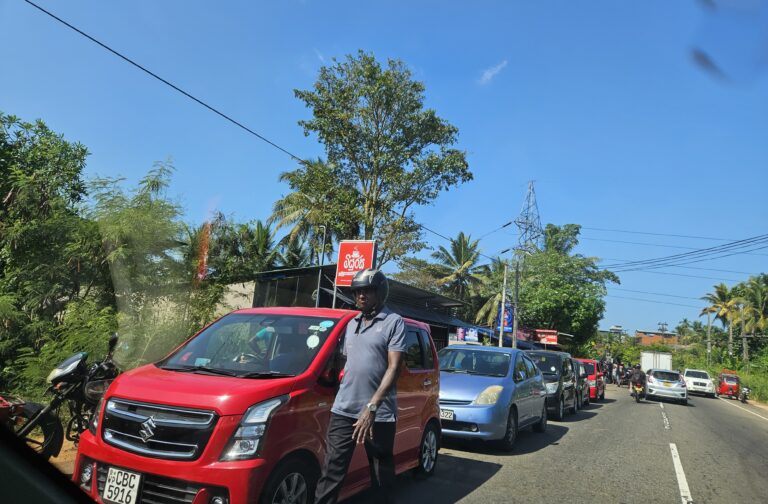
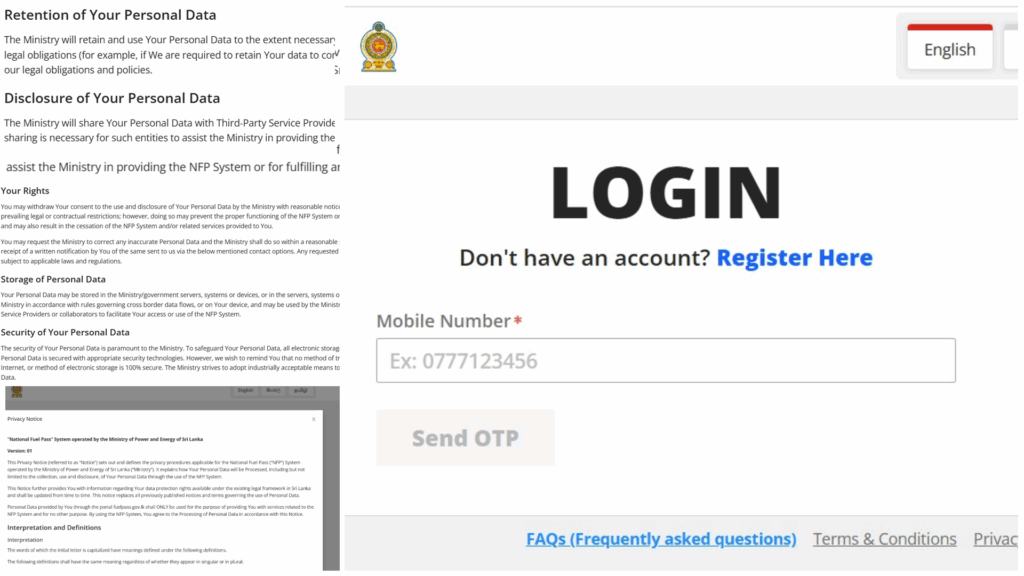
The national fuel pass system collects consumers’ sensitive personal data, including the national identity card number, contact details, and vehicle information, creating a centralized database of millions of citizens.
Though citizens’ personal data is purportedly protected through the Personal Data Protection Act No. 9 of 2022, it is not yet fully enforced, leaving gaping holes in accountability and compliance.
Digital rights experts and activists warn of serious privacy, transparency, and cybersecurity risks tied to centralized data systems.
With limited clarity on data usage, storage, and retention, the latest controversy highlights growing concerns over whether Sri Lanka’s digital transformation is outpacing its safeguards.
COLOMBO—Sri Lanka’s push toward digital governance is entering a critical phase and not without controversy. The reintroduction and expansion of the National Fuel Pass (NFP) system, a platform that aggregates vast amounts of citizen data, has sparked renewed debate over privacy, legality, and state accountability. At the heart of the issue lies a pressing question: Is Sri Lanka ready to protect the very data it is rapidly collecting?
The debate has gained urgency as the country sits in a transitional legal moment. The Personal Data Protection Act No. 9 of 2022 has been enacted but is yet to be fully enforced, creating a gray area where large-scale data systems operate without the full weight of regulatory oversight.
Privacy nightmare
Digital rights advocate Sanjana Hattotuwa described the NFP as a landmark case in this evolving landscape. “This is the first instance where a platform of this scale, collecting millions of records, has been launched after the passage of the Act,” he noted, framing it as a precursor to broader government-led digitalization initiatives expected in the near future.
At a functional level, the system serves a clear purpose: managing fuel distribution, preventing hoarding, and ensuring equitable access. But the scale and sensitivity of the data collected have raised significant concerns. Users are required to provide national identity card or passport details, vehicle registration numbers, phone numbers, and residential addresses. In effect, multiple layers of personal data are consolidated under a single identifier.
Hattotuwa did not mince words about the rollout. “The platform itself has been a complete technical nightmare,” he said, pointing to widespread public frustration as thousands struggled to register due to persistent glitches. While these technical failures dominated early public discourse, he emphasized that deeper structural issues, particularly around privacy, were initially overlooked.
One of the most concerning revelations, according to Hattotuwa, was that the system launched with an outdated privacy policy dating back to 2022, predating the data protection framework. “That policy was completely non-compliant,” he said, calling it a “major red flag” that suggested a lack of legal preparedness.
Although a revised privacy policy was issued shortly after public scrutiny intensified, he argued that the changes fell far short. “Out of around 30 areas assessed, only a handful were fully compliant. The majority were either partially compliant or entirely non-compliant,” he explained. “Even when prompted to revise the policy, the outcome suggests a lack of capacity, urgency, or genuine commitment to compliance.”
Technical failures dominated early public discourse as new registrants struggled with the system, but the system has structural issues that impact privacy.
Technical glitches
For Hattotuwa, the implications are particularly serious because of the system’s nature. He described the NFP as “critical national infrastructure,” a platform essential to the functioning of the country. “We now have a system of national importance that is almost entirely non-compliant with the very law designed to protect citizen data,” he noted.
He also raised unresolved questions around transparency: Where is the data stored, who has access to it? Is it hosted locally or overseas? The absence of a clearly identified Data Protection Officer (DPO)—
despite being a requirement under the law—was highlighted as another major gap.
Beyond legal compliance, Hattotuwa pointed to global precedents to underscore the risks. Large-scale breaches linked to India’s Aadhaar system under the Unique Identification Authority and a major data leak in Ecuador demonstrate how centralized databases can become targets for cyberattacks, negligence, or misuse. “Sri Lanka now has a platform that is potentially vulnerable to the same kinds of threats,” he cautioned.
He drew a clear line between public awareness and state responsibility. “It is not the public’s responsibility to ensure systems are lawful or secure. That duty lies with the state,” he said, adding that the lack of official communication in the days following the platform’s launch only deepens public concern.
Echoing these concerns, digital rights activist and tech policy researcher Saritha Irugalbandara spoke to CIR on the broader implications of centralized data collection and public awareness.
She pointed out that while such systems may be necessary for service delivery, they create high-value, high-risk data environments. “When you centralize data in this way, especially under a single identifier like the NIC, it significantly increases both the value and the vulnerability of that dataset,” she said.
Irugalbandara emphasized that transparency is critical. Systems like the NFP must clearly establish the legal basis for data collection and communicate how that data will be processed. However, she noted that in practice, consent is often tied to necessity. “It becomes less about informed consent and more about necessity,” she explained, highlighting how users are required to agree in order to access essential services like fuel.
She further flagged the absence of clear data retention policies as a key concern. “There should be a clearly defined timeframe for how long personal data will be stored,” she said, noting that such omissions leave users uncertain about how long their information remains in stake systems.
At the same time, Irugalbandara acknowledged a broader behavioral issue: many users do not read privacy policies in full. But this does not shift responsibility, she noted. “At the very least, State agencies must meet the minimum requirements set out in the law,” she said, stressing the need for purpose limitation, informed consent, and safeguards against misuse.
Not aligned with new law
Offering a legal perspective, technology law consultant and research fellow Ashwini Natesan highlighted the complexities of the current legal environment.
Natesan emphasized that while the Personal Data Protection Act was passed in 2022, it has not yet come into force. It was said to come into operation in 2025, but subsequent amendments have moved the enforcement.
“The Act is not yet in force,” Natesan noted, underscoring that although it was expected to be operational earlier, revised timelines are expected soon. Until those enforcement dates are finalized, institutions, including government entities, are not legally bound by its provisions.
This distinction is critical when assessing claims that the NFP system breaches the law. “Strictly speaking, since the Personal Data Protection Act is not yet in force, there could be areas that don’t comply with the Act, but this period where the law is passed but not yet in force is called the grace period for compliance,” she explained. However, this does not mean that data collection practices operate in a vacuum.
Even in the absence of enforceable legislation, organizations are expected to adhere to the commitments outlined in their own privacy policies. These documents, often overlooked by users, function as binding agreements that govern how personal data is collected, used, and shared.
“If data is being shared with third parties, that information should be clearly stated in the privacy notice,” Natesan said. “Users can, and should, check whether such disclosures are made. If there are concerns, they still have the option to write to the relevant organization/entity collecting the data and seek further information or clarification.”
This places a degree of responsibility on both institutions and citizens. On the one hand, data collectors must ensure transparency and consistency with their stated policies. On the other hand, users must navigate an increasingly complex digital environment where consent is often given without scrutiny.
Natesan acknowledged this reality. “On a daily basis, we agree to countless privacy notices, whether they are cookies on websites or app permissions. Even as a technology law professional, I don’t read every policy in full,” she said. This widespread disengagement, while understandable, weakens the practical effectiveness of consent-based data protection.
The situation is expected to change once the law is enforced. Under the act, individuals will gain stronger rights over their personal data, including the ability to withdraw consent even after initially agreeing to a privacy policy. This marks a significant shift from the current framework, where such protection is limited.
Until then, the focus remains on best practices rather than legal obligations. Natesan noted that government entities, in particular, should proactively align with the principles of the act, even before it becomes enforceable. “It would be ideal if institutions began following these standards now,” she said, noting that early compliance would build public trust and ensure a smoother transition once the law takes effect.
The debate also reflects differing interpretations among experts. While some argue that the mere existence of the Act necessitates immediate compliance, others, like Natesan, point to the legal reality that enforcement is an important factor.
Data at risk
This divergence highlights a necessity: Sri Lanka’s regulatory framework must keep pace with these developments. Systems like the NFP were introduced as urgent solutions during times of crisis, prioritizing efficiency and accessibility. However, their long-term sustainability depends on robust safeguards for user data.
For now, Sri Lanka finds itself in an interim phase caught between legislative intent and practical enforcement. As the country moves closer to operationalizing its data protection regime, the scrutiny surrounding initiatives like the fuel pass system is likely to intensify.
The conversation is no longer optional. In an era where data is both a resource and a risk, the question is not just whether laws exist, but whether they are ready, relevant, and rigorously applied. The differing perspectives highlight a central tension: while the law exists, its practical application remains incomplete. For some, this demands immediate alignment; for others, enforcement is the key threshold.
What is clear, however, is that Sri Lanka’s regulatory framework is being tested in real time. Systems like the NFP, introduced as urgent solutions during times of crisis, now sit at the intersection of efficiency and rights.
As the country accelerates its digital transformation, the stakes are rising. The question is no longer whether data will be collected but whether it will be protected.
In this evolving landscape, the national fuel pass may well become a defining case. One that determines not just the credibility of a single platform, but the future of data governance in Sri Lanka.
‘Panu kota,’ a lone elephant (Elephas maximus maximus) roaming the Sinharaja forestcapes in Sri Lanka’s south is living evidence of how deforestation causes habitat loss, restricting animal movement through natural corridors.
Clearing of the Botiyathenna forest—an important elephant corridor linking the Handapan Ella and Walankanda primary forests —has intensified human–elephant conflict, forcing the solitary elephant to move through plantations and settlements.
Due to the sensitivity of the area, conservationists have recommended the declaration of Botiyathenna as a protected sanctuary.
Experts also call for a coordinated effort among government agencies and law enforcement authorities to regulate encroachment and illegal resource extraction.
RAKWANA, Sri Lanka—Sirisena Gamage, a father of five, owned a small tea plot in Manikkawatte, a village nestled in Rakwana, Sabaragamuwa province, near the southern boundary of the Sinharaja Forest Reserve.
Three years ago, he failed to return home from his field. The next morning, Gamage’s relatives began searching for him. The search operation ended with the discovery of his lifeless body.
Pctured here is Sinharaja’s lone male elephant in Deniyaya (2017). Image courtesy of the Wildlife Conservation Society of Galle.
Evidence suggested he had been attacked by an elephant—and there was only one suspect—an elephant known as ‘panu kota,’ the only remaining elephant (Elephas maximus maximus) inhabiting the Sinharaja rainforest landscape.
The incident is a stark reminder of the growing human–elephant conflict in this region. Unlike the other entrances to Sinharaja, the hilly Rakwana side is dominated by tea plantations interspersed with fragments of rainforest. Over the years, villages and estate settlements have expanded along the forest boundary, bringing humans and wildlife into closer contact.
The lone elephant that roams this landscape is known to undertake seasonal movements across Rakwana through several villages. A century ago, ancestors of ‘panu kota’ would have moved freely using the same route through a mosaic of forests that connected Sinharaja with surrounding habitats. These forest patches functioned as natural corridors that allowed wild animals to move safely between feeding and resting areas. Today, many of these corridors have been cleared or encroached upon, intensifying encounters between humans and wildlife, says Sajeewa Chamikara of the Movement for Land and Agricultural Reform (MONLAR).
Clearing of the Botiyathenna forest—an important elephant corridor—has intensified human–elephant conflict. Image courtesy of Sajeewa Chamikara.
Intensifying HEC
Large-scale forest clearances began during the colonial period with the expansion of plantations and continue to date despite growing awareness of the ecological importance of Sri Lanka’s lowland rainforests. Sri Lanka is one of the 35 global biodiversity hotspots, with lowland rainforests being the only haven for the majority of the island’s endemic biodiversity. But sadly, despite the recognition of this significance, the deforestation and fragmentation of these forests continue—especially the unprotected forest corridors linking remaining forest patches, says Chamikara.
Botiyathenna forms a crucial link between the Handapan Ella and Walankanda primary forests on Sinharaja’s periphery. Image via Google Maps.
The most recent example is Botiyathenna, an area bordering Sinharaja where about 10 acres (about 0.04 km²) of forested grasslands have recently been cleared, providing evidence that commercial interests are driving forest clearance,” Chamikara explains. The landscape around Botiyathenna has seen increasing tourism development, with visitors traveling to nearby attractions like the scenic Handapan Ella waterfall. The region’s rich gem deposits have also led to widespread illegal mining, which further damages fragile forest habitats.
“The gem mining is extensive, sometimes involving heavy machinery,” says Suranga Buddhika, president of the National Environmental Foundation (NEF). Much of this activity occurs within what used to be a key elephant corridor. As these traditional movement routes become blocked by mining and other developments, the elephant is forced to navigate through villages and plantations, increasing the likelihood of encounters with people, Buddhika notes.
Workers of Deniyaya wildlife research center had a narrow escape in 2025 when the lone elephant entered the facility. To mark the encounter, the center preserved the elephant’s footprints in cement to perpetually record its visit. Image courtesy of the Wildlife Conservation Society of Galle.
“The elephant often passes through this stretch while in musth, which further increases the risk of conflict,” adds Buddhika. Due to the ecological sensitivity of the area, conservationists have recommended that the government declare Botiyathenna a protected sanctuary.
Botiyathenna forms a crucial link between the Handapan Ella and Walankanda primary forests on Sinharaja’s periphery. Located more than 3,000 feet (914.4 meters) above sea level, despite their significance, these forests remain poorly studied, says Manjula Karunaratne, a senior geography lecturer at the University of Ruhuna.
Many of these unprotected wildernesses in the area fall under lands managed by the Sri Lanka Land Reform Commission (LRC). According to Karunaratne, large portions of these lands — ranging from 50 to 300 acres (0.20 – 1.21 km²) each — have been transferred to private owners decades ago for commercial investments. Over time, much of the forest has already been cleared for tea plantations, spice cultivation, tourist hotels, bottled-water projects, and granite/gem mining, all of which have contributed to the soil erosion and disruption of fragile ecosystems.
During the 1990s, three elephants were observed in the Sinharaja forest reserve, thought to be the final remaining herd in the rainforest. By the year 2000, the female was no longer present, and in recent times, just one of the two remaining males has been seen. Image courtesy of Shalith Karunarathna.
Karunaratne calls for stronger coordination among the Forest Department, the Department of Wildlife Conservation (DWC), and law enforcement authorities to regulate encroachment and illegal resource extraction.
He also highlights the importance of empowering communities living around Sinharaja through community-based conservation initiatives that can share management responsibilities and benefits. Such integrated landscape-level conservation approaches, implemented at the grassroots level, are crucial for protecting both wildlife and the fragile rainforest ecosystems, he adds.
Biodiversity hotspot under pressure
The lone elephant is only the most visible sign of a deeper ecological problem. The Rakwana landscape forms a part of Sri Lanka’s wet-zone rainforest belt and represents one of the country’s richest centers of endemic biodiversity. Fragmented forests surrounding Sinharaja support numerous endemic reptiles, amphibians, birds, and plants that depend on interconnected rainforest habitats.
While the Sinharaja forest reserve remains Sri Lanka’s best-known rainforest and a UNESCO World Heritage Site, many surrounding forest fragments remain outside the formal protected area network. These forests form part of Sri Lanka’s lowland rainforest complex and act as ecological links that allow wild animals to move across the landscape.
This endemic Poppy’s shrub frog ((Pseudophilautus poppiae) is a critically endangered, arboreal frog found in Sri Lanka’s misty montane cloud forests. This amphibian, whose shrinking habitat puts it among the most endangered species, is shown here calling out for a mate. Image courtesy of Vimukthi Weeratunge.
Researchers have recorded several rare amphibians and reptiles in these forest fragments, some of which occur only in a handful of locations. When such habitats are cleared for agriculture, mining, or tourism infrastructure, entire populations can disappear, they say.
Despite their ecological importance, many of these forests remain vulnerable because they are managed by the LRC. Unlike the forests under the Forest Department or the DWC, LRC lands often lack strong conservation mandates, Chamikara adds.
Environmental groups have long called for these forests to be incorporated into Sri Lanka’s protected area system or be managed under stronger conservation frameworks. Without such measures, conservationists warn that the remaining rainforest patches around Sinharaja could continue to disappear, isolating one of the island’s most important ecosystems.
The Sinharaja’s lonely elephant was radio collared in 2019 with the intention of monitoring its movements to issue early warnings to the villagers. Once the radio collar’s battery ran out, no further action was taken. Image courtesy of Malaka Abeywardane.
Policy gaps, missed opportunities
The problem has roots in past land policies. The 1972 Land Reforms law limited private agricultural holdings to 50 acres (0.20 km²), bringing large areas of land — including some primary forests — under state ownership. In subsequent years, large tracts of land were released for investment, often to politicians and businessmen. In many cases, these lands included primary forests that were later cleared for plantations, tourism, and other commercial ventures. “Sri Lanka needs a clear policy to conserve the remaining forest areas and offer better legal protection,” says Indi Akurugoda, a senior lecturer at the public policy department of the Ruhuna University.
A July 2004 cabinet decision proposed incorporating a 500-meter (0.31 miles) buffer of peripheral LRC forests to the Sinharaja World Heritage site, which could have added more than 2,500 hectares (25 km²) of primary forest. Although the proposal was approved, it was never fully implemented, Akurugoda points out.
Some forest areas were later added to Sinharaja during a government initiative in 2019 to expand the protected area. Yet many important forest patches remain outside the reserve. Conservationists continue to call for the establishment of at least one kilometer (0.62 miles) environmentally sensitive buffer zone around Sinharaja.
Sinharaja is a key watershed that offers a remarkable habitat for diverse species while serving as a vital resource for local communities. Image courtesy of Vimukthi Weeratunge.
Conserving beyond Sinharaja
For communities living along the forest edge, the consequences of shrinking forest corridors are already visible. The lone elephant continues to move through plantations and settlements in search of food and safe passage between remaining forest patches.
Nimal Gunatilleke, an emeritus professor of the University of Peradeniya who studied Sinharaja ecology, notes that losing these forest links could also undermine the ecological stability of Sinharaja itself. Smaller forest patches surrounding the reserve act as buffers that protect watersheds, regulate microclimates, and provide additional habitat for wildlife, he adds.
“When these patches disappear, species become isolated and ecosystems become more vulnerable to climate change and human interventions,” Gunatilleke tells CIR.
The tragedy in Rakwana is a reminder that protecting Sinharaja alone is not enough. Safeguarding surrounding rainforest corridors may ultimately determine whether Sri Lanka’s last great rainforest landscape—and the extraordinary biodiversity it supports—can survive into the future, Gunatilleke notes.
Al comparar casinos en línea, teniendo en cuenta la variedad de juegos, pensando en un uso regular, una plataforma que puede revisarse de forma independiente es chicken subway juego , mientras una revisión independiente también puede abarcar la experiencia móvil y la navegación, junto con las reglas de retirada y los límites antes de registrarse.
Vor der Entscheidung, welche Seite näher geprüft werden soll, beim Vergleich von Navigation und Bedienkomfort, als Teil eines unabhängigen Vergleichs, eine Option für den direkten Vergleich ist fugu casino 5 , separat kann man auch betrachten die aktuellen Aktionsbedingungen, zusammen mit den wichtigsten Bedienungsdetails ohne die endgültige Wahl zu überstürzen.
Før man beslutter hvilken side der bør undersøges nærmere, ved vurdering af mobil brug, fra et praktisk brugerperspektiv, en platform der kan vurderes uafhængigt er https://spinlander-casino.dk/ , mens en uafhængig vurdering også kan omfatte registrerings- og verifikationsprocessen, med kundesupportens tilgængelighed i tankerne uden at forhaste den endelige beslutning.
Dla użytkowników zestawiających kilka platform jednocześnie, z uwzględnieniem metod wpłat i wypłat, na potrzeby wstępnej oceny, jednym z punktów odniesienia może być kasyno na prawdziwe pieniadze jeśli jednocześnie ocenia się najważniejsze warunki korzystania z serwisu, wraz z zasadami dotyczącymi wypłat w ramach szerszego porównania podobnych serwisów.