AI-driven deepfakes and disinformation are emerging as a decisive factor in Sri Lanka’s future elections, with the potential to influence not just campaigns, but outcomes.
Gendered attacks, especially sexualised and reputation-based, are more damaging to women candidates, exploiting entrenched societal biases around morality and “respectability”.
Institutions like the Election Commission lack the tools, rapid-response capacity and digital forensics needed to counter fast-moving AI-generated misinformation.
Legal reforms, digital literacy, stronger platform accountability and long-term shifts in education and social attitudes are critical to protecting women in politics.
COLOMBO – Sri Lanka has a long history of women in politics, yet meaningful representation remains elusive. As traditional barriers persist, a new and more complex threat is emerging. The next major threat to women’s political representation in Sri Lanka may not come from party structures or voter bias alone, but from algorithms.
AI-generated narratives, manipulated images, and synthetic audio are emerging as tools to discredit, intimidate, and silence women in public life. These attacks are not random. They often exploit deeply rooted social norms around morality, respectability, and gender roles, making them particularly effective in shaping public perception.
While women in politics have long demonstrated resilience in balancing social and personal pressures, the digital sphere presents a different kind of vulnerability. AI-driven misinformation spreads at a speed that traditional responses cannot match. In politics, reputations can be damaged in seconds, while corrections take time. By the time the truth emerges, the damage may already be done.
This is not simply a question of resilience. The scale and velocity of AI-generated content are creating a new kind of political battlefield, one where misinformation can decisively influence voter attitudes before it can be challenged.
The pace of this transformation is striking. Cybersecurity firm DeepStrike tracked a dramatic surge in high-quality deepfake content between 2023 and 2025, with identified cases rising from 500,000 to over one million. Beyond the numbers, the technology itself has advanced rapidly, with what experts describe as generational leaps in realism.
As these tools become more accessible and more convincing, their potential impact on women’s political representation cannot be ignored.
Debunking does not undo the damage. Voters may not fully believe what they see but doubt alone can prove decisive in a close race.
This is where gendered hate and electoral disinformation converge most dangerously: hostility supplies the emotional charge, political actors or opportunists inject the falsehoods, and digital platforms deliver them at speed.
If this trajectory continues, digital rights advocate Sanjana Hattotuwa cautions that by 2029 it may become increasingly difficult for ordinary voters to distinguish between authentic and synthetic political communication.
Sri Lanka’s current electoral oversight framework was not designed for this reality.
The Election Commission of Sri Lanka has focused on regulating campaign finance, nominations and the conduct of traditional media. Election observers also concentrate primarily on physical polling stations, ballot handling and visible violations. Yet AI-driven disinformation campaigns operate across global digital platforms, often in multiple languages and through coordinated networks.
According to Hattotuwa, Sri Lanka still lacks robust rapid-response digital forensic teams, clear emergency protocols for removing manipulated content during election periods, and strong institutional capacity to detect deepfakes at scale or quickly debunk coordinated campaigns.
The delay between a false claim appearing online and an authoritative correction can be decisive.
And for women in politics, the consequences may be particularly severe.
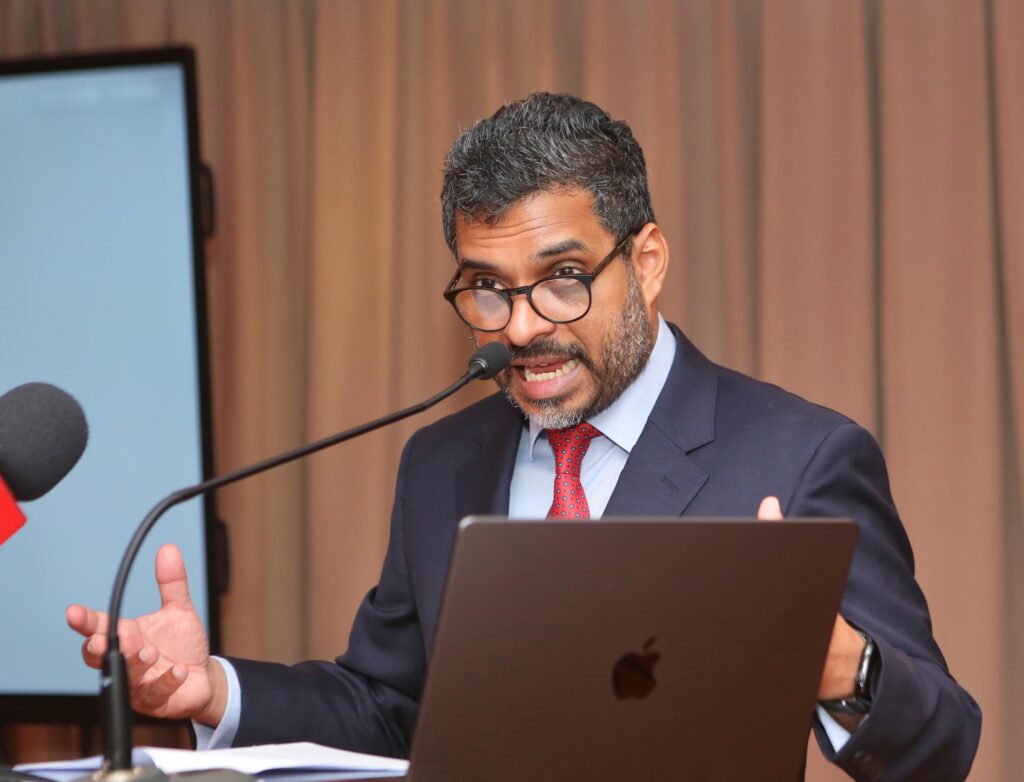
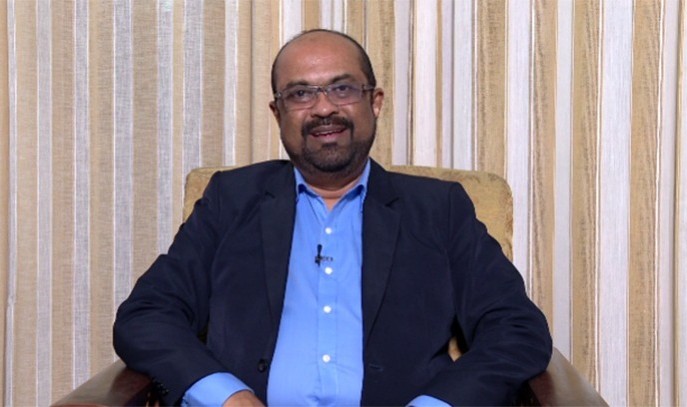
Sanjana Hattotuwa, a global expert in influence operations, disinformation and information integrity. Image courtesy of Sujeeva Kumar.
Gendered attacks already widespread
Activist and co-founder of Women’s Action Network (WAN) Shreen Saroor says women politicians are already exposed to a hostile digital environment that includes harassment, trolling, sexualised insults and manipulated images.
“Women in politics already experience online harassment, trolling, sexualised insults, doctored or photoshopped images and coordinated smear campaigns on social media,” she explains.
Such attacks are rarely about policy disagreements. Instead, Saroor notes, they are designed to undermine credibility and silence women’s voices rather than engage with their political ideas.
“These attacks are often carried out by anonymous actors, leaving victims with little control over the spread of harmful content,” she says. “When posts go viral, social media platforms are often slow to respond.”
The problem is compounded by a broader cultural tendency to dismiss gender-based online abuse. Saroor points out that sexualised attacks against women public figures are often not taken seriously, reflecting misogyny embedded in digital spaces and in technologies shaped by patriarchal attitudes.
Artificial intelligence could intensify this dynamic dramatically.
“AI could become another way of keeping women out of politics by amplifying disinformation and reinforcing existing inequalities,” Saroor warns.
This would become a significant challenge, particularly for women from conservative societies who fear greater personal and social consequences than men. Women may fear reputational damage not only to themselves but also to their families and communities.
This, she says, risks undoing years of progress achieved by women’s rights activists in Sri Lanka, including efforts to expand women’s representation in local government.
Saroor says that addressing the problem requires stronger legal and institutional responses.
“The government should strengthen existing laws to counter technology facilitated gender based violence,” she says, while urging the Election Commission to develop clear guidelines and rapid response mechanisms to address election disinformation, particularly gender-based attacks and fabricated content.
Social media platforms, she adds, must also improve detection systems and provide faster complaint mechanisms for women facing online abuse.
Shreen Saroor is a globally recognised peace and women’s rights activist. Image courtesy of Shreen Saroor.
AI amplifying patriarchal norms
Attorney-at-law and activist Swasthika Arulingam believes Sri Lanka’s deeply patriarchal social environment makes women especially vulnerable to AI-driven disinformation.
“Society is still very slow to accept women in active politics, particularly in electoral politics,” she says.
Artificial intelligence, she argues, could become a powerful tool for those seeking to discredit women in public life.
“One of the most common methods will be the sexualisation of women, alongside the spread of disinformation and misinformation about women and their bodies,” Arulingam explains.
In a society where ideas of “respectability” shape political perceptions, even fabricated images can be weaponised to question a woman’s suitability for leadership.
“For instance, if a photograph of a woman in a bikini were circulated, that alone should not be a reason for people to refuse to vote for her,” she says. “A woman should have the freedom to wear what she chooses. But in a highly patriarchal society, such images can easily be weaponised.”
AI tools now allow users to fabricate highly convincing images, videos or audio recordings showing individuals saying or doing things they never did.
For women politicians, the consequences may be even more damaging because attacks often target their morality rather than their policies.
Arulingam argues that legal protections alone will not solve the problem.
“The internet cannot be fully controlled, and legal systems often move too slowly to regulate rapidly evolving digital technologies,” she says.
Instead, she stresses the importance of long-term social transformation through education.
“Women must be taught not to internalise shame,” Arulingam says. “And men must be taught to respect women.”
If society begins to view attacks on women’s privacy and dignity as violations rather than sources of shame, she believes the power of such smear campaigns will diminish significantly.
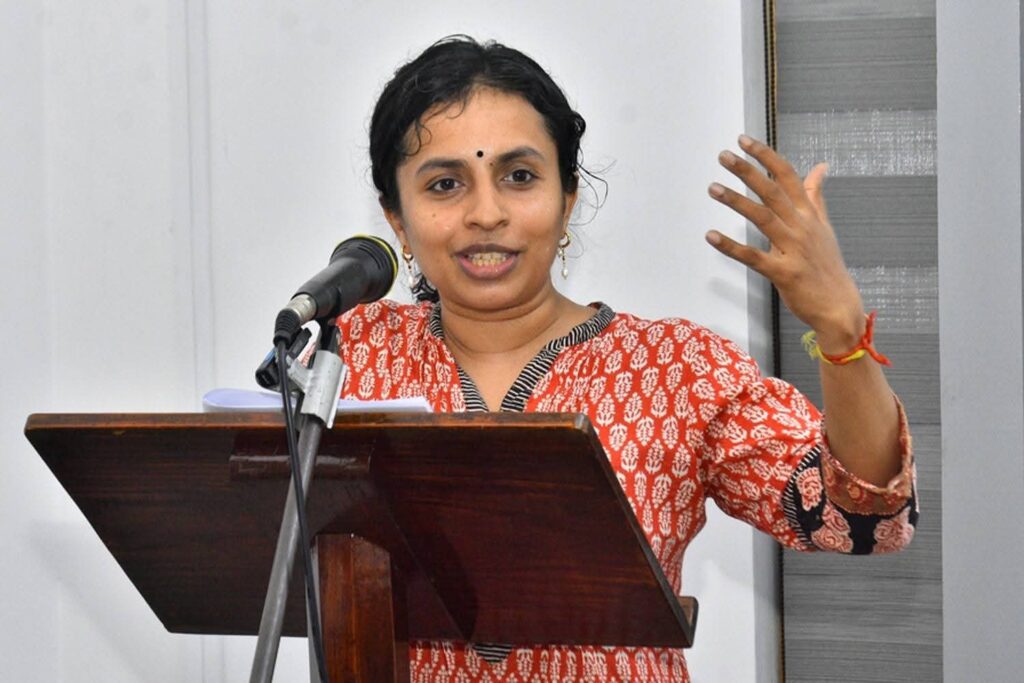
Swasthika Arulingam is a human rights lawyer and a political activist. Image courtesy of Swasthika Arulingam.
A new technological battlefield
Meanwhile, election monitoring experts warn that the speed and scale of AI-generated misinformation create an entirely new political battlefield.
Manjula Gajanayake, Executive Director of the Institute for Democratic Reforms and Electoral Studies (IRES), says reputations can now be damaged within seconds online.
“In politics, reputations can be damaged within seconds, while responding and correcting the record takes time,” he explains.
During that delay, misinformation may already have reached thousands or even millions of voters.
For women politicians, who already face heightened scrutiny, this gap can be especially damaging.
“When false content spreads online, they cannot simply wait until the truth emerges,” Gajanayake says. “By the time the issue is clarified, the damage to their public image may already be significant.”
He stresses that AI technologies are not inherently harmful. In fact, they could help politicians communicate more effectively and engage voters more directly.
But the current trend appears to be the opposite.
“With minimal cost, it is now possible to clone voices, fabricate images or create realistic-looking videos that can easily damage a woman politician’s reputation,” he warns.
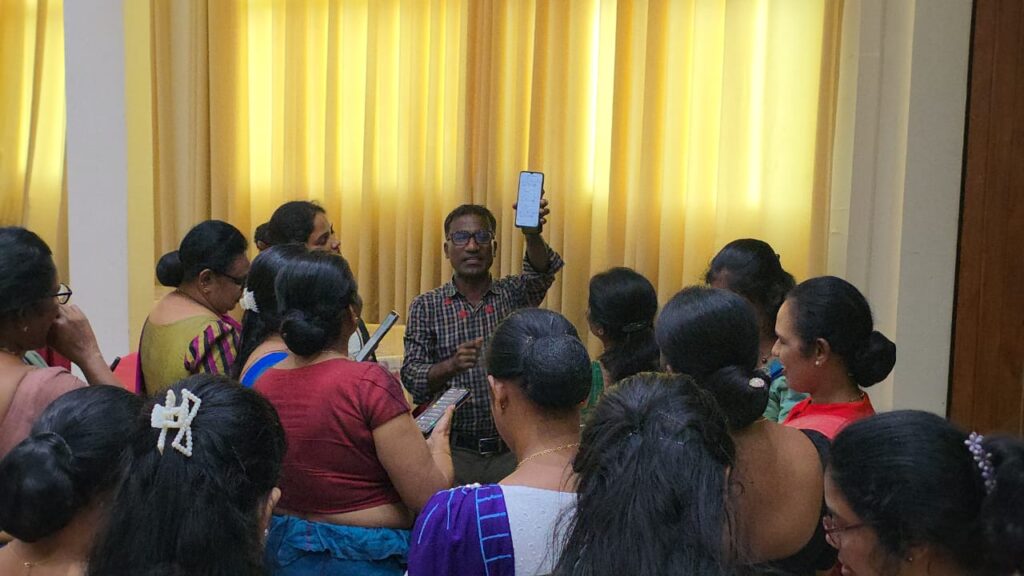
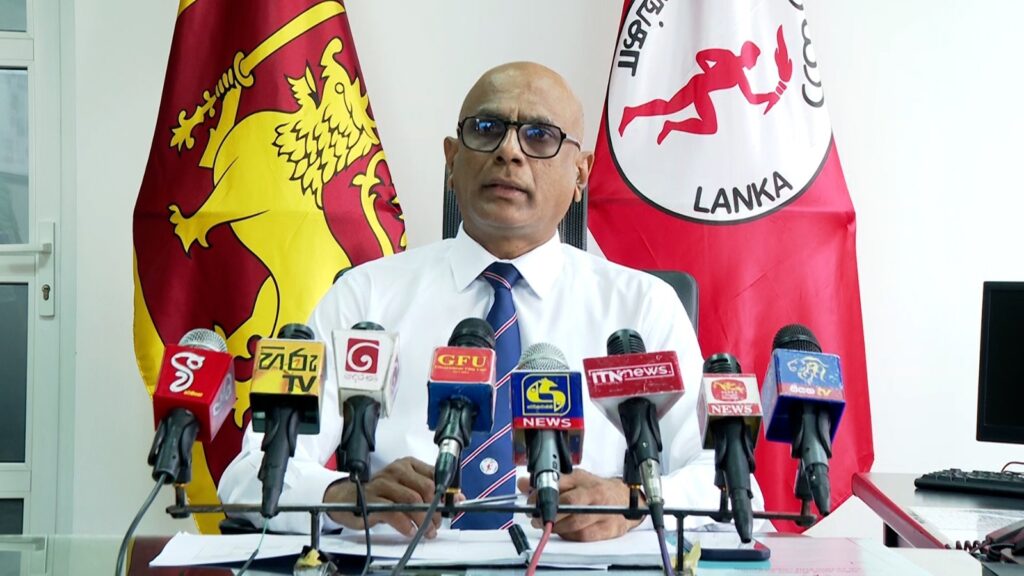
: Manjula Gajanayake, executive director of the Institute for Democratic Reforms and Electoral Studies (IRES) during a digital safety and literacy training for women activists and politicians. Image courtesy of Manjula Gajanayake.
Strengthening resilience
Gajanayake believes several practical steps are needed to reduce the risks.
First, Sri Lanka needs a nationwide public awareness campaign on the dangers of technology-driven misinformation.
“Political parties should take the lead in educating supporters and the public about manipulated digital content,” he says.
Second, women politicians themselves should be encouraged and trained to build strong, credible digital presences.
“Producing authentic and positive digital content can help counter misinformation,” he notes.
Third, the Election Commission must strengthen its capacity as a trusted source of election information by recruiting technical specialists and investing in digital monitoring systems.
However, he acknowledges that government salary structures often make it difficult to attract skilled IT professionals.
Another concern is the digital literacy gap among many politicians themselves.
“Many elected representatives in Sri Lanka, including women members of parliament and local government, are still not using digital tools effectively to communicate with voters,” Gajanayake observes.
Political parties therefore have a responsibility to invest in training programmes, research initiatives and support networks that strengthen women’s digital literacy.
Without such support, Gajanayake warns, AI-driven misinformation and disinformation could discourage a new generation of women from entering politics.
A test for democracy
If deepfake technology continues to evolve as rapidly as experts predict, elections will increasingly depend on institutions’ ability to detect and respond to digital manipulation in real time.
But as activists and analysts warn, the challenge is not purely technological.
AI tools will ultimately amplify the biases and inequalities already present in society.
Whether they become instruments of democratic participation, or tools for silencing women in public life, may depend on how quickly institutions, political parties and society adapt to this new reality.
Reporting and Editing: Gagani Weerakoon
This story was produced under the CIR– FACTUM Media Fellowship Program.
Introduced to Sri Lanka during the 1950s to control deforestation and to support the plywood industry, hard alstonia or hard milk wood (Alstonia macrophylla), has turned out to be a fast-spreading invasive species.
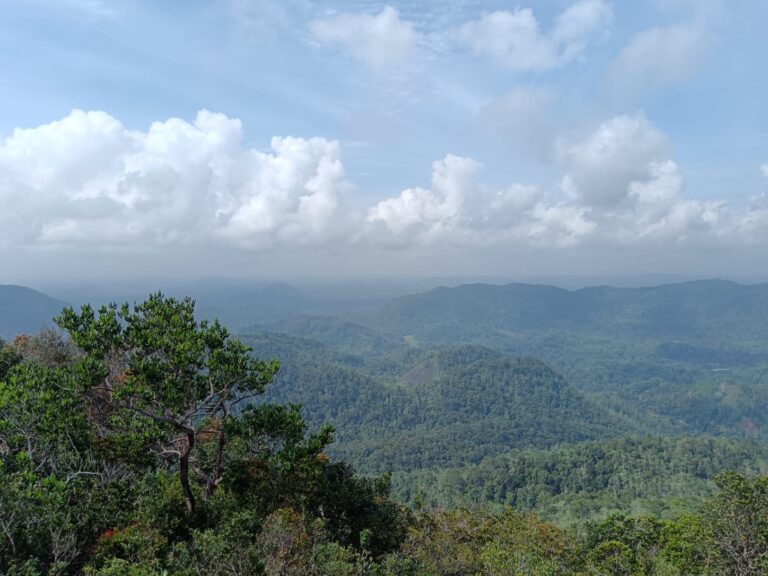
Kanneliya is part of a larger forest complex adjacent to the Sinharaja forest reserve, a UNESCO man and biosphere reserve, and the second largest remaining rainforest in Sri Lanka.
Invasive species compete with native plants for resources like sunlight, and their early flowering can attract pollinators—alstonia is one example.
Among the experiments carried out so far, a forest ecosystem restoration initiative within a degraded forest patch in the eastern part of Kanneliya has proved successful.
KANNELIYA, Sri Lanka – Back in 2009, a team of researchers was assessing the threat status of amphibians in Kanneliya, a lowland rainforest in southern Sri Lanka. They observed several species of shrub frogs belonging to the subfamily Rhacophoridae, locally known as panduru madiya. According to the study, these shrub frogs indicated morphological differences and generic diversity from the known shrub frogs (Pseudophilautus) found in Sri Lanka. They also identified critically endangered and extremely rare amphibian species including the whistling shrub frog (Pseudophilautus nemus), restricted to the rainforest, highlighting the importance of Kanneliya as a major centre of amphibian diversity in Sri Lanka.
But today, these shrub frogs are threatened by habitat degradation and the spread of invasive species such as hard alstonia (A.macrophylla).
The alstonia connection
Alstonia was introduced to Sri Lanka during the 1950s when man-made forest plantations were promoted by the Forest Department.
A 2019 review on the floral composition of the Kanneliya-Dediyagala-Nakiyadeniya (known as the KDN forest complex) by Lakmali Gunathilaka, an ecologist and postdoctoral scientist in aquatic ecology and environmental science, shows how the entire KDN complex was subjected to selective logging from 1970 to 1987. The result: Several native plants have been removed and replaced with new plant species like alstonia and mahogany (Swetinia macrophylla).
Gunathilaka told CIR how selective logging has significantly altered its floral composition, causing a decline in native species and enabling the encroachment of exotic species. “While the forest has shown resilience, the legacy of this disturbance persists in its current vegetative structure. Even though Kanneliya retains high overall endemism, the areas that were historically logged have lower concentrations of endemic species compared to undisturbed or primary patches,” she said.
Siril Wijesundara, a research professor at the National Institute of Fundamental Studies (NIFS) said that it was deliberately introduced by the governments during 1950s for purposes such as light wood, to manufacture matchboxes, tea boxes and similar products.
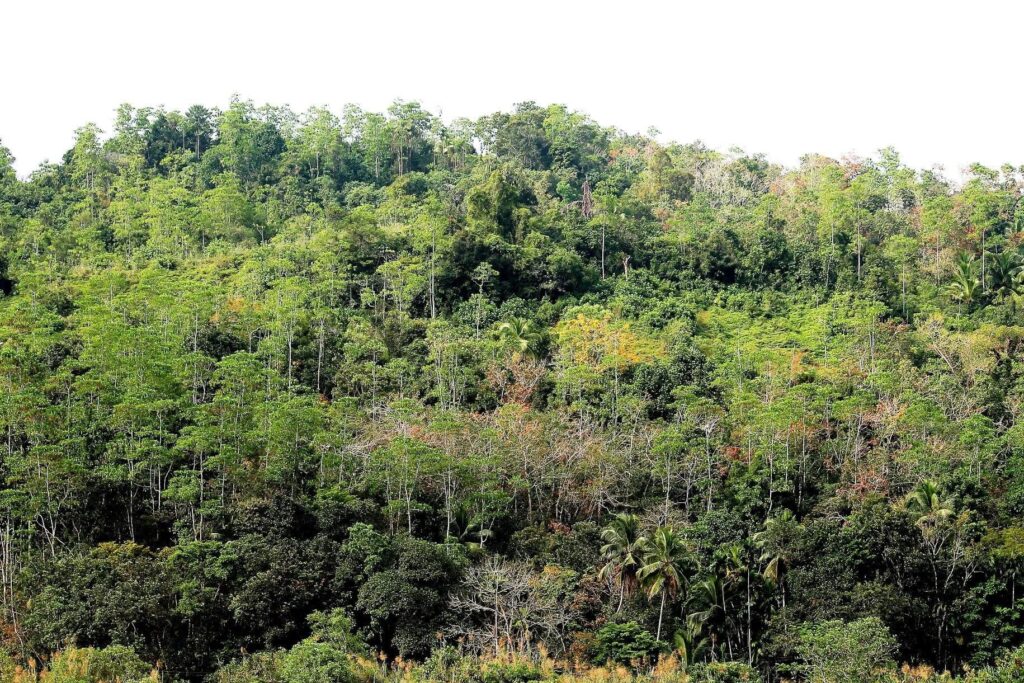
Alstonia trees dominating a forest patch. Image courtesy of Invasive Alien Species of Sri Lanka Facebook page.
Competition for natural resources
The growth of invasive species increases competition among native species for natural resources, explained Rohan Pethiyagoda, biodiversity scientist, amphibian and freshwater taxonomist and conservationist. The main ‘resource’ they compete for is sunlight.
Pethiyagoda noted that most of trees and shrubs considered invasive in Sri Lanka cannot establish themselves in undisturbed forest. “Pretty much all the woody species usually termed “invasive”, such as soap bush (Clidemia hirta), Simpoh air (Dillenia suffruticosa) and Pond Apple (Annona glabra) were established only after the natural forest canopy was already lost to deforestation. All these species need to begin their lives in environments with more sunlight. They do not flourish beneath the forest canopy and the main ‘resource’ they compete for is sunlight,” he explained.
There is also competition between invasive and native plants for pollinators, said Wijesundara, an authoritative botanist. “Invasive plants start flowering before native plants. Pollinators, despite being used to native species will be drawn to invasive species due to this. By the time the native species begin to flower, pollinators are already occupied with invasives and are less available for native species. This means, even though native species flower later, they will not be pollinated, impacting the production of fruits, seeds and flowers. There won’t be a regeneration of seeds of native species, and this often goes unnoticed,” he said.
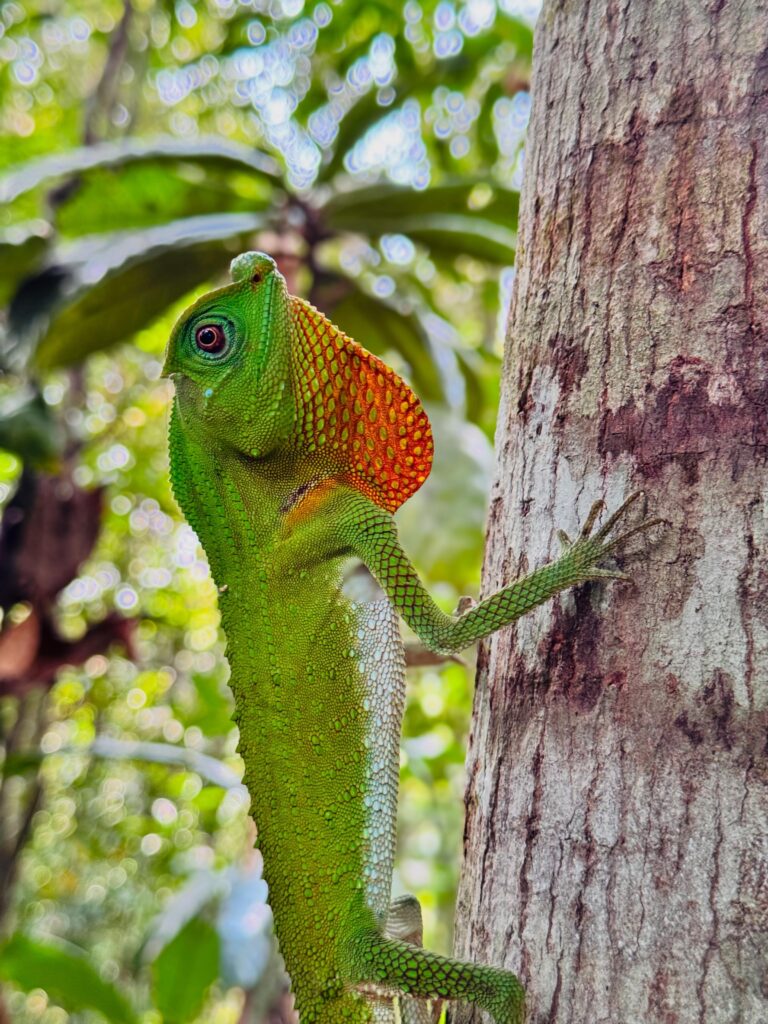
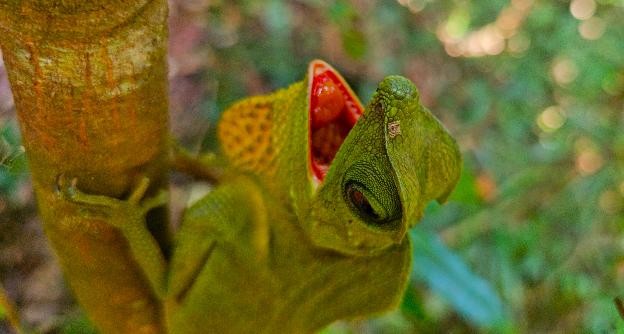
The hump-nosed lizard (Lyriocephalus scutatus) isthe largest agamid lizard endemic to Sri Lanka can bespotted in Kanneliya. Image courtesy of Vishan Pushpamal.
Impact on amphibians and lizards
A 2008 study on the species diversity and the status of amphibians in Kanneliya forest establishes the presence of 33 species within the ecosystem.
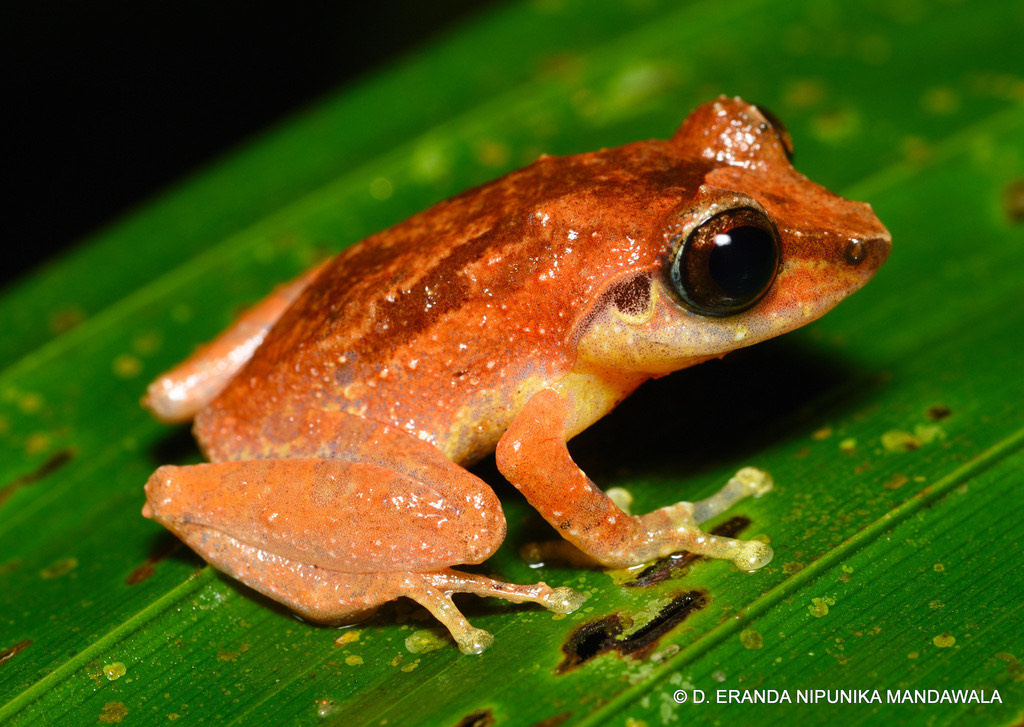
According to Vishan Pushpamal, a conservationist who has studied Kanneliya forest for two decades and a co-author of the study, certain amphibians lay eggs only on leaves of native species. The endemic leaf-dwelling shrub frog (Pseudophilautus folicola) a species found in rainforests, lays eggs on leaves of trees like the endemic Ceylon elimi (Canarium zeylanicum). “Once dried, the leaves curl up to retain water. But when leaves from trees such as alstonia fall on dried leaves of native trees, this system of retaining water gets disrupted and impacts smaller animals. Serpents and lizards drink water from such sources and the spread of invasive species leave an impact on such things,” he added.
Lizards being carnivorous species, are heavily dependent on trees but invasives have a strong impact on lizard species, said Madhava Boteju, zoologist and head of science at Environmental Foundation Limited (EFL).
“The endemic hump-nosed lizard is a wet zone keystone species and not found beyond certain altitudes. The only species of the genus Lyriocephalus it is a vulnerable species requiring a wet, cool climate for survival. They mimic mosses for camouflaging. They will not be able to activate their camouflage while resting on invasive species. From food to survival needs will change drastically when environmental conditions change due to a reduction of native trees,” he said.
The leaf-dwelling shrub frog (Pseudophilautus folicola) is found in subtropical or tropical moist lowland forests. Image courtesy of Eranda Nipunika Mandawala.
Managing invasive species
Once an invasive species has been established, it poses a challenge to the natural plants and shrubs. “If you’re averse to herbicides, the only method of control is shade,” Pethiyagoda added. “I have seen masses of invasive common gorse (Ulex) being removed from Horton Plains by well-meaning volunteers. In the long term, this does not work. Ulexproduces hundreds of thousands of seeds, and uprooting only causes the seeds to fall to the ground and remain buried, allowing the shrubs to re-emerge decades later. The best way to prevent invasives is to not disturb the native forest,” he explained.
In 2018, the Forest Conservation Department, Biodiversity Sri Lanka and the IUCN initiated the LIFE Project, a collaborative attempt at forest ecosystem restoration. The project aimed to restore a forest patch covered with Old World forked fern (Dicranopteris linearis) in Opatha, near Kanneliya’s eastern border.
According to Sandun Perera, program ccoordinator at IUCN holds a doctorate in environmental science and is a subject expert, to restore an ecosystem it must be degraded from its original state. To restore the selected area, the fern trees were systematically removed, soil was conditioned, composted, watered and chemically fertilized before plants were introduced from a nursery maintained within the forest itself. Perera said around 14 hectares (0.14 km²) have been restored under LIFE, a successful forest ecosystem restoration initiative in the country. “During monitoring surveys in 2025, we found some land snail species found interior in the forest returning to this patch, indicating how the restored forest patch is mimicking the rainforest,” he noted.
Kumar Rai, P., & Singh, J. S. (2020). Invasive alien plant species: Their impact on environment, ecosystem services and human health. Ecological indicators, 111, 106020. https://doi.org/10.1016/j.ecolind.2019.106020
Weidlich, E. W. A., Flórido, F. G., Sorrini, T. B., & Brancalion, P. H. S. (2020b). Controlling invasive plant species in ecological restoration: A global review. Journal of Applied Ecology, 57(9), 1806–1817. https://doi.org/10.1111/1365-2664.13656
Growing geopolitical tensions in West Asia are having a ripple effect and far beyond the region, raising concerns about the security of critical international maritime routes.
The March 4 attack on the Iranian frigate IRIS Dena by the U. S. Navy submarine USS Charlotte’s has sparked a fresh debate over the security of the Indian Ocean Region (IOR), a vital corridor for global trade and energy supplies.
For Sri Lanka, positioned at the center of these sea lanes, the torpedoing of the Iranian-flagged vessel has reignited questions about maritime security, regional stability and the country’s preparedness to deal with emerging security threats.
Former director general of the Institute of National Security Studies (INSS) Col. Nalin Herath believes the developments highlight a deeper structural issue: the absence of a comprehensive national security strategy for Sri Lanka.
In this interview with the Center for Investigative Reporting(CIR), Herath discusses the future of the Indian Ocean Peace Zone, vulnerabilities in Sri Lanka’s underwater domain awareness (UDA) , and the need for a proactive security framework that balances defence, diplomacy and economic realities. Excerpts from the interview:
Q: Following the recent U.S. submarine attack on an Iranian vessel, there is tensed discussions whether the Indian Ocean Region (IOR) can still be considered peaceful. Some argue Indian Ocean Peace Zone may no longer be viable. What is your view?
A: Sri Lanka has been advocating the concept of the Indian Ocean Peace Zone since the early 1970s. However, this is not something that Sri Lanka alone or, even India alone, can achieve. Maintaining the peaceful character of the Indian Ocean must be a collective effort involving all regional stakeholders.
Today, nearly 65 % of global commercial shipping passes through the Indian Ocean Region. If the stability of this maritime space is compromised and it becomes volatile, the consequences will affect the entire region. This is especially important because shipping routes to China and the broader Asia-Pacific region also rely heavily on these waters.
Therefore, regional states must remain committed to ensuring stability in the IOR.
At the same time, South Asia remains the least connected region in the world. Even basic travel between countries such as Bhutan, Pakistan and India often requires flights rather than land connectivity. Yet the region represents around 25 % of the global population. Instability in the Indian Ocean would therefore have serious economic and geopolitical consequences for all of us.
From a legal perspective, the recent attack itself cannot necessarily be categorised as illegal because the U. S. and Iran are engaged in hostilities. In a context of war, vessels, whether logistic ships, warships or even unarmed vessels, may become targets. As analyst Nitin A. Gokhale observed, the real debate is less about legality and more about whether such an attack is ethical.
Q: What consequences could this incident have for Sri Lanka’s national security? There are concerns about the presence of Israeli nationals in the country and strong expressions of solidarity with Iran among sections of the Muslim community.
A: The top priority should be the establishment of a national security strategy. Sri Lanka currently does not have one, whereas almost every other country does.
In 2019 an initiative was launched to draft a national security strategy, but the process was later abandoned. There are now renewed discussions about developing such a strategy, and several think tanks have proposed frameworks. However, it is ultimately the government’s responsibility to formulate and implement it.
We are already late in doing so, but it is better to act now than continue without a coherent strategy.
When discussing national security, it should not be limited to terrorism alone. Both traditional and non-traditional threats must be considered. This includes climate change, natural disasters and pandemics, which can significantly affect national stability.
Countries such as the United Arab Emirates, the U.S, Australia, India, Pakistan and Japan have comprehensive national security strategies. Sri Lanka must adopt a similar integrated approach.
In today’s geopolitical environment, conflicts rarely remain confined to a single region. The impact of a crisis can easily spill over to other parts of the world. The recent attack on the Iranian naval vessel IRIS Dena illustrates how developments elsewhere can have implications for our region and the country itself.
Q: What are the key considerations when developing a national security strategy?
A: One useful framework is the DIME model — Diplomacy, Information, Military and Economy.
These four components should form the foundation of any national security policy. Security cannot be viewed purely through a military lens. Civilian institutions, including the ministries responsible for environment, disaster management and public health, must also be involved.
National security is a whole-of-government responsibility. As far as I am aware, the current government, along with defence hierarchies, keen on finalising the security strategy soon.
Q: What prevents Sri Lanka from acquiring the technology needed to strengthen maritime and underwater security?
A: The main challenge is balancing security needs with economic realities. When a country is going through an economic crisis, national security investments become more difficult.
Nevertheless, Sri Lanka must prioritise maritime security, primarily because we are an island nation. Additionally, many forms of illegal activity occur within or near our waters. These include human trafficking, illegal arms smuggling, narcotics trafficking and terrorism.
We must also be prepared to deal with environmental disasters, such as the X-Press Pearl maritime disaster, which posed serious risks to marine ecosystems and public health.
Another important factor is the sheer size of the maritime area for which Sri Lanka is responsible. Our Search and Rescue (SAR) region is roughly 27 times larger than our land area. This means that if a distress situation arises at sea, Sri Lanka has an obligation to respond.
Operating vessels in mid-sea for surveillance or rescue missions requires substantial fuel and logistical resources, which can be challenging for a country still recovering from an economic crisis.
There is also a technological gap. For instance, our underwater domain awareness is virtually non-existent. We lack advanced technologies required for underwater surveillance. While India is somewhat ahead of us, even India does not yet possess the most advanced capabilities required to monitor modern submarine operations conducted by major powers.
At present, we are also discussing the rightsizing of the military. The key question is: if manpower is reduced, how will we fill the resulting capability gaps? Do we have the financial capacity to transition towards a technologically advanced force?
Historically, Sri Lanka has tended to react to crises rather than act proactively. This approach needs to change.
Q: Some groups have called for the Colombo Security Conclave to be convened following this incident. Why has that not happened?
A: The Colombo Security Conclave was originally proposed with support from India and was expected to receive funding from them. However, it has not fully materialised as initially envisioned.
For such a mechanism to function effectively, there must be a dedicated secretariat and a properly appointed national security adviser.
Institutionalising such roles is essential if we are serious about strengthening national security coordination.
Q: There have also been discussions about building a connectivity bridge between Sri Lanka and South India. Some sections believe such a connection could pose national security risks. What is your view?
A: In my view, connectivity should not be dismissed outright.
Consider the economic trajectory of Tamil Nadu, which is projected to become a $1 trillion economy by 2030 and potentially reach $3 trillion by 2035. In contrast, Sri Lanka’s economy has remained around $80 billion in GDP for many years.
Over decades, the Board of Investment (BOI) has attracted approximately $7 billion in investments. Given current projections, investors may increasingly prefer South India as an investment destination.
Sri Lanka therefore faces an important strategic choice: whether to remain isolated due to historical anxieties or to position itself to benefit from the growth of the neighbouring region.
Personally, I believe connectivity can be beneficial. However, such decisions must ultimately be made by policymakers after conducting comprehensive security assessments.
In other words, it is better to remain securely connected rather than completely disconnected.
Sri Lanka’s lowland rainforests support many endemic butterfly species that depend on intact forest habitats.
Disturbance and fragmentation reduce forest cover, threatening butterfly populations that need continuous and undisturbed forest.
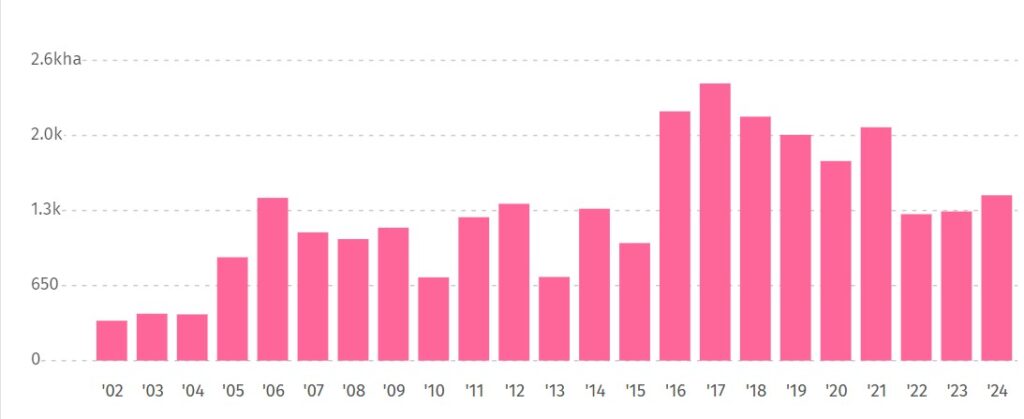
From 2002 to 2024, according to Global Forest Watch, Sri Lanka’s lowland rainforests lost 710 hectares (7.1 km²) of primary forest and about 30,000 ha (300 km²) of tree cover.
Loss of larval host plants and microhabitats drives decline, making butterflies useful bio-indicators.
KANNELIYA, Sri Lanka — Around the 1960s, the skies above Sri Lanka’s southern forests could turn yellow with butterflies during seasonal migrations. Gunadasa Pathirana, a 74-year-old wildlife guide from Koralegama near the Kanneliya Forest Reserve, recalls swarms of more than a 100 butterflies flying together toward Adam’s Peak, a major site of pilgrimage.
Today, such mass migrations are rarely seen, reflecting how much the landscape and forest habitats have changed over the decades.
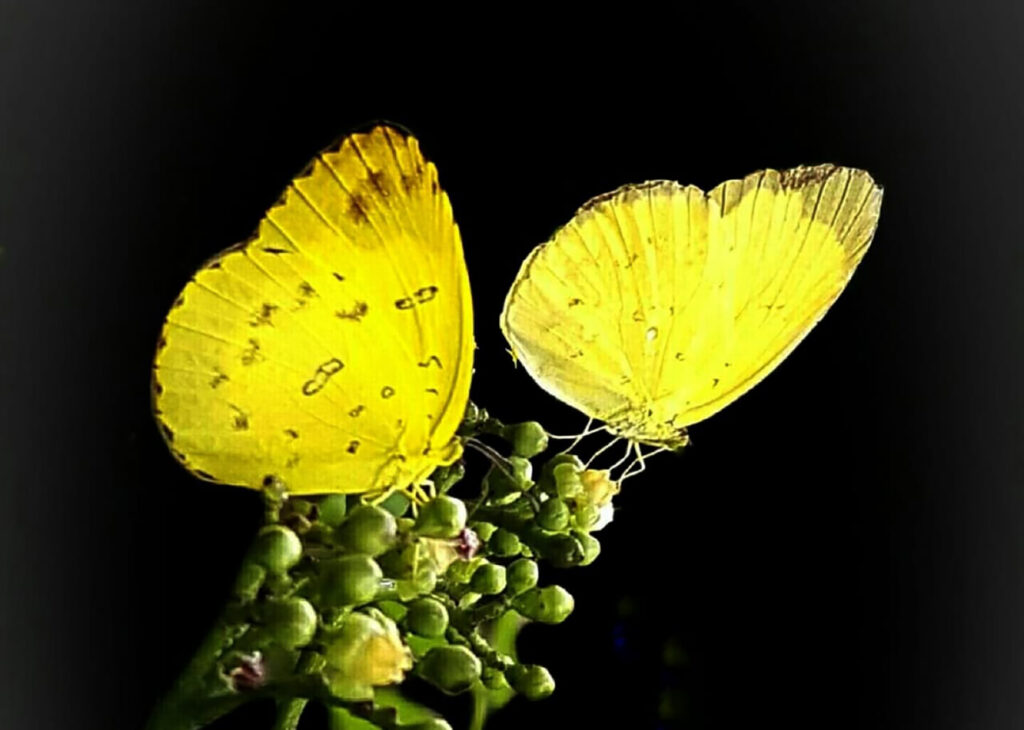
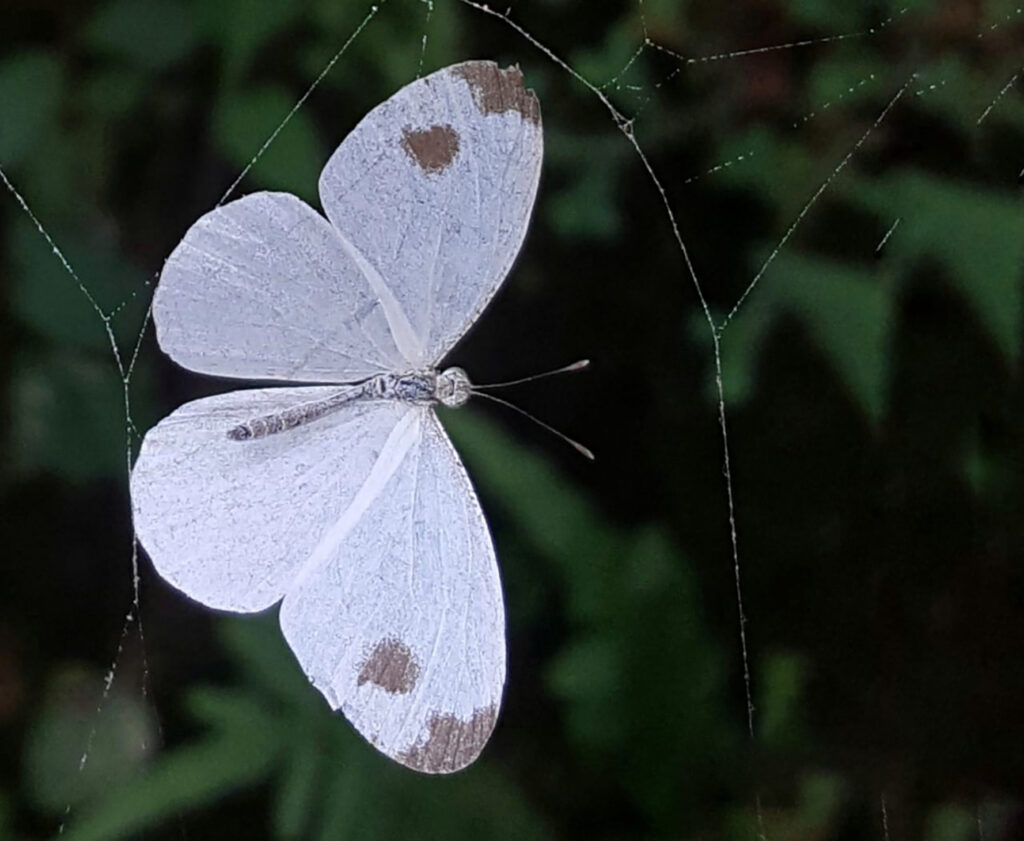
First described as Terias alitha by father and son entomologists Cajetan and Rudolf Felder in 1862, the Scalloped grass yellow (Eurema alitha), butterfly is found in Souhteast Asia. Image courtesy of Gunadasa Pathirana.
The Kanneliya-Dediyagala-Nakiyadeniya Forest Complex (KDN) is found in Sri Lanka’s southwestern wet zone and is among the few remaining lowland rainforest systems situated adjacent to the Sinharaja Forest Reserve, a globally recognized biodiversity hotspot. These forests rank among South Asia’s richest ecosystems, supporting a remarkable diversity of endemic species, particularly butterflies.
Sri Lanka hosts 248 recorded butterfly species, with 31 of them found nowhere else on Earth. Many of them are forest-dependent and restricted to the wet zone, a 2019 national assessment of butterflies states.
Under threat
The most threatened butterflies in Sri Lanka are confined to the wet zone, which supports nearly all endemic species, according to the Butterfly Conservation Action Plan of Sri Lanka 2014. Among the endemic butterflies, the Ceylon Rose (Pachliopta jophon), largely restricted to Sri Lanka’s wet-zone forests, stands out. The IUCN Red List records it as endangered, making it one of the few butterflies at global risk of extinction.
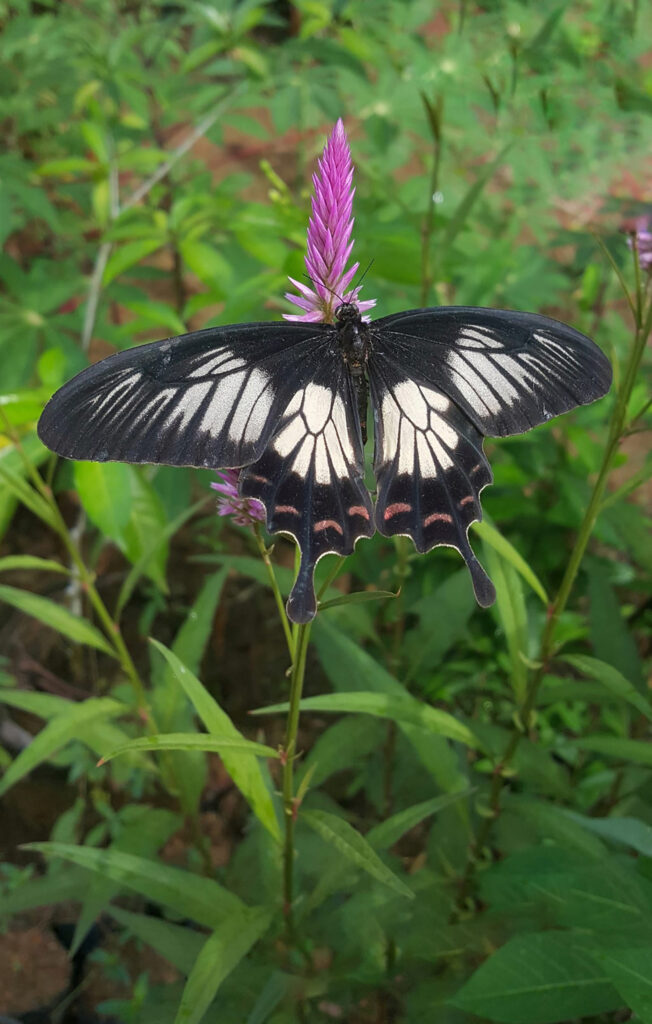
Ceylon rose (Pachliopta jophon) is an endemic swallowtail butterfly listed as endangered. Image courtesy of Gunadasa Pathirana.
The final national assessment of species, or Sri Lanka’s National Red List of 2012, includes butterfly data. It lists 21 species as critically endangered, 38 as endangered, 40 as vulnerable, 21 as near threatened, and another 6 as data deficient.
Conservation biologist Rajika Gamage notes the absence of an update on the conservation status of butterflies for 13 years as problematic. It is possible for about 80 % of butterflies, especially the wet zone species, to potentially fall into threatened categories, he tells CIR.
In the KDN forest complex, long-term observations made by conservationist Vishan Pushpamal show that clearing buffer vegetation reduces semi-open areas crucial for egg-laying, resulting in a decline in butterfly numbers.
White four ring (Ypthima ceylonica) is a butterfly found in Asia and deriving a part of its name from Sri Lanka, then Ceylon. Image courtesy of Gunadasa Pathirana.
Habitat loss and degradation remain major threats, especially in the wet zone forests where many species depend on specific microhabitats. Tree felling, pesticide use, invasive plants, and changing weather can disrupt these environments and affect butterfly survival, observes Himesh Dilruwan Jayasinghe in his 2015 publication, Common Butterflies of Sri Lanka. Species relying on pristine wet zone forests are particularly vulnerable as these habitats continue to decline, it adds.
As for Gamage, habitat loss is the most critical threat for species with narrow ecological requirements. The red spot duke (Dophla evelina) prefers dark forest interiors, while the Sri Lanka birdwing (Troides darsius), the national butterfly, depends on intact rainforest canopies. Similarly, the clipper (Parthenos sylvia cyaneus) prefers dense forests and is rarely seen near human-modified habitats.
Described by Frederic Moore in 1875, the Ceylon palmfly (Elymnias singhala) is endemic to Sri Lanka. Image courtesy of Gunadasa Pathirana.
Gamage says that some plants found in tea landscapes such as little ironweed(Cyanthillium cinereum), can support certain butterfly species. However, forest-dependent host plants like Wight’s adenia (Adenia wightiana) and Anantamul (Tylophora cordifolia) require dense forest habitats and are unable to survive in plantation environments, causing the butterflies associated with them to decline.
When cultivated land is abandoned, invasive species such as hard alstonia (Alstonia macrophylla) can become the dominant species, reducing plant diversity to only a few species and further limiting butterfly habitats.
Common Bluebottle (Graphium Sarpedon), also known as the blue triangle, is swallowtail butterfly found in South, East and Southeast Asia. Image courtesy of Gunadasa Pathirana.
The 2012 assessment also highlights how the removal of small understory plants such as herbs and shrubs, often removed for firewood or fencing, can contribute to habitat loss. Key larval host plants, such as little amherstia (Humboldtia laurifolia), false ashoka (Polyalthiaspecies), and chakrani (Thottea siliquosa), are lost, altering the understory microclimate. This affects shade-loving butterflies like the southern duffer (Discophora lepida) and disrupts specialized plant–butterfly relationships, including that of the endemic Sri Lankan rose (Pachliopta jophon).
“Even small vegetation changes can strongly impact butterflies, as many species depend on specific larval host plants and forest microhabitats,” adds Pushpamal. The pressures experienced by the local habitats also reflect broader forest changes that could be detected through satellite imagery.
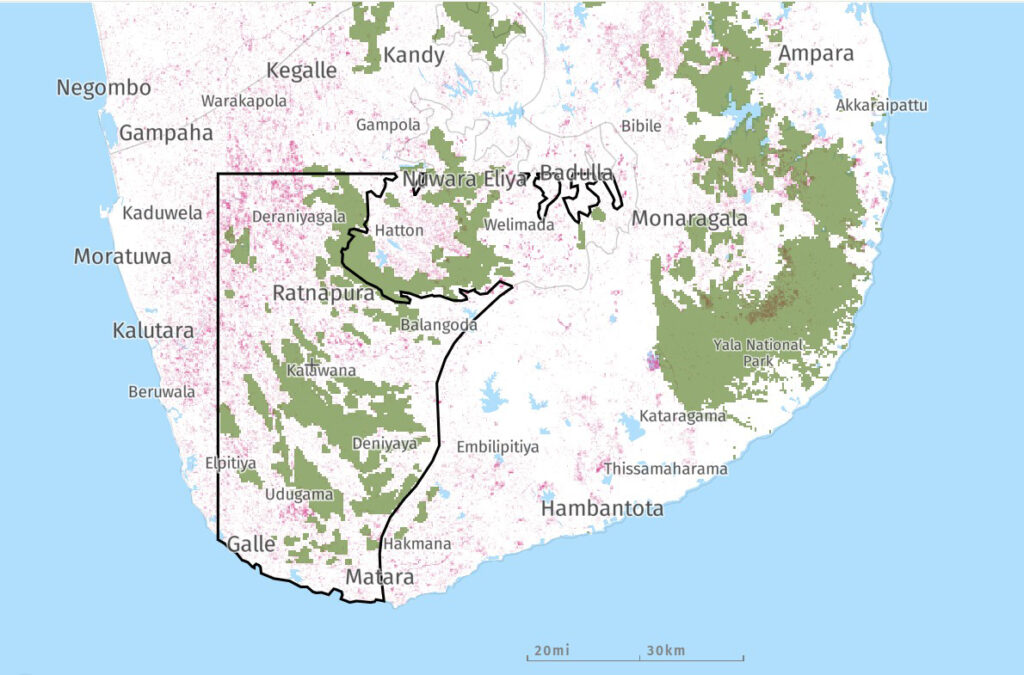
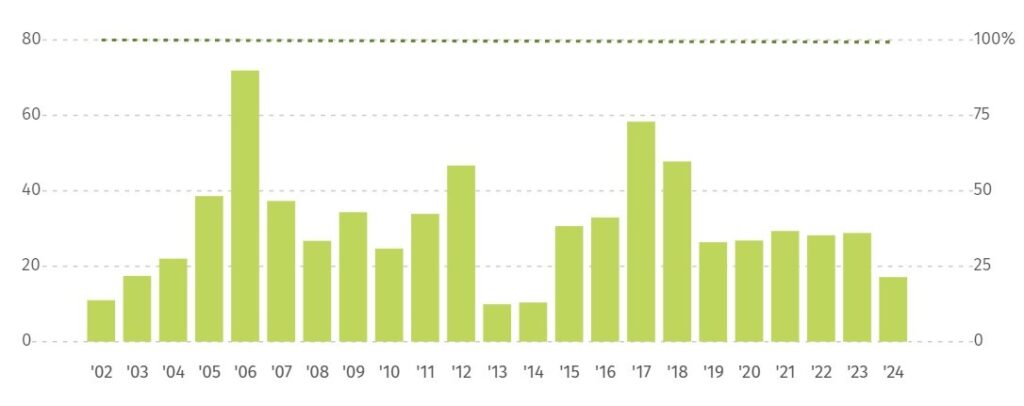
This screenshot from Global Forest Watch illustrates Sri Lanka’s lowland rainforests, where pink “disturbance alerts” signal tree cover loss from 2002 to 2024The loss ofhumid primary forest in lowland rainforests from 2002 to2024. Source: Global Forest Watch (GFW).The loss of tree cover in Sri Lanka’s lowland rainforests from 2002 to 2024. Source: Global Forest Watch (GFW).
At present, Sri Lanka’s lowland rainforests cover approximately 652,190 ha (6,521.9 km²) and are classified as a terrestrial ecoregion by the Global Forest Watch (GFW). Data analyses from 2002 to 2024 by GFW show measurable forest loss. During this period, about 710 ha (7.1 km²) of humid primary forest have disappeared, representing a 0.70% decline in primary rainforest cover. The Sinharaja and KDN regions have lost roughly 30,000 ha (300 km²) of total tree cover, equivalent to about 5.0% of the tree cover that existed in 2000.
This shows an annual loss of 1,304.3 ha (13.04 km²) of tree cover and 30.9 ha (0.31 km²) of forest cover.
Indicators of habitat stability
The psyche (Leptosia nina), also known as the wondering snowflake is a small and weak-flying butterfly found in Indian subcontinent, southeast Asia and Australia Image courtesy of Gunadasa Pathirana.
“High butterfly populations are the hallmark of ecological success. They represent a flawless food chain and a habitat rich in plant and animal life,” explains Gamage who works extensively on butterflies. “Butterflies are not just part of the scenery, they are essential indicators of a world in biological balance,” he adds.
Gamage suggests linking plant and butterfly diversity using 100 meters × 100 meters vegetation plots to understand habitat richness and the distribution of butterflies, adding that such studies could reveal how changes in vegetation directly impact butterfly populations, as there is ongoing forest loss in the lowland rainforests, threatening butterflies and their habitats, making forest protection and restoration essential for ecological balance and conservation.
COLOMBO — Sri Lanka has found itself navigating a delicate diplomatic and security challenge after responding to a maritime incident involving an Iranian naval vessel near its waters, highlighting the island nation’s strategic position in the Indian Ocean and the complexities of maintaining neutrality amid global geopolitical tensions.
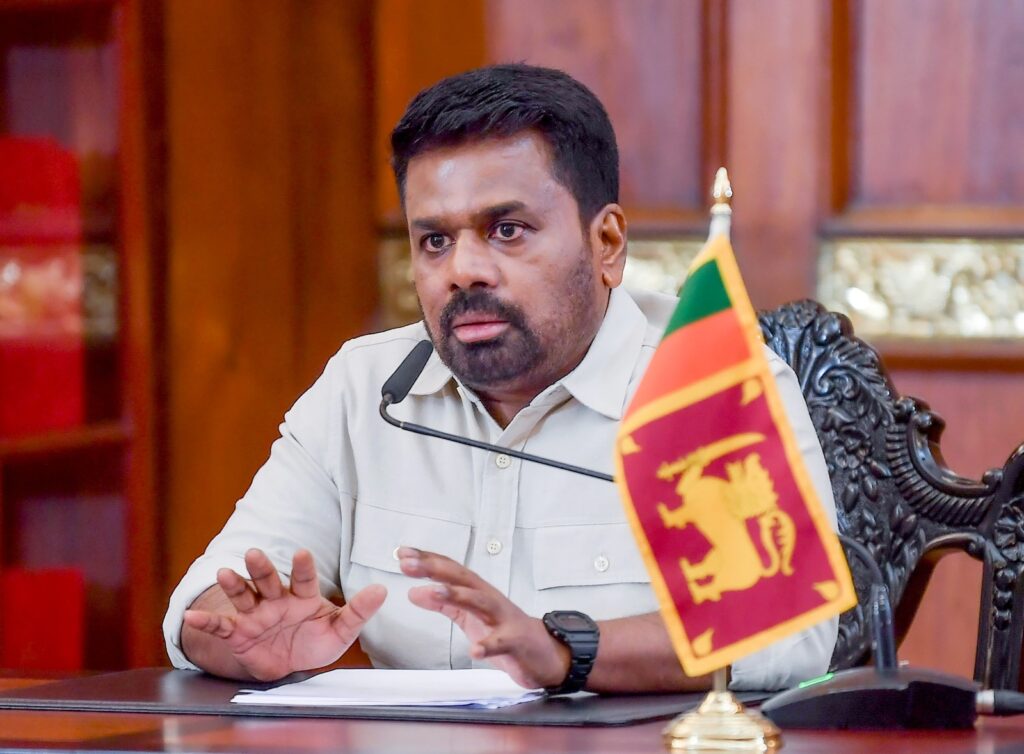
President Anura Kumara Dissanayake on March 5 night reaffirmed that Sri Lanka would remain neutral in the escalating tensions between the United States and Iran, while emphasising that humanitarian considerations would guide the country’s actions in emergency situations.
Addressing a special media briefing at the Presidential Secretariat in Colombo, the president said Sri Lanka would not allow its territory, maritime zones or airspace to be used in a manner that favours any party involved in the conflict.
“Particularly in the context of this Middle East conflict, as well as in any international dispute, our position and neutrality dictate that we shall not, under any circumstances, permit our land territory, maritime zones or airspace to be utilised in a biased manner by any nation engaged in a conflict,” he said.
Rescue and humanitarian response
Sri Lanka’s response came after an Iranian naval vessel operating close to the country’s maritime boundary reported mechanical difficulties and sought assistance.
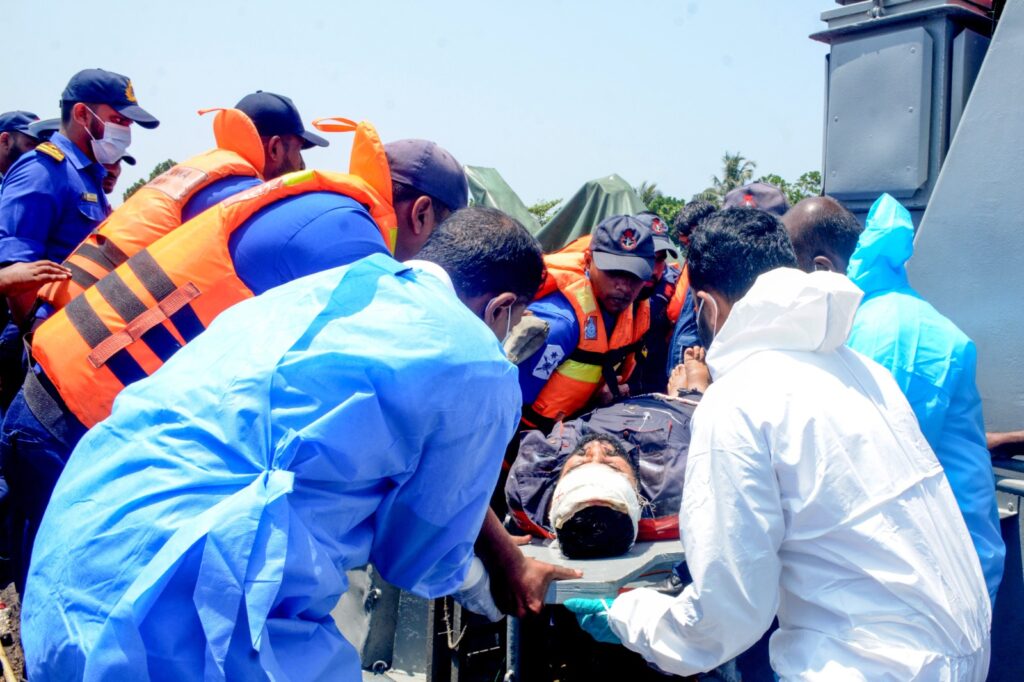
According to President Dissanayake, the vessel, identified as IRIS Bushehr, requested permission to enter a Sri Lankan port after reporting engine damage. Following consultations with diplomatic missions and Sri Lanka’s naval authorities, the government decided to evacuate the crew and relocate the vessel.
A total of 208 personnel aboard the vessel are currently being brought ashore to Colombo.
“According to the latest reports, arrangements have been made to bring 208 individuals ashore. This group includes 53 officers, 84 cadet officers, 48 senior sailors and 23 sailors,” the president said.
Once the evacuation is completed, the vessel itself will be moved to the Port of Trincomalee rather than being held in Colombo.
“Colombo is our principal commercial port. Retaining such a vessel within our main commercial port carries the risk of adversely affecting our maritime industry,” he explained.
The decision to relocate the vessel reflects Sri Lanka’s attempt to balance humanitarian assistance with economic and diplomatic sensitivities.
President speaking at a special media briefing. Image courtesy of the President Media Division.
Legal obligations and neutrality
Officials said the government carefully assessed the situation in light of international law, including the United Nations Convention on the Law of the Sea(UNCLOS) and the Hague Convention of 1907, both of which outline the responsibilities of neutral states during armed conflict.
“Neutrality does not mean ignoring humanitarian obligations,” the president said, adding that Sri Lanka would take necessary steps to protect human life without compromising its non-aligned stance.
The incident occurred within Sri Lanka’s Exclusive Economic Zone (EEZ), though outside its territorial waters, placing the response within the country’s search and rescue responsibilities.
Strategic concerns in the Indian Ocean
Security analysts note that the incident underscores the strategic challenges facing Sri Lanka as a small state located along one of the world’s busiest maritime corridors in the Indian Ocean.
Former Foreign Secretary Ravinatha Aryasinha said Sri Lanka must carefully balance its foreign policy to avoid being drawn into rivalries between major powers.
“Global powers such as the United States, India and China may prefer Sri Lanka to align with them, but in practice they are more concerned that the island does not firmly align with their rivals,” he said at a recent policy discussion.
Aryasinha argued that Sri Lanka should adopt what he described as a “smart hedging” strategy, maintaining constructive relations with multiple partners without becoming overly dependent on any single country.
“In a zero-sum geopolitical environment, the best way to avoid getting trapped is to hedge. In simple terms, that means not putting all your eggs in one basket,” he said.
Maritime security challenges
The incident has also drawn attention to the country’s growing maritime security responsibilities.
Former foreign secretary and security expert Jayanath Colombage noted that Sri Lanka’s designated search and rescue region is vast, extending far beyond its land territory and covering an area roughly 27 times the size of the island.
“Our search and rescue region is about 27 times the size of our land mass. We share this responsibility with neighbouring countries such as India, Indonesia, Australia and Maldives,” he said.
The scale of this responsibility requires improved maritime surveillance, reconnaissance and rapid-response capabilities, particularly as the Indian Ocean becomes increasingly militarized.
Colombage also highlighted the emerging threat posed by submarines operating in the region, noting that recent reports suggested the presence of underwater military activity linked to the maritime incident.
“In reality, there may be many submarines moving through the Indian Ocean, some nuclear-powered and potentially carrying nuclear weapons,” he said.
A patient in the ship being evacuated. Image courtesy of the President Media Division.
Diplomatic balancing act
For Sri Lanka, the episode has become a test of its long-standing commitment to non-alignment while maintaining cooperative relations with multiple global powers.
The government has emphasised that its actions were guided by humanitarian principles rather than political alignment.
“We do not act in a biased manner towards any state, nor do we submit to any state. We are a sovereign and independent state,” President Dissanayake said.
At the same time, analysts warn that incidents involving foreign naval vessels can quickly become diplomatically sensitive, particularly when they occur against the backdrop of wider geopolitical tensions.
As the crisis in the Middle East continues to unfold, Sri Lanka’s response to the Iranian vessel highlights the complex intersection of humanitarian duty, maritime security and diplomatic caution faced by smaller states situated at the heart of global trade routes.
Ultimately, the episode has served as a reminder that for countries such as Sri Lanka, neutrality is not merely a policy declaration but a delicate balancing act requiring constant vigilance, careful diplomacy and strong maritime capabilities.
As Sri Lanka takes measured steps, experts call for heightened maritime surveillance
COLOMBO – Sri Lanka allowed a second Iranian ship to dock in Trincomalee, an eastern port known for its strategic location and world’s fourth largest natural harbour, after evacuating 208 personnel on board IRINS Bushehr.
On March 5 evening, President Anura Kumara Dissanayake, in a television address, said Sri Lanka wished to remain neutral while dealing with the unfolding humanitarian crisis. “No one deserves to die. Every life is precious,” President Dissanayake noted.
This development comes a day after the United States torpedoed an Iranian warship 40 nautical miles (74 kilometers) off the Galle coast in southern Sri Lanka. The frigate joined a multinational naval exercise, International Fleet Review 2026, organized by India in the Bay of Bengal from 18 to 25 February before the incident.
The sinking of the Iranian naval vessel in waters close to Sri Lanka has intensified regional security concerns, while the government has urged political leaders to act responsibly amid a rapidly escalating geopolitical crisis.
Speaking in parliament on Thursday (5), Nalinda Jayatissa, cabinet spokesman and minister of health and mass media confirmed that a second Iranian vessel remains near Sri Lanka’s maritime boundary but has not entered the country’s territorial waters. The ship was positioned within Sri Lanka’s Exclusive Economic Zone (EEZ), an area extending beyond the nation’s 12-nautical-mile territorial limit.
His remarks followed claims made in parliament by Opposition Leader Sajith Premadasa, who revealed that Another Iranian ship had been located near the Port of Colombo.
Jayatissa responded by stating that the government had much more information about the situation than was shared with the public, and that it was carefully managing the crisis to maintain stability in the region.
“We know many more facts than those presented by the opposition leader,” Jayatissa said. “The government is acting with full knowledge to resolve this issue, minimize casualties and safeguard regional peace. The ship mentioned is still not within our territorial waters. It is in the EEZ close to our territorial waters.
He stated that after completing all necessary tasks and evaluations, a comprehensive report would be submitted to parliament.
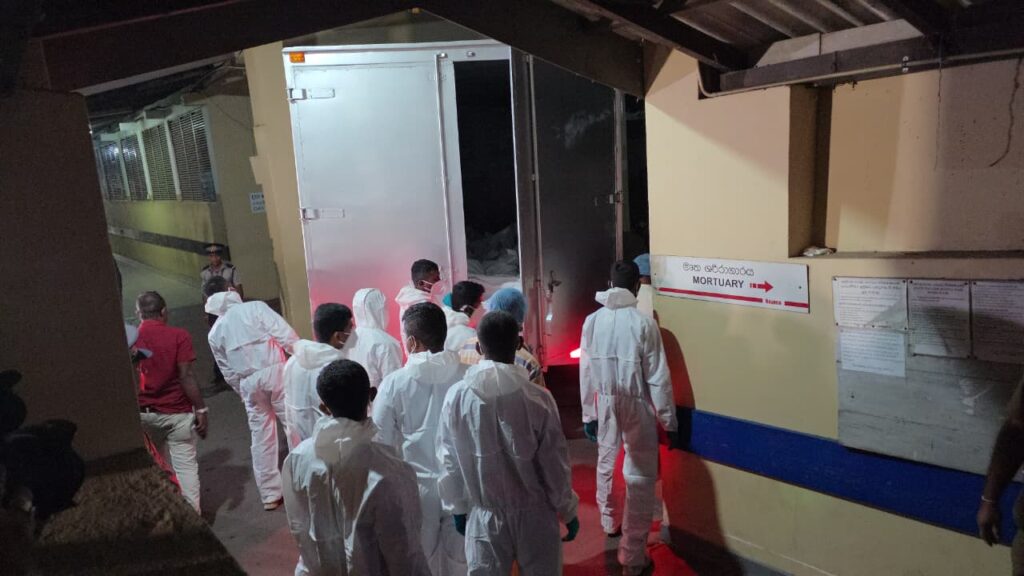
Over 80 dead bodies recovered from the Iranian warship IRIS DENA were brought to the hospital morgue of the Galle National Hospital. Image courtesy of Farhan Nizamdeen.
Rescue operations after attack
There is growing concern following the sinking of IRIS DENA by the US Marines in international waters but within Sri Lanka’s EEZ.
Buddhika Sampath, spokesman for the Sri Lanka Navy, said the Navy first received an alert at 5: 08 a.m. on Wednesday (4), indicating that bodies had been sighted floating in the sea, rather than a direct distress call about an attack.
In less than an hour, the navy launched search-and-rescue operations in coordination with the Ministry of Defense and other authorities.
“At that moment, the priority was not to investigate the attack but to save lives on humanitarian grounds,” Sampath said.
Rescue teams brought 32 survivors ashore, all of whom were admitted to Galle National Hospital, with one individual currently receiving treatment in the intensive care unit. Authorities have so far recovered 87 bodies from the sea.
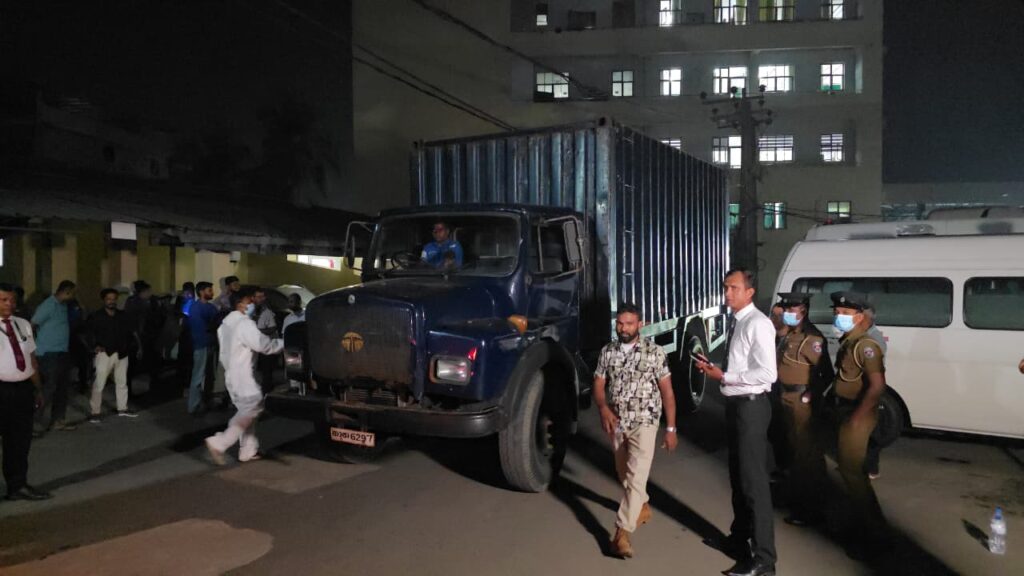
Jayatissa also noted that the hospital’s mortuary facilities had reached capacity. The government is therefore seeking assistance from the private sector to store the bodies, with two additional refrigeration units, are expected to arrive from Colombo, he said.
Attack linked to wider conflict
The ship sinking occurred against the backdrop of mounting hostilities in the Middle East, where the United States and Israel have been conducting strikes on Iranian targets, with Tehran responding through missile and drone attacks.
At a Pentagon press briefing, Pete Hegseth, U.S. Secretary of Defense, confirmed that a U.S. submarine had destroyed the Iranian vessel.
“An American submarine sank an Iranian warship that thought it was safe in international waters,” Hegseth said. “Instead, it was sunk by a torpedo. Quiet death.”
A video released by the Pentagon purportedly shows a large explosion striking the rear section of the vessel, causing severe structural damage and leading it to sink from the stern. Although independent verification of the footage is lacking, analysts pointed out that the vessel’s deck and mast closely resemble those seen in images of the Iranian warship IRIS DENA.
Staff awaiting to receive patients and the recovered bodies at the Galle National Hospital. Image courtesy of Farhan Nizamdeen.
Security implications for Sri Lanka
Security analysts warn that the incident highlights the growing strategic tension in the Indian Ocean, one of the world’s busiest maritime regions.
Mahil Dole, senior security analyst and former head of counter-terrorism at the State Intelligence Service (SIS), said the incident underscored the need for Sri Lanka to strengthen maritime surveillance.
“Sri Lanka must examine the Iranian crisis not only through a geopolitical lens but also through a social and national security perspective,” Dole said. “The incident sends a clear message that we must remain prepared and vigilant, as there is clearly an increasingly aggressive presence in the Indian Ocean.”
He noted that Sri Lanka currently lacks sophisticated undersea monitoring systems capable of detecting submarine threats.
“The Iranian ship itself may also have lacked the necessary facilities,” he said. “Otherwise, they would likely have detected the submarine. The vessel was reportedly used as a troop carrier in a naval exercise.
Diplomatic response and legal obligations
Former diplomat and retired admiral Jayanath Colombage noted that Sri Lanka’s response to the incident was guided primarily by international maritime obligations.
“As a maritime nation, Sri Lanka has a duty to respond to distress calls at sea,” he explained. “Under international conventions, we must rescue those in danger and bring them to safety.”
According to Colombage, diplomatic responses to incidents of this magnitude often require careful consideration rather than immediate public statements.
“Diplomacy does not always react instantly in the public domain,” he said. “A proper A response requires information from many sources. Until the Pentagon confirmed the attack, there was no certainty about what had actually happened.”
However, he cautioned that complete silence could also carry risks.
“Not Responding at all—acting as if nothing has happened—is not advisable.” Colombage noted. “This incident occurred very close to Sri Lanka’s maritime boundary and along one of the busiest shipping lanes in the Indian Ocean, where nearly 300 vessels pass each day.”
He added that the event raises broader concerns about maritime security in the region.
“What if There had been a mistaken identity involving a commercial vessel?” he asked. “Sri Lanka has long advocated for the Indian Ocean to remain a zone of peace. An incident like this is deeply concerning, and it may require at least a diplomatic message urging such actions not to occur near our waters again.”
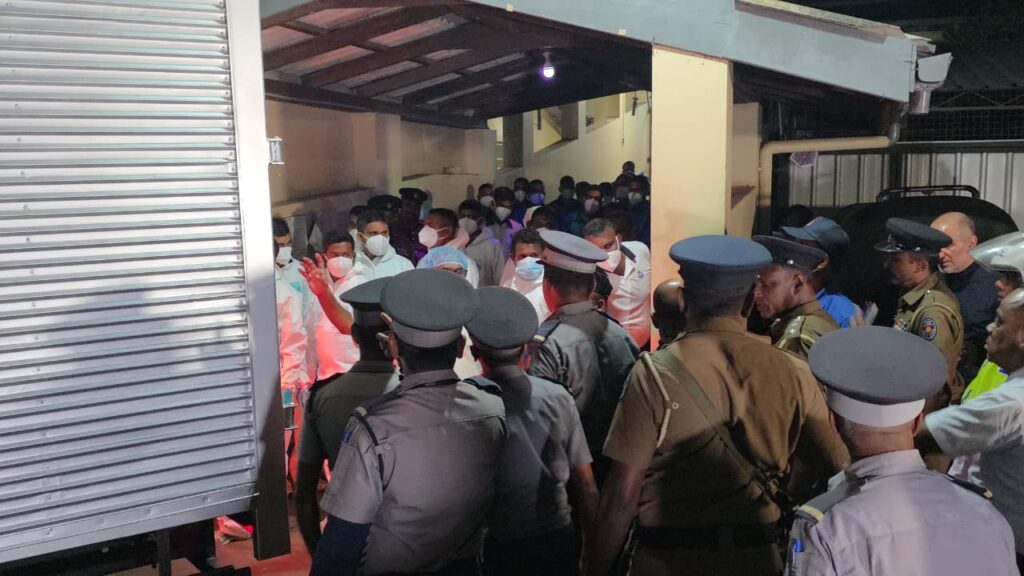
Heavy security presence was seen at the Galle National Hospital. Image courtesy of Farhan Nizamdeen.
Call for responsible political discourse
Amid the growing tensions, Jayatissa also urged political leaders and public representatives to avoid making speculative or inflammatory remarks.
With a war-like situation unfolding in the Middle East, he said, “This is not the time to make jokes, settle political scores, or provoke groups through the media or parliament using false or half-true information.”
Instead, he emphasized the need for responsible communication during a crisis with potentially global implications.
“Sri Lanka is acting in accordance with international law and responding to the unraveling humanitarian crisis to safeguard lives and maintain peace in the Indian Ocean,” the minister said.
COLOMBO – By the evening of March 1, queues had begun to snake out of filling stations once again — a sight that instantly transported many Sri Lankans back to the dark days of 2022.
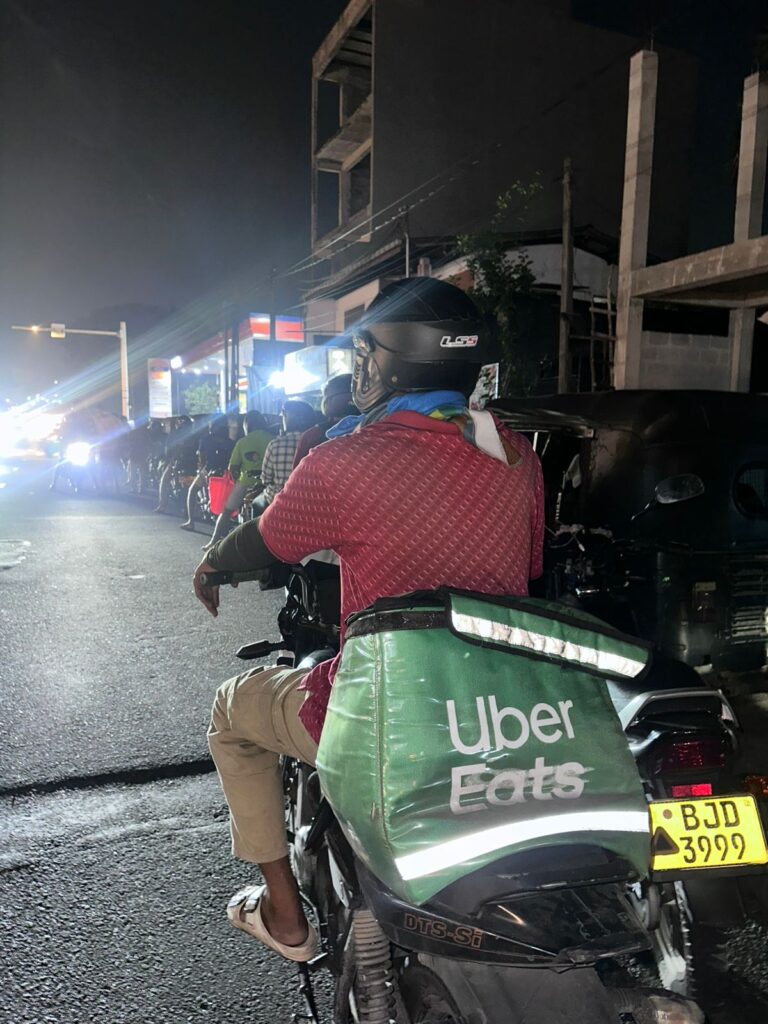
For 26-year-old Uber Eats rider Ranuka Dilshan, the long queue was more than an inconvenience. It was a threat to his survival.
“My petrol tank is almost empty, and I have a target to reach before midnight,” he said, visibly frustrated while waiting in line. “If I fail to meet today’s delivery expectations, I will not earn what I need at the end of the month. I don’t understand why people are trying to fill their tanks to the brim. How long are those stocks going to last anyway?”
For Ranuka, a few hours in a queue means losing peak delivery hours and ending up with what he describes as “a peanut income” that barely covers rent. Like thousands of ride-hailing drivers and delivery workers, his earnings depend entirely on staying on the road.
Across Colombo and in several other towns, similar scenes unfolded as motorists rushed to fill up their tanks following rising tensions in the Middle East.
Ranuka Dilshan has a long wait to pump fuel. Image by Gagani Weerakoon.
Why are Sri Lankans afraid?
The fear was triggered after Iran came under attack in the escalating Middle East crisis. While Sri Lanka does not primarily import refined petrol and diesel from Iran, a widespread public belief persists that the country depends heavily on Middle Eastern oil supplies.
For many citizens, the logic is simple: if the Middle East is unstable, fuel supplies will be disrupted. And if fuel is disrupted, Sri Lanka — still fragile after its worst economic crisis since independence— may experience hardships.
Memories of 2022 remain fresh. That year, a severe foreign exchange shortage left Sri Lanka unable to pay for fuel shipments. Vehicles queued for days. Public transport collapsed. Businesses shut down. Some people even slept in their vehicles for days to secure a few litres of petrol.
The trauma of that period has not faded, in fact rekindled by the unfolding crisis.
Even a rumour of disruption is enough to trigger panic buying. Many drivers fear that if they do not fill up today, they may not be able to obtain fuel the next day.
CPC: “No fuel crisis”
However, authorities insist that the situation today is quite different from 2022.
Shantha Rajakaruna, chairman of Ceylon Petroleum Corporation (CPC), told CIR that Sri Lanka has sufficient fuel stocks to avoid any shortage despite tensions in the Middle East.
“There is no fuel crisis in the country,” he stressed, urging the public not to panic.
According to Rajakaruna, current reserves, along with incoming shipments, are adequate for more than a month even if no additional cargo arrives and offered numbers:
• Overall fuel stocks are sufficient for 37 days
• Diesel stocks are adequate for 35 days
• Aviation fuel stocks will last 47 days
He explained Sri Lanka does not mainly import refined petrol and diesel from Middle Eastern countries. Recent shipments have arrived from India, Singapore, Malaysia, and South Korea, largely because freight costs are lower and distances are shorter.
Any potential impact from Middle Eastern instability would primarily relate to crude oil imports, he added. Even then, existing reserves would allow operations to continue for about a month.
Rajakaruna noted that unnecessary panic buying could create artificial shortages and disrupt distribution.
Shantha Rajakaruna, Chairman, Ceylon Petroleum Corporation (CPC) Image courtesy of the Department of Government Information.
Distribution strained by panic buying
While authorities maintain that stocks are sufficient, distributors admit that panic buying has temporarily strained supply networks.
The Sri Lanka Petroleum Private Tanker Owners’ Association (SLPPTOA) said it would take at least three days to fully normalize distribution across the country due to the sudden surge in demand.
Shantha Silva, Joint Secretary, SLPPTOA, said the dispatching of fuel from CPC storage terminals had already begun. However, he explained that transporting fuel to filling stations that had placed urgent orders takes time.
“Fuel stocks are being released, but delivery and redistribution cannot happen instantly,” he said.
The sudden spike in demand, driven by fears of supply disruptions linked to the Middle East war, led to long queues at stations and increased pressure on tanker operators.
Silva assured that fuel distribution activities would continue uninterrupted, to stabilize the situation as quickly as possible.
He urged the public to purchase only what is necessary, warning that panic buying prolongs recovery.
Fuel queues in suburban Kalubowila. Image courtesy of Adnan Cassim.
In a statement dated March 1, the Police Media Division said some individuals were attempting to stockpile fuel in cans, barrels, and other containers due to anxiety over provincial developments.
Police stations across the country have been instructed to work with filling station owners to prevent improper fuel collection.
Until further notice, fuel will not be dispensed into cans, bottles, or other containers except for legitimate needs such as fishing vessels, industrial operations, agriculture, and essential domestic purposes.
Police also warned investigations and legal action against those involved in hoarding, reselling fuel at inflated prices, or spreading false information about fuel shortages on social media.
Kumara Jayakody, Minister of Power and Energy, echoed the warning. He told CIR that legal action will be taken against individuals hoarding fuel and against filling stations that issue fuel for storage in barrels or cans.
“Issuing fuel to cans, barrels, and bottles is illegal,” he said, adding that law enforcement agencies have been instructed to conduct raids where necessary.
Jayakody emphasized that sufficient stocks are available for more than a month and appealed to the public to avoid unnecessary stockpiling.
In a move aimed at reassuring the public, the CPC issued fuel supplies on Sunday and distributed on Monday (Full Moon Day), days when fuel is usually not issued.
Kumara Jayakody, Minister of Energy. Image courtesy of the Department of Government Information.
QR code system may return
Muhammadu Ilyas Muhammadu Arkam, Deputy Minister of Energy, told CIR that the QR code fuel distribution system introduced during the 2022 crisis may have to be reactivated if panic buying continues.
“If people start gathering more fuel than required, we will have to resort to the QR code system again to manage distribution properly,” Akram said, reiterating that the country has sufficient fuel reserves.
The QR system, while effective in rationing fuel during the crisis, was also a reminder of severe scarcity — something many citizens hope never to experience again.
At the provincial level, officials sought to calm fears.
The Depot Superintendent of the Ceylon Petroleum Storage Terminal Ltd (CPSTL) branch in Matara, Chamila Hewagampolage, said there were adequate stocks for three days and assured uninterrupted supplies from the Kolonnawa and Muthurajawela terminals.
As of Sunday (1), Matara alone had 300,000 liters of diesel and 350,000 liters of petrol in reserve.
Fuel had already been distributed to stations in Matara town, while southern stations in Tangalle, Dikwella, and Hakmana were scheduled to receive supplies within hours. Deliveries were also being made to Thanamalwila, Suriyawewa, and Kirinda.
“The panic buying will only lead to unnecessary exhausting of prevailing stocks,” he noted.
Fuel queues in Nugegoda. Image courtesy of Adnan Cassim.
Fear vs. reality
The current rush appears driven more by fear than by an actual supply breakdown.
Sri Lanka’s economic recovery remains fragile. The country only recently stabilized its foreign reserves, restructured debt, and restored regular fuel imports. For many citizens, the mere possibility of disruption feels like standing on the edge of a cliff again.
There is also a deeper psychological factor at play. In 2022, official assurances often preceded worsening shortages. As a result, public trust in institutional reassurances remains low.
For workers like Ranuka Dilshan, however, the issue is immediate and practical. He does not analyze geopolitical supply chains. He calculates kilometers and delivery targets.
“If this panic buying leads to an actual shortage like in 2022, that will be the end of the story for us in rider and delivery services,” he said.
For him and thousands of others in the gig economy, fuel is not just a commodity — it is income, rent, groceries, and survival.
As authorities continue to insist that stocks are stable and distribution uninterrupted, the coming days will test whether reassurance can outweigh memory.
For now, the queues stand as a powerful reminder: in Sri Lanka, fuel is not merely about energy, it is about confidence.
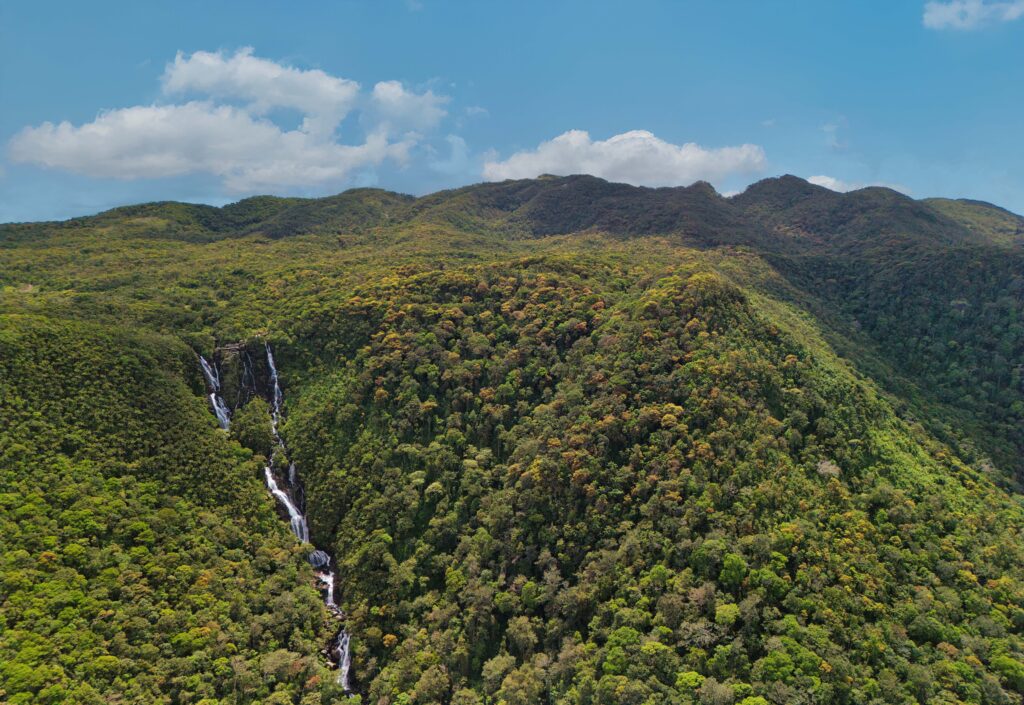
Unprotected forest patches around Sri Lanka’s Kanneliya rainforest, a globally recognized biodiversity hotspot, face ongoing deforestation.
Despite a 2004 decision to absorb them into the country’s protected area network, delays have enabled continued forest clearance and degradation.
An open-source intelligence (OSINT) investigation by CIR highlights how forest and tree cover loss occurred in five adjacent administrative areas from 2002 to 2024.
One of South Asia’s most biodiverse and floristically rich lowland rainforests, Kanneliya is a critical catchment area for the Gin and Nilwala rivers.
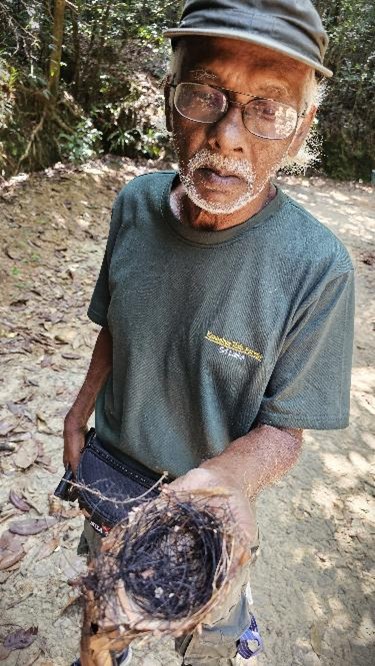
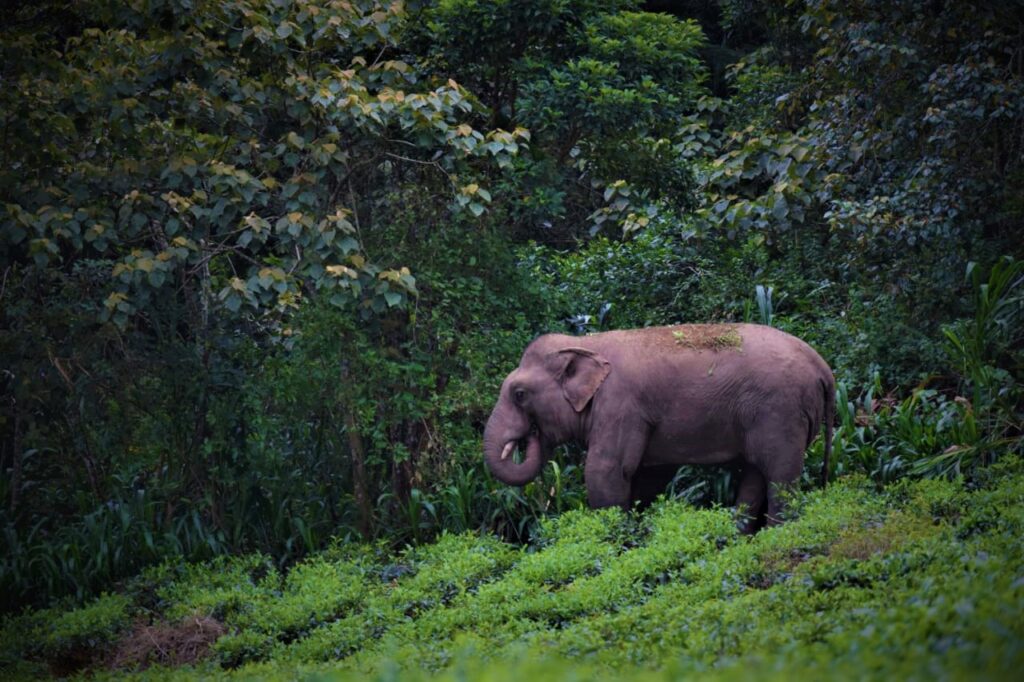
KANNELIYA, Sri Lanka— Seventy-four-year-old Gunadasa Pathirana is a senior wildlife guide in Kanneliya, a rainforest located in the southern district of Galle. Hailing from Koralegama, a village bordering the Kanneliya forest, Pathirana daily encounters a remarkable array of wild animals ranging from rare horned lizards (Ceratophora aspera) and endemic green pit vipers (Trimeresurus trigonocephalus) to vibrantly hued birds, but he continues to miss sighting his favourite animal: the elephant. (Elephas maximus maximus).
Spanning over 10,139 hectares (101.39km²), the Kanneliya forest reserve is a lowland rainforest recognized by UNESCO as a man and biosphere reserve for its exceptional biodiversity. Situated 35 km northwest of the city of Galle, Kanneliya serves as a major catchment area for Gin and Nilwala, two important rivers in the island’s south, and is home to many endemic plants and animals.
“This forest was once marked by the footprints of majestic elephants, but by now, Kanneliya has lost them all. There is a great sense of loss within me,” Pathirana says.
Gunadasa Pathirana, a field guide from a village bordering Kanneliya rainforest, now earns a living by guiding tourists visiting the Kanneliya forest reserve. Image by Malaka Rodrigo.
He recalls a time when herds of elephants roamed the forest. “I have seen at least three elephants feeding on paddy in a field near my home. In the mid-80s, I had this memorable moment late at night, watching their silhouettes move majestically in the soft moonlight, which was magical,” Pathirana reminisces.
Sadly, Kanneliya lost its last elephant in 1997, he says.
In the past, these forested landscapes were interconnected, allowing elephants to move freely between regions. Over time, those ecological corridors were severed, isolating the Kanneliya elephant herd and possibly leading to their disappearance from the wild, he says.
The recently cleared forest at Pattiyathenna forms part of a corridor used by the remaining Sinharaja elephants along their traditional annual routes. Forest clearance could result in human-elephant conflict, as elephants seek alternative paths. Image courtesy of Nisal Pubudu.
An ecosystem haven
Sri Lanka’s rainforests are among the most biologically rich ecosystems in South Asia, harbouring an extraordinary level of endemism within a relatively small island. Found mainly in the southwestern wet zone, these forests—including Sinharaja, Kanneliya, Dediyagala, and Nakiyadeniya—play a vital role in regulating rainfall, maintaining river catchments, and preventing soil erosion.
The Kanneliya–Dediyagala–Nakiyadeniya, collectively known as theKDN forest complex, is one of the last remaining large tracts of lowland tropical rainforest in the country outside the Sinharaja World Heritage Site.
Sinharaja and Kanneliya forests are recognized as UNESCO Man and the Biosphere sites and daily attract many visitors, including international tourists. Image by Malaka Rodrigo.
Numerous ecological studies and historical analyses support the assertion that the Sinharaja forest reserve and the KDN forest complex were once part of a vast, contiguous expanse of tropical lowland rainforest that stretched across the wet zone of southwestern Sri Lanka.
Historical land use, particularly during the British colonial period, caused extensive deforestation for tea and rubber plantations, breaking this once-continuous rainforest belt into isolated forest blocks.
In “Sinharaja: A Rain Forest in Sri Lanka,” de Zoysa and Raheem (1990) note that continuous forest cover likely existed between Sinharaja and KDN less than 200 years ago, and traces of this former connectivity can still be seen in intermediate forest patches and river catchments.
Supported by the United Nations Educational, Scientific, and Cultural Organization (UNESCO) and the International Union for Conservation of Nature (IUCN), Sri Lanka has since recognized this ecological history and proposed the creation of biological corridors, which are stretches of habitats that connect isolated protected areas, allowing wildlife to migrate, forage, and disperse safely. Linking these isolated forest patches in biodiversity-rich lowland rainforests through reforestation and conservation initiatives is now central to long-term biodiversity planning efforts.
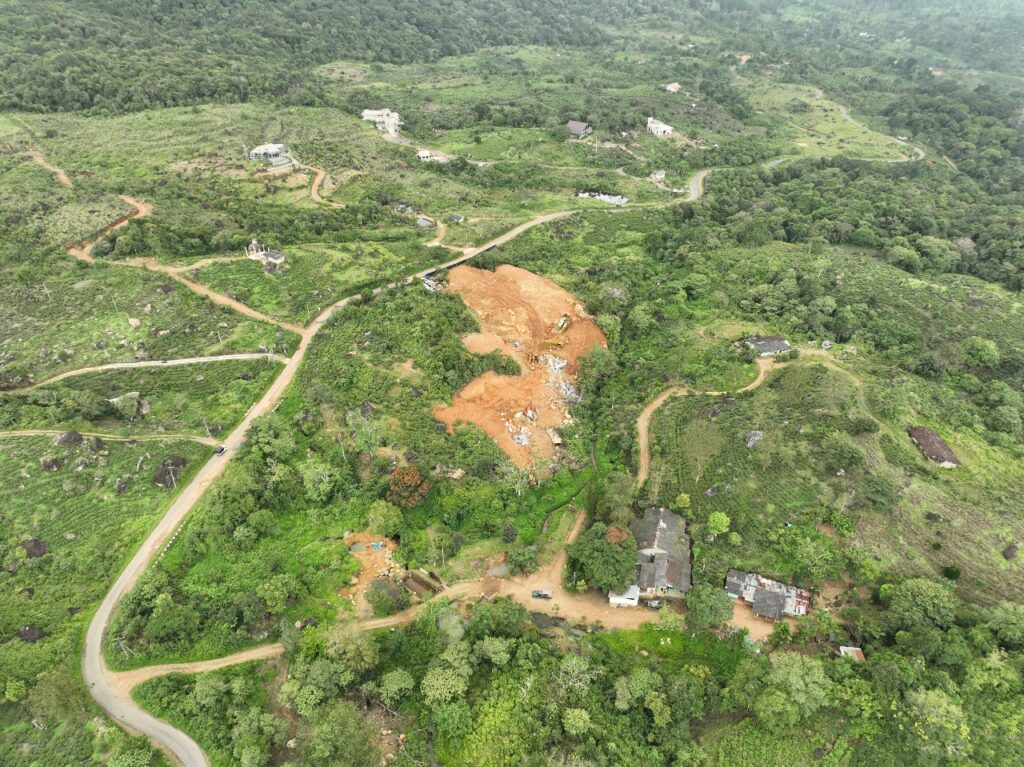
Aerial view of ongoing forest clearance in Botiyathenna, where gradual encroachment by tea and other agricultural plantations continue unhindered. Image courtesy of Sajeewa Chamikara/ Movement for Land and Agricultural Reform (MONLAR).
Declining forest cover
Over time, it is not just the elephants that went missing in Kanneliya.
There is evidence that Kanneliya, an ecologically, hydrologically, and socially significant lowland forest forming a part of the KDN forest complex, has experienced continuous deforestation.
This OSINT-led investigation draws on satellite-based forest monitoring data and geospatial analysis conducted through Global Forest Watch (GFW), EOSDA LandViewer, and QGIS to track deforestation over a period of 22 years.
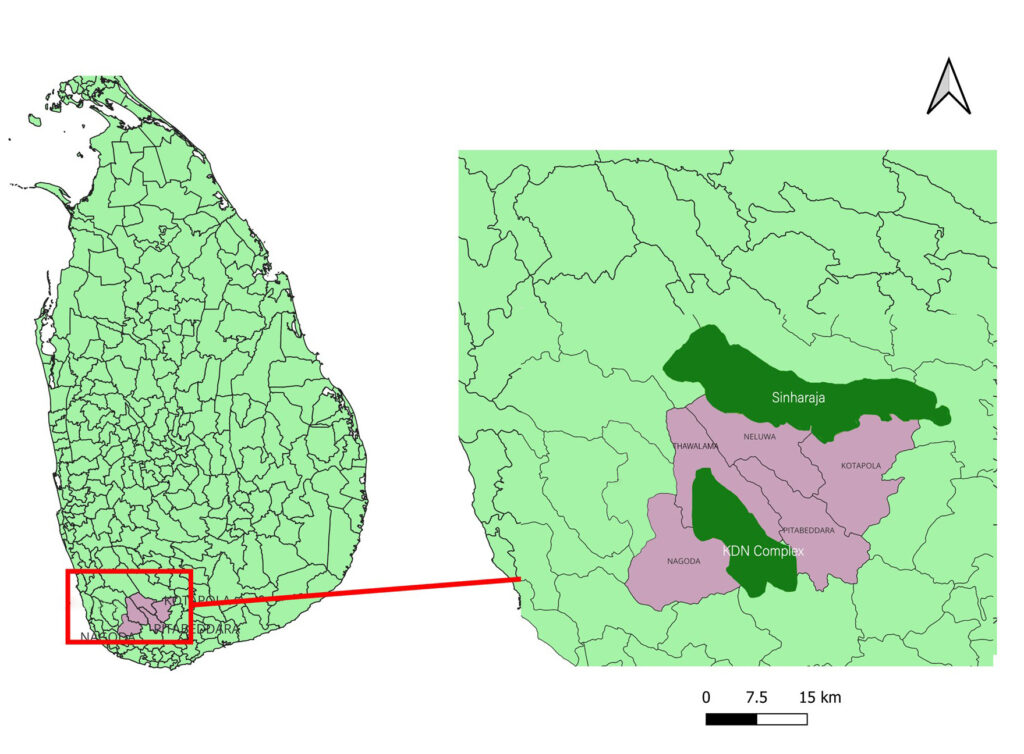
Five administrative areas adjacent to the Sinharaja forest reserve and the Kanneliya–Dediyagala–Nakiyadeniya (KDN) forest complex. Map by Ayodhya Kiriella.
Global Forest Watch (GFW), a free online platform offering near real-time data on forest cover change, shows how five administrative areas that surround Sinharaja and KDN kept losing forest and tree cover.
Geospatial maps generated using the GFW data show how deforestation has taken place over the past two decades in these administrative divisions adjacent to the forest boundaries—Nagoda, Thawalama, and Neluwa in the Galle District and Kotapola and Pitabeddara in the Matara District.
GFW records tree cover through satellite imagery, capturing all woody vegetation above a defined height threshold—typically five meters or more. This includes natural forests, plantations, tree crops, and trees lying outside forested areas.
In contrast, forest cover, as defined in traditional forest assessments such as the Food and Agriculture Organization’s Forest Resources Assessment (FRA), combines tree presence with land-use category, requiring the area to be officially classified as forest and to meet specific ecological criteria.
This investigation offers a comparison of forest and tree cover loss during 2002-2024 across the selected areas and shows how vegetation decline varied from one area to another.
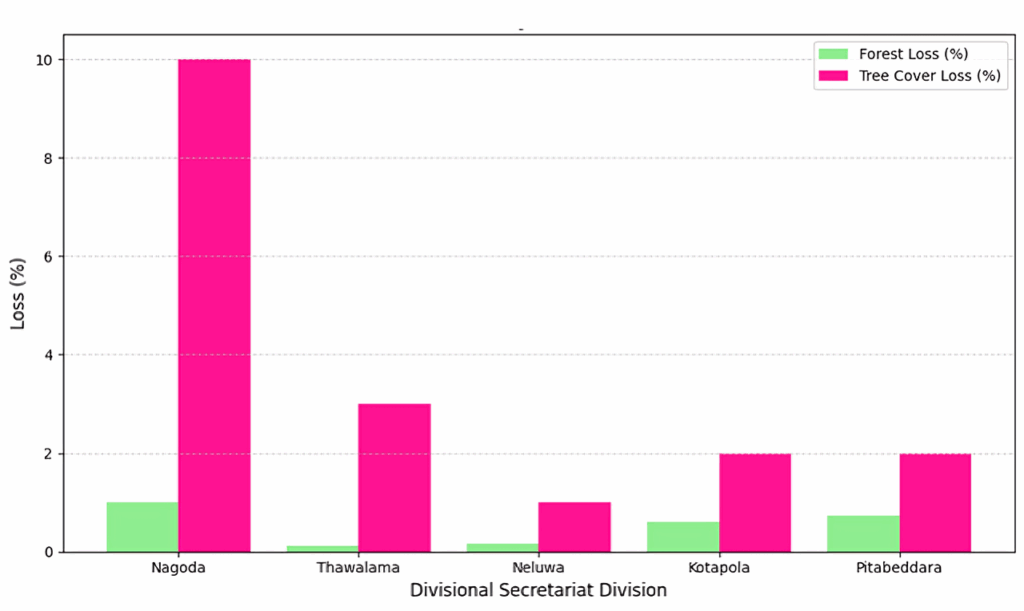
Forest loss vs tree cover loss by Divisional Secretariat areas generated using GFW data from 2002 to 2024. Graph by Ayodhya Kiriella.
The Nagoda region recorded a 1% forest cover loss, while the area’s tree cover loss was as high as 10% during the same period, the highest among the five divisions. Data analysis shows significant tree removal outside the officially classified forests. Tree removal means the loss of trees in an area due to natural events such as storms and floods or human activities such as logging, farming, construction, and land clearing.
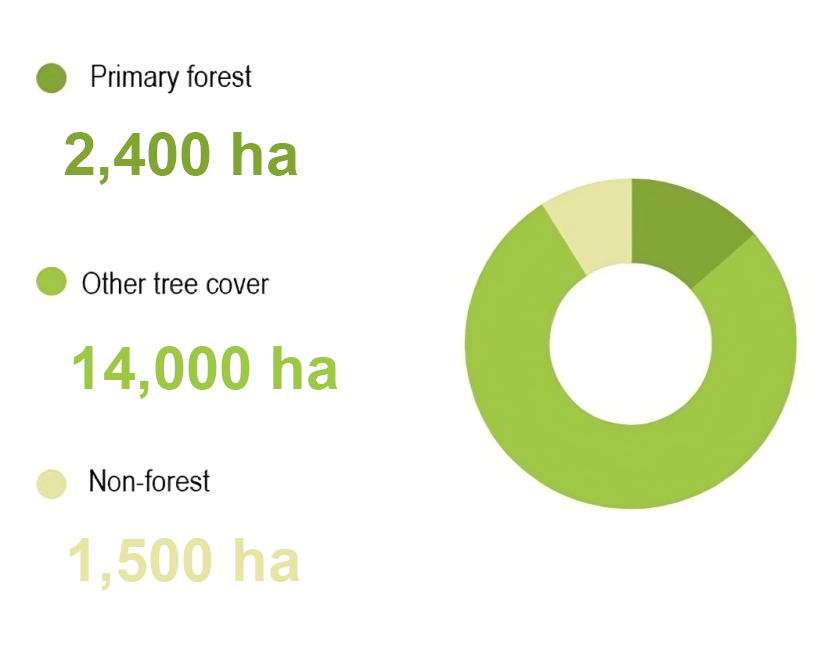
Nagoda covers a total land area of approximately 17,500 ha (175 km²). In 2000, approximately 91% of the land was covered by trees with a canopy density of over 30%. By 2001, about 14% of Nagoda’s total tree cover was classified as primary forest.
Classification of tree cover in the Nagoda region in 2024 Source: Global Forest Watch (GFW)
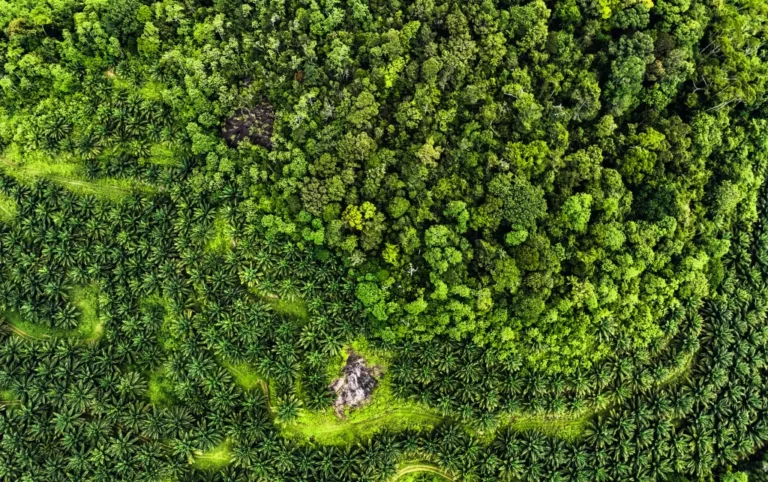
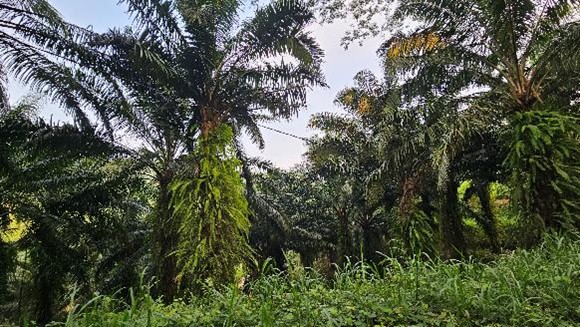
Data from 2002 to 2024 shows how oil palm has become the dominant plantation crop, spanning 3,400 ha (34 km²) and covering 20% of the total land area.
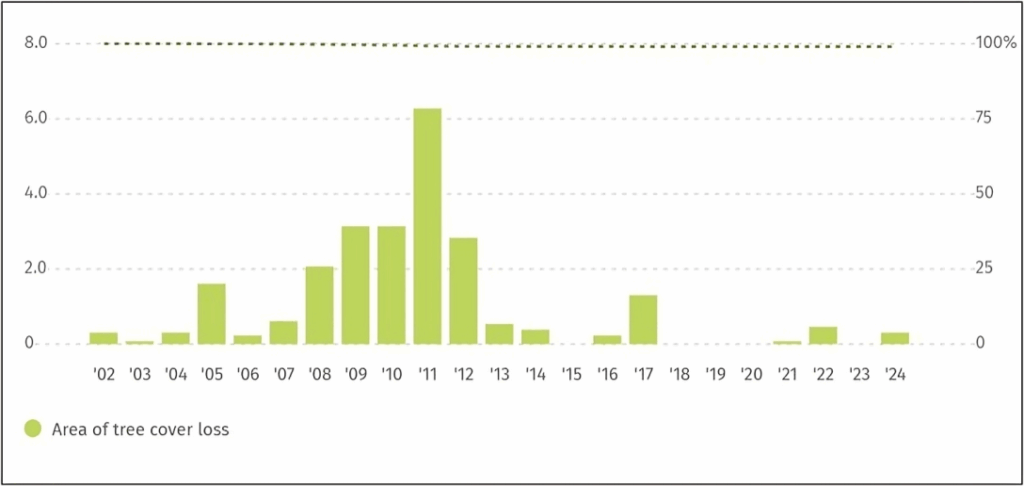
Nagoda has lost 24 hectares (0.24 km²) of humid primary forest during the 20 years, accounting for a 1.0% decline in forest cover. The loss of forests is not uniform across the years but shows a spike in specific years—from 2009 to 2012—with 2011 as the peak year.
Loss of primary forest in the Nagoda area from 2002 to2024. Source: Global Forest Watch (GFW).
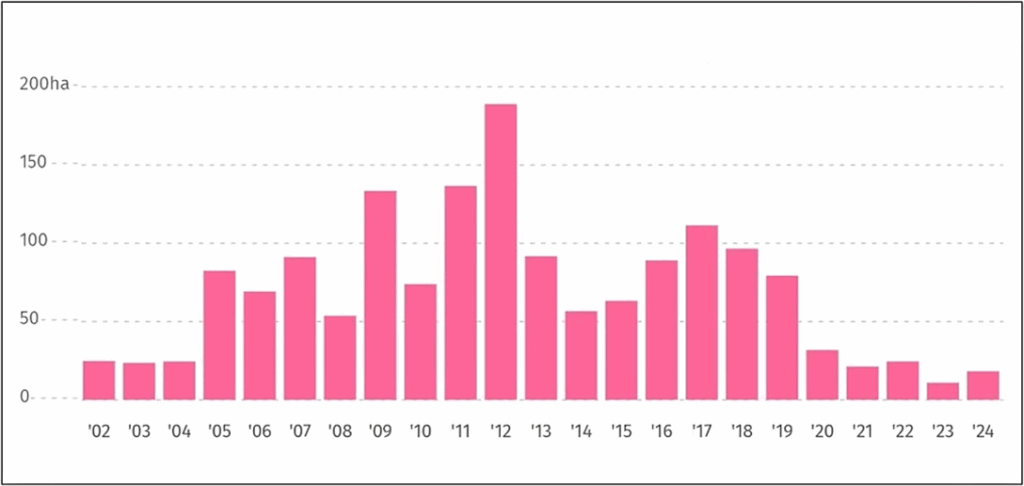
A temporal analysis between 2002 and 2024 shows that Nagoda has lost 1,600 ha (16 km²) of tree cover and about 10% tree cover by the year 2000.
Geospatial mapping also showed tree cover loss to be high around 2009, 2011, and 2012, with 2012 recording the highest loss.
Loss of tree cover in Nagoda from 2002 to 2024. Source: Global Forest Watch (GFW).
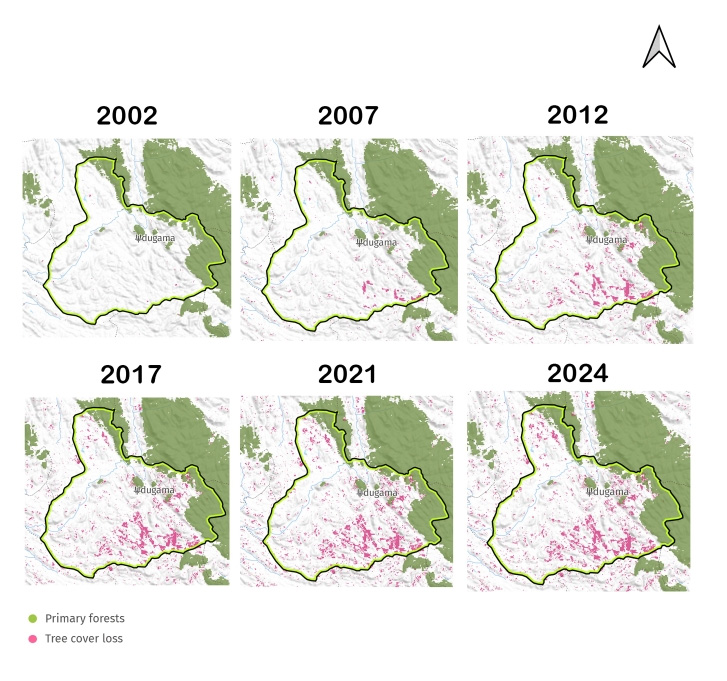
The following five-year interval map series illustrates the spatial pattern of tree cover loss from 2002 to 2024.
Tree cover loss recorded in Nagoda from 2002 to 2024. Map by Ayodhya Kiriella. Source: Global Forest Watch (GFW).
A LandViewer analysis showed a spatially fragmented pattern of deforestation across the Nagoda landscape rather than large, continuous clear-cut areas.
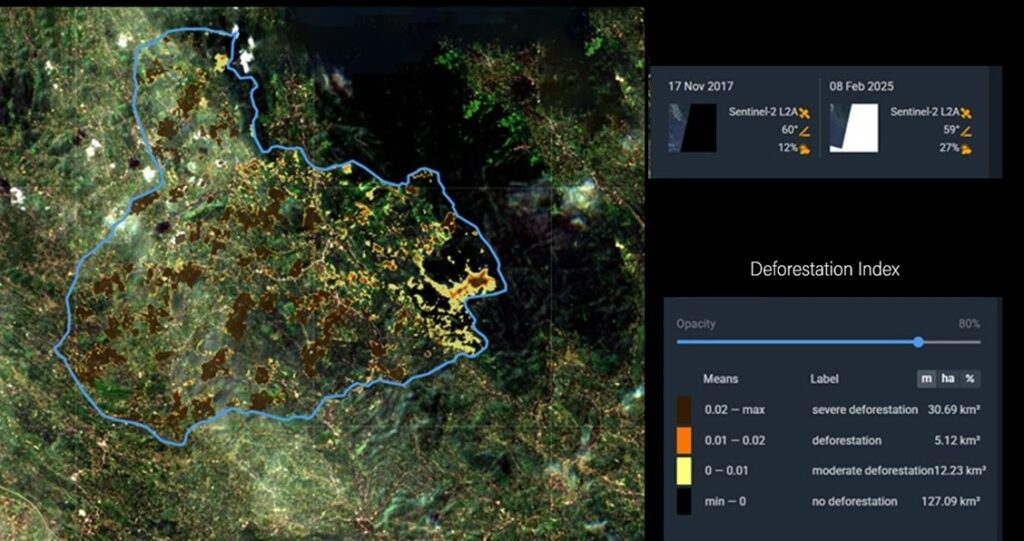
Deforestation Index in Nagoda from 2017 to 2025. Map by Ayodhya Kiriella.
The deforestation index derived from Sentinel-2 L2A imagery (from 2017 to 2025) shows a clear quantitative pattern of forest disturbance across the Nagoda landscape covering approximately 17,500 ha (175 km²). Severe deforestation accounts for about 3,069 ha (30.69 km²), representing approximately 17.5% of the total area, and occurring in distinct, fragmented patches across the interior and edges of the landscape. The satellite images (from 2017 to 2025) show a clear pattern of forest loss in the Nagoda area, which covers about 17,500 ha (175 km²).
Severe deforestation is found around 3,069 ha (30.69 km²), making up about 17.5% of the total area. The forest loss appears in scattered and fragmented patches, both within the interior and along the edges of the landscape.
Alarming loss of natural forests
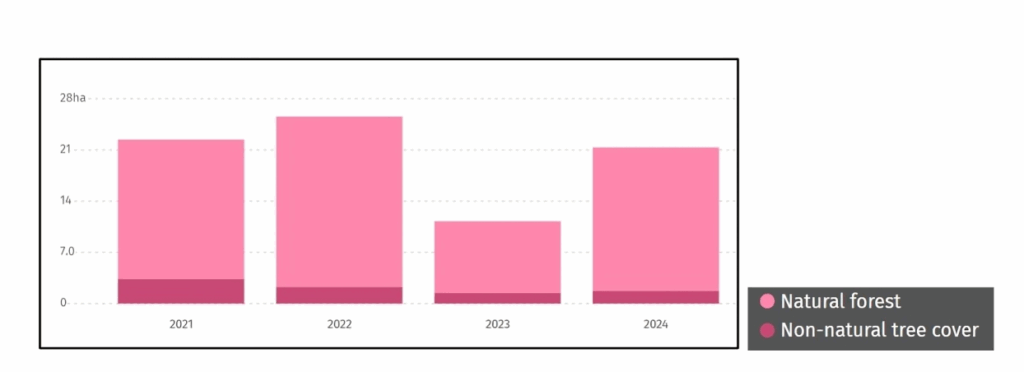
GFW’s updated indicators from 2021 to 2024 show an 89% tree cover loss in Nagoda within natural forests, totaling 72 ha (0.72 km²), reflecting fluctuating pressures on the region’s forest ecosystems.
Loss of forest cover within natural forests in Nagoda from 2021 to 2024.
Drivers of tree cover loss
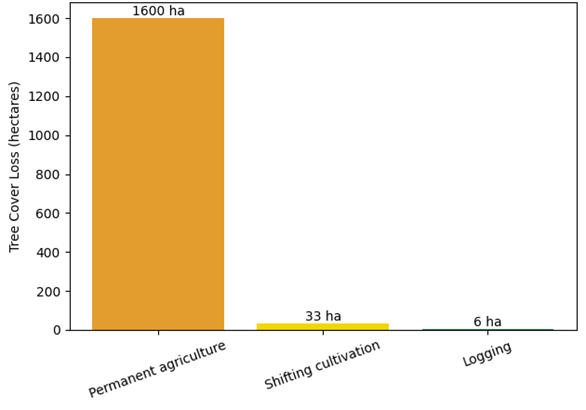
Further data analysis shows how Nagoda kept losing its tree cover, with logging, shifting cultivation practices, and permanent agricultural activities driving deforestation. Approximately 98% of total tree cover loss occurred in areas where these dominant drivers led to long-term land-use change.
Key drivers behind Nagoda’s tree cover loss from 2002 to 2024. Source: Global Forest Watch (GFW).
Nagoda’s deforestation was mainly driven by permanent agriculture, accounting for about 1,600 kha (16 km²) of tree cover loss, highlighting continuous conversion of forested land into agriculture. In contrast, temporary disturbances caused only minor losses, with shifting cultivation responsible for approximately 33 ha (0.33 km²) and logging for about 6 ha (0.06 km²).
GFW data highlights how permanent agriculture caused a continued deforestation pattern, resulting in irreversible forest conversion, rather than short-term or rotational land-use practices. In addition, GFW has another reason—forest fires—driving approximately 3 ha (0.03 km²) of total forest loss in the area.
Despite the GFW data showing the actual decline of forest and tree cover, government officials denied deforestation to be real. “There is no deforestation here,” U.V.A. Sarojani Sewwandi, Homadola village officer, told CIR. “Not to my knowledge,” she insisted.
Vishan Pushpamal is a conservationist who has been researching Kanneliya and its environs for over two decades. Before Kanneliya was recognized as a conservation forest, trees had been felled to supply timber to the State Timber Corporation. “This happened from 1968 to 1988. In 1990, Kanneliya was declared a forest reserve and, in 2004, a man and biosphere reserve, increasing its protection,” says Pushpamal.
The forests surrounding the picturesque Handapanella Falls in the Sinharaja forest reserve are under threat of deforestation. Image courtesy of Vimukthi Weeratunge.
When water runs dry
The ongoing deforestation has real consequences for the local people, and their main problem is water scarcity.
Every time there is a shortage, Selvi Veerani, 61, fetches drinking water in clay pots from a nearby well. “When it rains, we have water,” she says. “When there is no rain, we don’t have water, and we go in search of water.”
Veerani has lived in Udugama for nearly 40 years, a village bordering the Kanneliya forest reserve. She recalls a time when drinking water was not a luxury or tied to rainfall. “Back then, we had enough,” she said.
For generations, families living on the edges of Sri Lanka’s tea estates have traditionally drawn their drinking water from natural springs tucked within forest patches that have survived the expansion of colonial plantations.
The springs have sustained communities long before pipe-borne water schemes were introduced to the island and remain their main water source to date.
“But that delicate balance is under threat,” says Indi Akurugoda, a senior lecturer at the Department of Public Policy, University of Ruhuna, who studied Homadola, a locality bordering the Kanneliya forest, for her research, which delved into the expansion of commercial plantations and public agitation for water.
“These forests act as natural catchments, feeding springs that villagers rely on for their daily water supply. A conflict brewed when the estate administration suddenly started clearing the remaining forests to plant oil palm. Villagers wisely linked forest loss to the drying up of water sources. Public resistance emerged from the awareness that their survival was tied to these forests,” notes Akurugoda.
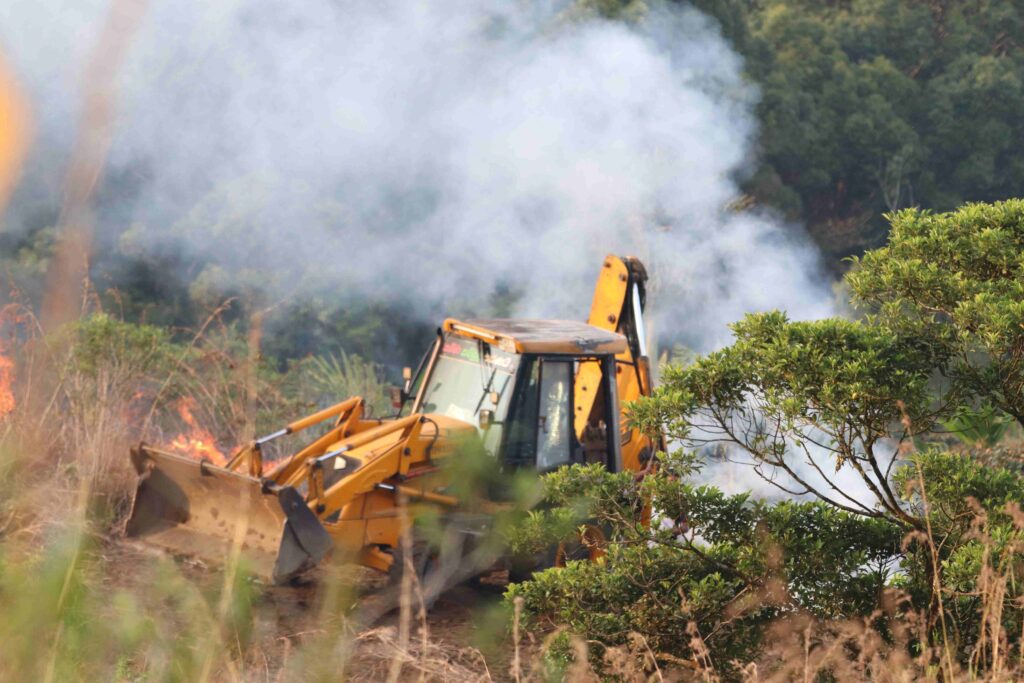
Heavy machinery has been deployed to clear forests in Botiyathenna, a forest currently administered by the Land Reform Commission (LRC). Image courtesy of Sajeewa Chamikara/ Movement for Land and Agricultural Reform (MONLAR).
Need for conservation
Ranil Senanayake, a systems ecologist who established the concept of analog forestry in 1980, notes that between 1990 and 2010, Sri Lanka had lost an average of 24,500 ha (245 km²) – or 1.04%of its forests each year.
“This is about 20.9% of its forest cover, or around 417,000 ha (4,170km²). A forest contains a huge array of organisms that continually change in form and function. It is the biodiversity of a forest that signals its identity,” he says.
These small forest patches on many Sri Lankan landscapes usually represent the only habitat for rare indigenous or endangered species. “The ability of the areas presently scheduled or under protection is unable to provide habitats for all the species represented in Sri Lanka. This is due to the many different ecosystems arising from past geologic history that lie outside currently scheduled areas,” notes Senanayake.
Forests are not just repositories of biodiversity but are critical contributors to the atmospheric water reservoir. “Through the action of photosynthesis, 100 molecules of water are released for every molecule of carbon fixed. Sri Lanka’s forests contain about 61 million metric tons of carbon in living forest biomass, or about 6.1 million tons of photosynthetic biomass. The forests in Sri Lanka release over 600 million tons of water into the atmosphere annually, cleaned of impurities and contributing to rainfall over the island,” he says.
It is this hydrological activity of a forest and its capacity to contribute to and retain local rainfall that makes it so valuable, says Senanayake, adding, “With increasing climate insecurity, the water functions of a forest must be recognized as a critical national need.”
With 50 out of 51 freshwater crab species found in the country being endemic, some of them are also found in Sri Lanka’s lowland rainforest. Image by Vimukthi Weeratunge.
A unique home
The Kanneliya forest is home to a range of remarkable species and a biodiversity hotspot. “Sri Lanka is among the 36 global biodiversity hotspots due to high endemism in both plants and animals,” says Sandun Perera, who holds a PhD in environmental sciences and IUCN’s program coordinator.
“Much of the endemism is concentrated within the wet zone, approximately one quarter of the island. This includes the southwestern region and the entire central highlands. The eastern part of the central highlands forms an intermediate zone but is considered a relatively wet zone. The entire area, including the lowland wet zone, is therefore considered the crucible of endemism,” he explains.
According to conservationist Pushpamal, there are around 301 recorded plant species within Kanneliya. It is home to 41 species of reptiles, including four venomous species such as the Ceylon krait (Bungarus ceylonicus) and hump-nosed pit viper (Hypnale hypnale).
Around 58 bird species, 32 butterfly species, 18 mammals, and six out of 22 lizard species found in Sri Lanka can be spotted at Kanneliya. These include endemic species such as the hump snout lizard (Lyriocephalus scutatus), rough-nosed horned lizard (Ceratophora aspera), and Sri Lankan kangaroo lizard (Otocryptis wiegmanni), he notes.
Scientific studies show that Kanneliya forest reserve has exceptionally high plant species richness and diversity. Historically, this forest was much larger, extending all the way to Galle and also connected to the Sinharaja forest, he adds.
Endemic red-faced malkoha (Phaenicophaeus pyrrhocephalus) is an iconic bird associated with the canopy of the rainforests for their survival. Image courtesy of Vimukthi Weeratunga.
A wildlife in peril
Dinarzarde Raheem, a malacologist at Rajarata University, notes that many endemic species would have been driven to extinction well before extensive exploration of the Sri Lankan biota began in the 19th century.
“We do not really know because we have no data on species that were present prior to the colonial period,” says Raheem.
“The threats they face include not just decline in forest cover but also the degraded state of the forests in the northern wet lowlands. In the Udugama/Homadola area, as in other parts of the wet and intermediate zones, there are plantations where fields are periodically abandoned, sometimes for decades, and then recultivated, she adds.
“Deforestation in upstream areas can negatively affect downstream protected habitats, as increased sedimentation and altered habitat quality degrade ecological conditions,” he tells CIR.
Meanwhile, conservationists argue that transferring ecologically important LRC forests to the Department of Forest Conservation would confer stronger legal protection and safeguard water catchments and biodiversity. “Forest cover in parts of the wet zone has rapidly vanished, putting locally endemic species at high risk,” adds Raheem of the Rajarata University.
Hump-nosed lizard (Lyriocephalus scutatus), the largest agamid lizard endemic to Sri Lanka is found only in dense wet zone forests. Image by Malaka Rodrigo.
Urgent challenges
“There are ongoing efforts to reclaim approximately 304 acres (3.04 km²) of land with vegetation similar to Kanneliya,” according to a forest officer connected to the Kanneliya reserve. Speaking on the condition of anonymity, he says, “This area was formerly an estate, but over time, portions were encroached upon or sold off. Some of these land issues date back to the 1970s. The Land Reform Commission (LRC) lacks documentation for some of these lands, which complicates the process of reclaiming land.”
A local activist who wishes to remain anonymous adds: “The forest has been gradually encroached upon through small-scale land grabbing.
Some of the remaining forests belong to private owners, but within these areas, large swathes of wilderness fall under the LRC. These forests are not automatically part of Sri Lanka’s formal protected area network, leaving them more vulnerable to development or changing land use.”
As oil palm plantations continue to expand in the rainforest areas, environmentalists warn against serious disruption to fragile ecosystems in these landscapes. Image by Malaka Rodrigo.
Jayantha Wijesinghe, chief coordinator of the Rainforest Protectors of Sri Lanka, tells CIR that over 2,500 ha (25 km²) of LRC lands adjoining the Sinharaja and the KDN forest complex have been identified as important forests decades ago, though there had been no move to include them within the formal protected area network yet.
Although this process began in 2004, delays have allowed nearly 405 ha (4.05 km²) of identified forest areas to be cleared, fragmenting habitats and threatening water sources and biodiversity. Irregular land use and questionable ownership claims have further accelerated environmental degradation in several estate areas bordering the forests, Wijesinghe tells CIR.
“Given the risk of irreversible damage, we urge the government to treat these acquisitions as an urgent national priority, ensuring coordinated and time-bound action,” adds Wijesinghe.
“There’s more deforestation taking place in the dry zone,” says Palamakumbura.
The department has already demarcated boundaries in major forests in the wet zone. There are several small forest patches to be demarcated that have been adopted into the 2026 action plan, he adds.
Meanwhile, there are plans to acquire LRC lands adjacent to the Sinharaja and Knuckles forest reserves. “Some lands are natural forests, while others are plantations. The acquisition process is ongoing. But before that, they need to be surveyed, boundaries clearly demarcated, and private landowners spoken to about willingness to hand over lands. In some lands, boundaries are unclear,” he explains.
But conservationists claim that delays contribute to further deforestation. “For example, the order to protect Homadola Mukalana was given in the early 2000s. Two decades later, the forests are still being cleared,” says Hemantha Withanage, senior advisor to the Center for Environmental Justice (CEJ).
It is rare for sunlight to penetrate the dense rainforest canopy of forests such as Kanneliya forest reserve, a habitat that supports Sri Lanka’s highest biodiversity per unit area. Image by Malaka Rodrigo.
A silver lining
With attempts to increase protection and acquire LRC lands to create a necessary buffer, other efforts too are underway to protect the KDN forest complex.
The Endane Biodiversity Corridor by Dilmah Conservation was initiated in 2018 when the founder of Dilmah Tea, Merrill J. Fernando, symbolically removed some tea bushes in a strip of land on the Endane Estate to begin linking two fragmented forest reserves: the proposed Iharakanda forest reserve and the Walankanda forest reserve. The area is close to the Sinharaja rainforest reserve, which makes its ecological importance especially high.
“Protecting and reconnecting the fragmented Sinharaja landscape is critical to sustaining Sri Lanka’s rainforest biodiversity, as this connectivity strengthens genetic diversity, reduces local extinctions, and supports long-term ecosystem resilience,” says Nalaka Geekiyanage, co-lead scientist of the Endane Biodiversity Corridor project.
Highlighting the corridor’s significance, Geekiyanage explains the need to protect vital water catchments to help buffer communities against climate-related impacts such as floods and landslides.
The forest restoration must go beyond planting popular or fast-growing trees, instead prioritizing threatened native species that naturally occur in the area. Through dedicated nursery efforts, more than 120 locally threatened plant species are now being propagated to strengthen true ecological recovery of this biodiversity corridor, adds Geekiyanage.
Gunatilleke, C. V. S., Gunatilleke, I. A. U. N., Ethugala, A. U. K., & Esufali, S. (2004). Ecology of Sinharaja Rain Forest and the Forest Dynamics Plot in Sri Lanka’s Natural World Heritage Site. Colombo: WHT Publications (Pvt.) Ltd.
Digital rights researcher and disinfo analyst, Dr. Sanjana Hattotuwa noted that chameleon ads, proxy page networks, and pink slime ops., first documented in SL, have since emerged in other democracies
Sri Lanka’s 2024 Presidential and Parliamentary Elections took place in an information environment that, at first glance, appeared familiar. Social media feeds were filled with political commentary, memes, and campaign messaging much like in previous elections. However, the nature of electoral influence had changed in ways that were less visible and far more difficult to track. What once showed up as obvious falsehoods has given way to subtler forms of manipulation that rely on emotional cues, selective amplification, and coordinated activity that looks organic to the ordinary user.
This shift mirrors trends seen in elections across the world, where influence campaigns increasingly operate in the space between fact and persuasion rather than through outright lies. To examine how these dynamics have played out in Sri Lanka, what they mean for electoral integrity, and why existing oversight mechanisms are struggling to keep pace, The Daily Morning spoke to digital rights researcher and disinformation analyst, Dr. Sanjana Hattotuwa, whose work spans multiple countries and political systems.
Following are excerpts of the interview:
You have studied information-related disorders across different regions and political systems. In the context of Sri Lanka’s elections, how has the nature of disinformation changed in recent years?
A: The difference between the 2019 and 2024 election cycles is striking and concerning. In 2019, the patterns were more visible. There were proxy Facebook pages, mock polls designed to spark emotional reactions, and misleading voter education content. Researchers and fact-checkers could follow these activities, trace their connections, and understand their effects, even if the tools for tracking them were far from perfect.
By 2024 however, the threat had evolved into something far more difficult to define or counter. The central challenge is that modern campaigns no longer need to rely on outright falsehoods. Instead, they operate as influence operations, focusing on shaping perception rather than making claims that can be fact-checked. Emotional priming, selective amplification, and the strategic use of ready-made audiences have replaced obvious lies as the primary tools of manipulation. Pages initially built for entertainment, gossip, or viral content are repurposed overnight to serve partisan ends. Administrators are paid to post content that never enters platform ad libraries, making it invisible to regulators and outside researchers. This shift represents a fundamental transformation in the ecosystem of disinformation. It now exists in the grey space between truth and manipulation, where the ordinary voter cannot easily distinguish between authentic and orchestrated content. Election commissions, civil society groups, and platform companies find their existing tools insufficient because they were designed to identify false claims rather than monitor the complex interactions of emotion, network effects, and algorithmic amplification.
The problem has become one of scale and subtlety. The content does not need to lie to succeed; it only needs to manipulate the lens through which voters perceive reality. The danger of this evolution is that it allows campaigns to operate under the radar, bypassing scrutiny from the institutions and frameworks designed to protect electoral integrity. It combines technical sophistication with an understanding of human psychology.
By leveraging the biases and emotional responses of ordinary users, these campaigns can shape collective perception in ways that feel organic. The result is a system where influence is pervasive, subtle, and exceptionally difficult to combat through traditional oversight mechanisms.
What are the most common forms of election-related disinformation today, and who benefits most from their spread?
The forms of manipulation have grown far more diverse, and that diversity itself is a challenge. Coordinated inauthentic behaviour remains central. Networks of Facebook pages, mostly repurposed from entertainment or gossip content, post identical or nearly identical material simultaneously. Administrators are often paid in cash to ensure that these posts never appear in ad transparency libraries. That means that regulators cannot track the spending or distribution of the material. Layered on top of this are chameleon ads that exploit gaps in moderation systems, websites that simultaneously produce disinformation and appear to fact-check it, and fabricated institutional reports designed to borrow legitimacy from authority. Short message service (SMS) campaigns targeting millions of users without consent also play a role, as do professionally designed infographics and reports that appear credible even when entirely false. These tactics allow manipulation to reach large audiences quickly. They shape perception long before any corrective information can intervene. Who benefits most depends on the structural advantage within a given system. Incumbents often have easier access to State resources, media infrastructure, and partisan networks capable of amplifying messaging.
Dark campaign financing also favours those with deep pockets and established networks. At the same time, organic engagement can counteract financial advantage. In 2024, Anura Kumara Dissanayake, a challenger with strong grassroots support, generated five times more Facebook shares than the incumbent and main Opposition candidate combined. This demonstrates that genuine popular momentum can amplify a candidate’s reach in ways that paid campaigns cannot fully replicate. Even though financial and institutional resources provide structural advantage, the unpredictable nature of viral content means that even challengers without access to the State or deep-pocketed networks can achieve a disproportionate influence. However, those with control over infrastructure, media access, and technical know-how retain the ability to manipulate narratives at scale.
Social media platforms play a central role in political communication. From your research, how does platform design and algorithms shape the visibility and impact of false or misleading election content?
Platform architecture is not neutral. Every design choice shapes what voters see, how they react, and what spreads. My research across multiple Sri Lankan election cycles shows that algorithms prioritise content that generates engagement. Emotional reactions, shares, and comments drive visibility. Content that triggers anger, fear, or excitement travels further than sober, fact-based reporting.
In the 2024 elections, coordinated networks exploited this systematically. Proxy pages posted identical content across multiple entertainment, gossip, and meme pages. Because engagement was high, the algorithm rewarded the content with increased organic reach. These posts were never paid advertisements and therefore remained invisible to ad libraries and most oversight tools. When the primary tracking tool for public page activity, CrowdTangle, was sunset in 2024, independent researchers were left almost entirely blind to these networks.
Language also plays a critical role. Sinhala-language content largely escapes platform moderation because the algorithms and human reviewers are poorly resourced for less commercially dominant languages. Coordinated campaigns that shape perception without making clear false statements operate in a grey zone. They remain undetected by standard moderation. Platforms profit from engagement, which means that content designed to provoke outrage or fear is naturally amplified. Until these incentive structures change, platforms will continue to function as accelerators of content that undermines electoral integrity rather than protecting it.
Sri Lanka has experienced conflict, political instability, and democratic erosion. How do these factors make the country more vulnerable to disinformation during elections?
Sri Lanka’s post-war information landscape carries long-lasting vulnerabilities. The military defeat of the Liberation Tigers of Tamil Eelam in 2009 suppressed underlying ethno-political fractures but did not resolve them. The unresolved tensions left fertile ground for narratives built on fear, anxiety, and appeals to security and order. Incidents such as the anti-Muslim violence in Kandy in 2018 demonstrated how quickly online content could transform tensions into physical conflict.
By 2024, networks and pages created during anti-authoritarian protests were repurposed for political ends. Distrust in institutions including the Election Commission, the Judiciary, and mainstream media made alternative narratives, even completely fabricated ones, seem plausible. Political instability reinforces a constant campaign environment. Incumbents with access to State broadcasting, telecommunications, and SMS infrastructure can push content to millions of voters. These structural conditions amplify vulnerability to disinformation because they create channels of power that do not exist in neutral, competitive systems. The broader context also matters.
Sri Lanka’s long history of political volatility means that citizens are often skeptical of official information, which creates fertile ground for alternative narratives to spread. Manipulated or selective content can easily exploit existing tensions, ethnic anxieties, and distrust in institutions. The combination of weak oversight, concentrated media influence, and emotionally charged historical narratives makes disinformation particularly effective.
There is often a focus on false content itself. In your view, how important are emotional triggers such as fear, anger, or identity in driving the spread of election disinformation?
Focusing only on false content is misleading. It draws attention to what can be fact-checked and ignores the true levers of influence. My research shows that manipulation rarely relies on outright lies. Instead, it works through what I call ‘limbic engagement’. Content is designed to trigger fear, outrage, or identity-based solidarity before rational thought can intervene. Memes, short videos, and selectively framed narratives do not need to be false to be deeply persuasive. They only need to evoke strong emotional responses that prompt people to react, share, or engage without questioning the accuracy. During the 2024 Presidential Election, most posts appearing on Facebook were election related.
But, a large majority of users only read headlines. The architecture of persuasion has adapted to this reality. Mock polls and coordinated campaigns create emotional contagions. They generate a perception that a candidate is winning or losing, which can influence voter behaviour, independent of the actual facts. Entertainment and gossip pages were pivoted to partisan content precisely because their audiences were already primed for engagement.
In Sri Lanka, these triggers carry unique potency. They map onto historical ethnic and political fractures, majoritarian anxiety, post-war insecurity, and the distrust of institutions. Fact checking is ineffective against feelings. Once a strong emotional response has been triggered, corrective content struggles to reach the same audience or elicit the same intensity of engagement. Emotional manipulation has become the backbone of modern disinformation campaigns because it is invisible to traditional oversight and powerfully shapes perception and behaviour.
What role do political actors and organised networks play in amplifying disinformation, compared to ordinary users who may share content unknowingly?
The distinction between organised networks and ordinary users is crucial, but, the interaction between the two is what makes modern electoral manipulation so effective. In Sri Lanka, political actors and organised networks create the architecture of influence, and ordinary users, acting in good faith, provide the amplification. Coordinated networks of proxy Facebook pages form the backbone of these campaigns.
During the 2024 Presidential Election, the campaigns of major candidates operated through dozens of accounts, with each account posting content in tightly synchronised bursts. The numbers captured in Meta’s Ad Library represent only a fraction of the actual spending. Far more content was paid for in cash to page administrators and posted as organic content, completely invisible to regulators.
Political actors exploit legal loopholes. Individuals running nominally independent campaigns in support of a candidate face no reporting obligation. This creates a shadow infrastructure that exists outside formal oversight. But, the influence operation only achieves its full effect when ordinary users engage with the content.
Pages that were originally built for entertainment or gossip were repurposed for partisan content. Users who followed these pages for neutral or anti-authoritarian reasons became unwitting distributors, sharing, reacting, and amplifying content. They didn’t realise that it was part of a coordinated campaign. Seventy per cent of users engaging with election content only read headlines before sharing. The campaigns are designed for exactly this type of interaction. The relationship between organised networks and ordinary users is therefore parasitic. Political actors create the infrastructure, determine the timing, and engineer the content for maximum emotional effect. Ordinary users, seeking information or entertainment, supply the reach and credibility. This combination of top-down coordination and bottom-up dissemination makes influence operations extremely difficult to detect or counter.
Fact-checking initiatives exist, but, disinformation continues to circulate widely. What limits their effectiveness during election periods?
Fact-checking addresses symptoms rather than the underlying problem. Its primary limitation is timing. By the time a correction is issued, the original content has often already achieved its purpose. In the 2024 Presidential Election, fabricated postal vote results circulated widely in professionally designed infographics. Fact checking platforms issued corrections, but, the reach of the original content had already far surpassed the corrective message. Emotional engagement, algorithmic amplification, and rapid network effects mean that corrections almost never achieve equivalent visibility.
A new challenge is the rise of “pink slime” website operations that simultaneously produce disinformation and publish fact-checks of their own content. This creates a closed loop where the act of correction becomes part of the manipulation. It confuses audiences further. Civil society organisations often rely on the vocabulary of disinformation, bots, and fake news without understanding the operational mechanics of campaigns. Fact-checking is necessary but is insufficient by itself.
How should Governments and institutions such as election authorities, media organisations, and the civil society respond to disinformation without undermining the freedom of expression?
Content regulation during elections is risky and counterproductive. Granting authorities the power to decide acceptable political speech is inherently fraught and can easily be misused. The focus should instead be on making the machinery of influence visible. This includes exposing networks, coordination, and hidden financing.
In 2024, the Election Commission (EC) issued social media guidelines for the first time, but, these had no practical effect. Page administrators ignored them, and the Commission lacked the technical capacity to monitor compliance. A proper response would involve dedicated units within the electoral authorities, capable of the real-time monitoring of content spread, coordinated networks, and expenditure flows. This capacity does not require restricting speech. It requires visibility, accountability, and competence. The civil society also has an important role. Organisations need to move beyond issuing statements about “disinformation” and build technical literacy to track, document, and expose influence operations. Journalists and watchdogs should be equipped to analyse how content spreads, identify networks, and understand funding mechanisms.
Based on your experience across different countries, are there lessons that Sri Lanka can draw from other contexts that have faced similar challenges?
There are lessons, but, Sri Lanka’s willingness to adopt them is uncertain. Mexico has developed a formal memorandum of understanding with Facebook for flagging content during election periods. Civil society and journalistic organisations participate in fact-checking with a genuine technical capacity rather than performative oversight. Estonia has a tripartite coordination system between its electoral body, platforms, and private technical firms. They have admitted that no single institution can address the problem alone. Panama’s Digital Ethical Pact encourages citizens to commit to responsible information sharing. Sri Lanka’s experience is not just a recipient of lessons; it is also a laboratory whose strategies now appear in Canada, the United Kingdom, and New Zealand. Chameleon ads, proxy page networks, and pink slime operations first documented in Sri Lanka have since emerged in other democracies. This demonstrates that the country’s experience holds global significance.
What are the most urgent steps that Sri Lanka needs to take to protect electoral integrity in an era of rapidly evolving digital technologies?
The most urgent intervention is institutional. The EC entered the 2024 elections without the technical capacity to monitor campaigns, detect coordinated networks, or verify online expenditure. A dedicated digital monitoring unit staffed with analysts capable of tracing content flows, proxy networks, and unreported spending is essential. Campaign finance reform is also urgent. Loopholes allowing individuals to run independent campaigns without reporting expenditure must be closed. The definition of campaign spending must include coordinated organic content paid for in cash, which currently escapes all oversight. The Data Protection Authority also has a role. The 2024 SMS campaign reached all 27.6 million registered mobile numbers without consent. Existing laws provide a basis to prevent future misuse if enforced rigourously. Finally, platforms must be engaged formally. Agreements with Meta, modelled on international precedents, should establish real-time communication during elections and extend transparency requirements to organic, coordinated content. Civil society and election monitors need genuine technical literacy to track and expose influence operations. None of this requires suppressing speech.
The views and opinions expressed in this column are those of the Interviewee, and do not necessarily reflect those of this publication
This Interview was produced under the CIR– FACTUM Media Fellowship Program and was originally published in The Morning on 25 February 2026.
🔎 Await CIR’s latest OSINT-led investigation highlighting the extent of tree cover loss from 2002 to 2024 in one of Sri Lanka’s last remaining key lowland rainforests, Kanneliya, and its environs.
The investigation looks at the key drivers causing forest decline, with a focus on forest-edge changes in southern Sri Lanka, around Nagoda, Galle, and areas bordering the Kanneliya–Dediyagala–Nakiyadeniya Forest Complex, exploring what these shifts mean for biodiversity, water security, and the country’s environmental future.
Since 2001, Sri Lanka has lost around 230,000 hectares (2,300 square kilometers) of tree cover — or 6% of the island’s total forest cover — according to data from Global Forest Watch. From 2023 – 2024 over 540 hectares (5.4 square kilometers) have disappeared, much of it from natural forests, including the fragile lowland rainforests of the southern wet zone.
These rainforests are not simply clusters of trees. They are biodiversity strongholds, climate regulators, and lifelines for surrounding communities. As forest patches shrink and fragment under mounting development and changing land-use patterns, it has far greater implications for the country’s already stressed environment.
Al comparar casinos en línea, teniendo en cuenta la variedad de juegos, pensando en un uso regular, una plataforma que puede revisarse de forma independiente es chicken subway juego , mientras una revisión independiente también puede abarcar la experiencia móvil y la navegación, junto con las reglas de retirada y los límites antes de registrarse.
Vor der Entscheidung, welche Seite näher geprüft werden soll, beim Vergleich von Navigation und Bedienkomfort, als Teil eines unabhängigen Vergleichs, eine Option für den direkten Vergleich ist fugu casino 5 , separat kann man auch betrachten die aktuellen Aktionsbedingungen, zusammen mit den wichtigsten Bedienungsdetails ohne die endgültige Wahl zu überstürzen.
Før man beslutter hvilken side der bør undersøges nærmere, ved vurdering af mobil brug, fra et praktisk brugerperspektiv, en platform der kan vurderes uafhængigt er https://spinlander-casino.dk/ , mens en uafhængig vurdering også kan omfatte registrerings- og verifikationsprocessen, med kundesupportens tilgængelighed i tankerne uden at forhaste den endelige beslutning.
Dla użytkowników zestawiających kilka platform jednocześnie, z uwzględnieniem metod wpłat i wypłat, na potrzeby wstępnej oceny, jednym z punktów odniesienia może być kasyno na prawdziwe pieniadze jeśli jednocześnie ocenia się najważniejsze warunki korzystania z serwisu, wraz z zasadami dotyczącymi wypłat w ramach szerszego porównania podobnych serwisów.