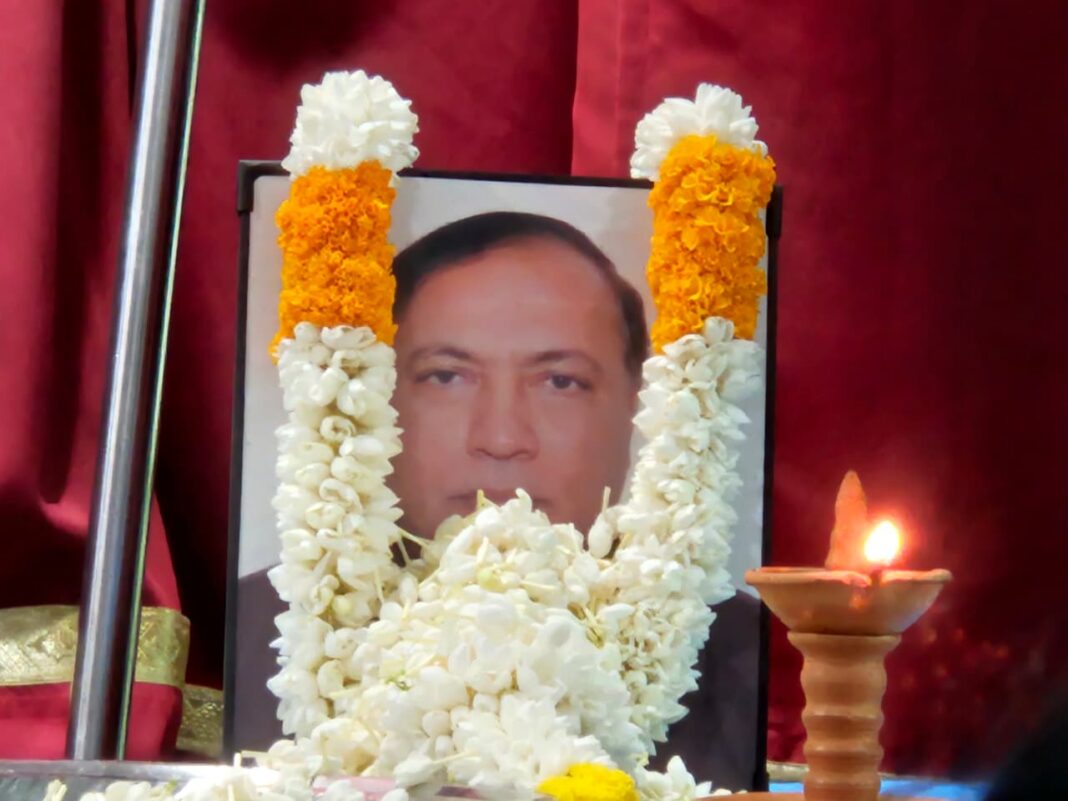

David Buell Sabapathy Jeyaraj (DBS) left behind more than decades of journalism. He left behind a record of a country at war with itself — its conflicts, its politics, its people and the truths that were often difficult, dangerous or inconvenient to tell.
When DBS died on May 17, 2026, Sri Lankan journalism lost one of its most distinctive voices. For generations of readers, particularly during the years of the civil war, his reporting and political analysis offered a rare window into events unfolding in the North and East, connecting experiences that might otherwise have remained separated by geography, language and politics.
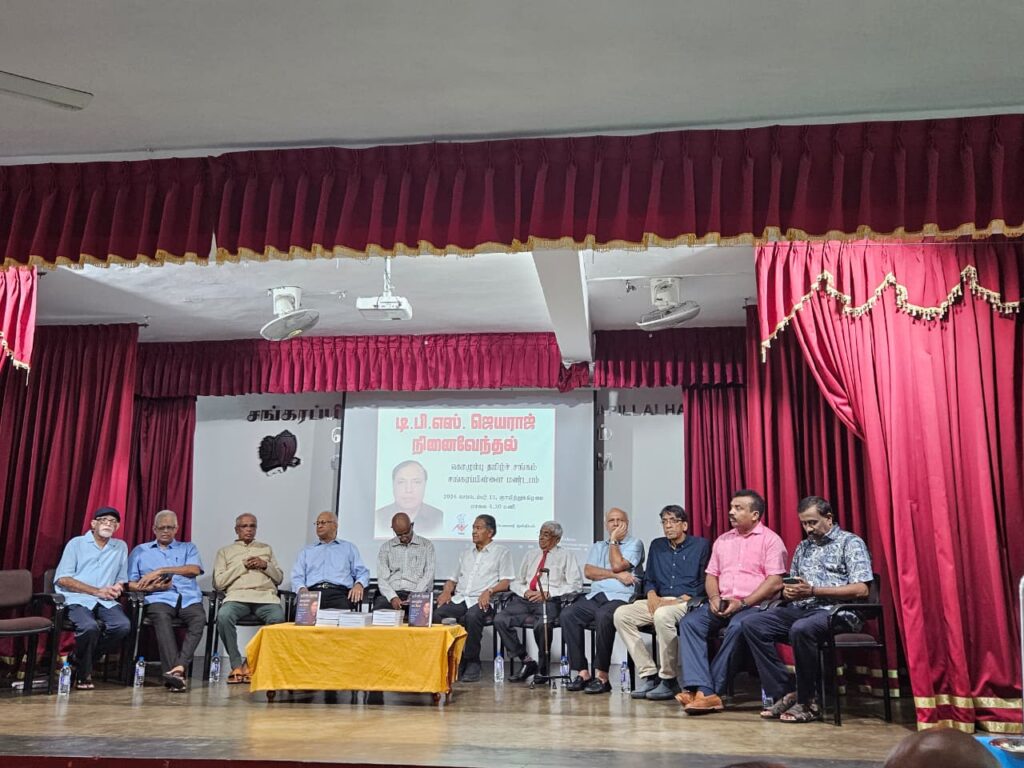
On Sept. 12, his family, friends and fellow journalists gathered at the Tamil Sangam to remember the man behind the byline and to launch a collection of his work in Tamil. The gathering became not simply a commemoration, but a reflection on what made DBS difficult to replace — his pursuit of truth, his extraordinary memory for detail, his independence and his determination to make Sri Lanka’s different communities see one another.
‘He tried to keep truth alive’
For parliamentarian Mathiaparanan Abraham Sumanthiran, DBS was more than a respected journalist. He was “Rajan anna,” a second cousin whose family connection stretched back generations. Sumanthiran’s maternal grandmother and Jeyaraj’s maternal grandmother were sisters.
He first met DBS as a child, sometime in the late 1970s, when his father took him to visit Jeyaraj at a room on W.A. Silva Mawatha after a haircut.
DBS was exactly 10 years older than Sumanthiran. In the years that followed, Sumanthiran began reading his work in Virakesari and later followed his journalism in the English-language press.
Among DBS’s most significant contributions, Sumanthiran recalled, was his reporting during Sri Lanka’s long civil war, including his Behind the Cadjan Curtains column in The Island.
He was a journalist working through years in which truth was often one of the first casualties of conflict.
“He tried to keep truth alive, valiantly fought to keep truth alive,” Sumanthiran said.
What set DBS apart, he said, was his almost obsessive attention to detail. His accounts could contain the movements of military units, precise timings of events and extensive background on the people involved.
“He had multiple sources that he checked. Always checked, and had to be accurate,” Sumanthiran said.
That same care extended to names and family histories. Even when someone appeared only incidentally in a story, DBS would often establish who that person was, where they came from and how they were connected to others.
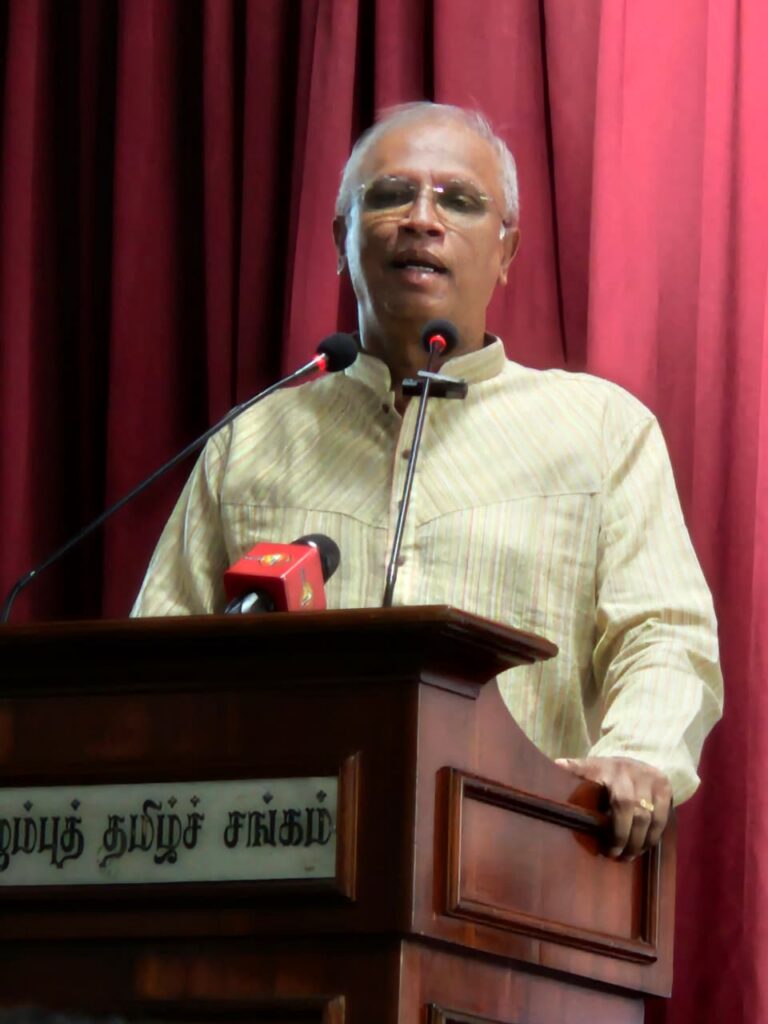
Those details, Sumanthiran said, gave his larger stories credibility.
“Those who knew all the other details, the unrelated details, would immediately know, well, he’s got all that right. So, the story also must be right,” he said.
His commitment to truth was not confined to professional life.
When Sumanthiran entered politics, DBS initially tried to persuade him not to do so. He spent hours warning him about the consequences.
“We have a family tradition of telling the truth,” DBS told him. “I suspect you may also suffer from that, and you’ll be hunted down for that.”
Sumanthiran said DBS was not entirely wrong.
He also remembered a more painful conversation, when DBS spoke about being branded a “traitor” to the Tamil cause.
“He said, ‘I was nothing of that sort. But that’s how I have been painted.’ And that hurt him the most,” Sumanthiran recalled.
Yet the hostility did not persuade DBS to abandon the principles that guided his journalism.
There was a personal price for those principles. Sumanthiran recalled DBS’s arrest in October 1987 after he published a detailed interview with Gopalaswamy Mahendraraja, known as Mahattaya, then a deputy leader of the LTTE. DBS refused to reveal information about his source.
Sumanthiran also recalled DBS’s gratitude to N. Ram, the former editor of The Hindu, who flew from Chennai to Colombo and intervened with the highest echelons of the government on his behalf.
The episode illustrated the professional respect DBS commanded beyond Sri Lanka.
Even people who disliked him, or who had been angered by what he exposed, would return to his writing when they wanted to know what had actually happened.
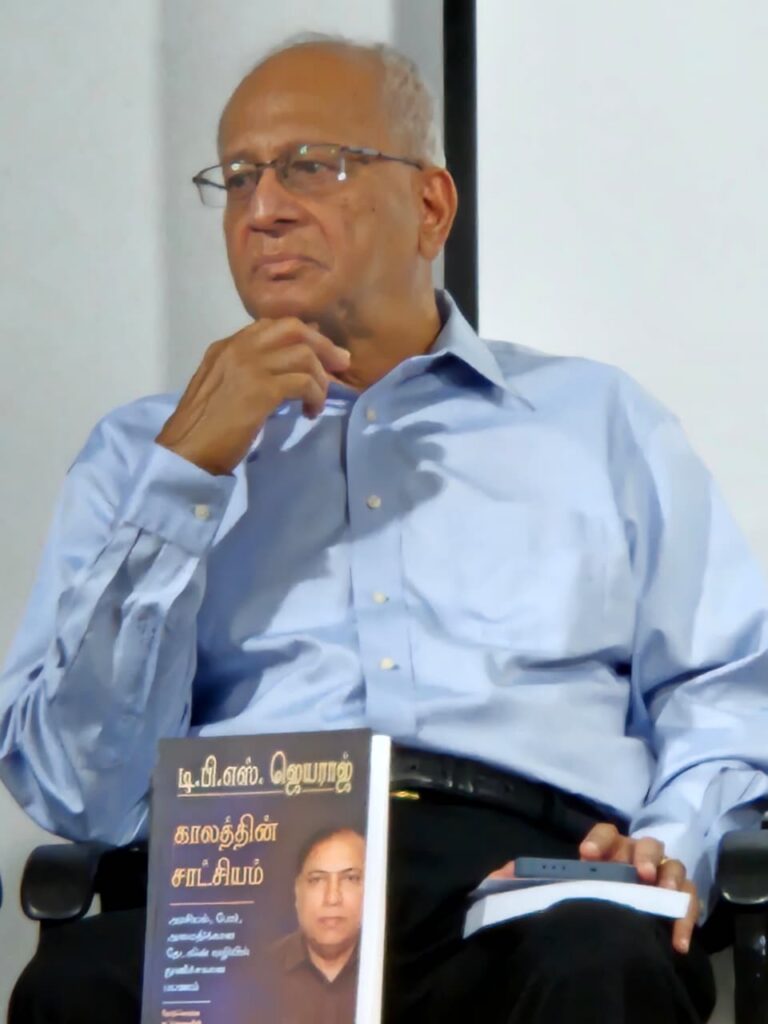
“I came across a number of people who hated him — hated him for the things that he exposed. But when they really wanted to know what actually had happened and what the truth was, they went to his column,” Sumanthiran said.
“That’s a true mark of an honest journalist.”
His interests extended well beyond politics and the civil war. DBS wrote about prominent personalities and developed a deep interest in Tamil cinema, its actors, singers, films and music.
For Sumanthiran, that body of work deserves to be preserved alongside his political journalism.
“There will be no other DBS,” he said.
“He reached those heights of what a journalist should be.”
Sumanthiran also paid tribute to those who had worked to preserve DBS Jeyaraj’s journalism, including those behind the commemorative event and the publication of the Tamil collection.
‘DBS was a mentor to me’
For National Peace Council chair Jehan Perera, DBS was not simply a columnist or political analyst. He was a journalist whose work helped readers understand Sri Lanka’s conflicts from multiple perspectives — and, for Perera personally, a mentor whose example shaped his understanding of journalism.
“It is indeed fitting that we remember him, DBS, if I can call him, and most of us call him, through his writings,” Perera said at the commemoration.
DBS was primarily a columnist, Perera recalled, and his articles were often among the first he read when they appeared in newspapers.
But the columns were distinctive because the commentary was grounded in reporting.
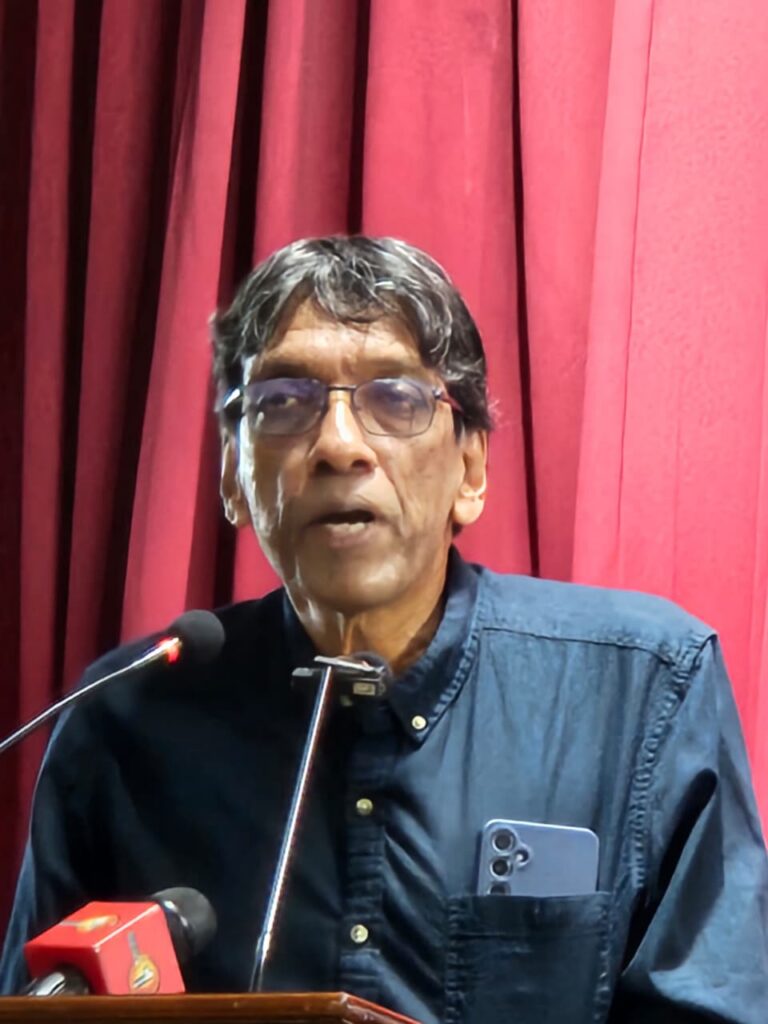
DBS drew on first-hand accounts from people he spoke to, as well as information he uncovered himself. His work was therefore not simply opinion or analysis. It was rooted in events on the ground, particularly in the Northeast and among people directly affected by Sri Lanka’s ethnic conflict.
That grounding allowed him to continue writing about Sri Lanka from Canada without losing touch with developments at home.
“I trusted his writing,” Perera said. “I felt that he tried to give a balanced account, bringing in different points of view, including views that were opposed to his own.”
That balance mattered in a country where political writing, particularly on the ethnic and national conflict, was often shaped by deep divisions.
DBS occupied a distinctive position: a Tamil journalist writing about the North and the Tamil national question for the mainstream English-language press. His readership extended well beyond the Tamil community, bringing perspectives that might otherwise have remained confined to particular communities into the wider national conversation.
For Perera, this was among DBS’s most important contributions.
Sri Lanka’s communities can exist in separate “silos,” he said, with limited understanding of one another’s histories, fears and political aspirations. Jeyaraj’s journalism created a space in which readers from different communities could encounter those perspectives, even when they disagreed with them.
But Perera cautioned against reducing DBS’s contribution simply to his identity as a Tamil journalist.
“His writings mattered because they addressed the country as a whole,” he said. “The experiences of one community are not less important than those of another. But neither are they more important simply because they belong to that community.”
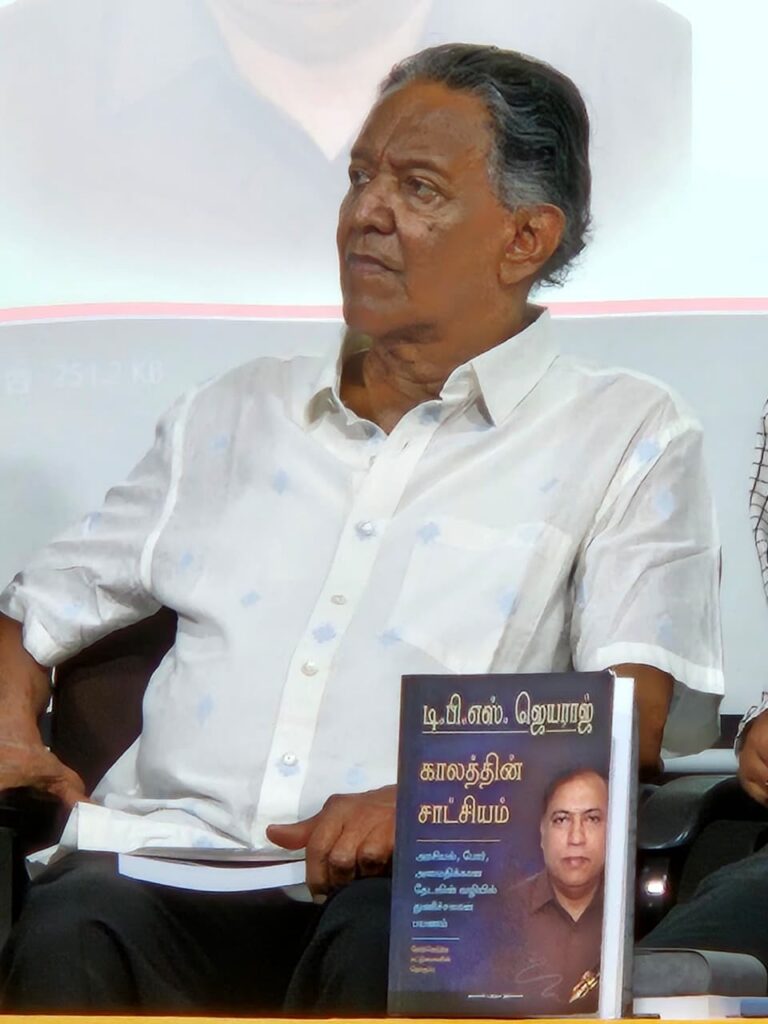
Drawing on his extensive knowledge of history, he recognized that each side had its own experiences, fears and perceptions of threats. The conflict, Perera said, could not be understood through a single narrative, nor could a lasting solution be imposed unilaterally by one community on another.
“A journalist who understands this complexity needs to do more than simply take sides,” Perera said. “He or she must help readers understand why the conflict has endured, why trust has been so difficult to establish, and why lasting peace requires more than one dominant story.”
Seeing Sri Lanka beyond its politicians
Perera also recalled an interview DBS gave after returning to Sri Lanka on April 23, 2013, following 25 years away.
“During that visit, DBS said he had deliberately stayed away from politics so he could experience the country as an ordinary person rather than through politicians and political associates.
What struck him was the resilience and tenacity of people who had lived through decades of conflict and were trying to rebuild their lives.”
He also saw a disconnect between the needs of ordinary people and those of the political class — a disconnect that Perera said became particularly visible during Sri Lanka’s 2022 crisis.
For Perera, that observation pointed to another responsibility of journalism: remembering that a country is more than its governments, political parties and conflicts. It is also made up of people, their struggles, their pragmatism and their efforts to build better lives.
DBS also offered journalists working in Sri Lanka a simple but powerful piece of advice. External pressures, he acknowledged, could prevent journalists from writing everything they wanted to write. But those pressures should never force them to write something they did not want to write.
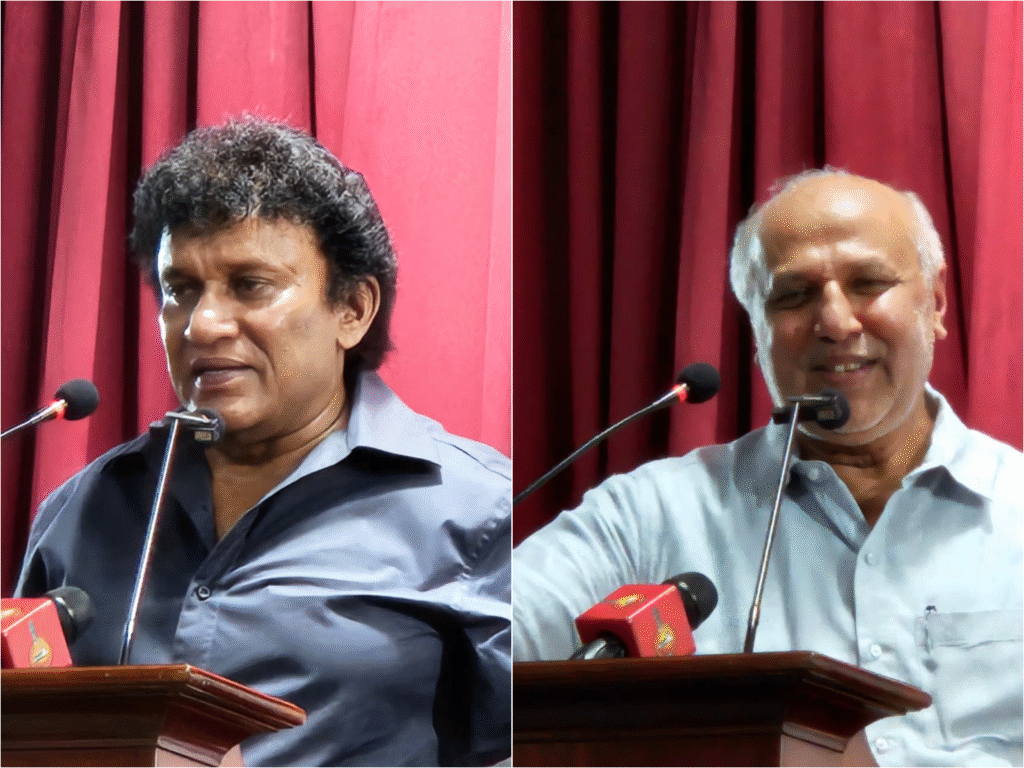
Perera described that as a powerful statement of journalistic independence — an acknowledgment of the pressures journalists face without allowing those pressures to become an excuse for surrendering integrity.
“For all these reasons, I consider DBS to have been a mentor of mine,” Perera said. “I never said so to him.”
Mentors, Perera noted, are not necessarily people who formally teach us or with whom we have close personal relationships. Sometimes they are people whose work we follow, whose judgment we respect and whose example shapes what we aspire to become.
“DBS was such a person to me,” he said.
As DBS Jeyaraj’s writings are collected and published, his legacy is becoming more than an archive of Sri Lanka’s turbulent past.
It is also a record of a way of doing journalism — rigorous, deeply reported, independent and willing to look beyond the dominant narrative.
The event was organized by the Sri Lanka Tamil Media Alliance. Kumar Nadesan, managing director of Express Newspapers Ceylon Limited, and K. Kanag-Isvaran, president’s counsel, attended the event. Vijitha Yapa, founding editor of The Island and The Sunday Times, Rauff Hakeem, leader of the Sri Lanka Muslim Congress, and Parliamentarian Mano Ganesan also shared their memories of DBS.
Banner Image: A floral tribute was paid to the portrait of DBS Jeyaraj by Kumar Nadesan, managing director of Express Newspapers Ltd and other dignitaries at the Tamil Sangam during the commemorative book launch. Image by Dilrukshi Handunnetti.
This was written and edited by Gagani Weerakoon. She leads the editorial at the Center for Investigative Reporting (CIR).