Home Blog Page 7

As cases surge in Sri Lanka, schools and religious institutions become main dengue mosquito breeding grounds

Speed Read

  • Sri Lanka has recorded nearly 49,000 dengue infections and 30 deaths by June 25 this year, with more than 14,000 cases reported in June alone.
  • More than 5,000 lawsuits have been filed against individuals and institutions for facilitating mosquito breeding grounds.
  • Schools account for nearly 60% of identified dengue breeding sites, the highest among all inspected locations, followed by religious institutions at 28%.
  • Health authorities warn major hospitals are nearing capacity and say the outbreak could escalate into a full-scale epidemic without sustained public cooperation.

COLOMBO — Sri Lanka’s worsening dengue outbreak has triggered an unprecedented nationwide response, with authorities filing action against more than 5,000 individuals and institutions for facilitating mosquito breeding. Meanwhile, health officials warn that schools and religious institutions have emerged as some of the country’s most significant transmission risks.

The outbreak has already infected more than 49,000 people and claimed 30 lives by June 25 this year, prompting the government to launch a nationwide anti-dengue campaign and intensify enforcement measures against those who fail to eliminate mosquito breeding sites.

Out of 30 fatalities reported so far, five are children under 15 years of age.

For Ganga Nayomi, whose daughter is sitting the G.C.E. Advanced Level examination in August, the increasing numbers are extremely worrying.

“Despite keeping our environment clean, all five members of my neighboring family have been admitted to the hospital with dengue. At least 10 in my daughter’s school have tested positive for dengue and receiving treatments. How can I be sure that my children will not get affected? Our biggest concern is my daughter as she is getting ready to face one of the most decisive exams,” she said.

Strict scrutiny begins

In response, the authorities have quickly turned toward legal enforcement as public health officials struggle to contain the outbreak.

Secretary of the Public Health Inspectors’ Union, Chamil Muthukuda told CIR, more than 5,000 cases have already been filed in the magistrates’ court against individuals and entities found responsible for maintaining mosquito breeding grounds in the past two weeks.

Approximately 3,000 red notices too have been issued while nearly 1,000 offenders faced spot fines.

The government’s tougher stance comes amid growing frustration among health officials, who argue that recurring outbreaks are largely driven by preventable environmental conditions.

Muthukuda said authorities repeatedly observe the same pattern: once dengue cases decline, both the public and institutions become complacent, allowing breeding grounds to re-emerge.

“We cannot reduce dengue cases to zero, but we definitely can bring the numbers down and control dengue from reaching epidemic levels by destroying breeding grounds,” he said.
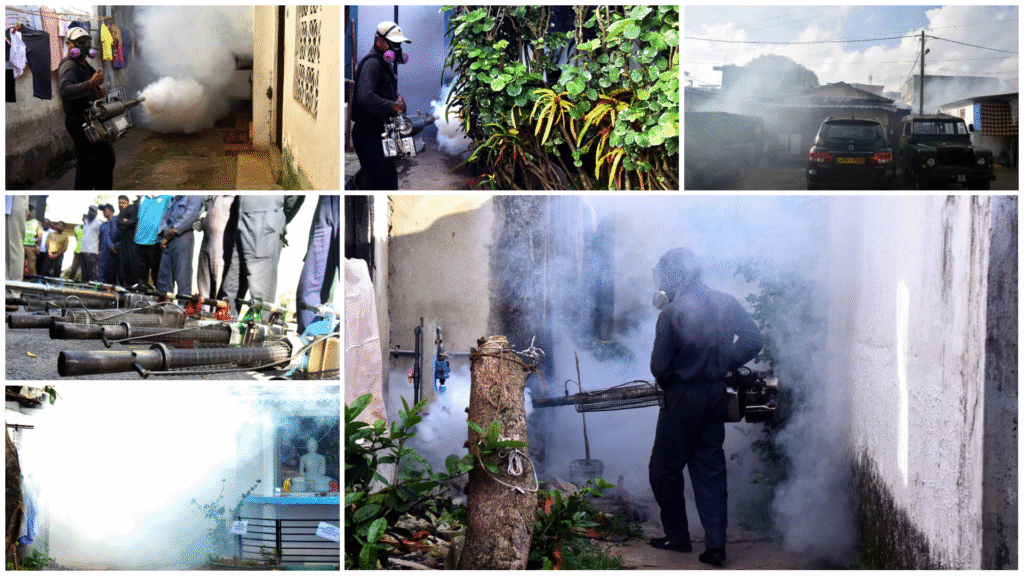
Fogging operations are conducted in areas reporting multiple dengue cases, though health authorities stress it is only a temporary control measure and not a long-term solution. Image courtesy of Pradeep Pathirana.

He said fogging operations are carried out when multiple dengue cases are reported from the same area but cautioned against fogging being viewed as a long-term solution to disease control.

“When several cases are reported from a particular area, we conduct fogging using chemical agents. However, people should not mistake this for a lasting solution. Fogging only kills adult insects, whether they are mosquitoes, bees or other flying insects. It does not eliminate mosquito larvae, and cannot by itself end the mosquito threat,” he said.

Muthukuda added that authorities regularly rotate the chemicals used in fogging operations to prevent mosquitoes from developing resistance.

“To ensure mosquitoes do not become accustomed to a particular chemical, different provinces use different formulations, and these are alternated approximately every six months,” he said.

The Presidential Secretariat meanwhile has warned that individuals, businesses and institutions that fail to comply with dengue prevention measures will face legal action under the Quarantine and Prevention of Diseases Ordinance and other public health regulations.

Schools lead the list

One of the most troubling findings emerging from recent inspections is the extent to which educational institutions have become breeding grounds for dengue-carrying mosquitoes.
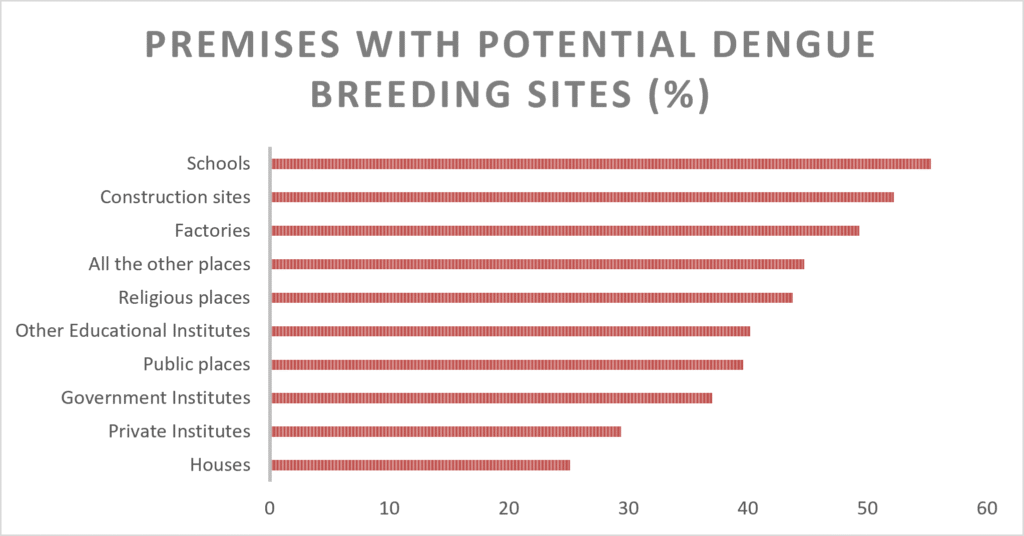
Schools accounted for nearly 60% of over 70,000 locations found to contain mosquito breeding sites, making them the highest at-risk category countrywide. Graph by Ayodhya Kiriella using NDCU data.

Dr. Kapila Kannangara, acting director of the National Dengue Control Unit (NDCU) told CIR that schools accounted for nearly 60% of over 70,000 locations identified as mosquito breeding sites, making them the highest-risk category countrywide.

“There are mosquito breeding conditions in 268 schools across the country, including 67 schools in the Western Province alone.”

Religious institutions accounted for 28% of breeding sites, while industrial premises accounted for 26%.

The findings have prompted authorities to introduce stricter preventive measures throughout the education sector.

Provincial directors of education have been instructed to take immediate action to reduce mosquito breeding risks in schools, while institutions have been directed to conduct mandatory 30-minute cleanup programs every Monday and Friday.

Schools have also been instructed to establish school health promotion committees and work closely with public health inspectors to ensure compliance with prevention measures.
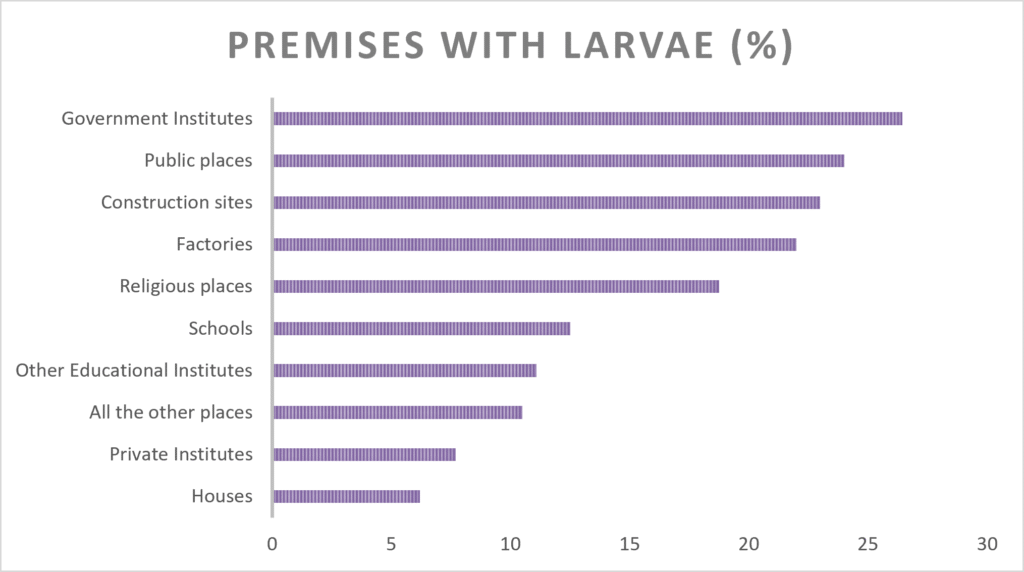
Entomological surveys continue to identify a significant number of breeding grounds in schools, government institutions, factories and places of worship. Graph by Ayodhya Kiriella using NDCU data.

Consultant Community Physician Prashila Samaraweera on June 20 told media that entomological surveys continue to identify a significant number of breeding grounds in schools, government institutions, factories and places of worship.

She called upon parents to not send children to school if they develop fever symptoms, saying that early medical intervention remained critical in preventing severe dengue complications.

Religious places under scrutiny

The identification of breeding sites in nearly one-third of inspected religious institutions has raised concerns among health officials.

According to the NDCU, temples, churches, mosques and other places of worship often contain water-holding containers, neglected outdoor areas and structures that can become mosquito breeding grounds.

The government’s latest dengue prevention directive specifically includes religious institutions among locations requiring intensified inspections and cleanup efforts. Public health inspectors have been tasked with conducting regular inspections and taking legal action where necessary.

Hospitals approaching capacity

However, the rapid increase in infections is placing a growing strain on Sri Lanka’s healthcare system.

According to NDCU’s Kannangara, several major hospitals including the National Hospital of Sri Lanka and Infectious Diseases Hospital (IDH)are operating near maximum capacity as patient numbers continue to rise.

Kannangara said nearly 750 new dengue cases are being reported daily while a record number of 1,069 new cases of dengue fever were reported on June 22 alone.

More than 14,400 cases have been recorded during June, making it one of the most severe monthly outbreaks in recent years.

The Western province accounts for more than half of all reported cases, with 52.12% of infections, followed by the Southern province with 16.04% and Sabaragamuwa province with 9.15%.
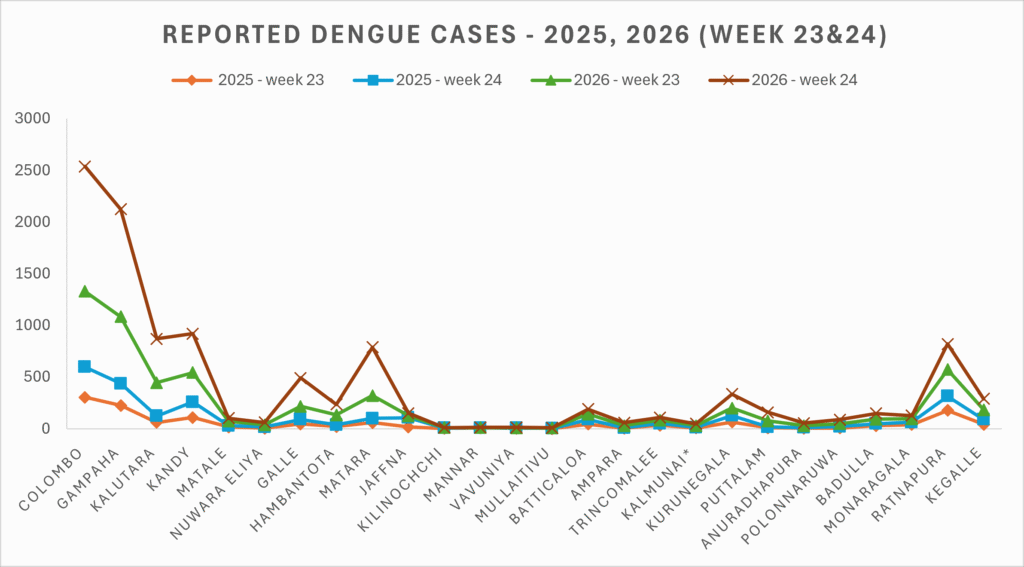
In the first six months, over 49,000 cases were reported together with 30 dengue-related fatalities. Graph by Ayodhya Kiriella using NDCU data.

The highest number of dengue cases so far – 186,000 – was reported in 2017 which recorded 440 deaths, Kannangara noted.

Calls for a presidential task force

As dengue continues steadily rise, the Government Medical Officers’ Association (GMOA) described the current outbreak as approaching “super epidemic” proportions and called for the immediate establishment of a presidential task force to coordinate the national response.

GMOA Media Spokesperson Chamil Wijesinghe said dengue transmission is now approaching levels last seen during Sri Lanka’s devastating 2017 epidemic.

“In May, 8,600 patients were reported. However, in June, more than 9,000 cases were reported within the first two weeks alone. This highlights the danger inherent in this situation,” he said.
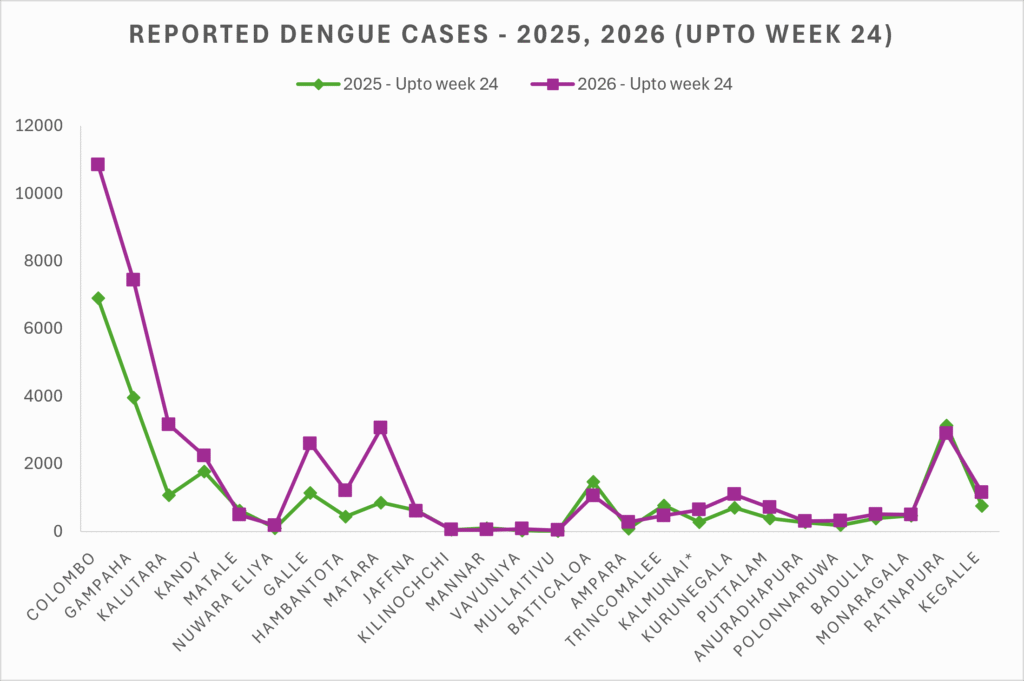
: Weekly dengue cases in the Colombo district have increased by approximately 200% compared with the same period last year. Graph by Ayodhya Kiriella using NDCU data.

Wijesinghe also noted that weekly dengue cases in Colombo district have increased by approximately 200% compared with the same period last year, while more than half of all patients continue to originate from the Western province.

The medical practitioner warned that the healthcare system is reaching its limits even before dengue infections peak.

“The most serious issue is that although the number of dengue patients has not yet reached its maximum level, the healthcare system is reaching its maximum capacity,” he said, while adding: “If this situation escalates any further, the healthcare system will not be able to withstand it.”

To prepare for this scenario, the GMOA has proposed a centralized national action plan led by a presidential task force capable of coordinating resources across ministries, local authorities, healthcare institutions and community organizations.

Three-day national operation

In response to the escalating crisis, the government has launched a special three-day dengue suppression campaign between June 24-26 covering 14 high-risk districts.

The operation targets 112 Medical Officer of Health (MOH) divisions and 600 Grama Niladhari (village officer) divisions identified as having elevated transmission risks.
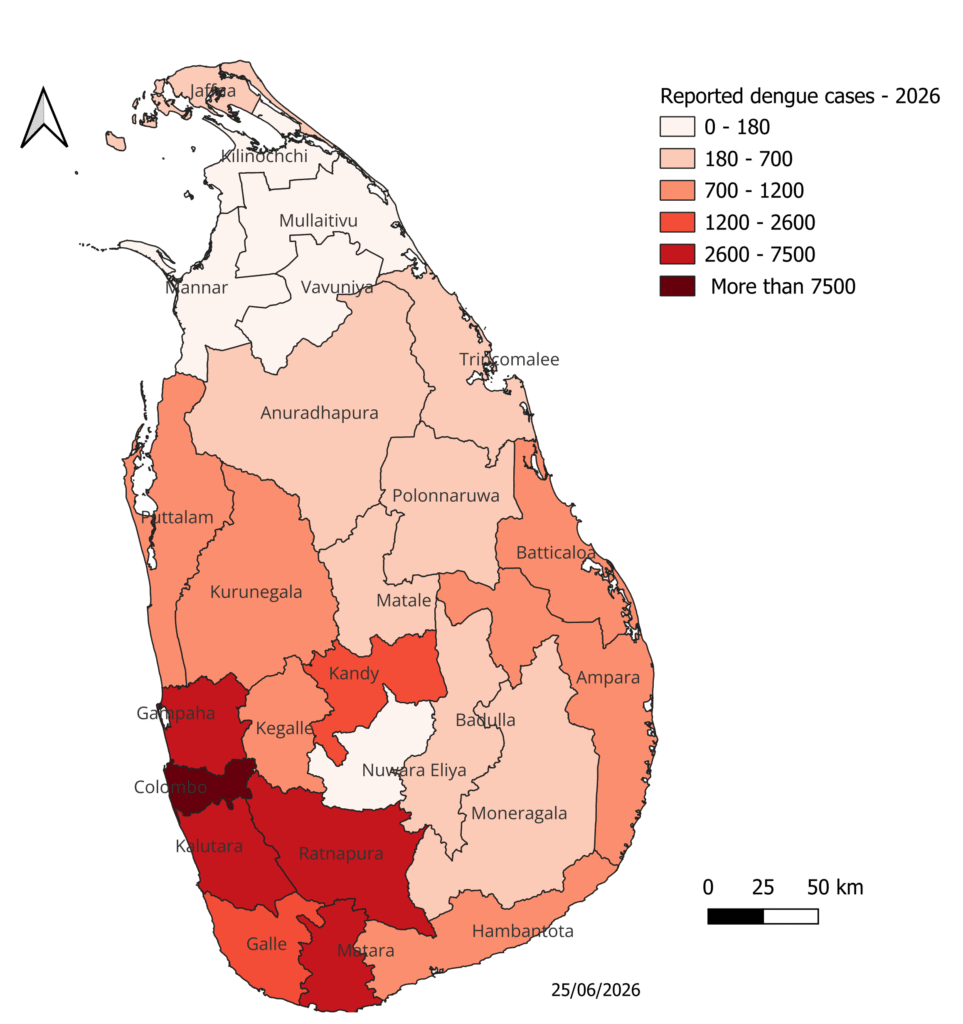
There are 14 high-risk districts, covering 112 Medical Officer of Health (MOH) divisions and 600 grama niladhari divisions identified  by health authorities as areas with elevated transmission risks. Map by Ayodhya Kiriella using NDCU data.

As part of the initiative, the Sri Lanka Air Force, Colombo Municipal Council and the Clean Sri Lanka Secretariat have deployed drones to identify breeding locations in rooftops, abandoned structures and other difficult-to-access areas in Colombo.

A special dengue operations center established by the Department of Government Information has also begun receiving public complaints.

On the first day alone, the center recorded 47 complaints, including 19 reports of blocked drains and stagnant water, 15 related to improper waste disposal, nine concerning overgrown or abandoned lands and four requests for information and general queries .

Officials said the reports illustrate how environmental neglect continues to fuel mosquito breeding across many communities.

Poor drainage key drive

Beyond household negligence, public health inspectors noted how structural issues are contributing significantly to the outbreak.

Muthukuda of the Public Health Inspectors’ Union said clogged drainage systems caused by illegal garbage dumping and inadequate maintenance by local authorities were major contributors to mosquito breeding.
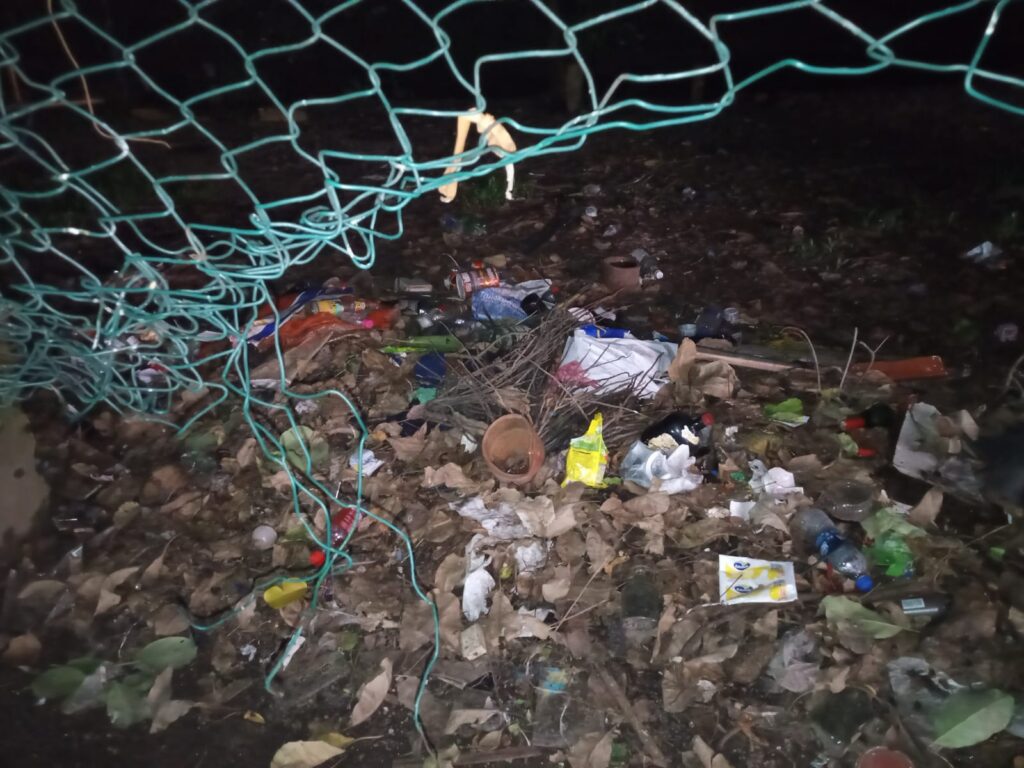
Clogged drainage systems caused by illegal garbage dumping remain a major contributors to mosquito breeding in urban areas. Image courtesy of Ravishan Fernando.

He highlighted poor drainage design in urban areas, arguing that many drainage systems are constructed without proper gradients, allowing water to stagnate and become ideal breeding environments for dengue-carrying mosquitoes.

“The Urban Development Authority should revisit drainage systems and rectify those issues,” he said.

Public cooperation decisive

Despite the government’s expanded enforcement efforts and nationwide cleanup operations, health officials insist that long-term success depends on sustained public participation.

Muthukuda said many citizens still fail to recognize the seriousness of the threat despite the rapidly rising caseload.

The NDCU and PHIs also noted that mosquito populations cannot be reduced solely through inspections, fines and legal action. Eliminating breeding grounds at homes, schools, workplaces, religious institutions and public spaces remains essential to preventing a larger epidemic.
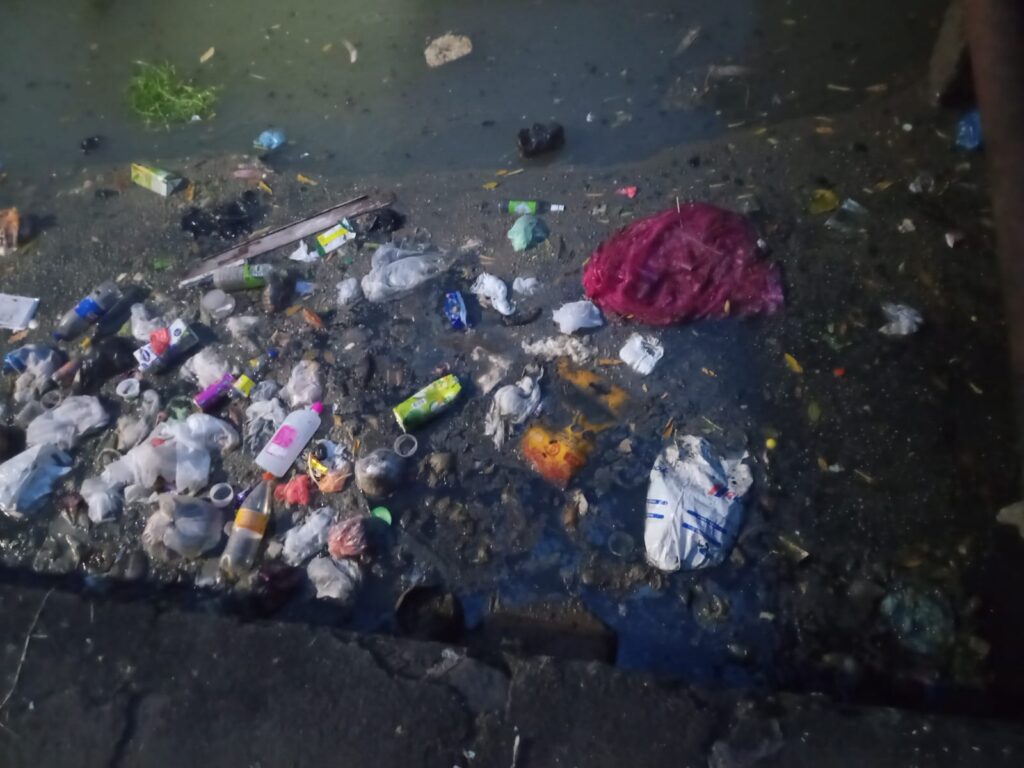
Clogged drainage systems contribute to mosquito breeding in urban areas. Image courtesy of Ravishan Fernando.

With nearly 49,000 reported infections and hospitals operating under mounting pressure coupled with the southwest monsoon creating favorable conditions for mosquito breeding, health officials say the coming weeks will be critical in determining whether Sri Lanka can contain the outbreak or face a repeat of the devastating epidemics that overwhelmed the country in previous years.

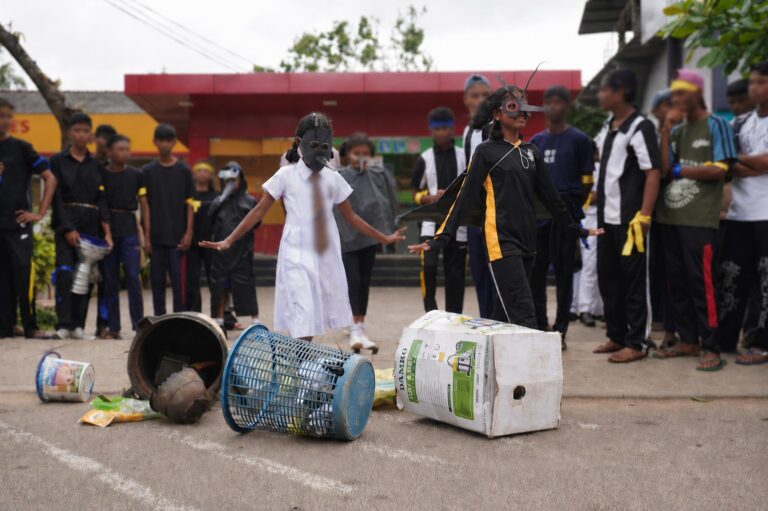
Banner Image: As schools emerge among the country’s highest-risk locations Students in Eppawala, Anuradhapura, participate in a dengue awareness campaign urging communities to eliminate mosquito breeding sites. Image courtesy of Thisara Samal.

This story was written and edited by Gagani Weerakoon. She leads the editorial at the Center for Investigative Reporting (CIR).

This story was produced with support from Report for the World, a global media service strengthening local independent journalism
Add your comment

Sri Lanka’s Strategic Push to Export Skilled Labour

Sri Lankan labour migration to Gulf Cooperation Council (GCC) countries is a cornerstone of the Sri Lankan economy, employing over 1.3 million workers in sectors like construction, domestic services, and hospitality. Over 75% of all officially recorded foreign employment departures from Sri Lanka head to the Middle East, with Gulf states serving as the primary employers. Historically female-dominated, the workforce demographic has changed in recent years, indicating that male workers now comprise about 60% of total departures, driven by demand in the construction, service, and technical sectors.

The past few years have witnessed a policy shift, with Sri Lanka actively promoting skilled labour migration to reduce dependency on low-skilled jobs and boost national development. Through updated policy frameworks, there is an aim to transition its workforce into the global talent pool while supporting return and reintegration.

In 2023, CIR launched “Reporting for Change on Skilled Migration,”  an initiative that brought together journalists from across Sri Lanka to strengthen reporting on skilled labour migration and its impact on individuals, families, and the national economy.

Following specialized training and mentoring, journalists published 32 stories that explored a wide range of topics linked to skilled migration, including policy shifts, demand for skilled migrant workers, success stories, training opportunities, increased capacity for return and reintegration, family support systems, and the challenges associated with low-skilled migration. The stories were published in Sinhala, Tamil, and English across print, online, radio, and visual media platforms.

The program exceeded its original publication target and demonstrated the value of informed, evidence-based journalism in shaping public understanding on international labour migration.

Featured Stories

  1. ‘Skilled’ migration: Short-term problem and long-term solution by Sumudu Chamara
  2. දැන ගියොත් පිටරට- නොදැන ගියොත් පාරට! by Harsha Sugathadasa
  3. රට ගිහින් හම්බකරගෙන ආවට පස්සේ අනාථ වන ජිවිත by Sakeef Sam
  4. අතරමං නොවී, විශ්වාසයෙන් එතෙර යන මග by Soba Kolyawansa
  5. රට රස්සාවලට එතෙර ගොස් අතරමං වන නුපුහුණු ශ්‍රමිකයන්ගේ ඛේදවාචකය by Indika Garusinghe
  6. Are We Adopting a Prudent Overseas Placement Strategy? by Mithun Jayawardhana
  7. 2019 සිට 2023 දක්වා කාලය තුලදී විදෙස් රටවලදී මියගිය හා විවිධ අනතුරුවලට ලක්වූ විදෙස් ශ්‍රමිකයන්ගෙන් 84%ක් නිසි පුහුණුවක් නොලබා විදේශගත වූ පිරිස් by Rahul Samantha Hettiarachchi
  8. ஆணி உற்பத்தியாளராகிய புலம்பெயர் தொழிலாளி : ‘புதுத்திறனால் சாதித்த யாழ்.வாசி’ by R. Ramkumar
  9. பயிற்சிகளற்ற புலம்பெயர்வுகளால் சிதைக்கப்படும் எதிர்காலம் by Nivetha Arichandran
  10. தொடரும் பேரவலத்தில் – புலம்பெயர் தொழிலாளர் by R. Maheswary
  11. பறந்து பறந்து உழைத்தாலும் இன்னும் பரித்தாப நிலைதான் by Sritharkumar Nilushan
  12. “பயிற்சிகள் பெற்றாலும் அவஸ்தைகள் இன்னும் தொலையவில்லை by K. Prasnnakumar
  13. தொழில் தகைமை எதுவுமின்றி வெளிநாட்டு வேலைவாய்ப்புக்குச் செல்வது விஷப்பரீட்சை! By Vasantha Mary
  14. தொடரும் குறைதிறன் ; புலம்பெயர் தொழிலாளர்களின் இன்னல்… விதிவிலக்காய் சிலர் ! by Vadamalai Rajkumar
  15. නිපුණත්වය තුලින් එතෙර ජයගමු. – දවසේ අවධානය by Ajith Wasantha Epa
  16. බෝට්ටුවෙන් රට යන්න කලින් දෙපාරක් හිතන්න by Mangalanath Liyanaarachchi
  17. Yanna Yanna Dura Gamanak A Documentary on Skilled Migration in Sri Lanka by Christy Shelton Fernando
  18. ඉතාලියත් ලංකාවත් ජයගත් චමිලගේ කතාව by Farook Suhail
  19. මොනවටද රට යැවුවේ | හොර පාරෙන් රට ගිය තරුණයන්ට වැඩ වරදී | දෙමව්පියන් පොලිසියත් එක්ක පැටලෙයි by Roshan Gunasekara
  20. බෝට්ටුවෙන් ඉතාලි යන්න ගිහින් මොකද වුනේ by Prasad Purnamal
  21. විදෙස් රැකියාවෙන් ජයගත් මහයියාවේ මනෝන්මනී by Ruwan Meegammana
  22. විදෙස් ගත වී, අසරණ වන කාන්තාවන්ගේ දුක්ගැනවිලි by Chandani Dissanayaka
  23. அக்குறணையிலிருந்து மத்திய கிழக்குக்கு தொழில் தேடிச் செல்வோரின் நிலை என்ன? by Irfan Cader
  24. නිපුනතාවය නිසාම ලොවක් ජයගත් රත්නපුරයේ ඩස්මන්. By Jude Samantha
  25. වවුනියාවේ විදෙස් රැකියා සදහා ගිය 23ක් විදේශයන්හි සිර වෙලා. නිසි කුසලතා සංවර්ධනයකින් තොරව නිත්‍යානුකුල නොවන අයුරින් විදෙස්ගත වන්න එපා – විදේශ සේවා නියුක්ති කාර්යාංශය by Prasanna Pradeep Kumara
  26. ගැහැණුන් දෙදෙනෙක් – එකම ඉරණමක්: ක්ෂුද්‍ර මූල්‍ය ණය උගුලේ පැටළී විදෙස්ගත වූ ඔවුන් අද by Radika Gunaratne
  27. සංක්‍රමණික ශ්‍රමිකයන්ට තරුණයෙකුගෙන් පණිවිඩයක් !සැලසුම් කළොත් ජීවිතය ජයගන්න පුළුවන් ! by Lalantha Wanniarachchi
  28. முறையான வெளிநாட்டு பயணமும் தொழில்திறனும் இருந்தால் வேலை வாய்ப்பு வழங்கலாம் by H. M. Halaldeen
  29. புலம்பெயர்வில் புதுத்திறன் வளர்த்து உள்நாட்டில் தொழில் வழங்கும் ஓவியன் by Mohomad Farik
  30. නිපුණතා සහිත ශ්‍රමිකයන්ගේ අඩුපාඩුව සහ ප්‍රතිලාභ by Dini Jayasekara
  31. කරදර නොවී විදේශ රැකියාවකට යමු by Nimal Abeysinghe
  32. ආර්ථික අර්බුදය හමුවේ විදෙස් රැකියා හීන මවන මහනුවර දිස්ත්‍රික්කයේ තරුණයන් by Nadeeka Daya Bandara

Sri Lanka’s emergence as a cybercriminals paradise spells doom for national security

Speed Read

  • Following the recent crackdowns on international gangs engaged in cybercrimes, experts are warning against existing regulatory gaps that could attract organized cybercrime syndicates.
  • The challenge is becoming even more complex as scammers are adopting artificial intelligence.
  • Cyber scams could damage investor confidence and Sri Lanka’s global reputation.
  • Failure to strengthen cyber defenses could threaten Sri Lanka’s economic and national security.

COLOMBO — As Southeast Asian nations intensify crackdowns on sprawling cyber scam compounds, cybersecurity experts are warning warn the possibility that Sri Lanka could emerge as an attractive alternative destination for transnational fraud networks.

Cybersecurity experts also say the challenge is becoming even more complex as artificial intelligence transforms the methods used by scammers. They say that a country cannot market itself as a digital hub while simultaneously gaining a reputation as a safe operating environment for cybercriminals.

What initially appeared to be isolated cybercrime cases is increasingly being viewed by experts as something far more concerning: the possible emergence of Sri Lanka as a new operating base for transnational cyber scam networks displaced from other parts of Asia.

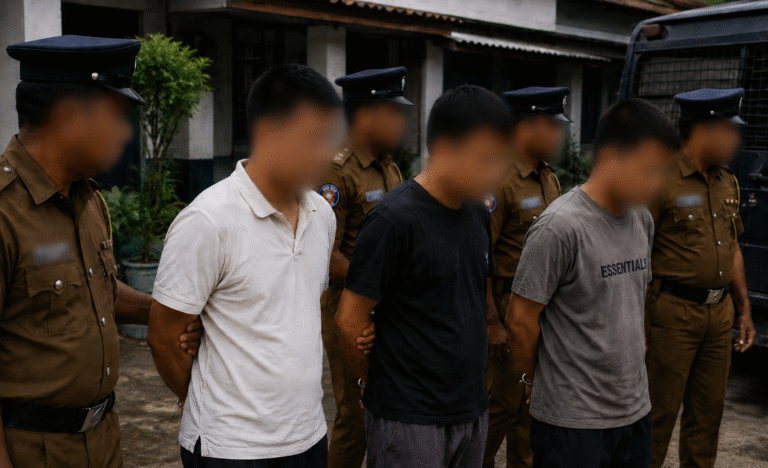
Over the past five months, Sri Lankan authorities have arrested more than 1,000 individuals in connection with cybercrime-related activities, including online scams, financial fraud, cryptocurrency-related schemes and suspected scam operations allegedly run by foreign nationals.

The arrests come at a time when governments across Southeast Asia are intensifying crackdowns on sprawling scam compounds linked to online fraud, money laundering, human trafficking and organized crime. Countries such as Cambodia, Myanmar and Thailand have faced growing international pressure to dismantle criminal networks that have targeted victims around the world.

While Sri Lankan authorities describe the arrests as evidence of heightened vigilance, cybersecurity experts, intelligence analysts and legal experts claim that the growing frequency of such cases raises a broader question: Are criminal networks increasingly viewing Sri Lanka as a safe and attractive place from which to operate?

“The increasing arrests of foreign nationals linked to cybercrime operations in Sri Lanka should no longer be treated as isolated criminal incidents. It has become a dangerous and deeply organized pattern,” said Mahil Dole, a former investigation and intelligence analyst at the Financial Crimes Investigation Division (FCID).

The concern extends beyond online fraud.

Experts say if Sri Lanka develops a reputation as a destination for cybercriminal networks, the consequences could include loss of investor confidence, increased global scrutiny of the country’s financial system, reputational harm to its digital economy ambitions and broader national security risks.

Mahil Dole, security analyst and former head of counter-terrorism of the State Intelligence Service (SIS). Image courtesy of Mahil Dole.

A pattern, not isolated incidents

According to Dole, public attention is increasingly being directed toward apartment owners and landlords who rent their properties to suspects, while more fundamental questions remain unanswered.

“The first and most important question is this: How did these individuals enter the country, establish themselves and operate so freely within Sri Lanka in the first place?” he asked.

“Foreign nationals do not simply appear inside luxury apartments overnight. They arrive through airports, obtain visas, extend permits, lease office spaces, establish communications infrastructure, move funds and begin operations. Every one of these stages should leave a regulatory footprint.”

Dole noted that responsibility begins with immigration controls, in exercising regulatory oversight, financial monitoring and national security mechanisms rather than with private property owners who hardly have any means of knowing what activities are taking place behind closed doors.

“Sri Lanka cannot expect ordinary civilians to perform the functions of intelligence officers, cyber investigators or immigration surveillance units,” he said. “The danger arises when accountability is shifted downward because institutional systems above have failed.”

He warned that many of today’s cybercrime operations bear little resemblance to the stereotypical image of a lone hacker.

“Many of these groups function as highly organized transnational criminal cartels with international linkages, encrypted communications, financial laundering systems and sophisticated operational structures,” said Dole.

Some, he added, may have links to broader criminal ecosystems involved in online gambling, money laundering, identity theft and financial fraud.

Why Sri Lanka could be attractive

Rohan Samarajiva, chair of LIRNEasia, a Colombo-based digital policy and regulation think-tank, believes the issue is more complex than traditional cybersecurity concerns.

Based on information available so far, he noted that many of the scam operations detected in Sri Lanka appear to be targeting victims abroad rather than local citizens.

“If a crime is happening within Sri Lanka, it is not happening to the people inside Sri Lanka,” he said.

Samarajiva said these operations often rely on social engineering, fraudulent communications and deception rather than sophisticated technical attacks on computer networks.

He also suggested that perceived legal and regulatory gaps may be one factor attracting foreign criminal groups.

“Perhaps if there is such a gap in the law, they might think this is a safe place,” he said.

The perception that prosecution may be difficult, even if inaccurate, could itself be enough to make Sri Lanka appear attractive to transnational scam networks seeking new jurisdictions from which to operate.

He also noted that because of these scammers paying exorbitant prices for accommodations, the rental prices in Colombo and suburban areas have skyrocketed, thereby making it next to impossible for locals to rent houses or apartments.

Cybercriminals today do not necessarily break through firewalls or attack networks, says Sithira Wanniarachchi. Image via LinkedIn.

Digital transformation without digital defenses?

Sithira Wanniarachchi, chair of the Colombo-based SLASSCOM Cybersecurity Center of Excellence and director of the Digital Trust Alliance, said Sri Lanka’s digital transformation has outpaced the systems designed to protect it.

“Everyone talks about digital transformation and building a digital economy, but the question is whether we have built the supporting systems around it,” he said.

“Do we have the laws, the forensic capabilities, the investigative capacity and the enforcement mechanisms required when something goes wrong?”

Wanniarachchi warned that artificial intelligence is making cyber scams more sophisticated and difficult to detect.

“Today’s cybercriminals are not necessarily breaking through firewalls or attacking networks,” he said. “The easiest target is still the human being.”

Voice cloning, AI-generated videos, automated chatbots and advanced phishing campaigns are increasingly allowing criminals to deceive victims at unprecedented scale. He noted deportation alone being an inadequate response.

“If someone enters the country and establishes a scam operation that defrauds people of millions of dollars, that is not simply an immigration issue,” he said. “It is a criminal offense.”

Perhaps his starkest warning was directed at Sri Lanka’s broader digital ambitions.

“A country cannot market itself as a digital hub while simultaneously gaining a reputation as a safe operating environment for cybercriminals,” Wanniarachchi said.

Investor confidence at risk

Meanwhile, others warn that the issue could eventually affect far more than law enforcement statistics.

Nirosh Ananda, Chief Information Security Officer of the Sri Lanka Computer Emergency Readiness Team (SLCERT) said a sustained increase in cyber scam operations could damage perceptions of Sri Lanka’s digital ecosystem.

“If this situation continues unchecked, it could affect perceptions about Sri Lanka’s cybersecurity environment and potentially undermine investor confidence,” he said.

Ananda noted that many of the foreign nationals arrested in recent operations were found to be targeting victims in overseas jurisdictions rather than Sri Lankan citizens.

“Based on information that emerged from investigations so far, many of these groups appear to be operating from Sri Lanka while targeting victims abroad,” he said.

Even so, he warned that reputational damage can occur regardless of where the victims are located.

Countries increasingly compete for foreign investment, technology partnerships and digital services contracts based not only on economic fundamentals but also on trust, regulatory effectiveness and cybersecurity resilience.

A national security and economic challenge

For Nalin Herath, former director general of Institute of National Security Studies the issue extends beyond cybercrime and enters the realm of national security.

“If Sri Lanka develops a reputation as a regional hub for cybercrime, the implications extend well beyond individual financial losses. It becomes a national security issue,” he said.

Herath noted that cybercriminal networks often exploit weaknesses in governance, financial oversight, law enforcement and digital infrastructure.

“The image projected internationally matters. Investors seek predictability, regulatory effectiveness and confidence that their data, intellectual property and financial transactions will be protected.”

Recent incidents involving major financial fraud investigations and cyber-related losses affecting institutions connected to Sri Lanka’s financial system have only intensified concerns about cyber resilience and financial sector integrity.

“When significant cyber or financial fraud incidents affect major financial institutions or entities connected to the country’s monetary system, the issue transcends criminal activity and enters the realm of economic security,” Herath said.

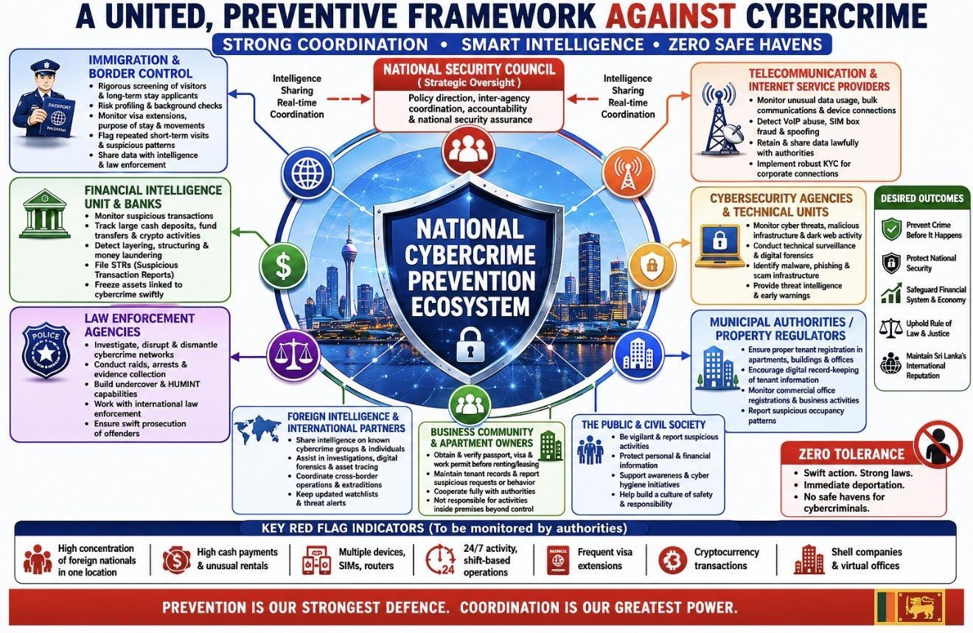
An effective response mechanism would include strong immigration controls, regulatory oversight, financial monitoring and prioritizing national security mechanisms. Image generated using artificial intelligence by Mahil Dole.

Can Sri Lanka prosecute foreign cybercriminals?

One of the recurring questions surrounding recent arrests is whether foreign nationals operating cyber scam networks from Sri Lanka can be prosecuted under local law.

Senior technology and digital law expert Jayantha Fernando, who was involved in drafting Sri Lanka’s Computer Crimes Act, said the legal framework provides broad jurisdiction to prosecute cybercrime offenses involving foreign nationals and cross-border activities.

“One of the key principles is that the law applies to a person committing an offense while being present in Sri Lanka or outside Sri Lanka,” he said.

Fernando noted that the law refers to a “person” rather than a citizen, meaning it applies to foreign nationals as well.

“The cause-and-effect principle is important. If an action results in an offense under the Computer Crimes Act and that offense has an impact on a computer system, service or information connected to Sri Lanka, the law can be triggered,” said Fernando, adding that the law does not require the offender and victim to be located in the same country.

His interpretation suggests that foreign nationals operating cyber scam networks from Sri Lanka could face prosecution under domestic law, provided the jurisdictional requirements of the Computer Crimes Act are met.

Raids alone not be enough

However, Police insist that authorities are actively responding.

Police media spokesman ASP Fredrick Wootler said recent enforcement operations have resulted in hundreds of deportations and increased monitoring of immigration violations.

“We always encourage foreign nationals to visit Sri Lanka and experience the beauty of our country. However, some individuals violate the provisions of the Immigration and Emigration Act by overstaying their visas or engaging in unlawful activities,” he said.

He said approximately 700 of over 1000 foreign nationals arrested during recent operations were deported by the first week of June, while many deportees have been blacklisted from re-entering Sri Lanka.

Experts argue that enforcement alone will not be enough.

“What matters most is not detection after the crime has already occurred, but prevention before these networks become operationally entrenched within the country,” Dole said.

As Southeast Asian nations intensify crackdowns on organized cybercrime syndicates, Sri Lanka faces a pivotal challenge: not merely arresting cybercriminals after the fact, but building the legal, technological and institutional safeguards needed to prevent such networks from taking root. How the country responds could determine whether it strengthens its position as a trusted digital economy or becomes an attractive destination for cyber scam operations seeking new bases in the region.

Banner Image : More than 1,000 suspects have been arrested from January to May amid a surge in online fraud investigations. The image has been generated using artificial intelligence.

This story was written and edited by Gagani Weerakoon. She leads the editorial at the Center for Investigative Reporting (CIR).

This story was produced with support from Report for the World, a global media service strengthening local independent journalism.

Add your comment

Application Call: Reporting on Environmental Crises

17–19 August 2026, Kalutara, Sri Lanka

Asia is increasingly affected by tropical cyclones, severe flooding, extreme heat, and the resulting displacement, loss of livelihoods and disease burden. As the region is warming faster than the global average and includes 11 of the world’s 20 most climate-vulnerable countries, journalists must be equipped to report on these events at speedand responsibly.

In response to these challenges, the Konrad-Adenauer-Stiftung’s Media Programme Asia, in partnership with the Centre for Investigative Reporting Sri Lanka, is organising a 3-day residential Environmental Crises Reporting Training, taking place from 17–19 August 2026 in Kalutara, Sri Lanka. Accommodation, transportation, and meals will be provided.

Upon completion, participants will be better equipped to inform and engage communities through ethical journalism and effective use of technology, to respond to climate-related disasters, and to serve as an early warning mechanism by highlighting challenges, explaining the science, and exploring solutions.

Structure:

Through a combination of expert input, practical exercises, and hands-on reporting, participants will explore the full disaster and crisis cycle. The programme concludes with a practical reporting simulation, allowing participants to apply the skills and tools acquired throughout the workshop.

Day 1 – Preparedness: Participants will receive an introduction to climate science and environmental reporting, examine necessary international frameworks, explore early warning signals, and discuss how journalists can contribute to a culture of prevention.

Day 2 – Response: Sessions will focus on reporting during an ongoing crisis, including ethical story development, framing, sourcing, verification and fact-checking under tight deadlines. Participants will also learn how to use AI tools, interpret data and includesatellite imagery.

Day 3 – Recovery: The final phase will explore how journalists report on recovery, resilience and accountability, and how to adoptasolutions journalism approach whenever possible.

Application:

We encourage mid-career journalists from South and Southeast Asia who already possess a basic understanding of environmental reporting to apply.

Please complete the application form by 05 July 2026: https://forms.cloud.microsoft/e/rtsHxiDgrW


Successful applicants will be notified by 10 July 2026.

As El Niño whiplashes, Sri Lanka braces for scorching dry spell

Speed Read

  • As El Nino scorches Sri Lanka, electricity generation may drop by 127 gigawatt-hours
  • Sri Lanka could face hotter and drier conditions from July to September, increasing risks to agriculture, water supply and electricity generation.
  • Experts say a strong El Niño may reduce crop yields, strain reservoirs and increase food prices at a time when food insecurity is already rising along with the prices.
  • The same phenomenon could later bring intense rainfall and flooding during October and November, creating a second wave of challenges.

COLOMBO — Sweat poured from Kandasamy Rasiah’s face as he piled garbage on to the municipal truck. “It has never been this warm. We are used to being exposed to the harsh sun, and even though it rains these days, during the day, it is not easy to work,” says the municipal garbage collector.

This means he consumes more water and enjoys the occasional king coconut. But the heat is something he says, “I cannot beat.”

The coming months are going to be scorching hot for the tropical Indian Ocean island and it will be felt more by people like Rasiah who is daily exposed to the burning sun. But scores of people like him, there is no way to prepare for the unusually hot spell triggered by an El Nino event.

Experts confirm that Sri Lanka could be heading into months of extreme weather that may affect everything, from food prices to electricity supply to drinking water availability and crop production. They warn of a strengthening El Niño event in the Pacific Ocean.

Meteorologists and agricultural specialists say the climate phenomenon is likely to bring hotter and drier conditions, increasing pressure on reservoirs, reducing crop yields and straining power generation. Later in the year, the same weather system could trigger intense rainfall and flooding, creating a second wave of challenges for the island’s population.

The warnings come at a particularly vulnerable time for Sri Lanka which is struggling to overcome the devastating impact of last year’s Cyclone Ditwah. Three years before that, in 2022, Sri Lanka also faced the nation’s worst financial collapse since independence in 1948, triggered by a toxic mix of unsustainable foreign debt, severe government tax cuts, and external shocks from the Easter Bombings and the COVID-19 pandemic.  

The scenario is quite bleak according to the World Food Programme, which states that the proportion of households unable to meet essential food needs has risen from 14 % in 2024 to 20 % in 2026. If food prices continue to rise over the next three months, an additional 1.3 million people could face food insecurity, including nearly 300,000 poor urban households.

Experts say the threat extends far beyond weather forecasts. A strong El Niño could set off a chain reaction across agriculture, energy generation, water resources and food security, testing the country’s ability to manage multiple climate-related risks simultaneously.

The Government of Sri Lanka, meanwhile, says it is preparing for the impending threat. On June 11, President Anura Kumara Dissanayake chaired a high-level meeting involving agencies responsible for weather forecasting, irrigation, disaster management, agriculture, electricity generation and water management. During the meeting, food security, drinking water availability and energy supply emerged as the sectors most vulnerable to disruption.

Hotter and drier months ahead

According to meteorologists, the risks are becoming increasingly clear.

Ajith Wijemanna, director of forecasting at the Department of Meteorology, said El Niño conditions currently remain weak but are expected to strengthen during the coming months.

He said forecast from the U.S. National Oceanic and Atmospheric Administration indicate more than a 60 % probability that the event could intensify into a strong or very strong El Niño between December and February.

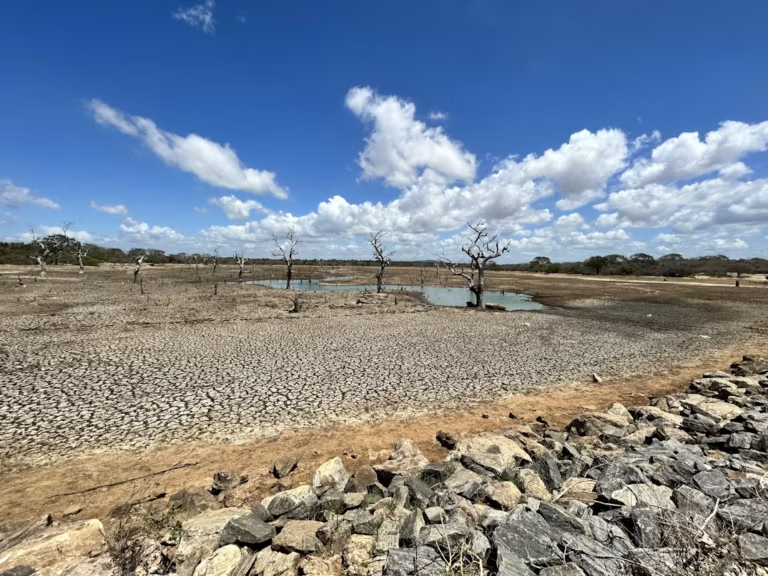
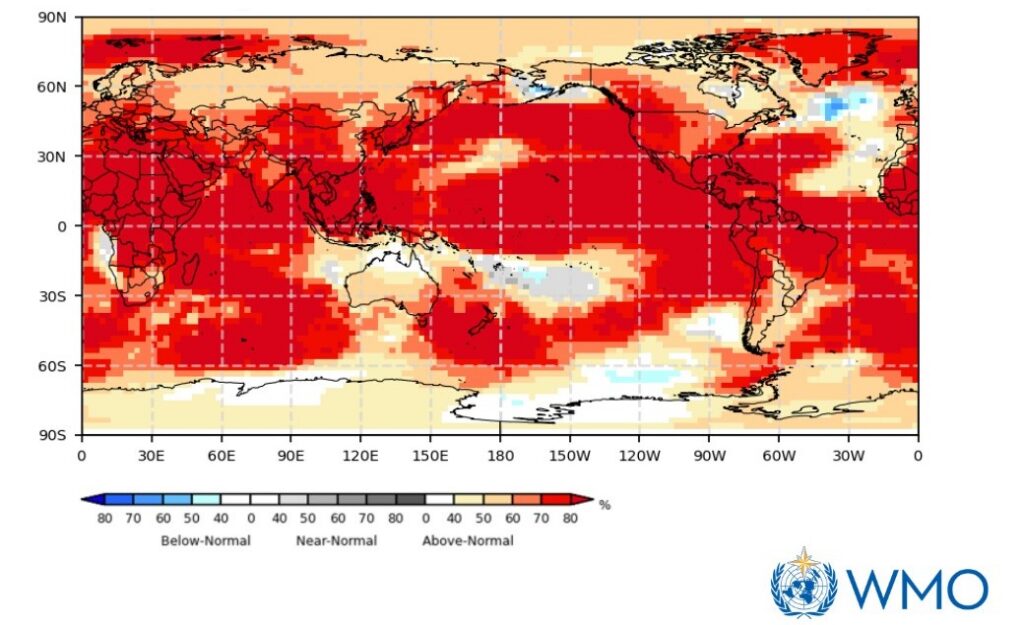
If current projections hold, Sri Lanka is likely to experience below-average rainfall during July, August and September, accompanied by above-normal temperatures, particularly in August.  

“The concern is that rainfall may reduce sharply toward the latter part of June, resulting in hotter and drier conditions during July and August,” Buddhi Marambe, senior professor of crop science at the University of Peradeniya told CIR.

Sri Lanka is likely to experience below-average rainfall during July, August and September, accompanied by higher temperatures, particularly in August. Image courtesy of World Meteorological Organization.

Agriculture faces first major test

For farmers, the consequences could be significant.

Higher temperatures increase evaporation from reservoirs and soils while placing crops under greater moisture stress during critical stages of growth. One of the biggest concerns is the impact on paddy cultivation during the latter stages of the Yala season.

Marambe pointed to a phenomenon known among farmers as “Ehala Pussa” – when extreme heat during July strongly impacts rice plants during their reproductive stage.

“The plant may look productive, but the harvest can be disappointing because many of the seeds could be empty,” he said.

High temperatures can dry out pollen before fertilization occurs, resulting in poorly filled grain despite otherwise healthy-looking crops.

The risk is particularly high for farmers who planted late, as flowering and grain formation may coincide with the hottest weeks of the season.

And that is not the whole story. The impacts extend beyond rice cultivation. Vegetables, fruits and other field crops may also suffer from declining soil moisture and higher irrigation requirements, increasing production costs and potentially reducing yields.

Water stress and power shortages

Beyond agriculture, the anticipated dry spell could create serious challenges for water and energy managers.

Sri Lanka’s reservoirs perform multiple functions simultaneously, supplying irrigation water, drinking water and hydroelectric power generation. Reduced rainfall during July and August could force authorities to make difficult decisions including limiting the supply of water to consumers.

Sustainability specialist Vidhura Ralapanawe cautioned that declining reservoir levels may reduce hydropower generation while electricity demand increases due to hotter weather and greater use of cooling systems.

The result could be a significant supply-demand imbalance during one of the most challenging periods of the year for the power sector.

Ralapanawe highlighted concerns over potential coal supply constraints and operational risks at the Norochcholai Power Plant, factors that could further tighten electricity supplies if weather conditions become severe.

Energy Minister Anura Karunathilaka recently told Parliament that El Niño could reduce electricity generation by approximately 127 gigawatt-hours (GWh) in the coming months.  Energy authorities are already exploring alternative measures to offset potential losses and to maintain grid stability.

Satellite imagery showing the difference from average sea surface temperatures at the equator in the tropical Pacific Ocean (depicted using various shades of red and orange for warmth) during the first week of June 2026, as compared with the baseline used by NOAA’s Coral Reef Watch. Image courtesy of NOAA Satellites.

From drought to floods

Yet drought may only be the first phase of the challenge.

Researchers say El Niño events are frequently associated with a positive Indian Ocean Dipole, a climate pattern that can significantly increase rainfall over Sri Lanka during October and November.

Studies conducted by Marambe, former senior agro-climatologist Ranjith Punyawardena and Aruni Weerasekara, the deputy director at the Department of Agriculture in 2023, indicate that warmer waters in the western Indian Ocean can enhance atmospheric moisture and intensify rainfall across the island.

“If the El Niño develops as strongly as predicted, we could experience very heavy rainfall during October and November,” Marambe said.

Sri Lanka experienced a similar pattern during the 2023 El Niño event, when widespread flooding damaged crops and infrastructure in several regions.

Heavy rainfall can cause flooding, waterlogging and landslides, destroying crops and disrupting livelihoods. Even where crops survive, prolonged cloud cover can reduce photosynthesis and lower productivity, he noted.

“Plants need sunlight for photosynthesis,” Marambe explained. “If cloud cover remains for extended periods, crop productivity can decline even if the plants themselves are not destroyed.”

He described the scenario as a “double jeopardy” for farmers: direct damage from floods followed by reduced yields.

 El Niño effect

El Niño is a naturally occurring climate pattern that develops when sea surface temperatures in the central and eastern Pacific Ocean become significantly warmer than normal.

It forms part of the El Niño-Southern Oscillation (ENSO), a large-scale ocean-atmosphere system that influences weather patterns around the world.

For South Asia, El Niño is often associated with disrupted rainfall patterns, higher temperatures and drought conditions, although impacts can vary significantly from region to region.

Sri Lanka’s location in the Indian Ocean leaves the country vulnerable to both rainfall deficits and excessive rainfall, depending on how the climate system evolves.

Meanwhile, scientists caution that El Niño itself should not be confused with climate change. “It is a result of natural climate variability, not climate change,” Marambe said.

While research suggests global warming may influence the frequency and intensity of El Niño events, the phenomenon has existed for centuries as part of Earth’s natural climate system.

Because El Niño interacts with other climate drivers, including tropical cyclone activity and the Indian Ocean Dipole, forecasting its precise impacts remains challenging.

Testing Sri Lanka’s preparedness

The challenge facing Sri Lanka is that El Niño does not arrive as a single disaster. Instead, it unfolds as a sequence of interconnected risks — drought, extreme heat, water stress, power shortages, flooding, crop losses and rising food prices.

Whether those risks develop into a full-scale crisis may ultimately depend not on the strength of El Niño itself, but on how effectively Sri Lanka prepares before the impacts begin to unfold in the months ahead.

Banner Image: A strong El Niño could set off a chain reaction across agriculture, energy generation, water resources and food security, testing the country’s ability to manage multiple climate-related risks simultaneously. Image courtesy of Chamika Jayasri, Unsplash.

This story was written and edited by Gagani Weerakoon. She leads the editorial at the Center for Investigative Reporting (CIR).

This story was produced with support from Report for the World, a global media service strengthening local independent journalism.

Add your comment

‘We escaped at midnight’: How debt bondage traps Sri Lanka’s Malaiyaha Tamil tea workers

Speed Read:

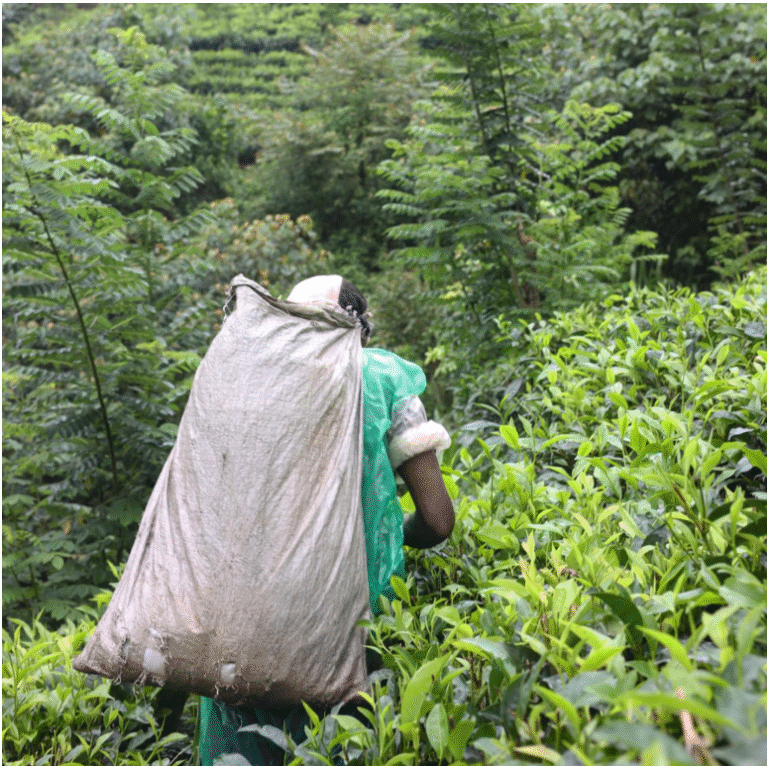
  • Tea workers allege debt bondage and restrictions on movement in Sri Lanka’s private estates.
  • Amnesty International documents labor abuses that may amount to forced labor under ILO indicators.
  • Housing dependency and lack of social protections leave workers vulnerable.
  • Government rejects allegations and promises improvements for estate communities.

COLOMBO- For years, Chithra Devi* counted down the days until she could escape.

Every morning, she woke before dawn and walked into the tea fields of a privately owned estate in Sri Lanka’s Southern province. Every evening, she returned to a small house beside a fertilizer storage facility, where the smell of chemicals lingered in the air and breathing often became difficult.

Chithra, a Malaiyaha Tamil worker, married to a Sinhalese worker employed at the same estate, had one goal: escape.

“It felt like a prison,” she said.

Today, sitting in her mother’s modest home with her two-year-old child in her lap, Chithra recalls the night she finally fled.

Her husband left the estate earlier that day, telling management he needed medical treatment. Hours later, after midnight, Chithra quietly gathered a few clothes, picked up her sleeping child and slipped into the darkness.

“I had been waiting for that day for years,” she said.

What she left behind, she says, was a life controlled by debt, restrictions and fear.

Vicious cycle of debt

According to Chithra, workers on the estate were expected to meet strict daily tea-plucking targets.

Failure came at a cost.

“If we did not meet the target, two days of work would be counted as one,” she said. “That meant less money at the end of the month.”

The wages they earned rarely lasted.

Workers were compelled to buy groceries from a shop linked to the estate owner. Medical emergencies required loans from management. At month’s end, deductions were made from salaries to repay debts.

“The owner would calculate everything,” Chithra said. “We never really knew how much we owed. After deductions, there was never enough money left. Then we had to borrow again.”

The result was a cycle that many workers say they could not escape.

Debt became not merely a financial burden but a mechanism of control.

“When you owe money, you cannot leave,” Chithra said.

Even after fleeing, she says, debt followed her.

She and her husband later learned they were expected to continue repaying loans allegedly taken by her mother.

“We have worked on estates for more than five years,” she said. “We have never received records showing our Employees’ Provident Fund (EPF) or Employees’ Trust Fund (ETF) contributions. We do not have pay slips or documents proving anything.”

Documents taken; freedom restricted

Chithra says estate management held workers’ National Identity Cards (NIC) and restricted their movement.

“Only one person from a family could leave the estate at a time,” she said. “They kept our identity cards.”

Without identification documents, workers found it difficult to seek employment elsewhere, access government services or leave permanently.

Labor activists say such restrictions are not uncommon.

Devakumar, deputy secretary of the Ceylon Workers’ Red Flag Union, says his organization has handled numerous complaints involving debt disputes, confiscation of documents and restrictions on movement in privately owned estates across the Southern province.

“In many cases, workers borrow Rs. 10,000 and later discover the amount has become Rs. 100,000,” he said. “Identity cards, birth certificates and even children’s clinic cards are sometimes taken away so families cannot leave.”

According to him, fear often prevents workers from challenging employers.

“Many workers believe that if they complain, they could lose both their jobs and their homes,” he said.

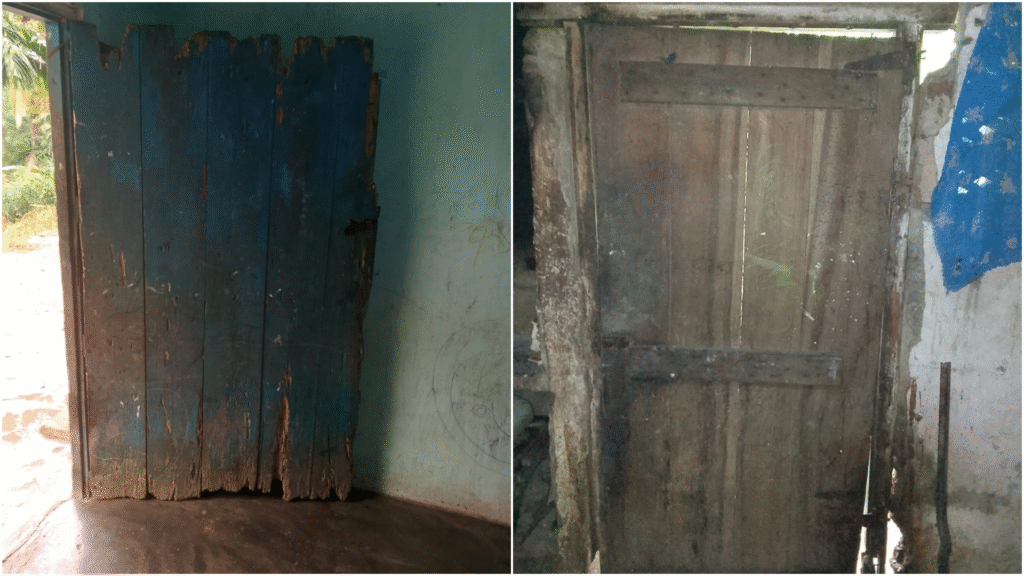
Chithra lived in a small house beside a fertilizer storage facility, where the smell of chemicals lingered in the air and breathing often became difficult. Image courtesy of Chithra.

Amnesty’s findings

Chithra’s experience is not an isolated case. According to a recent Amnesty International report titled “Abandoned by the State, Trapped in Private Estates: Rights Abuses Against Sri Lanka’s Malaiyaha Tamil Tea Workers,” hundreds of Malaiyaha Tamil workers in private tea estates across Sri Lanka’s Southern Province report similar patterns of debt, dependency and control.

The two-year investigation, conducted between January 2024 and January 2026, examined conditions in 45 private tea estates and smallholdings in Galle and Matara districts. Researchers interviewed 159 workers, estate managers and supervisors.

The report alleges that many workers are subjected to conditions that may amount to forced labor under indicators established by the International Labour Organization (ILO).

Researchers documented allegations of debt bondage, restrictions on movement, intimidation, physical and sexual violence, abusive working conditions and exploitation of workers’ economic vulnerability.

“Private tea estates in Sri Lanka are systematically violating labor laws in their treatment of Malaiyaha Tamil workers with no accountability,” said Smriti Singh, Amnesty International’s regional director for South Asia.

The report argues that historical discrimination against the Malaiyaha Tamil community has created conditions that make workers especially vulnerable to exploitation.

Landlessness and dependency

One of Amnesty’s most significant findings concerns housing.

Workers on all 45 estates visited said they depended on employers for accommodation.

This dependence, researchers argue, leaves families trapped.

Fear of eviction often discourages workers from reporting abuse, joining trade unions or seeking alternative employment.

For many, home and workplace are inseparable.

“If you lose your job, you lose your house too,” one worker told researchers.

Human rights advocates say this dynamic creates a powerful imbalance.

Attorney-at-law and social activist Balachandran Gouthaman described the situation as the result of decades of exclusion from land ownership programs and government housing initiatives.

“These communities have historically been left out of many state support systems,” he said during a panel discussion following the report’s release. “That creates a poverty trap that reproduces itself across generations.”

The cost of casual labor

Amnesty’s report found that nearly 90% of workers interviewed were classified as casual laborers despite working under conditions resembling permanent employment.

The designation carries serious consequences.

Workers reported having little or no access to maternity benefits, pensions, paid sick leave or employment protections.

Many said they did not know whether employers were making mandatory contributions to their Employees’ Provident Fund or Employees’ Trust Fund accounts.

For women workers, the consequences can be especially severe.

Lechchumanan Kamaleswari, project director of the Centre for Equality and Justice, said women often continue working despite injuries or illness because missing work means losing income.

“They have no social safety net,” she said. “Many continue working under extremely difficult conditions because they simply cannot afford to stop.”

Barriers to justice

Workers interviewed by Amnesty reported significant obstacles when attempting to seek legal remedies.

According to labor activists and attorneys, complaints to police, labor officials and other authorities frequently produce little result.

Activist Vijay Kumar Sukumaran said many workers fear retaliation.

“The barriers begin the moment a worker decides to make a complaint,” he said. “Workers know that reporting abuse could jeopardize their employment, housing and livelihoods.”

Some workers also reported hostility toward trade union activity.

Researchers found that many estates either discouraged union membership or lacked union representation altogether.

Labor advocates argue that the absence of independent worker representation allows abuses to continue unchecked.

Government pushes back

The Sri Lankan government has rejected Amnesty International’s conclusions.

Responding to concerns raised in Parliament on June 9, Plantation and Community Infrastructure Minister Samantha Vidyarathna said the government’s position was that the allegations were inaccurate.

“The government’s view is that the matters raised by the international human rights organization are not correct,” he said.

The minister noted that the government is preparing an official response and pointed to initiatives aimed at improving conditions for estate workers, including wage increases, housing projects and land ownership programs.

Vidyarathna also highlighted efforts to expand housing allocations for estate families and said the administration is accelerating implementation with support from the Indian government.

A midnight escape, but not freedom

Today, Chithra is free from the estate she once described as a prison. Yet the debt she thought she had escaped continues to shadow her family.

Still, she says she would make the same choice again.

On the night she fled, she carried her sleeping child through the darkness with no certainty about what would come next.

What she did know was that staying meant surrendering any hope of a different future.

“I wanted my child to have a different life,” she said.

For thousands of Malaiyaha Tamil workers living in private estates across southern Sri Lanka, that hope remains elusive—a future where work does not come with debt, housing is not tied to employment, and freedom does not require a midnight escape.

*Real name changed for their safety.

This story was written and edited by Gagani Weerakoon. She leads the editorial at the Center for Investigative Reporting (CIR).

This story was produced with support from Report for the World, a global media service strengthening local independent journalism.

Add your comment

Trust as Currency: Journalism and the Value of Sincerity in the Age of AI

Journalism’s task is not to win the race against the machines. It is to provide a sincere human account of what is real.

Syed Nazakat and Nirat Bhatnagar | 4 June, 2026

There was a time when information moved with deliberation. 

News travelled at the speed of horses, ships, and the printing presses that followed Gutenberg’s invention in the 1440s. In the 1850s, German-born British entrepreneur Julius Reuter built one of the world’s first modern news networks, famously using carrier pigeons to carry stock prices between Brussels, Belgium and Aachen, Germany.

Radio arrived in the 1920s, television towers in the 1930s, bringing voices and images directly to  our homes. Yet, between an event and its interpretation, there were always pauses. Editors verified facts. Historians added context. Societies had time to absorb meaning before they reacted.

An older version of a radio set. Photo: Charles William Taussig/Wikimedia Commons
An older version of a television set. Photo:  Wikimedia Commons

Those pauses were never mere delays. They were the moments where journalism did its most important work — verification.

We write this as two people who have spent the last decade on different sides of the same problem. One of us has spent years reporting and building information infrastructure and driving the digital transformation of newsrooms across Asia. The other has spent years studying how communities come to trust or quietly stop trusting the institutions that claim to speak for them. 

From both vantage points, one conclusion has become impossible to avoid: the pauses are gone, and we have not yet built anything to replace what they protected.

Challenges of Journalism Compounded by AI

Journalism, at its best, is a public good. It is as essential to a functioning democracy as clean water or working courts. When DataLEADS was built in 2015, it was conceived as a kind of mothership: part newsroom, part data lab, part training academy, and part incubator set up  to understand open data and digital tools as they were beginning to reshape how information moved. 

The bet was simple: if journalism was going to survive the coming decade, it would need new skills, new tools, and a renewed clarity about what it was and is actually for? 

Good journalism has always rested on two commitments: 

  • The first is that reporting should reflect the ground realities of the people. 
  • The second is that it should be grounded in truth and integrity, not merely in what is convenient, fast, or popular. 

Strip those away and what remains may still look like journalism but it will not function like it.

The challenge is that these ideals have often existed alongside the difficult realities journalists work within. Two longstanding problems are worth naming — not because AI may inevitably worsen them, but because the way we shape and govern AI today will determine whether journalism becomes more fragile or more resilient in the years ahead.

  • The first is epistemic capture: when the framing of an issue is shaped largely by those with proximity to power, funding, or institutions, rather than by those who live the issue everyday. 
  • The second is parachute journalism: the reporter who drops into an unfamiliar district, files a story within 48 hours, and leaves before understanding what was actually seen. 

Both problems share a single consequence — the people closest to a story, those with the most at stake, are the ones least likely to shape how it gets told.

Data-driven journalism, for all its promise, has often been especially vulnerable here. Numbers can be collected far from the ground and presented with enormous authority while losing the texture that lived experience provides. 

A district’s health crisis becomes a chart. A community’s loss becomes a percentage. A reporter who has spent time in a place knows which questions the data does not answer, which official figure the residents quietly distrust, and which silence in an interview is the actual story. A reporter who has not been there cannot know any of this, however clean the spreadsheet looks. 

What gets lost in that gap is not accuracy; it is sincerity.

The sense that someone genuinely went, listened, and stayed long enough to be changed by what they found. That sincerity was never decorative. It was the thing that made a story trustworthy in the first place.

For years, organisations such as DataLEADS have worked against this drift in concrete ways. By training journalists across the regions and countries rather than only in the metros. By building data and AI capacity inside local and regional newsrooms. By creating online verification networks in different regional languages close to the communities where rumours actually spread. The infrastructure was unglamorous, but the logic was sound: keep the tools, and the trust, as close to the ground as possible.

Training on online information verification and the critical assessment of digital content for local educators in Kerala as part of the state government’s Satyameva Jayate campaign. Photo: DataLEADS

Globally, the architecture of information increasingly gave way to the relentless logic of speed. After the world wide web (www) opened to ordinary users in the early 1990s, the transformation accelerated relentlessly. 

Google organised the world’s information in 1998. Facebook turned relationships into networks in 2004. YouTube made everyone a broadcaster in 2005. X (then Twitter)  compressed public conversation into a real-time stream in 2006. Smartphones began appearing in India in the early 2000s, and the launch of the iPhone in 2007 transformed the landscape, placing an entire digital ecosystem permanently in our hands.

India felt this acutely. Many of us still remember our first mobile phone, the first time it rang in public and a whole room turned to look. India’s first mobile call was made in 1995, when calls were a luxury, incoming minutes were charged, and bills meant standing in queues. Within two decades, politics, commerce, journalism, and friendship had all migrated into the glowing rectangle in our pockets.

This brought losses we are still counting. 

The shared public sphere, a common set of facts that a society could argue over, fragmented into millions of personalised feeds. Two people in the same household can now inhabit entirely different informational universes, consuming different fears and different versions of the truth. 

Yet the same shift also produced one of the great democratisations of expression in history. A single person with a laptop in a small town can now reach an audience that once belonged only to large institutions. Podcasts, newsletters, and independent creators have opened pathways for voices that gatekeeping had long excluded, including, sometimes, exactly the voices that parachute journalism used to miss. The new landscape is not simply worse. It is more open and more chaotic at the same time.

And then, by the time ChatGPT arrived in 2022, machines were no longer just distributing information. They had begun generating it. We should be honest that this has brought real gifts to journalism. 

AI is a capable proofreader and a tireless thinking partner. It can translate interviews, summarise dense research, and analyse archives in minutes. There was a time when making sense of parliamentary proceedings and audit reports meant collecting them by hand and reading thousands of pages. Today those same documents can be searched and interrogated before lunch. Used well, AI can free a reporter to do the human part of the job: to go, to ask, to notice.

But the same tools that polish good work can manufacture convincing emptiness at near-zero cost. 

Consider healthcare. For years, the central challenge was human-driven misinformation: a misleading remedy shared online, a frightening claim forwarded on WhatsApp. During COVID-19, digital verification work finally entered the mainstream of social media platforms as a recognised and necessary function. Online verification teams were stretched thin, but the problem was still, at least, human in scale.

After 2023, that scale broke. Generative AI can now produce synthetic articles, fabricated studies, fake quotes, and deepfaked video faster than any network of newsrooms can review them. 

The work of verification has not just grown harder. Its very nature has changed. When fabrication is fluent, cheap, and infinite, the question is no longer only “is this false?” but “can anything still be shown to be true?” 

Overwhelmed, people retreat into personal circles and trusted contacts, which often turn out to be echo chambers and even greater sources of distortion. Attention drifts away from real issues. Important channels get hijacked. Skepticism curdles into cynicism, and cynicism is corrosive: people stop believing science, governments, journalism, and eventually one another.

Existing responses, on their own, cannot meet this. More verification teams cannot out-produce a machine. More content, even good content, only adds to the flood. Media literacy helps, but it asks ordinary people to do forensic work that should not be theirs to do alone. The problem is no longer a shortage of information. It is a shortage of trustworthy signals about which information, and which messenger, is sincere.

The Future of Journalism

This, we believe, is where the future of journalism actually lies. 

Not in producing more, faster, but in rebuilding trust as something that can be seen and verified. For nearly two centuries, as the author Francesco Marconi has noted, journalism’s great advantage was simply knowing first: the scoop, the exclusive.

AI has erased that advantage permanently. But what it cannot replace is provenance. It cannot fake the fact of having genuinely been somewhere, listened to someone, and stood behind the result. In a world where polished content is effectively free, the scarce and valuable thing is credible proof of sincerity. A signal only carries meaning when it cannot simply be performed on demand.

That principle is already shaping practical work. DataLEADS now runs AI-readiness training so that journalists can use these tools without being used by them.

First Check, a health information initiative, has built health-focused verification networks rooted in local realities rather than distant assumptions.

It is this same logic that animates Sinceriti, a community platform by Belongg Community Ventures: the conviction that sincerity— genuine commitment that is costly to fake, needs infrastructure if it is to remain legible. When anyone can sound credible, sounding credible stops being evidence of anything. What still means something is the cost a person was willing to bear to be there, to verify, to be accountable for the result.

This matters most for the voices with the least cover. When fabrication is everywhere, audiences and editors default to trusting names they already recognise and networks they already move in. That instinct is understandable, and it quietly shuts out the regional reporter, the first-generation journalist, the local stringer who actually lives the story but lacks the institutional badge. A trust crisis, left unaddressed, does not spread its costs evenly. It rewards proximity to power all over again, which is exactly where epistemic capture began. 

The task of the next decade is to build systems that let honest reporting, and honest reporters, prove that they are exactly that, regardless of which newsroom they belong to or whose network they were born into.

There was a time when Indians settled an argument with a single question, “Paper mein aaya hai kya?” (Has it appeared in the newspaper?) That question was never really about a publication. It was about trust in a process, the belief that information had passed through verification before it reached the public.

That process is what we now have to rebuild, deliberately, for an age that no longer waits. The most important institutions of the coming decades will not be the ones that move information fastest. They will be the ones that can still make trust, authenticity, and sincerity worth something. 

Journalism’s task is not to win the race against the machines. It is to remain the one thing the machines can never counterfeit: a sincere human account of what is real.

This story was originally published by  Asian Dispatch on June 4, 2026. It has been republished by Center for Investigative Reporting with permission.


Syed Nazakat is a founder and CEO of DataLEADS, of which Asian Dispatch is a flagship initiative. Nirat Bhatnagar is a technology entrepreneur and founder of Belongg, a research and innovation firm focusing on inclusion.

From Sri Lanka to Gaza’s waters: Sameera’s chilling account of detention, defiance and hope

After days in detention and treating injured activists with improvised medical supplies, a mother of two, humanitarian worker and Gaza flotilla participant returned home with a message she says the world needs to hear.

COLOMBO- By the time Sameera Mahboobdeen stepped back onto Sri Lankan soil, she had spent days in detention, treated wounded activists with improvised medical supplies, endured what she describes as psychological and physical abuse, and witnessed suffering she says she will never forget.

Yet the 39-year-old mother of two was not thinking about rest. Instead, she decided to tell her story of her journey which she believes has “only strengthened her resolve to speak for Palestinians.”

“It sends a chill along my spine when I think about it,” she said. “But this is the truth that the world needs to know.”

A humanitarian activist, emergency medic, forensic psychologist, criminologist and mental health practitioner, Sameera became one of the most recognizable faces of Sri Lanka’s solidarity movement for Palestine after joining the international Global Sumud Flotilla mission to Gaza.

The mission sought to challenge Israel’s blockade of Gaza by delivering humanitarian aid to Palestinians facing acute shortages of food, medicine and essential supplies.

For Sameera, however, the decision was not driven by idealism.

“It wasn’t actually motivation,” she said. “The correct terminology is desperation.”

“This was the only thing we could do”

For years, Sameera had tried to support Palestinians through medical and humanitarian initiatives.

“As a Sri Lankan, as a medic, do we have any other means to support Palestine? It’s very limited,” she said.

She had previously worked with Palestinian medical students through online programs and counseling initiatives.

“I worked with medical students in Palestine. We lost students during the conflict. We lost children while we were doing lectures. My desperation was higher than ever.”

Attempts to enter Palestine through humanitarian organizations had repeatedly failed.

“Because of my ‘weak’ passport, many organizations were reluctant to take me. Joining the flotilla felt like the only direct action I could take to show that Sri Lankans care about Palestine.”

The decision came at a personal cost.

Her journey was largely self-funded. Her husband helped finance the mission, while portions of her travel expenses were later covered by organizers when her stay abroad extended beyond what she had anticipated.

“They are my biggest asset,” she said of her family. “I was so concerned about my children because I had never left them for that long. But they managed beautifully.”

Before departure, she underwent specialized disaster-response training in Turkey, preparing for what participants believed was a likely interception by Israeli forces.

Nonviolence was central to the mission.

Activists were trained not to resist physically if confronted.

Drones, warships and silence

The voyage began routinely enough.

Then came the drones.

“On May 17, we started seeing a lot of drone movement and warships in the distance,” Sameera recalled.

“We knew we were being followed.”

The following day, communications abruptly stopped.

“There was no mobile data. Our CCTV was cut. Our communications were cut. Shortly afterward, we were intercepted.”

According to Sameera, two Israeli warships approached the vessel.

“They asked us to stand up, put our hands up and turn toward their warship.”

The activists refused.

“They boarded our boat forcefully. We were in international waters. We were not in their territorial waters. We were not going to Israel. We were going to Gaza with aid.”

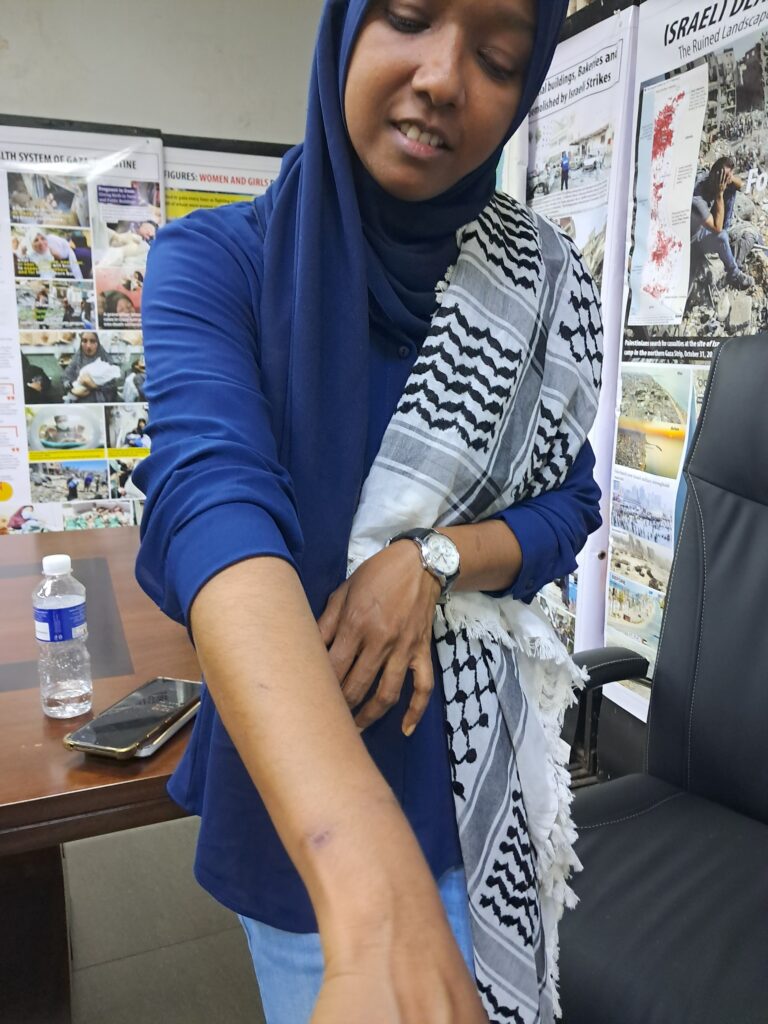
Sameera was handcuffed using Ziplock which cut into her flesh. She said the Israeli forces made sure most of them sustained injuries were below the neck and covered. Image by Gagani Weerakoon

“The trauma started the moment we stepped onto the ship”

What followed remains vivid in her memory. The moment Sameera sensed all their lives are going to be in danger she threw her mobile phone to the sea as none of the activists didn’t want to compromise thousands of others involved in the mission. There were over 400 participants in 50 boats intercepted by Israeli forces. All members of the flotilla made sure their phones were not compromised and then they threw away all the tools and knives that could be used to harm any life.

“The trauma and brutality started the moment we stepped onto that ship,” she said.

She alleges activists were dragged, forced to kneel and stripped of life jackets and warm clothing despite cold weather conditions.

“It was very cold. They took our warm clothes. They took our life jackets.”

One by one, detainees were taken into what she described as a dark container guarded by armed personnel.

“They tried to take off my hijab. I resisted.”

An Israeli soldier then demanded she remove her jewelry.

“He told me he would rip off my nose ring if I didn’t remove it myself.”

Moments later, she emerged to find fellow activists injured.

“I saw comrades beaten up, bleeding, with rib fractures.”

As one of the few trained medics among the detainees, she immediately began treating the wounded.

The problem was that there were virtually no medical supplies.

“We used frozen flatbread to bandage our comrades using T-shirts and water bottles.”

The injuries, she said, were severe.

“There were fractures, taser wounds and head injuries. People had been punched in the face. One of my comrades sustained 15 burn injuries from a taser.”

She also alleged that some women were physically assaulted.

“Women were punched in the face. Their noses were broken. They were beaten in their stomachs.”

“We didn’t think some would survive the night”

For the next three days, Sameera said, detainees were held in shipping containers.

The conditions were harsh.

The containers lacked proper protection from the cold and offered little comfort.

“We didn’t know the time. We didn’t know where we were.”

Medical concerns quickly mounted.

“We didn’t think some of them could make the night.”

Food and water, she said, were scarce.

“We had to fight and demand water. We had to demand food.”

She described nights punctuated by intimidation and fear.

“People were terrified and traumatized.”

According to Sameera, guards mocked detainees and celebrated their suffering.

“They laughed at us. They clapped when our people suffered.”

Inside Detention

After arriving in Ashdod, Sameera said conditions worsened.

She alleged detainees were subjected to prolonged restraints, humiliation and psychological pressure.

“We were handcuffed. Our legs were cuffed.”

She described overcrowded detention facilities where some detainees struggled to breathe.

“They put us into tiny rooms. People started screaming because they couldn’t breathe.”

Food and water remained limited, she said.

The detainees were repeatedly moved between cells and awakened throughout the night.

“They used dogs to traumatize us.”

One of the most haunting memories came from the prison cells themselves.

“We didn’t see any Palestinians, but we could feel their presence.”

Arabic writing covered the walls.

“There were children’s drawings. Alphabets were written on the walls.”

For Sameera, the markings were a reminder of those who had occupied the cells before them.

For Sameera, the memories remain difficult. The images of injured activists, frightened detainees and children’s drawings on prison walls still linger. Image courtesy of Sujeewa Kumar.

Sri Lanka Mobilizes

Back home, concern for the activists was growing.

Sameera believed public pressure, media attention and diplomatic engagement played a crucial role in securing their release.

“From day one, Sri Lanka mobilized because of the voices of the people,” she said.

She credited government officials, parliamentarians and diplomats for actively engaging with the situation.

“Everyone was working. The Foreign Ministry was involved. Parliamentarians spoke about it. The president was briefed. Everyone was trying to ensure our safety and return.”

She also praised the Sri Lankan delegation supporting the mission.

“Our people worked 24 hours a day. They were coordinated, committed and determined.”

Despite her ordeal, Sameera repeatedly returned to one central message.

The suffering endured by international activists, she said, pales in comparison to what Palestinians experience daily.

“What we experienced was less than one percent of what Palestinians go through.”

Unlike Palestinians, she said, the activists had governments, organizations and international supporters advocating on their behalf.

“We had people fighting for us. We had delegations demanding our release.”

Palestinians, she noted, often do not enjoy the same protections.

Ambassador’s praise

Palestinian Ambassador in Colombo Ihab I.M. Khalil, who came to meet Sameera described her experience as evidence of the power of public solidarity.

“In the end, the voice of the people matters,” he said.

“You can send bombs or bullets, but the message that has been carried across the world is stronger than all of that.”

He thanked her for speaking publicly about her experience despite the trauma she had endured.

“On behalf of the Palestinian people, I thank you. We will not forget what you have done.”

The ambassador also praised the response of ordinary Sri Lankans.

“The love and support we have seen from people here had been amazing.”

When Sameera described her involvement as being driven by desperation, the ambassador offered a different interpretation.

“This is not a message of desperation,” he said. “It is a message of hope and strength.”

“There is something inside you that cannot be changed. It is your belief, your principles and your humanity.”

A mission far from over

Today, Sameera is back with her family.

But she says the mission that took her to Gaza’s waters is far from over.

“We wanted the world to see what is happening,” she said.

“We were desperate to bring aid to Gaza because there seemed to be no other way.”

The memories remain difficult.

The images of injured activists, frightened detainees and children’s drawings on prison walls still linger.

Yet amid the trauma, she says one lesson stands out.

“Every voice matters.”

For Sameera, that belief carried her across the Mediterranean, through detention and ultimately back home.

And it is the message she hopes the world hears.

This story was written and edited by Gagani Weerakoon. She leads the editorial at the Center for Investigative Reporting (CIR).

This story was produced with support from Report for the World, a global media service strengthening local independent journalism.

Add your comment

Sri Lanka faces rising inflation and economic strain as rupee weakens against USD

Speed Read:

  • Rupee slides past Rs. 350 as Sri Lanka faces fresh economic pressure
  • Fuel shock, inflation fears and forex strain test Sri Lanka’s recovery
  • Exporters remain divided over the benefits of a weaker currency
  • Construction and manufacturing sectors face rising operational costs and project disruptions

COLOMBO – Sri Lanka’s fragile economic recovery is facing renewed pressure as the Sri Lankan rupee rapidly depreciates against the US dollar, exposing the country to rising import costs, inflation risks and growing uncertainty across key sectors of the economy.

The rupee’s decline, which saw the dollar briefly exceed Rs. 350 in the local market this week, has triggered intense political debate, concern among businesses and warnings from economists over mounting pressure on foreign exchange reserves and living costs.

While the government insists the depreciation is being driven primarily by external shocks linked to the escalating Middle East conflict, opposition parties and some analysts argue that weakening market confidence, policy uncertainty and structural vulnerabilities are accelerating the pressure on the currency.

Deputy Minister of Finance and Planning Anil Jayantha Fernando defended the government’s handling of the situation, saying the depreciation was “not the result of any government policy or wrong decision,” but rather the consequence of a global crisis triggered by the conflict in the Middle East.

Speaking at a media briefing, he said the war had sharply increased global fuel prices, shipping charges, insurance costs, fertilizer prices and other import-related expenses, placing severe strain on Sri Lanka’s dollar demand.

“The demand for the dollar has increased while the supply available to meet that demand has become limited in the short term. As a result, the exchange rate rose abnormally and exceeded Rs. 350,” he said.

Fuel imports and rising dollar demand

The sharp increase in Sri Lanka’s fuel import bill has emerged as one of the main drivers behind the currency pressure.

Sri Lanka’s fuel import expenditure surged dramatically in recent months as global oil prices climbed amid fears of supply disruptions linked to tensions in the Middle East and concerns surrounding shipping routes such as the Strait of Hormuz and Red Sea corridors.

Deputy Minister Anil Jayantha said Sri Lanka’s monthly fuel import bill had risen from around $120 million-$200 million to approximately $521 million by May.

Central Bank (CBSL) Governor Nandalal Weerasinghe told the Parliament Committee on Public Finance that the country’s petroleum import expenditure during the first four months of the year had already reached nearly two-thirds of the total spent throughout 2025.

“At the same time, tourism also has slowed down. Although imports have increased significantly, exports have not performed to the same extent,” he said.

The imbalance between rising import expenditure and weaker foreign currency inflows has widened pressure on the foreign exchange market, causing the rupee to weaken further.

The National Chamber of Exporters (NCE) cautioned that while some exporters may experience short-term gains from a weaker currency, the broader economy remains highly vulnerable because Sri Lanka depends heavily on imported raw materials and intermediate goods.

Sri Lanka imported approximately $11.8 billion worth of intermediate goods in 2025, including fuel, textiles, chemicals, plastics and industrial materials critical for manufacturing and construction, according to the NCE.

Central Bank (CBSL) Governor Nandalal Weerasinghe told the Parliament Committee on Public Finance that the country’s petroleum import expenditure during the first four months of the year had already reached nearly two-thirds of the total spent throughout 2025. Image courtesy of Parliament Communication Division.

Inflation fears return

The weakening rupee is also reviving concerns about inflation at a time when households are already struggling with high living costs following the 2022 economic collapse.

As an import-dependent economy, Sri Lanka is highly exposed to currency depreciation because a weaker rupee increases the cost of fuel, food, medicine, industrial inputs and other essential imports.

Government ministers have acknowledged that inflationary pressure is likely to intensify.

Minister Vijitha Herath said the weaker rupee could push up the price of imported goods and contribute to broader inflation across the economy.

According to official data, Sri Lanka’s headline inflation rose sharply to 5.4% in April 2026 from 2.2% in March, partly driven by higher domestic energy prices.

Opposition parties have accused the government of failing to shield ordinary citizens from the impact of the depreciation.

The United National Party noted that while exporters may benefit from higher returns due to the weaker currency, “employees and the general public will suffer due to a rising cost of living.”

Opposition Leader Sajith Premadasa also questioned the government in Parliament over what measures were being taken to ease economic hardship and reduce pressure on middle- and low-income families.

“The people of this country are facing extremely difficult conditions. The government must explain what steps are being taken to provide relief,” he said.

Premadasa announced that the Opposition has decided to formally request President Anura Kumara Dissanayake to immediately convene an all party conference to discuss and develop urgent solutions.

Export sector divided

The depreciation has exposed divisions within Sri Lanka’s export sector over whether a weaker rupee is ultimately beneficial or harmful to the economy.

The Joint Apparel Association Forum (JAAF) maintained that the current depreciation should be viewed within the context of wider global currency pressures rather than as evidence of economic failure.

JAAF noted that several regional currencies, including the Indian rupee, Nepalese rupee and Indonesian rupiah, have also weakened against the US dollar in recent weeks.

“This is not a Sri Lanka-specific situation,” JAAF Chairman Felix Fernando noted issuing a statement.

“Global factors, including instability in the Middle East, higher fuel costs and rising shipping costs, are placing pressure on currencies across emerging and developed economies alike.”

Fernando said that a competitive exchange rate could strengthen export competitiveness, improve foreign exchange earnings and help protect jobs in sectors such as apparel manufacturing.

“A weaker rupee does not mean the economy is failing,” he said.

However, the NCE was of the view that the long-term costs of currency depreciation could outweigh short-term export gains because many Sri Lankan industries rely heavily on imported machinery, chemicals, textiles and industrial inputs priced in dollars.

For manufacturers, rising import costs are already squeezing profit margins and increasing operational uncertainty.

Sri Lanka’s headline inflation rose sharply to 5.4% in April 2026 from 2.2% in March, partly driven by higher domestic energy prices. Graph courtesy of the Department of Census and Statistics.

Cautions of project disruptions

Sri Lanka’s construction industry has also raised alarm over the impact of the depreciating rupee on infrastructure projects and material costs.

The National Construction Association of Sri Lanka cautioned that many projects could stall unless the government revises price fluctuation formulas used in public contracts.

Association’s Chairperson M. Darinton Paul told media contractors are struggling to absorb rapidly rising import costs for electrical, mechanical and petroleum-based materials.

“There is no way that we can construct these roads,” he said, referring to rising bitumen prices linked to Middle East oil market disruptions.

The industry also cautioned of shortages of imported materials and increasing uncertainty in the private construction sector, where many contracts do not include protection against exchange rate volatility.

Confidence crisis in the forex market

Beyond global pressures, some economists and opposition lawmakers argue that declining market confidence is worsening volatility in Sri Lanka’s foreign exchange market.

Economist and lawmaker Harsha de Silva warned of what he described as a “vicious cycle” driven by panic, speculation and weakening trust in the market.

“Markets operate on trust. If market trust collapses, the market itself collapses,” he said.

According to de Silva, exporters are delaying dollar conversions in anticipation of further depreciation, while importers are rushing to secure foreign currency before rates climb higher.

He also claimed that market activity had effectively frozen at certain points due to uncertainty over exchange rate direction and price discovery.

“Today there isn’t even a rate in the market. There isn’t a single bid or offer,” he said.

adasa announced that the Opposition has decided to formally request President Anura Kumara Dissanayake to immediately convene an all party conference to discuss and develop urgent solutions.

IMF support critical

Amid the uncertainty, the government is banking heavily on upcoming foreign financial inflows to stabilize the rupee and restore confidence.

Sri Lanka expects the International Monetary Fund (IMF) Executive Board to consider the combined fifth and sixth reviews of the country’s Extended Fund Facility program on May 27.

If approved, Sri Lanka is expected to receive approximately $700 million from the IMF, alongside additional financial support from the Asian Development Bank (ADB) and the World Bank.

Deputy Minister Anil Jayantha expressed confidence that the inflows would ease pressure on the currency market.

“At present, the midpoint in the interbank foreign exchange market has come down to around Rs. 330,” he said.

President Anura Kumara Dissanayake also sought to reassure the public that Sri Lanka would not return to conditions similar to the 2022 economic collapse.

“In 2022, the Central Bank did not have dollars either. Today, the CBSL holds nearly $7 billion in reserves,” he said.

“We will never allow any shortage of imported fuel, gas, milk powder or fertilizer.”

Still, Opposition Leader Sajith Premadasa has urged the government to begin negotiations for a successor IMF program beyond March 2027, warning that Sri Lanka remains vulnerable to external shocks and may struggle to meet reserve accumulation targets under the current arrangement.

“The window to negotiate from relative strength is open,” Premadasa said.

Global crisis testing Sri Lanka’s recovery

The current pressure on the rupee highlights how vulnerable Sri Lanka’s recovery remains to external shocks, particularly in energy markets and global financial conditions.

The escalation of conflict in the Middle East has disrupted shipping routes, increased oil prices and strengthened the US dollar globally, placing strain on import-dependent economies with limited fiscal space.

IMF Managing Director Kristalina Georgieva recently cautioned that prolonged instability and oil prices above $100 per barrel could slow global growth, increase inflation and force countries into tighter monetary policies.

For Sri Lanka, the challenge now extends beyond defending the rupee. The country must simultaneously manage inflation, maintain investor confidence, protect foreign reserves and prevent another crisis of public trust in the economy.

While the government insists the current pressure is manageable and fundamentally different from the collapse of 2022, economists warn that restoring confidence will require not only external financial support, but also clear policy direction, market transparency and credible long-term economic management.

This story was written and edited by Gagani Weerakoon. She leads the editorial at the Center for Investigative Reporting (CIR).

This story was produced with support from Report for the World, a global media service strengthening local independent journalism.

Add your comment

Displaced Asian cybercrime operatives find a new operational home in Sri Lanka

Speed Read

  • In coordinated cybercrime raids conducted within 24 hours, authorities have arrested more than 220 foreign nationals in Sri Lanka’s South.
  • Since January 2026, nearly 850 foreign nationals have been arrested in connection with online fraud, cybercrime, visa violations, and illegal business operations linked to transnational scam networks.
  • Police say foreign syndicates are increasingly using rented villas, apartments, hotels, and guesthouses across the island as operational bases for sophisticated digital scam centers.
  • Crackdowns in Cambodia and Myanmar have displaced cybercrime syndicates into Sri Lanka, citing weak regulatory oversight, lenient visa policies, and affordable infrastructure as key drivers.

COLOMBO –  Sri Lanka is facing an unprecedented surge in transnational cybercrime activity, with authorities arresting more than 220 foreign nationals in a series of coordinated raids across the Southern province within a 24-hour period, as the island increasingly emerges as an operational base for sophisticated online fraud syndicates displaced from other parts of Asia.

The raids, carried out on Monday (11) and Tuesday (12) in Midigama, Hikkaduwa, and Galle, form part of a broader nationwide crackdown that has already led to the arrest of nearly 850 foreign nationals linked to cybercrime, online financial fraud, immigration violations, and illegal business operations from January to May 2026.

The scale, geographic spread, and sophistication of the operations have intensified concerns among law enforcement officials and digital security analysts that Sri Lanka is rapidly becoming a preferred destination for regional cybercrime syndicates seeking to exploit the country’s relatively liberal visa regime, expanding digital infrastructure, and weak regulatory oversight.

Investigators say the simultaneous operations underscore a rapidly expanding pattern in which foreign cybercrime syndicates establish temporary operational hubs across Sri Lanka using rented villas, hotels, apartments, and guesthouses.

Sweeping regional crackdowns, particularly by China and the United States, have forced East and Southeast Asia’s multi-billion-dollar cyber scam syndicates to rapidly evolve and expand into new territories. Rather than dismantling the illicit industry, intensified law enforcement pressure has pushed these operations into under-governed and conflict-affected regions around the world.

Southern province raids

Police told CIR the latest operations uncovered multiple foreign-run cybercrime centers operating out of hotels, guesthouses, and rented accommodations along Sri Lanka’s southern coastline.

In Midigama, authorities arrested 33 foreign nationals, including 28 Indian nationals and five Nepali nationals, at a tourist hotel. The suspects, aged between 25 and 35, were taken into custody over allegations including overstaying visas, engaging in employment while holding tourist visas, possession of duty-free cigarettes, and offenses under Sri Lanka’s Computer Crimes Act.

In a separate operation, Special Task Force (STF) officers attached to the Akmeemana Camp raided a lodging facility in Dodanduwa, Hikkaduwa, arresting 55 foreign nationals, including 35 Indians and 20 Nepalis. Police also arrested the 43-year-old owner of the guesthouse for allegedly providing accommodation to the suspects.

Authorities seized 25 computers, 119 mobile phones, Rs. 750,000 (equivalent to $3,215) in cash, a car, and a jeep during the raid.

Meanwhile, officers attached to the Galle Police Station arrested 110 Indian nationals staying at two guesthouses. The suspects, aged between 19 and 35, were detained on suspicion of offenses linked to the Computer Crimes Act. Police seized 58 computers and 79 mobile phones during the operation.

Another 23 foreign nationals, including 19 Indians and four Nepalis, were arrested by Galle Harbour Police during raids. Officers recovered 10 computers and 32 mobile phones from the suspects, who are aged between 21 and 47.

Police said the suspects are expected to face charges related to violations of the Computer Crimes Act, visa overstays and engaging in employment while on tourist visas.

Operations reveal broader pattern

The Southern province raids came days after another major operation in Colombo.

According to Police Spokesperson and Assistant Superintendent of Police Fredrick Wootler, on May 6, officers attached to the Kollupitiya Police raided a housing complex along Sri Uttarananda Mawatha, arresting 74 Vietnamese nationals aged between 19 and 39. Police said investigations are continuing into their suspected involvement in digital fraud operations.

Simultaneously, officers from the CID’s Matara cybercrime investigation division raided a hotel in Talalla, Gandara, arresting six additional foreign nationals. The suspects, identified as Taiwanese and Chinese nationals aged between 25 and 40, were alleged to have conducting unauthorized business operations while residing in the country on tourist visas. Authorities also found foreign cigarettes in their possession.

Sri Lanka’s growing cybercrime crisis

The first major operation of the year took place on February 23 in Cinnamon Gardens, Colombo 7, where two separate raids resulted in the arrest of 21 Chinese nationals.

Weeks later, on March 16, authorities carried out coordinated raids across three hotels in Mihintale and Anuradhapura, arresting 133 Chinese nationals in what became one of the largest cybercrime-related operations recorded in the country.

The crackdown rapidly expanded nationwide.

On March 20, police arrested 77 Indonesian nationals in Kochchikade. Four days later, raids in Poddala and Kurunegala led to the arrest of 12 Vietnamese and five Chinese nationals.

On March 27, authorities conducted dual operations in Negombo, arresting 43 Chinese nationals alongside several Malaysian and Cambodian suspects.

April saw an even sharper escalation. A large-scale operation in Chilaw on April 2 dismantled a cybercrime hub involving 133 Chinese nationals, 13 Vietnamese nationals, and one Malaysian national.

Later that month, police arrested 30 suspects from China, Malaysia, and India during operations in Dungalpitiya.

The trend intensified further in May.

On May 2, police raided a location in Koswatta, arresting 37 Chinese nationals. On the same day, a landmark operation at a residential complex on Meda Welikada Road in Rajagiriya resulted in the arrest of 121 suspects from China, Myanmar, Malaysia, Vietnam, and the Philippines.

By early May, Sri Lankan authorities had arrested well over 800 foreign nationals connected to cybercrime investigations, with the majority linked to organized online fraud and digital scam operations.

Property owners warned

Police have now issued warnings to landlords, property owners, and apartment managers over the increasing use of rented premises for organized cybercrime operations.

According to police, many of the recent raids uncovered foreign nationals operating sophisticated online scam centers from luxury apartments, villas, and commercial buildings equipped with advanced computer systems and telecommunications infrastructure.

Police said many suspects had also violated immigration regulations by overstaying visas or engaging in employment while holding tourist visas. Legal action has already been initiated against several groups in coordination with the Department of Immigration and Emigration, ASP Wootler said.

Under Section 76 of the Police Ordinance, police officers have the authority to request details regarding residents occupying any household.

“Homeowners and chief occupants are required to provide information about family members, employees and temporary residents to the nearest police station,” police spokesman said.

Police warned that failure to notify police regarding changes in residency status, including arrivals and departures, constitutes a punishable offense under Sri Lankan law.

“Any foreigner who visits the country will have a valid visa and passport. These particulars are incorporated into the Department and Immigration and Emigration. Any foreigner who overstays after their valid dates commits an offence under the Immigrants and Emigrants Act, and authorities will take action against them.”

“Sri Lanka is what displacement looks like”

Digital rights advocate Sanjana Hattotuwa said the current crisis reflects a broader regional displacement of cybercrime syndicates following crackdowns in countries such as Cambodia and Myanmar.

“The crackdowns on scam compounds in Cambodia and Myanmar have not eliminated these networks. They have displaced them,” Hattotuwa said.

“Sri Lanka is what displacement looks like in practice. A liberal tourist visa regime, decent digital infrastructure, affordable accommodation, and a leasing and sub-letting framework that asks almost no questions about what tenants actually do with the property: each of these on its own is unremarkable, but together they form an operationally attractive proposition for criminal enterprises looking for somewhere to land.”

Hattotuwa noted that even the Chinese Embassy in Colombo had acknowledged Sri Lanka’s telecommunications infrastructure, geographic location, and comparatively lenient visa policies as factors driving the influx.

He said the predominance of Chinese nationals among those arrested reflects a deeper structural shift in regional organized crime rather than isolated criminal incidents.

“The predominance of Chinese nationals among those arrested is not coincidence or stereotype,” he said. “It is the leading edge of a structural shift in transnational organized crime that finds our country precisely because our legal framework can do little more than deport people back to where they came from.”

He also pointed to the growing human cost of the crisis, noting that Sri Lanka is simultaneously becoming both a host country for cybercrime operations and a source of trafficking victims.

“Even as foreign syndicates set up shop here, Sri Lankans lured by false job offers continue to be rescued from scam compounds in Myanmar. The country is now host and source of victims at the same time.”

Escaped detainees raise serious questions

One of the most alarming incidents emerged after 30 foreign nationals, including 21 Chinese and nine Vietnamese suspects, escaped from the Welisara Detention Centre, where they had been held pending deportation.

Police later re-arrested the group in Boralesgamuwa, where authorities discovered they had resumed operating an online fraud center from a rented building equipped with 10 computers, 29 iPhones, and communications equipment.

Hattotuwa said the incident pointed to severe institutional failures.

“You do not walk out of a detention center, secure a property, set up infrastructure, and reboot a scam operation by accident,” he said.

“Something inside the system enabled it. Whether that something is gross negligence, paid complicity, or some hybrid of the two will determine whether the next televised raid means anything at all.”

He cautioned that deportation alone is proving insufficient as a deterrent.

“Deportation as the only available consequence was already an embarrassment. A deportation pipeline that leaks its own detainees, and into a working scam center at that, is something worse.”

Over the past two years, authorities in Myanmar, Cambodia, Laos, and the Philippines have come under growing international pressure over scam compounds linked to online financial fraud, cryptocurrency scams, romance scams, and human trafficking operations.

As enforcement pressure increased in those countries, criminal groups appear to have shifted toward jurisdictions perceived as lower risk and less regulated.

Sri Lanka’s strategic location, comparatively low operating costs, expanding internet connectivity, and tourism-linked accommodation sector have combined to create what investigators increasingly describe as a permissive operating environment for transnational cybercrime networks.

The rapid rise in arrests during 2026 now poses mounting questions for Sri Lankan authorities over border controls, visa monitoring, property regulation, financial oversight, and the country’s broader cyber defense capabilities.

This story was written and edited by Gagani Weerakoon. She leads the editorial at the Center for Investigative Reporting (CIR).

This story was produced with support from Report for the World, a global media service strengthening local independent journalism.

Add your impact